Menopause weight gain: why it happens and what actually works
TL;DR: Menopause causes weight gain, usually 2 to 5 pounds directly from hormonal changes, with lifestyle factors pushing the total higher. Falling estrogen shifts fat storage to the belly and makes muscle harder to keep. The gain often starts in perimenopause and sticks around for years without intervention. Hormone therapy, strength training, higher protein, and GLP-1 medications all have real evidence.
Does menopause actually cause weight gain, or is it just aging?
Both. And separating them matters if you want to do something about it.
Aging and menopause overlap so tightly that most studies struggle to pull them apart. Here is what we do know. The Study of Women's Health Across the Nation (SWAN), one of the longest-running longitudinal studies on this question, found that women gain an average of about 5 pounds during the menopausal transition, roughly age 42 to 52, independent of other aging factors [1]. That gain is more than another birthday. It is hormonal.
Meanwhile, muscle mass drops about 3 to 8 percent per decade after age 30, a process called sarcopenia [2]. Less muscle means a lower resting metabolic rate, so you burn fewer calories doing nothing. Add declining estrogen on top and you get a compounding effect that feels, to most women, like their body quietly stopped responding to habits that worked for twenty years.
So can menopause cause weight gain on its own? Yes. But the total weight change most women see in midlife comes from the hormonal shift and the slower metabolic background of aging together. The upside is that once you name each driver, you can aim at both.
Why does menopause cause weight gain? The hormone science explained
Estrogen is the lead character here, but it never works alone.
Estradiol, the main form of estrogen in your reproductive years, does several things that touch body weight. It decides where fat gets stored, favoring subcutaneous fat (hips, thighs) over visceral fat (belly). It keeps insulin sensitivity higher. It supports lean muscle. And it has a mild appetite-dampening effect through leptin and GLP-1 receptors in the hypothalamus [3].
When estradiol drops in perimenopause and menopause, every one of those protections weakens. Fat migrates toward the abdomen. Insulin sensitivity falls, so the same meal drives higher blood glucose. Muscle gets harder to hold. Appetite regulation loosens. The net result: women in menopause often watch their waist expand even when the scale stays put.
Progesterone matters too, in a different way. Falling progesterone worsens sleep, and poor sleep independently drives more hunger, higher cortisol, and preferential fat storage [4]. Our progesterone explainer covers its broader role.
Cortisol, the stress hormone, tends to run higher in perimenopause because estrogen normally softens the cortisol response. Higher cortisol directly feeds visceral fat. This is not a rounding error. Visceral fat is metabolically active in a harmful way. It pumps out inflammatory cytokines and worsens insulin resistance, which makes more weight gain more likely.
Testosterone, which women make in smaller amounts than men, also declines with age. Lower testosterone speeds muscle loss and drains the energy you have for movement. It is a quieter contributor to menopausal weight gain, but a real one.
How much weight do most women gain during menopause?
The range is wide, and averages can mislead you.
SWAN found average gain of about 5 pounds across the full menopausal transition [1]. Other studies land lower, around 2 to 3 pounds tied directly to hormonal change, with the rest coming from aging, less activity, and diet drift.
What shifts more than total weight is body composition and where the fat sits. Multiple studies document waist increases of 2 to 3 inches in the years around menopause, even in women whose scale barely moves [5]. This is the belly that seems to show up overnight in your late 40s.
About one in three women gains more than 10 pounds during the transition, according to data reviewed by the North American Menopause Society (NAMS) [5]. That group tends to carry more insulin resistance, less activity, worse sleep, and higher baseline stress. None of that is fixed. All of it is workable.
Some women gain almost nothing. Genetics, starting muscle mass, diet quality, sleep, and whether they use hormone therapy all move the needle. Calling menopause weight gain inevitable is both wrong and defeating.
How long does menopause weight gain last?
Nobody gives you a straight answer on this, so here it is.
The active hormonal disruption of the transition, the stretch when estrogen is most erratically falling, usually runs 4 to 8 years. It starts in perimenopause and ends a year or two after your final period [6]. Most of the hormonally driven weight gain happens inside that window. SWAN data show the steepest gains in the two years before and two years after the final period.
Once menopause is complete, estrogen settles at a new, lower baseline. Gain does not stop entirely, because aging keeps going, but the fast, hard-to-explain changes of the transition tend to ease. Women who feel like they are suddenly gaining far faster than before are usually in the acute hormonal phase, not a permanent new setting.
Here is the part worth saying plainly. Weight gained during the transition does not fall off when the transition ends. Without active intervention, hormone therapy, diet change, exercise, or medical weight management, it stays. The rate slows. The baseline has moved.
The practical answer: menopausal weight gain as a distinct, accelerated event lasts about as long as the transition, 4 to 8 years for most women. Postmenopausal weight management is a separate, longer game that needs its own plan.
Where does the weight go? Why belly fat increases in menopause
Visceral fat is the specific problem, and it is more than cosmetic.
Before menopause, estrogen steers fat to the hips, thighs, and buttocks, the gynoid pattern. After menopause, without that steering, fat redistributes toward the abdomen and around the organs, the android or visceral pattern. This happens even in women who gain no total weight [5].
Visceral fat is not padding. It makes inflammatory proteins, jams insulin signaling, and links independently to heart disease, type 2 diabetes, and certain cancers. The American Heart Association flags waist circumference above 35 inches in women as a cardiovascular risk marker, regardless of BMI [7].
That is why many menopause clinicians watch waist and body composition more closely than the scale. A woman who holds the same weight but goes from 28 percent body fat to 35 percent, with the extra fat parked in her middle, has a worse metabolic profile. The scale shows none of it.
Strength training pushes back on this shift directly by building muscle, which improves insulin sensitivity and raises resting metabolism. It is the most evidence-backed non-drug intervention for abdominal fat gain in menopausal women.
Does hormone replacement therapy help with menopausal weight gain?
Yes, with effects that surprise most people.
Hormone replacement therapy (HRT) does not reliably drop the number on the scale. What it does is prevent or partly reverse the shift toward abdominal fat that estrogen loss drives. Multiple randomized trials show women on estrogen therapy add less visceral fat than untreated women over the same span, and hold onto lean muscle better [8].
A Women's Health Initiative analysis and later research found HRT users gained less abdominal weight and had smaller waist increases than placebo groups, even when total body weight matched [8]. The North American Menopause Society's 2022 position statement states that hormone therapy "is not associated with weight gain" and may reduce central fat [5].
The type of hormone therapy matters. Estradiol delivered through the skin (patch, gel, spray) skips first-pass liver metabolism and has a cleaner metabolic profile than oral estrogen, which raises triglycerides and can nudge clotting factors. If you are weighing options, our hormone replacement therapy and estrogen patch articles cover the differences.
HRT works best for weight-related outcomes when you start it during perimenopause or early postmenopause, the so-called timing hypothesis, rather than years later. Women who start 10 or more years after menopause do not get the same metabolic benefit.
HRT is not a weight loss drug. Think of it as blocking the worst of the hormonal fat redistribution and making your other efforts (diet, exercise, medication if needed) pull harder.
What actually works for losing weight gained during menopause?
The interventions with the best evidence are not mysterious. The doses and combinations are where people go wrong.
Strength training. Two to three sessions a week of progressive resistance work is the single most evidence-backed move for menopausal body composition. It keeps and builds muscle, raises resting metabolic rate, improves insulin sensitivity, and cuts visceral fat. Cardio helps your heart but does less than resistance training for fat redistribution specifically.
Protein intake. Most women eat far too little protein to hold muscle through this stretch. Research supports 1.2 to 1.6 grams per kilogram of body weight per day for women trying to preserve muscle in midlife, well above the 0.8 g/kg general baseline [2]. Spreading it across meals (30 to 40 grams per meal) beats loading most of it at dinner.
Sleep. This gets less airtime than diet and exercise, and the data are clear anyway. Chronic sleep below 7 hours raises ghrelin (hunger), drops leptin (satiety), lifts cortisol, and promotes fat storage. Women fighting menopause sleep disruption are dieting with one hand tied behind their back. Fixing the root cause of the disruption, often menopause itself, is part of the weight plan.
Dietary pattern. No single diet owns the evidence for menopausal weight management. But patterns that cut refined carbs and ultraprocessed food while pushing protein and fiber consistently beat calorie restriction alone in this group. The Mediterranean-style pattern has the strongest data for cardiometabolic risk in postmenopausal women [9].
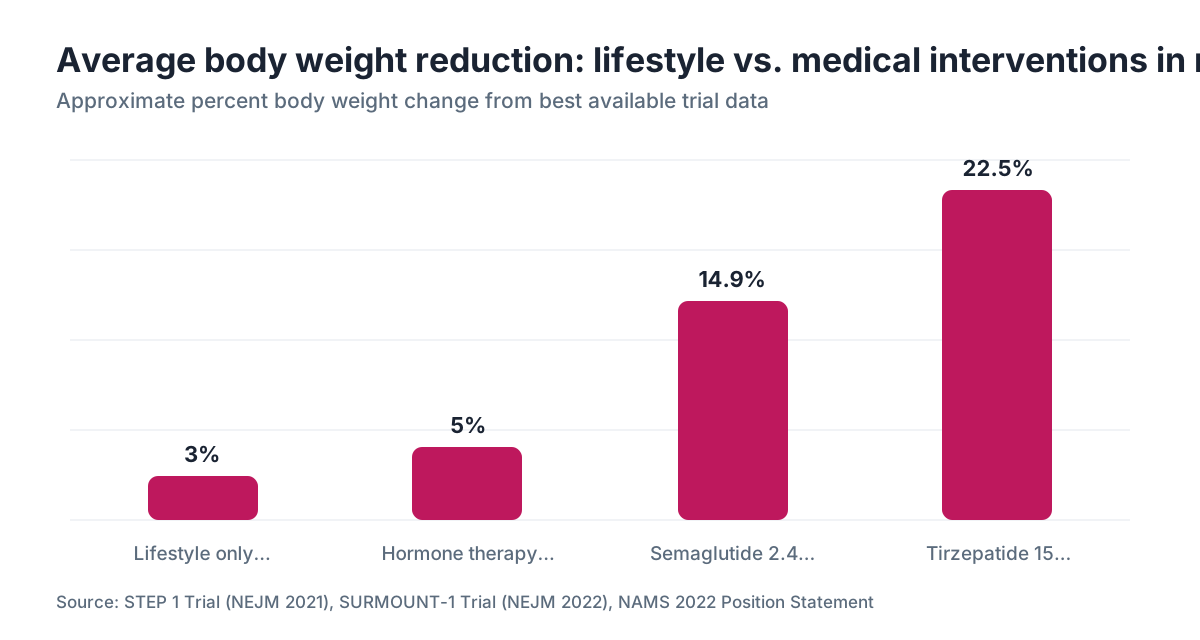
GLP-1 receptor agonists. This is where the picture has moved most in the last five years. Semaglutide and tirzepatide are FDA-approved for chronic weight management and have trial data in populations that include menopausal women. The STEP 1 trial of semaglutide showed average weight reduction of 14.9 percent of body weight over 68 weeks [10]. The SURMOUNT-1 trial of tirzepatide showed up to 22.5 percent in the highest dose group [11]. These are big numbers. Postmenopausal women in these trials saw meaningful benefit, and some data point to especially strong visceral fat loss with this drug class. To understand how they work and which might fit you, see our semaglutide for weight loss and semaglutide vs tirzepatide articles.
At WomenRx, GLP-1 treatment plans are built around the menopause context, meaning the hormonal and metabolic picture that makes standard weight loss advice fall flat for so many women at this stage.
Combining interventions beats any single one. HRT plus resistance training plus enough protein produces better body composition than any of those alone.
Does perimenopause cause weight gain before menopause is official?
Yes, and it catches a lot of women off guard.
Most of the fast, frustrating weight changes hit during perimenopause, not after menopause is confirmed. Perimenopause can start as early as the late 30s and usually begins in the mid-to-late 40s, often 4 to 10 years before the final period [6].
During perimenopause, estrogen does not glide down. It swings, sometimes spiking high before crashing. Those swings drive irregular cycles and unpredictable metabolic effects. Insulin sensitivity can vary week to week. Sleep disruption from falling progesterone often shows up years before any obvious hot flash. Plenty of women are gaining belly fat, losing muscle, and noticing energy shifts long before a doctor uses the word perimenopause.
If you are in your mid-to-late 40s and your body seems to have rewritten its rules with no warning, perimenopause is the likely answer. Learn more about the timeline in our perimenopause age and when does menopause start articles. Knowing your stage tells you which interventions matter right now.
Are there any medications specifically approved for menopause weight gain?
No FDA-approved drug carries 'menopausal weight gain' as its indication, but two categories have strong evidence behind them.
Hormone therapy is FDA-approved for menopausal symptoms (hot flashes, night sweats, vaginal symptoms, osteoporosis prevention) and delivers weight-composition benefits as a side effect. It is not a weight loss drug, but for women whose gain is hormonally driven, it treats the cause instead of the symptom.
GLP-1 receptor agonists, specifically semaglutide (Wegovy) and tirzepatide (Zepbound), are FDA-approved for chronic weight management in adults with BMI 30 or above, or 27 or above with a weight-related condition [12]. There is no menopause-specific approval, but these drugs work no matter what caused the gain, and the metabolic setting of menopause (insulin resistance, visceral fat) is exactly where they shine.
Some clinicians run semaglutide or tirzepatide alongside hormone therapy in perimenopausal and postmenopausal women with real weight gain. The pairing makes sense and shows up more and more in menopause-focused practices, though head-to-head trial data comparing combination therapy versus either alone in menopausal populations are thin.
Over-the-counter supplements sold for menopausal weight loss, black cohosh combinations, berberine, various thermogenics, do not match HRT or GLP-1s for meaningful loss. Berberine has some data for insulin sensitivity at 500 mg three times daily, but the effect is modest and not menopause-specific.
Does surgical menopause cause more weight gain than natural menopause?
Likely yes, because the hormonal drop is a cliff, not a slope.
Surgical menopause from removing both ovaries causes an immediate, total loss of estrogen, unlike the years-long fade of natural menopause. The body gets no time to adjust. Women who go through surgical menopause before age 45 without hormone therapy show steeper weight gain and worse metabolic profiles than women who reach natural menopause at a similar age [13].
This is one of the strongest arguments for hormone therapy after surgical menopause. The Endocrine Society and NAMS both note that women with premature menopause (before 40) or early menopause (before 45) from surgery carry higher long-term health risks if left untreated, including heart disease, bone loss, and metabolic trouble [5][13].
If you had a hysterectomy with your ovaries removed, the weight and metabolic changes may come faster and hit harder than most general menopause information describes. This group benefits from early, proactive hormone management.
What about bone health when addressing menopause weight gain?
Weight loss during menopause carries a bone density risk you should plan around.
Estrogen loss already speeds bone density decline. Stacking rapid weight loss on top can make it worse, especially if that loss comes from harsh calorie cutting rather than fat-focused approaches. This is not a reason to skip weight management. It is a reason to do it with care.
Weight-bearing exercise and enough protein protect bone during weight loss. Vitamin D (targeting 25-hydroxyvitamin D of 40 to 60 ng/mL) and calcium (1,000 to 1,200 mg per day from food and supplements combined) are the baseline bone recommendations from NAMS for menopausal women [5].
Women using GLP-1 medications for weight loss who are postmenopausal should talk to their clinician about bone density monitoring. The STEP trials noted small drops in bone mineral density with semaglutide, and pairing that with estrogen-deficiency bone loss deserves attention. A bone density test (DEXA scan) at baseline and periodically during treatment is reasonable.
What is the most honest summary of the evidence on managing menopause weight gain?
Here is what we actually know, without the tidy oversimplification.
Menopause causes weight gain and fat redistribution through specific, well-mapped hormonal mechanisms. The gain directly from hormonal change is modest, roughly 2 to 5 pounds, but total midlife gain runs much higher once you fold in aging, less activity, and diet drift.
Hormone therapy is underused for menopausal weight management. It does not cause weight gain (that fear rests on older, flawed data), and it reduces visceral fat and preserves muscle when started around the time of menopause.
Strength training is non-negotiable for body composition at this stage. The women who handle menopausal weight changes best almost always lift.
GLP-1 medications are a legitimate, evidence-backed option for women who have gained real weight in menopause and whose usual moves have stopped working. STEP 1 and SURMOUNT-1 showed 14.9 percent and up to 22.5 percent average body weight reduction [10][11]. Those are large enough to shift a metabolic trajectory.
The worst move is treating menopausal weight gain as fixed and hopeless. It is neither. But the fix means matching the right tool to the right mechanism, and most women need more than one.
For a personalized plan built around your hormonal status, weight history, and preferences, the menopause resource page is a good starting point, and the clinical team at WomenRx works specifically with women in this transition.
Frequently asked questions
How long does menopause weight gain last?
The accelerated, hormonally driven gain is most intense during the menopausal transition, which runs about 4 to 8 years starting in perimenopause. Once menopause is complete and estrogen settles at its new lower level, the rate of gain slows. But weight added during that window does not reverse on its own. Without active intervention, the higher baseline tends to stick around long after the transition ends.
Can menopause cause you to gain weight even if your diet and exercise haven't changed?
Yes. This is one of the most frustrating and real parts of the transition. Falling estrogen lowers insulin sensitivity, shifts fat toward the abdomen, and makes muscle harder to keep, all of which drop the calories you burn at rest. The same diet and activity that held your weight at 40 can produce slow gain at 48, purely from hormonal change.
Does weight gain from menopause ever go away on its own?
No, not reliably. The transition-driven acceleration eases after menopause is complete, but the weight itself does not self-resolve. Women who address it with intentional strategies, hormone therapy, diet change, strength training, or GLP-1 medications, see reversal. Women who wait it out usually find the weight stays and keeps building at the slower pace of normal aging.
Is perimenopause weight gain different from postmenopause weight gain?
Somewhat. Perimenopausal gain is often more erratic because estrogen is swinging wildly rather than falling steadily. Many women find this the hardest stretch, with symptoms and weight that vary week to week. Postmenopausal gain tends to be slower and more consistent. The interventions overlap, but the hormonal context differs and so does the ideal timing.
Does HRT make you gain weight in menopause?
No. The belief that hormone therapy causes weight gain rests largely on older studies using oral synthetic progestins, not modern body-identical regimens. Current evidence, including NAMS's 2022 position statement, is clear that HRT does not cause weight gain and may reduce abdominal fat. Some women retain a little water when they first start, which is temporary and not fat tissue.
Why do I gain weight in my belly during menopause but not elsewhere?
Estrogen controls where your body prefers to store fat. Before menopause, it directs fat toward the hips, thighs, and buttocks. When estrogen falls, that direction disappears and fat defaults to the abdomen and internal organs, the visceral pattern. This can happen even without total weight gain, which is why waist circumference tells you more than scale weight for menopausal women.
Do GLP-1 medications like semaglutide or tirzepatide work for menopause weight gain?
Yes. GLP-1 receptor agonists act on the brain's appetite and satiety signaling, which estrogen loss impairs. They cut visceral fat specifically, the main problem in menopausal fat redistribution. The STEP 1 trial showed 14.9 percent average body weight loss with semaglutide at 68 weeks, and SURMOUNT-1 showed up to 22.5 percent with tirzepatide. Both are FDA-approved for chronic weight management in eligible adults.
How much weight does the average woman gain during menopause?
The SWAN study, one of the most rigorous longitudinal studies on this question, found average gain of about 5 pounds during the transition. About one in three women gains more than 10 pounds. Waist increases of 2 to 3 inches are common even without large scale changes, because of the shift toward abdominal fat storage driven by falling estrogen.
What is the fastest way to lose menopause weight gain?
There is no single fastest way, but the combination with the most evidence is progressive resistance training two to three times a week, protein of 1.2 to 1.6 grams per kilogram of body weight per day, estrogen therapy if you are a candidate, and a GLP-1 medication if the weight is significant. Each element hits a different mechanism. Chasing only one rarely produces durable results in this group.
Does losing weight during menopause hurt your bones?
It can, if the loss is rapid and comes from calorie restriction alone. Estrogen loss already speeds bone density decline, and harsh calorie cutting on top makes it worse. The protective approach pairs weight-bearing and resistance exercise with enough protein and calcium during any weight loss program. Women on GLP-1 medications postmenopausally should discuss baseline bone density monitoring with their clinician.
Does surgical menopause cause worse weight gain than natural menopause?
Yes, generally. Surgical menopause from removing the ovaries causes an immediate, total estrogen drop rather than a gradual years-long fade. Women who have surgical menopause before age 45 without hormone therapy show steeper weight gain and worse metabolic outcomes than those who reach natural menopause. Both NAMS and the Endocrine Society recommend hormone therapy for women with premature or early surgical menopause unless there is a specific contraindication.
Can intermittent fasting help with menopause weight gain?
The evidence is mixed and genuinely unsettled. Some small trials show time-restricted eating cuts calorie intake and improves insulin sensitivity in menopausal women. Others find it does not beat standard calorie reduction and may increase muscle loss if protein intake slips. If you try it, high-protein meals during your eating window plus resistance training largely handle the muscle concern. Nobody has great long-term data specifically in postmenopausal women.
Is menopause weight gain linked to thyroid problems?
Not directly, but the timing overlap is real and worth checking. Hypothyroidism becomes more common in women in their 40s and 50s and causes weight gain, fatigue, and metabolic slowing that closely mimics menopause. A TSH test is cheap and quickly rules it in or out. If you are gaining weight fast in perimenopause, running a thyroid panel alongside hormonal evaluation is sensible standard care.
Does menopause cause weight gain in thin women too?
Yes. Lean women still get the shift toward abdominal fat and can develop metabolically significant visceral fat even if total weight rises only slightly. Some thin menopausal women carry surprisingly high visceral fat ratios, a pattern sometimes called 'metabolically obese normal weight.' Body composition testing, rather than BMI or scale weight alone, tells you far more in this group.
Sources
- SWAN (Study of Women's Health Across the Nation), NIH-funded longitudinal cohort
- Journal of Cachexia, Sarcopenia and Muscle: Cruz-Jentoft et al. sarcopenia consensus
- Endocrine Society: Estrogen and Metabolic Function
- NIH National Heart, Lung, and Blood Institute: Sleep deprivation and metabolic effects
- North American Menopause Society (NAMS), 2022 Hormone Therapy Position Statement
- NIH National Institute on Aging: Menopause Overview
- American Heart Association: Waist Circumference and Cardiovascular Risk
- Women's Health Initiative (WHI), NHLBI
- American Journal of Clinical Nutrition: Mediterranean diet and cardiometabolic risk in postmenopausal women
- STEP 1 Trial: Wilding et al., NEJM 2021, Semaglutide 2.4 mg for weight management
- SURMOUNT-1 Trial: Jastreboff et al., NEJM 2022, Tirzepatide for obesity
- U.S. Food and Drug Administration (FDA)
- Endocrine Society Clinical Practice Guideline: Menopause and premature ovarian insufficiency