Menopause vitamins: what actually works and what to skip
TL;DR: The three vitamins with the strongest evidence for menopause are vitamin D (bone density, mood), calcium (fracture prevention when paired with D), and magnesium (sleep, anxiety, hot flash intensity). B vitamins and vitamin E have supporting roles. No supplement replaces hormone therapy for severe symptoms. But the right stack genuinely matters for long-term health.
What are the top 3 vitamins for menopause?
If you're only going to prioritize three, make them vitamin D, calcium, and magnesium. That ranking isn't random. It tracks where the evidence is strongest and where deficiency among perimenopausal and postmenopausal women is most common.
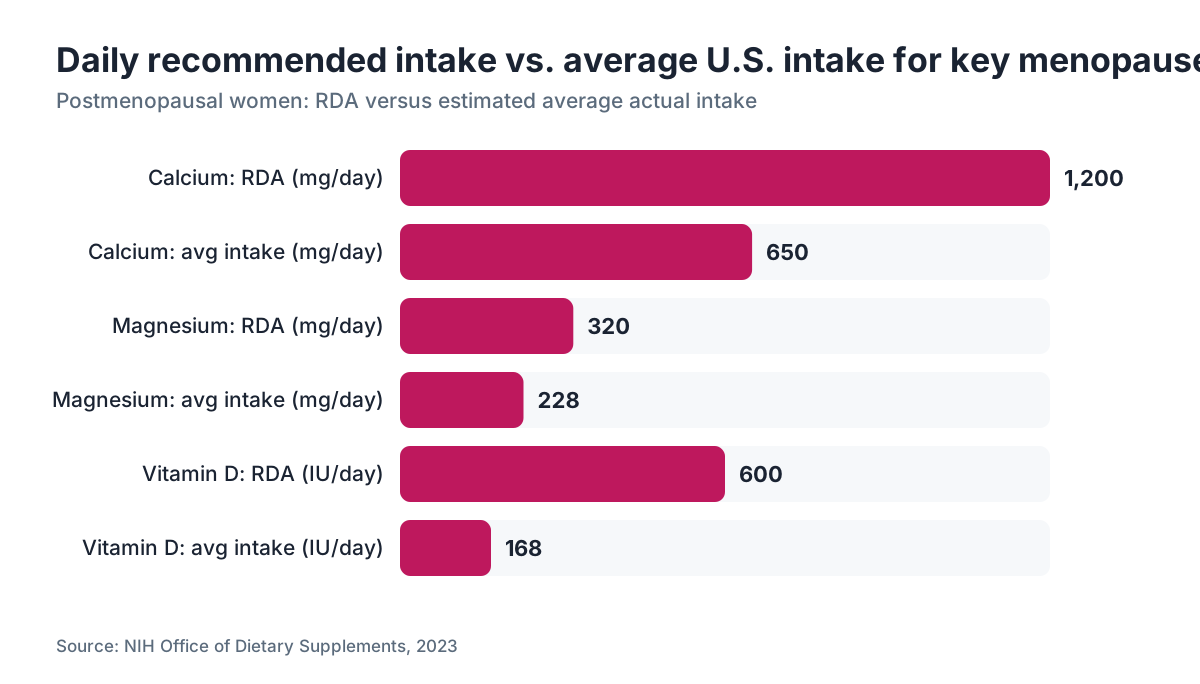
Vitamin D sits at the top of every serious clinician's list because estrogen loss speeds up bone resorption, and vitamin D controls how much calcium your gut actually absorbs. The Women's Health Initiative found that women taking 400 IU of vitamin D plus 1,000 mg of calcium daily had a 12% lower rate of hip fracture compared to placebo, and the researchers noted the effect was larger in women who were consistently deficient at baseline [1]. The current recommended dietary allowance (RDA) for women 51-70 is 600 IU per day; women over 70 get bumped to 800 IU. Most menopause specialists now say 1,000-2,000 IU is more realistic for women who spend little time in direct sun, though the Endocrine Society has set the tolerable upper intake limit at 4,000 IU daily for most adults [2].
Calcium comes second because fracture is one of the most serious health consequences of menopause, and postmenopausal women in the U.S. typically get only 600-700 mg of calcium per day from food. That's well below the 1,200 mg recommended for women 51 and older [3]. Here's the catch: calcium carbonate (the cheapest, most common form) needs stomach acid to absorb, so take it with food. Calcium citrate absorbs without food and is the better pick if you're on proton pump inhibitors.
Magnesium rounds out the top three partly because it's genuinely underappreciated. About 48% of Americans don't meet the RDA for magnesium, and that figure is likely higher in perimenopausal women under chronic stress [4]. Magnesium regulates GABA receptors (relevant to anxiety and sleep), helps activate vitamin D in your body, and a small but well-designed randomized trial in the Journal of the American Board of Family Medicine found that magnesium glycinate cut hot flash frequency by roughly 41% over four weeks in breast cancer survivors avoiding hormone therapy [5]. The evidence base isn't as large as it is for bone outcomes. But the safety profile is excellent, and the sleep improvement alone makes it worth trying.
Why do vitamin needs change so much during menopause?
Estrogen does a surprising amount of metabolic work that has nothing to do with reproduction. It helps maintain intestinal calcium absorption, supports collagen synthesis (which keeps bones and skin intact), influences serotonin metabolism, and protects against oxidative stress in the cardiovascular system. When estrogen drops, all of those downstream functions get disrupted at once.
Bone loss is the most numerically alarming. Women lose roughly 2% of bone mineral density per year in the first five years after the final menstrual period, compared to the 0.5% per year that happens with normal aging [6]. That gap is why NAMS and bone health organizations flag the perimenopausal transition as the window to get vitamin D and calcium intake right, before bone loss becomes hard to reverse.
Sleep and mood changes compound the deficiency picture. Disrupted sleep raises cortisol, which depletes magnesium. Low mood from estrogen withdrawal can overlap with B12 and folate deficiencies, which affect the same methylation pathways involved in making neurotransmitters. The biology is layered. That's exactly why no single supplement covers all the ground.
You can read more about what's happening hormonally during this transition in our overview of menopause and, if you're still in the irregular-period phase, perimenopause age.
Vitamin D for menopause: how much do you actually need?
The short answer is more than most women currently get. The NIH Office of Dietary Supplements sets the RDA for women 51-70 at 600 IU and for women 70+ at 800 IU, but observational data consistently show that 40-60% of American women in this age group have serum 25-hydroxyvitamin D levels below 20 ng/mL, the threshold generally accepted as deficient [13].
The Endocrine Society's clinical practice guideline states that adults who are obese, on certain medications (rifampin, anticonvulsants, glucocorticoids), or who have fat malabsorption may need 2-3 times the standard dose to maintain adequate levels [2]. That covers a lot of midlife women. My honest take: get a 25(OH)D blood level before you start supplementing aggressively, because the rare risk of vitamin D toxicity is real above sustained doses of 10,000 IU/day, and the test costs about $30-40 out of pocket if your insurer won't cover it.
For most women, 1,000-2,000 IU of vitamin D3 (cholecalciferol, more bioavailable than D2) taken with a fat-containing meal is the practical sweet spot. Recheck your level after three months. Aim for a 25(OH)D of 40-60 ng/mL. Below 20 ng/mL, you probably need a loading dose under medical supervision.
Vitamin D's job isn't limited to bone. A meta-analysis of 18 randomized controlled trials in the British Medical Journal found that vitamin D supplementation cut the risk of acute respiratory tract infection by roughly 12%, with a bigger effect in people who were deficient at baseline [7]. That immune benefit matters for postmenopausal women whose immune senescence is already accelerating.
Do calcium supplements actually help, or do they cause heart problems?
This is the controversy that deserves a careful answer. A 2010 meta-analysis in the British Medical Journal raised alarm by suggesting calcium supplementation (without vitamin D) was linked to a 31% increased relative risk of myocardial infarction [8]. That finding got wide coverage and scared a lot of women off calcium supplements entirely. Context changes the picture, though.
The elevated risk showed up mainly in studies of calcium taken alone, without vitamin D, and in women who already had high dietary calcium intake. The Women's Health Initiative, which used calcium plus vitamin D, found no significant increase in cardiovascular events in the main analysis [1]. NAMS and the American College of Obstetricians and Gynecologists still hold that calcium supplementation, combined with vitamin D and at appropriate doses, is fine for postmenopausal bone health.
The practical guidance: get as much calcium from food as you can first. Dairy, fortified plant milks, sardines with bones, and cooked greens like collards are all good sources. One cup of plain yogurt provides about 450 mg. If your dietary intake stays below 800 mg/day, a supplement covering the gap (usually 500-600 mg per dose, never more than 600 mg at once because absorption maxes out there) is reasonable. Take calcium with vitamin D, not in isolation. That's the safer approach the evidence points to.
Does magnesium help with hot flashes, sleep, and anxiety in menopause?
Yes, and magnesium is the supplement I'd tell a friend about before almost anything else on the market, because the evidence is solid, the side effect profile is minimal, and most women are already low.
The RDA for magnesium for adult women is 320 mg/day. The average American woman gets only about 228 mg daily from food [4]. Add the cortisol elevation from poor sleep (which increases urinary magnesium excretion), the fact that proton pump inhibitors reduce magnesium absorption, and the common menopausal pattern of reduced appetite, and deficiency becomes routine.
For sleep, a double-blind placebo-controlled trial in the Journal of Research in Medical Sciences found that 500 mg of magnesium daily for eight weeks significantly improved sleep time, sleep efficiency, and early morning awakening scores in older adults with insomnia, alongside lower cortisol and higher melatonin levels [9]. That's the kind of clean mechanistic story that makes an intervention make sense.
For hot flashes, the evidence is thinner but promising. The trial mentioned earlier showed a 41% drop in hot flash frequency with magnesium glycinate. The mechanism probably involves GABA-ergic calming and reduced autonomic nervous system excitability, the same reason magnesium gets used in obstetric medicine for seizure prevention.
Which form matters. Magnesium glycinate is the best-absorbed form for sleep and anxiety because glycine has its own calming properties. Magnesium oxide (the cheapest, most widely sold form) is poorly absorbed and mostly works as a laxative at higher doses. Magnesium citrate sits in between. Start with 200-300 mg of glycinate at bedtime; work up to 400 mg if tolerated.
Do B vitamins help with menopause mood, energy, and brain fog?
Vitamins B6, B9 (folate), and B12 earn attention in menopause, mostly for mood, cognitive clarity, and cardiovascular risk. Estrogen appears to influence the enzyme activity that converts dietary folate to its active form, 5-methyltetrahydrofolate. After menopause, that process becomes less efficient in some women.
B12 deficiency is also common in midlife women for a separate reason: gastric acid production declines with age, and B12 absorption from food needs stomach acid to release it from protein. Anyone over 50 absorbing B12 mainly from supplements or fortified foods rather than meat protein takes it in more efficiently, through passive diffusion. The NIH recommends that adults over 50 meet their B12 needs primarily through supplements or fortified foods for exactly this reason [3].
Elevated homocysteine, which rises when B6, B9, and B12 run low, is an independent risk factor for cardiovascular disease and cognitive decline. Postmenopausal women lose estrogen's cardioprotective effects and face rising cardiovascular risk, which makes adequate B vitamin status relevant well beyond mood.
For brain fog specifically, no randomized trial shows B vitamins reverse menopausal cognitive symptoms. That's the honest caveat. Correcting a documented B12 or folate deficiency removes a confounding factor, though, which is worth doing regardless. A complete metabolic panel plus a homocysteine and B12 level is a reasonable baseline test.
What about vitamin E, omega-3s, and other supplements marketed for menopause?
The menopause supplement market is enormous and largely unregulated. Here's a quick tour of what has actual evidence behind it and what's mostly marketing.
Vitamin E showed up in early studies as a possible hot flash remedy. A randomized trial in Gynecologic and Obstetric Investigation found that 400 IU of vitamin E daily reduced hot flash frequency modestly compared to placebo in breast cancer survivors. The effect size was small. The evidence isn't strong enough to recommend it as a primary intervention, but it's benign at 400 IU and may help a little as an adjunct. The tolerable upper limit is 1,000 mg (1,500 IU) of synthetic alpha-tocopherol per day [3].
Omega-3 fatty acids (EPA and DHA) don't directly reduce hot flashes, but the evidence for cardiovascular risk reduction, which matters a lot postmenopausally, is meaningful. The American Heart Association recommends two servings of fatty fish per week, roughly 500 mg EPA+DHA daily [10]. If you're not eating salmon or sardines twice weekly, a fish oil supplement with at least 1 gram combined EPA+DHA is worth taking.
Black cohosh is the most studied herbal option for hot flashes, and the evidence is mixed. A Cochrane review found no consistent benefit over placebo for vasomotor symptoms, and there have been rare but documented cases of liver toxicity [11]. I wouldn't prioritize it, especially given that liver risk, however small.
DHEA is a hormone precursor, not a vitamin, and it's sold over the counter in the U.S. That one deserves a separate conversation with your doctor. Melatonin has solid data for sleep onset but doesn't touch the root causes of menopause insomnia. Collagen peptides are biologically reasonable for skin and joint symptoms but lack large-scale RCT data in menopausal women specifically.
What does the research say about vitamins versus hormone therapy?
This is the question that matters most, and the honest answer is that vitamins and supplements address nutrient gaps and support general health, but they don't replicate what hormone therapy does for vasomotor symptoms, genitourinary changes, or bone protection.
Hormone therapy (estrogen with or without progesterone) is still the most effective treatment for moderate-to-severe hot flashes. The North American Menopause Society's 2022 position statement states plainly that "for women aged younger than 60 years or within 10 years of menopause onset, the benefits of hormone therapy outweigh the risks" for treating vasomotor symptoms [12]. No vitamin achieves that effect size.
For bone protection specifically, NAMS notes that vitamin D and calcium are important foundations, but postmenopausal women with significant bone loss may need prescription options (bisphosphonates, denosumab, or hormone therapy) rather than supplements alone. Getting a bone density test after menopause gives you the data to make that call.
That said, vitamins matter alongside hormone therapy, not instead of it. Even women on an estrogen patch need adequate vitamin D and calcium for full bone benefit, because estrogen and vitamin D work through different mechanisms on bone remodeling. Supplementing wisely makes every other intervention work better.
If you're weighing whether hormone therapy might fit your situation, WomenRx offers telehealth consultations with clinicians who specialize in menopause hormone management, including options like hormone replacement therapy and progesterone.
How do you build a menopause vitamin stack without wasting money?
The supplement industry pulls in billions from products with minimal evidence. Here's a framework for spending selectively.
Step one: test before you treat. At minimum, get a 25(OH)D level and a B12 level. If your doctor is willing, add a magnesium RBC (red blood cell) level, which is more accurate than serum magnesium. Treating a documented deficiency always beats guessing.
Step two: food first, genuinely. Fatty fish, leafy greens, dairy or fortified alternatives, nuts and seeds (for magnesium), and eggs (for B12 and D) cover most of what you need. Supplements fill gaps. They don't rescue a poor diet.
Step three: prioritize by risk. Vitamin D plus calcium is non-negotiable for bone protection if your dietary intake is low. Magnesium glycinate at bedtime is high value, low cost, and almost universally tolerated. B12 sublingual or methylcobalamin (the active form) is worth adding if you're 50+ or have any digestive issues.
Step four: skip the proprietary menopause blends. Most contain low doses of everything, carry a premium price, and swap marketing language for evidence. A few individual, well-dosed supplements from a USP-verified or NSF-certified maker will cost less and deliver more.
Step five: recheck your labs after three months on a new regimen. For vitamin D especially, you need to know whether you've actually hit adequate serum levels, more than whether you're swallowing a pill.
For context on the hormonal shifts driving these needs, the article on when does menopause start covers the timeline, and menopause age covers how individual variation affects when you need to start paying attention.
Is the timing of vitamins different during perimenopause?
Yes, and most women miss this window. Perimenopause can start as early as the late 30s and typically runs 4-10 years before the final menstrual period, and that's when estrogen starts fluctuating and bone loss begins. By the time menopause is confirmed (12 consecutive months without a period), some women have already lost meaningful bone density that would have been easier to protect early.
The same vitamin D, calcium, and magnesium recommendations apply during perimenopause. The difference: in perimenopause you still have some estrogen, so the urgency around bone supplementation is slightly lower, but the window to build good habits is wide open. Starting a vitamin D supplement, confirming your calcium intake is adequate, and fixing any magnesium deficiency during perimenopause gives you a head start.
Iron is another perimenopausal consideration that postmenopausal women often forget. Heavy or irregular periods during perimenopause can cause iron deficiency, which drives fatigue and brain fog. Iron supplementation is only appropriate if you have documented low ferritin; supplementing without deficiency is harmful. Get tested.
Vitamin K2 is worth a mention during this phase too. It activates osteocalcin, a protein that helps direct calcium into bone rather than soft tissue. The evidence for K2 (specifically the MK-7 form) on bone density is promising in smaller trials, and several European countries include K2 in their osteoporosis prevention guidelines. In the U.S. it's not yet standard, but 90-180 mcg/day is safe and potentially synergistic with vitamin D.
What won't supplement labels tell you about quality and dosing?
The U.S. FDA does not evaluate dietary supplements for safety or efficacy before they hit the market. Manufacturers themselves are responsible for making sure their products are what they claim. Independent testing consistently finds that 20-30% of supplements don't contain what the label says, or contain contaminants.
Third-party certification fixes this problem. USP (U.S. Pharmacopeia), NSF International, and ConsumerLab.com all independently verify that a product contains the stated ingredients at the stated doses without harmful contaminants. When you buy vitamin D, magnesium, calcium, or B12, look for one of these seals on the label. The cost difference is usually small.
Dosing timing matters more than most people realize. Calcium carbonate taken at the same time as magnesium competes for the same transporter. Fat-soluble vitamins (A, D, E, K) need dietary fat to absorb. Magnesium is best at bedtime because it promotes relaxation. Iron should be taken on an empty stomach (or with vitamin C) and never with calcium. These are real pharmacological interactions, not marketing details.
Certain medications interact with supplements in ways that matter clinically. Calcium and vitamin D can affect how levothyroxine absorbs (take them at least four hours apart). Magnesium can reduce absorption of some antibiotics and bisphosphonates. If you take any prescription medication, a five-minute check with your pharmacist about interaction timing is worth doing before you start a new supplement.
When are vitamins not enough, and what should you discuss with your doctor?
Supplements are foundation work. They cover nutritional bases and cut long-term risk. They are not the right tool for severe vasomotor symptoms, significant bone loss, or genitourinary syndrome of menopause.
If you're having more than seven moderate-to-severe hot flashes a day, or night sweats consistently wreck your sleep, or vaginal dryness is affecting your daily life, the conversation with your clinician needs to be about hormone therapy, not whether to add another vitamin. Vitamins won't close that gap.
If a bone density scan shows osteopenia (T-score between -1.0 and -2.5) or osteoporosis (T-score below -2.5), you need a discussion about prescription treatment options on top of supplements. The FRAX calculator (available at sheffield.ac.uk/FRAX) estimates your 10-year fracture probability and helps guide that decision.
For women who can't take or choose not to take systemic hormone therapy, non-hormonal prescription options exist, including low-dose paroxetine (FDA-approved for vasomotor symptoms under the brand name Brisdelle) and fezolinetant (approved in 2023). Those sit outside the scope of a vitamin article, but they matter as context. Supplements complement these options; they don't replace them.
WomenRx clinicians can help you figure out where you land on this spectrum and whether hormone therapy, prescription non-hormonal treatments, a structured supplement approach, or some combination makes the most sense for your situation.
Frequently asked questions
What are the top 3 vitamins for menopause?
Vitamin D, calcium, and magnesium have the strongest evidence for menopause. Vitamin D supports bone density and immune function. Calcium is critical for fracture prevention, especially combined with D. Magnesium improves sleep, reduces anxiety, and may lower hot flash frequency. Most menopausal women are low in all three. Getting your blood levels tested before supplementing tells you exactly how much you need.
Can vitamins reduce hot flashes?
Modestly. Magnesium glycinate showed roughly 41% reduction in hot flash frequency in one randomized trial. Vitamin E (400 IU) showed a small benefit in a separate study. Neither approaches the 70-80% reduction typical with hormone therapy. If hot flashes are severe and disrupting sleep or quality of life, supplements alone are unlikely to be enough. A conversation about hormone therapy or non-hormonal prescription options is warranted.
Is vitamin D or calcium more important for menopause bone health?
They're interdependent, so the question is slightly false. Without adequate vitamin D, your gut absorbs only about 10-15% of dietary calcium. With sufficient vitamin D, absorption rises to 30-40%. Taking calcium without vitamin D is largely ineffective. Taking vitamin D without enough dietary or supplemental calcium gives your bones nothing to build with. You need both, at appropriate doses, at the same time.
How much magnesium should I take for menopause symptoms?
The RDA for women is 320 mg per day. Most women in the U.S. consume only about 228 mg from food. Starting with 200-300 mg of magnesium glycinate at bedtime is a reasonable approach. You can increase to 400 mg if tolerated. Avoid magnesium oxide for sleep or anxiety; it's poorly absorbed. Loose stools are a sign you've exceeded your bowel tolerance; reduce the dose.
Do menopause multivitamin blends work?
Most fall short. They typically contain doses too low to address real deficiencies, blend forms with poor bioavailability (magnesium oxide, vitamin D2 instead of D3), and charge a premium for the packaging. You'll almost always do better buying individual supplements at therapeutic doses from a USP- or NSF-certified manufacturer. The exception would be a B-complex, where a combination product makes practical sense.
Are there vitamins specifically for menopause weight gain?
No vitamin directly prevents or reverses menopause-associated weight gain, which is driven primarily by declining estrogen, muscle loss, and metabolic rate changes. Vitamin D deficiency is associated with increased adiposity, so correcting deficiency may help modestly. Magnesium supports insulin sensitivity. But for significant weight management concerns, addressing the hormonal root cause (with hormone therapy, if appropriate) or a GLP-1 medication is more effective than any supplement.
Does vitamin B12 help with menopause brain fog?
If you're B12 deficient, correcting it will likely improve cognitive clarity. B12 deficiency itself causes fatigue, memory issues, and mood changes that overlap significantly with menopause brain fog. Women over 50 often absorb B12 less efficiently from food because of declining stomach acid. A sublingual methylcobalamin supplement or a B12 injection from your doctor can address this. If you're not deficient, extra B12 won't provide an additional cognitive boost.
Is it safe to take calcium supplements after menopause?
Yes, with caveats. Take calcium with vitamin D, not alone. Keep individual doses at or below 600 mg because absorption doesn't increase beyond that. Prefer calcium citrate if you take acid-reducing medications. The elevated cardiovascular risk seen in older studies was primarily with calcium supplementation taken without vitamin D. Current NAMS and American Heart Association guidance supports appropriate calcium supplementation for bone health in postmenopausal women.
What vitamins help with menopause sleep problems?
Magnesium glycinate (200-400 mg at bedtime) has the best evidence for sleep improvement in this context. A randomized trial found it significantly improved sleep efficiency and duration while reducing cortisol. Vitamin D deficiency is also associated with poor sleep quality; correcting it often helps. Melatonin can reduce time to fall asleep but doesn't address the night-sweat disruption that is the most common menopausal sleep disruptor.
Can vitamin D help with menopause mood changes?
Possibly. Vitamin D receptors are present throughout the brain, including in areas regulating mood and serotonin production. Observational studies consistently link low 25(OH)D with higher rates of depression, including in postmenopausal women. Randomized trials are more mixed, but correcting a documented deficiency is reasonable and low-risk. Severe mood changes or depression during menopause warrant a full evaluation; vitamin D alone is not a treatment for clinical depression.
What form of vitamin D is best for menopause?
Vitamin D3 (cholecalciferol) is more effective at raising serum 25(OH)D levels than D2 (ergocalciferol). Most studies showing bone and immune benefits used D3. Take it with a meal that contains some fat, since it's fat-soluble. Soft-gel capsules typically absorb better than hard tablets. Test your 25(OH)D level before and after starting supplementation to confirm you've reached an adequate serum level (generally 40-60 ng/mL).
Should I take vitamin K2 with vitamin D during menopause?
This is reasonable, though not yet standard in U.S. guidelines. Vitamin K2, specifically the MK-7 form at 90-180 mcg/day, activates osteocalcin, a protein that helps direct calcium into bone rather than arteries. Several European osteoporosis guidelines include it. The biological rationale is sound, the safety profile is excellent, and it's increasingly included in menopause bone-health protocols. It's not a replacement for D and calcium but may enhance their combined effect.
How do I know if my menopause symptoms need vitamins or hormone therapy?
A useful rule of thumb: vitamins address nutrient deficiencies and reduce long-term risk. Hormone therapy addresses the symptoms caused by estrogen loss itself, including hot flashes, night sweats, genitourinary changes, and sleep disruption. If your symptoms are mild and primarily fatigue or mood-related, addressing vitamin deficiencies is a reasonable first step. If symptoms are moderate to severe, vitamins alone are unlikely to be sufficient and hormone therapy deserves serious consideration.
Are there any vitamins I should avoid during menopause?
Avoid high-dose vitamin A (preformed retinol above 10,000 IU/day); it competes with vitamin D and can paradoxically increase fracture risk at high doses. Iron supplements should be avoided unless you have documented deficiency; postmenopausal women no longer lose iron through menstruation and excess iron is harmful. Avoid soy isoflavone supplements in mega-doses if you have a history of hormone-sensitive breast cancer; discuss with your oncologist.
Sources
- NIH National Heart, Lung, and Blood Institute, Women's Health Initiative study overview
- Endocrine Society, Vitamin D Deficiency Clinical Practice Guideline
- NIH Office of Dietary Supplements, Calcium Fact Sheet for Health Professionals
- NIH Office of Dietary Supplements, Magnesium Fact Sheet for Health Professionals
- Park H et al., Journal of the American Board of Family Medicine, 2011
- NIH Office of Dietary Supplements, Calcium Fact Sheet for Health Professionals
- Martineau AR et al., BMJ 2017, Vitamin D supplementation and respiratory tract infections
- Bolland MJ et al., BMJ 2010, Calcium supplements and cardiovascular events
- Abbasi B et al., Journal of Research in Medical Sciences, 2012
- American Heart Association, Fish and Omega-3 Fatty Acids
- Cochrane Database of Systematic Reviews, Black cohosh for menopausal symptoms
- North American Menopause Society, 2022 Hormone Therapy Position Statement
- NIH Office of Dietary Supplements, Vitamin D Fact Sheet for Health Professionals