Menopause treatment: every option explained, honestly
TL;DR: Menopause treatment ranges from hormone therapy (HRT), the most effective option for hot flashes and bone loss, to non-hormonal prescriptions like fezolinetant and SSRIs, to lifestyle changes. The right choice depends on your symptom burden, cardiovascular and breast-cancer risk, and whether you're in perimenopause or post-menopause. Most women with moderate-to-severe symptoms qualify for at least one effective treatment.
What are the main categories of menopause treatment?
Menopause treatment splits into three buckets: hormonal therapies, non-hormonal prescription drugs, and lifestyle or behavioral changes. Each has real evidence behind it. Each has real limits.
Hormone therapy (estrogen alone, or estrogen combined with a progestogen) is the most effective treatment for hot flashes and night sweats, and the only treatment with solid evidence for slowing menopause-related bone loss [1]. The non-hormonal menu got meaningfully better in 2023, when the FDA approved fezolinetant (Veozah), the first neurokinin 3 receptor antagonist cleared specifically for moderate-to-severe hot flashes [2]. SSRIs, SNRIs, gabapentin, and clonidine have older but real evidence for vasomotor symptoms, though none carry an FDA approval for that use.
Lifestyle changes (aerobic exercise, weight loss, cognitive behavioral therapy, cooling strategies) help at the margins. They won't erase severe hot flashes. They're not nothing either.
Here's the honest headline: there is no single best treatment. The North American Menopause Society (NAMS) 2023 position statement puts it plainly: "the risks of hormone therapy differ depending on type, dose, duration of use, route of administration, timing of initiation, and whether a progestogen is used" [1]. Your decision is genuinely individual, not something you run through a formula.
If you're still in the transition, our overview of perimenopause age helps you figure out where you are on the timeline before you map a plan.
What does hormone replacement therapy actually do for menopause symptoms?
HRT replaces the estrogen (and, in women with a uterus, progesterone) that the ovaries stop making. Simple idea. Wide effects.
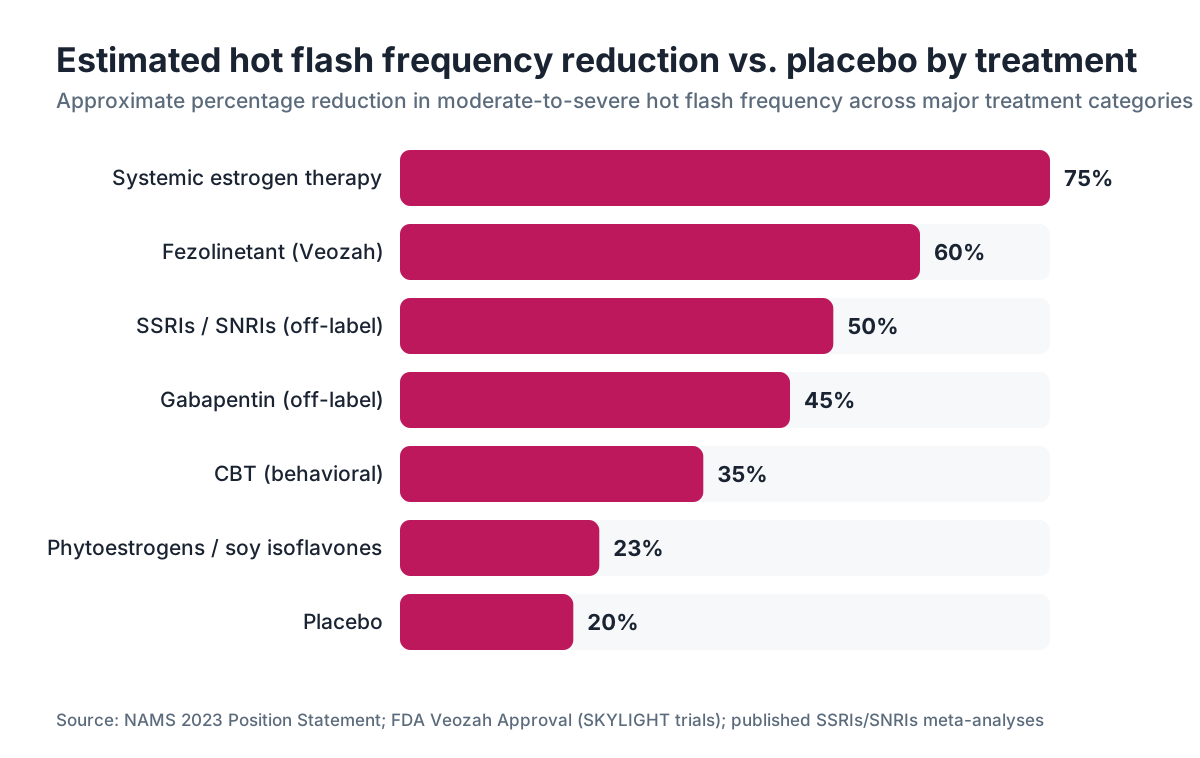
For hot flashes and night sweats, estrogen-containing HRT cuts frequency and severity by roughly 75% versus placebo in most randomized trials [1]. Nothing else matches that number. Vaginal dryness, painful sex, and urinary urgency (grouped as genitourinary syndrome of menopause, or GSM) respond well to both systemic estrogen and low-dose local vaginal estrogen. Local vaginal estrogen has essentially no systemic absorption at standard doses, so many women with breast-cancer concerns can still use it after talking with their oncologist [3].
Bone protection is significant. Estrogen preserves bone mineral density and cuts fracture risk while you're taking it, though the benefit fades after you stop. The Women's Health Initiative (WHI) found combined estrogen-progestin reduced hip fracture risk by 34% versus placebo over about five years [4]. That's a real number on a real outcome.
Mood, sleep, and joint aches improve for many women too, though the evidence there is softer than it is for hot flashes and bone.
For a full breakdown of delivery forms (pills, patches, gels, rings, pellets), read our hormone replacement therapy explainer. If you want the detail on skin-delivery, our estrogen patch page covers absorption, dosing, and cost.
What are the real risks of HRT, and who should avoid it?
This is where honesty matters most. The WHI scared a generation of women and clinicians off HRT for reasons that, on re-analysis, turned out to be more nuanced than the headlines.
The WHI's combined arm (conjugated equine estrogen plus medroxyprogesterone acetate) enrolled women averaging 63 years old and showed a small absolute increase in breast cancer, stroke, and blood clots [4]. The estrogen-alone arm (women who'd had a hysterectomy) showed no increase in breast cancer and a possible drop. Timing matters. Starting HRT within ten years of menopause or before age 60 carries a more favorable risk-benefit profile than starting at 70. NAMS calls this the "timing hypothesis" or "window of opportunity" [1].
Absolute contraindications to systemic estrogen: active or recent breast cancer, active coronary artery disease, a prior stroke or TIA, unexplained vaginal bleeding, active liver disease, and known thrombophilia (for example, Factor V Leiden with a prior clot) [1][3].
For women with a uterus, estrogen without a progestogen raises endometrial cancer risk substantially. Adding a progestogen removes that risk. The type of progestogen matters. Micronized progesterone (bioidentical) appears to carry lower breast-cancer and clot risk than synthetic progestins like medroxyprogesterone, though head-to-head RCT data are thin [5]. Our progesterone explainer walks through the options.
Transdermal delivery (patch, gel, spray) skips first-pass liver metabolism and carries a lower clot risk than oral estrogen. For most women, transdermal is the route to reach for today.
The bottom line: most healthy women under 60 with significant symptoms are candidates for HRT. A woman at high familial breast-cancer risk, or with a prior clot, needs a careful individual conversation with a clinician who works in this area.
What non-hormonal prescription options work for hot flashes?
The non-hormonal options got real teeth in 2023.
Fezolinetant (Veozah) is an oral neurokinin 3 (NK3) receptor antagonist. Hot flashes are driven partly by KNDy neurons in the hypothalamus that go overactive when estrogen falls; fezolinetant blocks the NK3 receptor those neurons use and quiets the thermoregulatory circuit. The SKYLIGHT 1 and 2 trials showed it cut moderate-to-severe hot flash frequency by about 60% at 12 weeks, versus roughly 45% for placebo [2]. Not as strong as estrogen, but a real option for women who can't or won't take hormones. The FDA approved it in May 2023 for moderate-to-severe vasomotor symptoms. Liver enzyme monitoring is required because elevations turned up in trials.
SSRIs and SNRIs have the most evidence among the older drugs. Paroxetine 7.5 mg (brand Brisdelle) is the only SSRI with an actual FDA approval for hot flashes [6]. Venlafaxine, escitalopram, and citalopram have good off-label evidence. Reductions in flash frequency run 40 to 60% versus placebo. One caveat carries weight: paroxetine strongly inhibits CYP2D6 and should not be used in women on tamoxifen, because it blocks tamoxifen's conversion to its active form.
Gabapentin at 300 mg three times daily cuts flash frequency and improves sleep in several small trials. It's sedating, which helps at night but complicates daytime dosing. Oxybutynin, mainly a bladder drug, shows a modest hot-flash benefit in limited data.
Clonidine works, but the side effects (dizziness, dry mouth, rebound hypertension) make it a last resort for most clinicians.
For GSM specifically, ospemifene (Osphena) is an oral selective estrogen receptor modulator with FDA approval for painful sex. Vaginal DHEA (prasterone, brand Intrarosa) converts locally to estrogen and androgen and is also FDA-approved for painful sex due to GSM [3].
What do pre-menopause symptoms look like, and can they be treated the same way?
"Pre-menopause" usually means perimenopause: the 4 to 10 years before your final period when cycles turn irregular and estrogen swings erratically rather than just declining [7]. Symptoms can actually run worse during perimenopause than after, because the volatility hits harder than the low levels do.
Common pre-menopause symptoms include irregular periods, hot flashes, night sweats, mood swings, anxiety, brain fog, disrupted sleep, and joint pain. Heavy or unpredictable bleeding is a perimenopausal thing that post-menopausal women don't get (and any bleeding after 12 months without periods needs evaluation, not treatment).
Treatment in perimenopause has a few quirks. First, FSH swings so much that a single "menopause blood test" won't reliably confirm where you are. NAMS recommends diagnosing women over 45 with typical symptoms clinically, not by lab values alone [1]. Second, women in perimenopause can still ovulate now and then, so contraception matters if pregnancy isn't wanted. Low-dose combined oral contraceptives (if no contraindications) or a hormonal IUD can cover both contraception and symptoms at once. Third, cyclic progesterone may help more than continuous progesterone in early perimenopause, because cycles haven't stopped.
For a detailed look at the timeline, our when does menopause start article walks through the stages by age and symptom pattern, and our menopause age page covers average and early-menopause data.
The treatments in every other section here work in perimenopause too, sometimes at lower doses. Fezolinetant is approved for the vasomotor symptoms of menopause broadly, more than post-menopause.
How does lifestyle change actually help, and how much can you realistically expect?
Lifestyle gets both over-sold and under-sold. Here's the honest accounting.
Weight loss is the most underrated lever. The Study of Women's Health Across the Nation (SWAN) found women with a BMI over 30 reported significantly more hot flashes than normal-weight women [8]. A randomized trial in Menopause (Huang et al., 2010) found women who lost at least 10 pounds over six months were much more likely to see hot flash improvement than those who held steady. Part of the mechanism is that fat tissue insulates the body and worsens temperature control; part is that fat tissue aromatizes androgens to estrogen in a disorganized way.
For women facing weight gain alongside symptoms, GLP-1 receptor agonists like semaglutide are now a real option. Semaglutide produced roughly 15% body weight reduction in the STEP 1 trial [9], and early data hint that visceral fat loss may ease vasomotor symptoms indirectly, though no head-to-head trial with menopause symptoms as the primary endpoint has finished. Platforms like WomenRx can prescribe both HRT and GLP-1s through one telehealth visit, which helps women juggling both problems. Our semaglutide for weight loss article covers dosing and expectations.
Cognitive behavioral therapy (CBT) has the strongest behavioral evidence for hot flashes. A UK trial (MENOS 1) showed CBT cut hot flash problem-rating scores significantly versus a control condition, though it didn't change flash frequency. CBT works by changing how you relate to the symptom, not by killing the flash. That's a real and useful distinction.
Cooling tricks (a cooler room, wicking fabrics, a bedside fan) sound trivial but reduce nighttime awakenings for most women who try them. Regular aerobic exercise improves sleep and mood but hasn't reliably lowered flash frequency in RCTs.
Acupuncture is inconsistent across trials. Some well-designed studies beat sham acupuncture; others don't. The evidence doesn't support it as a primary treatment. If a woman finds it helpful and affordable, there's no harm in it.
What about supplements and herbal remedies for menopause?
This section exists because millions of women use supplements. You deserve straight information, not a brush-off.
Black cohosh (Actaea racemosa) is the most studied herb. The evidence is genuinely mixed: some trials show modest hot flash reduction, others show nothing over placebo. A Cochrane review found insufficient evidence to recommend it [10]. Rare but real liver toxicity cases have been reported. If you take it, tell your clinician.
Phytoestrogens (isoflavones from soy, red clover) act as weak estrogen receptor agonists. Meta-analyses show modest cuts in flash frequency, roughly 20 to 25% over placebo. Real, but modest. They don't replace estrogen therapy in women with severe symptoms.
Magnesium may help sleep. The evidence is limited to small trials and observational data.
Oral DHEA supplements are metabolized to estrogen and testosterone systemically, which raises the same safety questions as systemic hormones. Vaginal DHEA (prasterone) is different: it works locally, has minimal systemic absorption, and carries FDA approval. Over-the-counter oral DHEA is not the same thing.
"Bioidentical hormones" sold by compounding pharmacies without FDA oversight are not equivalent to FDA-approved products. NAMS is explicit: compounded hormones lack the safety and efficacy data of regulated products [1]. Compounded preparations have a place in specific situations (unusual dose needs, allergen avoidance), but the marketing around them tends to oversell the safety and hide the unknowns.
How is bone loss treated and prevented in menopause?
Bone loss speeds up sharply in the first two to five years after menopause, averaging about 2% per year of bone mineral density (BMD) during that stretch, against under 0.5% per year before menopause [11]. The U.S. Preventive Services Task Force recommends a bone density test (DEXA scan) for all women by age 65, and earlier for women with risk factors [11].
Estrogen therapy preserves BMD while you take it. Stop, and the bone benefit fades within a few years. Women who choose HRT mainly for hot flashes still get the bone benefit as a bonus, which feeds into the risk-benefit math.
For women who can't take estrogen or who already have osteoporosis, bisphosphonates (alendronate, risedronate, zoledronic acid) are first-line. They cut vertebral fracture risk by 40 to 70% and hip fracture risk by about 40 to 50% in women with established osteoporosis [11]. RANK-L inhibitors (denosumab) are used for women who can't tolerate bisphosphonates or have severe disease.
Calcium and vitamin D support the effort; they don't cure it. The NIH recommends 1,200 mg calcium daily (food and supplements combined) and 600 to 800 IU of vitamin D for women over 50 [12]. Higher supplement doses haven't added fracture benefit and may carry cardiovascular risk.
A baseline bone density test before or shortly after menopause gives you an actual number to work with instead of a guess.
How are mood, sleep, and brain fog treated in menopause?
These three are among the most disruptive symptoms and the least well-treated, partly because clinicians often chalk them up to primary depression or stress rather than the hormonal shift.
Mood changes in perimenopause and early menopause are real and biologically driven. Estrogen tunes the serotonin, dopamine, and norepinephrine systems. Women with a history of premenstrual dysphoric disorder (PMDD) or postpartum depression face higher risk of menopause-related depression [5]. Estrogen therapy can lift mood in perimenopausal women even when they don't meet formal criteria for depression. A randomized trial by Schmidt et al. in JAMA Psychiatry (2015) found transdermal estradiol significantly improved depressive symptoms in perimenopausal women versus placebo. For women who do meet criteria for major depression, antidepressants are appropriate, possibly alongside HRT.
Sleep disruption is often secondary to night sweats: you wake because of the flash, not because sleep architecture itself is broken. Treat the vasomotor symptoms and sleep usually improves a lot. When insomnia hangs on after the flashes are controlled, CBT for insomnia (CBT-I) is the recommended first-line treatment over sleep medications, per the American College of Physicians [5].
Brain fog has the weakest drug evidence. Many women say estrogen sharpens their thinking, especially verbal memory. Observational data lean supportive; randomized data are murkier. The Women's Health Initiative Memory Study (WHIMS) found HRT started after age 65 didn't protect cognition and, in some analyses, worsened dementia risk. That finding doesn't apply to women starting HRT in their 40s or 50s, where the timing hypothesis points to a different (possibly protective) picture. The honest answer: nobody has definitive RCT data on cognition in women who start HRT during perimenopause. The closest evidence is observational and generally reassuring.
What does menopause treatment cost, and is it covered by insurance?
Cost is a real barrier, and clinics rarely talk about it plainly. Here are the numbers.
FDA-approved systemic HRT ranges widely. Generic oral estradiol tablets run $10 to $30 per month with a GoodRx coupon. Generic estradiol patches cost $30 to $60 per month at most pharmacies. Brand products like Vivelle-Dot or Divigel can hit $80 to $200 per month without insurance. Micronized progesterone (brand Prometrium or generic) runs $30 to $60 per month at the standard dose.
Fezolinetant (Veozah) launched at a list price around $550 per month. Insurance coverage swings a lot; NAMS has pushed for payer coverage given the FDA approval [2].
SSRIs and SNRIs used off-label for hot flashes are cheap: generic venlafaxine costs under $20 per month.
Telehealth menopause visits run $50 to $200 per consultation depending on the platform. Some plans cover them; most don't.
Medicare covers DEXA bone scans every two years for women at risk. Commercial coverage for menopause prescriptions varies by plan. The Affordable Care Act requires preventive services to be covered without cost-sharing when the USPSTF recommends them, but most menopause prescription treatments fall outside that category [12].
The table below compares rough costs across the major treatment categories.
How do I find a menopause-knowledgeable clinician?
This is a real problem, and the training gap is documented. Fewer than 7% of ob-gyns have taken the NAMS Menopause Practitioner examination, and surveys have found that only about 20% of ob-gyn residency programs included a dedicated menopause curriculum [1]. Plenty of women report being dismissed or told to "just deal with it."
NAMS keeps a searchable directory of menopause practitioners at menopause.org, including those who've passed the certification exam. That's the most reliable starting point for in-person care.
Telehealth has widened access, especially for women in rural areas or without a nearby specialist. Platforms like WomenRx focus on women's hormones and offer live visits with clinicians trained in menopause care. If you go telehealth, look for someone who can prescribe both hormonal and non-hormonal options, order labs, and adjust your dose over time, rather than hand you a one-time prescription.
Whatever clinician you see, bring a symptom log (dates, frequency, severity, sleep impact) and a list of current medications and supplements. A 15-minute appointment goes further with data in hand.
Our broader menopause hub covers what to expect from a first consultation.
How long should menopause treatment continue?
There's no universal answer, and the old "stop at five years" rule is outdated.
NAMS 2023 states there is no evidence-based mandatory duration limit for HRT in women who still have symptoms and no contraindications [1]. Some women have symptoms for two to three years. Others have them for fifteen. Staying on HRT past five years is reasonable for women with ongoing symptoms, with an annual reassessment of risks and benefits.
For bone protection specifically, the choice to keep going or switch to a bisphosphonate depends on DEXA trends, fracture history, and personal preference.
For non-hormonal treatments like fezolinetant or SSRIs, no set duration limit applies. The question is whether symptoms stay controlled and side effects stay acceptable.
When you stop systemic estrogen, tapering rather than quitting cold reduces the odds of rebound hot flashes. There's no RCT evidence on the ideal taper, but most clinicians cut the dose by 50% for four to eight weeks before stopping.
Annual check-ins with whoever manages your treatment make sense. A mammogram on the standard screening schedule (annually starting at 40 or 45, depending on which society's guidance you follow) should continue regardless of HRT status.
Frequently asked questions
Can I use HRT if I've had breast cancer?
Systemic estrogen-containing HRT is generally contraindicated in women with hormone-receptor-positive breast cancer, about 70 to 80% of cases. Women with hormone-receptor-negative cancer have fewer data, and most oncologists still avoid systemic HRT. Low-dose vaginal estrogen for GSM may be permissible in some survivors, particularly those not on aromatase inhibitors, but only after an explicit conversation with the treating oncologist. Never start or stop without that conversation.
What's the difference between bioidentical and conventional HRT?
FDA-approved estradiol and micronized progesterone are structurally identical to the hormones your ovaries made. They are bioidentical in the chemical sense. "Bioidentical" in marketing usually means compounded preparations made by a pharmacy, which aren't FDA-regulated for safety, potency, or sterility the same way. NAMS advises choosing FDA-approved products when available and using compounding only when a specific medical need can't be met by a regulated product.
Is there an age cutoff for starting HRT?
There's no absolute cutoff, but risk climbs when HRT starts after age 60 or more than ten years past menopause. In that window, cardiovascular and stroke risks turn less favorable. Women who start in their 40s or 50s close to menopause onset generally have a much better risk profile. Women over 65 considering HRT for the first time need an especially careful individual discussion with an experienced clinician.
Do I still need birth control in perimenopause?
Yes, until you've gone 12 straight months without a period. Ovulation is unpredictable in perimenopause, so pregnancy is possible even with irregular cycles. Low-dose combined oral contraceptives or a hormonal IUD do double duty: contraception plus symptom relief. Standard postmenopausal HRT doses are not reliable contraception and shouldn't be used as such during perimenopause.
What's the fastest relief for severe hot flashes?
Estrogen therapy typically cuts hot flash frequency by 75%, and most women notice improvement within two to four weeks of reaching a therapeutic dose. Fezolinetant shows significant reduction by week four in trials. SSRIs and SNRIs kick in over two to four weeks as well. There's no instant fix, but systemic estrogen is the fastest and most effective option for women who are candidates.
Does menopause treatment help with weight gain?
Estrogen therapy doesn't cause weight loss, but it may help prevent the belly-fat accumulation that speeds up after menopause by shifting fat away from the abdomen. For real weight loss, HRT alone won't do it. GLP-1 receptor agonists like semaglutide or tirzepatide are a separate and additive option. The STEP 1 trial showed semaglutide produced roughly 15% body weight loss over 68 weeks, and many women use GLP-1s alongside HRT.
Can testosterone be used in menopause treatment?
Testosterone is used off-label for low libido in post-menopausal women and has reasonably good trial evidence for that specific use. No testosterone product has FDA approval for women in the United States; products approved for men get used at much lower doses. NAMS acknowledges testosterone's role in managing hypoactive sexual desire disorder (HSDD) in post-menopausal women while noting the lack of long-term safety data in women.
Is vaginal estrogen safe if I can't take systemic estrogen?
Low-dose vaginal estrogen (cream, ring, or tablet) has minimal systemic absorption at recommended doses and is considered safe for most women who can't use systemic HRT, including many breast-cancer survivors not on aromatase inhibitors. It treats vaginal dryness, painful sex, and recurrent UTIs well but does nothing for hot flashes or bone loss. The FDA labeling includes a general estrogen class warning, though clinical guidelines acknowledge the favorable local safety profile.
What blood tests are done before starting menopause treatment?
A standard pre-treatment workup usually includes FSH and estradiol (to confirm menopausal status if unclear), a lipid panel, thyroid function (TSH), fasting glucose, a complete metabolic panel (baseline liver function, especially before fezolinetant), and a check on mammography status. Women with irregular bleeding before starting HRT need endometrial evaluation, usually transvaginal ultrasound or biopsy, to rule out endometrial pathology.
How does semaglutide or tirzepatide interact with HRT?
There are no known pharmacokinetic drug-drug interactions between GLP-1 receptor agonists and estrogen or progesterone. You can use them together. GLP-1s slow gastric emptying, which could in theory shift the absorption timing of oral hormones, but that hasn't shown clinical significance in practice. Some clinicians suggest taking oral HRT at a consistent time relative to the GLP-1 injection as a practical precaution, though no formal guideline addresses it.
What happens if menopause goes completely untreated?
Untreated vasomotor symptoms often ease on their own over two to seven years, though roughly 10 to 15% of women have symptoms past ten years. What doesn't self-resolve: accelerated bone loss, vaginal atrophy, and higher cardiovascular risk from lipid changes after estrogen loss. Treatment isn't mandatory for every woman, but declining it should be an active, informed choice rather than a default forced by lack of information or access.
Are there menopause treatments covered by Medicare?
Medicare Part D covers most FDA-approved prescription menopause treatments including oral estradiol, estradiol patches, and progesterone, subject to your plan's formulary and cost-sharing. Fezolinetant coverage varies by Part D plan. Medicare Part B covers DEXA bone density scans every 24 months for eligible beneficiaries. Telehealth menopause consultations are covered under certain conditions after COVID-era telehealth expansions, but the rules keep evolving.
What's the difference between perimenopause and menopause treatment?
The distinction is mainly about which symptoms are present and whether cycles have stopped. In perimenopause, cycles still happen, so progestogen must be given in a pattern that handles the irregular endogenous progesterone, and contraception may be needed. After menopause (12 months without a period), a continuous HRT regimen is standard. Non-hormonal options like fezolinetant work across both stages. Lab interpretation also differs: FSH is less diagnostically useful in perimenopause.
How do I compare semaglutide and tirzepatide for weight loss during menopause?
Both are GLP-1 receptor agonists; tirzepatide also hits GIP receptors. Head-to-head data from the SURMOUNT-5 trial favor tirzepatide for weight loss (roughly 20 to 22% body weight reduction versus 15% for semaglutide). For menopausal women specifically, no published trial has compared them on menopause symptom endpoints. Either can be used alongside HRT. Cost, insurance coverage, and individual tolerability are the main practical differentiators. See our semaglutide vs tirzepatide comparison for detailed numbers.
Sources
- North American Menopause Society (NAMS), 2023 Hormone Therapy Position Statement
- FDA, Veozah (fezolinetant) Approval, May 2023
- The Menopause Society, Genitourinary Syndrome of Menopause (GSM) Clinical Practice Guidelines
- Women's Health Initiative (WHI), JAMA 2002 and JAMA 2004 (NIH)
- Endocrine Society, Menopause Hormone Therapy Clinical Practice Guideline 2015
- FDA, Brisdelle (paroxetine 7.5 mg) Label
- NIH Office on Women's Health, Menopause Overview
- Study of Women's Health Across the Nation (SWAN), NHLBI/NIH
- Wilding JPH et al., STEP 1 Trial, New England Journal of Medicine, 2021
- Leach MJ, Moore V. Black cohosh (Cimicifuga spp.) for menopausal symptoms. Cochrane Database of Systematic Reviews, 2012
- U.S. Preventive Services Task Force (USPSTF), Osteoporosis Screening Recommendation, 2018
- NIH Office of Dietary Supplements, Calcium Fact Sheet for Health Professionals
- Jastreboff AM et al., SURMOUNT-1 Trial, New England Journal of Medicine, 2022