Menopause therapies explained: every real option, ranked by evidence
TL;DR: Menopausal hormone therapy (MHT) is the most effective treatment for hot flashes, night sweats, and bone loss, with the strongest evidence base of any option. Non-hormonal FDA-approved drugs (fezolinetant, paroxetine) work for women who can't or won't use hormones. Lifestyle changes and supplements help modestly. The right choice depends on your symptom burden, cardiovascular health, and personal risk profile.
What is menopause therapy and who actually needs it?
Menopause therapy is any treatment designed to relieve symptoms caused by the drop in estrogen and progesterone that happens around menopause. Symptoms range from mildly annoying to genuinely disabling. About 75% of women have hot flashes, and for roughly 25% of them, those flashes are severe enough to interfere with sleep, work, and mood for years. [1]
Not every woman needs treatment. Some sail through the transition with minimal disruption. Others lose sleep for a decade and feel like their body has been replaced by someone else's. If your symptoms are affecting your quality of life, that's the threshold for considering therapy. You don't need to hit some severity score on a questionnaire to deserve help.
The timing of menopause matters too. Most women reach natural menopause between ages 45 and 55, with the median around 51 in the United States. [2] Women who go through surgical menopause (both ovaries removed) have an abrupt, often more severe estrogen drop and typically have stronger indications for hormone therapy. perimenopause age, which can start in the early 40s, is also a valid window for beginning therapy in some cases. The decision is personal and should be made with a clinician who knows your full history, not a quiz on the internet.
What is menopausal hormone therapy (MHT) and what does it actually do?
Menopausal hormone therapy, still sometimes called HRT or hormone replacement therapy, replaces the estrogen (and, for women with a uterus, progesterone) that the ovaries stop making. It is the most effective treatment for vasomotor symptoms. The North American Menopause Society (NAMS) states that "hormone therapy remains the most effective treatment for vasomotor symptoms and the genitourinary syndrome of menopause and has been shown to prevent bone loss and fracture." [3]
Estrogen does several things at once. It stops hot flashes and night sweats in the vast majority of users. It reverses genitourinary syndrome of menopause (GSM), which covers vaginal dryness, painful sex, and recurrent UTIs. It protects bone mineral density. And for women who start it within 10 years of their last period or before age 60, good evidence suggests it may reduce cardiovascular risk rather than increase it. That last point confused everyone for two decades because of how the Women's Health Initiative data were initially interpreted, and it deserves a minute.
The WHI trial, published in 2002, scared an entire generation away from hormones. But the average participant was 63 years old, more than a decade past menopause, and many had pre-existing cardiovascular disease. Applying those results to a healthy 50-year-old starting hormones at menopause was always a statistical error. The "timing hypothesis" has since been validated in multiple analyses: estrogen started early is cardioprotective, started late (over 10 years post-menopause or over age 60) carries more risk. [4]
If you want to read more about how these drugs actually work mechanically, hormone replacement therapy covers the pharmacology in detail.
What are the different forms of estrogen therapy?
Delivery method matters more than most people realize. Oral estrogen goes through the liver first, which raises clotting proteins and triglycerides. Transdermal estrogen (patches, gels, sprays) bypasses the liver entirely and does not carry the same venous thromboembolism risk. [5]
Here are the main options:
| Form | Examples | Notes | |------|----------|-------| | Oral tablets | Premarin, Estrace | Convenient, well-studied; increases clot risk vs. transdermal | | Patch | Vivelle-Dot, Climara | Twice-weekly or weekly; avoids first-pass liver metabolism | | Gel | EstroGel, Divigel | Daily; applied to skin; steady absorption | | Spray | Evamist | Daily; dries quickly; transfer risk if skin contact with others | | Vaginal ring | Femring | Systemic or local depending on dose | | Vaginal cream/tablet | Premarin cream, Vagifem | Local only; minimal systemic absorption; for GSM only | | Pellet implant | BioTE, others | Not FDA-approved for hormone therapy; doses often supraphysiologic |
For most women starting systemic MHT, an estrogen patch is a reasonable first choice. The dosing is predictable, the liver bypass is real, and sticking a patch on twice a week beats remembering a daily pill. Some women prefer gels or sprays because patches can irritate skin or fall off.
Vaginal estrogen in low doses is so minimally absorbed that it is generally considered safe even for women who have had estrogen-sensitive breast cancer, though that decision should always be made with an oncologist. [3]
Does a woman with a uterus need progesterone, and what are her options?
Yes. Unopposed estrogen (estrogen without a progestogen) causes the uterine lining to thicken, which raises endometrial cancer risk. Any woman who still has her uterus needs a progestogen alongside systemic estrogen. Women who have had a hysterectomy can take estrogen alone.
The two main categories are synthetic progestins and bioidentical progesterone. Synthetic progestins (medroxyprogesterone acetate, norethindrone) protect the uterus well but were the component of the original WHI combination pill tied to a slightly higher breast cancer signal. Oral micronized progesterone (Prometrium) is chemically identical to what the ovaries make. Some evidence suggests it carries a lower breast cancer risk than synthetic progestins, and it has a mild sedating effect that many women find helpful for sleep. [6]
For a full breakdown of how progesterone works and the differences between forms, progesterone goes into detail worth reading before you decide.
There is also a progesterone-releasing IUD (Mirena) that provides local uterine protection while you use systemic estrogen. Some gynecologists use this combination for women who prefer not to take oral or transdermal progestogen.
What are the evidence-based non-hormonal drug options for menopause?
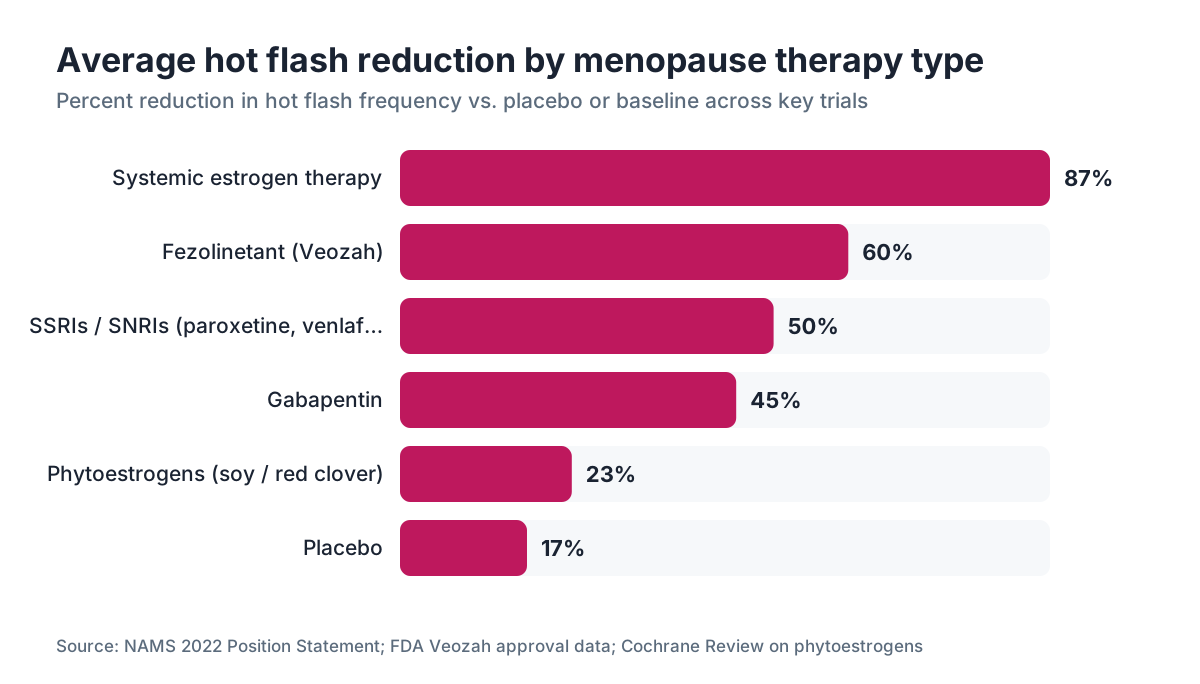
Several non-hormonal prescription drugs have meaningful evidence for vasomotor symptoms. The FDA approved fezolinetant (Veozah) in 2023, the first drug in a new class that targets neurokinin 3 (NK3) receptors in the brain, which are directly involved in triggering hot flashes. In phase 3 trials, fezolinetant cut hot flash frequency by about 60% at 12 weeks compared to roughly 17% for placebo. [7] It is a real option for women who cannot or choose not to use hormones.
Paroxetine (Brisdelle, 7.5 mg) is the only SSRI/SNRI with an FDA indication specifically for hot flashes. Effect size is moderate, reducing hot flash frequency by about 33-65% depending on the trial. [8] Other SSRIs (escitalopram, venlafaxine) are used off-label and have similar effect sizes. They are useful for women who also have depression or anxiety. The downside: sexual side effects, and some interact with tamoxifen (fluoxetine and paroxetine are strong CYP2D6 inhibitors, which reduces tamoxifen's effectiveness).
Gabapentin works for hot flashes, especially nocturnal ones, but causes significant drowsiness and is best used at night. Oxybutynin, an anticholinergic used for overactive bladder, has been shown in small trials to reduce hot flash frequency and is inexpensive. Clonidine has evidence but a rough side effect profile (dizziness, dry mouth) that limits its use.
None of these non-hormonal options match hormone therapy for symptom relief or for bone protection. They are alternatives for women with contraindications to hormones, not upgrades.
What about supplements and lifestyle changes? Do any of them work?
This is where the evidence gets thin. The honest answer is that most supplements marketed for menopause have weak, inconsistent data.
Phytoestrogens (soy isoflavones, red clover) have mild estrogenic activity. Some meta-analyses show a modest reduction in hot flash frequency of about 20-25%, which is real but well below hormone therapy. [9] They are probably harmless for most women and may be worth trying if you want something over the counter.
Black cohosh has a long history of use and is in most menopause supplements. The mechanism is still debated (it does not appear to act like estrogen), and trial results are mixed. NAMS notes it may have "some benefit" for hot flashes but does not recommend it as a primary treatment. [3] The main safety concern is rare but serious liver toxicity. If you take it, use a standardized extract and tell your doctor.
Magnesium glycinate is popular for sleep and mood and has reasonable tolerability. The evidence for menopause-specific symptoms is thin, but the risk is low.
Lifestyle interventions that have real data: regular aerobic exercise reduces hot flash severity (though not frequency as reliably as drugs), improves sleep quality, and meaningfully protects bone density. [1] Cognitive behavioral therapy (CBT) for hot flashes has surprising evidence, reducing the distress and sleep disruption from vasomotor symptoms even when it doesn't reduce the flash count. Weight loss reduces hot flash frequency, which is one of several reasons that GLP-1 therapy is increasingly relevant for women going through menopause.
Sponsored supplements and MLM "hormone support" products? A waste of money. Nobody has good data on most of them.
How do GLP-1 medications fit into menopause care?
GLP-1 receptor agonists like semaglutide and tirzepatide were developed for diabetes and weight loss, but they're becoming genuinely relevant in menopause care for reasons beyond the scale.
Weight gain is common during perimenopause and menopause, driven by estrogen loss, metabolic slowdown, muscle loss, and poor sleep. That weight tends to concentrate in the abdomen, which raises cardiovascular and metabolic risk. GLP-1s address that directly. In the SURMOUNT-1 trial, tirzepatide produced an average body weight reduction of up to 22.5% over 72 weeks. [10] In the STEP 1 trial of semaglutide 2.4 mg, participants lost an average of 14.9% of body weight. [11]
There's a second reason. Adipose tissue is hormonally active. Fat cells convert androgens to estrogen, which sounds helpful but creates an uneven, poorly regulated estrogen environment that worsens hot flashes for some women. Reducing visceral fat can improve symptom management in parallel with MHT.
GLP-1s also carry cardiovascular benefits relevant for women in this life stage: blood pressure reduction, improved lipids, and in semaglutide's case, a demonstrated reduction in major cardiovascular events in the SELECT trial.
WomenRx providers work with women on combining MHT and GLP-1s when the clinical picture supports it, because the two approaches aren't competing. They address different aspects of menopause-related health change.
If you're considering a GLP-1, the comparison between agents matters. semaglutide vs tirzepatide covers the efficacy and side effect differences in plain terms, and semaglutide for weight loss goes into the STEP trial data in more detail.
What are the real risks of hormone therapy?
The risks are real, but they are often overstated or applied to the wrong population. Here is an honest accounting.
Breast cancer is the risk most women worry about. Combined estrogen-progestogen therapy is associated with a small increase in breast cancer risk with long-term use (over 5 years). The absolute risk increase is roughly 1 in 1,000 women per year of use, which is comparable to the risk from drinking one glass of wine daily. [3] Estrogen alone (in women without a uterus) may actually slightly reduce breast cancer risk, based on the estrogen-only arm of the WHI. Switching from synthetic progestins to micronized progesterone may reduce breast cancer risk further, though long-term head-to-head data are limited.
Venous thromboembolism (blood clots) risk is elevated with oral estrogen but not meaningfully elevated with transdermal estrogen. This is one of the strongest arguments for using patches or gels over pills, especially in women with other clot risk factors.
Stroke risk is slightly elevated with oral estrogen. Transdermal estrogen again appears safer.
Endometrial cancer risk is elevated only with unopposed estrogen. Adequate progestogen protects against this completely.
Bone health goes the other way: MHT protects against osteoporosis and fracture. Women on hormones who stop should consider whether they need a bone density test and possibly a non-hormonal bone-protective agent.
Who should not use systemic MHT: women with active or recent estrogen-receptor-positive breast cancer, unexplained vaginal bleeding, active liver disease, personal history of blood clots or stroke, or active heart disease. These are real contraindications. The conversation with your doctor about whether benefits outweigh risks requires your complete history.
What is the "timing hypothesis" and why does it change everything about who benefits?
The timing hypothesis is the most important idea in menopause medicine that most women have never heard of. It says estrogen therapy started early (within 10 years of menopause onset, or before age 60) has a different risk-benefit profile than estrogen started late.
The biology is simple. Healthy, estrogen-primed arteries respond well to estrogen. Arteries with existing atherosclerotic plaque can react poorly, potentially destabilizing plaques. Women who start MHT at 50 mostly have healthy arteries. Women who start at 65 often do not. The WHI enrolled mostly the latter group.
Multiple reanalyses of WHI data by age and time since menopause support this. The Kronos Early Estrogen Prevention Study (KEEPS) and the Early versus Late Intervention Trial with Estradiol (ELITE) specifically tested the timing question and found cardiovascular benefit (or at least neutrality) for early starters, with no meaningful benefit for late starters. [4]
Here's what it means for you. If you are 48, perimenopausal, and considering hormones, the risk-benefit math is different from what the original 2002 WHI headlines suggested. The window of opportunity is real. For most healthy women, MHT started at or near menopause is expected to benefit the heart, bones, and brain until at least age 60, at which point the decision to continue should be revisited.
How do menopause therapies compare on cost?
Cost is a real barrier, especially for women without insurance or stuck in the Medicare Part D gap before 65.
| Therapy | Typical monthly cost (US, 2025) | Insurance coverage | |---------|--------------------------------|--------------------| | Estrogen patch (generic) | $30-$80 | Usually covered | | Oral estradiol (generic) | $10-$25 | Usually covered | | Micronized progesterone (generic) | $30-$60 | Usually covered | | Fezolinetant (Veozah) | $550-$600 | Variable; often requires prior auth | | Paroxetine 7.5 mg (Brisdelle) | $200-$400 | Variable | | Generic SSRI off-label | $5-$20 | Usually covered | | Semaglutide 2.4 mg (Wegovy) | $1,300-$1,400 list | Limited; manufacturer savings card may apply | | Tirzepatide (Zepbound) | $1,000-$1,100 list | Limited | | Compounded semaglutide | $200-$400 | Rarely covered |
Generic hormone therapy is genuinely affordable. The newer non-hormonal drugs are expensive and often require prior authorization battles. GLP-1s are the big-ticket item, though compounded semaglutide has cut out-of-pocket costs substantially for many women. Coverage is improving for GLP-1s in some employer plans, but it stays spotty.
Telehealth platforms have made prescribing and follow-up for MHT cheaper by cutting in-person overhead, and many use cash-pay generic pharmacies that keep costs predictable.
What questions should you ask your doctor about menopause treatment?
Most visits are short. Going in with specific questions gets you further than describing symptoms and waiting to see what the doctor proposes.
Five questions worth asking:
- Am I a candidate for systemic hormone therapy given my personal and family history?
- Would transdermal estrogen be safer for me than oral given my cardiovascular risk factors?
- What progestogen would you recommend, and why?
- If I start now, when should we reassess whether to continue?
- Are there symptoms I have (sleep, mood, joint pain, weight gain) that might need a separate treatment approach alongside MHT?
Ask specifically about the timing hypothesis and where you fall on the age and years-since-menopause spectrum. Ask about bone density screening if you haven't had one. The U.S. Preventive Services Task Force recommends bone density screening for all women 65 and older, and earlier for women with risk factors. [12] A bone density test is a reasonable baseline before or shortly after starting menopause therapy.
If you leave a visit without understanding why a specific therapy was or wasn't recommended, that's a signal to ask again or seek a second opinion. Menopause medicine has changed a lot in the last decade and not every clinician is current on the evidence.
For women who want a specialist who focuses on menopause medicine, NAMS maintains a certified practitioner finder at menopause.org. Telehealth has widened access considerably for women in rural areas or those who can't get a timely appointment.
What does a good menopause treatment plan actually look like over time?
A good plan starts with symptom mapping. Not "I have hot flashes" but: how many per day, how severe, are they nocturnal, is sleep affected, is there vaginal dryness, is mood a factor, what is bone density, what is cardiovascular risk score. Different symptom clusters point toward different therapies.
For a woman with moderate-to-severe vasomotor symptoms, GSM, and no contraindications, a reasonable starting point is transdermal estradiol plus oral micronized progesterone (if she has a uterus). Reassess at 3 months: are symptoms controlled? Are there side effects? Adjust the dose if needed.
For a woman whose primary issue is GSM (vaginal dryness, painful sex) without significant hot flashes, low-dose vaginal estrogen alone is appropriate and avoids systemic exposure.
For a woman who cannot use hormones and has severe hot flashes, fezolinetant is the strongest non-hormonal option. Pair it with CBT for hot flashes if distress is high, and consider the lifestyle modifications with actual evidence (exercise, weight loss if applicable, limiting alcohol and caffeine as triggers).
For a woman managing perimenopausal weight gain and metabolic risk alongside hormone symptoms, combining MHT with a GLP-1 is an increasingly discussed approach. WomenRx clinicians take this integrated view because the two therapies aren't competing. They address different axes of the same hormonal transition.
Review the plan at least once a year. The evidence says most healthy women started on MHT before 60 can continue through their 60s with ongoing reassessment. The old practice of stopping at 5 years regardless of symptoms was not evidence-based. NAMS and the Endocrine Society both support individualized duration decisions. [3][6]
Frequently asked questions
Is hormone therapy safe for most women in their 50s?
For healthy women in their early 50s who are within 10 years of menopause, yes. The evidence now supports that the cardiovascular and breast cancer risks were overstated by the original WHI analysis, which studied an older population. NAMS states hormone therapy is appropriate for healthy symptomatic women under 60 with no specific contraindications. Risks should still be discussed individually with your clinician.
What is the difference between estrogen and progesterone in menopause therapy?
Estrogen is the workhorse: it stops hot flashes, reverses vaginal changes, and protects bone. Progesterone is added to protect the uterine lining from the stimulating effect of estrogen, which can cause endometrial cancer if estrogen is used alone. Women without a uterus use estrogen only. Women with a uterus need both. The type of progestogen (synthetic progestin vs. micronized progesterone) affects side effects and possibly breast cancer risk.
Can I use hormone therapy if I have a family history of breast cancer?
Family history alone is not a hard contraindication. The decision depends on the specific history (first-degree relative, bilateral, pre-menopausal), your personal genetic risk (BRCA status if tested), and the severity of your symptoms. Women with BRCA1/2 mutations who have had risk-reducing surgeries have different risk calculus than women with one aunt who had postmenopausal breast cancer. This is a nuanced conversation for a specialist, not a blanket no.
How long does it take for hormone therapy to start working?
Most women notice improvement in hot flash frequency and severity within 4 to 8 weeks of starting at an adequate dose. Vaginal symptoms often take 8 to 12 weeks to fully respond. Sleep often improves faster, sometimes within weeks, because nocturnal hot flashes are frequently the main disruptor. If you're not seeing meaningful improvement at 3 months, a dose adjustment or delivery method change is worth discussing.
What non-hormonal options work best for severe hot flashes?
Fezolinetant (Veozah) is the strongest FDA-approved non-hormonal option for vasomotor symptoms, reducing hot flash frequency by about 60% in trials. SSRIs and SNRIs (paroxetine, venlafaxine, escitalopram) are the next tier with moderate effect. Gabapentin works especially for nighttime symptoms. None of these match hormone therapy in overall effectiveness, but they are real options for women with contraindications to hormones.
Does menopause therapy help with weight gain?
Hormone therapy does not cause significant weight loss, but it does reduce the redistribution of fat toward the abdomen that happens with estrogen loss. It also preserves muscle mass and improves sleep, both of which support a healthier body composition. For active weight loss during menopause, GLP-1 medications have the strongest evidence, with semaglutide and tirzepatide producing average weight losses of 15-22% of body weight in clinical trials.
Is bioidentical hormone therapy safer than conventional hormone therapy?
This depends on what you mean by "bioidentical." FDA-approved estradiol and micronized progesterone are chemically identical to what your ovaries made and are bioidentical in the technical sense. They have solid safety data. Custom-compounded bioidentical hormones from compounding pharmacies are also bioidentical in structure but lack FDA-reviewed safety and efficacy data, and doses are often inconsistent. The term itself is a marketing category, not a regulatory or safety category.
What happens if I stop hormone therapy abruptly?
Hot flashes often return, sometimes worse than before, within weeks of stopping. Gradual tapering rather than abrupt discontinuation reduces the rebound effect. Bone protective effects reverse over time after stopping, so women with osteoporosis or high fracture risk may need a non-hormonal bone agent. There is no medical danger in stopping, but doing it with a taper and a plan for managing returning symptoms makes it easier.
Can I use menopause therapy while taking antidepressants?
Generally yes, with some specifics. Hormone therapy and most antidepressants are safe together. The caution is for women on tamoxifen for breast cancer who should avoid paroxetine and fluoxetine specifically because those SSRIs inhibit the enzyme that activates tamoxifen. For most women on standard SSRIs or SNRIs for depression, adding MHT is straightforward and can actually reduce depressive symptoms by stabilizing estrogen levels.
Does hormone therapy protect against osteoporosis?
Yes. This is one of its best-documented benefits. Estrogen preserves bone mineral density by slowing the bone resorption that accelerates after menopause. Women on MHT have significantly lower fracture rates than untreated women. After stopping MHT, bone loss resumes. Women over 65 should have bone density tested regardless of MHT status. Women who stop hormones and have low bone density should discuss bisphosphonates or other bone-protective agents.
How do I find a doctor who specializes in menopause treatment?
NAMS (menopause.org) maintains a searchable directory of certified menopause practitioners in the US and Canada. Board-certified OB-GYNs, internists, and family medicine physicians with NAMS certification or significant menopause experience are your best options. Telehealth has dramatically expanded access, especially for women in areas where in-person specialists have long wait times. Primary care doctors vary widely in their menopause knowledge, so asking directly about their experience is fair.
At what age should I stop hormone therapy?
There is no universal age cutoff. NAMS and the Endocrine Society both support individualized decisions about duration. The older recommendation to stop at 5 years or age 65 was not based on strong evidence. Most healthy women who started MHT before 60 can continue into their 60s with annual reassessment. After 65 or 10 years of use, the risk-benefit balance is reassessed, and the decision depends on symptom burden, bone density, and cardiovascular health.
What is the genitourinary syndrome of menopause (GSM) and how is it treated?
GSM is the medical term for vaginal dryness, thinning of vaginal tissues, pain during sex, and increased urinary urgency and recurrent UTIs that result from estrogen loss. Unlike hot flashes, GSM does not improve on its own over time. It is treated with low-dose vaginal estrogen (cream, tablet, ring), which has minimal systemic absorption and is considered safe for most women including many with breast cancer history. Non-hormonal vaginal moisturizers provide partial relief.
Sources
- NAMS (North American Menopause Society), 2023 Menopause Practice Guidelines
- NIH Office on Women's Health, Menopause overview
- NAMS, 2022 Hormone Therapy Position Statement
- Hodis HN et al., ELITE Trial, New England Journal of Medicine, 2016
- Canonico M et al., Circulation 2007; transdermal estrogen and VTE risk
- Endocrine Society, Clinical Practice Guideline: Treatment of Symptoms of the Menopause
- FDA Drug Approval: Veozah (fezolinetant), FDA.gov, 2023
- FDA Drug Label: Brisdelle (paroxetine 7.5 mg), FDA.gov
- Lethaby A et al., Cochrane Database of Systematic Reviews, Phytoestrogens for menopausal vasomotor symptoms
- Jastreboff AM et al., SURMOUNT-1 Trial, New England Journal of Medicine, 2022
- Wilding JPH et al., STEP 1 Trial, New England Journal of Medicine, 2021
- U.S. Preventive Services Task Force, Osteoporosis Screening Recommendation, 2018