Menopause test: what FSH levels, blood panels, and at-home kits actually tell you
TL;DR: No single test confirms menopause. Doctors use FSH (typically above 30 mIU/mL on two draws at least 4-6 weeks apart), estradiol, and AMH alongside your symptom history. At-home menopause test kits measure FSH from urine or blood, but NAMS cautions that FSH fluctuates heavily in perimenopause, making any single result hard to interpret without clinical context.
What is a menopause test and what does it actually measure?
A "menopause test" is not one thing. It is shorthand for a set of hormone measurements, mainly follicle-stimulating hormone (FSH), estradiol, and sometimes anti-Müllerian hormone (AMH), that clinicians read alongside your age, symptoms, and menstrual history to figure out where you sit on the menopause spectrum.
FSH is the hormone your pituitary gland releases to tell your ovaries to make eggs. As your ovary reserve shrinks, the pituitary pumps out more and more FSH trying to get a response. A persistently high FSH is the clearest hormonal signal that your ovaries are winding down. The threshold most labs use is FSH above 30 mIU/mL, measured on two separate occasions at least four to six weeks apart, in a woman who has not had a period for 12 consecutive months [1].
Estradiol (E2) is the main estrogen your ovaries produce. In the reproductive years, estradiol sits roughly between 30 and 400 pg/mL depending on where you are in your cycle. After menopause, it usually falls below 20 pg/mL and often below 10. A very low estradiol next to a high FSH paints a consistent picture.
AMH is newer in menopause diagnostics. Small follicles left in your ovaries make it, so it tracks your remaining egg supply directly. AMH falls steadily through your 30s and 40s and reaches undetectable levels around the time of your final period. Some clinicians find AMH more stable across the menstrual cycle than FSH, which makes it useful in perimenopause when FSH can swing wildly from week to week [2].
At-home menopause test kits add one more layer. Most measure FSH from a urine or fingerstick blood sample. The FDA has cleared a handful for over-the-counter use, but cleared does not mean the result is easy to read alone. More on that below.
What are normal FSH levels by age, and when does a result suggest menopause?
FSH depends heavily on context. The same number means one thing at 38 and something else at 52.
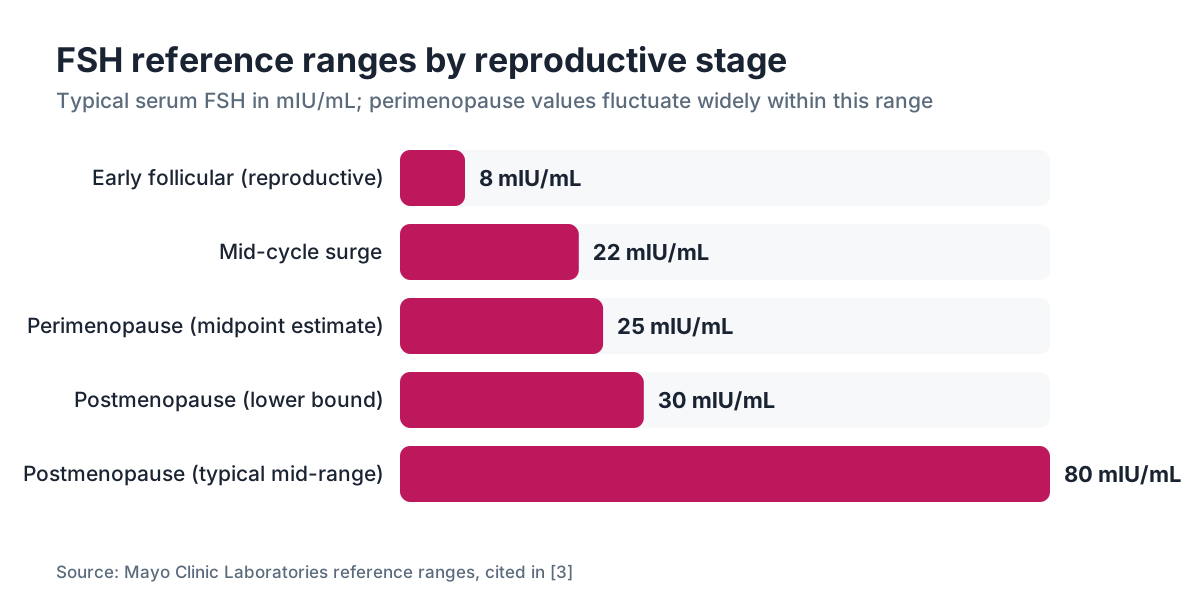
Here is a rough reference table based on standard laboratory reference ranges [3]:
| Life stage | Typical FSH range (mIU/mL) | |---|---| | Reproductive years (follicular phase) | 3.5 to 12.5 | | Mid-cycle surge | up to 25 | | Perimenopause | 10 to 40+ (fluctuates widely) | | Postmenopause (confirmed) | 25 to 135 |
The clinical cutoff for diagnosing menopause is FSH above 30 mIU/mL on two draws separated by at least four to six weeks, in a woman whose periods have stopped for 12 months [1]. Under 45, doctors want a higher bar before calling it menopause, because early or premature ovarian insufficiency (POI) has different causes and different management.
The tricky part is perimenopause. FSH can read 8 one month and 45 the next. That variability is the biology, not a lab error. This is why the North American Menopause Society (NAMS) says that in women over 45 with classic symptoms, the clinical diagnosis does not require hormone testing at all [1]. Your symptom pattern, your age, and your menstrual history tell the story just as reliably.
Under 45, testing is more urgent when periods turn irregular or stop. The Endocrine Society recommends evaluating for POI in women with unexplained amenorrhea before 40, using FSH measured twice plus a karyotype if FSH is elevated [2]. That is a different clinical pathway from routine menopause confirmation.
What blood tests does a doctor order to evaluate menopause?
A thorough menopause workup usually goes beyond FSH alone. Here is what most gynecologists and endocrinologists order and why.
FSH and estradiol together are the core pair. Drawing them at the same time gives you a ratio that tells you more than either number by itself. High FSH with low estradiol is a clear signal. High FSH with a still-normal estradiol can happen in early perimenopause, when the ovaries mount one last strong push.
LH (luteinizing hormone) gets added sometimes. LH also rises as ovarian function declines, and a high LH-to-FSH ratio can point toward other diagnoses like polycystic ovary syndrome (PCOS) that need ruling out.
Thyroid-stimulating hormone (TSH) is almost always checked. Hypothyroidism causes irregular periods, weight gain, fatigue, and mood changes that overlap completely with perimenopausal symptoms. Missing a thyroid problem because you assumed the symptoms were menopause is a common clinical error.
Complete blood count and metabolic panel catch anemia and glucose abnormalities, both of which can worsen menopausal symptoms or complicate hormone therapy decisions.
AMH is not yet ordered everywhere, but commercial labs offer it more and more. It gives the clearest window into remaining ovarian reserve and helps most in women in their late 30s and early 40s who want to know how much time they likely have before menopause [4].
Prolactin gets ordered when periods stop unexpectedly in younger women, to rule out a pituitary adenoma.
Timing of the draw matters. For women still cycling, most hormones should be drawn on cycle days 2 to 5 (early follicular phase) for a clean baseline. In women who have not had a period in months, timing matters less, but morning draws are standard.
How accurate are at-home menopause test kits?
At-home menopause test kits are FDA-cleared for detecting elevated FSH in urine, which the FDA says can be "associated with menopause" [5]. The cleared kits use immunoassay strips much like pregnancy tests. They return a positive or negative based on an FSH threshold, usually around 25 to 30 mIU/mL.
Analytical accuracy, meaning whether the strip reliably detects that FSH level in urine, is generally good for the cleared products. That is a different thing from clinical accuracy, meaning whether a positive result actually means you are in menopause.
The problems are well documented. FSH swings dramatically within a single cycle and even within a single week during perimenopause [1]. A positive at-home test on Tuesday tells you nothing about what FSH will look like in three weeks. Women who are still cycling can get a positive during the mid-cycle LH/FSH surge and wrongly conclude they are menopausal.
Some newer at-home options, including fingerstick blood spot tests offered through telehealth platforms, measure FSH plus estradiol and sometimes AMH from one sample. Those give more information than a urine strip. The interpretation problem stays, though. A result without context is a result without meaning.
Where at-home kits genuinely help: they can push you to raise symptoms you have been brushing off, they give you a data point to bring to an appointment, and for women in confirmed postmenopause tracking hormone therapy response, serial measurements can show trends. They are a starting point, not a diagnosis.
Cost runs from about $20 to $60 for single urine strip tests to $150 to $250 for multi-marker fingerstick panels through direct-to-consumer labs.
Can you have menopause symptoms with normal test results?
Yes. This is one of the most clinically important and least appreciated facts about menopause testing.
In early perimenopause, symptoms can hit hard while FSH still reads normal. Estrogen in perimenopause is erratic, not simply falling. You get stretches of very high estrogen followed by steep drops, and it is the fluctuations, more than the low levels, that drive hot flashes, sleep disruption, and mood changes [6].
A single normal FSH does not rule out perimenopause. NAMS is explicit: the perimenopause diagnosis is clinical, based on irregular cycles and symptoms in a woman of the right age, not on a specific FSH threshold [1].
The reverse happens too. A woman can have FSH above 30 mIU/mL with almost no symptoms. Ovarian function varies.
This disconnect frustrates a lot of women who bring a "normal" lab result to a doctor and get told their symptoms cannot be hormonal. It cuts the other way as well. A slightly elevated FSH in a 48-year-old with symptoms should surprise no one, and it does not need an exhaustive workup before you start managing the symptoms.
If your results read normal but your symptoms are real and eating into your quality of life, that is a conversation about treatment, not a reason to sit and wait for the numbers to catch up.
How is menopause diagnosed without hormone testing?
For women 45 and older, the diagnosis is clinical. NAMS guidelines say that in the right age group, with classic symptoms and periods that have stopped, hormone testing adds little and is not required to start treatment [1].
Menopause is defined as 12 consecutive months without a menstrual period, not caused by pregnancy, breastfeeding, certain medications, or illness [7]. That 12-month mark is the official boundary. Before it, you are in perimenopause. After it, you are postmenopausal.
Symptoms that point strongly toward the transition include vasomotor symptoms (hot flashes and night sweats), sleep disturbance, vaginal dryness, changes in cycle length or flow, and mood shifts. The Menopause Rating Scale and the Greene Climacteric Scale are validated questionnaires clinicians use to quantify symptom burden, and neither needs a blood draw.
Testing matters more when the woman is under 45, when periods stop abruptly instead of drifting toward irregular, when symptoms do not fit typical menopause, when hormonal contraception is masking cycle changes, or when the clinician wants a baseline before starting hormone therapy.
Your perimenopause age and whether you are approaching when menopause typically starts are factors your doctor weighs alongside any lab work.
What does a menopause test show about perimenopause specifically?
Perimenopause is the transition leading up to your final menstrual period. It can last two to ten years. The average woman enters perimenopause in her mid-to-late 40s, though it can start as early as the late 30s [8].
Testing during perimenopause is genuinely tricky, because the hormone pattern is not a steady decline. Estradiol fluctuates wildly. FSH rises on average but also swings. AMH shows a steadier decline and is arguably the single most informative marker during this phase.
The STRAW+10 staging system (Stages of Reproductive Aging Workshop) is the standard framework clinicians use to describe where a woman sits in reproductive aging [8]. It stages women from -5 (early reproductive) through +2 (late postmenopause) using cycle changes and hormone levels together, not hormone levels alone.
In early perimenopause (STRAW stage -2), cycles start to vary in length by seven or more days. FSH may be intermittently elevated. AMH is typically low. In late perimenopause (STRAW stage -1), cycles run 60 days or more apart, FSH is more consistently elevated, and estradiol is more consistently low.
Say you are 44 and your periods have shifted from 28 days to 35 or 40 days apart. You are likely in early perimenopause regardless of what a single FSH test says. That matters for decisions about contraception (you can still ovulate and get pregnant in perimenopause), bone health, cardiovascular risk, and whether to start talking about hormone therapy.
What other tests should you get alongside a menopause hormone panel?
Menopause is a metabolic event as much as a reproductive one. The hormone shifts that come with it affect bone density, cardiovascular risk, and metabolic function in ways that need their own monitoring.
A bone density test (DEXA scan) is recommended at menopause for most women, or earlier if you have risk factors. Estrogen is the main defender of bone density, so its decline triggers faster bone loss. The Bone Health and Osteoporosis Foundation puts the rate of bone loss in the first few years after menopause at 1 to 2% per year, rising to as much as 3 to 5% per year in the immediate postmenopause period [9].
Lipid panel. Estrogen helps hold cholesterol in a favorable range. After menopause, LDL tends to rise and HDL may fall. Women's cardiovascular risk climbs sharply after menopause and, by late postmenopause, approaches that of men the same age.
Fasting glucose or HbA1c. Insulin sensitivity worsens in perimenopause. Women with no blood sugar issues in their 30s can develop prediabetes in their late 40s and 50s, partly because of shifting estrogen.
Blood pressure. Hypertension risk goes up after menopause.
Thyroid panel (TSH, free T4). As noted above, thyroid disorders are more common in women and peak in the same decade as menopause.
For some women, genetic testing for BRCA variants becomes relevant here, because BRCA status affects hormone therapy decisions. That is a separate conversation with a genetic counselor, but the perimenopausal workup is a natural moment to raise it.
If you work with a telehealth platform like WomenRx that focuses on women's hormones, a good provider will order the full picture alongside FSH, not FSH in isolation.
How do hormone test results affect menopause treatment options?
Test results shape treatment decisions but do not dictate them. Symptoms and individual health history carry more weight than any single number.
For hormone replacement therapy (HRT), also called menopausal hormone therapy (MHT), a confirmed diagnosis of menopause (or an established perimenopause transition) is the starting point. The Menopause Society's 2023 position statement holds that for healthy women under 60 or within 10 years of menopause, the benefits of hormone therapy outweigh the risks for most women with bothersome vasomotor symptoms [1]. You do not need a specific FSH number to qualify. The clinical picture is enough.
Estradiol levels do inform dosing. If your estradiol is already very low, your clinician may start higher. Serial monitoring of estradiol during therapy helps titrate the estrogen patch or oral dose to a therapeutic range, generally 40 to 100 pg/mL for symptom control.
Progesterone is required for uterine protection in women who still have a uterus. Type and dose depend partly on whether you are in perimenopause (where progesterone may be used cyclically) or postmenopause (where it is used continuously).
AMH results feed more and more into shared decision-making around fertility. A very low or undetectable AMH in a 40-year-old changes the urgency of those conversations.
For women using GLP-1 medications for weight management alongside hormone therapy, knowing your hormonal status matters. Estrogen affects how the body distributes fat and how it responds to metabolic interventions. If you are considering semaglutide for weight loss during the menopause transition, a clear hormone picture helps your provider see the full metabolic context.
Does menopause testing differ for women with surgical menopause or early menopause?
Yes, a lot.
Surgical menopause, meaning menopause caused by bilateral oophorectomy (removal of both ovaries), is immediate rather than gradual. FSH rises sharply within days of surgery and estradiol drops to postmenopausal levels just as fast. Here, testing is not needed to confirm menopause. Symptoms are often more abrupt and more severe than in natural menopause, because the hormonal floor drops all at once instead of over years [10].
For women with surgical menopause, hormone testing still helps for monitoring therapy response and dialing in the dose, but the diagnosis comes from the history.
Premature ovarian insufficiency (POI), once called premature ovarian failure, is ovarian dysfunction before age 40. It affects about 1% of women under 40 [2]. The Endocrine Society diagnostic criteria require two FSH measurements above 25 to 40 mIU/mL (lab-dependent) at least four weeks apart, in a woman with at least four months of irregular or absent periods before age 40. The Endocrine Society clinical practice guideline states: "We recommend confirming the diagnosis with two serum FSH levels in the menopausal range measured four or more weeks apart." [2]
A POI workup goes further than standard menopause testing. It adds a karyotype (to catch Turner syndrome or chromosomal variants), FMR1 premutation testing (linked to fragile X syndrome), thyroid antibodies, adrenal antibodies (21-hydroxylase), and sometimes a pelvic ultrasound for follicle count.
Women with POI carry specific health risks, including higher rates of osteoporosis, cardiovascular disease, and in some cases autoimmune conditions. Their hormone replacement approach differs from natural menopause, usually requiring higher estrogen doses sustained through age 50 to 51.
How much does a menopause test cost, and does insurance cover it?
Cost swings widely depending on whether tests run through a physician (and bill to insurance) or come as at-home kits you buy directly.
Through a physician with insurance, FSH, LH, and estradiol are usually covered under standard diagnosis codes for menstrual irregularity or menopausal symptoms. You will likely pay your normal copay or apply the cost toward your deductible. Without insurance, the cash price for a basic FSH and estradiol panel at major commercial labs (Quest, LabCorp) runs roughly $40 to $150 depending on the lab and whether you use a direct-pay portal [11].
AMH testing is covered less consistently. It shows up more in fertility contexts and may need prior authorization for menopause indications. Cash price is typically $60 to $120 at commercial labs.
A full menopause panel including FSH, estradiol, LH, AMH, TSH, lipids, and a metabolic panel, ordered by a physician, usually runs $200 to $400 total in cash cost at commercial lab list prices, though direct-pay discounts through a lab's own patient portal can bring that down.
At-home menopause test kits run from $20 to $60 for urine FSH strips (First Response and Clearblue have sold these over the counter for years) to $150 to $250 for multi-marker fingerstick blood panels from companies like LetsGetChecked, Everlywell, or similar direct-to-consumer labs. The at-home blood spot tests typically give you FSH plus estradiol, and some add AMH and testosterone.
The at-home panels are usually not insurance-reimbursable, because they are self-ordered and sit outside a physician visit.
When should you get a menopause test, and how often?
There is no universal screening schedule for menopause testing the way there is for mammograms or Pap smears. Symptoms or clinical questions prompt testing, not the calendar.
Reasonable triggers to get tested:
You are 38 to 45 with irregular cycles, worsening PMS, or new hot flashes. A baseline FSH, estradiol, and AMH gives you a snapshot of where you are in the transition and whether anything looks unusual.
You are 45 or older and want to confirm your symptoms are menopausal before starting hormone therapy. One FSH and estradiol, drawn on day 2 to 5 of a cycle if you are still cycling, or any time if you are not.
Your periods stopped before age 40. This calls for the full POI workup described above, more than an FSH.
You are on hormonal contraception and cannot tell whether you are menopausal. The pill suppresses FSH and hides cycle changes. One option is a four to six week hormone holiday to let levels reflect your underlying ovarian function, then test. AMH is less suppressed by hormonal contraception than FSH, which is why some clinicians prefer AMH here [4].
You are already on hormone therapy and getting breakthrough symptoms. Checking estradiol (and sometimes progesterone) helps show whether your dose is enough.
How often to retest depends on your situation. Annual hormone panels during perimenopause are reasonable if you and your provider are tracking progression. In established postmenopause, symptom management drives repeat testing, not routine surveillance.
Frequently asked questions
Can a menopause test tell you how close you are to your last period?
Not precisely. AMH gives the best estimate of remaining ovarian reserve and correlates loosely with time to menopause, but the prediction window is wide, often plus or minus two to four years. FSH is less useful here because it fluctuates. No current test predicts your final period within a year. AMH research from large cohort studies like the Study of Women's Health Across the Nation (SWAN) has improved estimates but not made them precise.
Is a urine FSH test as accurate as a blood test for menopause?
For detecting elevated FSH, FDA-cleared urine tests perform reasonably well analytically. The bigger limitation is interpretive, not technical. Urine FSH reflects the same hormone as blood FSH but is more diluted and more variable with hydration. For a clinical decision, blood FSH is more reliable. Urine strips are useful for prompting a conversation with your doctor, not for making a definitive call.
Can you test for menopause while on hormonal birth control?
Standard FSH and estradiol testing is unreliable on combined hormonal contraception, because the pill suppresses FSH artificially. AMH is less suppressed and can still reflect ovarian reserve. If you need a definitive answer, stopping contraception for four to six weeks and then testing is the standard approach, though this carries pregnancy risk in perimenopause, so discuss it with your provider first.
What FSH level confirms menopause?
FSH above 30 mIU/mL on two separate draws at least four to six weeks apart, in a woman who has had no period for 12 consecutive months, is the standard clinical threshold. Some labs use 25 mIU/mL as their postmenopausal lower limit. The number alone is never diagnostic without the clinical context of symptom history and menstrual history beside it.
Can you still get pregnant with a high FSH or a positive menopause test?
Yes, and this matters. High FSH in perimenopause means ovarian function is declining, but it does not mean ovulation has stopped entirely. Spontaneous pregnancies have happened in women with FSH over 30 mIU/mL who had not yet reached the 12-month amenorrhea mark. Keep using contraception until you have been confirmed postmenopausal for 12 months by the absence of periods, not by a test result alone.
Does a menopause test show whether you need hormone therapy?
Not directly. The decision to start hormone therapy rests on symptom burden and a risk-benefit analysis, not on a specific hormone level. NAMS guidelines say that for women 45 and older with classic menopausal symptoms, clinical diagnosis is enough to begin treatment. Test results help optimize dosing and rule out other causes, but a high FSH is not a prescription trigger and a normal FSH does not rule out the need for treatment.
What is AMH and is it better than FSH for menopause testing?
AMH (anti-Müllerian hormone) is made by small ovarian follicles and tracks remaining egg supply. It falls steadily through the 40s and reaches undetectable levels near the final period. Unlike FSH, AMH does not swing dramatically within a menstrual cycle, which makes it more stable and arguably more informative during perimenopause. It is not yet in every standard panel but is increasingly ordered by clinicians tracking the transition.
How is menopause confirmed after a hysterectomy if you still have your ovaries?
After a hysterectomy with ovary preservation, you no longer have periods to use as the 12-month amenorrhea marker. Blood testing becomes the main tool. Two FSH levels above 30 mIU/mL with low estradiol and symptoms consistent with menopause is the standard approach. AMH can also help. Symptom tracking stays important, especially hot flashes and sleep disruption, which tend to emerge as ovarian function declines.
Can stress or illness cause a false high FSH result?
Acute serious illness can temporarily shift FSH and LH, but ordinary stress does not meaningfully raise FSH. Conditions like extreme weight loss, eating disorders, or hyperprolactinemia can suppress FSH and produce a falsely low reading, which can mask ovarian insufficiency. Thyroid dysfunction can shift FSH indirectly too. This is why a full panel rather than FSH alone gives a more accurate picture.
Are menopause test results different for women who are overweight or obese?
Body weight affects estrogen metabolism. Fat tissue converts androgens into estrogen (a process called aromatization), so women with higher body fat may carry somewhat higher circulating estradiol even as ovarian production declines. This can mask perimenopausal patterns on testing. FSH may still rise normally, but estradiol may not fall as sharply. Weight changes during the transition are common and go both ways, and this metabolic context matters when reading results.
What should I bring to my doctor appointment after an at-home menopause test?
Bring the test result and the date you took it, your menstrual calendar for the past six to twelve months (even rough notes help), a list of current symptoms and how long you have had them, and any medications or supplements you take. If your cycles are still happening, note where in your cycle you tested. This context turns a single number into something a clinician can actually use.
Is there a menopause blood test for women in their late 30s?
Yes. FSH, estradiol, AMH, and LH are all available for women in their 30s and can flag early perimenopause or premature ovarian insufficiency. For women under 40 with irregular periods or menopausal symptoms, the Endocrine Society recommends a full POI workup including two FSH measurements, karyotype, and FMR1 testing, because early menopause in this age group has specific causes and health implications beyond natural menopause.
How do I read my menopause test results at home?
For urine FSH strips, a result in the positive zone means FSH was above the test threshold (usually around 25 mIU/mL). For blood spot panels, results come back in pg/mL or mIU/mL with a reference range. Compare your FSH to the postmenopausal range (above 25 to 30 mIU/mL) and your estradiol to the postmenopausal range (below 20 pg/mL). A single positive result does not confirm menopause. Take results to your provider with your symptom and cycle history.
Sources
- The Menopause Society (NAMS), 2023 Menopause Hormone Therapy Position Statement
- Endocrine Society, Clinical Practice Guideline: Premature Ovarian Insufficiency
- Mayo Clinic Laboratories, FSH Reference Ranges
- Obstetrics & Gynecology (ACOG journal), AMH in perimenopause staging review
- U.S. Food and Drug Administration, Over-the-Counter Menopause Tests
- SWAN (Study of Women's Health Across the Nation), NIH National Institute on Aging
- National Institute on Aging, Menopause definition and stages
- Harlow SD et al., STRAW+10: Staging the Menopausal Transition, Climacteric 2012
- Bone Health and Osteoporosis Foundation, Bone loss and menopause
- ACOG Practice Bulletin, Surgical Menopause and Hormone Therapy
- LabCorp Patient, FSH and Estradiol panel cash pricing
- CDC, Women's Reproductive Health and Menopause Data