Menopause symptoms at age 47: what's normal and what to do
TL;DR: At 47, you're almost certainly in perimenopause, the 2-to-8-year stretch before your final period. Estrogen and progesterone swing unpredictably, driving hot flashes, irregular cycles, broken sleep, mood shifts, and brain fog. True menopause is 12 straight months with no period, and it hits at an average age of 51.4. Symptoms at 47 are normal, and they're treatable.
Is 47 too early to be experiencing menopause symptoms?
No. At 47 you're almost certainly in perimenopause, and every symptom you're feeling is expected.
The average age of natural menopause in the United States is 51.4 years, and the transition that leads up to it usually starts 4 to 8 years earlier [1]. That puts the most common onset squarely in the mid-to-late 40s. Some women start in their early 40s. A smaller group starts sooner.
Perimenopause is not a soft warm-up act. It is the main event. Estrogen and progesterone stop following their tidy monthly rhythm and start swinging in ways that are, frankly, chaotic. Estrogen can spike higher than it ever did in your reproductive prime, then crash. Progesterone depends on ovulation actually happening, and since you're skipping more ovulations, you make it less reliably. This volatility, not a smooth downhill slide, is what drives most of what women describe at 47.
Could you have reached full menopause at 47? Technically yes. But that would count as early menopause if it happened before 45, or premature ovarian insufficiency (POI) if it happened before 40 [2]. Both deserve a specific conversation with a doctor. If you still have periods, even chaotic ones, you're in perimenopause, not menopause, and that's completely normal at your age. The perimenopause age timeline shows where you likely fall.
What are the most common menopause symptoms at 47?
The list is longer and stranger than most women expect. Everybody braces for hot flashes. Fewer brace for the 2 a.m. version, the concentration problems at work, or the anxiety that shows up out of nowhere.
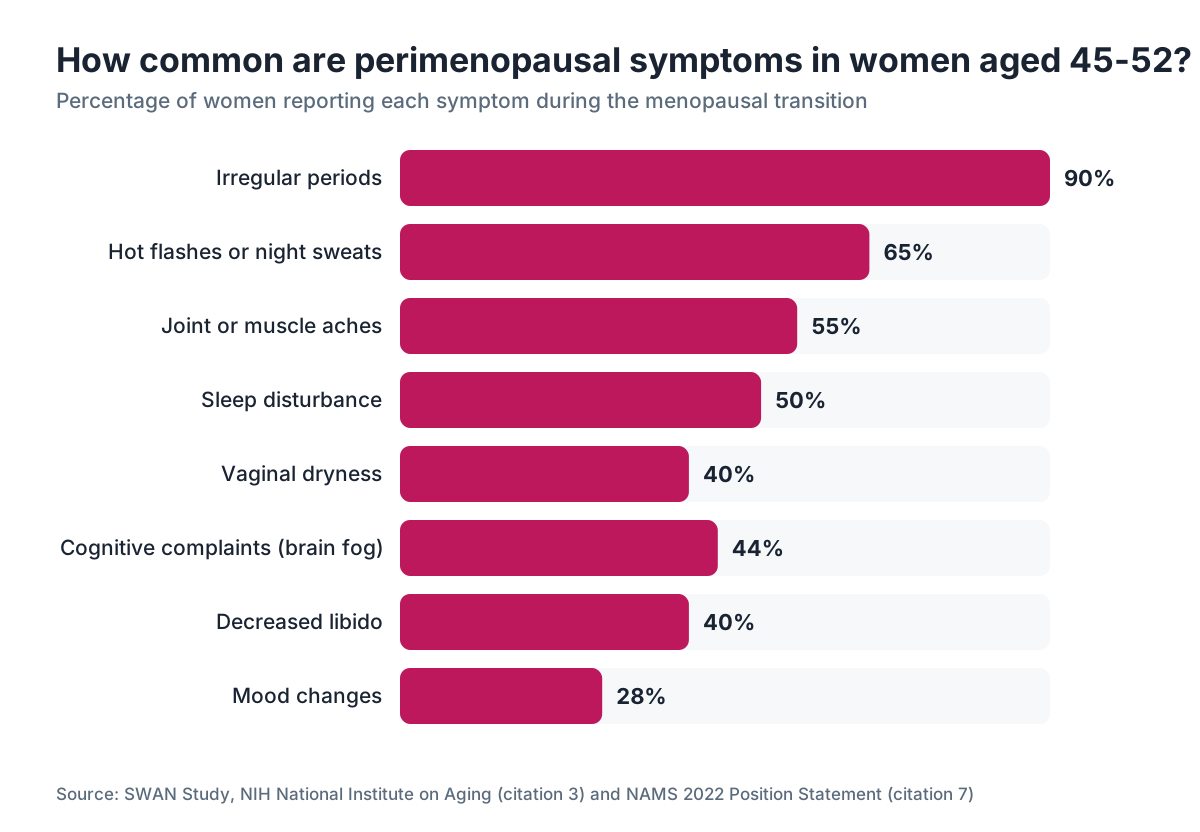
Here are the symptoms reported most consistently in women in their late 40s, drawn from the Study of Women's Health Across the Nation (SWAN), a federally funded study that followed over 3,300 women through the transition [3]:
| Symptom | % of perimenopausal women reporting it | |---|---| | Vasomotor symptoms (hot flashes, night sweats) | 55-75% at peak transition | | Sleep disturbance | ~40-60% | | Irregular periods | Nearly universal in perimenopause | | Mood changes (irritability, low mood) | ~25-30% | | Vaginal dryness or discomfort | ~25-50%, increases with time | | Cognitive complaints (brain fog, word-finding) | ~44% | | Joint or muscle aches | ~50-60% | | Decreased libido | ~40% |
Hot flashes deserve extra attention because they're both misread and undertreated. SWAN found that vasomotor symptoms last a median of 7.4 years from onset, and women who start having them in perimenopause (rather than after their last period) tend to have them longest [4]. Starting at 47 means you could be dealing with them into your mid-50s if you leave them alone.
Brain fog is the sleeper symptom. Women lose words mid-sentence, walk into rooms and forget why, and feel like they're thinking through wet concrete. It's real and measurable. Neuroimaging research has documented metabolic changes in the brain during perimenopause [5]. This isn't anxiety and it isn't just aging. It's estrogen pulling its influence out of your neurological wiring.
Irregular periods at 47 usually go long first (cycles over 35 days), then short, then the occasional big gap. A gap of 60 days or more marks late perimenopause. And you can still ovulate and get pregnant through all of it. Contraception matters until you've hit the 12-month mark.
How do menopause symptoms at 47 differ from symptoms at 50?
The symptoms are largely the same. What changes is where you sit on the transition.
At 47, most women are in early or mid-perimenopause. Periods are irregular but still coming. Estrogen is volatile, swinging up and down. This phase tends to bring more mood instability and heavier or erratic bleeding alongside the classic hot flashes. Plenty of women at 47 feel like they have PMS every two weeks.
By 50, you're statistically closer to your final period (the average is 51.4) [1]. Late perimenopause, defined by a cycle gap of 60 days or more, brings more intense hot flashes and more pronounced vaginal and urinary changes. The wild estrogen highs quiet down and the trend turns steadily downward.
Searches for "menopause symptoms age 50" spike because 50 is when many women finally connect the dots and go looking for help. But the transition at 50 is a continuation of what started at 47 or 48, not a fresh event. If you're 47 and symptomatic, you're not behind or ahead. You're on the standard curve. The broader menopause age data shows just how wide that curve runs.
One clinical note worth holding onto: cardiovascular risk and bone loss both speed up in the years right after menopause, not necessarily during perimenopause. Starting to think about your bones and heart at 47, before the final transition, is time well spent. A bone density test baseline often gets ordered in this window.
Why do hormones go so haywire in your late 40s?
The short answer: you're running out of follicles.
You were born with roughly 1 to 2 million eggs. By puberty that number was down to about 300,000. Ovulation uses one per cycle, but follicle loss through a process called atresia runs much faster. Once the pool drops to a critical threshold, somewhere near 1,000 follicles, the ovaries can no longer reliably run the hormonal cycle the hypothalamus is asking for [6].
The pituitary responds by pumping out more FSH (follicle-stimulating hormone) to force ovulation. You can measure this. Rising FSH is one of the standard lab markers for perimenopause, though a single FSH reading is notoriously unreliable because levels swing dramatically week to week during this phase.
When a follicle does respond, it sometimes produces a burst of estrogen higher than normal. When none respond, estrogen crashes. Progesterone needs a corpus luteum to form after ovulation, so anovulatory cycles, the ones where you don't ovulate, produce almost none. That estrogen-to-progesterone mismatch is part of what drives the heavier bleeding, bloating, breast tenderness, and mood swings.
This is why so many women in their late 40s feel terrible in a way that's hard to put words to. They're not declining in a straight line. They're swinging.
Can you still get pregnant at 47 with all these symptoms?
Yes. This catches a lot of women off guard, and it matters.
Perimenopause is not infertility. You can still ovulate, sometimes without warning, through the entire transition. CDC National Survey of Family Growth data shows that while natural conception rates drop sharply after 40, unintended pregnancies still happen to women in their late 40s.
If you're not trying to conceive, use contraception until you've gone 12 consecutive months without a period. That's the clinical definition of menopause [2]. One year. Not almost a year. Not 10 months with a light bleed at the end. Twelve months.
Hormone therapy, including the low-dose options common in perimenopause, does not double as birth control. A pill or hormonal IUD used for cycle regulation is different, since some hormonal contraceptives suppress ovulation. But if you're on HRT purely for symptoms, add contraception unless pregnancy is welcome.
If you want to get pregnant at 47, take that to a reproductive endocrinologist. Options exist, but they're specific to your situation.
What are the treatment options for menopause symptoms at 47?
The most effective treatment for hot flashes and many other perimenopausal symptoms is hormone therapy, formally menopausal hormone therapy (MHT), also called hormone replacement therapy (HRT). The evidence isn't subtle here. A 2022 position statement from The Menopause Society (formerly NAMS) says "hormone therapy is the most effective treatment for vasomotor symptoms and the genitourinary syndrome of menopause and has been shown to prevent bone loss and fracture" [7].
If you still have a uterus, estrogen has to be paired with progesterone (or a progestogen) to protect the uterine lining. Estrogen alone with an intact uterus raises endometrial cancer risk. After a hysterectomy, estrogen alone is fine. The specifics of progesterone matter here, and so does what an estrogen patch delivers versus other routes.
Options in perimenopause include:
Estrogen plus progesterone (standard MHT). Comes as patches, gels, sprays, oral pills, or combinations. Transdermal estrogen (patch or gel) carries a lower clot risk than oral estrogen, which matters for women with certain risk factors [8].
Low-dose hormonal contraceptives. Some clinicians prefer these in perimenopause because they flatten the chaotic cycle swings while providing contraception. The estrogen dose is higher than in standard MHT, so they don't fit everyone.
Non-hormonal prescriptions. Fezolinetant (brand name Veozah), FDA-approved in 2023 for moderate to severe hot flashes, is a neurokinin B receptor antagonist, an option for women who can't or won't use estrogen [9]. Low-dose SSRIs and SNRIs (well below depression doses) have reasonable evidence for cutting hot flashes, though the effect is smaller than estrogen's.
Genitourinary symptoms specifically. Vaginal estrogen, as a cream, ring, or tablet, works locally with minimal systemic absorption. It treats vaginal dryness, painful sex, and urinary urgency. Most guidance, including the FDA label, treats it as safe at standard doses even for many women with a history of breast cancer, though loop in your oncologist if that applies [10].
Lifestyle measures. They help at the margins. A cold bedroom cuts night sweat severity. Dodging triggers like hot drinks, alcohol, and spicy food has modest evidence for hot flashes. Exercise helps mood and sleep. None of this replaces hormones when symptoms are wrecking your life, but it's free and worth doing.
If you'd rather build a treatment plan without waiting months for an in-person slot, WomenRx runs telehealth care for perimenopausal and menopausal women, with clinicians who can prescribe hormone replacement therapy and order the right labs. More on that near the end.
Is hormone therapy safe at 47?
For most healthy women at 47, yes, and the risk-benefit math usually favors treatment.
The fear traces back to the Women's Health Initiative (WHI), whose 2002 findings spooked a generation of doctors and patients. What gets dropped from most retellings: WHI studied women with an average age of 63, most of whom started HRT more than 10 years after menopause. Starting that late is a different clinical situation than starting during perimenopause or just after your final period.
The concept is the timing hypothesis, or the window of opportunity. The Endocrine Society's menopause guideline notes that hormone therapy started in women younger than 60, or within 10 years of menopause onset, has a favorable benefit-risk profile for most women [11]. At 47, starting during perimenopause puts you well inside that window.
The risks women ask about most:
Breast cancer. WHI found a small increased risk with combined estrogen-progestogen therapy, not with estrogen alone. Later analyses suggest the type of progestogen matters. Micronized progesterone, a body-identical form, looks like it carries lower breast cancer risk than synthetic progestins in observational data, though randomized trial data on that exact comparison is still thin [11].
Blood clots. Oral estrogen raises clot risk modestly. Transdermal estrogen doesn't appear to move it meaningfully. Women with a personal or strong family history of clots should stick to transdermal routes.
Cardiovascular disease. For healthy women under 60 starting HRT near menopause onset, the evidence shows no increased heart disease risk and may show some benefit, particularly for slowing atherosclerosis.
The Menopause Society's 2022 statement puts it plainly: "For most symptomatic women younger than 60 years of age and within 10 years of menopause onset, the benefits of hormone therapy outweigh the risks." [7]
Individual risk still matters. A woman with active breast cancer, unexplained vaginal bleeding, a clot history, or active liver disease needs a different conversation. That's exactly why a telehealth or in-person evaluation, not self-prescribing, is the right path.
What about weight gain during perimenopause at 47?
Perimenopausal weight gain is real, documented, and not a willpower problem.
SWAN found women gain about 5 pounds on average across the transition, separate from aging itself [3]. The distribution shifts too: more fat lands in the abdomen (visceral fat) even when the scale barely moves. Estrogen shapes where fat gets stored, and as it declines, the belly-centered pattern takes over.
Metabolic rate slows. Insulin sensitivity drops. Muscle mass falls if you aren't actively working to hold onto it. All of it stacks.
For women who need more than diet and exercise, GLP-1 receptor agonists have become a real option. These drugs, first developed for type 2 diabetes, reduce appetite and slow gastric emptying. The SURMOUNT-1 trial of tirzepatide showed an average weight reduction of 20.9% in adults with obesity, and the STEP 1 trial of semaglutide showed 14.9% [12]. Neither trial was menopause-specific, but both included women in the relevant age range.
Hormone therapy and GLP-1s hit different parts of the problem. HRT doesn't drive meaningful weight loss on its own, but it may improve body composition and slow fat redistribution. GLP-1s attack the metabolic resistance that makes losing weight harder in midlife. Some women run both, with medical supervision.
If you're weighing semaglutide for weight loss or comparing semaglutide vs tirzepatide for your situation, those are genuinely different medications with different profiles worth understanding.
What lab tests should you get at 47 if you suspect perimenopause?
There's no single test that diagnoses perimenopause. It's a clinical diagnosis, meaning a good clinician listens to your symptoms and menstrual history, then uses any labs to fill in around them.
Still, labs earn their keep by ruling out other causes and setting baselines.
FSH (follicle-stimulating hormone). Elevated FSH points to ovaries that are under-responding. The classic threshold is 25 IU/L or higher on day 2 or 3 of the cycle. But FSH swings hard in perimenopause, so one normal result doesn't rule anything out. A single draw never tells the whole story.
Estradiol. Can read low, normal, or high depending on where you are in your cycle and transition. Less diagnostic than FSH in perimenopause, for the same reason: it swings.
TSH (thyroid-stimulating hormone). Thyroid trouble mimics perimenopause almost perfectly. Fatigue, mood changes, weight gain, brain fog, irregular periods. Ruling out hypothyroidism or hyperthyroidism comes before you pin everything on perimenopause.
CBC and metabolic panel. Heavy bleeding, common in perimenopause, can cause iron-deficiency anemia. Worth checking.
Pregnancy test. Sounds obvious. But irregular periods plus perimenopausal symptoms have fooled plenty of 47-year-olds.
AMH (anti-Müllerian hormone). A marker of ovarian reserve, so lower AMH tracks with a lower follicle count. More useful for fertility planning than for day-to-day perimenopause diagnosis.
Bone density (DEXA scan). The US Preventive Services Task Force recommends screening starting at 65, but NAMS and many clinicians push earlier for women with risk factors (low body weight, smoking history, family history of osteoporosis, prolonged low estrogen) [13]. A baseline at 47 or around menopause gives you a reference point. Here's what a bone density test involves.
When should you call a doctor rather than wait it out?
Most perimenopausal symptoms at 47 are medically benign, meaning they won't harm you just by existing. A few scenarios need prompt evaluation.
Very heavy or prolonged bleeding. Soaking through a pad or tampon every hour for two or more hours in a row, or periods running past 7 days, can cause real anemia. More to the point, heavy bleeding needs a gynecological workup to rule out uterine fibroids, polyps, or endometrial hyperplasia. Common, usually benign, but they need to be found.
Bleeding after 12 months of no periods. If you've gone a full year without a period and then bleed, that's postmenopausal bleeding and it requires evaluation for endometrial cancer. Full stop.
Symptoms severe enough to wreck your daily function. If hot flashes wake you four times a night and you're running on 4 hours of sleep, that's not something to white-knuckle. Sleep deprivation on its own raises cardiovascular, metabolic, and cognitive risk. Treat it.
Symptoms that appear suddenly or one-sided. A sudden severe headache, visual changes, or neurological symptoms are not perimenopause. They need urgent evaluation.
Pelvic pain. Irregular perimenopausal periods aren't usually painful in a new way. Significant new pelvic pain warrants investigation.
Mood symptoms crossing into clinical territory. Perimenopause raises depression risk, especially in women with a prior mood disorder [3]. Irritability is normal. Sustained low mood, hopelessness, or thoughts of self-harm are not something to manage with magnesium. Get a mental health clinician or psychiatrist in the loop.
Non-hormonal and lifestyle approaches: what the evidence actually shows
There's a huge market for supplements aimed at perimenopause. Most of the evidence is modest at best.
Black cohosh. The most-studied herbal option. Systematic reviews find modest, inconsistent evidence for reducing hot flash frequency, with an effect much smaller than estrogen. Generally considered safe for up to 6 months in women who can't use hormones, though rare liver toxicity cases have been reported.
Phytoestrogens (soy isoflavones, red clover). Some evidence for modest hot flash reduction, strongest in populations with higher baseline soy intake. Results scatter across trials. Not well studied in women with estrogen-receptor-positive breast cancer.
Magnesium. Good evidence for better sleep quality and fewer muscle cramps. Less evidence for hot flashes specifically, but it's low risk and cheap. Most women run mildly deficient anyway.
Cognitive behavioral therapy (CBT). Genuinely effective for how much hot flashes bother you, and for sleep. UK trial work shows CBT reduces the distress hot flashes cause even without cutting their frequency. It changes the brain's response to the experience, not the hormones behind it. Underused and underappreciated.
Exercise. Steady aerobic exercise improves mood, sleep, and insulin sensitivity. It doesn't meaningfully drop hot flash frequency in most trials. What it does do is lower cardiovascular and bone loss risk, which is the bigger prize at this age.
Acupuncture. Some randomized trials show modest benefit for hot flashes. The effect is real but small, and blinding in acupuncture trials is inherently limited.
The honest summary: non-hormonal options can take the edge off and are worth layering in, but none of them come close to MHT for hot flashes and genitourinary symptoms head-to-head. If your symptoms are hammering your quality of life, that gap matters.
WomenRx clinicians can help you sort what's worth trying in your case, including labs, treatment options, and monitoring. A provider who takes perimenopause seriously, rather than waving it off as normal aging, makes a real difference.
What does the full menopause timeline look like from here?
If you're 47 and in perimenopause, here's roughly what's ahead.
Perimenopause averages 4 to 8 years, with a range of 1 to 10 [1]. The final menstrual period, the one that starts the 12-month clock, arrives on average at 51.4 years in the US. You won't know which period was the final one until 12 months have passed with no other.
Early postmenopause, the first few years after your final period, often brings the most intense hot flashes before they ease. Genitourinary symptoms, vaginal dryness and urinary changes, tend to progress over time without treatment rather than fading on their own.
The health stakes shift after menopause. Bone density loss accelerates in the first 5 to 7 years after the final period. Cardiovascular risk climbs. Metabolic changes keep going. Treating perimenopause as pure symptom management misses half the picture. What you decide now about hormone therapy, bone health, heart habits, and holding onto muscle has long downstream effects.
You can read more about the menopause transition in full, or look at when does menopause start if you're trying to pin down where you are on the curve.
Frequently asked questions
Is it normal to have hot flashes at 47?
Yes, completely normal. Most women enter perimenopause in their mid-to-late 40s, and hot flashes are a hallmark symptom. SWAN found vasomotor symptoms in 55 to 75 percent of women at peak perimenopause. If they're frequent or bad enough to break your sleep or disrupt your day, they're worth treating rather than tolerating.
Can perimenopause cause anxiety and depression at 47?
Yes. Hormonal swings in perimenopause directly affect neurotransmitter systems, especially serotonin and GABA. Research shows women with a prior history of depression face higher recurrence risk during perimenopause. New-onset anxiety and low mood are recognized symptoms of the transition. If mood symptoms are persistent or severe, an evaluation by a clinician beats trying to manage it alone.
How do I know if I'm in perimenopause or just stressed?
The two overlap and feed each other. The clearest sign of perimenopause is menstrual irregularity paired with hot flashes or night sweats. Stress alone doesn't usually produce that combination. A TSH test rules out thyroid issues. An FSH level above 25 IU/L on day 2 or 3 of a cycle suggests declining ovarian function, though one reading isn't definitive in perimenopause.
What's the difference between perimenopause and menopause?
Perimenopause is the transition phase with irregular periods and fluctuating hormones. Menopause is a single point in time: 12 consecutive months without a period. At 47 with ongoing periods, even irregular ones, you're in perimenopause. The average US woman reaches the 12-month mark at 51.4 years. Everything before that point is perimenopause.
Can I still get pregnant at 47 if I'm having menopause symptoms?
Yes. Perimenopausal symptoms don't mean ovulation has stopped for good. Irregular ovulation is still ovulation. Unintended pregnancies happen to women in their late 40s. Use contraception until you've reached 12 consecutive months without a period, which is the clinical definition of menopause. Standard HRT does not provide contraceptive protection.
Does hormone therapy help with perimenopause symptoms at 47?
Yes, and it's the most effective treatment available. The Menopause Society calls hormone therapy the most effective treatment for hot flashes and genitourinary symptoms, and it prevents bone loss. For women under 60 who start within 10 years of menopause, the benefits generally outweigh the risks. Pairing estrogen with progesterone protects the uterus in women who haven't had a hysterectomy.
Why am I gaining weight in my mid-40s even though I haven't changed my diet?
Estrogen shifts drive abdominal fat accumulation during perimenopause. SWAN found women gain roughly 5 pounds on average across the transition, separate from general aging. Insulin sensitivity also declines, and muscle mass drops without targeted resistance training. This is physiology, not willpower. Addressing it may involve hormone therapy, resistance exercise, dietary changes, or for some women, GLP-1 medications.
What is brain fog in perimenopause and does it go away?
Perimenopausal brain fog, word-finding trouble, poor concentration, and memory lapses, is tied to estrogen's effect on the brain's glucose metabolism and neurotransmitter systems. About 44 percent of perimenopausal women report cognitive complaints. Most research suggests it improves after the transition, particularly once postmenopause stabilizes. Hormone therapy started early in the transition may help protect cognition, though the evidence is still building.
How long do perimenopause symptoms last?
The perimenopausal transition averages 4 to 8 years. Hot flashes specifically can last a median of 7.4 years from onset per SWAN data, and women who start symptoms in perimenopause rather than after their last period tend to have the longest run. Untreated, many symptoms ease gradually in the years after menopause, though genitourinary symptoms tend to worsen without treatment.
Should I get a bone density test at 47?
Standard USPSTF guidance recommends DEXA screening at 65, but NAMS suggests earlier testing for women with risk factors including low body weight, smoking history, long-term corticosteroid use, family history of hip fracture, or early menopause. Even without those, a baseline scan during perimenopause gives you a reference point as estrogen-driven bone loss accelerates in the years right after your final period.
Are there non-hormonal prescription options for hot flashes?
Yes. Fezolinetant (brand name Veozah), FDA-approved in May 2023, is a non-hormonal neurokinin B receptor antagonist for moderate to severe hot flashes. Low-dose SSRIs and SNRIs (paroxetine, venlafaxine, escitalopram) have modest evidence for reducing hot flashes. These are reasonable alternatives for women with contraindications to hormone therapy, though their efficacy is generally lower than estrogen's.
Can I use GLP-1 medications like semaglutide during perimenopause?
GLP-1 receptor agonists are prescribed on BMI and metabolic criteria, not menopausal status. Women in perimenopause who meet criteria (BMI 30 or higher, or 27 or higher with a weight-related condition) can use them. The STEP 1 trial showed 14.9 percent average weight loss with semaglutide. They address metabolic resistance but don't treat hormonal symptoms directly. Some women use both HRT and GLP-1s under medical supervision.
Is 47 considered early menopause?
Not automatically. Early menopause means a final period before age 45. If at 47 you still have periods, even irregular ones, you're in perimenopause, not menopause, and that's normal. If your periods stopped completely before 45, that's early menopause. Before 40, it's called premature ovarian insufficiency (POI) and warrants specific evaluation and treatment regardless of symptoms.
What period changes are normal in perimenopause at 47?
Cycles that ran like clockwork turn unpredictable. Longer cycles first (over 35 days), then shorter ones, then increasingly long gaps is the typical pattern. Heavier flow is common because anovulatory cycles let the uterine lining build up. Spotting between periods can happen. Any bleeding that soaks through protection hourly for two or more hours, or any bleeding after 12 months with none, needs medical evaluation.
Sources
- The Menopause Society (NAMS), Menopause Practice: A Clinician's Guide
- ACOG, Committee Opinion on Management of Menopausal Symptoms
- SWAN Study, NIH National Institute on Aging
- Avis NE et al., Duration of Menopausal Vasomotor Symptoms Over the Menopause Transition, JAMA Internal Medicine, 2015
- Mosconi L et al., Perimenopause and emergence of an Alzheimer's bioenergetic risk profile in women, PLOS ONE, 2017
- Endocrine Society, Clinical Practice Guideline: Treatment of Symptoms of the Menopause
- The Menopause Society, 2022 Hormone Therapy Position Statement
- ACOG Practice Bulletin No. 141, Management of Menopausal Symptoms
- FDA Drug Approval: Veozah (fezolinetant), May 2023
- FDA, Labeling for Vaginal Estrogen Products
- Endocrine Society, Clinical Practice Guideline: Menopause Treatment, 2015 (updated)
- Wilding JPH et al., Once-Weekly Semaglutide in Adults with Overweight or Obesity (STEP 1), NEJM, 2021; Jastreboff AM et al., Tirzepatide for Obesity (SURMOUNT-1), NEJM, 2022
- US Preventive Services Task Force, Osteoporosis Screening Recommendation, 2018