Menopause support: what actually works and what doesn't
TL;DR: Menopause support runs from FDA-approved hormone therapy (the most effective option for hot flashes and bone loss) to non-hormonal prescriptions, lifestyle changes, and supplements. The Menopause Society says hormone therapy is safe for most healthy women under 60 who start within 10 years of their last period. Everything else varies widely in evidence quality, and most supplements barely beat placebo.
What does 'menopause support' actually mean?
The phrase gets stretched to cover everything from prescription estrogen to a $30 bottle of black cohosh. That's a problem, because those two things are not remotely equivalent.
Menopause is 12 consecutive months without a period. It usually lands between ages 45 and 55, and the U.S. average is 51 [1]. The years before that point, perimenopause, can start a decade earlier and bring their own symptoms. If you want the timing details, see our explainers on when does menopause start and menopause age.
When we talk about support, we're really talking about managing a specific list of symptoms and long-term health risks. Hot flashes and night sweats (together called vasomotor symptoms) hit about 75% of women going through menopause [2]. Genitourinary symptoms, meaning vaginal dryness, urinary urgency, and painful sex, are nearly as common and get worse over time rather than better. Then there's the less visible stuff: accelerated bone loss, shifting cardiovascular risk, mood changes, and brain fog.
Good menopause support means having a plan for each of those. It is not picking whatever supplement is trending on Instagram this month.
Is hormone therapy still the best option for menopause symptoms?
Yes, for most women, and the evidence isn't close. Hormone therapy (HT) is the most effective treatment for vasomotor symptoms and the only FDA-approved option for preventing osteoporosis in women at risk. The Menopause Society's 2022 position statement puts it plainly: for women who are healthy, under 60, and within 10 years of menopause onset, "the benefits of hormone therapy outweigh the risks" [3].
Most of the fear around hormone therapy traces back to a 2002 Women's Health Initiative (WHI) report that scared a generation of doctors and patients away from estrogen. A lot of unnecessary suffering followed. The WHI's own researchers later clarified that the risks had been misread: the study's participants were older (average age 63), many already had cardiovascular disease, and the findings don't transfer to younger, healthy women starting HT at menopause [4].
What the current evidence actually shows:
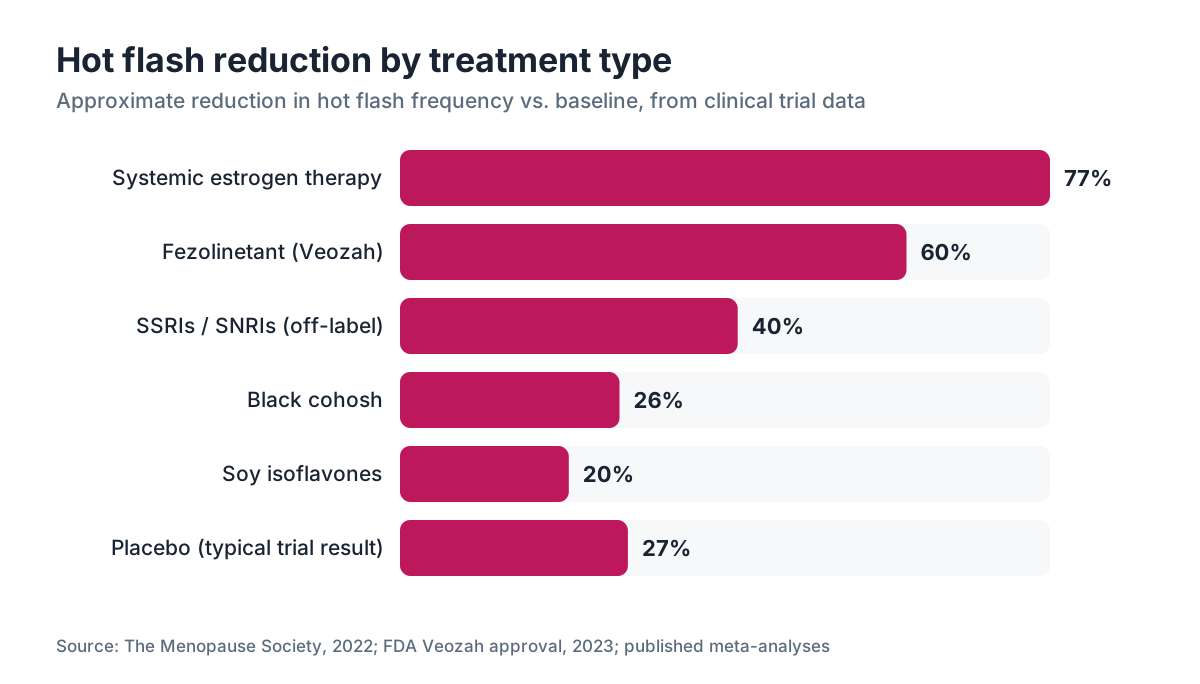
- Estrogen plus progesterone cuts hot flash frequency by 75% or more in most women [2]
- Estrogen alone (for women without a uterus) has an even better safety profile
- Starting HT within 10 years of menopause or before age 60 is linked to lower cardiovascular risk, not higher
- Bone density protection is real and clinically significant
The form matters too. Transdermal estrogen (patches, gels, sprays) carries a lower clot risk than oral estrogen because it skips first-pass liver metabolism [5]. Micronized progesterone (Prometrium) has a better breast-tissue safety profile than synthetic progestins. These distinctions are worth raising with your prescriber. Our deeper guide on hormone replacement therapy walks through the options, and for the patch-specific breakdown, see estrogen patch and progesterone.
What are the non-hormonal prescription options for hot flashes?
Some women can't use hormones. Some just don't want to. That's a legitimate choice, and there are now real prescription alternatives that don't rely on estrogen.
Fezolinetant (brand name Veozah) is the first non-hormonal drug approved specifically for menopause hot flashes. The FDA cleared it in May 2023. It's a neurokinin 3 receptor antagonist that acts on the temperature-regulation pathway in the hypothalamus. In the SKYLIGHT 1 and 2 trials, fezolinetant reduced hot flash frequency by about 60% at 12 weeks versus about 45% for placebo [6]. Meaningful, though not quite as strong as estrogen.
Paroxetine 7.5 mg (Brisdelle) is the only SSRI with an FDA menopause indication. It's weaker than estrogen and fezolinetant, but it earns its place if someone is already on an antidepressant or can't take the other two.
Other SSRIs and SNRIs (venlafaxine, escitalopram, desvenlafaxine) get used off-label with reasonable evidence behind them. Gabapentin shows up off-label for night sweats, mostly in women whose hot flashes are worst after dark.
Clonidine is technically an option, but the side effect profile (dizziness, dry mouth, rebound hypertension when you stop) makes it a last resort for most practitioners.
None of these do anything for bone loss or genitourinary symptoms. If those are part of your picture, you'll need a separate plan for each.
What can you do about vaginal dryness and painful sex after menopause?
Genitourinary syndrome of menopause (GSM) is chronically undertreated, mostly because women don't raise it and many providers don't ask. It affects roughly 50 to 60% of postmenopausal women, and unlike hot flashes, it doesn't fade on its own [7].
Local vaginal estrogen (cream, ring, or tablet) is the standard of care and has an excellent safety profile because it stays local with minimal systemic absorption. The FDA labeling still carries a black box warning about systemic estrogen risks, but that warning was written for systemic therapy and never updated to reflect the data on vaginal-only products. The Menopause Society states directly that local vaginal estrogen does not carry the same risks as systemic therapy [3].
Ospemifene (Osphena) is an oral SERM (selective estrogen receptor modulator) approved for painful sex and vaginal dryness. It's an option for women who can't use anything vaginal.
Prasterone (Intrarosa) is a vaginal DHEA insert that converts to estrogens and androgens locally. It works, and the data for painful sex is solid.
Over-the-counter vaginal moisturizers (Replens, Revaree) and silicone-based lubricants help with comfort. They don't reverse the tissue changes the way estrogen does, but they're useful adjuncts. Use them on a schedule, not only during sex.
How do supplements and 'natural' menopause remedies actually perform?
Most of them perform poorly against placebo. That doesn't make all of them useless, but the marketing outruns the evidence by miles.
Black cohosh is the most studied. The best meta-analyses show a modest drop in hot flash frequency, but the effect is inconsistent across trials and the mechanism is unclear. It's generally considered safe for short-term use, up to about 6 months, though there are rare case reports of liver toxicity [8].
Phytoestrogens (soy isoflavones, red clover) have mixed evidence. Some trials show a 20 to 25% reduction in hot flash frequency, which sounds fine until you remember that placebo cuts frequency by 25 to 30% in well-designed trials. The real effect, if there is one, is small.
Magnesium, vitamin B6, and evening primrose oil are popular. The evidence for any of them on hot flashes is weak. Magnesium does matter for sleep and bone health, so it's not wasted money if you're actually deficient, and many women are.
Melatonin improves sleep quality for some women, which can interrupt the night-sweat-to-sleep-loss cycle even though it does nothing for the sweats themselves.
The honest answer: if a supplement helps you and your provider isn't worried about interactions, it's probably fine. But don't delay or refuse evidence-based treatment while you wait for a supplement to be enough. For most women with moderate to severe symptoms, it won't be.
Does weight gain during menopause actually have to happen?
Not entirely, but the deck is stacked against you in ways that aren't your fault.
Estrogen decline shifts fat storage from hips and thighs toward the abdomen. Resting metabolic rate drops. Insulin sensitivity falls. Sleep disruption from night sweats compounds all of it. The average woman gains about 1.5 pounds per year during the menopausal transition, and much of it lands as visceral fat even when total body weight barely moves [9].
Hormone therapy doesn't cause weight gain (a myth that refuses to die) and actually tends to blunt the abdominal fat shift compared to no treatment.
For women who need more than lifestyle changes, GLP-1 receptor agonists have become a serious option. Semaglutide (Wegovy) and tirzepatide (Zepbound) produce body weight reductions above 15 to 20% in clinical trials. The SURMOUNT-1 trial found tirzepatide reduced body weight by up to 22.5% [10]. These drugs work regardless of menopausal status, though women in menopause often report better sleep and less joint pain as secondary effects. See our full breakdown on semaglutide for weight loss and the head-to-head on semaglutide vs tirzepatide.
WomenRx prescribes GLP-1s alongside hormone therapy for women who need both, which is more common than most people expect.
Strength training is the single best lifestyle investment for menopausal women. It holds onto lean mass, improves insulin sensitivity, supports bone density, and appears to soften vasomotor symptoms in some women. Aim for two to three sessions a week with progressive resistance.
What should you do about bone loss during and after menopause?
Bone loss speeds up sharply in the first few years after menopause, and some women lose 10 to 20% of bone density in that window [11]. This is not a distant risk. It starts during perimenopause.
Estrogen is the most powerful tool for slowing it. Women who start hormone therapy at menopause and stay on it hold onto meaningfully better bone density than those who don't. When they stop, the accelerated loss picks back up, which is one reason some women stay on HT long-term.
For women who can't or won't use estrogen, bisphosphonates (alendronate, risedronate) are first-line for osteoporosis. RANK-L inhibitors (denosumab) and PTH analogs (teriparatide) come in for more severe cases.
Before any of that, you need to know where your bones actually stand. A DEXA scan is the standard tool. The U.S. Preventive Services Task Force recommends screening every woman 65 and older, plus younger postmenopausal women with risk factors [11]. If you're past menopause and haven't had one, ask. Our article on bone density test explains what the numbers mean.
Calcium and vitamin D matter but get badly oversold. Current evidence suggests supplemental calcium doesn't prevent fractures in most women with adequate dietary intake, and high-dose supplements may raise kidney stone risk. Get calcium from food when you can. Vitamin D3 at 1,000 to 2,000 IU daily is reasonable for most postmenopausal women, especially if your 25-OH vitamin D is below 30 ng/mL.
How does menopause affect mental health and cognitive function?
The mood and cognitive symptoms of menopause are real, and they get dismissed constantly. This is the space where women are told it's just stress or anxiety while a hormonal explanation sits in plain view.
Estrogen has neuroprotective effects and influences serotonin, dopamine, and acetylcholine systems. As estrogen swings and then drops, many women hit depression, anxiety, irritability, and brain fog that are physiologically driven rather than a reaction to life circumstances.
The menopausal transition is the highest-risk period for new-onset depression in a woman's life, even in women with no prior history [2]. This gets missed when providers treat the depression without connecting it to the hormonal picture.
Hormone therapy, started during perimenopause or early menopause, reduces depressive symptoms in many women. The cognitive data is messier: estrogen started close to menopause may protect cognition, while estrogen started much later doesn't help and may modestly raise dementia risk in older women. That timing pattern is one of the strongest arguments for not waiting too long to address hormonal changes.
Sleep disruption drives a lot of the cognitive symptoms. Night sweats that wake you three times a night will wreck memory, attention, and mood regardless of estrogen levels. Fix the night sweats and a surprising amount of what felt like cognitive decline lifts.
How do you find good menopause care when many doctors aren't trained for it?
This is a real problem. A 2019 survey found that most U.S. ob-gyn residency programs gave menopause fewer than 3 hours of total curriculum time [12]. Plenty of women report being brushed off, undertreated, or handed outdated information about hormone therapy risks.
The Menopause Society (formerly NAMS) keeps a searchable directory of certified menopause practitioners at menopause.org. These providers have completed extra training and passed a certification exam. Not a perfect filter, but a strong starting point.
Telehealth has widened access, especially for women in rural areas or those whose local gynecologist still reflexively refuses hormone therapy. When you evaluate a telehealth menopause provider, look for one who lays out the full range of options, asks about your personal and family history, and explains the reasoning instead of just firing off a prescription. Platforms like WomenRx are built around women's hormonal health and connect you with licensed clinicians who focus on it.
Come prepared. Bring a symptom log (what's happening, how often, how much it disrupts your day), a list of current medications, and your most recent bloodwork if you have it. Ask directly about your hormone therapy options, which form the prescriber recommends and why, and what monitoring they want to do. A good provider welcomes those questions.
How do you compare the main menopause treatment options?
Here's a side-by-side view of the main options, their evidence strength, and what each one does and doesn't address.
| Treatment | Hot flashes | Vaginal symptoms | Bone protection | Evidence quality | |---|---|---|---|---| | Systemic estrogen (+ progestogen if uterus intact) | Excellent (75%+ reduction) | Yes | Yes | High (FDA-approved) | | Vaginal estrogen only | Minimal systemic effect | Excellent | Minimal | High (FDA-approved) | | Fezolinetant (Veozah) | Good (~60% reduction) | No | No | High (FDA-approved, 2023) | | SSRIs/SNRIs (off-label) | Moderate | No | No | Moderate | | Black cohosh | Modest, inconsistent | No | No | Low-moderate | | Soy isoflavones | Small to none | No | Possibly small | Low | | Lifestyle (exercise, diet) | Small to moderate | No | Modest | Moderate | | GLP-1 agonists | No direct effect | No | No | High for weight loss |
One thing jumps off the table: no supplement covers the full picture. Hormone therapy is the only option that handles hot flashes, vaginal symptoms, and bone loss with high-quality evidence behind all three.
What lifestyle changes genuinely help during menopause?
A handful have real evidence behind them. Most of the wellness-industry advice is noise.
Exercise: aerobic training reduces hot flash severity (frequency is less reliable) and supports bone density, cardiovascular health, mood, and sleep. Resistance training specifically guards against the muscle loss (sarcopenia) that accelerates after menopause. This is the highest-yield lifestyle move you can make.
Sleep hygiene: keep the bedroom cool (around 65 to 68 degrees F), use moisture-wicking bedding, and cut alcohol, which triggers hot flashes in a lot of women. Alcohol deserves specific attention because many women don't realize it's a vasomotor trigger.
Diet: a Mediterranean-style eating pattern is linked to lower cardiovascular risk, which matters because menopause speeds up atherosclerosis. Direct evidence that diet changes cut hot flash frequency is limited, but the payoff for weight, inflammation, and cholesterol is real.
Cognitive behavioral therapy (CBT) for menopause has genuinely good evidence for reducing the distress hot flashes cause, even when it doesn't touch the frequency. Worth knowing about, especially for women who can't use or don't want medical treatments.
Stress reduction through mindfulness, yoga, or whatever actually works for you: there's some signal that chronic stress and elevated cortisol worsen vasomotor symptoms. The data isn't strong enough for firm claims, but stress management has essentially no downside.
Smoking cessation: smoking worsens hot flashes, speeds bone loss, and pulls menopause onset forward by roughly 1 to 2 years. If you smoke, quitting is one of the highest-impact things you can do for your menopausal health.
Frequently asked questions
At what age should I start thinking about menopause support?
Most women enter perimenopause between 40 and 51, though symptoms can start in the late 30s. You don't need to wait for menopause to be official (12 months without a period) before seeking support. If hot flashes, irregular periods, sleep disruption, or vaginal dryness are affecting your life, that's when to have the conversation, not after some arbitrary date.
Is it safe to take hormone therapy for more than 5 years?
For many women, yes. The old '5-year rule' came from outdated, overapplied WHI data. The Menopause Society now says duration should be individualized. Women who started HT for severe symptoms and are still benefiting at 5 or 10 years aren't automatically required to stop. Annual reassessment with your provider makes sense, but there's no hard cutoff for healthy women with ongoing symptoms.
Can hormone therapy help with menopause-related weight gain?
HT doesn't cause weight loss on its own, but it does blunt the visceral fat shift that comes with estrogen decline. Women on HT tend to gain less abdominal fat than women who aren't, even at the same total body weight. For active weight loss, diet, exercise, and in some cases GLP-1 medications are more directly effective. HT and GLP-1s can be used together.
What blood tests should I get during menopause?
FSH and estradiol are commonly ordered and can confirm menopause when it's uncertain, though they fluctuate and aren't always needed. More useful: a full lipid panel (cardiovascular risk climbs after menopause), fasting glucose or HbA1c (insulin resistance rises), a thyroid panel (thyroid problems mimic menopausal symptoms), vitamin D level, and a DEXA scan for bone density. Ask for all of these if you haven't had them recently.
Do I still need birth control during perimenopause?
Yes, until you've had 12 consecutive months without a period. Pregnancy during perimenopause is uncommon but possible. Low-dose hormonal contraceptives can also manage perimenopausal symptoms for some women. Once you've completed the full year without a period, fertility is effectively zero and contraception is no longer needed.
Are bioidentical hormones safer than conventional hormone therapy?
FDA-approved bioidentical hormones (estradiol and micronized progesterone) have strong safety data and are standard in many menopause practices. Custom-compounded 'bioidentical' blends from compounding pharmacies haven't been tested the same way, and the FDA has stated they lack evidence of safety or efficacy. If a provider pushes compounded hormones over FDA-approved versions, ask specifically why.
Can menopause cause anxiety and depression?
Yes. The menopausal transition is the highest-risk period for new-onset depression in a woman's life, driven partly by estrogen's effects on serotonin and dopamine systems. Anxiety is also common, especially during perimenopause when hormones swing unpredictably. Hormone therapy can reduce these symptoms for many women. If you were prescribed an antidepressant for new mood symptoms in your 40s or 50s, ask whether hormones were considered.
What is the difference between perimenopause and menopause?
Perimenopause is the transitional phase where hormone levels turn irregular and symptoms begin, usually starting in the mid-to-late 40s. Menopause is the single point defined as 12 consecutive months without a menstrual period. Postmenopause is everything after that. Many women spend 4 to 8 years in perimenopause before reaching the menopause milestone. For more on timing, see our perimenopause age and menopause age articles.
Does menopause increase heart disease risk?
Yes, substantially. Before menopause, estrogen helps keep LDL lower and HDL higher and keeps blood vessels flexible. After menopause, LDL rises, HDL falls, blood pressure tends to climb, and inflammation markers go up. Heart disease becomes the leading cause of death for postmenopausal women. Starting HT close to menopause appears to lower cardiovascular risk; starting it 10 or more years later does not give the same benefit.
What helps with menopause-related insomnia?
Hot flashes and night sweats are the leading cause of menopause-related sleep disruption. Treating them directly (with HT, fezolinetant, or SSRIs) is often the most effective route. If the sweats are controlled and sleep is still poor, cognitive behavioral therapy for insomnia (CBT-I) is the most evidence-backed treatment for chronic insomnia. Sleep medications carry real drawbacks for long-term use, especially in older women.
Are GLP-1 medications useful for menopause weight gain?
GLP-1 drugs like semaglutide and tirzepatide work well for weight loss in postmenopausal women. They don't directly treat menopausal symptoms, but the weight loss itself can ease hot flash severity in some women, improve sleep, lower joint pain, and cut cardiovascular risk. They're especially useful when lifestyle changes aren't producing enough. They can be prescribed alongside hormone therapy with no known interactions.
How do I know if my symptoms are bad enough to warrant treatment?
If your symptoms are hitting your sleep, work, relationships, or quality of life in a consistent way, that's reason enough to pursue treatment. There's no severity threshold you have to pass. Mild symptoms don't require medical intervention if you're comfortable managing them another way, but you also shouldn't white-knuckle through moderate to severe symptoms for years when effective options exist.
Is testosterone therapy part of menopause support?
Testosterone declines along with estrogen and can contribute to low libido, fatigue, and a dulled sense of wellbeing. No testosterone product is FDA-approved specifically for women in the US, but off-label low-dose testosterone is practiced by many menopause specialists. The evidence for libido improvement is reasonably good. Evidence for energy and cognitive effects is more preliminary. Worth discussing if those symptoms are prominent and estrogen alone hasn't fixed them.
Sources
- Office on Women's Health, U.S. Department of Health and Human Services — Menopause overview
- The Menopause Society (NAMS) — 2023 Menopause Practice: A Clinician's Guide
- The Menopause Society — 2022 Hormone Therapy Position Statement
- Manson JE et al. — Menopausal Hormone Therapy and Long-term All-Cause and Cause-Specific Mortality, JAMA 2017
- Canonico M et al. — Hormone Therapy and Venous Thromboembolism Among Postmenopausal Women, Circulation 2007
- FDA Drug Approval — Fezolinetant (Veozah), May 2023
- Portman DJ, Gass ML — Genitourinary syndrome of menopause: new terminology for vulvovaginal atrophy, Menopause 2014
- NIH National Center for Complementary and Integrative Health — Black Cohosh fact sheet
- Davis SR et al. — Understanding weight gain at menopause, Climacteric 2012
- Jastreboff AM et al. — Tirzepatide Once Weekly for the Treatment of Obesity, NEJM 2022 (SURMOUNT-1)
- U.S. Preventive Services Task Force — Osteoporosis to Prevent Fractures: Screening, 2018
- Kaunitz AM et al. — Menopause education needs in US ob-gyn residency, Menopause 2019