Menopause supplements: what works, what doesn't, and what to skip
TL;DR: Most menopause supplements carry modest evidence at best. Black cohosh and soy isoflavones have the most studied track records for hot flashes, though effects run small next to hormone therapy. Magnesium, vitamin D, and calcium matter for bone and sleep. Many popular blends are underdosed. For moderate-to-severe symptoms, supplements rarely do the job alone.
Why do women turn to supplements during menopause?
The supplement industry markets hard to women in their 40s and 50s, and the reasons they buy are easy to understand. Hot flashes, broken sleep, joint pain, mood swings, brain fog. These symptoms are real and disruptive, and many women either don't want hormone therapy or can't get to a clinician who prescribes it well. A bottle off the shelf feels like a lower-stakes place to start.
The global menopause supplement market was valued at roughly $600 million in 2023 and keeps climbing [1]. That growth says more about unmet need than proven results. Most of these products never go through the clinical testing that prescription drugs do, and the FDA does not require supplement makers to prove a product works before they sell it [2].
Dismissing all supplements is too blunt, though. A handful of compounds have real, if modest, evidence behind them. The trick is knowing which ones, at what dose, and for which symptom. This article maps all of that out.
Want the full hormonal picture first? Start with the menopause overview.
What supplements are most commonly recommended for menopause symptoms?
Here's an honest map of the evidence for the supplements women reach for most.
Black cohosh (Actaea racemosa) This is the most studied botanical for hot flashes. A Cochrane review of 16 trials found black cohosh reduced hot flash frequency modestly against placebo, though the authors called the evidence "insufficient to draw firm conclusions" [3]. Most studies use 20 to 40 mg standardized extract twice daily. The North American Menopause Society (NAMS) says it may be reasonable for women with mild-to-moderate vasomotor symptoms who can't or won't use hormones [4]. Don't run it past 6 months without medical supervision. Rare cases of liver injury have been reported.
Phytoestrogens (isoflavones, lignans, red clover) Found in soy, red clover, and flaxseed, these compounds bind estrogen receptors weakly. Meta-analyses show they cut hot flash frequency by roughly 20 to 25% versus placebo, less than half the drop you get from low-dose estrogen [5]. The effect is more consistent with soy isoflavone supplements (40 to 80 mg/day) than with food alone. If you have a history of estrogen-receptor-positive breast cancer, talk to your oncologist before starting concentrated doses.
Magnesium Magnesium shortfall is common in midlife women and worsens with age. Low levels track with poor sleep, muscle cramps, and shaky mood. A 2021 randomized trial in Nutrients found 320 mg/day of magnesium glycinate improved sleep quality in perimenopausal women over 8 weeks [6]. It also helps hold bone density. This is one I'd put money on for most women.
Vitamin D Most women in perimenopause and beyond run low. The Endocrine Society recommends 1,500 to 2,000 IU/day for adults at risk, with dosing guided by blood levels [7]. Vitamin D drives calcium absorption and supports bone, mood, and immune function [13]. It's cheap. Hard to argue against testing and correcting a low level.
Calcium Estrogen decline speeds bone loss. The NIH recommends women over 50 get 1,200 mg of calcium daily from food and supplements combined [8]. Calcium carbonate is cheap but needs stomach acid to absorb; calcium citrate absorbs better and sits easier if you have reflux. Don't take more than 500 mg at once. The link between very high supplemental calcium (over 1,500 mg/day) and heart risk is still contested, which is why food first is a sane rule.
Ashwagandha (Withania somnifera) A randomized trial of 91 women in the Journal of Ethnopharmacology (2021) found ashwagandha root extract at 300 mg twice daily improved menopause symptom scores, including anxiety, hot flashes, and sleep, against placebo [9]. Effect sizes were modest. It's an adaptogen that likely works partly by tamping down cortisol. The research is early but good enough to name.
Melatonin Sleep disruption is one of the most common and most damaging menopause symptoms, and melatonin production drops with age. Low doses (0.5 to 1 mg) 30 minutes before bed have reasonable evidence for falling asleep, and a few small trials hint at a mood benefit in perimenopause. Safe short-term. It's no substitute for hormone therapy, but for sleep alone it's one of the more defensible picks here.
Omega-3 fatty acids (EPA/DHA) A 2009 randomized trial in Menopause found omega-3 supplementation at 1.8 g EPA/day cut hot flash frequency by 55%, versus 25% in the placebo group, over 8 weeks [10]. The study was small (n=120), so hold it loosely. But omega-3s carry so many other benefits for heart health and inflammation that they're easy to justify in midlife anyway.
Worried about bone loss and fractures? A bone density test is worth raising with your doctor, especially if you're 5 or more years past your last period.
How do menopause supplements compare to hormone replacement therapy?
Supplements don't come close to hormone therapy for moderate-to-severe hot flashes. That's the honest answer to the question most women actually want settled.
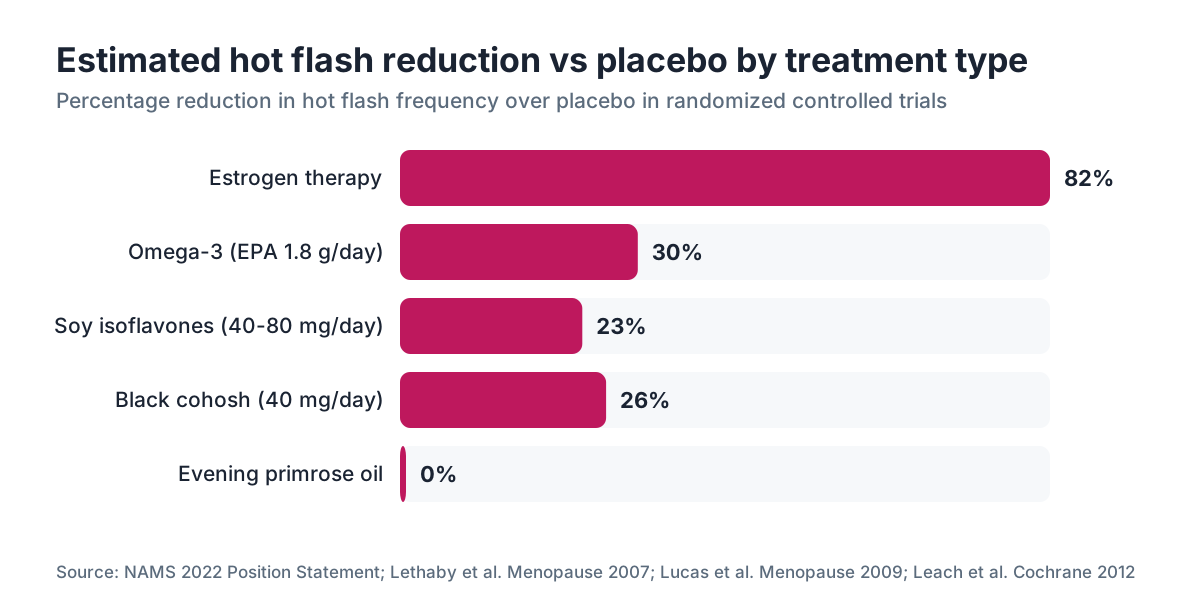
Estrogen therapy cuts hot flash frequency by 75 to 90% in most trials [4]. The best botanical supplements get you 20 to 30%. That's not nothing. But for a woman having 10 hot flashes a day, dropping to 7 doesn't change her life. Dropping to 1 or 2 does.
Hormone therapy also has evidence for bone protection, cardiovascular benefit when started within 10 years of menopause, steadier mood, and healthier genital tissue. Supplements have weaker or no evidence for most of those.
The NAMS 2022 position statement puts it plainly: "hormone therapy remains the most effective treatment for vasomotor symptoms," with a risk-benefit profile that favors most healthy women under 60 or within 10 years of menopause onset [4].
For women who can't use estrogen (certain hormone-receptor-positive cancers, some clotting disorders, unexplained vaginal bleeding), supplements matter more as a management tool. For women who simply prefer to skip hormones, that's a legitimate choice. Just go in with clear eyes about what a supplement can and can't deliver.
Want the detail on hormone options? The hormone replacement therapy explainer covers the types, the risks, and who's a candidate.
Which supplements actually help with hot flashes specifically?
Hot flashes draw the most treatment attention and the most supplement research. Here's the short list with actual randomized controlled trial evidence behind it:
- Black cohosh: modest cut in frequency and severity, roughly 26% over placebo in better-quality trials [3]
- Soy isoflavones (40 to 80 mg/day): roughly 20 to 25% reduction in hot flash frequency [5]
- Red clover isoflavones (40 to 160 mg/day): similar to soy, possibly a touch better at higher doses
- Omega-3s (EPA-heavy formulas): one good trial shows a meaningful drop, but it needs replication [10]
- Pycnogenol (French maritime pine bark extract, 60 to 200 mg/day): two small trials show some benefit, evidence is thin
Supplements with no reliable hot flash evidence despite heavy marketing: evening primrose oil, dong quai, wild yam, chasteberry, valerian. Save your money.
Dose is everything. Most black cohosh and isoflavone studies used specific standardized extracts at specific amounts. A grocery store "black cohosh blend" with no stated extract concentration is not the thing that was tested.
What supplements support bone health after menopause?
Bone loss speeds up sharply in the first 5 to 7 years after menopause, and women can lose up to 20% of bone density in that window [8]. Supplements can't halt that the way estrogen can, but they can slow it.
The three evidence-based pillars are calcium, vitamin D, and magnesium. Women over 50 need 1,200 mg of calcium daily from food and supplements combined [8]. Most get 600 to 700 mg from diet, so a 500 to 600 mg supplement closes the gap. Vitamin D is required for calcium absorption; without enough of it (at least 800 IU/day, and often 1,500 to 2,000 IU/day for deficient women), you absorb very little of the calcium you swallow [7].
Magnesium gets overlooked, but it's needed for vitamin D metabolism and for bone crystal formation. Low magnesium tracks with lower bone density in observational data.
Collagen peptides (types I and II) have early evidence for joint comfort and some data on bone markers, but the fracture-reduction proof isn't there yet. Vitamin K2 (as MK-7, 90 to 180 mcg/day) looks promising for steering calcium into bone rather than arteries, and some European guidelines mention it, though US guidelines haven't formally adopted it.
If bone density worries you, especially after early menopause, get a baseline DEXA scan before deciding between supplements and medications like bisphosphonates.
Do supplements help with menopause-related sleep problems and mood?
Sleep and mood are the two areas where the line between real supplement effect and placebo gets blurriest, and where women vary the most from one another.
For sleep, the strongest candidates are melatonin (low dose, 0.5 to 1 mg, for falling asleep), magnesium glycinate (320 mg before bed for sleep quality), and ashwagandha, which appears to lower cortisol and improve sleep architecture in the limited trial data available [6][9]. L-theanine, an amino acid from green tea, has some trial support for cutting the time it takes to fall asleep at 200 mg, though menopause-specific studies are scarce.
Mood is more tangled. Menopause mood changes come from several places at once: hormone swings, wrecked sleep, life stress, and for some women, a first brush with depression. Supplements that touch serotonin or cortisol pathways (ashwagandha, saffron, omega-3s) have small trial support. But for actual clinical depression, a supplement won't cover it. If your mood dips run deeper than mild, talk to a clinician.
Saffron extract (28 to 30 mg/day) has a small but surprisingly steady evidence base for mild depression across several trials, including one perimenopausal study. It's underrated in most supplement roundups.
Are menopause supplements safe, and do they interact with medications?
Safety swings widely by supplement. Most are well tolerated at standard doses. But several carry real risks or drug interactions that labels rarely mention.
Black cohosh: rare but documented cases of liver toxicity. The European Medicines Agency has flagged this. Skip it if you have liver disease or take medications hard on the liver.
Phytoestrogens: women with an estrogen-receptor-positive breast cancer history should check with their oncologist. The data on food-level phytoestrogens in this group is fairly reassuring, but concentrated supplements at pharmacological doses are a separate conversation.
St. John's Wort (sometimes sold for menopause mood): induces the CYP3A4 enzyme and can knock down the effectiveness of antidepressants, birth control pills, thyroid medication, blood thinners, and antiretrovirals. This one's a genuine interaction hazard.
Vitamin D at very high doses (over 10,000 IU/day long-term): can cause hypercalcemia. Taking 1,000 to 2,000 IU/day is safe for most women without testing; anything higher should follow blood levels.
Melatonin: safe short-term, thin long-term data in women. It can nudge blood pressure in some people and deserves caution alongside sedatives or blood pressure medication.
Tell your prescribing clinician everything you take. This matters most if you're on hormones, thyroid medication, antidepressants, or anticoagulants.
How do you read a menopause supplement label and spot low-quality products?
The supplement market has almost no enforcement for label accuracy before a product hits shelves [2]. Independent testing by ConsumerLab.com, USP, and NSF International keeps finding supplements that contain less (or occasionally more) of the stated ingredient than the label claims.
Here's what a higher-quality product looks like.
Third-party certification: a USP Verified, NSF Certified for Sport, or ConsumerLab Approved seal. That means an outside lab tested the product for potency and purity.
Standardized extract notation: for black cohosh, the label should give the extract ratio and the triterpene glycoside concentration (usually 2.5%). For isoflavones, it should list the milligrams of actual isoflavone content, more than plant material weight.
No proprietary blends that hide the doses: a label reading "women's botanical blend 500 mg" with 10 herbs inside tells you nothing about whether any single herb hits an effective dose.
Realistic claims: the FDA bars supplements from claiming to treat or cure disease. A label promising to "eliminate hot flashes" or "stop bone loss" flags a company that ignores the rules [2].
Price tells you little about quality. Some expensive branded lines have mediocre evidence and no certification. Some cheap single-ingredient products with USP verification are excellent.
What should women in perimenopause take versus post-menopause?
The phase changes the symptom picture, so it changes what's worth taking.
In perimenopause, hormones swing erratically rather than simply falling. Estrogen can spike, then crash. This stage produces the worst mood swings, broken sleep, and irregular periods. Supplements that steady cortisol (ashwagandha), support sleep (magnesium, low-dose melatonin), and ease cycle-related symptoms fit here. Phytoestrogens make less sense when estrogen is already running high on some days.
Post-menopause (defined as 12 straight months without a period) means estrogen sits consistently low. Now bone loss becomes the main long-term worry, and the case for calcium, vitamin D, and magnesium gets stronger. Hot flash supplements matter more if symptoms drag on, though most women find hot flashes peak in the first 1 to 3 years post-menopause and fade after.
Not sure when menopause starts or which phase you're in? FSH and estradiol testing through a clinician can help sort it out.
One practical note. If you're in perimenopause and taking something for hot flashes, your symptoms may swing week to week no matter what the supplement does. Give any new supplement 8 to 12 weeks before you judge it, and keep a symptom log so you don't hand credit to the bottle for a naturally good week.
Are there supplements that genuinely aren't worth buying?
Yes. And I'd rather say so straight than hedge.
Evening primrose oil is one of the most aggressively marketed products for hot flashes. A 2007 randomized controlled trial in BJOG found no significant benefit over placebo for vasomotor symptoms [11]. It stays popular. It still doesn't work.
Wild yam cream gets sold as a "natural progesterone." Your body cannot turn diosgenin (the compound in wild yam) into progesterone. That conversion happens in a lab, not your liver. Wild yam cream is not progesterone and won't raise your progesterone. If you need progesterone, you need actual bioidentical progesterone prescribed by a clinician (see the progesterone overview).
Dong quai has no reliable clinical evidence for any menopause symptom and contains coumarin compounds that interact with warfarin.
Maca root has enthusiastic marketing and a few tiny trials. Nothing large or rigorous enough to recommend for menopause symptoms with confidence.
Most proprietary "menopause support" blends at big retailers stack 8 to 12 herbs at doses too low to match what worked in studies. They're legal, cheap, and unlikely to do much.
The best supplement for menopause is rarely the one with the prettiest box or the longest ingredient list. A single well-dosed, certified magnesium glycinate beats most of the blends on the shelf.
When should you talk to a doctor instead of relying on supplements?
Supplements make sense for mild symptoms, for women with informed reasons to avoid hormones, and as add-ons to other treatments. They fall short in several situations:
- Severe hot flashes (more than 7 a day, especially night sweats that wreck sleep every night)
- Signs of real bone loss or a high FRAX fracture risk score
- Moderate-to-severe depression or anxiety that started around menopause
- Genitourinary syndrome of menopause (GSM): vaginal dryness, recurrent UTIs, pain with sex. Supplements essentially don't touch this. Vaginal estrogen does.
- Premature menopause (before 40) or early menopause (before 45): the long-term heart and bone risks run higher, and these women usually benefit most from hormone therapy
WomenRx offers telehealth access to clinicians who focus on hormones and menopause care, including hormone replacement therapy and estrogen patch options, worth exploring if supplements alone aren't moving the needle.
The supplements-versus-hormones decision doesn't have to be all-or-nothing. Plenty of women run both: hormone therapy for the symptoms hormones handle best, and targeted supplements (vitamin D, magnesium, omega-3s) for the nutrition and bone gaps that exist no matter your HRT status.
What does the research actually say about popular menopause supplement brands?
Nobody has run head-to-head clinical trials on most named brands, so I can't rank Ritual against Bonafide against Amazon basics on outcome data. What you can judge is formulation quality.
Bonafide sells a product called Relizen, marketed for hot flashes. Its active ingredient is a proprietary pollen extract called Sérélys (not an isoflavone, despite common confusion). A 2015 randomized placebo-controlled trial of 170 women found a 65% reduction in hot flash frequency versus 38% on placebo after 12 weeks [12]. The study was industry-sponsored and small, but the effect size runs notably larger than most botanical trials. Worth watching if independent replications land.
For verification of specific products, ConsumerLab.com regularly tests menopause supplements and publishes pass/fail results. Their recent reviews have flagged popular isoflavone products containing far less isoflavone than labeled. That's the kind of data that should shape a purchase more than marketing copy.
The most defensible way to buy any menopause supplement: single ingredient, known dose, third-party certified, matched to the dose range from peer-reviewed trials.
Frequently asked questions
What is the best menopause supplement for hot flashes?
Black cohosh (20 to 40 mg standardized extract twice daily) and soy isoflavones (40 to 80 mg/day) have the most evidence for hot flash reduction, though effects stay modest next to hormone therapy. Omega-3 fatty acids at 1.8 g EPA/day showed a meaningful drop in one randomized trial. No supplement reliably matches the 75 to 90% reduction seen with estrogen therapy.
Can I take menopause supplements and hormone therapy at the same time?
Generally yes for vitamin D, calcium, magnesium, and omega-3s. These pair well with hormone therapy and fill nutrient gaps HRT doesn't cover. Be more careful with phytoestrogens (the added estrogenic effect is unknown) and definitely avoid St. John's Wort, which can cut HRT effectiveness by speeding up drug metabolism. Always tell your prescriber what you're taking.
Are menopause supplements FDA-approved?
No. Dietary supplements fall under DSHEA (1994), which means manufacturers don't have to prove safety or efficacy before selling. The FDA can act after a product is on the market if harm shows up. That's fundamentally different from drug approval. Look for third-party certification from USP, NSF, or ConsumerLab as a proxy for quality.
How long does it take for menopause supplements to work?
Most botanical supplements need 8 to 12 weeks to show a noticeable effect, if they work at all. That's longer than most women expect. Keeping a daily symptom log before and after starting gives you real data instead of relying on memory. Magnesium for sleep may act faster, often within 1 to 2 weeks. Less than 8 weeks probably isn't enough time to judge fairly.
What is the difference between bioidentical hormones and natural menopause supplements?
Bioidentical hormones (estradiol, progesterone) are pharmaceutical compounds with the same molecular structure as the hormones your body makes. They're regulated, dosed precisely, and backed by clinical trials. Natural menopause supplements are plant-derived compounds that may weakly mimic or nudge hormone activity. The word 'natural' on a label describes where something came from, not whether it's safe or effective.
Is black cohosh safe for women with breast cancer?
The evidence is mixed and still developing. Black cohosh doesn't appear to bind estrogen receptors directly, which is why many oncologists rank it lower-risk than phytoestrogens for hormone-sensitive cancers. Still, most breast cancer guidelines recommend clearing any botanical supplement with your oncologist first. Several major cancer centers advise caution regardless of the current evidence gaps.
What supplements help with menopause weight gain?
No supplement has strong evidence for reversing the metabolic shift of menopause. Inositol (myo-inositol, 2 to 4 g/day) has some trial support for insulin sensitivity in perimenopausal women. Berberine has preliminary data for blood sugar and weight. Neither replaces diet, resistance training, and in some cases medical weight management. For significant menopause-related weight gain, GLP-1 medications have far stronger evidence than any supplement.
Do phytoestrogens in supplements act like estrogen in the body?
Phytoestrogens bind both estrogen receptor alpha and beta, but with far lower affinity than estradiol. Their effects are weak and tissue-selective. At typical supplement doses (40 to 80 mg isoflavones/day) they produce mild estrogenic effects in some tissues. They don't raise measurable serum estrogen and aren't equivalent to estrogen therapy. Their safety in women with an estrogen-receptor-positive cancer history isn't fully established.
What vitamins should every woman take during menopause?
Vitamin D (test first, then supplement to reach 30 to 50 ng/mL, typically 1,000 to 2,000 IU/day), calcium (1,200 mg/day total from food plus supplement), and magnesium (320 mg/day, glycinate form for tolerance) carry the strongest evidence for midlife women. These fill nutrient gaps hormone therapy doesn't cover and support bone, muscle, sleep, and mood.
Are magnesium supplements helpful for menopause symptoms?
Yes, especially for sleep and muscle cramps. A 2021 randomized trial found 320 mg/day of magnesium glycinate improved sleep quality in perimenopausal women over 8 weeks. Magnesium also supports bone density and may ease anxiety. Glycinate or malate forms sit better than oxide, which tends to cause loose stools. This is one of the supplements with the clearest benefit-to-risk ratio for most midlife women.
Can supplements replace hormone therapy for perimenopause?
For mild symptoms, some women find supplements enough. For moderate-to-severe hot flashes, night sweats, sleep disruption, or symptoms hitting daily function, no supplement comes close to hormone therapy. The NAMS 2022 position statement is clear that hormone therapy is the most effective treatment for vasomotor symptoms. Treat supplements as add-ons or alternatives for mild symptoms or specific contraindications.
What supplements help with vaginal dryness during menopause?
Honestly, little from the supplement world. Omega-3s and vitamin E may offer mild mucous membrane support, and oral DHEA (Intrarosa) is a prescription option. But genitourinary syndrome of menopause responds best to local vaginal estrogen or vaginal DHEA, both prescription. Over-the-counter non-hormonal vaginal moisturizers also outperform any supplement for this specific symptom.
How much do menopause supplements cost per month?
A basic stack of vitamin D (1,000 to 2,000 IU), magnesium glycinate (320 mg), and calcium citrate (500 mg) from a certified brand usually runs $25 to $45 a month. A quality black cohosh or isoflavone supplement adds another $15 to $30. Branded proprietary blends marketed as menopause supplements often cost $50 to $90 a month and generally give you less per dollar than single-ingredient certified products.
Sources
- Grand View Research, Menopause Supplements Market Report, 2023
- U.S. FDA, Dietary Supplements Overview
- Cochrane Database of Systematic Reviews, Leach MJ et al., Black cohosh for menopausal symptoms, 2012
- North American Menopause Society (NAMS), 2022 Hormone Therapy Position Statement
- Menopause journal, Lethaby A et al., Phytoestrogens for menopausal symptoms, 2007
- Nutrients journal, magnesium and sleep quality randomized trial, 2021
- Endocrine Society, Vitamin D Deficiency Clinical Practice Guideline
- NIH Office of Dietary Supplements, Calcium Fact Sheet for Health Professionals
- Journal of Ethnopharmacology, Choudhary D et al., ashwagandha and menopause symptoms, 2021
- Menopause journal, Lucas M et al., omega-3 and hot flashes, 2009
- BJOG, Chenoy R et al., evening primrose oil for hot flashes, 2007
- Climacteric journal, Winther K et al., pollen extract for hot flashes, 2015
- NIH Office of Dietary Supplements, Vitamin D Fact Sheet for Health Professionals