How to find a menopause specialist (and what they actually do)
TL;DR: A menopause specialist is a clinician, usually a gynecologist, internist, or nurse practitioner, with extra training in hormonal transitions. They prescribe hormone therapy, manage related conditions like bone loss and cardiovascular risk, and read labs most general practitioners skip. The Menopause Society (formerly NAMS) certifies providers through the NAMS Certified Menopause Practitioner (NCMP) credential. Search their directory at menopause.org.
What is a menopause specialist?
A menopause specialist is a licensed clinician who has gone past general training to focus on the hormonal, metabolic, and quality-of-life changes of perimenopause and menopause. It's not a single specialty the way cardiology is. The title covers gynecologists, internists, family medicine doctors, and advanced practice nurses who have pursued extra education, exams, and often continuing clinical hours in this area.
The most recognized credential in the United States is the NAMS Certified Menopause Practitioner (NCMP), awarded by the Menopause Society (formerly the North American Menopause Society, or NAMS). To earn it, a clinician passes a written exam covering hormone physiology, pharmacology, bone health, cardiovascular risk, genitourinary syndrome, and more. As of 2024, fewer than 1,200 NCMPs practice in the U.S., which is one reason so many women struggle to find one [1].
What sets a menopause specialist apart from a general ob-gyn or primary care provider is how they spend their clinical time. They read the hormone therapy evidence regularly. They know why an estradiol patch differs from a pill for clot risk. They read an FSH, estradiol, and SHBG panel together rather than one number at a time. And they don't wave off brain fog, joint pain, or wrecked sleep as "getting older."
Some women also see endocrinologists for menopause care, especially when thyroid disease, adrenal issues, or premature ovarian insufficiency (POI) are in the picture. An endocrinologist isn't automatically a menopause specialist, but many are excellent at the hormonal piece. Credential or specialty matters less than the individual clinician's actual training and comfort with this patient population.
What does a menopause specialist treat?
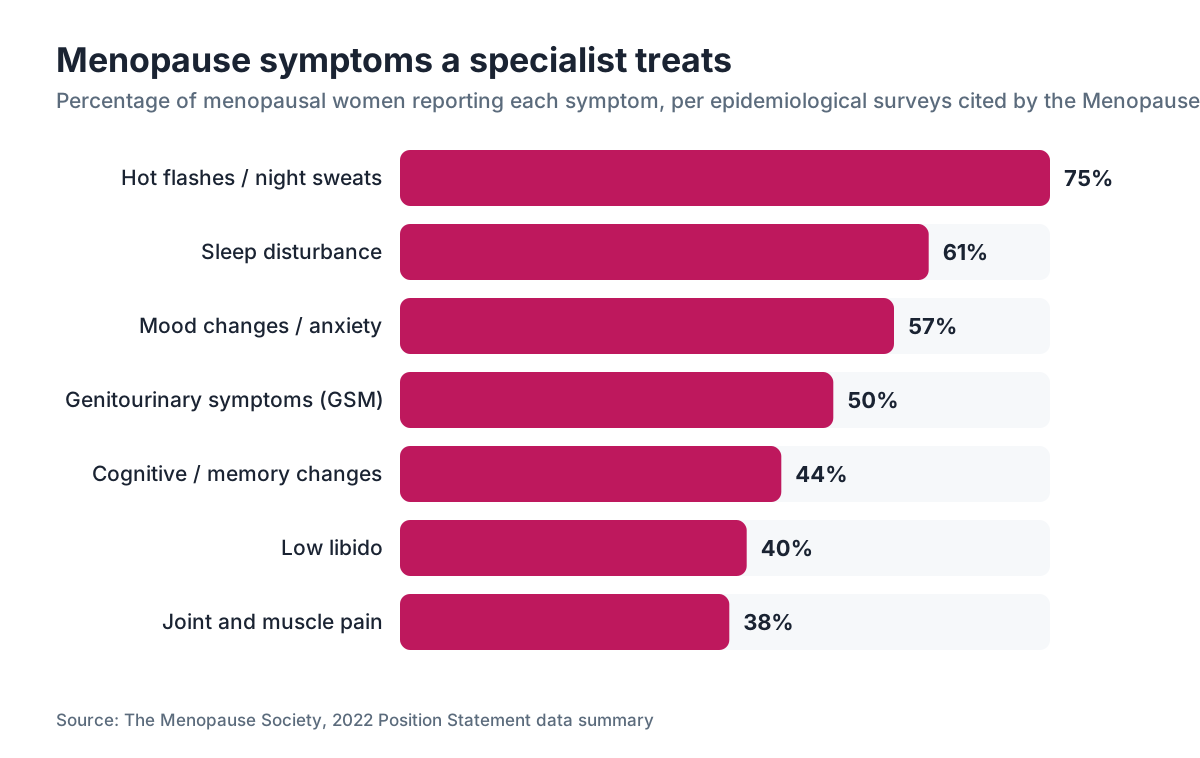
The symptom list runs longer than most people expect. Hot flashes and night sweats get all the attention, but a good menopause specialist also manages [2]:
- Genitourinary syndrome of menopause (GSM): vaginal dryness, pain with sex, recurrent UTIs, and urinary urgency
- Sleep disruption (often tangled up with night sweats, sometimes independent of them)
- Mood changes, anxiety, and depression that track with hormonal fluctuation rather than a primary psychiatric disorder
- Cognitive symptoms, particularly memory and word-retrieval issues many women call "brain fog"
- Bone density loss, with formal assessment and treatment when indicated
- Shifts in cardiovascular risk, including lipid changes and blood pressure that often worsen after menopause
- Weight redistribution, insulin resistance, and metabolic change
- Sexual dysfunction, including low libido that may respond to testosterone therapy
- Premature ovarian insufficiency in women under 40, which carries its own urgency because untreated estrogen deficiency at that age has real cardiovascular and bone consequences
A menopause specialist also manages the timing question: when to start hormone therapy, how long to continue, what form to use, and how to taper or stop if that's the right call. That's a more layered conversation than a 15-minute appointment allows.
For women dealing with weight gain during this transition, some menopause-focused providers now also discuss GLP-1 receptor agonists as a complementary tool. Hormone replacement therapy and semaglutide for weight loss aren't competing choices; plenty of women use both. The hormonal shift itself drives fat redistribution and insulin resistance, so treating only one side of the equation often leaves you halfway there.
What credentials should you look for in a menopause specialist?
The NCMP is the standard to look for in the U.S. The Menopause Society publishes a public directory at menopause.org where you can search by zip code and filter for NCMPs specifically [1]. Start there.
Canada, the UK, and Australia have their own societies with their own credentialing (the British Menopause Society awards the BMS-accredited Menopause Specialist designation), so if you're outside the U.S., look for your national society's equivalent.
Beyond the NCMP, reasonable signals of real expertise include:
- Fellowship training in reproductive endocrinology (REI) or a gynecologic subspecialty
- Active membership in the Menopause Society, the International Menopause Society (IMS), or the Endocrine Society, with regular attendance at their CME conferences
- A practice that is substantially focused on midlife women's health, not menopause as a thin slice of a general ob-gyn practice
- Familiarity with current guidelines: the Menopause Society hormone therapy position statement, the Endocrine Society's testosterone therapy guideline, and the USPSTF bone density screening recommendation
What doesn't tell you much: a provider whose bio says they "treat menopause" with no credential or society membership behind it. That phrase costs nothing to write. Ask directly. Are you an NCMP? Do you attend the Menopause Society annual meeting? How many patients per week do you see specifically for perimenopause or menopause management? The answers tell you a lot.
For women who need labs read alongside their symptoms, make sure the provider orders a panel that covers what you need. A fasting lipid panel, estradiol, FSH, TSH, testosterone (total and free), SHBG, and vitamin D are a reasonable start. A provider who orders only FSH and says "you're in menopause, take it or leave it" is not doing menopause medicine.
How do you find a menopause specialist near you?
Start with the Menopause Society's provider directory at menopause.org [1]. You can filter by NCMP certification, location, and telehealth availability. It's the most reliable single resource.
If the directory doesn't turn up results within a reasonable distance (genuinely common in rural and suburban areas), try these next steps.
Ask your current ob-gyn or primary care physician directly: "Do you have a colleague who specializes in menopause management?" Warm referrals within a practice network often surface providers who don't market themselves publicly.
Check academic medical centers. Major universities with ob-gyn departments often run a midlife women's health or menopause clinic. These can be harder to get into but tend to be strong on evidence-based care.
Telehealth has widened access here in a real way. Several platforms now offer synchronous video visits with NCMPs or other hormone-trained providers who can prescribe, read labs, and follow you over time. This matters a lot if you live somewhere with no local options. Platforms like WomenRx connect women with clinicians trained specifically in hormonal health, worth knowing if in-person options aren't working out.
When you call to book, ask two screening questions first. How long is the initial consultation? (Anything under 45 minutes is a red flag for a complex new patient.) And do they prescribe both systemic hormone therapy and local vaginal estrogen when indicated? A provider who says they "prefer not to" prescribe hormones, with no reason tailored to you, is going to frustrate you.
See also: perimenopause age and when does menopause start for context on where you might be in the transition before your first appointment.
What happens at your first appointment with a menopause specialist?
A first visit with a good menopause specialist usually runs 45 to 75 minutes. Expect a detailed symptom history, a review of your personal and family medical history (specifically cardiovascular disease, breast cancer, blood clots, and osteoporosis), a medication review, and a discussion of what labs you've had recently versus what they want to order.
They'll probably ask about things your regular doctor hasn't: sleep detail (more than "do you sleep" but when you fall asleep, whether you wake at 2 to 3 a.m., whether you're drenched when you do), how your menstrual pattern has changed over the past year, and symptoms in the luteal phase of your cycle that have gotten worse. They'll ask about vaginal and urinary symptoms you might not have volunteered because they're embarrassing. A good clinician makes that conversation comfortable.
The physical exam varies by provider and setting. In person, it may include blood pressure, weight, a breast exam, and a pelvic exam, especially if genitourinary symptoms are present. In a telehealth setting the exam is limited, but a skilled provider can still make real progress from history and labs alone.
You should leave with a clear treatment plan, or at minimum a clear next step. "Come back after we have your labs" is reasonable. "Let's just see how you do" with no specifics is not.
Expect follow-up at 6 to 12 weeks after starting any new hormone therapy, then every 6 to 12 months once you're stable. Hormone management is iterative. Doses often need adjusting. Most providers also order a bone density test at some point around or after menopause, per USPSTF guidance that recommends screening for all women 65 and older and for younger postmenopausal women with risk factors [3].
What does a menopause specialist cost, and does insurance cover it?
Cost varies widely depending on whether you see someone in-network, out-of-network, or through a cash-pay telehealth platform. Here's the rough landscape.
| Setting | Typical initial visit cost | Insurance coverage | |---|---|---| | In-network ob-gyn or internist (NCMP) | $20-$60 copay | Usually covered as specialist visit | | Out-of-network menopause specialist | $250-$600 out of pocket | Partial reimbursement if OON benefits apply | | Concierge or direct primary care | $150-$300/month membership | Usually no insurance; some labs covered | | Telehealth platform (cash pay) | $100-$250 per visit | Sometimes; check your plan | | Academic medical center clinic | $30-$100 copay if in-network | Usually covered |
Hormone therapy itself, once prescribed, is usually covered under Part D or commercial pharmacy benefits, though coverage for bioidentical compounded hormones is spottier. FDA-approved hormone products (patches, pills, gels, vaginal rings) are reimbursed more consistently than custom-compounded preparations.
If you use an HSA or FSA, visits to a menopause specialist and prescribed hormone therapy are typically eligible expenses. That can make an out-of-network provider more affordable than it looks on paper.
One practical note: some women find that coding the appointment as a gynecologic visit rather than a menopause consultation helps with insurance. Discuss that with the provider's billing staff instead of assuming it happens automatically.
Lab coverage is uneven. Estradiol, FSH, and TSH are usually covered. Testosterone panels and SHBG sometimes need a specific diagnosis code. Ask the office to check before the draw so you're not surprised by a bill.
What is the difference between a menopause specialist and a regular gynecologist?
Most gynecologists get some menopause training during residency, but it's often thin. A 2019 survey published in Menopause (the Menopause Society journal) found ob-gyn residents received a median of only 2.9 hours of formal menopause education across their four-year residency [4]. Two hours and fifty-four minutes to cover a decade-long transition that affects nearly every woman alive. That's the gap.
A regular gynecologist is excellent for annual well-woman care, contraception, cervical cancer screening, and many acute gynecologic problems. Some are perfectly comfortable prescribing a standard hormone therapy regimen for straightforward cases. But if your picture is more complex (a history of migraines, prior blood clots, cardiovascular risk factors, or premature ovarian insufficiency), the nuance matters and a generalist may not have the depth to manage it well.
A menopause specialist has spent real time with the literature and with patients going through this transition. They know transdermal estradiol carries lower thrombotic risk than oral estrogen, a distinction that genuinely changes the risk-benefit math for women with clot history or obesity [5]. They know the Women's Health Initiative findings from 2002 were largely misapplied to younger, symptomatic women, and that the science has moved a long way since [6].
See also: hormone replacement therapy for a full breakdown of current evidence and estrogen patch for more on delivery methods.
If your current gynecologist knows menopause well and takes your symptoms seriously, you may not need to switch. If you've heard "your labs are normal" while feeling miserable, you probably do.
When should you see a menopause specialist instead of your regular doctor?
There's no hard rule, but a few situations push strongly toward specialist care.
You've been dismissed. If you described your symptoms to a primary care doctor or general ob-gyn and left feeling unheard, or got told your labs are "normal" with no one explaining what normal means here, it's time for a second opinion with someone who focuses on this.
Your symptoms are severe or affecting how you function. Severe hot flashes (more than 7 per day is one threshold used in trials like REPLENISH), significant sleep disruption, mood changes, or sexual dysfunction that's straining your relationship all merit specialist-level attention.
You have a complicated medical history. Women with cardiovascular disease, a history of breast cancer (or significant family history), prior blood clots, migraine with aura, or depression with hormonal triggers need someone who can work through the risk-benefit analysis carefully. General practitioners often default to refusing hormone therapy in these cases, but the calculus is more layered and a specialist can make an individualized call.
You have premature ovarian insufficiency. If you're under 40 and your periods have stopped, that's a medical situation with real long-term consequences for heart and bone health. It needs active management, not watchful waiting.
You want a full conversation about your options, not a prescription pad. Some women come to a menopause specialist not in crisis but because they want a thoughtful partner to track their health through their 50s and 60s. That's a completely valid reason.
For context on the timeline: menopause age covers what's typical and what's not, which can help you orient before the appointment.
How does a menopause specialist approach hormone therapy?
Hormone therapy is the most effective treatment for vasomotor symptoms (hot flashes and night sweats) and genitourinary syndrome of menopause, and a menopause specialist knows how to use it well [6]. That means thinking hard about formulation, dose, route, and risk profile, rather than handing over a one-size prescription.
The current Menopause Society position statement, last updated in 2022, says hormone therapy is appropriate for healthy women within 10 years of menopause onset or under age 60 who have bothersome symptoms, and that for these women the benefits generally outweigh the risks [6]. A menopause specialist actually applies that guidance instead of reflexively declining to prescribe.
Here's how a specialist typically thinks through the prescription.
Estrogen formulation. Transdermal estradiol (patch, gel, or spray) bypasses first-pass liver metabolism and doesn't raise venous thromboembolism risk the way oral estrogen does. For most women, especially those with any cardiovascular risk factors, transdermal is preferred. See estrogen patch for more detail.
Progestogen. Women with a uterus need a progestogen to protect the endometrium. A specialist will explain the difference between synthetic progestins and micronized progesterone (Prometrium), the latter having a more favorable cardiovascular and breast safety signal in observational data [5]. See progesterone for a full explainer.
Testosterone. No FDA-approved testosterone products exist for women in the U.S., but the Endocrine Society and the Menopause Society both acknowledge that off-label low-dose testosterone can help sexual dysfunction in postmenopausal women [9]. A specialist is more likely to have experience dosing it and to prescribe it appropriately.
Local vaginal estrogen. Separate from systemic therapy, low-dose vaginal estrogen for GSM has extremely low systemic absorption and can be used even by many women with a history of hormone-sensitive breast cancer, per oncology guidelines. A specialist knows this. Many general practitioners don't.
A specialist also knows the "lowest dose for the shortest time" mantra that became dogma after 2002 isn't the only or always the right framework. For a 52-year-old with severe symptoms and no contraindications, that framing can mean years of undertreatment. The conversation should be about the individual, not the slogan.
Do menopause specialists also address weight gain and metabolic changes?
They should, because the two are biologically linked. Estrogen loss drives visceral fat, insulin resistance, and a worsening lipid profile. Women who were metabolically healthy before menopause often see meaningful changes within the first few years after their final period, independent of any change in diet or exercise [7].
A menopause specialist who ignores weight and metabolism is missing part of the picture. The best ones order fasting glucose, HbA1c, and a lipid panel at intake and revisit them over time.
For women who need more than lifestyle support, some menopause-focused practices now bring GLP-1 receptor agonists into their scope. Semaglutide and tirzepatide have strong trial evidence for weight loss, and how they work overlaps meaningfully with the metabolic disruption of menopause. The STEP 1 trial showed a mean weight reduction of 14.9% with semaglutide 2.4 mg versus 2.4% with placebo over 68 weeks [8]. Tirzepatide showed larger effects in SURMOUNT-1, with up to 22.5% mean weight loss at the highest dose [12]. These aren't menopause treatments, but they're legitimate tools for the metabolic fallout of menopause.
See semaglutide, semaglutide vs tirzepatide, and compounded semaglutide for what the evidence actually shows.
A telehealth platform like WomenRx is one place where women can get both hormone management and GLP-1 prescribing through clinicians who understand the overlap, a practical advantage if you'd rather not coordinate across three separate providers.
Physical activity stays irreplaceable, especially resistance training, which helps hold onto the muscle mass that fades with estrogen loss. A good menopause specialist names this specifically instead of saying "exercise more."
What questions should you ask a menopause specialist at your first visit?
Go in prepared. The appointment is far more productive if you've thought through what you want to know. Here's a starting list that actually earns its place:
- What hormone therapy options fit my specific situation, and what's the reasoning for what you'd recommend first?
- What's the difference between oral and transdermal estrogen in terms of risk for someone with my history?
- How do you approach testosterone for low libido? Do you prescribe it, and in what form?
- What labs do you want to run, and how will you use the results to guide my treatment?
- What does monitoring look like? How often will we check in, and what signals a dose adjustment?
- My family history includes [breast cancer / blood clots / heart disease, as applicable]. How does that change the risk-benefit calculation for hormone therapy in my case?
- What do you recommend for vaginal dryness and urinary symptoms, separate from systemic hormone therapy?
- Are there non-hormonal options if I decide against hormones, and how effective are they really?
- What should I expect in the first 8 to 12 weeks of treatment, and what should prompt me to call before my next appointment?
- What's the biggest thing women my age get wrong about menopause care?
That last question is genuinely useful. The answer tells you what kind of clinician you're talking to.
Bring a written list of your symptoms and their severity. Memory under the pressure of a medical appointment is unreliable. A symptom journal covering the prior two weeks, even a rough one, is worth more than trying to reconstruct everything in the room.
Are there menopause specialists who practice via telehealth?
Yes, and access has grown a lot since 2020. Telehealth suits menopause care well. Most of the work is history-taking, lab interpretation, and prescription management, none of which need an in-person exam for the majority of visits.
The Menopause Society directory lets you filter for telehealth availability, so that's still the right starting point [1]. Beyond it, several specialized platforms now focus on midlife women's hormonal health, staffed by clinicians whose caseloads are mostly or entirely this population.
What telehealth can and can't do:
- Can: prescribe hormone therapy, order and interpret labs, adjust doses, manage follow-up, prescribe vaginal estrogen, discuss testosterone
- Can't: perform a pelvic exam, a Pap smear, a breast exam, or a DEXA scan. You'll still need a local provider for those.
The practical model for many women is telehealth for the hormone management piece paired with a local ob-gyn or primary care provider for routine screening. That split works reasonably well because the two types of care don't overlap much.
One check that matters: verify the telehealth provider is licensed in your state. Prescribing authority is state-specific, and a provider licensed only in California cannot legally prescribe for a patient in Texas. Most reputable platforms confirm this before you book, but check anyway.
Also confirm you'll see the same clinician at follow-up, or at minimum that your chart travels with you inside the platform. Hormone management that restarts from scratch every visit because you're handed a different provider is not good care.
Frequently asked questions
Is there a difference between a menopause specialist and a gynecologist?
Yes. Most gynecologists have limited formal training in menopause; a 2019 survey found ob-gyn residents received a median of under 3 hours of menopause education. A menopause specialist has pursued additional training, often the NCMP credential from the Menopause Society, and treats this population as a focus rather than a sideline. They're more likely to prescribe appropriately, read hormone labs correctly, and stay current with evolving evidence.
What does NCMP stand for, and how do I verify if a provider has it?
NCMP stands for NAMS Certified Menopause Practitioner, awarded by the Menopause Society after a written exam covering hormone physiology, pharmacology, bone and cardiovascular health, and more. You can verify a provider's status and find NCMPs near you through the public directory at menopause.org. Fewer than 1,200 NCMPs currently practice in the U.S., so availability can be limited by geography.
Can a menopause specialist prescribe hormones?
Yes, if they're a licensed prescriber (MD, DO, NP, or PA). A menopause specialist can prescribe estrogen, progesterone, and off-label testosterone. What sets them apart from a general prescriber is that they choose the formulation, dose, and route based on your individual risk profile. They also know current guidelines, like the Menopause Society 2022 position statement, which informs when hormones are appropriate and when they're not.
How much does it cost to see a menopause specialist?
Cost depends heavily on setting. In-network visits run roughly $20-$60 in copay. Out-of-network initial visits often cost $250-$600 out of pocket. Telehealth cash-pay platforms typically charge $100-$250 per visit. Hormone therapy itself is usually covered by insurance when FDA-approved products are prescribed. HSA and FSA funds work for both visits and medication, which can meaningfully offset out-of-pocket costs.
What labs does a menopause specialist typically order?
A good starting panel includes estradiol, FSH, TSH, total and free testosterone, SHBG, fasting lipids, fasting glucose or HbA1c, and vitamin D. FSH alone tells you very little in perimenopause because it swings wildly. A specialist reads estradiol in context with symptoms and menstrual pattern rather than chasing a single number. They may also order bone density imaging if you're approaching or past menopause age.
Can I see a menopause specialist if I still have my period?
Absolutely. Perimenopause begins years before the final period, often in the mid-to-late 40s, and symptoms can be significant during this phase. Some of the most disruptive hormonal swings happen while cycles are still irregular. You don't need to have reached official menopause (12 consecutive months without a period) to benefit from specialist care. Many women first seek out this provider because of worsening PMS, irregular cycles, and new sleep problems.
What non-hormonal options does a menopause specialist offer?
Several. For hot flashes and night sweats, the FDA approved fezolinetant (Veozah) in 2023, a non-hormonal neurokinin B receptor antagonist. SSRIs and SNRIs (paroxetine, venlafaxine) have modest evidence for vasomotor symptoms. Gabapentin is used off-label with some benefit. Cognitive behavioral therapy designed for menopause has good evidence for sleep and hot flash perception. A specialist presents these as real options, not consolation prizes.
Does a menopause specialist treat women with premature ovarian insufficiency (POI)?
Yes, and POI absolutely warrants specialist attention. Women with POI (ovarian function loss before age 40) face elevated cardiovascular risk and accelerated bone loss compared to women who reach menopause at the typical age. The Endocrine Society recommends hormone therapy until at least age 50 for women with POI unless there's a specific contraindication. A menopause specialist can design and monitor that regimen over the long term.
Can a menopause specialist help with sexual dysfunction and low libido?
Yes, and they'll address multiple contributing factors. Local vaginal estrogen treats the physical cause of pain with sex. Systemic hormone therapy can improve energy and mood. Off-label low-dose testosterone, prescribed by specialists who know dosing for women, can directly improve libido. A menopause specialist won't treat low libido as inevitable or wave it off. This is one of the clearest areas where specialist care outperforms general medicine.
Is hormone therapy safe? How does a menopause specialist assess my risk?
For most healthy women within 10 years of menopause onset and under 60, the Menopause Society 2022 position statement says the benefits of hormone therapy generally outweigh the risks. A specialist assesses your individual risk for breast cancer, cardiovascular disease, and blood clots, then chooses the formulation and route accordingly. Transdermal estradiol carries lower clot risk than oral estrogen. Micronized progesterone has a better safety signal than synthetic progestins. Risk is real but individualized, not one-size-fits-all.
How long do I need to see a menopause specialist?
There's no fixed answer. Many women work with a menopause specialist actively during perimenopause and the first several years after menopause, then shift to less frequent check-ins once things are stable. Some stay engaged into their 60s for ongoing bone, cardiovascular, and metabolic monitoring. The idea that hormone therapy must stop after a few years is outdated for many patients. Your specialist should revisit the plan annually instead of renewing prescriptions on autopilot.
Can a menopause specialist prescribe GLP-1 medications for weight loss?
Some can, depending on their scope of practice and state licensing. Menopause specialists who work within an integrated platform or have expanded into metabolic medicine may prescribe semaglutide or tirzepatide alongside hormone therapy. Others refer out for that piece. Ask directly. The metabolic consequences of menopause, including insulin resistance and visceral fat gain, are a legitimate clinical reason to consider both hormonal and GLP-1 approaches together.
What's the difference between bioidentical hormones and regular hormone therapy?
Bioidentical means the hormone molecule is chemically identical to what the body produces. FDA-approved estradiol patches, gels, and pills are bioidentical in this sense. The term gets murky when applied to custom-compounded preparations made by compounding pharmacies, which aren't FDA-approved and lack standardized dosing or purity testing. A menopause specialist usually prefers FDA-approved products for their documented safety and consistent dosing, and will explain why compounded isn't automatically better.
How do I prepare for my first appointment with a menopause specialist?
Bring a two-week symptom log noting the frequency and severity of hot flashes, sleep disruption, mood changes, and any vaginal or urinary symptoms. List all current medications and supplements, including any hormones you already take. Note your menstrual pattern over the past 12 months. Know your family history for breast cancer, clots, heart disease, and osteoporosis. Write your questions down in advance. A prepared patient gets far more out of a 60-minute visit.
Sources
- The Menopause Society (formerly NAMS) - Find a Healthcare Provider directory
- The Menopause Society - Menopause 101: A Primer for the Perimenopausal
- U.S. Preventive Services Task Force - Osteoporosis to Prevent Fractures: Screening recommendation
- Menopause journal (The Menopause Society) - Survey of menopause education in ob-gyn residency programs, 2019
- Climacteric journal - Transdermal versus oral estrogen and venous thromboembolism risk
- The Menopause Society - 2022 Hormone Therapy Position Statement
- Journal of Clinical Endocrinology and Metabolism - Estrogen loss, insulin resistance, and visceral fat in menopause
- New England Journal of Medicine - STEP 1 trial: Once-Weekly Semaglutide in Adults with Overweight or Obesity, Wilding et al. 2021
- Endocrine Society - Clinical Practice Guideline: Testosterone Therapy in Women
- Endocrine Society - Clinical Practice Guideline: Premature Ovarian Insufficiency
- FDA - Drug Approval Package: Veozah (fezolinetant)
- New England Journal of Medicine - SURMOUNT-1 trial: Tirzepatide for Obesity, Jastreboff et al. 2022