Menopause relief: what actually works, ranked by evidence
TL;DR: The most effective menopause relief is menopausal hormone therapy (MHT), which cuts hot flash frequency by roughly 75% in most women. Non-hormonal prescription options like fezolinetant and SNRIs are real alternatives when hormones aren't suitable. Lifestyle changes help but rarely erase symptoms alone. The right choice depends on symptom severity, health history, and how far past menopause you are.
What does 'menopause relief' actually mean?
Menopause isn't a disease to be cured. It's a biological transition, usually landing somewhere between ages 45 and 55, that ends ovarian estrogen production. [1] But the symptoms that arrive with falling estrogen can wreck your life: hot flashes that soak the sheets, sleep that fractures nightly, a brain that can't find words, joints that ache for no clear reason, vaginal tissue that thins and tears. Menopause relief means treating those symptoms so they stop running the show.
The conversation has shifted hard since 2002. For years, a misreading of the Women's Health Initiative (WHI) scared millions of women and their doctors away from hormone therapy. More careful analysis of that same data, plus 20 years of follow-up research, has largely reversed that fear for healthy women under 60 or within 10 years of their last period. [2] The North American Menopause Society (NAMS) now calls MHT the most effective treatment for hot flashes and night sweats and appropriate for most healthy women who start it early. [3]
So the starting point is this: you have real options. Hormone therapy is one. It isn't the only one. This article ranks the evidence honestly and tells you what's worth trying and what's mostly marketing.
Timing drives almost every decision here, so it helps to know when menopause actually starts and how the years of perimenopause before your final period shape what you feel.
Which menopause symptoms need the most relief?
Most women don't get every symptom equally. Knowing which category hits you hardest is how you pick the right treatment.
Vasomotor symptoms (VMS), meaning hot flashes and night sweats, are the most common. About 75 to 80 percent of women get them, and for roughly 25 percent the flashes are severe enough to interfere with daily function. [3] They usually peak in the first two years after the final period but can drag on for seven to ten years in a sizable minority of women. [4]
Genitourinary syndrome of menopause (GSM) covers vaginal dryness, painful sex, recurrent urinary tract infections, and bladder urgency. Unlike hot flashes, GSM does not improve with time. Left alone, it gets worse. This catches women off guard. Some stop hormone therapy after a few years assuming their symptoms will stay gone, then GSM arrives and progresses.
Sleep disruption is often driven by night sweats. But it can also run independent of VMS, tied to changing progesterone and altered sleep architecture. [5]
Cognitive symptoms, the "brain fog" so many women describe, are real but harder to treat head-on. Most observational data suggest they improve on their own within a few years of menopause, though hormone therapy may help during the transition itself. [3]
Mood changes, joint pain, hair thinning, and skin changes fill out the picture. Each has its own evidence behind its own treatments.
Does hormone therapy actually work for menopause relief?
Yes, and it beats every other option by a wide margin. That's not a drug company talking. It's the consistent finding of randomized controlled trials reviewed by NAMS, the Endocrine Society, and the British Menopause Society. [3][6]
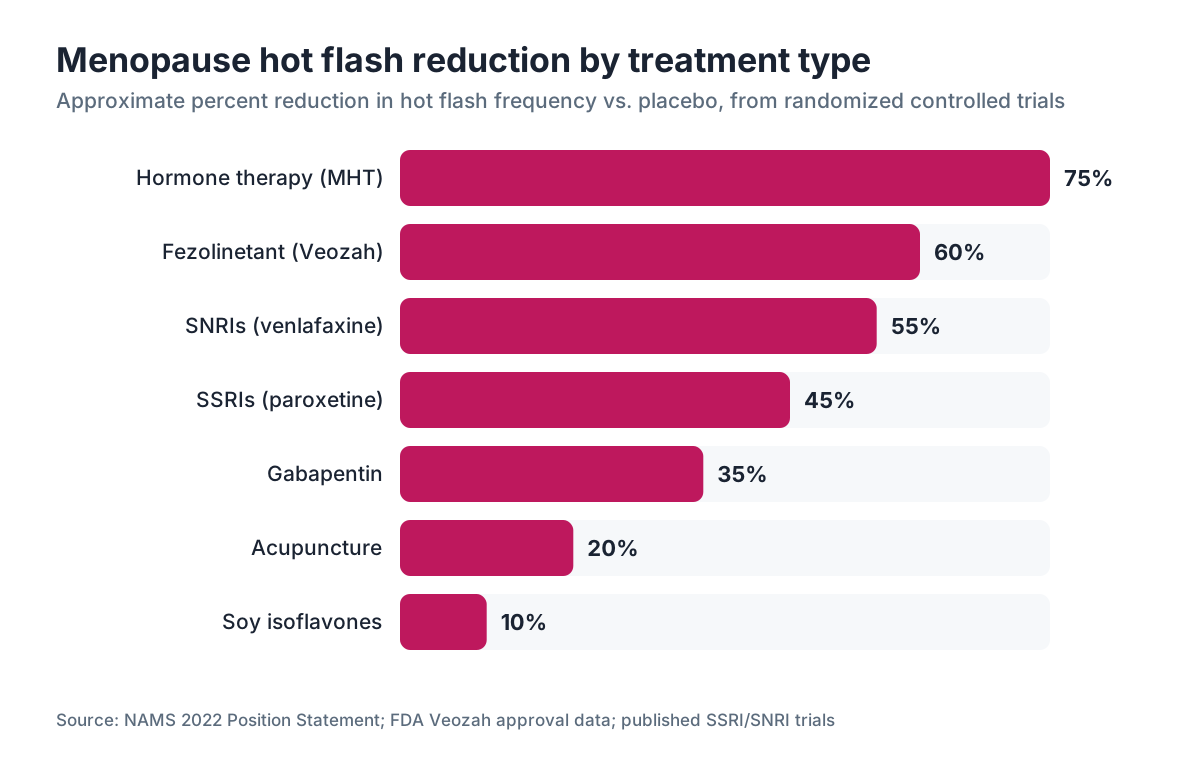
Menopausal hormone therapy (MHT, also called HRT) cuts hot flash frequency by about 75 percent on average versus placebo. For most women that means dropping from 10 or 12 flashes a day to two or three. That's a different life. It also resolves GSM, improves sleep, prevents bone loss, and in women who start within 10 years of menopause, it's linked to lower cardiovascular risk. [2]
The form matters. Women with a uterus need progesterone alongside estrogen to protect the uterine lining, because estrogen alone raises endometrial cancer risk. Women without a uterus can take estrogen alone, which carries a better safety profile. [6] The Endocrine Society's 2015 guideline puts it plainly: "For most women younger than 60 years or within 10 years of menopause, the benefits of MHT outweigh the risks." [6]
The breast cancer question is real but often overstated. Estrogen-alone therapy in women without a uterus doesn't appear to raise breast cancer risk and may lower it. Estrogen plus synthetic progestin (like medroxyprogesterone acetate) carries a small increase in breast cancer risk with long-term use, roughly one extra case per 1,000 women per year of use. Micronized progesterone (Prometrium or its generics) appears to carry less risk than synthetic progestin, though most of that data is observational. [3]
Delivery route matters too. Transdermal estrogen (patches, gels, sprays) skips first-pass liver metabolism and doesn't raise clotting or stroke risk the way oral estrogen can. For women with clotting risk factors, transdermal wins. [3] You can read more about the estrogen patch and how it compares to other routes, and about progesterone specifically.
For how all these pieces fit together, see our guide to hormone replacement therapy.
What are the non-hormonal prescription options for menopause relief?
If hormone therapy isn't right for you, whether because of hormone-sensitive breast cancer, active blood clots, or personal preference, you have real non-hormonal prescriptions. Not placebo-adjacent supplements. FDA-approved or well-studied medications.
Fezolinetant (Veozah) is the newest and most targeted. It's an NK3 receptor antagonist that blocks the brain pathway that triggers hot flashes. The FDA approved it in May 2023. In the SKYLIGHT trials it reduced hot flash frequency by about 60 percent at the 45 mg dose, versus roughly 45 percent with placebo. [7] Meaningful, but less than hormone therapy. It doesn't touch GSM or bone density. It runs around $550 to $600 a month without insurance, which is a real barrier.
SSRIs and SNRIs (paroxetine, escitalopram, venlafaxine, desvenlafaxine) have treated VMS off-label for years. Paroxetine 7.5 mg (Brisdelle) is the only SSRI with an FDA indication specifically for hot flashes. These drugs cut flash frequency by about 40 to 65 percent in trials. [3] They're a smart pick for women who also have depression or anxiety. The tradeoff: sexual side effects, weight gain in some users, and a serious interaction between paroxetine and tamoxifen (the two should not be combined).
Gabapentin reduces hot flashes modestly, mostly at night, which makes it useful when the main complaint is sleep wrecked by night sweats. The evidence is thinner than for SNRIs. Side effects include dizziness and sedation.
Clonidine, an older blood pressure drug, has modest VMS data and a side-effect profile (dizziness, dry mouth, rebound hypertension when you stop) that makes it third-line at best.
For GSM specifically, low-dose vaginal estrogen (creams, suppositories, the vaginal ring, or the vaginal tablet Imvexxy) delivers estrogen locally with minimal systemic absorption. NAMS considers it safe even for breast cancer survivors in most cases, though oncology guidance varies. [3] Ospemifene (Osphena) is an oral SERM that treats painful sex without any vaginal application, approved by the FDA in 2013.
How much does menopause relief actually cost?
Cost swings widely by treatment type, insurance status, and whether you use brand-name or generic products.
| Treatment | Typical monthly cost (out-of-pocket) | Notes | |---|---|---| | Generic oral estradiol + micronized progesterone | $20 to $60 | Most affordable hormonal option | | Estradiol patch (generic) | $30 to $80 | Twice-weekly application | | Estradiol gel or spray | $50 to $150 | Brand-name Divigel, EstroGel | | Compounded bioidentical HRT | $50 to $200+ | Varies by pharmacy; no FDA oversight | | Fezolinetant (Veozah) | $500 to $600 | Newer; limited insurance coverage | | Paroxetine 7.5 mg (Brisdelle) | $200 to $400 | Generic paroxetine at low dose is far cheaper | | Low-dose vaginal estrogen (generic) | $30 to $100 | Cream or suppository | | SSRIs/SNRIs generic | $10 to $40 | Most covered by insurance |
Insurance coverage for MHT has improved but isn't universal. The ACA requires most insurers to cover preventive services, but hormone therapy for symptom relief sits in a gray zone. Medicare Part D covers most of these medications, with copays that vary by plan. [8]
Telehealth platforms including WomenRx can make prescribing more accessible, especially for women in areas with few menopause-trained clinicians, though the consultation fee and any required labs add to the total.
Do lifestyle changes actually help with menopause symptoms?
Yes, with honest caveats about how much and for whom.
Weight loss is the most reliable lifestyle move for hot flashes. The MsFLASH trial found women who lost 10 or more pounds over six months had significantly greater reduction in VMS than those who didn't lose weight. [9] That tracks with the biology: fat tissue produces estrone (a weaker estrogen) and also generates heat, both of which affect flash frequency and severity.
Regular aerobic exercise reliably improves sleep, mood, and energy in menopausal women. The direct evidence for cutting hot flash frequency is mixed. Several RCTs found no significant effect on VMS frequency versus controls, even when exercise clearly lifted overall quality of life. [3] Worth doing for a dozen reasons. Just not a dependable flash remedy on its own.
Cognitive behavioral therapy (CBT) has real evidence. The MENOS trials found CBT reduced how much hot flashes bothered women, even when flash frequency barely moved. [3] The point is to change the distress response, not the flash itself. It's underused because you have to find a trained therapist, but it works.
Dietary tweaks like cutting alcohol, caffeine, and spicy food reduce known triggers for some women. The evidence is mostly observational and personal. Some women find dropping alcohol slashes night sweats. Others notice nothing.
Acupuncture: several small trials suggest a modest benefit for VMS, and a 2019 Cochrane review found some evidence of reduced hot flash frequency, though study quality was uneven. [10] If you like acupuncture and can afford it, it's unlikely to hurt. It's no replacement for effective medical treatment when symptoms are severe.
Phytoestrogens (soy isoflavones, red clover): the data are genuinely weak. Some women swear by them. Controlled trials show inconsistent effects, and NAMS says the evidence is insufficient to recommend them. [3]
What about GLP-1 medications and menopause weight gain?
Menopause-associated weight gain is real, and it's complicated. Estrogen loss pushes fat toward the abdomen even when total weight barely moves. Muscle mass declines. And the habits that kept your weight steady in your 30s often stop working in your 50s.
GLP-1 receptor agonists like semaglutide (Ozempic, Wegovy) and tirzepatide (Mounjaro, Zepbound) have reset the weight loss conversation for menopausal women. In the STEP 1 trial, semaglutide 2.4 mg produced an average weight loss of 14.9 percent of body weight over 68 weeks. [11] In SURMOUNT-1, tirzepatide reached up to 22.5 percent weight loss at the highest dose. [12] Those are numbers lifestyle alone almost never hits.
For menopausal women, meaningful weight loss can ease hot flash severity (as noted above), improve sleep apnea (which worsens with menopause), lower cardiovascular risk, and cut joint pain. GLP-1s don't treat estrogen deficiency, and they don't fix GSM or bone loss. They're a weight tool, not a hormone tool.
Clinicians are increasingly pairing MHT with a GLP-1 in practice, especially for women carrying significant weight gain, metabolic syndrome, or type 2 diabetes alongside vasomotor symptoms. Nobody has published a large RCT on the combination yet. The evidence is clinical experience and mechanism. Ask your provider about it if both problems apply to you.
For more on semaglutide, see our semaglutide for weight loss guide, and for a head-to-head on the two main GLP-1s, semaglutide vs tirzepatide.
What about bone health during menopause?
Bone loss speeds up sharply in the first three to five years after menopause, averaging about one to three percent of bone density per year. [13] Estrogen keeps bone resorption in check. Without it, osteoclasts (the bone-breaking cells) get more active relative to osteoblasts (the bone-building cells).
MHT clearly prevents this loss. Women who start hormone therapy at menopause and stay on it hold their bone density. Those who stop see accelerated loss resume. MHT is FDA-approved for osteoporosis prevention, though it's usually not the first choice for treating established osteoporosis when bone-specific drugs (bisphosphonates, denosumab) have more data behind them. [6]
If you're perimenopausal or recently menopausal, a bone density test (DEXA scan) gives you a baseline. NAMS recommends screening at age 65 for all women, and earlier for women with risk factors like early menopause (before 45), low body weight, smoking, or a family history of hip fracture. [3]
Calcium and vitamin D matter but won't hold the line alone if your bone loss is estrogen-driven. Current guidance points to 1,200 mg calcium daily (food plus supplement combined) and 800 to 1,000 IU vitamin D for women over 50. [13] Don't push past that. Excess supplemental calcium may raise cardiovascular risk without adding any bone benefit.
What are the risks of menopause hormone therapy I should know about?
Here's the honest version. Not the scary one, not the minimized one.
Blood clots (VTE): oral estrogen roughly doubles clotting risk compared to no estrogen. Transdermal estrogen doesn't appear to raise it. [3] If you or a close relative has had a deep vein thrombosis or pulmonary embolism, transdermal is strongly preferred.
Stroke: same pattern. Oral estrogen is tied to a small increase in stroke risk. Transdermal isn't. [3]
Breast cancer: as above, estrogen alone doesn't appear to raise breast cancer risk and may lower it. Combined estrogen plus synthetic progestin (specifically MPA) carries a small increase with long duration of use. Micronized progesterone looks safer, though most of that data comes from observational studies. [3] For most women under 60, the absolute numbers are small.
Cardiovascular disease: starting MHT within 10 years of menopause or before age 60 is linked to lower cardiovascular risk in healthy women. Starting it more than 10 years out (especially in older women with existing arterial disease) may raise risk. This is the "timing hypothesis," or "window of opportunity," and it's the main reason early initiation matters. [2]
Gallbladder disease: oral estrogen raises gallstone and cholecystitis risk. Transdermal doesn't. [3]
The short version: most of the serious risks people associate with HRT trace back to oral estrogen given to older women who started late, often with synthetic progestin. Transdermal estrogen plus micronized progesterone, started early, looks much safer. That's not a sales pitch. It's the current consensus from NAMS, the Endocrine Society, and the British Menopause Society.
How do you find a menopause specialist who actually knows this area?
Most OB-GYNs and primary care doctors got very little menopause training in residency. A 2019 survey found only around 20 percent of OB-GYN residency programs offered a formal menopause curriculum, with a median of six hours of training total. [3] That's a real problem. It means plenty of women get outdated guidance or an unnecessary refusal of appropriate hormone therapy.
NAMS keeps a directory of certified menopause practitioners (CMPs) at menopause.org. A CMP has passed a standardized exam and completed continuing education. It's a reasonable filter for choosing a provider.
Telehealth has widened access, especially for women in states with few menopause-trained clinicians. Platforms built around women's hormones can prescribe most forms of MHT, order labs, and follow up remotely. WomenRx is one option here, offering hormone and GLP-1 care specifically for women.
Questions worth asking before you start MHT: Do you use transdermal or oral estrogen as your first choice? Do you prescribe micronized progesterone or synthetic progestins? Are you familiar with the timing hypothesis? If the answers sound like 2002 WHI thinking instead of the 2023 evidence base, get a second opinion.
What's the right menopause relief approach for different situations?
There's no single right answer. Here's how to reason through it.
Healthy, under 60, within 10 years of menopause, with moderate to severe VMS: hormone therapy is the most effective option, and for most women in this group the benefit-risk balance is favorable. Transdermal estradiol plus micronized progesterone (if you have a uterus) is the combination with the best current safety profile.
History of hormone-sensitive breast cancer: you're in a gray zone, and the answer depends on your specific cancer, your oncologist's input, and how bad your symptoms are. Fezolinetant and SNRIs are first-line. Low-dose vaginal estrogen for GSM is acceptable to many oncologists but takes a case-by-case conversation.
Mainly GSM with little or no VMS: local vaginal estrogen alone may be all you need. Minimal systemic absorption, a very good safety profile.
More than 10 years past menopause and never took hormones: starting MHT now carries more uncertainty and potentially more risk, cardiovascular especially. Non-hormonal options for VMS and local therapy for GSM are the clearer fit here.
Weight gain and metabolic health are the main issues alongside mild VMS: consider whether a GLP-1 handles the weight problem while low-dose MHT or non-hormonal options handle the symptoms. Bone protection belongs in the conversation either way.
For the full picture of menopause and where menopause age fits into treatment planning, those guides go deeper on the biology.
Frequently asked questions
How long does it take for hormone therapy to relieve menopause symptoms?
Most women notice fewer hot flashes within two to four weeks of starting MHT. Full benefit, including better sleep and mood, usually takes six to twelve weeks. Vaginal symptoms from GSM may take two to three months to respond noticeably. If you've seen no improvement at all after three months at an adequate dose, raise it with your provider, who may adjust the dose or delivery method.
Can I get menopause relief without taking hormones?
Yes. Fezolinetant (Veozah), FDA-approved in 2023, cuts hot flash frequency by about 60 percent with no hormone activity. SNRIs like venlafaxine and desvenlafaxine are effective non-hormonal options too. CBT has strong evidence for reducing how disruptive hot flashes feel. For GSM specifically, vaginal moisturizers, lubricants, and ospemifene (a non-estrogen oral pill) can help. Non-hormonal options are generally less effective than MHT for severe VMS.
Is it safe to take hormone therapy for more than five years?
For many women, yes. NAMS's position is that there's no arbitrary time limit on hormone therapy duration if the clinical need persists and the benefit-risk profile stays favorable for that individual. The five-year rule was a conservative carryover from early WHI interpretation and is no longer the standard recommendation for healthy women who start MHT before age 60.
What helps menopause brain fog and memory problems?
Honest answer: the evidence for treating cognitive symptoms directly is thin. Most data suggest they improve on their own within a few years of menopause. MHT started early may support cognition during the transition, but it hasn't been shown to prevent dementia. The best-supported moves are adequate sleep (treat the night sweats), regular aerobic exercise, and blood pressure control. If memory concerns are severe, get a neurology evaluation.
Does menopause cause weight gain, or is it aging?
Both, and they're hard to pull apart. Estrogen loss specifically pushes fat toward visceral (abdominal) storage and cuts muscle mass, even without total weight gain. Aging also slows resting metabolic rate. Studies show women gain an average of 1.5 to 2 pounds per year around menopause, slightly more than age-matched premenopausal women. MHT can reduce the visceral fat shift. It doesn't typically cause weight loss on its own.
What's the difference between bioidentical and conventional hormone therapy?
Bioidentical means the hormone molecule is chemically identical to what your body made. Many FDA-approved products are bioidentical: estradiol patches, estradiol gel, and micronized progesterone (Prometrium). Compounded bioidentical hormone therapy (cBHT) means custom-mixed preparations from compounding pharmacies. FDA-approved bioidentical products are tested for consistency and safety. Compounded ones are not FDA-approved and lack standardized potency data, though some women use them for doses or combinations that aren't sold commercially.
Can GLP-1 medications like semaglutide help with menopause symptoms?
Indirectly, yes. GLP-1s don't treat estrogen deficiency or hot flashes directly. But the significant weight loss semaglutide reliably produces in most users can ease hot flash severity and frequency, improve sleep apnea, and lower cardiovascular risk, all of which menopause amplifies. For women with both significant weight gain and VMS, clinicians increasingly discuss pairing a GLP-1 with MHT, though large trials on the combination don't exist yet.
What helps with menopause-related sleep problems?
Treating night sweats comes first: MHT is the most effective intervention for VMS-driven sleep disruption. If sleep problems persist after VMS are controlled, or if they're independent of sweating, cognitive behavioral therapy for insomnia (CBT-I) has the strongest evidence of any insomnia treatment and is recommended as first-line by sleep medicine guidelines. Low-dose doxepin, suvorexant, and melatonin are medication options for insomnia that isn't driven by VMS.
What's the best treatment for vaginal dryness and painful sex after menopause?
Low-dose vaginal estrogen is the most effective treatment for GSM (vaginal dryness, painful sex, recurrent UTIs). It comes as creams, suppositories, tablets, and a vaginal ring. Systemic absorption is very low. Ospemifene (Osphena) is an oral option that works without vaginal application. Daily vaginal moisturizers (different from lubricants) help maintain tissue hydration between uses. Unlike hot flashes, GSM symptoms don't improve over time without treatment.
When should I start thinking about bone density testing?
NAMS recommends a baseline DEXA scan at age 65 for all women. Earlier screening applies if you have risk factors: menopause before age 45, low BMI, smoking history, heavy alcohol use, a fracture after age 50, or long-term steroid use. If you go through early or surgical menopause, a baseline scan at that time or shortly after is reasonable. Catching early bone loss gives you more options before it reaches the fracture-risk threshold.
Are there menopause supplements that actually work?
Mostly no. Black cohosh has inconsistent trial data, and NAMS says the evidence is insufficient to recommend it. Soy isoflavones and red clover show weak, inconsistent effects in controlled trials. Magnesium and melatonin may support sleep but don't address VMS. Evening primrose oil has no meaningful evidence for hot flashes. The menopause supplement market is enormous and far outpaces the evidence. Save your money for treatments with actual trial data behind them.
Can I get menopause relief through telehealth?
For most standard treatments, yes. Telehealth providers can prescribe oral and transdermal MHT, micronized progesterone, non-hormonal prescriptions like SNRIs and fezolinetant, low-dose vaginal estrogen, and GLP-1 medications after appropriate screening. They can order labs remotely too. What they can't do is replace a pelvic exam or an in-person workup for complex or unclear diagnoses. For straightforward VMS in an otherwise healthy woman, telehealth menopause care is legitimate and often more accessible.
What happens to menopause symptoms if I stop hormone therapy?
Hot flashes usually come back within weeks to months of stopping MHT, sometimes worse than before, especially with abrupt discontinuation. Tapering slowly over several months helps minimize rebound symptoms. GSM symptoms, if they were present before MHT, return and progress without treatment. Bone density loss resumes after stopping too. There's no evidence you must go off MHT at any specific age; the decision should rest on your individual risk-benefit assessment.
What's the difference between perimenopause and menopause symptoms and treatment?
Perimenopause is the transition, lasting four to eight years on average, when hormone levels swing unpredictably. You can have hot flashes, irregular periods, and mood changes while still menstruating. Menopause is defined as 12 consecutive months without a period. Treatment overlaps a lot, but perimenopausal women who still have a uterus and periods need different hormone regimens than post-menopausal women, and low-dose hormonal contraception is often used during perimenopause to manage symptoms and provide birth control.
Sources
- NIH National Institute on Aging — Menopause
- NAMS — The 2022 Hormone Therapy Position Statement of The North American Menopause Society
- North American Menopause Society — Menopause Practice: A Clinician's Guide (and position statements)
- NIH SWAN Study — Study of Women's Health Across the Nation, published findings
- NIH National Institute on Aging — Sleep and menopause
- The Endocrine Society — Clinical Practice Guideline: Treatment of Symptoms of the Menopause (2015)
- FDA — Approval of fezolinetant (Veozah) for vasomotor symptoms, May 2023
- CMS Medicare — Part D drug coverage overview
- MsFLASH Network — Lifestyle interventions for vasomotor symptoms, published in Menopause journal
- Cochrane Library — Acupuncture for menopausal hot flushes (review)
- NEJM — STEP 1 Trial: Once-Weekly Semaglutide in Adults with Overweight or Obesity (Wilding et al., 2021)
- NEJM — SURMOUNT-1 Trial: Tirzepatide Once Weekly for the Treatment of Obesity (Jastreboff et al., 2022)
- NIH National Institute of Arthritis and Musculoskeletal and Skin Diseases — Osteoporosis overview