Menopause medication: every option explained, with honest tradeoffs
TL;DR: Menopause medications range from hormone replacement therapy (estrogen alone or combined with progesterone) to non-hormonal options like fezolinetant, SSRIs, and gabapentin. HRT is still the most effective treatment for hot flashes and bone loss. Non-hormonal drugs are real alternatives for women who can't or won't use hormones. The right choice depends on your symptom burden, health history, and what you actually want.
What medications are used to treat menopause symptoms?
There is no single menopause pill. What exists is a menu, some hormonal and some not, each aimed at different symptoms with different evidence behind them.
The core categories are: hormone replacement therapy (HRT), which can be systemic (reaching the whole body) or local (staying mostly in vaginal tissue); non-hormonal prescription drugs approved specifically for vasomotor symptoms; and off-label medications like certain antidepressants and anticonvulsants that doctors have used for decades because they help, even though the FDA never reviewed them for this purpose.
HRT is the most studied and generally most effective option for moderate-to-severe hot flashes, night sweats, and bone loss. The North American Menopause Society (NAMS) states in its 2023 position statement that "hormone therapy remains the most effective treatment for vasomotor symptoms and genitourinary syndrome of menopause" [1]. That's the baseline everything else gets measured against.
Effective doesn't mean right for every woman. A breast cancer survivor, a woman with a history of blood clots, or someone who tried HRT and hated how it felt all have real reasons to look elsewhere. The non-hormonal side has grown a lot since 2023, which makes this a genuinely better time to have that conversation than it was even five years ago.
For a broader picture of what menopause actually is and when it typically starts, see our guide on menopause.
How does hormone replacement therapy work and what forms does it come in?
HRT works by replacing the estrogen (and when needed, progesterone) that your ovaries stop producing. Estrogen does most of the work. It quiets the hypothalamic temperature dysregulation behind hot flashes, holds onto bone mineral density, and restores vaginal tissue. Progesterone's job in systemic HRT is almost entirely protective: if you still have a uterus, unopposed estrogen raises endometrial cancer risk, so a progestogen is added to counteract that [2].
Estrogen alone is prescribed for women who have had a hysterectomy. Combination therapy (estrogen plus a progestogen) is for women with a uterus. The distinction matters because the risks differ between the two regimens.
Delivery forms vary widely, and the route changes the risk profile:
| Form | Estrogen delivered | Notes | |---|---|---| | Oral tablet | Systemic | Passes through liver; small increase in blood clot risk compared to transdermal [3] | | Patch (transdermal) | Systemic | Bypasses first-pass liver metabolism; preferred route for women with clot history or migraines with aura [3] | | Gel / spray | Systemic | Similar to patch in metabolic profile | | Vaginal ring (low-dose) | Mostly local | Treats GSM; minimal systemic absorption | | Vaginal cream / suppository | Mostly local | Same; good for dryness and urinary symptoms without full systemic exposure | | Implant (pellet) | Systemic | Not FDA-approved; used in some compounding practices |
The estrogen patch is the form specialists most often reach for in women with cardiovascular risk factors, because transdermal delivery avoids the liver's clotting-factor response. A 2010 observational study in the BMJ found that transdermal estrogen was not linked with increased venous thromboembolism risk, while oral estrogen was [3].
On the progesterone side, options include synthetic progestins (like medroxyprogesterone acetate, or MPA, and norethindrone) and body-identical micronized progesterone (Prometrium in the US). The WHI trial used MPA, and some researchers think the cardiovascular signal in that trial was partly a progestin effect rather than an estrogen effect. Micronized progesterone appears to have a kinder cardiovascular and breast profile than synthetic progestins, though head-to-head RCT data are limited [2]. Read more about progesterone specifically if this distinction matters to your decision.
Combined pills and patches exist too: Combipatch, Climara Pro, and Bijuva are examples. They make adherence easier but reduce your ability to adjust each hormone on its own.
What does the evidence actually say about HRT safety?
The Women's Health Initiative (WHI) scared a generation of women and their doctors when it published in 2002. Breast cancer headlines dominated. What got buried is more nuanced.
The WHI studied two regimens: conjugated equine estrogen (CEE) alone in women who had hysterectomies, and CEE plus MPA (a synthetic progestin) in women with a uterus. The estrogen-only arm actually showed a reduced risk of breast cancer at 7 years. The combination arm showed a small absolute increase in breast cancer (8 extra cases per 10,000 women per year) after about 5 years of use [4]. The trial used oral estrogen, used MPA, and enrolled women whose average age was 63, meaning most were 10 or more years past menopause. Extrapolating those results to a 50-year-old starting HRT at the menopause transition is scientifically shaky.
The "timing hypothesis" is now mainstream: starting HRT within 10 years of menopause onset (or before age 60) appears to carry a more favorable benefit-risk ratio than starting later [1]. NAMS, the Endocrine Society, and the British Menopause Society all endorse this framing [1][5].
Absolute risk matters more than relative risk here. NAMS puts it plainly: for healthy women under 60 who are within 10 years of menopause, "the benefits of hormone therapy outweigh the risks" for most indications [1]. The breast cancer risk tied to combination HRT sits in the range of, or below, the risk from drinking one glass of wine a day or being sedentary and obese.
That doesn't mean every woman should take HRT. Contraindications most clinicians treat as absolute include estrogen-receptor-positive breast cancer (current or prior), unexplained vaginal bleeding, active liver disease, and a personal history of estrogen-sensitive clotting disorders. Women with a history of VTE can often use transdermal estrogen safely, but that's a specialist conversation [3].
For a full breakdown of the therapy itself, see our hormone replacement therapy guide.
What is fezolinetant and is it actually effective?
Fezolinetant (brand name Veozah) is genuinely new. The FDA approved it in May 2023, making it the first non-hormonal drug approved specifically for moderate-to-severe vasomotor symptoms in menopause [6].
It works through a completely different mechanism than anything before it. Hot flashes start in the hypothalamus, in neurons that use a neuropeptide called neurokinin B (NKB) to signal body-temperature changes when estrogen is absent. Fezolinetant blocks the NK3 receptor that NKB binds to, quieting that signaling pathway without touching hormone levels [6].
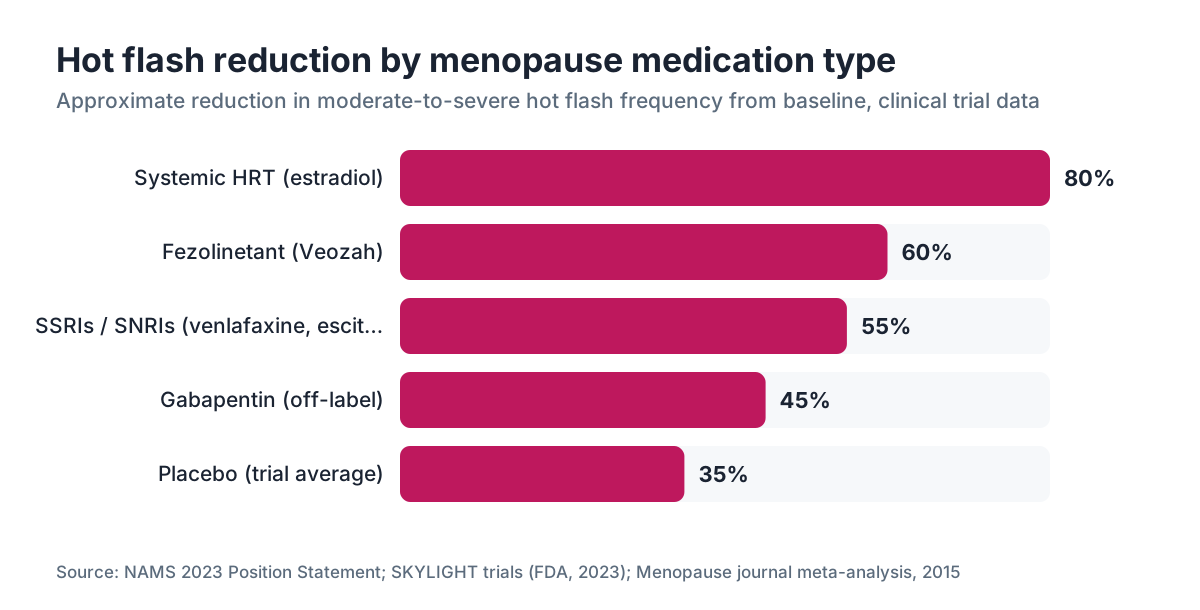
The SKYLIGHT trials (the Phase 3 program behind FDA approval) found that fezolinetant 45 mg daily cut moderate-to-severe hot flash frequency by roughly 60% from baseline at 12 weeks, versus about 45% for placebo [6]. Severity scores dropped similarly. The drug does nothing to bone density and carries none of the cardiovascular or breast considerations of HRT.
The tradeoffs are real though. It costs roughly $550 to $600 per month without insurance (as of mid-2025 US cash prices), and coverage is inconsistent. You take it orally once a day. The main safety signal in the trials was a small rise in liver enzymes in some patients, so the FDA label requires liver function testing before starting and periodically during use. Women with liver impairment should not use it [6].
For women who can't use HRT and found older non-hormonal options weak, fezolinetant is a real step forward. It probably won't push HRT off first-line status for most healthy women, because HRT does more (bones, cardiovascular markers, vaginal tissue, mood) and costs less. But it fills a gap that was wide open.
What non-hormonal prescription medications are used off-label for hot flashes?
Before fezolinetant arrived, non-hormonal treatment for hot flashes meant reaching for drugs approved for other conditions. That's still common, and some of these work reasonably well.
SSRIs and SNRIs are the most frequently used. Paroxetine 7.5 mg (sold as Brisdelle) is the only SSRI with an FDA approval specifically for menopausal vasomotor symptoms, at a lower dose than its antidepressant use [13]. Other SSRIs and SNRIs used off-label include escitalopram, venlafaxine, and desvenlafaxine. A 2015 meta-analysis in Menopause found that escitalopram and venlafaxine produced the most consistent reduction in hot flash frequency among SSRIs/SNRIs, with drops around 50-60% from baseline in clinical trials, compared to about 25-40% for placebo [7].
One real caution: paroxetine is a strong CYP2D6 inhibitor. Women taking tamoxifen for breast cancer should avoid paroxetine, because tamoxifen needs CYP2D6 to convert into its active form (endoxifen). That interaction can meaningfully reduce tamoxifen's effectiveness. Venlafaxine or escitalopram are generally preferred in that group [7].
Gabapentin (an anticonvulsant) also reduces hot flash frequency, probably by working on the same hypothalamic temperature dysregulation through a different route. Doses studied range from 300 mg three times daily to 900 mg at bedtime for nighttime symptoms. Sedation is a real side effect. That can be an asset for women whose biggest complaint is night sweats wrecking their sleep, or a problem for women who drive or work early mornings.
Clonidine, an old blood pressure drug, has some hot flash data, but side effects (dizziness, dry mouth, rebound hypertension on stopping) make it a third- or fourth-line choice in most clinicians' minds.
None of these non-hormonal options touch bone density, vaginal dryness, or libido. They treat one symptom. If hot flashes are the only complaint, that may be enough.
What medications treat genitourinary syndrome of menopause (vaginal dryness, pain, urinary symptoms)?
Genitourinary syndrome of menopause (GSM) covers vaginal dryness, thinning of vaginal tissue, discomfort with sex, recurrent UTIs, and urinary urgency. It affects roughly 50-60% of postmenopausal women and, unlike hot flashes, does not fade on its own over time. It usually gets worse [8].
For mild symptoms, over-the-counter vaginal moisturizers (like Replens) and lubricants help with comfort but don't reverse the tissue changes. They aren't medications and won't get more space here, but they're worth trying first for mild cases.
Prescription options:
Local vaginal estrogen is highly effective and has minimal systemic absorption at standard doses. FDA-approved forms include vaginal creams (Premarin, Estrace), the low-dose vaginal ring (Estring), and vaginal tablets or suppositories (Vagifem, Yuvafem). The NAMS 2023 position statement notes that low-dose vaginal estrogen does not produce measurable elevations in serum estradiol in most women, which is why many clinicians consider it safe even in breast cancer survivors on aromatase inhibitors, though oncology society guidelines vary on this [1][8].
Ospemifene (Osphena) is an oral selective estrogen receptor modulator (SERM) approved for dyspareunia (painful sex) from GSM. It acts like estrogen on vaginal tissue but not on breast tissue. It has a mild pro-estrogenic effect on the uterus, so it carries a black-box warning to use with caution in women with intact uteri, though the clinical significance of endometrial thickening at the approved 60 mg dose is debated.
Prasterone (Intrarosa) is a vaginal DHEA suppository. DHEA converts locally in vaginal tissue to estrogen and testosterone, which restores tissue health. It's FDA-approved for dyspareunia and shows very low systemic hormone levels in studies.
For women dealing with repeated UTIs after menopause, topical vaginal estrogen is an evidence-based preventive: it shifts the vaginal microbiome back toward lactobacillus dominance, which lowers UTI risk. This is underused and underknown.
Do any medications help with menopause-related bone loss?
Bone loss speeds up sharply in the first few years after menopause, driven entirely by estrogen withdrawal. In the 5-7 years after the final period, women can lose 1-3% of bone density per year [9]. Systemic HRT, started at or near menopause, slows that loss well and is approved for osteoporosis prevention (more than treatment).
Not every woman worried about bone loss needs or wants HRT for that reason alone. Specific osteoporosis medications are an alternative:
Bisphosphonates (alendronate, risedronate, zoledronic acid) are first-line for treating osteoporosis. They cut fracture risk by 30-50% at the hip and spine in women with established osteoporosis and are cheap as generics.
Raloxifene is a SERM that acts like estrogen on bone but blocks estrogen in breast tissue. It reduces spine fracture risk and carries FDA approval for both osteoporosis prevention and treatment, plus reducing invasive breast cancer risk in high-risk postmenopausal women. It does nothing for hot flashes, and it raises VTE risk about as much as estrogen.
Denosumab (Prolia), romosozumab (Evenity), and teriparatide (Forteo) are held back for severe osteoporosis or women who can't tolerate bisphosphonates.
A bone density test (DEXA scan) is the right starting point before choosing any of these. Current US Preventive Services Task Force guidelines recommend screening for women 65 and older, and earlier for postmenopausal women under 65 with risk factors [12]. Your T-score on that scan should drive the medication decision, not a symptom checklist.
What about menopause and weight gain: do GLP-1 medications help?
Weight gain during the menopause transition is real, common, and not simply about eating more or moving less. Falling estrogen shifts fat toward the abdomen, changes insulin sensitivity, and slows resting metabolic rate. HRT, estrogen in particular, does seem to partly offset this metabolic shift: the WHI found that women on combination HRT had less abdominal fat accumulation and lower rates of diabetes than controls [4].
But what if the weight gain is significant and HRT alone isn't enough? GLP-1 receptor agonists like semaglutide (Ozempic, Wegovy) and tirzepatide (Mounjaro, Zepbound) have strong trial evidence for weight loss in women generally, though menopause-specific trial data are thin. The STEP 1 trial of semaglutide 2.4 mg found a mean body weight reduction of 14.9% over 68 weeks versus 2.4% for placebo [10]. The SURMOUNT-1 trial of tirzepatide found reductions of 15-20.9% depending on dose [11].
Those trials enrolled mixed populations and weren't powered to analyze perimenopausal or postmenopausal subgroups separately, which is an honest limitation. Still, the mechanism works regardless of menopause status: GLP-1 agonists reduce appetite signaling in the hypothalamus and slow gastric emptying.
For women who want to explore semaglutide for weight loss in the context of menopause, the practical point is this: these medications do nothing for hot flashes, vaginal symptoms, bone loss, or mood. They're a weight management tool, not a menopause treatment. Pairing them with HRT may address more of the metabolic disruption at once, and that combination is an active area of clinical interest, though formal trial data are still limited.
A telehealth practice like WomenRx can evaluate both HRT and GLP-1 options together, which matters because most primary care visits aren't long enough to sort through both.
For a comparison of the two main GLP-1 options, see semaglutide vs tirzepatide.
What are the newest and emerging menopause medications?
The landscape has genuinely changed in the last three years.
Fezolinetant (Veozah, approved 2023) is the clearest advance: a non-hormonal NK3 antagonist that targets the actual neurological mechanism of hot flashes. Covered in detail above.
Elinzanetant is a dual NK1/NK3 receptor antagonist in late-stage trials as of mid-2025. Phase 3 data (the OASIS trials) showed roughly 74% reduction in moderate-to-severe hot flash frequency from baseline at 12 weeks, with a clean safety profile. It is not yet FDA-approved but could be the next non-hormonal approval if the data hold through regulatory review.
Sleep research is pushing gabapentin alternatives: low-dose oral progesterone for sleep is seeing renewed interest as a prescription option, given progesterone's well-established GABA-A receptor activity that promotes sleep without the next-day fog of most sleep aids. The evidence is preliminary but interesting.
Oral selective estrogen receptor modulators keep getting developed. Conjugated estrogen/bazedoxifene (Duavee) is already approved: it pairs estrogen with a SERM instead of a progestogen, meaning women with a uterus can take systemic estrogen for hot flashes without adding a progestogen. That can matter for women who had mood symptoms or bleeding irregularity on progestogens.
Testosterone for women stays in a gray zone in the US. There is no FDA-approved testosterone product for women, but off-label use of low-dose testosterone (male formulations at much lower doses, or compounded products) is common for libido and energy. The data for sexual function are reasonably good. The long-term safety data for cardiovascular and breast outcomes in women are not.
For women looking into perimenopause age or trying to figure out when does menopause start, knowing that better options exist now matters for timing the decision about when to start treatment.
How do you choose between all these options?
This is where the shared decision-making conversation actually happens, and it doesn't fit neatly into a single algorithm.
Start with your symptoms. Hot flashes only? A non-hormonal option like fezolinetant or an SSRI/SNRI might be enough. Hot flashes plus vaginal dryness plus bone loss worry plus mood changes? That's a picture HRT covers more fully in one prescription. If you have only vaginal symptoms, local vaginal estrogen without systemic HRT may be all you need.
Then layer in your history. A personal history of hormone-receptor-positive breast cancer is the clearest relative contraindication to systemic HRT (though vaginal estrogen is an ongoing debate within oncology). A history of VTE pushes you toward transdermal rather than oral estrogen if you want HRT at all, and away from SERMs like raloxifene. An intact uterus means you need progestogen with systemic estrogen.
Cost is real. Generic oral estradiol tablets cost under $30 a month at most pharmacies. A brand-name patch can run $100 to $200 a month without insurance coverage. Fezolinetant is around $550 to $600 a month cash price. Most SSRIs are generic and cost $10 to $25 a month.
The question of "how long" matters too. NAMS guidance sets no mandatory time limit on HRT for women who are benefiting and have no contraindications. Older guidance suggested stopping at 5 years, but that came from an overinterpretation of the WHI. Current guidance supports individualized duration decisions, with an annual review of risks and benefits [1][5].
If your clinician won't engage with these nuances, or is either reflexively prescribing or reflexively refusing HRT without reviewing your individual history, that's information too. WomenRx focuses on exactly this kind of individualized evaluation if your current provider isn't equipped for it.
What does menopause medication typically cost, with and without insurance?
Cost is one of the least-discussed but most practical parts of this decision.
Most HRT formulations have generic versions now. Generic oral estradiol (0.5 mg, 1 mg, 2 mg tablets) typically runs $15 to $30 a month at retail pharmacies without insurance. Generic patches (estradiol transdermal, twice weekly) run $30 to $80 a month depending on pharmacy and dose. Brand-name patches like Vivelle-Dot or Climara can be $100 to $250 a month without insurance or a GoodRx-type coupon.
Micronized progesterone (generic Prometrium) is usually $20 to $60 a month.
Vaginal estrogen forms vary: vaginal tablets (Vagifem/Yuvafem generics) can be $25 to $60 a month; the Estring ring is closer to $200 to $300 every 3 months. Ospemifene (Osphena) stays brand-only and runs $200 to $300 a month without coverage.
Fezolinetant (Veozah) has no generic and lists at roughly $550 to $600 a month as of mid-2025. Astellas runs a patient savings program that can lower cost for commercially insured patients.
Insurance coverage under the ACA requires most plans to cover FDA-approved contraceptives without cost-sharing, but menopause hormones aren't in that category. Coverage varies a lot by plan. Medicare Part D covers most menopause hormones, with copays that shift by formulary tier.
Direct-to-consumer pharmacy programs (Mark Cuban's Cost Plus Drugs, for example) have cut prices on generic estradiol and progesterone. Check multiple sources before assuming the retail price is what you'll pay.
How do I talk to my doctor about menopause medication, and what should I ask?
Most primary care appointments are 15 minutes. Menopause medication conversations often need 30. Going in prepared helps.
Bring your symptom history in writing: when symptoms started, what's worst, how much sleep disruption you're having, any vaginal or urinary changes, and whether this is hitting your quality of life at work or in relationships. Symptom burden shapes the prescribing decision.
Ask directly whether you have any contraindications to HRT. If the answer is yes, ask which specific ones and what evidence base the clinician is working from. Some contraindications (like controlled hypertension) are relative, not absolute, and deserve more than a reflexive no.
Ask about delivery route. If a doctor offers you an oral estrogen without discussing the transdermal option, ask why. Not because patches are always better, but because the choice should be spoken out loud.
Ask about the progestogen specifically if you're a candidate for combination therapy. Micronized progesterone versus a synthetic progestin is a real distinction, and you deserve to know your options.
Ask when to reassess. A six-month follow-up to check how a new medication is working is appropriate, not excessive.
If your doctor waves off your symptoms, hasn't kept up with post-WHI evidence, or tells you HRT is simply too dangerous without a personalized risk discussion, a second opinion is reasonable. Menopause-specialized clinicians (often tied to NAMS-member practices) or telehealth providers who focus on hormonal health are alternatives worth knowing about.
Frequently asked questions
Is HRT the same as birth control pills?
No. Hormonal birth control contains synthetic estrogen (usually ethinyl estradiol) and progestins at doses designed to suppress ovulation. HRT for menopause uses body-identical or conjugated estrogens and much lower progestogen doses, aiming to replace what the ovaries stopped making, not override them. The risk profiles, doses, and mechanisms differ enough that you can't use evidence from one to predict the other.
What is the safest menopause medication for hot flashes?
Safety is personal, but for women without contraindications, transdermal estradiol with micronized progesterone (if needed) has the most favorable evidence profile. It avoids the liver's clotting-factor response, uses body-identical hormones, and has decades of observational safety data. For women who can't use hormones, fezolinetant (Veozah) is the newest purpose-built non-hormonal option with a clean short-term record, though data past 52 weeks are still limited.
Can I use menopause medication if I've had breast cancer?
Systemic HRT is generally contraindicated if you have or had hormone-receptor-positive breast cancer, and most oncologists advise against it. Low-dose vaginal estrogen for GSM is more of a gray area: some oncology societies accept it for severe vaginal symptoms in women on aromatase inhibitors, while others don't. Non-hormonal options like fezolinetant, SSRIs, or SNRIs are often the first recommendation for hot flashes in breast cancer survivors.
How long does it take for menopause medication to work?
HRT usually improves hot flash frequency within 2-4 weeks, with full effect at 8-12 weeks. Vaginal estrogen for GSM symptoms usually takes 4-12 weeks for tissue changes to show. Fezolinetant showed meaningful hot flash improvement by week 4 in the SKYLIGHT trials. SSRIs and SNRIs for vasomotor symptoms often work within 2-4 weeks, similar to their antidepressant timeline.
Do I need to take progesterone if I'm on estrogen for menopause?
Only if you have an intact uterus. Unopposed estrogen stimulates the uterine lining and raises endometrial cancer risk, so a progestogen is added to counteract that. If you've had a hysterectomy, estrogen alone is appropriate. There's no uterine protection benefit to progesterone if you don't have a uterus, though some women use low-dose progesterone separately for sleep or mood.
What is the difference between systemic and local estrogen therapy?
Systemic estrogen (pills, patches, gels, sprays) enters the bloodstream and reaches tissues throughout the body: the brain, bones, heart, and vagina. It treats hot flashes and bone loss. Local vaginal estrogen (creams, rings, suppositories) stays mostly in vaginal tissue and treats GSM symptoms with minimal systemic absorption. Many women use both. You can use local estrogen without adding progestogen, even with an intact uterus, because systemic exposure is too low to stimulate the endometrium at standard doses.
Are compounded menopause hormones safer or better than FDA-approved versions?
Not in any proven way. FDA-approved hormone preparations have gone through standardized efficacy and safety testing. Compounded versions skip that process. Some women prefer compounded formulations for individualized doses or delivery methods not sold commercially, and that's a legitimate reason to use them. But claims that compounded 'bioidentical' hormones are safer aren't supported by comparative evidence. The Endocrine Society has stated that custom-compounded hormones lack safety and efficacy data equivalent to approved products.
Does menopause medication help with mood and depression?
Estrogen has real effects on serotonin and dopamine signaling. Many women notice better mood, less irritability, and better sleep on HRT. For true depressive episodes, the evidence is stronger during the perimenopause transition than in established postmenopause. SSRIs and SNRIs used for hot flashes also treat depression at the same time, which can help women with both symptoms. HRT isn't formally approved as an antidepressant, but the practical overlap is real.
What menopause medications are covered by insurance or Medicare?
Most FDA-approved HRT formulations are covered by commercial insurance and Medicare Part D, though tier placement varies. Generic estradiol tablets and patches are usually Tier 1 or Tier 2 with modest copays. Fezolinetant (Veozah) is typically Tier 3 or higher, with prior authorization at many plans. Vaginal estrogen formulations are generally covered. Check your specific formulary, and use GoodRx or Cost Plus Drugs for generics if your out-of-pocket cost is high.
Can menopause medication help with weight gain?
HRT, estrogen in particular, partly offsets the metabolic shift that drives abdominal fat gain in menopause. It reduces visceral fat gain and improves insulin sensitivity compared to no treatment, based on WHI metabolic data. But it isn't a weight loss drug. For significant menopausal weight gain, GLP-1 medications like semaglutide or tirzepatide have much stronger weight loss evidence and are increasingly used alongside HRT for women who need both.
What is fezolinetant and how is it different from HRT?
Fezolinetant (Veozah) is a non-hormonal pill approved in 2023 that blocks the NK3 receptor involved in triggering hot flashes. Unlike HRT, it doesn't affect estrogen levels, so it has no effect on bone density, vaginal tissue, or cardiovascular risk factors. It's specifically for hot flashes in women who can't or don't want hormones. It costs roughly $550 to $600 a month without insurance and requires liver function monitoring.
At what age should I start menopause medication?
There's no universal right age. The relevant question is whether your symptoms are significant enough to affect quality of life and whether your risk profile supports a given option. The 'timing hypothesis' suggests HRT started within 10 years of menopause onset (or before age 60) has the most favorable benefit-risk profile. Women with premature or early menopause (before 45) are often strongly advised to use HRT at least until the average menopause age of 51-52, for bone and cardiovascular protection.
Can I get menopause medication without seeing a doctor in person?
Yes, in most US states. Telehealth prescribing of HRT and non-hormonal menopause treatments is legal and widely available. A clinician still needs to review your medical history and any contraindications before prescribing. Labs (basic metabolic panel, hormone levels if needed) can often be ordered through telehealth and drawn at a local lab. In-person pelvic exams aren't a prerequisite for starting HRT, though they're part of routine gynecological care.
What happens if I stop taking menopause medication abruptly?
Stopping HRT abruptly often brings hot flashes back, sometimes more intensely in the first weeks. Tapering gradually over several months is the standard recommendation to minimize rebound symptoms. There's no medical danger in stopping abruptly, but the symptom return can be unpleasant. If you stop over a safety concern (like a new diagnosis), talk to your clinician about whether non-hormonal alternatives should start at the same time.
Sources
- North American Menopause Society, 2023 Menopause Hormone Therapy Position Statement
- Endocrine Society, Clinical Practice Guideline: Treatment of Menopause
- BMJ, Canonico et al., Hormone therapy and venous thromboembolism among postmenopausal women, 2010
- NIH/NHLBI, Women's Health Initiative study results
- British Menopause Society, HRT and breast cancer risk guidance
- FDA Drug Approval, Veozah (fezolinetant) prescribing information, 2023
- Menopause journal, Nelson et al., meta-analysis of SSRIs/SNRIs for vasomotor symptoms, 2015
- NAMS, Genitourinary Syndrome of Menopause position statement
- NIH National Institute on Aging, Osteoporosis and menopause
- New England Journal of Medicine, Wilding et al., STEP 1 trial semaglutide 2.4 mg, 2021
- New England Journal of Medicine, Jastreboff et al., SURMOUNT-1 tirzepatide trial, 2022
- U.S. Preventive Services Task Force, Osteoporosis screening recommendation
- FDA, Brisdelle (paroxetine 7.5 mg) prescribing information