Does menopause hormone replacement therapy cause weight gain?
TL;DR: HRT does not cause weight gain in most women. Randomized trials show estrogen therapy reduces abdominal fat during menopause and can improve body composition. The weight women notice around menopause comes from falling estrogen, aging muscle loss, and metabolic slowdown, not the hormones you take. Some progestogens are worse than others for fluid retention and appetite.
What actually causes weight gain during menopause?
Weight gain around menopause is real, but the cause is not the therapy. Falling estrogen redistributes body fat from the hips and thighs toward the abdomen. That visceral shift happens even when total weight barely moves, so a woman can see the same number on the scale while her waist grows two inches. Research in the Journal of Clinical Endocrinology and Metabolism found the menopause transition itself, independent of aging, is associated with increased fat mass and preferential accumulation of visceral adipose tissue [1].
Aging piles on. Muscle mass drops roughly 3 to 8 percent per decade after age 30, and the decline speeds up after menopause [2]. Less muscle means a slower resting metabolic rate. The same meals that held your weight steady at 40 leave a small surplus at 52.
Sleep makes it worse. Hot flashes and night sweats fragment sleep, and poor sleep raises ghrelin (the hunger hormone) while blunting leptin (the fullness signal), so appetite climbs at the exact moment metabolism is slowing.
Menopause weight gain has several overlapping drivers, and HRT is not one of them. The confusion is a timing problem. Women often start HRT right as these metabolic changes accelerate, so the treatment gets blamed for changes it did not cause. See our menopause overview for a fuller picture of what's happening physiologically during this transition.
Does hormone replacement therapy cause weight gain?
No, not in the way most women fear. The honest longer answer is that it depends on which hormones, which delivery route, and which woman.
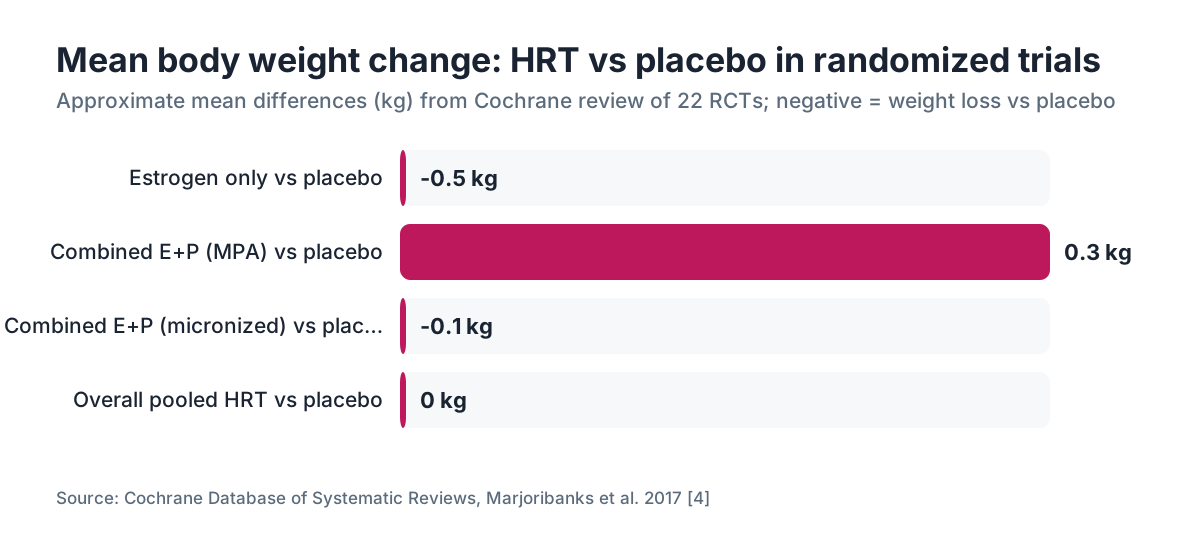
The biggest evidence base is the Women's Health Initiative (WHI), which followed more than 27,000 postmenopausal women and did not find that HRT caused clinically meaningful weight gain compared to placebo [3]. A 2017 Cochrane review pooling 22 randomized controlled trials reached the same conclusion: hormone therapy had no significant effect on body weight [4].
What some women do notice in the first few weeks is bloating and fluid retention, most often with oral estrogen or synthetic progestogens like medroxyprogesterone acetate (MPA). That is water, not fat, and it usually clears within two to three months as the body settles. Uncomfortable, yes. The same thing as gaining fat, no.
The progestogen matters more than anything else in your regimen. MPA, the synthetic progestogen in many older combined formulations, has some glucocorticoid-like activity that can raise appetite and hold water. Micronized progesterone (bioidentical) has a much more neutral metabolic profile [5]. If you're gaining weight on combined HRT and haven't tried switching the progestogen, that's the first conversation to have with your prescriber. Our progesterone article covers the differences in depth.
Delivery route matters too. Transdermal estrogen (patches, gels, sprays) skips first-pass liver metabolism, so it does not raise triglycerides or sex hormone-binding globulin the way oral estrogen can. Many clinicians prefer it for women with metabolic concerns, though head-to-head data on weight specifically are thin.
Does hormone replacement therapy help with weight loss?
Here it gets genuinely interesting. Several well-run trials suggest estrogen does more than avoid causing weight gain. It appears to protect body composition during the transition.
A randomized controlled trial in JAMA in 1997 found women on estrogen replacement gained significantly less intra-abdominal fat over three years than women on placebo, despite similar calorie intake [6]. A 2012 meta-analysis in Climacteric confirmed that postmenopausal estrogen therapy reduced total body fat and abdominal fat compared to placebo [7].
The mechanism makes sense. Estrogen shapes fat distribution through receptors in adipose tissue and by improving insulin sensitivity. When estrogen drops, visceral fat cells get more active at storage. Restoring estrogen partly reverses that.
So does HRT cause weight loss? Not dramatically. You will not drop 15 pounds by starting a patch. What the evidence suggests is that HRT holds a more favorable body composition than you'd otherwise have: less visceral fat, better insulin sensitivity, and possibly easier muscle maintenance. For women already working on food and movement, that metabolic backdrop is meaningfully better than the alternative. It removes a headwind. It does not add a tailwind.
Women who want bigger weight loss on top of HRT often ask about GLP-1 receptor agonists. There's no contraindication to combining them. See our semaglutide for weight loss article for what the data actually show for women in midlife.
Which hormone replacement therapy is best for weight loss or weight neutrality?
No single formulation has been proven superior for weight in a head-to-head trial built around weight as the primary endpoint. That's an honest limit. Based on the mechanistic and observational data, here's what clinicians generally favor for women worried about weight.
Estrogen type and dose: Estradiol (bioidentical) at the lowest effective dose is the standard recommendation from both the Menopause Society (formerly NAMS) and the Endocrine Society [8][11]. Conjugated equine estrogen (CEE) and ethinyl estradiol have different potencies and receptor profiles, and most US menopause specialists have shifted toward estradiol.
Delivery route: Transdermal estradiol (patch, gel, or spray) is generally preferred over oral for women with any metabolic concern, including a tendency toward weight gain, because it avoids the liver's first-pass effects. The estrogen patch is the most studied transdermal option.
Progestogen: Micronized progesterone (sold as Prometrium in the US, FDA-approved with estrogen for women with a uterus [12]) has the most favorable metabolic profile of the options. It does not bind glucocorticoid receptors the way MPA does, so appetite bumps and fluid retention are less likely. Women using a levonorgestrel IUD for endometrial protection may not need systemic progestogen at all, which removes the metabolic variable entirely.
| Progestogen type | Glucocorticoid activity | Androgenic activity | Metabolic concern level | |---|---|---|---| | Micronized progesterone (Prometrium) | None | None | Low | | Dydrogesterone | None | None | Low | | Medroxyprogesterone acetate (MPA) | Moderate | Low | Moderate | | Norethindrone acetate | Low | Moderate | Moderate | | Levonorgestrel | Low | High | Moderate-High |
This table reflects the general pharmacological consensus. Individual responses vary, and no trial has directly ranked these for weight [5][8].
If you want personalized guidance on formulation, a telehealth platform like WomenRx that specializes in women's hormones can review your full picture (lab work, symptoms, metabolic history) before recommending a protocol. That individual approach matters when the thing you're trying to optimize intersects with several hormone interactions at once.
Will hormone replacement therapy cause weight gain if I am already overweight?
Fair concern, and one most generic HRT guides skip. Most HRT trial populations skewed toward normal-weight or mildly overweight women, so applying that data to women with obesity carries some uncertainty.
Here's the part that surprises people. Obese women have lower circulating estradiol after menopause than lean women do, not higher, despite more peripheral aromatization. That means the potential benefit of estrogen on visceral fat may be larger for heavier women, not smaller.
A 2018 analysis in Obesity found postmenopausal HRT use was associated with lower odds of central obesity compared with never-users, and the association held across BMI categories [7]. Observational data, so causality is limited, but the direction matches the trial evidence.
The practical issue for higher-weight women is usually not fat gain from HRT. It's the cardiovascular risk math that decides whether HRT is appropriate at all. Women over 60 or more than 10 years past menopause onset face a different risk-benefit calculation than women in early menopause, regardless of weight. The Endocrine Society guideline says the decision to start HRT should be individualized on cardiovascular, bone, and symptom factors together [11].
Why do some women gain weight after starting HRT?
It does happen. Saying the research shows no causal link is not the same as calling every woman's experience placebo. A few real explanations are worth knowing.
Fluid retention is the most common culprit in the first two months, especially with oral estrogen or synthetic progestogens. The scale climbs three to five pounds, pants feel tight, ankles look puffy. Usually transient. If it hangs on past 10 to 12 weeks, the formulation probably needs to change.
Appetite changes from specific progestogens, mainly MPA and norethindrone, are real and underappreciated. Their mild glucocorticoid or androgenic receptor activity can turn up hunger. Switching to micronized progesterone often fixes it.
Then there's timing. Most women start HRT in their late 40s or early 50s, right as the natural metabolic slowdown speeds up. If weight was creeping up before HRT and keeps creeping after, it's tempting to blame the new variable. An honest food and weight log for two to three months before and after starting HRT is one way to separate signal from noise.
Check the thyroid too. Hypothyroidism is more common in perimenopausal women than in the general population and causes weight gain that has nothing to do with estrogen. If your prescriber hasn't run a TSH, ask.
One more. The stress and broken sleep of the transition itself can drive weight gain through cortisol and appetite pathways. Fixing sleep often matters more than tweaking the HRT. If night sweats wake you four times a night, address that first, which is often exactly what HRT does.
Can hormone replacement therapy help with weight loss when combined with GLP-1 medications?
This combination is drawing real clinical attention, and the early signals are encouraging. GLP-1 receptor agonists like semaglutide (Wegovy, Ozempic) and tirzepatide (Zepbound) produce large weight loss, but their performance in perimenopausal and postmenopausal women has historically looked slightly blunted compared to premenopausal women, probably because estrogen deficiency creates an unfavorable setting for energy regulation.
The STEP 1 trial found mean weight loss of about 14.9 percent of body weight with semaglutide 2.4 mg over 68 weeks, though subgroup data by menopausal status are not broken out in the primary publication [9]. The SURMOUNT-1 trial with tirzepatide showed mean reductions of up to 22.5 percent of body weight over 72 weeks, again without a published menopausal subgroup [10].
The clinical logic for pairing them is straightforward. Estrogen restores a more normal fat-distribution pattern and improves insulin sensitivity. The GLP-1 drives the caloric deficit. Different pathways. There's no expected pharmacokinetic interaction between transdermal estradiol and semaglutide or tirzepatide that would cause harm, and several menopause specialists now treat estrogen deficiency before or alongside starting a GLP-1, especially for women in early menopause.
If you're weighing both, comparing the two GLP-1 options is worth the time. Our semaglutide vs tirzepatide breakdown covers the efficacy and side-effect differences specifically.
What does the research say about HRT, insulin resistance, and metabolism?
Estrogen is metabolically active well beyond fat distribution. It improves insulin sensitivity in muscle and liver, lowers fasting glucose, and modestly reduces LDL cholesterol when taken orally. These matter for weight because insulin resistance makes fat loss harder and fat storage easier.
Work in the Journal of Clinical Endocrinology and Metabolism links the menopause transition to higher odds of insulin resistance, independent of age and BMI [1]. That's a metabolic disadvantage HRT can partly offset.
Estrogen also raises adiponectin, a protein secreted by fat tissue that improves insulin sensitivity and lowers inflammation. Postmenopausal women have lower adiponectin than premenopausal women, and estrogen therapy partly restores it.
Testosterone deserves a mention, because many women on HRT also run low testosterone, which drives loss of muscle and lower energy expenditure. Testosterone therapy for women is still off-label in the United States, but the British Menopause Society and others recognize it as an option for women with documented low levels and symptoms. More muscle means a higher resting metabolic rate, which matters for long-term weight maintenance. If you're on HRT and still fighting low energy and body composition, asking about testosterone levels is reasonable.
See our full hormone replacement therapy guide for how each hormone component works.
When does the HRT benefit on weight outweigh the risks?
The 'timing hypothesis' is one of the most important ideas in menopause medicine right now. Evidence from the WHI and the KEEPS trial suggests starting HRT within 10 years of menopause onset, or before age 60, is associated with cardiovascular benefit and a much better risk-benefit ratio than starting later [3][8].
For women in that window, especially those with significant hot flashes, night sweats, and broken sleep, the case for HRT is strong before you even factor in body composition. Add the metabolic benefits (less visceral fat, better insulin sensitivity, preserved bone density, see our bone density test article for how to track it) and the weight-related arguments get stronger still.
Women who should approach HRT with caution include those with a personal history of estrogen receptor-positive breast cancer, unexplained vaginal bleeding, active liver disease, or a recent VTE. These are real contraindications that call for an individual risk discussion, more than a checklist. The Menopause Society notes that absolute risks in healthy women under 60 who start close to menopause onset are low, and that "for most women with bothersome menopausal symptoms, the benefits of hormone therapy outweigh the risks" [8].
Knowing when menopause starts and tracking where you sit in the transition helps frame whether the timing is right. Understanding perimenopause age ranges matters too, because many women benefit from starting HRT before their final period, not after.
What should you actually do if you are gaining weight on HRT?
Rule out the formulation before you quit. A few practical steps.
Give it three months first. Fluid retention and mild appetite changes in the first six to eight weeks are common and often self-resolve. Quit too early and you lose the metabolic and symptom benefits without ever clearing the adjustment phase.
If weight gain lasts past three months, look at the progestogen. On MPA or norethindrone? Ask about switching to micronized progesterone. On oral estrogen? Ask about going transdermal. These are evidence-informed tweaks, not experiments.
Check your labs. TSH, fasting insulin, and fasting glucose can reveal hypothyroidism or insulin resistance driving the gain independent of HRT. Cheap tests, frequently skipped.
Review the basics honestly. Menopause shifts the calorie math. Many women need 200 to 300 fewer calories a day than they did at 40, purely from reduced muscle and a lower resting metabolic rate. If your eating hasn't changed to match, HRT will not paper over that.
Done all of it and still struggling? Consider whether adding a GLP-1 fits your health profile. Platforms like WomenRx can coordinate HRT and GLP-1 prescribing together, which matters because the two interact through metabolic pathways even when they don't interact pharmacokinetically.
Don't let weight worry push you off HRT early. The evidence does not support the idea that HRT makes most women heavier. For many women, staying on well-chosen HRT is one of the better metabolic decisions of their 50s.
Frequently asked questions
Will I definitely gain weight if I start HRT?
No. Randomized controlled trials, including a 22-trial Cochrane review, found no statistically significant effect of HRT on body weight compared to placebo. Some women get temporary fluid retention in the first few weeks, which resolves on its own. Whether you gain fat long-term depends far more on age, diet, exercise, sleep, and the specific hormones in your regimen than on HRT itself.
Does hormone replacement therapy help with weight loss directly?
It is not a weight loss drug, but several randomized trials found estrogen therapy reduces intra-abdominal fat accumulation compared to placebo during the menopause transition. A 2012 meta-analysis in Climacteric confirmed reduced total body fat and abdominal fat with postmenopausal estrogen therapy. Think of it as improving your metabolic environment rather than producing weight loss on its own.
Which type of HRT is least likely to cause weight gain?
Transdermal estradiol combined with micronized progesterone (bioidentical progesterone, sold as Prometrium in the US) has the most favorable metabolic profile of the options. Micronized progesterone lacks the glucocorticoid and androgenic receptor activity that makes synthetic progestogens like medroxyprogesterone acetate more likely to increase appetite and hold water.
Can switching from oral to transdermal HRT reduce weight gain?
Possibly, yes. Oral estrogen goes through first-pass liver metabolism, which raises sex hormone-binding globulin and triglycerides in ways transdermal delivery does not. For women who notice weight or metabolic changes on oral estrogen, switching to a patch, gel, or spray is a reasonable next step. The evidence is mechanistic rather than from a head-to-head weight trial, but clinical experience generally supports the switch.
Does HRT cause weight gain in the belly specifically?
HRT does the opposite. It is estrogen decline, not estrogen therapy, that shifts fat toward the abdomen. Studies consistently show estrogen replacement slows or partly reverses visceral fat accumulation during menopause. Women who stop HRT often see abdominal fat gain return, which fits the mechanistic role of estrogen in fat distribution.
How long does water retention from HRT last?
For most women, water retention and bloating from HRT resolve within six to ten weeks of starting. It is most common with oral estrogen and synthetic progestogens. If it persists past three months, that is a signal to revisit the formulation with your prescriber rather than a reason to stop HRT altogether.
Can I combine HRT with a GLP-1 like semaglutide for weight loss?
Yes. There is no known pharmacokinetic interaction between transdermal estradiol and GLP-1 receptor agonists like semaglutide or tirzepatide. Many menopause specialists now treat estrogen deficiency alongside starting GLP-1 therapy, since estrogen improves insulin sensitivity and fat distribution while GLP-1s drive the overall caloric deficit. The two work through different pathways and can complement each other.
Does progesterone in HRT cause more weight gain than estrogen alone?
It can, depending on the progestogen type. Synthetic progestogens, especially medroxyprogesterone acetate, have glucocorticoid-like activity that can raise appetite and cause fluid retention. Micronized progesterone does not have these properties and is metabolically much more neutral. Women on estrogen-only HRT (typically post-hysterectomy) avoid this variable entirely.
Should I stop HRT if I am gaining weight?
Not without first investigating whether HRT is actually the cause. Check your thyroid function, consider whether your calorie needs have shifted with age, and look at whether the progestogen in your regimen might be the culprit. Stopping HRT eliminates the metabolic and symptom benefits without addressing the real driver of weight gain in most cases. Work with your prescriber to troubleshoot the formulation before quitting.
Is HRT weight gain a myth?
The idea that HRT causes significant fat gain is not supported by the clinical trial evidence. The confusion is understandable because women often start HRT exactly when age-related metabolic changes accelerate. But the randomized data consistently show HRT is weight-neutral to mildly beneficial for body composition, not harmful. Temporary fluid retention and formulation-specific appetite changes are real, but different from gaining fat.
Does the timing of starting HRT affect its impact on weight?
Probably yes. The 'timing hypothesis' suggests HRT started within 10 years of menopause onset and before age 60 has the most favorable metabolic effects. Starting later, after visceral fat has significantly accumulated and insulin resistance has progressed, may produce smaller metabolic benefits. Early initiation is preferred for multiple reasons beyond weight.
What is the average weight change women see on HRT?
The Cochrane review of 22 randomized trials found no statistically significant difference in body weight between HRT users and placebo. Mean differences across trials were close to zero. Individual variation exists, especially in the first few months, but the average effect on the scale is essentially flat. Body composition may improve (less fat, better muscle preservation) even when weight stays the same.
Sources
- Journal of Clinical Endocrinology and Metabolism, Lovejoy et al., 2008, menopause transition and visceral fat
- American College of Sports Medicine, position stand on exercise and muscle mass
- NIH Women's Health Initiative, WHI study findings
- Cochrane Database of Systematic Reviews, Marjoribanks et al., 2017, long-term hormone therapy for perimenopausal and postmenopausal women
- Climacteric, Sitruk-Ware, 2004, pharmacological profile of progestins in menopause
- JAMA, Espeland et al., 1997, effect of postmenopausal hormone therapy on body weight and waist/hip ratio
- Climacteric, Santen et al., 2012, meta-analysis of postmenopausal estrogen therapy and body fat
- The Menopause Society (NAMS), 2022 hormone therapy position statement
- New England Journal of Medicine, Wilding et al., 2021, STEP 1 trial, once-weekly semaglutide in adults with overweight or obesity
- New England Journal of Medicine, Jastreboff et al., 2022, SURMOUNT-1 trial, tirzepatide for obesity
- Endocrine Society, Clinical practice guideline on menopause hormone therapy
- FDA, Approved labeling for Prometrium (micronized progesterone)