Menopause headaches: why they happen and how to stop them
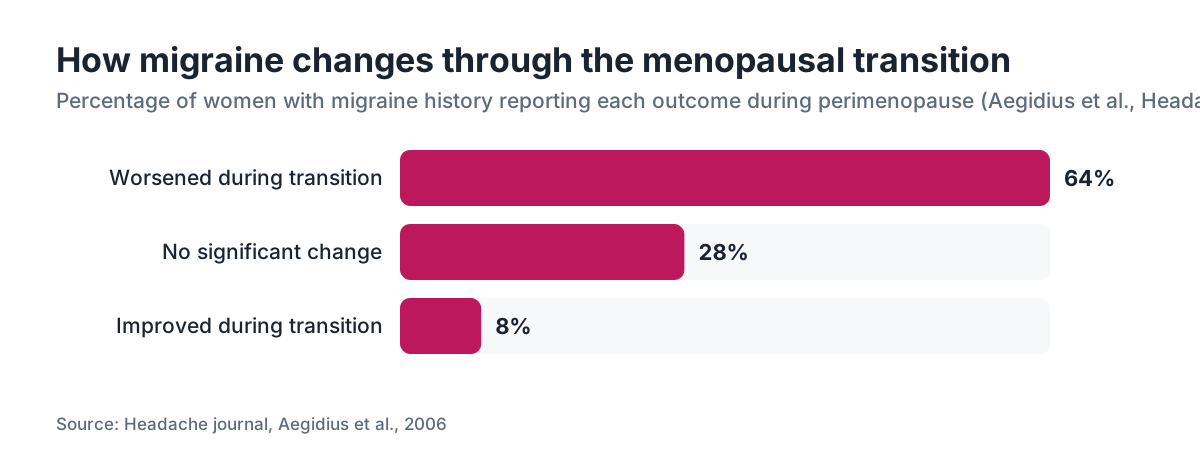
TL;DR: Falling and swinging estrogen during perimenopause triggers or worsens headaches in many women. Up to 64% of women with a migraine history report worse attacks during the transition. Steadying estrogen through lifestyle changes, non-hormonal drugs, or hormone therapy often cuts frequency. Most menopause headaches ease after the final period, though some women need ongoing treatment.
What causes headaches during menopause?
The short answer is estrogen. Estrogen affects the trigeminal pain pathway, serotonin receptor sensitivity, and prostaglandin levels, all of which influence how likely your brain is to mount a headache response. When estrogen is stable, even at a lower postmenopausal level, many women feel better. The problem is the transition.
In perimenopause, estrogen does not decline in a straight line. It swings. Some months it spikes well above premenopausal norms before crashing. Those drops, called estrogen withdrawal, are exactly what the brain reads as a headache trigger. This is the same mechanism behind menstrual migraine, where the pre-period estrogen drop reliably sets off attacks in susceptible women.
Progesterone fluctuates too, and how it moves against estrogen matters for headache threshold. Women with low progesterone relative to estrogen sometimes report more frequent headaches even when absolute estrogen is not dramatically low.
Other perimenopause symptoms feed the cycle. Disrupted sleep raises cortisol. Hot flashes at 3 a.m. cause dehydration and sleep fragmentation, both established headache triggers. The hormonal piece is real, but it rarely operates alone.
How common are headaches in menopause and perimenopause?
Very common, and badly underreported.
A 2006 population study published in Headache found that 64% of women with a migraine history reported worsening during the menopausal transition, compared with only 8% who improved [1]. For women who never had significant headaches before, new-onset headaches in the late 40s and early 50s are still frequently tied to hormonal shifts, though other causes always need ruling out.
The North American Menopause Society (NAMS) notes that headache is one of the most commonly reported neurological symptoms of the menopausal transition, alongside cognitive fog and mood changes [2]. Migraine peaks in prevalence for women between ages 35 and 55, overlapping almost exactly with the typical perimenopause window.
After the final period, the picture changes for many women. With estrogen no longer cycling, the wild swings stop. Around 67% of women with menstrual migraine improve after natural menopause, according to data summarized by the American Headache Society [3]. Surgical menopause is a different story: abrupt loss of ovarian estrogen often worsens migraine, sometimes severely.
So the arc looks like this. Headaches frequently get worse in perimenopause, plateau or improve after the final period in natural menopause, and can spike sharply after surgical menopause without hormonal support.
What does a menopause headache feel like, and how is it different from other headaches?
There is no single "menopause headache" sensation. What changes is the pattern, frequency, and sometimes the character of headaches a woman already had, or the new arrival of headaches in someone who previously had few.
Migraine is the most affected type. Women report attacks lasting longer than usual, responding less well to their usual triptans, or arriving without the predictable pattern they had during their reproductive years. Losing the menstrual cycle as a timing cue means attacks can feel random and harder to anticipate.
Tension-type headaches also increase. These feel like a band of pressure around the forehead or a dull ache at the base of the skull. They track closely with sleep quality and muscle tension, both of which worsen during the transition.
A small subset of women develop new aura symptoms in perimenopause, which can be frightening. Visual aura (zigzag lines, blind spots) appearing for the first time after 50 must be evaluated promptly to rule out TIA or other vascular causes. Migraine with aura is itself a cardiovascular risk factor, a fact that becomes more clinically relevant as women's baseline cardiovascular risk rises after menopause.
Headaches that are thunderclap in onset, or come with fever, vision changes, weakness, or confusion, are neurological emergencies regardless of menopausal status. The menopause label should never explain away a new severe headache that has not been properly evaluated.
Does hormone replacement therapy help or worsen menopause headaches?
Here the evidence gets genuinely complicated, and anyone who gives you a simple yes or no is oversimplifying.
The key variable is delivery route and dose stability. Oral estrogen (pills) creates peaks and troughs in blood levels. Those fluctuations can trigger migraine the same way menstrual cycling does. That is why oral HRT gets a bad reputation in headache research.
Transdermal estrogen, such as an estrogen patch or gel, delivers a much steadier blood level. Several observational studies and clinical guidance from the European Headache Federation suggest that low-dose transdermal estradiol at a stable dose often reduces rather than worsens migraine frequency in perimenopausal women [4]. The NAMS 2022 Hormone Therapy Position Statement acknowledges this distinction, noting that route of administration affects tolerability [2].
The progestogen matters too. Micronized progesterone (body-identical progesterone, often Prometrium in the U.S.) appears more headache-neutral than synthetic progestins like medroxyprogesterone acetate, which some women find worsens attacks. If you are already on hormone replacement therapy and your headaches are worse, switching from a synthetic progestin to micronized progesterone is worth discussing with your prescriber before giving up on HRT entirely.
Women with migraine with aura need a specific conversation. Migraine with aura combined with estrogen-containing therapy has historically been flagged as a combined thrombotic risk, though the absolute risk with low-dose transdermal estrogen is much lower than with combined oral contraceptives. The FDA label for estrogen therapy does not absolutely contraindicate it in women with migraine with aura, but individual risk stratification is mandatory [5].
Bottom line: transdermal estrogen at a stable dose, with micronized progesterone if you have a uterus, is generally the better choice for headache-prone women than oral estrogen. But the answer depends heavily on your headache subtype and cardiovascular history.
What non-hormonal treatments work for menopause headaches?
Plenty, and many women use them alongside or instead of hormone therapy.
For acute migraine attacks, triptans remain the most effective class of drugs. Sumatriptan, rizatriptan, and eletriptan are all available generically. They bind serotonin receptors and constrict dilated cranial blood vessels. Take them at the first sign of an attack, not once it is fully established. Frequent use (more than 10 days per month) creates medication overuse headache, which is its own problem.
CGRP-related therapies are a newer and important category. The calcitonin gene-related peptide (CGRP) pathway is central to migraine. Rimegepant (Nurtec) and ubrogepant (Ubrelvy) are gepants that block CGRP receptors acutely. Lasmiditan (Reyvow) works through a different mechanism. For prevention, injectable monoclonal antibodies (erenumab, fremanezumab, galcanezumab) block CGRP or its receptor monthly or quarterly and have strong trial evidence behind them [6].
Oral preventive options include beta-blockers (propranolol, metoprolol), topiramate, valproate (pregnancy risk means it is rarely used in women of reproductive age, but postmenopausal women do use it), and amitriptyline. Candesartan, an ARB, has good evidence in European practice though it is off-label in the U.S.
For non-migraine tension headaches, magnesium glycinate (400-600 mg daily) has reasonable evidence and is often the first thing worth trying. Several randomized trials support magnesium for both tension headache prevention and migraine reduction [7]. It is cheap and low-risk. Riboflavin (vitamin B2) at 400 mg daily has similar evidence for migraine specifically.
Behavioral changes matter more than they sound. Consistent sleep schedules, limiting caffeine to a defined morning amount, staying well-hydrated, and finding food triggers (common ones are alcohol especially red wine, aged cheese, and processed meats) can meaningfully cut attack frequency. Biofeedback and cognitive behavioral therapy have randomized trial support for migraine prevention, which often surprises patients.
At WomenRx, providers who manage hormonal care for women in the menopausal transition often work through exactly this kind of treatment ladder, matching the approach to a woman's headache subtype and her broader hormonal picture.
Which supplements actually help menopause headaches?
Three supplements have real trial data. Everything else is noise.
Magnesium is the most supported. The American Migraine Foundation cites several randomized trials showing that magnesium (400-600 mg of an absorbable form like glycinate or citrate) reduces migraine days per month [7]. Magnesium is also commonly low in perimenopausal women who are not sleeping well and sweating through hot flashes.
Riboflavin (vitamin B2) at 400 mg daily reduced migraine frequency by roughly 50% compared to placebo in a 1998 trial published in Neurology, and later smaller trials have been broadly consistent [8]. It is safe, cheap, and turns urine bright yellow (harmless).
Coenzyme Q10 has a randomized trial in which 47.6% of patients on 300 mg daily saw migraine days drop by more than 50%, compared to 14.4% on placebo, in a small but well-designed 2005 study [9].
Feverfew has traditional use but mixed trial results. I would not prioritize it before magnesium and B2.
For headaches tied specifically to poor sleep, melatonin at low doses (0.5-3 mg) may help by improving sleep quality rather than any direct anti-headache mechanism. It is worth trying if sleep disruption is a clear trigger.
Phytoestrogenic supplements like black cohosh get marketed for menopausal symptoms broadly. The evidence for headache reduction specifically is thin. If they help hot flashes and better sleep follows, there may be an indirect benefit, but that is not a direct mechanism.
Do hot flashes and headaches happen together, and why?
They often do, and the connection is more than coincidence.
Hot flashes and migraine share hypothalamic and brainstem mechanisms. The hypothalamus regulates both thermoregulation and the trigeminovascular system that drives migraine. A hot flash can directly set off a headache in susceptible women: the vasodilation, rapid heart rate, and adrenaline surge of a flash can tip the brain into a headache state.
Night sweats are the worst offender. Waking repeatedly at 2 and 4 a.m., sweating, then lying in damp sheets, is a recipe for sleep deprivation and dehydration, two of the most reliable headache triggers known. Women often underestimate how much overnight fluid loss affects them.
Treating hot flashes, whether through hormone therapy, non-hormonal options like fezolinetant (Veozah, the first FDA-approved non-hormonal hot flash treatment, cleared in 2023), or older options like venlafaxine or low-dose paroxetine, can break this cycle and reduce headache burden [10]. The effect is indirect but clinically significant in many women.
Tracking both hot flash frequency and headache occurrence in a diary for 4-6 weeks can reveal patterns that are otherwise invisible, and it hands a prescriber much better data to work with.
When should I be worried about a new headache in menopause?
Most headaches in the menopausal transition are hormonal or tension-related. But new onset headaches after 50 always deserve a proper evaluation before you chalk them up to hormones.
See a doctor promptly or go to an ER for any headache described as the worst of your life, headaches that wake you from sleep and build rapidly, new headache with fever and stiff neck, headache with sudden vision changes or one-sided weakness, and headache following head injury or positional changes.
See a doctor on a non-emergency basis for headaches that have changed character from your usual pattern, headaches occurring daily or near-daily that are new, headaches unresponsive to standard treatment, and any headache you are worried about.
Giant cell arteritis (temporal arteritis) is worth knowing about. It mostly affects women over 50, causes headache often centered at the temples, and comes with jaw pain while chewing, scalp tenderness, and elevated inflammatory markers (ESR, CRP). It is a medical urgency because it can cause blindness if untreated. A sudden or progressive headache in a woman over 60, especially with those symptoms, needs same-day evaluation.
Menopause does not protect against brain tumors, aneurysms, or hypertension-related headache. If you have new or rapidly worsening high blood pressure alongside new headaches, those two things are connected and both need attention.
How do I track and identify my menopause headache triggers?
A paper or app-based headache diary is the single most useful diagnostic tool you can get without a prescription.
Track daily for at least 4-6 weeks: date and time of headache onset, severity (1-10), location, associated symptoms (nausea, light sensitivity, aura), sleep hours the night before, any alcohol or dietary suspects, stress level, and whether you had a hot flash in the preceding few hours. If you are still cycling, note where you are in your cycle.
Patterns that commonly emerge: headaches clustering in the week before a period or around ovulation (hormonal), headaches after nights below 6 hours of sleep (sleep-driven), headaches following alcohol even in small amounts (alcohol trigger), and headaches easing on mornings after a good night without night sweats (hot flash connection).
Apps like Migraine Buddy and N1-Headache are free and built for this. The data from even 4 weeks of consistent logging can turn a conversation with a headache specialist from vague to specific.
If your diary shows headaches on more than 15 days per month, you have chronic migraine (or chronic daily headache) by clinical definition, and you are a candidate for preventive therapy rather than acute treatment. That threshold matters because it changes what your insurer is likely to cover.
What is the connection between perimenopause headaches and cardiovascular risk?
Here the science is clear enough to take seriously.
Migraine with aura is an independent cardiovascular risk factor. A meta-analysis published in BMJ found migraine with aura was associated with a two-fold increased risk of ischemic stroke and a 1.5-fold increased risk of myocardial infarction in women [11]. The absolute risk for any individual woman is still relatively low, but the presence of aura changes the clinical calculus, especially alongside other risk factors like smoking, hypertension, or obesity.
Menopause itself raises cardiovascular risk through estrogen loss, changes in lipid profiles, and increased arterial stiffness. A woman entering her mid-50s who has migraine with aura, newly elevated blood pressure, and is considering estrogen therapy is having a different conversation than a woman of the same age with tension-type headaches and no vascular risk factors.
Combined oral contraceptives with estrogen are generally avoided in women with migraine with aura due to stroke risk, a caution that appears in FDA labeling and WHO Medical Eligibility Criteria [5]. The evidence for low-dose transdermal postmenopausal estrogen is not as restrictive, but the aura history should always trigger a cardiovascular risk discussion.
For women managing their hormonal care and headache history together, a provider who understands both sides of that equation matters. A useful starting point is reading about menopause and what a thorough menopausal care evaluation looks like before you book your first visit.
Do menopause headaches eventually go away on their own?
For most women, yes, but the timeline is variable and not guaranteed.
Women who had menstrual migraine tied closely to their cycle typically see real improvement within one to two years after their final period. Ending estrogen cycling removes the biggest trigger. Around 67% of women with menstrual or hormonally linked migraine report improvement after natural menopause, per American Headache Society data [3].
Women whose migraine was not strongly tied to the menstrual cycle fare less predictably. Some improve, some stay the same, and a smaller group worsen postmenopausally, possibly because the protective effect of baseline estrogen is gone.
Surgical menopause, including bilateral oophorectomy, frequently worsens migraine acutely. If you are having ovaries removed and have a migraine history, discuss starting transdermal estrogen with your surgeon before the procedure, not weeks later.
Postmenopausally, headaches that were once episodic can sometimes turn into daily headache through medication overuse or independent chronification. Staying below the overuse threshold for pain medications and triptans (10 days per month) is part of long-term management.
Age itself brings some relief. Migraine prevalence drops sharply after 60, likely because multiple hormonal and neurological factors converge toward lower overall excitability. Many women who struggled through their 40s and 50s find their 60s genuinely quieter.
How does GLP-1 medication or weight change affect menopause headaches?
This is newer territory and the data is limited, but the clinical reasoning holds.
Obesity is an established risk factor for chronic migraine. A systematic review found obese individuals had a 27% higher risk of episodic migraine transforming to chronic migraine compared to healthy-weight individuals [12]. Weight loss, by any means, is associated with reduced headache frequency in overweight migraine patients in observational data.
GLP-1 receptor agonists like semaglutide and tirzepatide produce substantial, sustained weight loss. In the STEP 1 trial, semaglutide at 2.4 mg produced an average weight loss of 14.9% of body weight over 68 weeks [13]. If some of the headache burden in overweight perimenopausal women is weight-related, then meaningful weight loss should logically help.
One caveat is worth naming. GLP-1 medications can cause nausea, which can itself trigger headache in susceptible people, particularly during early dose escalation. Some migraine patients report temporary worsening before the longer-term metabolic benefits take hold.
No large trial has yet specifically studied GLP-1 medications and migraine outcomes. Anyone claiming definitive data on that question does not have it. But the weight-migraine link is real, and for perimenopausal women considering semaglutide for weight loss as part of a broader menopausal care plan, potential headache improvement is a plausible secondary benefit worth tracking.
For an overview of how these medications compare, see semaglutide vs tirzepatide.
Frequently asked questions
Can menopause cause daily headaches?
Yes. The hormonal fluctuations of perimenopause can drive an increase in headache frequency that, in some women, becomes daily or near-daily. If you are having headaches more than 15 days a month, that meets the clinical threshold for chronic daily headache and warrants evaluation for preventive treatment rather than relying only on acute medications.
Why do I get headaches after a hot flash?
Hot flashes involve rapid vasodilation, a surge in adrenaline, and a brief spike in core body temperature. Each of those can trigger the trigeminal pain pathway that drives migraine and other headache types. Night sweats compound the problem by fragmenting sleep and causing mild dehydration, both well-documented headache triggers. Treating hot flashes effectively often reduces headache frequency as a secondary benefit.
Does estrogen cream or gel help headaches more than an estrogen patch?
The key is blood level stability, not the specific delivery form. Transdermal gels, sprays, and patches all provide more stable estradiol levels than oral pills, which create peaks and troughs. Within transdermal options, the practical difference between a gel and a patch is modest. Some women find a patch simpler for compliance; others prefer gel for dose flexibility. Discuss your preference with your prescriber.
Is it normal to start getting migraines for the first time in your late 40s?
Yes. New-onset migraine in the late 40s and early 50s is frequently tied to the hormonal shifts of perimenopause. Migraine prevalence in women peaks between ages 35 and 55, the same window as the menopausal transition. However, any new headache pattern that arrives after 50 should be evaluated by a physician to rule out non-hormonal causes before it is attributed solely to menopause.
Which magnesium form is best for headaches?
Magnesium glycinate and magnesium citrate are both well-absorbed and gentler on the digestive system than magnesium oxide, the cheap form found in many supplements that has poor absorption. The dosage studied for migraine prevention is 400-600 mg of elemental magnesium daily. It can take 2-3 months of consistent use before you see the full effect.
Can stopping birth control pills trigger menopause-like headaches?
Yes. Combined oral contraceptives suppress your natural hormonal cycle. When you stop, the sudden removal of exogenous estrogen can trigger a withdrawal headache similar to what happens in perimenopause. For women stopping the pill in their 40s, this may overlap with genuine perimenopause beginning, making the trigger hard to isolate. Give your body 2-3 months to re-establish its own cycle before drawing conclusions.
Do triptans still work during menopause?
For most women, yes. Triptans work through serotonin receptors, not directly through estrogen, so they remain effective regardless of menopausal status. Some women report needing a slightly higher dose or a different triptan than they used premenopausally. If your usual triptan has stopped working well, it is worth trying a different formulation (nasal spray or injectable for faster onset) or switching to a gepant like rimegepant.
What is the difference between a menopause headache and a tension headache?
Menopause headache is not a clinical diagnosis. It describes headaches whose frequency or severity is driven by hormonal changes. Those headaches are typically migraine or tension-type in character. Tension headaches feel like bilateral pressure or a tight band and rarely involve nausea or light sensitivity. Migraine is usually one-sided, pulsating, moderate to severe, and often includes nausea or sensitivity to light and sound. The distinction matters because treatments differ.
Does caffeine help or hurt menopause headaches?
Both, depending on context. Caffeine constricts blood vessels and can abort an early migraine, which is why it is in many OTC headache remedies. But regular daily caffeine use raises the threshold at which withdrawal headache occurs. If you consume caffeine daily and miss your morning dose, you will likely get a headache. In perimenopausal women already prone to headaches, cutting caffeine to one defined morning dose and avoiding it after noon is usually the net-positive move.
Will headaches improve after menopause is confirmed?
For many women, yes. Roughly 67% of women with hormonally linked migraine improve after natural menopause, once the estrogen cycling stops. The improvement often appears within one to two years after the final period. Women whose migraines were not strongly tied to their menstrual cycle show more variable outcomes. Surgical menopause is the exception and frequently worsens migraine without hormonal support.
Can progesterone cause headaches?
Yes, particularly synthetic progestins. Medroxyprogesterone acetate and norethindrone, the progestins used in some older HRT formulations, can worsen headache in susceptible women. Micronized progesterone (body-identical, like Prometrium) appears headache-neutral or even mildly beneficial for sleep in most women. If your headaches worsened after starting HRT that includes a synthetic progestin, switching to micronized progesterone is a reasonable next step before abandoning therapy.
How long does it take for HRT to improve headaches?
Most women who respond to transdermal estrogen for headache see a change in frequency within 2-3 months of stable dosing. The first 4-6 weeks can be variable as the body adjusts. If headaches worsen significantly in the first month, dose adjustment or a switch from oral to transdermal estrogen is warranted. Tracking headache frequency in a diary during this period gives your prescriber the data needed to make informed adjustments.
Are menopause headaches linked to anxiety or depression?
There is a real bidirectional relationship. Migraine and depression share serotonergic pathways, and perimenopause increases risk for both. Women with migraine have higher rates of anxiety and depression, and those mood states lower the pain threshold, making headaches feel more severe. Treating the mood component, whether with therapy, SNRIs, or hormonal stabilization, often has a meaningful effect on headache burden. This is not the same as saying the headaches are psychological.
Sources
- Headache journal, Aegidius et al. 2006
- North American Menopause Society, 2022 Hormone Therapy Position Statement
- American Headache Society, Menstrual Migraine overview
- European Headache Federation, guidelines on hormonal contraception and hormone therapy in migraine
- FDA, Estradiol Prescribing Information (label reference)
- American Migraine Foundation, CGRP medications overview
- American Migraine Foundation, Magnesium for Migraine
- Neurology journal, Schoenen et al. 1998, Riboflavin migraine trial
- Neurology journal, Sandor et al. 2005, CoQ10 migraine trial
- FDA, Veozah (fezolinetant) approval, 2023
- BMJ, Schurks et al. 2009, migraine and cardiovascular risk meta-analysis
- Cephalalgia, Bigal and Lipton 2006, obesity and migraine chronification
- NEJM, STEP 1 trial, Wilding et al. 2021, semaglutide 2.4 mg weight loss