Menopause hair loss: why it happens and what actually helps
TL;DR: Menopause hair loss affects roughly 40-50% of women and is driven mainly by falling estrogen and rising androgen activity, which shifts hair follicles into a resting phase. Hormone replacement therapy can slow or partially reverse hormonally driven shedding in some women, but it is not a guaranteed fix. Minoxidil remains the most evidence-backed topical treatment. Most women need more than one approach.
Why does menopause cause hair loss?
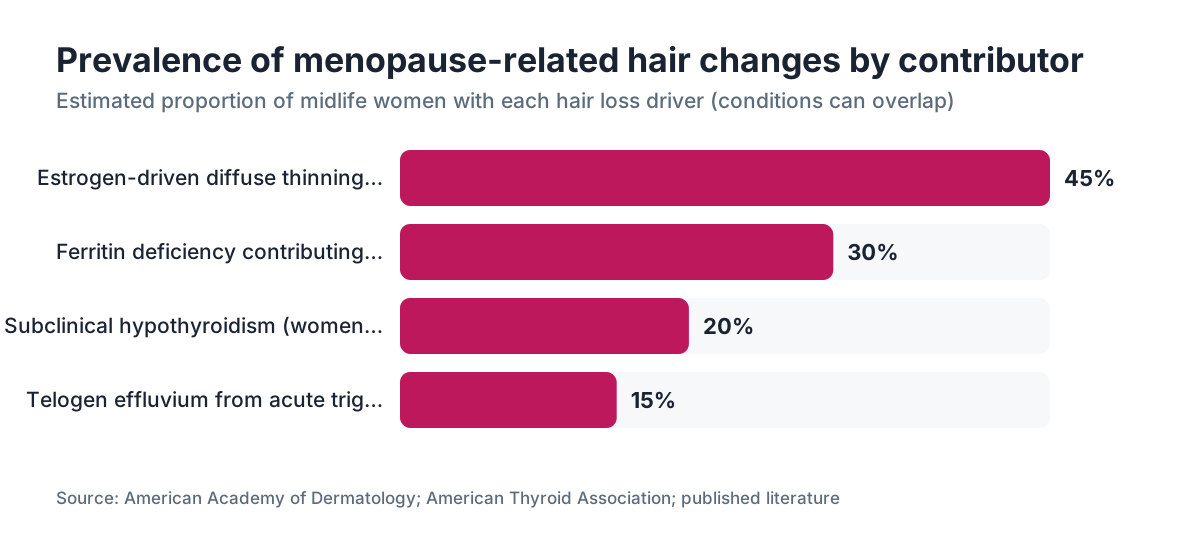
Hair loss during menopause is real, common, and underreported by doctors. Somewhere between 40% and 50% of women will experience noticeable thinning by the time they reach their late 40s or 50s, according to the American Academy of Dermatology [1]. The pattern is usually diffuse, meaning the hair thins across the scalp rather than in discrete bald patches, which is why it can creep up slowly before you notice your ponytail has gotten thinner or your part looks wider.
The core driver is estrogen. Estrogen prolongs the anagen (growth) phase of the hair cycle and keeps hair follicles healthy. When estrogen drops during perimenopause and menopause, follicles spend more time in the telogen (resting) phase and less time actively growing. More hairs shed per day. The hairs that replace them come in finer and shorter.
Progesterone matters here too. Progesterone competes with the enzyme 5-alpha reductase, which converts testosterone into dihydrotestosterone (DHT). DHT is the androgen that shrinks hair follicles in genetically susceptible women. As progesterone falls, that competitive block disappears, and DHT activity rises even if your total testosterone is perfectly normal [2]. This is why the hair loss pattern in menopausal women often looks similar to androgenetic alopecia (female pattern hair loss): thinning at the crown and widening of the part, with the frontal hairline usually preserved.
Other contributors layer on top of the hormonal changes. Thyroid dysfunction, which becomes more common in the same age window, can cause hair shedding that mimics menopause-related loss. Iron deficiency is another frequent culprit, especially in perimenopausal women who have had heavy periods for years. Chronic stress elevates cortisol, which can trigger telogen effluvium (mass shedding about three months after the stressor). Any major illness, surgery, or dramatic weight change can do the same. Calling all midlife hair loss "menopause hair loss" misses the fact that several things are probably happening at once.
How is menopause-related hair loss different from other types?
Menopausal hair loss overlaps with two other well-defined conditions: female androgenetic alopecia (FAGA) and telogen effluvium. Getting the distinction right matters because the treatments differ.
Female androgenetic alopecia is a genetic condition that can start in your 20s but often becomes much more noticeable at menopause because the hormonal environment that was partially protecting your follicles has shifted. It presents as diffuse thinning over the crown, visible on the Ludwig scale (Grades I to III), with a preserved frontal hairline. Dermatologists diagnose it by pattern, often confirmed with a dermoscopy exam showing miniaturized follicles [12].
Telogen effluvium is a reactive shed. Something shocked your system, follicles stalled in telogen, and roughly 2-3 months later you lose a lot of hair at once. Menopause can act as that shock. So can the abrupt hormone drop right after stopping HRT. Telogen effluvium typically self-resolves within 6-12 months once the trigger is removed, though menopausal hormonal changes are an ongoing trigger rather than a one-time event.
| Type | Pattern | Timeline | Reversible? | |---|---|---|---| | Female androgenetic alopecia | Crown/part widening, diffuse | Slow, progressive | Partially with treatment | | Telogen effluvium | Diffuse all-over shed | Acute or chronic | Often yes, 6-12 months | | Menopausal hair loss | Usually diffuse, crown-prominent | Tied to estrogen decline | Partially, especially with HRT | | Thyroid-related | Diffuse | Tied to thyroid levels | Yes, with thyroid treatment |
A good workup before starting any treatment should include TSH, free T4, a complete blood count, ferritin (more than serum iron), and ideally total and free testosterone. These tests are inexpensive and will save you from spending months on the wrong treatment.
Does HRT help with hair loss during menopause?
This is the question most women ask, and the honest answer is: sometimes yes, but not reliably, and the evidence is thinner than you'd expect for something so common.
Estrogen and progesterone receptors are present in human hair follicles [3]. The follicle is biologically responsive to the hormones HRT delivers. When you restore estrogen, you theoretically restore some of the growth-phase prolonging effect it had before menopause. When you add progesterone (particularly oral or topical bioidentical progesterone), you theoretically restore the DHT-blocking effect described above.
Clinical trial data is limited. A 2021 review in the Journal of the American Academy of Dermatology noted that while estrogen receptor presence in follicles is well established, randomized controlled trial data specifically on HRT and hair regrowth in menopausal women remains sparse [4]. Most evidence is observational: women on HRT who report less hair loss, or small studies showing improved hair density on scalp biopsy.
What the data does suggest, reasonably consistently, is that HRT can slow or halt the progression of hormonally driven hair loss. It is less likely to regrow hair that has already been lost from miniaturized follicles. Think of it as protective rather than restorative, especially if you start it early in perimenopause.
The type of HRT may matter. Some synthetic progestins, particularly those with androgenic properties like norethindrone acetate in higher doses, may actually worsen hair loss in susceptible women. Micronized progesterone (like Prometrium) has a more neutral or favorable androgen profile and is generally preferred when hair loss is a concern [5]. Testosterone supplementation, which some practitioners add for libido and energy in menopause, cuts both ways for hair: some women do fine, others shed more. If you are already prone to androgenetic alopecia, discuss this explicitly with whoever is managing your hormones.
For women who want to explore HRT as part of a broader approach to menopause management, including its well-documented benefits for hot flashes, bone density, and mood, hormone replacement therapy is worth a thorough conversation with a knowledgeable clinician. The hair benefit, if it comes, is often a bonus rather than a guarantee.
Can HRT help with hair loss if you haven't started it yet?
If you are currently in perimenopause and have not yet started HRT, starting it sooner rather than later likely gives your hair follicles a better chance. Follicles that have been miniaturizing for years are harder to rescue than follicles that are just beginning to feel the hormonal shift.
The North American Menopause Society (NAMS) 2022 position statement notes that hormone therapy is most appropriate for women within 10 years of menopause onset or under age 60 who have bothersome menopause symptoms, and that the benefit-risk profile is generally favorable in this window [6]. The statement focuses on vasomotor symptoms, cardiovascular risk, and bone health, not hair specifically, but the implication for timing applies across all hormonally driven tissues.
If you are in your mid-40s noticing more hair shedding and other perimenopausal signs like irregular periods, sleep disruption, or brain fog, that clinical picture may support HRT for multiple reasons at once. Hair is one piece of the picture, not usually the sole deciding factor. Understanding perimenopause age and what hormone shifts are normal at each stage can help you put your hair changes in context.
If you are already post-menopausal and considering starting HRT primarily for hair, the conversation is more nuanced. Benefits for hair are less certain later in the menopausal transition. Other treatments like minoxidil are probably more reliably effective for hair-specific goals at that point.
What treatments actually work for menopause hair loss?
Several options have real evidence behind them. None of them work overnight, and none of them are permanent fixes you can use once and stop.
Minoxidil is the most established. The 2% and 5% topical solutions are FDA-approved for female pattern hair loss [7]. The 5% foam formulation is the same active concentration and generally preferred because it is lower in irritating propylene glycol. Oral minoxidil at low doses (0.25 mg to 2.5 mg daily) is increasingly used off-label, and several small trials have shown good results for women with diffuse hair loss. It works by prolonging the anagen phase and increasing follicle size. You need to use it consistently for at least 4-6 months before judging results, and if you stop, the benefit reverses within a few months.
Spironolactone is a potassium-sparing diuretic that also blocks androgen receptors. Prescribed off-label for female androgenetic alopecia at 50-200 mg per day, it is one of the more commonly used options in dermatology practices for women whose hair loss has an androgenic component. A 2020 retrospective study of over 1000 women found subjective improvement in the majority of patients [8]. It requires monitoring of potassium and blood pressure and is not appropriate for women who are pregnant or planning to become pregnant.
Low-level laser therapy (LLLT) devices, including FDA-cleared laser caps and combs, have modest evidence for stimulating follicle activity. The effect size is smaller than minoxidil in most comparison studies, but they are well-tolerated and some women use them in combination.
Platelet-rich plasma (PRP) injections into the scalp have a growing evidence base. A 2019 meta-analysis found statistically significant improvement in hair density and thickness compared to placebo [9]. It is not covered by insurance and costs roughly $400-$800 per session, with most protocols requiring three initial sessions followed by maintenance. Results vary substantially.
Nutritional support is worth addressing directly. Iron deficiency (ferritin below 30-40 ng/mL, which many labs will flag as "normal" below that) is a well-recognized contributor to hair shedding [11]. Correcting it with supplemental iron if you are deficient can reduce shedding. Biotin is widely marketed, but evidence for hair growth in women without biotin deficiency is essentially absent. Zinc, vitamin D, and protein adequacy matter as baseline nutrition, though none are reliable treatments for hair loss on their own.
The realistic approach for most women with menopause-related hair loss is a combination: address any nutritional deficiencies, discuss HRT if appropriate for menopause management, and add topical minoxidil as the anchor treatment for hair specifically.
What role does progesterone specifically play in hair loss?
Progesterone's relationship with hair is one of the more interesting and underappreciated parts of this topic. Progesterone is more than a "uterine protection" hormone added to HRT to prevent endometrial hyperplasia. It has direct effects on the scalp.
The mechanism is 5-alpha reductase inhibition. Progesterone competes with this enzyme, which converts testosterone to DHT. Less DHT means less follicle miniaturization. This is the same basic mechanism behind finasteride (a prescription drug for hair loss in men and increasingly used off-label in post-menopausal women), but progesterone achieves the effect through a different and more natural pathway.
Some clinicians, particularly those practicing functional or integrative medicine, use topical progesterone cream applied directly to the scalp for hair loss, based on this mechanism and a few small studies. Mainstream dermatology has not fully adopted this, partly because the evidence is limited and partly because topical progesterone absorption through scalp skin is variable.
What is clear is that when choosing a progestogen for HRT, the androgenic index of the molecule matters for hair. Micronized progesterone has low androgenic activity. Some synthetic progestins (norethindrone, levonorgestrel, medroxyprogesterone in higher doses) have measurable androgenic effects and may counteract the hair-protective effect you are hoping to get from estrogen. For women with hair loss concerns, this is a concrete reason to discuss formulation specifically with your prescriber. You can read more about the specifics of progesterone and how different forms compare.
If you are already on HRT and noticing increased shedding, look at your progestogen type before assuming HRT is not working for hair. A switch to micronized progesterone may make a difference.
What blood tests should you get before treating hair loss at menopause?
Treating hair loss without a basic workup is like treating fatigue without checking your thyroid. You will spend money and time on the wrong thing.
The minimum reasonable panel:
- TSH and free T4: Hypothyroidism causes diffuse hair loss and is common in this age group. The American Thyroid Association estimates that up to 20% of women over 60 have subclinical hypothyroidism [10]. If your TSH is elevated, treating the thyroid often resolves the hair loss completely.
- Ferritin: Not serum iron alone. Ferritin is the storage form, and levels below 30-40 ng/mL are associated with increased hair shedding even when hemoglobin is normal [11]. Many labs report normal at 12 ng/mL, which is too low for optimal hair cycling.
- CBC: Anemia is an obvious contributor and easy to check.
- Total and free testosterone, DHEA-S: To understand your androgen picture.
- Estradiol and FSH: To confirm where you are in the menopausal transition, especially if periods are still irregular.
- Vitamin D: Not a direct hair treatment, but widespread deficiency in this age group and worth correcting.
- ANA and inflammatory markers: If the pattern is more patchy or there are other autoimmune symptoms, alopecia areata should be on the differential.
Many of these can be ordered by your primary care doctor. A dermatologist with experience in hair loss can add dermoscopy and sometimes a scalp biopsy if the diagnosis is unclear. Getting the workup right upfront saves months of guessing.
How long does it take to see improvement in hair after starting HRT or minoxidil?
Patience is genuinely required here. Hair cycles are slow.
The anagen phase of hair growth runs 2-7 years, but the turnover cycle for any individual follicle from rest back to active growth is about 3-4 months. Any treatment that works at the follicle level takes at least 3-6 months to produce visible change, and 12 months for a realistic assessment of whether it is working.
With minoxidil, most studies show a detectable increase in hair count or density at 4-6 months, with continued improvement through 12 months. Some women see initial increased shedding in the first 2-8 weeks as resting hairs are pushed out to make room for new growth. This is normal and not a sign the treatment is failing.
With HRT, the hair-related timeline is less studied specifically, but most clinicians who see this in practice report that shedding stabilizes within 3-6 months, with modest regrowth possible over 12 months in women who respond. If you are 12 months into HRT and have seen no change in shedding, hair is probably not going to be a major HRT benefit for you, and it is worth adding or adjusting other treatments.
PRP protocols typically show results after the third session (about 3 months into treatment) with assessments at 6 and 12 months.
The practical advice: take dated photos in the same lighting every month. Hair loss and regrowth are gradual enough that you will not notice in the mirror, but side-by-side photos over 6-12 months will show you the real trend.
Are there things that make menopause hair loss worse?
Yes, and some of them are very fixable.
Chronic dieting and caloric restriction top the list. If you are eating fewer than about 1200-1400 calories a day for an extended period, your body deprioritizes hair growth. Protein intake below roughly 50-60 grams per day has the same effect. Hair is essentially protein (keratin), and if dietary protein is insufficient, follicles are among the first systems to be downregulated. This matters for women on GLP-1 medications like semaglutide who are eating significantly less. Hair shedding is a recognized side effect of rapid weight loss by any means, and it is usually telogen effluvium that resolves once intake stabilizes, but it adds to whatever hormonally driven loss is already happening.
High emotional or physical stress drives up cortisol, which suppresses follicle cycling. The pandemic years saw a documented surge in telogen effluvium cases for this reason.
Heat styling, tight hairstyles (ponytails, braids, extensions), and chemical processing cause mechanical and physical follicle damage that compounds hormonal loss. Traction alopecia from tight styles is irreversible if continued long enough.
Certain medications can drive hair loss: anticoagulants, beta-blockers, some antidepressants, retinoids, and excess vitamin A supplementation are the most common culprits. Review your medication list with a dermatologist if shedding increased shortly after starting something new.
Sleep deprivation is less studied but biologically plausible as a contributor, since growth hormone (which supports follicle activity) is predominantly secreted during slow-wave sleep, which is often disrupted in perimenopause.
Fix the fixable things first. That is a reasonable starting point before spending money on specialized treatments.
When should you see a dermatologist versus your gynecologist for this?
The short answer: see both, but start with whichever you can get to first.
A gynecologist or menopause specialist is your person for understanding the hormonal picture, assessing whether HRT is appropriate for you, and helping you choose the right formulation if hair is one of your concerns. Telehealth platforms that specialize in women's hormones, including WomenRx, can order labs, prescribe HRT, and manage the hormone side of this with you. That is genuinely useful for getting the hormonal foundation right.
A dermatologist, ideally one who specializes in hair loss, adds clinical examination of the scalp (dermoscopy), can diagnose the specific type of hair loss accurately, and manages minoxidil, spironolactone, PRP, and other hair-specific treatments. If your hair loss is patchy rather than diffuse, or progressing very rapidly, see a dermatologist promptly, because alopecia areata and other conditions need different treatment.
You do not have to choose. Many women with significant hair loss are best served by coordinating between both. Tell your gynecologist about any hair treatments you are on (especially spironolactone, which affects aldosterone) and tell your dermatologist what HRT you are taking and what formulation.
What does the research say about estrogen patches or topical estrogen for hair?
Systemic HRT, whether delivered via pill, patch, gel, or spray, raises circulating estrogen levels and in theory should have similar effects on hair follicles. The estrogen patch is popular for several reasons: it avoids first-pass liver metabolism, produces more stable estradiol levels than oral pills, and many clinicians prefer it for cardiovascular safety reasons.
For hair specifically, there is no strong evidence that the delivery method of systemic estrogen (oral vs. patch vs. gel) makes a meaningful difference for hair outcomes. What matters more is whether your circulating estradiol level is adequately restored.
Topical scalp application of estradiol or estrone solutions has been studied, mostly in small trials. A study published in the International Journal of Dermatology found that topical 17-beta estradiol applied to the scalp improved hair density compared to placebo after 6 months [3]. This is a niche approach not widely practiced in the US, but it is used in some European clinical settings. It is not the same as systemic HRT and does not provide the full menopausal symptom benefits.
If you are specifically pursuing HRT for menopause symptoms and hoping hair is one of the beneficiaries, the route of administration is less critical for hair than getting your systemic estradiol into an adequate range and choosing the right progestogen.
What is the realistic outlook for women dealing with this?
Honest prognosis: most women will not fully restore the hair density they had at 30. That is a frustrating truth, but it is the truth. What most women can achieve with appropriate treatment is stabilization of loss, some modest regrowth, and better hair quality.
Women who start addressing hormonal hair loss early, during perimenopause rather than years after menopause, tend to do better. Women who combine approaches (HRT if appropriate, minoxidil, nutritional optimization, scalp health) tend to do better than women who rely on any single intervention.
The psychological impact of hair loss in midlife is significant and often unacknowledged. Studies have documented that women rate hair loss as a more distressing experience than men do, and that it affects self-esteem, social functioning, and quality of life independently of its severity [1]. If you are struggling emotionally with this, that is valid and worth mentioning to your doctor explicitly rather than hoping they bring it up.
For women who want to understand their full menopause picture and think through when does menopause start and what symptoms to expect across the transition, getting educated early means you can address hair loss before it becomes severe rather than after years of progressive thinning.
The options are genuinely better now than they were 15 years ago. Low-dose oral minoxidil has simplified treatment. Better understanding of progestogen selection has improved HRT outcomes for hair. PRP has real evidence. This is a solvable problem for many women, even if the solution takes more time and effort than anyone would like.
Frequently asked questions
Does HRT help with hair loss in menopause?
HRT can slow or halt hormonally driven hair loss in some menopausal women by restoring estrogen's hair-cycle protecting effects and, with the right progestogen, reducing DHT activity at the follicle. Evidence for regrowth is limited; the effect is more stabilizing than restorative. Results vary widely. Women who start HRT early in the menopausal transition and choose a low-androgenic progestogen like micronized progesterone tend to see better hair outcomes.
Can HRT help with hair loss even if I'm already post-menopausal?
It can, but the evidence is less strong for women who are years past menopause. Follicles that have been miniaturizing for a long time are harder to rescue. If hair is your primary motivation for starting HRT at 60 or later, a dermatologist-prescribed topical treatment like minoxidil will likely give you more reliable results specifically for hair. HRT makes more sense as part of broader menopause management.
What is the best HRT for hair loss in menopause?
No single formulation is proven best specifically for hair, but most clinicians favor systemic estradiol (patch, gel, or spray) to reach adequate circulating levels, combined with micronized progesterone rather than a synthetic progestin with androgenic properties. Norethindrone and levonorgestrel have higher androgenic activity and may worsen hair loss in susceptible women. If hair loss is a concern, tell your prescriber so they can factor that into the formulation decision.
How much hair loss is normal in menopause?
Losing 50-100 hairs per day is considered within normal range for any adult woman. Many menopausal women report shedding significantly more, particularly in the shower or on their brush. Noticeable widening of the part, visible scalp at the crown, or a markedly thinner ponytail are signs the shedding has crossed into clinically meaningful territory and warrants evaluation rather than watchful waiting.
Will my hair grow back after menopause?
Partial regrowth is possible, especially with treatment, but most women will not return to their pre-menopausal hair density. Follicles that have miniaturized over years respond less than follicles that are newly affected. Early treatment consistently produces better outcomes than waiting. Stabilizing further loss is a realistic and meaningful goal for the majority of women, even when full regrowth is not achievable.
Does stopping HRT cause hair loss?
Yes, stopping HRT abruptly can trigger a telogen effluvium shed, typically 2-3 months after discontinuation, as the follicles react to the sudden hormone drop. If you are stopping HRT, tapering gradually rather than stopping cold is gentler on the hair. Make sure you have a plan for hair maintenance treatments before stopping if hair has been a concern.
Is minoxidil safe for menopausal women?
Topical minoxidil 2% and 5% are FDA-approved for female pattern hair loss and are considered safe for menopausal women. Low-dose oral minoxidil (0.25-2.5 mg) is used off-label and generally well tolerated, but can cause mild fluid retention and rarely unwanted facial hair. Blood pressure should be monitored with the oral form. It is not appropriate during pregnancy, but that is not a concern for post-menopausal women.
Can perimenopause cause hair loss before menopause is complete?
Absolutely. Estrogen and progesterone begin fluctuating and declining years before the final menstrual period, and hair follicles respond to those changes throughout perimenopause. Many women notice hair thinning starting in their mid-40s, well before they would technically be classified as menopausal. Perimenopause-related hair loss is the same biological process, just earlier in the hormonal transition.
Does a low-androgen diet help with menopause hair loss?
There is limited direct evidence, but some data suggests that diets high in refined carbohydrates raise insulin, which can increase androgen production. Reducing refined sugars and processed foods while eating adequate protein may modestly reduce androgenic hair loss. This is a supportive measure, not a primary treatment. Nutritional deficiencies, especially low ferritin and low protein intake, are more directly actionable contributors.
Should I take biotin supplements for menopause hair loss?
Probably not as your primary strategy. Biotin deficiency is rare, and supplementing biotin when you are not deficient has not been shown to improve hair growth in clinical trials. High-dose biotin (above 5 mg per day) can also interfere with thyroid lab tests and other hormone assays, leading to falsely reassuring results. If a doctor orders labs and you take high-dose biotin, let them know.
Can GLP-1 weight loss drugs like semaglutide make hair loss worse?
Yes, rapid weight loss by any means, including GLP-1 medications, can trigger telogen effluvium from the metabolic stress of eating significantly less and losing weight quickly. This type of hair loss is usually temporary and resolves once your weight stabilizes. Keeping protein intake adequate during weight loss (at least 60-80 grams per day) is the most practical preventive measure.
What ferritin level do I need for healthy hair?
Most hair loss specialists recommend ferritin of at least 40-70 ng/mL for optimal follicle function, though some suggest up to 80 ng/mL. Standard lab reference ranges often mark anything above 12-15 ng/mL as normal, which is too low for hair health. If your ferritin is below 40 ng/mL and you have significant shedding, correcting iron stores with supplementation and a diet higher in iron-rich foods is a reasonable first step.
How do I know if my hair loss is from menopause or from thyroid problems?
You often cannot tell by pattern alone, which is why TSH testing is essential before treating hair loss. Both causes produce diffuse shedding. Hypothyroidism may also cause dry, coarse hair texture, constipation, fatigue, and cold intolerance. A simple TSH blood test differentiates them. The conditions can coexist, so even if your hormones are the primary driver, ruling out thyroid dysfunction before or alongside HRT evaluation is smart medicine.
Is spironolactone a good option for menopause hair loss?
Spironolactone at 50-200 mg per day is a reasonable option for post-menopausal women with androgenetic alopecia or androgen-driven shedding, particularly those who cannot or prefer not to use HRT. It requires monitoring of potassium and blood pressure. A 2020 retrospective study of over 1000 women found most reported improvement in hair. It is not appropriate during pregnancy but is safe for post-menopausal women without contraindications.
Sources
- American Academy of Dermatology, Hair loss in women overview
- Endocrine Society, Androgens in women clinical review
- Ohnemus U et al., International Journal of Dermatology 2006, topical estradiol and hair growth
- Fabbrocini G et al., Journal of the American Academy of Dermatology, HRT and hair loss review 2021
- Azziz R, Journal of Clinical Endocrinology and Metabolism, androgenic activity of progestogens
- North American Menopause Society, 2022 Hormone Therapy Position Statement
- FDA, Minoxidil Topical Drug Label (Women's Rogaine)
- Sinclair R et al., retrospective study of spironolactone in female pattern hair loss, 2020, JAAD
- Gupta AK et al., PRP for alopecia meta-analysis, Journal of Dermatological Treatment 2019
- American Thyroid Association, Hypothyroidism Brochure and patient resources
- Goldberg LJ, Dermatologic Clinics, hair loss and iron deficiency 2010
- Shapiro J, NEJM, Clinical Practice: Hair Loss in Women 2007