Menopause fatigue: why you're exhausted and what actually helps
TL;DR: Menopause fatigue comes from falling estrogen and progesterone, sleep wrecked by night sweats, and often a thyroid or iron problem hiding underneath. Up to 85% of women in the transition report significant fatigue. Hormone therapy improves sleep and energy for most symptomatic women, and a few specific lifestyle changes make a measurable difference within weeks.
What is menopause fatigue and is it really that common?
Menopause fatigue is not ordinary tiredness. It's a bone-deep exhaustion that a full night of sleep doesn't fix, that makes concentration feel like wading through wet sand, and that can show up years before your last period. It's one of the most reported symptoms of the transition and one of the least discussed in the exam room.
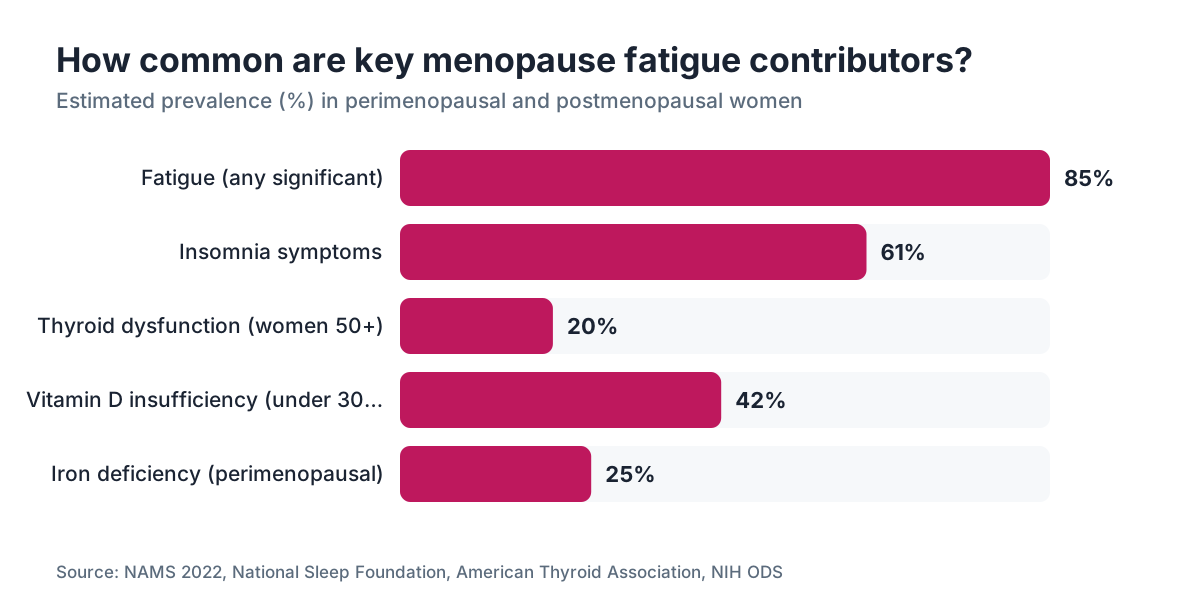
Studies put the prevalence high. A population-based analysis published in Menopause: The Journal of The Menopause Society found that between 40% and 85% of women report fatigue during perimenopause and menopause, with the range shifting depending on how researchers defined and measured it [1]. That spread tells you something. When studies used validated fatigue scales instead of a single survey question, the numbers clustered toward the top of the range.
Fatigue here covers three overlapping things. Physical tiredness, where your legs feel heavy and exercise feels harder than it used to. Cognitive fatigue, where word retrieval slows and multitasking falls apart. And what many women call motivational fatigue, a flatness that isn't quite depression but isn't energy either. These travel together and share a root in hormonal change, though not always the same hormonal change.
Fatigue during menopause is not a character flaw or a sign of weak resilience. It has identifiable mechanisms, and those mechanisms respond to specific treatments. This article walks through all of them so you can have a targeted conversation with your clinician and stop guessing.
What causes fatigue during menopause?
Estrogen and progesterone don't only run your reproductive system. They are neuroactive hormones that shape sleep architecture, body temperature, serotonin signaling, and mitochondrial function in muscle and brain. When they fall, everything downstream gets noisier.
Estrogen first. Estradiol, the main estrogen in reproductive-age women, binds receptors throughout the brain, including the hypothalamus, which runs the sleep-wake cycle and core body temperature. As estradiol declines in perimenopause, thermoregulation gets unstable and triggers the vasomotor events we call hot flashes and night sweats. A hot flash at 2 a.m. doesn't just feel awful in the moment. It fragments sleep architecture, cutting short slow-wave (deep) sleep and REM sleep [2]. Fragmented sleep is the most direct road to daytime fatigue, full stop.
Progesterone works differently. Progesterone and its metabolite allopregnanolone act on GABA-A receptors, producing a sedative, anxiety-calming effect. It's your body's built-in sleep aid. Progesterone drops first, early in perimenopause, so many women notice worsening insomnia and anxiety before hot flashes even begin. That's why some women in their late 30s or early 40s suddenly can't sleep well with no obvious explanation [3].
Two other hormonal systems matter. Cortisol patterns shift during menopause. The buffer estrogen provided against HPA axis dysregulation shrinks, leaving many women with a flatter daily cortisol curve and low morning energy. Thyroid function also gets disrupted in this window. Autoimmune thyroid disease peaks in women in their 40s and 50s, and subclinical hypothyroidism can be almost impossible to tell apart from menopause fatigue by symptoms alone [4].
Iron-deficiency anemia is another common impostor. Perimenopausal women often bleed heavily and irregularly for years before periods stop, and heavy bleeding is the leading cause of iron deficiency in premenopausal women. A ferritin under 30 ng/mL can cause real fatigue even when hemoglobin still reads normal [5].
Sleep apnea risk climbs sharply after menopause too. Before menopause, women have much lower apnea rates than men. After menopause, that gap narrows, partly because progesterone stimulates upper airway muscle tone and partly because fat shifts toward the trunk. Undiagnosed apnea quietly destroys sleep quality and looks exactly like menopause fatigue on the surface.
How does poor sleep during menopause make fatigue worse?
Sleep and fatigue during menopause are so tightly linked you can't treat one without the other. The mechanism is worth spelling out because it decides the treatment approach.
Slow-wave sleep (stage N3) is when the brain clears metabolic waste through the glymphatic system, when growth hormone releases its biggest pulse, and when most physical repair happens. REM sleep is when emotional memory consolidates and mood-regulating neurotransmitters reset. A hot flash that wakes you doesn't only cost you those minutes. It disrupts the architecture, so even after you drift off again you cycle through light stages instead of returning to deep sleep.
The National Sleep Foundation reports that roughly 61% of postmenopausal women have insomnia symptoms [2]. Vasomotor symptoms and sleep disturbance explain a large share of fatigue in menopausal women, more than depression or anxiety do as independent factors.
Here's the practical takeaway. Treating hot flashes is usually the most direct lever for better sleep and, through it, better energy. Women and clinicians who chase fatigue as a standalone symptom without touching its nighttime root end up stuck in cycles of supplements and tired mornings with nothing to show for it.
What other medical conditions can look like menopause fatigue?
Before you blame menopause for all of it, do a targeted workup. Several conditions peak at the same age and either mimic menopause fatigue or stack on top of it.
Hypothyroidism is the big one. Check TSH, and for persistent fatigue, add free T4 and free T3, because TSH alone can miss subclinical or conversion-level problems. The American Thyroid Association estimates up to 20% of women over 50 have some degree of thyroid dysfunction [4].
Iron deficiency causes fatigue even without frank anemia. Ask specifically for a serum ferritin. Many labs call ferritin "normal" at 12 to 15 ng/mL, but sports medicine and functional literature suggests anything under 30 to 50 ng/mL can drive fatigue, especially when sleep is already disrupted.
Vitamin D insufficiency (25-OH vitamin D below 30 ng/mL) links to fatigue and muscle weakness and is very common in this age group. B12 deficiency follows a similar pattern, more likely in women on metformin or plant-heavy diets, and it slips past standard testing when it lands in the low-normal range.
Depression and generalized anxiety both rise in perimenopause and connect to hormonal change more than to situational stress. The PHQ-9 and GAD-7 are validated screens that take about two minutes and clarify whether mood is a big enough factor to need its own treatment track.
Sleep apnea deserves formal screening if you snore, if a bed partner notices breathing pauses, if you wake with headaches, or if you feel unrefreshed after enough hours in bed. A home sleep test is cheap and widely available now.
| Condition | Key test | Threshold to investigate | |---|---|---| | Hypothyroidism | TSH, free T4 | TSH above 2.5 mIU/L with symptoms | | Iron deficiency | Serum ferritin | Under 30-50 ng/mL | | Vitamin D insufficiency | 25-OH vitamin D | Under 30 ng/mL | | B12 deficiency | Serum B12 | Under 300 pg/mL (clinical judgment) | | Sleep apnea | Home sleep test | AHI 5 or above = diagnosis | | Depression | PHQ-9 | Score 5 or above = mild+ | | Anemia | CBC with ferritin | Hgb below 12 g/dL in women |
Does hormone replacement therapy actually help menopause fatigue?
For most women whose fatigue traces to hot flashes, night sweats, and broken sleep, hormone therapy (HT) is the single most effective treatment. The mechanism is simple. Replacing estrogen steadies the hypothalamic thermostat, cuts vasomotor episodes, restores sleep architecture, and removes the main source of chronic sleep deprivation.
The evidence holds up. A 2020 analysis in Menopause reviewed multiple randomized trials and found estrogen therapy improved self-reported fatigue and sleep quality in symptomatic perimenopausal and postmenopausal women [6]. The effect was larger in women with frequent hot flashes, which fits the biology.
If you have a uterus, estrogen always comes with progesterone to protect the uterine lining. Micronized progesterone (Prometrium or compounded bioidentical) seems to help sleep directly through its GABA-A activity, on top of that protective job. A 2012 randomized controlled trial in Menopause showed oral micronized progesterone improved subjective sleep quality in postmenopausal women versus placebo [7]. For more on how it works, see our article on progesterone.
The caveats are real. HT isn't right for everyone. Women with a history of certain hormone-sensitive cancers, uncontrolled hypertension, active clots, or specific cardiovascular conditions may not be candidates. Individualize the decision with a clinician who knows your full history. The Menopause Society (NAMS) 2022 position statement puts it this way: "For women who are within 10 years of menopause onset and are younger than 60, the benefits of hormone therapy outweigh the risks for treating bothersome vasomotor and other menopause symptoms" [1].
Delivery route matters too. Transdermal estrogen (patch, gel, spray) skips the first-pass liver effect and carries lower clot risk than oral estrogen. For more on those options, see our piece on the estrogen patch.
For how HT is structured, the hormone replacement therapy article covers the main approaches. And if you're earlier in the transition and trying to sort out your timeline, when does menopause start is worth a read.
What lifestyle changes genuinely reduce menopause fatigue?
Lifestyle advice for fatigue is usually vague and a little patronizing. "Exercise more, sleep better" gives you nothing to act on. Here's what the evidence actually supports, with enough detail to use tonight.
Sleep timing beats sleep tricks. Consistent bed and wake times regulate your circadian rhythm more powerfully than most people expect. Keep the room below 68 degrees F, which matters more now than it did before because your thermoregulatory margin is narrower. Cooling mattress pads (thin research base, sound physics) and moisture-wicking bedding cut the thermal disruption of night sweats. Skip alcohol within three hours of bed. It fragments sleep architecture, suppresses REM, and worsens night hot flashes even when it seems to help you fall asleep faster.
Aerobic exercise earns its place. A 2014 randomized controlled trial in Menopause found women who exercised regularly reported lower fatigue and sleep disturbance scores than sedentary controls, and the effect held regardless of weight change [8]. Moderate aerobic exercise for 150 minutes a week is the NAMS starting point. Resistance training adds something separate. It improves insulin sensitivity, which feeds energy metabolism and may soften the cortisol dysregulation common in this stage.
Blood sugar stability is underrated. Estrogen loss brings more insulin resistance in many women. The post-meal energy crashes that follow high-glycemic eating compound hormonal fatigue. Eating enough protein (1.2 to 1.6 grams per kilogram of body weight daily, per recent muscle-preservation research) at regular intervals tends to flatten the energy curve across the day.
Caffeine has a cutoff. Counterintuitively, afternoon caffeine worsens the sleep fragmentation that underlies menopause fatigue. Stopping caffeine by noon or 1 p.m. is one of the highest-return sleep moves you can make, even though the first week feels rough.
Stress and cortisol is where the evidence thins out, but the biology is real. If your cortisol rhythm is dysregulated, ashwagandha (KSM-66 form, 300 to 600 mg daily) has some pilot-trial data for lower perceived stress and faster sleep onset, though trial quality is modest. Don't lead with supplements. Get sleep, exercise, and diet working first.
Are there non-hormonal medications that help fatigue during menopause?
Non-hormonal options matter for women who can't or won't use HT. The honest answer is that nothing non-hormonal matches estrogen for hot-flash-driven fatigue, but several choices meaningfully improve sleep quality and daytime energy.
Fezolinetant (brand name Veozah) is an FDA-approved non-hormonal drug for moderate to severe vasomotor symptoms. It blocks neurokinin 3 receptors in the hypothalamus that drive hot flashes. The Phase 3 SKYLIGHT trials showed a significant drop in hot flash frequency and severity versus placebo [9]. Because it hits the same hypothalamic circuit that wrecks sleep, it can cut nighttime arousals and improve sleep quality without hormones. The FDA approved it in May 2023, and it's a genuine option for women with HT contraindications.
Low-dose paroxetine (7.5 mg, brand name Brisdelle) is the only FDA-approved SSRI for vasomotor symptoms. Other SSRIs and SNRIs (escitalopram, venlafaxine) get used off-label for the same purpose with decent evidence, though none reach HT's effect size. Better hot flash control means better sleep and less fatigue.
Cognitive behavioral therapy for insomnia (CBT-I) has the strongest evidence of any behavioral treatment for insomnia, with effects that outlast medication in head-to-head trials. The American College of Physicians recommends CBT-I as first-line treatment for chronic insomnia [10]. Several telehealth platforms deliver it digitally now. If your fatigue is mostly sleep-driven, CBT-I is worth pursuing.
Low-dose naltrexone (LDN) at 1.5 to 4.5 mg nightly gets used off-label for fatigue in fibromyalgia and autoimmune disease. Data for menopause-specific fatigue is sparse. I'd file this under discuss-with-your-doctor, not start-on-your-own.
Can GLP-1 medications like semaglutide affect energy levels during menopause?
GLP-1 receptor agonists are increasingly used by women in the menopause transition for weight management, and plenty of them report shifts in energy, appetite, and general wellbeing. The link between GLP-1s and fatigue is indirect but plausible.
Excess fat, especially the visceral fat that piles on after menopause from estrogen loss and falling growth hormone, drives low-grade inflammation. Chronic inflammation is a real contributor to fatigue. GLP-1 medications produce significant weight loss (semaglutide 2.4 mg averaged about 15% body weight reduction in the STEP 1 trial over 68 weeks [11]), which lowers inflammatory load and can ease sleep apnea severity, two routes to better energy.
GLP-1s also act directly on reward circuitry and appetite signaling. Some women describe clearer thinking and less mental overhead from constantly managing hunger. Whether that produces real fatigue reduction independent of weight loss isn't settled by menopause-specific trials yet.
The caveat cuts both ways. GLP-1s can also cause fatigue, especially early on, from lower calorie intake, nausea that disrupts sleep, and muscle loss when protein intake slips. If you're on a GLP-1 and your fatigue got worse, those are the usual suspects.
For how these medications compare, see semaglutide vs tirzepatide and semaglutide for weight loss.
A platform like WomenRx, which handles hormones and GLP-1s together for women, is one place to work through whether your fatigue fits a picture where both hormonal and metabolic treatment make sense at once.
If you want the basics on the class, semaglutide is a good starting point.
What blood tests should you ask for if you're exhausted during menopause?
A targeted lab panel does most of the diagnostic work. Here's what to request, and why each earns its place.
FSH and estradiol together confirm where you are in the transition. FSH above 10 mIU/mL suggests diminished ovarian reserve. FSH consistently above 40 mIU/mL on two tests at least a month apart, plus no period for 12 months, meets the clinical definition of menopause. Estradiol in the single digits (under 10 pg/mL) in a symptomatic woman tells you the ovaries aren't compensating.
TSH and free T4 rule out thyroid dysfunction. If TSH runs above 4.0 mIU/L, or sits in the 2.5 to 4.0 range while you're symptomatic, add a free T3.
CBC catches anemia. Follow any borderline hemoglobin with ferritin whether or not the CBC flags it, because iron deficiency shows up months before anemia does.
Serum ferritin, requested explicitly rather than as a CBC reflex.
25-OH vitamin D. Deficiency is below 20 ng/mL, insufficiency is 20 to 30 ng/mL, and most clinicians target 40 to 60 ng/mL in symptomatic patients.
B12 and folate, especially if you take metformin, proton pump inhibitors, or eat vegan.
Fasting glucose and hemoglobin A1c. Insulin resistance climbs after menopause and can read as fatigue and post-meal crashes well before diabetes shows.
CRP or hs-CRP, a marker of systemic inflammation. Elevated hs-CRP (above 1.0 to 3.0 mg/L) alongside fatigue points you toward sleep apnea, autoimmune disease, or metabolic syndrome.
You don't need all of this at once. A good starting panel is TSH, CBC, ferritin, 25-OH vitamin D, fasting glucose, and B12, with FSH and estradiol added if the menopause timeline is unclear.
How long does menopause fatigue last?
This is the question most women actually want answered, and the honest reply is that it varies more than anyone would like.
When fatigue runs mainly on vasomotor symptoms and broken sleep, it tends to track with hot flashes. The Study of Women's Health Across the Nation (SWAN), which followed over 3,000 women, found the median duration of vasomotor symptoms is about 7.4 years from onset, though women who started symptoms in perimenopause (before their final period) had longer runs, sometimes past 10 years [12]. If your fatigue is sleep-mediated and hot flashes are the disruptor, that's your relevant window.
With effective treatment, whether HT, fezolinetant, or another targeted approach, fatigue often improves meaningfully in 4 to 12 weeks. That's not a promise, and partial responders need more workup to catch the co-contributors (thyroid, iron, sleep apnea) that HT won't touch.
Fatigue that hangs on despite good hot flash control and normal labs points toward sleep apnea, a mood disorder, or less often something outside menopause entirely, like autoimmune disease or chronic fatigue syndrome, that needs a specialist.
The unhelpful but true version: fatigue resolves faster with a systematic approach than with waiting. Women who spend years chalking everything up to menopause without a workup often find a treatable second cause sitting quietly in the background the whole time.
What can you do today if you're exhausted and waiting on a doctor's appointment?
Low-risk, evidence-adjacent moves you can start while the formal workup comes together.
Start tracking. Log sleep hours, hot flash frequency, and morning energy on a 1 to 10 scale in a notes app. Two weeks of this gives your clinician more than a verbal summary and shows you patterns, like whether fatigue tracks specifically with nights you woke from hot flashes.
Cut alcohol for two weeks. It's the fastest single sleep experiment you can run. Many women notice a real jump in sleep quality and morning energy within 10 days, often more than they expected.
Set a hard caffeine cutoff at noon. It sounds disruptive, but it's free, reversible, and frequently works.
Get outside for a 20-minute morning walk. Morning light anchors your circadian rhythm and has a modest but real effect on daytime cortisol patterning and evening melatonin onset.
Order a ferritin test if direct-to-consumer lab testing is available in your state. Knowing your ferritin before the appointment sets up a more specific conversation.
If you're in perimenopause and haven't mapped where you are in the timeline, that context genuinely changes the treatment conversation. The menopause age article covers the typical ranges.
Frequently asked questions
Is extreme fatigue a normal part of menopause?
Yes and no. Fatigue is very common, affecting up to 85% of women during the transition, but common doesn't mean you have to accept it. Extreme, disabling fatigue that doesn't ease with basic sleep hygiene deserves a workup for thyroid problems, iron deficiency, sleep apnea, and other treatable causes layered on top of the hormonal shift.
Why am I so tired during perimenopause if I'm still having periods?
Progesterone drops early in perimenopause, often years before estrogen falls much. Since progesterone acts on GABA receptors to promote sleep, lower progesterone means lighter, more fragmented sleep even with regular cycles. Heavier perimenopausal periods also drain iron. Both cause real fatigue well before the final period.
Will hormone therapy fix my menopause fatigue?
For most women whose fatigue runs on hot flashes, night sweats, and broken sleep, hormone therapy is the single most effective treatment. The Menopause Society's 2022 position statement supports HT for symptomatic women under 60 or within 10 years of menopause onset. It won't fix fatigue from thyroid disease, sleep apnea, or iron deficiency, which is why those get checked first.
What vitamins help with menopause fatigue?
Vitamin D (target 40 to 60 ng/mL if deficient), B12 (especially on metformin or a vegan diet), and iron (ferritin under 30 to 50 ng/mL) are the three deficiencies most often found in fatigued menopausal women. Magnesium glycinate 200 to 400 mg at bedtime has weak but consistent evidence for sleep quality. Supplements don't replace the hormonal and medical causes, but deficiencies are worth finding and fixing.
Does menopause fatigue ever go away on its own?
Sometimes. For women whose fatigue is mainly vasomotor and sleep-driven, it often eases as hot flashes subside. The SWAN study found median hot flash duration around 7.4 years from onset, with longer runs for women who started symptoms in perimenopause. Fatigue that lasts well past hot flash resolution, or never tracked with sleep disruption, needs its own investigation.
Can low estrogen cause fatigue even without hot flashes?
Yes. Estrogen receptors sit in the brain, muscles, and mitochondria. Low estradiol can reduce serotonin and norepinephrine signaling, blunt motivation, and affect cellular energy production independent of vasomotor symptoms. Some women feel fatigue and mood changes as the first sign of perimenopause before hot flashes ever appear, which is why FSH and estradiol are worth checking even without classic symptoms.
How do I know if my fatigue is menopause or depression?
The two overlap and can coexist. A PHQ-9 questionnaire (two minutes, freely available) is a validated starting point. Menopause-related low mood often improves with estrogen therapy, which is not true of primary major depression. Persistent anhedonia, hopelessness, or suicidal thoughts point toward a primary mood disorder that needs its own treatment, potentially alongside hormone therapy rather than instead of it.
Does sleep apnea get worse during menopause?
Yes. Before menopause, women have much lower apnea rates than men, and the gap narrows sharply afterward. Progesterone normally supports upper airway muscle tone, and its loss plus a shift of fat toward the neck and trunk both raise risk. If you snore, feel unrefreshed no matter how long you sleep, or have been told you stop breathing at night, a home sleep test is a reasonable next step.
What is the fastest way to get energy back during menopause?
It depends on the cause. If hot flashes are waking you, treating them (HT, fezolinetant, or an SSRI) often improves sleep and energy within 4 to 8 weeks. If iron or vitamin D is low, correcting it usually produces a noticeable lift in 4 to 6 weeks. Cutting alcohol and holding a consistent sleep schedule can change how you feel in 10 to 14 days.
Can I still have menopause fatigue if I'm on hormone therapy?
Yes. HT covers hormonal and vasomotor causes but won't fix sleep apnea, thyroid disease, iron deficiency, or depression that developed alongside the transition. If fatigue persists on a stable, adequate dose, the next step is a targeted lab panel and sleep evaluation rather than assuming the dose is wrong, though a dose adjustment sometimes does help.
Does weight gain during menopause make fatigue worse?
It can, through two routes. More visceral fat raises low-grade inflammatory markers that contribute to fatigue and blunt insulin sensitivity, causing blood sugar swings that hit energy. Excess weight also raises sleep apnea risk. Women who lose weight during menopause, through diet, exercise, or GLP-1 medications, often report secondary gains in energy and sleep quality.
How much does fezolinetant (Veozah) help with fatigue?
Fezolinetant cut hot flash frequency by about 60% versus roughly 15% for placebo in the Phase 3 SKYLIGHT trials. Because it reduces the nighttime vasomotor events that fragment sleep, better sleep quality and less daytime fatigue come as secondary benefits. It's not a direct fatigue drug, but for women who can't use hormones and whose fatigue is hot-flash-driven, it's a real option, approved by the FDA in May 2023.
What is a good fatigue scale to track menopause symptoms?
The Menopause-Specific Quality of Life (MENQOL) questionnaire and the Fatigue Severity Scale (FSS) are both validated tools used in research and clinics. The FSS has 9 items scored 1 to 7, and a total above 36 indicates clinically significant fatigue. Tracking for two to four weeks before an appointment gives your clinician a pattern rather than a single snapshot.
Sources
- The Menopause Society (NAMS), 2022 Hormone Therapy Position Statement
- National Sleep Foundation, Women and Sleep
- Endocrine Society, Menopause and Hormones Clinical Practice
- American Thyroid Association, Thyroid Disease and Women
- National Institutes of Health Office of Dietary Supplements, Iron Fact Sheet for Health Professionals
- Menopause Journal, Review of Estrogen Therapy and Fatigue (2020)
- Menopause Journal, Oral Micronized Progesterone RCT (2012)
- Menopause Journal, Exercise and Fatigue RCT (2014)
- FDA Drug Approval Letter, Fezolinetant (Veozah), May 2023
- American College of Physicians, Management of Chronic Insomnia Disorder in Adults Clinical Guideline
- NEJM, STEP 1 Trial: Semaglutide and Obesity (Wilding et al., 2021)
- JAMA Internal Medicine, Study of Women's Health Across the Nation (SWAN), Menopause Symptoms Duration