Menopause face: what changes, why, and what actually helps
TL;DR: Estrogen decline during perimenopause and menopause causes measurable skin changes: collagen drops roughly 30% in the first five years after the final period, skin thins, fat pads shift downward, and the jawline softens into jowls. Some changes respond to topical retinoids, some to hormone therapy, and a few require in-office procedures. Nothing reverses all of it, but the science is clearer than most skincare marketing lets on.
What is 'menopause face' and is it a real thing?
Yes, it is real, though the term itself is informal. What women and clinicians are describing is a cluster of facial changes that accelerate during the menopausal transition and the years right after the final period. These include skin thinning, increased dryness, deeper lines around the mouth and eyes, loss of fullness in the cheeks and temples, softening of the jawline, and in some women, increased facial hair and acne alongside new skin laxity.
The timing is not a coincidence. Estrogen receptors sit throughout the skin, and when estrogen falls, skin physiology changes in ways that show up in biopsies. This is separate from general chronological aging, though the two happen at once and are hard to pull apart in real life. The menopausal component is steeper and faster than background aging would predict on its own. [1]
If you feel like your face changed faster in your late 40s or early 50s than it did in your early 40s, you are probably right. That is not a perception bias. It is biology.
How does estrogen loss change the skin on your face?
Estrogen does several things for skin that become obvious only once it is gone. It pushes fibroblasts to produce collagen and elastin, it supports the moisture barrier, it influences sebum production, and it helps maintain fat distribution in the face.
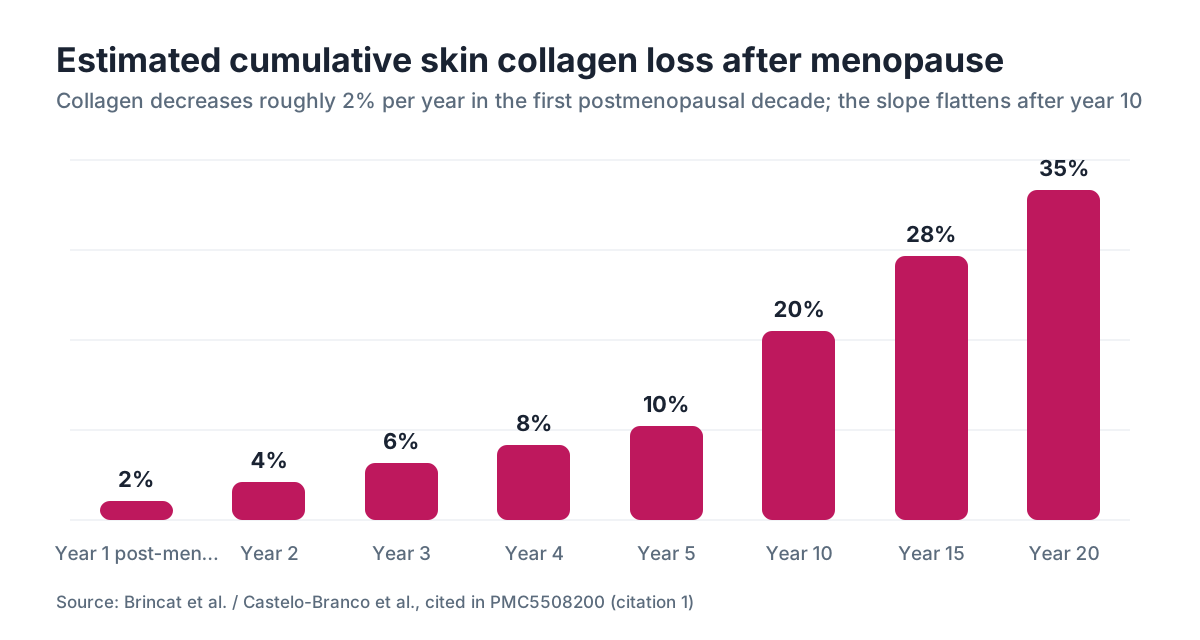
The collagen data are striking. A widely cited study in the British Journal of Obstetrics and Gynaecology found that skin collagen content falls approximately 2% per year in the first two decades after menopause, with the steepest loss in the first five years. Across that first five-year window, total collagen loss averages about 30%. [1] That is a fast drop. The skin that remains is also thinner: epidermal and dermal thickness both decrease after menopause, which is why postmenopausal skin can look more translucent and feel more fragile.
Hyaluronic acid, the molecule that lets skin hold water, also decreases as estrogen drops. Less hyaluronic acid means less plumpness and faster water loss from the surface, which shows up as dryness, tightness, and a duller look. [2]
Sebaceous gland activity tends to fall after menopause, which adds to the dryness. Some women see the opposite: a rise in androgens relative to estrogen, which can trigger breakouts or new adult acne at a time they never expected it. [3]
Elastin degrades faster and rebuilds more slowly without estrogen support. That is the mechanism behind the looser, crepe-like texture many women notice on the cheeks and neck.
Why do your jawline and cheeks change shape during menopause?
Fat redistribution is the other major driver of the structural changes women notice. The face has several discrete fat compartments: malar (cheekbone area), buccal (cheeks), periorbital (around the eyes), and the area around the jaw and chin. Estrogen signaling helps maintain these compartments, and as estrogen declines, fat in the upper face (cheeks, temples) tends to atrophy while fat in the lower face and neck may accumulate or simply become more visible as the tissue above it loses support. [4]
The result is the hollowed temples and flattened cheeks combined with a softening at the jawline that many women describe as jowling. The face does not get uniformly heavier. The architecture of where fat sits changes.
Bone changes too. The facial skeleton remodels throughout life, and postmenopausal bone loss (well documented at the hip and spine) also hits facial bones. The eye socket enlarges slightly, the jawbone loses density, and the scaffolding the soft tissue rests on becomes less pronounced. [5] A 2012 study in Plastic and Reconstructive Surgery measured these changes with CT scans and found statistically significant increases in orbital volume and jaw angle with age, more pronounced in women than men. [5]
This is why fillers or face lifts sometimes give limited results when bone and fat volume have both been lost. The scaffolding itself has changed.
What does menopause do to skin dryness and the moisture barrier?
Dryness is one of the earliest and most consistent complaints. Estrogen supports ceramide production, and ceramides are the lipid molecules that hold the moisture barrier together. Less estrogen, fewer ceramides, more water lost through the skin. [2]
For some women this shows up as rough texture, flaking, or tightness after washing. For others it is quieter: more sensitivity, redness, or a sense that skin now reacts to products it used to tolerate fine. That reactivity is partly a more permeable barrier and partly the fact that thinner skin has less capacity to buffer irritants.
So the occlusive and emollient steps of a routine matter more after menopause than before. Hyaluronic acid serums draw moisture in but need something on top to keep it there. Ceramide-containing moisturizers earn their place here and are more than marketing language: they replace what the skin is making less of. [2]
Water intake, a humidifier in dry climates, and fewer hot showers all help at the margins. They do not replace barrier-repair products, but they are not nothing.
What skincare ingredients actually work on menopause-related skin changes?
A few ingredients have real, peer-reviewed evidence. Most skincare marketing does not.
Retinoids (retinol, tretinoin, retinaldehyde) are the most evidence-backed topical for postmenopausal skin. Tretinoin, the prescription-strength form, has been shown in randomized controlled trials to increase dermal collagen, improve fine lines, and thicken the epidermis. A 2007 study in the Archives of Dermatology found that 0.4% retinol lotion applied for 24 weeks raised glycosaminoglycans and collagen in older skin. [6] Start low, go slow, and expect a few weeks of adjustment. Postmenopausal skin is drier and more sensitive, so every-other-night application is a reasonable start.
Topical estrogen (estradiol cream or serum applied to the face) has been studied in small trials and does improve skin thickness and collagen content. It is not widely prescribed for cosmetic skin care in the US, but some dermatologists and compounding pharmacies offer it. The evidence is real, the trials are small. [7]
Vitamin C (ascorbic acid, 10 to 20% concentration) is an antioxidant and a required cofactor for collagen synthesis. It does not replace estrogen's effect on fibroblasts, but it supports whatever collagen production is still happening. It degrades quickly, so stabilized forms (ascorbyl glucoside, sodium ascorbyl phosphate) or air-tight packaging matter.
SPF every single day. UV exposure is the largest modifiable driver of collagen breakdown, and postmenopausal skin has less repair capacity. Broad-spectrum SPF 30 or higher is the single best ratio of evidence to cost in this entire article. [6]
Peptides, growth factors, and niacinamide all have some supporting data, thinner than the retinoid evidence. Niacinamide at 4 to 5% improves barrier function and is easy to tolerate. Peptides are hard to judge because formulations vary so much.
Probably a waste of money: most luxury moisturizers above $80 that do not deliver a proven active at a proven concentration. The elegance of a formula matters for tolerance, not for results.
Does hormone replacement therapy (HRT) actually help menopause face?
Systemic hormone therapy (oral, patch, or gel estrogen taken for menopausal symptoms) does appear to help skin. The evidence here is not from giant trials the way the cardiac and bone data are, but it is consistent across multiple smaller studies.
A systematic review in the American Journal of Clinical Dermatology found that systemic estrogen therapy was associated with improved skin elasticity, thickness, hydration, and reduced wrinkling compared to untreated postmenopausal women. [7] The effect is meaningful but not dramatic: skin on HRT does not look 20 years younger, but the rate of collagen decline slows.
Timing matters. Women who start hormone therapy within a few years of menopause seem to get more skin benefit than those who start a decade later. This tracks with the broader timing hypothesis in menopause medicine, and it applies to skin even though most HRT trials never measure skin as a primary outcome. [8]
Systemic HRT is prescribed for menopausal symptoms (hot flashes, sleep disruption, vaginal dryness, mood changes) and is not FDA-approved specifically for skin. But skin improvement is a real secondary benefit for many women. If you are on the fence about HRT for symptoms you already have, the skin data can reasonably tip you toward yes.
The decision about hormone therapy is individual and belongs in a real conversation with a clinician who knows your full health history. You can read more in our overview of hormone replacement therapy and the mechanics of delivery methods like the estrogen patch. WomenRx offers telehealth consultations for exactly this conversation if you are not sure where to start.
Progesterone also affects skin, less directly than estrogen. Some evidence suggests it influences sebum and skin texture. The details are in our progesterone overview.
Can weight loss treatments like GLP-1s affect your face during menopause?
This is a real concern that has gotten more attention as GLP-1 medications like semaglutide and tirzepatide have become common. Significant weight loss, especially rapid weight loss, tends to speed up facial volume loss. When you drop subcutaneous fat across the body, the face loses it too, and the structural fat compartments that support the cheeks and temples thin out faster.
The informal term "Ozempic face" describes this. It is not specific to semaglutide. It happens with any substantial weight loss. In perimenopausal and postmenopausal women, who are already living through fat redistribution and collagen loss, a 15 to 25% body weight reduction can make facial aging feel more pronounced.
That does not make GLP-1s a bad idea in this age group. The cardiometabolic benefits are documented in large trials. But the facial volume question is real and worth raising with your clinician before you start. Slower weight loss (1 to 2 pounds per week rather than faster) may give the face more time to adapt, though nobody has a good randomized trial comparing facial aging at different GLP-1 titration speeds.
For more on how these medications work and what to expect, see our articles on semaglutide for weight loss and semaglutide vs tirzepatide.
If facial volume loss worries you, dermal fillers or biostimulators (like Sculptra, which stimulates collagen) are options some women use alongside GLP-1 therapy. The combination shows up more and more in practices that see midlife women.
What in-office treatments work for menopause-related facial changes?
Several categories of in-office procedures address different pieces of menopause face, with varying evidence and cost.
Neuromodulators (Botox, Dysport, Xeomin) relax muscles that pull the face down or cause dynamic wrinkles. They do nothing for laxity, volume loss, or bone changes, but they are among the most studied aesthetic interventions and work predictably for their one job. Results last 3 to 4 months.
Dermal fillers (hyaluronic acid-based, like Juvederm or Restylane) add volume to deflated areas: temples, cheeks, nasolabial folds, lips. They are temporary (6 months to 2 years depending on product and location) and reversible with hyaluronidase. Biostimulators like Sculptra (poly-L-lactic acid) and Radiesse (calcium hydroxylapatite) work differently: they trigger the body's own collagen production over months and last 1 to 2 years. For postmenopausal women with diffuse volume loss, biostimulators often look more natural than trying to fill specific spots.
Energy-based devices, including radiofrequency (Thermage, Morpheus8), ultrasound (Ultherapy), and laser resurfacing, address laxity and texture. Radiofrequency and ultrasound heat the dermis to trigger collagen remodeling. The evidence is real, but results vary by device, operator skill, and how much laxity is being treated. Fractional laser resurfacing (Fraxel, CO2 fractional) has good evidence for fine lines, texture, and pigmentation.
Surgical options (face lift, brow lift, blepharoplasty for the eyelids) remain the most durable structural fix for advanced laxity. A well-performed deep plane face lift works on the SMAS layer, not only skin, which lasts longer. Cost runs from roughly $8,000 to $20,000+ for a full face lift depending on region and surgeon. [9]
None of these replace the underlying hormonal changes. They address the visible results of those changes.
Does facial hair increase after menopause, and what helps?
Yes, for many women it does. As estrogen drops, the ratio of androgens to estrogen shifts, and that relative androgen excess can stimulate coarser, darker terminal hairs on the chin, upper lip, and jaw. This is called postmenopausal hirsutism, and it is separate from polycystic ovary syndrome, though the mechanism (androgen effect on hair follicles) is similar. [3]
The hairs are not dangerous. They just bother most women who develop them. Options run from practical (tweezing, threading, waxing, depilatory creams) to more permanent: laser hair removal works well on dark hairs against light skin, and electrolysis is effective on any hair color.
Eflornithine cream (Vaniqa) is a prescription topical that slows hair regrowth by blocking an enzyme in the follicle. It does not remove hair, but it stretches the time between other removal methods. It is FDA-approved for facial hair reduction in women. [10]
HRT may modestly reduce hirsutism in postmenopausal women by rebalancing the estrogen-to-androgen ratio, but it is not a primary treatment for facial hair and the effect is small.
What about menopause and changes in skin pigmentation or acne?
Pigmentation changes are common. Melasma, patchy brown hyperpigmentation usually on the cheeks, upper lip, and forehead, can appear or worsen during perimenopause, partly from hormonal shifts and partly from cumulative sun exposure. Some women who had melasma during pregnancy find it returns or worsens in perimenopause. [3]
Postinflammatory hyperpigmentation (dark spots left after breakouts or minor irritation) is also more stubborn on postmenopausal skin because cell turnover slows. Spots that would have faded in a few weeks in your 30s can take months in your 50s.
Treatments for pigmentation with real evidence include topical hydroquinone (the most studied skin-lightening agent, OTC at 2% or prescription at 4%), azelaic acid (10 to 20%, which also treats acne and rosacea), kojic acid, and tranexamic acid (oral or topical, with emerging evidence). Retinoids speed cell turnover and help fade spots. Daily SPF is non-negotiable if you are treating pigmentation: UV exposure will undo your progress immediately.
Menopause acne (breakouts from relative androgen excess) tends to land on the jaw and chin. Topical retinoids, benzoyl peroxide, and occasionally low-dose hormonal treatment help. Systemic spironolactone (an androgen-blocking medication used for adult female acne) may fit some cases and is worth raising with a dermatologist.
How does sleep deprivation and stress from menopause affect your face?
Menopause disrupts sleep in a documented, substantial way. Hot flashes, night sweats, and anxiety fragment sleep for years. Poor sleep raises cortisol, and chronic cortisol elevation degrades collagen, weakens the skin barrier, and drives up systemic inflammation. [11]
This is not metaphorical. A 2015 study in Clinical and Experimental Dermatology showed that poor sleepers scored significantly higher on standardized skin aging assessments and recovered their skin barrier more slowly after UV exposure than good sleepers, even after controlling for age. [11]
The loop is frustrating: menopause disrupts sleep, disrupted sleep speeds the visible changes, the visible changes raise stress, and stress disrupts sleep again. Treating the root cause (menopause symptoms, including hot flashes and sleep disruption) matters more for the skin than any topical product if your nights are badly hit.
Fixing sleep means addressing menopause. You can read more about the transition in our articles on menopause and when does menopause start to figure out where you are in the timeline.
What is the realistic timeline and outlook for menopause face changes?
The steepest phase of estrogen-driven skin change happens in the first five years after the final menstrual period. [1] After that, the rate slows and merges more with the background rate of chronological aging. That matters, because the window for interventions that touch the hormonal component is not infinite.
Women who start hormone therapy within a few years of menopause seem to get more skin benefit. Women who dial in their retinoid use, sunscreen habits, and barrier care early also slow the progression better than those who start later. This is not to induce panic. It is honest: the first five years after menopause are when skin-directed interventions do the most.
By the time a woman is ten or more years past menopause, the visible changes that remain are a mix of uncorrected hormonal losses and chronological aging, and they are genuinely harder to address. In-office procedures (fillers, energy devices, surgery) can still improve appearance, but they work against a larger deficit.
The honest answer: some facial change is irreversible with current tools, some is improvable, and knowing which category you are dealing with sets realistic expectations.
| Intervention | Target change | Evidence level | Rough cost range | |---|---|---|---| | Daily SPF 30+ | UV-driven collagen loss | Strong | $15-40/month | | Tretinoin (Rx) | Fine lines, collagen | Strong | $30-80/month | | Ceramide moisturizer | Barrier, dryness | Moderate | $20-50/month | | Systemic HRT | Collagen loss, laxity, dryness | Moderate | $30-150/month | | Topical vitamin C | Antioxidant, pigmentation | Moderate | $30-80/month | | Botox | Dynamic wrinkles | Strong (for indication) | $300-600/session | | HA fillers | Volume loss | Strong (for indication) | $600-1,200/syringe | | Biostimulators | Diffuse volume loss, collagen | Moderate | $800-1,500/session | | Fractional laser | Texture, pigmentation | Strong (for indication) | $1,000-3,000/session | | Surgical face lift | Laxity, structural change | Strong (for indication) | $8,000-20,000+ |
Frequently asked questions
At what age does menopause face typically start?
Most women start noticing accelerated facial changes in perimenopause, which usually begins in the mid-to-late 40s. The sharpest skin changes tend to hit in the first five years after the final period, usually between ages 50 and 55. Women who go through early menopause (before 45) can see these changes sooner. See our overview of perimenopause age for more on the transition timeline.
Can you reverse menopause face completely?
No, not completely. Some changes respond well: retinoids rebuild some collagen, fillers restore volume, and HRT slows further loss. But bone remodeling, significant structural fat loss, and elastin degradation cannot be fully reversed with current tools. The honest framing is that you can improve appearance meaningfully and slow future change, but "reversing" is not an accurate description of what any current treatment achieves.
Does drinking more water help with menopause skin dryness?
Hydration from drinking water helps at the margins but does not replace topical barrier repair. Postmenopausal dryness comes from reduced ceramide and hyaluronic acid production in the skin itself, not primarily from low water intake. Ceramide-containing moisturizers and humectants applied topically do more for dryness than drinking extra water, though staying well-hydrated is still a reasonable general health practice.
Is menopause face the same as normal aging?
They overlap but are not identical. Chronological aging causes gradual collagen loss at roughly 1% per year starting in the 20s. Menopause adds an accelerated phase on top: about 2% collagen loss per year in the first postmenopausal decade, with the steepest drop in the first five years. The menopausal component is hormonally driven and responds at least partly to hormonal intervention in a way that general aging does not.
Does progesterone affect facial skin during menopause?
The skin has progesterone activity, and some evidence suggests progesterone influences sebum production and may have modest effects on texture. The evidence is thinner than for estrogen. Women on combined HRT (estrogen plus progesterone) report skin benefits similar to estrogen-only therapy. Progesterone type matters: micronized progesterone has a better side-effect profile than older synthetic progestins for most women. See our progesterone article for more.
What is the difference between perimenopause skin changes and menopause skin changes?
In perimenopause, estrogen fluctuates rather than steadily declining, so skin symptoms come and go: some women notice more breakouts from androgen surges, others notice early dryness or sensitivity. After the final period (menopause itself), estrogen stays consistently low, and the collagen and barrier changes become more predictable and progressive. Perimenopause skin is often more reactive. Postmenopausal skin is more consistently dry and thin.
Can diet help with menopause-related skin changes?
Diet has a supporting role. Adequate protein matters for collagen synthesis (collagen is a protein, and the fibroblasts making it need amino acid building blocks). Omega-3 fatty acids from fish or flaxseed have some evidence for improving skin hydration. Excess sugar drives glycation, which cross-links collagen and stiffens it. None of these override hormonal changes, but they sit on the same side of the equation as your skincare routine: they slow the process rather than stop it.
Does the sun cause worse damage to postmenopausal skin?
Yes. Postmenopausal skin has less collagen to start with and a reduced capacity for DNA repair and collagen synthesis after UV exposure. The same dose of UV causes more lasting damage than it would have a decade earlier. This is the strongest argument for consistent broad-spectrum SPF 30+ in midlife: you are protecting a resource that is already more limited and harder to replenish.
What do dermatologists typically recommend first for menopause face?
Most dermatologists start with the basics: daily SPF, a ceramide-containing moisturizer for barrier repair, and a gradual introduction of topical retinoids (tretinoin by prescription if tolerated, retinol OTC as a gentler start). These three steps address the most common complaints (lines, dryness, pigmentation) with the best evidence-to-cost ratio. In-office procedures come next if topicals fall short after several months of consistent use.
Will GLP-1 weight loss medications make menopause face worse?
Significant weight loss from any cause, including GLP-1 medications like semaglutide or tirzepatide, can speed up facial volume loss. In perimenopausal and postmenopausal women already losing facial fat and collagen, rapid weight loss can make these changes more visible. Slower titration and gradual weight loss may reduce the effect, though no randomized trial has tested this directly. Facial fillers or biostimulators are options some women pursue alongside GLP-1 therapy.
Is menopause-related facial hair permanent?
Without treatment, yes: the coarser chin and jaw hairs from androgen-driven follicle stimulation do not go away on their own. Temporary removal methods (threading, waxing, depilatory creams) need ongoing maintenance. Laser hair removal offers longer-lasting reduction for dark hairs on light skin, and electrolysis is permanent for any hair color. Prescription eflornithine cream (Vaniqa) slows regrowth between removal sessions.
How long does it take to see results from retinoids on postmenopausal skin?
Expect 12 weeks of consistent use before judging results, and allow up to six months for collagen remodeling to become visible. Postmenopausal skin often needs a longer adjustment period because it is more sensitive and dry. Starting every other night and building to nightly use reduces the peeling and redness that make women quit. Results are real but gradual.
Do collagen supplements work for menopause skin?
The evidence for oral hydrolyzed collagen peptides has improved and is now more than marketing. Several small randomized trials (most funded by supplement companies, which is a limitation) show improvements in skin elasticity and hydration with daily doses of 2.5 to 10 grams over 8 to 12 weeks. The mechanism is indirect: dietary collagen peptides appear to stimulate fibroblast collagen synthesis rather than getting built directly into skin. The effect size is modest. Supplements are unlikely to replace retinoids or HRT but may add something on top.
Sources
- Brincat M et al., British Journal of Obstetrics and Gynaecology, 1987; and Castelo-Branco C et al., Maturitas, 1992 -- collagen decline ~2%/year postmenopause, ~30% in first 5 years
- Verdier-Sevrain S & Bonte F, Journal of Cosmetic Dermatology, 2007 -- skin hydration and estrogen
- Thorneycroft IH, Journal of Reproductive Medicine, 1996 -- androgen-to-estrogen ratio and skin effects including hirsutism and acne in menopause
- Lambros V, Plastic and Reconstructive Surgery, 2007 -- facial fat compartment changes with aging
- Shaw RB et al., Plastic and Reconstructive Surgery, 2012 -- facial skeletal changes with aging measured by CT scan
- Kafi R et al., Archives of Dermatology, 2007 -- retinol increases collagen and glycosaminoglycans in older skin
- Stevenson S & Thornton J, American Journal of Clinical Dermatology, 2007 -- systematic review of estrogen effects on skin aging
- North American Menopause Society (NAMS), 2022 Hormone Therapy Position Statement
- American Society of Plastic Surgeons, 2023 Procedural Statistics -- face lift cost data
- FDA label: Eflornithine (Vaniqa) -- approved for reduction of unwanted facial hair in women
- Oyetakin-White P et al., Clinical and Experimental Dermatology, 2015 -- sleep quality and skin aging