Menopause brain fog: why it happens and what actually helps
TL;DR: Menopause brain fog, including forgetfulness, word-finding problems, and poor concentration, affects roughly 60% of women in perimenopause and early menopause. Declining estrogen drives it. Estrogen regulates brain glucose metabolism and neurotransmitter activity, so losing it clouds thinking. Symptoms peak in early postmenopause and improve over three to seven years. Hormone therapy has the strongest evidence for speeding that recovery.
What is menopause brain fog, exactly?
Menopause brain fog is not one symptom. It is a cluster of cognitive complaints that women in perimenopause and menopause describe with striking consistency: walking into a room and forgetting why, losing words mid-sentence, reading the same paragraph three times, struggling to hold a to-do list in working memory.
Clinicians sometimes call this "subjective cognitive decline" because, for many women, standard neuropsychological tests do not flag the deficits their patients report. That gap is real, and it matters. A woman who scored in the 90th percentile at 42 may now score in the 70th and still look "normal" on a population chart, even though she has lost real cognitive ground for herself [1].
The symptoms cluster in three domains: verbal memory (remembering names, words, conversations), processing speed (how fast you take in and respond to information), and attention or working memory (holding information in mind while you use it). Executive function, the higher-order planning and task-switching, can also take a hit, though studies are less consistent there.
This is not Alzheimer's disease. It is not even a predictor of Alzheimer's in most women. The cognitive changes of menopause are largely reversible and distinct from the progressive neurodegeneration of dementia.
How common is brain fog during menopause?
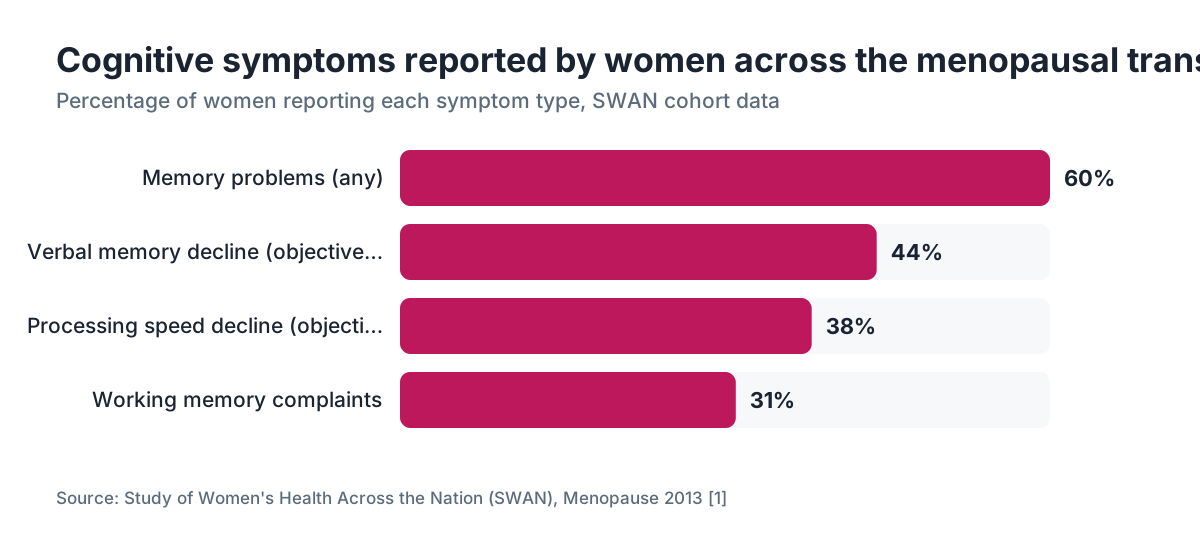
Prevalence estimates depend on how you ask and which stage you study, but the numbers stay high. Roughly 60% of women report memory problems during the transition.
The Study of Women's Health Across the Nation (SWAN), one of the largest longitudinal cohorts of midlife women in the U.S., found that 60% of women reported memory problems during the menopausal transition [1]. Objective testing in the same cohort confirmed measurable declines in verbal learning and processing speed, worst in perimenopause and early postmenopause.
A 2013 SWAN analysis published in Menopause reported that "perimenopausal women demonstrated poorer performance on measures of verbal memory and processing speed compared with premenopausal women." Performance improved in postmenopause, which fits what clinicians see: brain fog often peaks around the final period, then gradually lifts [1].
Women who undergo surgical menopause (bilateral oophorectomy) before natural menopause report more severe, more sudden cognitive symptoms, because estrogen withdrawal happens over days rather than years [2].
Sleep deprivation and hot flashes worsen cognitive performance on their own. So the women with the most disruptive menopause symptoms often get hit hardest by brain fog, less from estrogen itself and more from everything its decline sets in motion.
Why does estrogen loss cause brain fog?
Estrogen is more than a reproductive hormone. It is a potent neuroactive molecule. The brain is loaded with estrogen receptors, densest in regions tied to memory and cognition: the hippocampus, prefrontal cortex, and basal forebrain [3].
Estrogen does several things in brain tissue at once. It supports glucose metabolism, the brain's main fuel. PET imaging shows measurable drops in cerebral glucose metabolism in perimenopausal women, a pattern that looks like the early metabolic changes seen in Alzheimer's risk research. That finding, from Dr. Lisa Mosconi's group at Weill Cornell, drew attention across neurology because it frames menopause as a neurological event, not only a hormonal one [3].
Estrogen also modulates acetylcholine, the neurotransmitter most tied to memory consolidation. When estrogen drops, cholinergic signaling in the basal forebrain gets less efficient. Serotonin and dopamine systems, which shape mood, motivation, and attention, take a hit too.
Myelin, the insulating sheath that lets nerve fibers fire fast, depends partly on estrogen for upkeep. Some researchers think myelin changes in perimenopause explain the slower processing speed women notice.
Progesterone has its own cognitive role. It works partly through GABA receptors, which is why high-progesterone states (the luteal phase, early pregnancy) can cause sedation and mental fuzziness. The erratic progesterone swings of perimenopause, before it declines fully, may drive the unpredictable day-to-day nature of brain fog. Our overview of progesterone covers its broader hormonal role.
What does menopause brain fog feel like day to day?
Women describe it differently, but the patterns repeat. The word-finding blank is the one nearly everyone names.
You are mid-sentence in a meeting and the word you need is simply not there. You can describe the thing, you know what it is, but the word is gone. This is called anomia, and it ties directly to the verbal memory circuits estrogen supports.
Many women describe a foggy or cottony feeling in the mornings, a delay before the brain feels loaded. Others notice they cannot multitask the way they used to. Following a complex conversation while taking notes becomes genuinely hard. Reading comprehension feels effortful in a way that is new.
Working memory failures show up as losing track of what you were doing, forgetting a number between reading it and typing it, needing to re-read instructions. This differs from failing to encode information in the first place. The information was encoded. It just did not stay.
Anxiety and brain fog feed each other. Worrying about whether you are losing your mind raises cognitive load and impairs the very functions you are trying to assess. Name that loop. Breaking it matters for treatment.
Is menopause brain fog the same as early dementia?
No. This deserves a direct answer, because fear of Alzheimer's is exactly what drives women to catastrophize brain fog and, sometimes, to never mention it to their doctors at all.
The cognitive changes of menopause are age-concurrent and hormone-driven, not progressive and degenerative. SWAN and other longitudinal studies show that verbal memory and processing speed recover in the late postmenopause years, which does not happen in Alzheimer's disease [1].
That said, the link between estrogen, menopause, and long-term Alzheimer's risk is an active and genuinely unsettled research area. Women develop Alzheimer's at roughly twice the rate of men, and longer lifespan does not fully explain the gap [10]. Some researchers think the neurological stress of the transition adds to long-term risk, especially after early or surgical menopause. Others argue the link is indirect, mediated by sleep disruption, cardiovascular risk, and mood disorders.
If your symptoms include serious language difficulties, getting lost in familiar places, or forgetting the names of close family members, get a formal evaluation. That is a different clinical picture.
If you are worried, talk to your doctor. A baseline cognitive assessment at 50 is a reasonable idea for any woman. But most women with menopause brain fog have menopause, not dementia.
Does hormone replacement therapy actually help brain fog?
This is the treatment question that matters most, and the answer is more textured than yes or no. Timing is the whole game.
The short version: starting hormone therapy (HT) during perimenopause or early postmenopause is linked to better cognitive outcomes and symptom relief. Starting it ten or more years after menopause, or after 65, does not carry the same benefit and may add risk. This is the "critical window" hypothesis, and it has reasonably solid epidemiological backing [4].
Estrogen therapy improves verbal memory and processing speed in symptomatic perimenopausal or recently postmenopausal women. But the Women's Health Initiative Memory Study (WHIMS) found that combination estrogen-progestin therapy in women aged 65 and older actually raised dementia risk [4]. That single finding scared an entire generation of clinicians away from hormone therapy across the board. It was the wrong lesson, applied to the wrong age group.
The North American Menopause Society (NAMS) 2022 position statement puts it plainly: "for women younger than 60 years of age or within 10 years of menopause onset, the benefits of hormone therapy outweigh the risks for most women" [5]. That window includes cognitive symptoms.
Estradiol, rather than estrogen-progestin combinations, shows the strongest cognitive signal in most observational studies. Route matters too. Transdermal estradiol (patches, gels) does not raise clotting risk the way oral estrogen does and is generally preferred for systemic use [9]. An estrogen patch delivers a steady blood level without the first-pass liver effect of oral pills.
If you are in perimenopause and brain fog is hurting your work and quality of life, hormone therapy is the most evidence-supported option on the table. WomenRx offers telehealth hormone consultations if you want to talk through your situation with a clinician who knows this literature.
Our hormone replacement therapy guide breaks down risks, routes, and regimens in full.
What non-hormonal treatments help with menopause brain fog?
Hormone therapy is not right for every woman, and brain fog has multiple drivers HT alone does not touch. Here is what actually has evidence behind it.
Sleep. This sounds obvious, but sleep architecture changes in perimenopause in specific ways that impair memory consolidation. Slow-wave sleep, the stage where the glymphatic system clears metabolic waste from brain tissue, drops with age and gets fragmented by hot flashes. Treating hot flashes, with hormones, cognitive behavioral therapy for insomnia (CBT-I), or low-dose paroxetine (FDA-approved at 7.5 mg for vasomotor symptoms), improves sleep and therefore cognition [6].
Aerobic exercise. Forty-five minutes of moderate aerobic exercise, four or more days a week, raises BDNF (brain-derived neurotrophic factor), which supports neuroplasticity. A Neurology trial found that sedentary midlife women who began an aerobic program showed measurable gains in memory and executive function over six months [7]. This is one of the few interventions with evidence across both objective and subjective outcomes.
Cognitive load management. Not a medical treatment, but practical. Writing things down, using calendars and reminders, offloads a taxed working memory system. That is not cheating. It is adaptive.
Treating depression and anxiety. Mood disorders impair cognition on their own, and perimenopause is a high-risk window for new depression. When low mood and brain fog show up together, treating the depression often lifts the cognitive symptoms too.
Alcohol. Even moderate drinking measurably worsens verbal memory and sleep architecture. If you are struggling with brain fog, this is the easiest win most women overlook.
Supplements? Ginkgo biloba, omega-3s, and assorted nootropics get marketed hard for brain fog. The evidence is thin. A 2012 Cochrane review found no convincing evidence that ginkgo biloba prevents cognitive decline or dementia [8]. Omega-3s are safe but have no strong RCT support for menopause-specific cognition. Nobody has good data on most of the supplement stack sold to this demographic.
How long does menopause brain fog last?
For most women, the worst symptoms track the perimenopausal transition and the first one to two years of postmenopause. Recovery follows. SWAN longitudinal data shows verbal memory tends to return toward premenopausal baseline by late postmenopause, roughly three to seven years after the final period [11].
That recovery is not guaranteed and not complete for everyone. Women who had severe vasomotor symptoms, heavy sleep disruption, or untreated depression during the transition tend to recover more slowly. Surgical menopause before 45 is linked to more persistent cognitive effects if HT is not started promptly [2].
The reassuring part: this is a transition, not a permanent state. The less reassuring part: "three to seven years" is a long time to struggle at work and at home, which is why treating the symptoms rather than waiting them out is a legitimate clinical choice.
For timing relative to your own stage, our articles on perimenopause age and when does menopause start lay out the typical timeline.
Does perimenopause brain fog feel different from postmenopause brain fog?
Yes, and the difference is clinically useful. Perimenopause fog is erratic. Postmenopause fog is steadier.
Perimenopause brain fog swings, because estrogen and progesterone are fluctuating wildly rather than declining smoothly. Women describe good days and terrible days with no obvious pattern. The unpredictability itself is distressing, because you cannot plan around it.
That variability is also why perimenopause gets missed. A 48-year-old with irregular periods, mood swings, and cognitive complaints may be told she is stressed or anxious before anyone checks her FSH or reviews her menstrual history carefully.
Postmenopause brain fog, once periods have stopped for 12 straight months, often feels like a steady low-level haze rather than dramatic swings. Many women find that easier to work around, even when the objective impairment on testing is similar.
The distinction shapes treatment timing. Starting hormone therapy in perimenopause, when you still have circulating estrogen even if it is erratic, is different from starting years into postmenopause. Earlier is generally better for cognitive outcomes, which is an argument for having the conversation before symptoms turn severe.
Can lifestyle changes actually move the needle on brain fog?
Yes, meaningfully, though probably not as fast or as completely as hormones for women with significant estrogen deficiency.
The lifestyle factors with the clearest cognitive evidence in midlife women are aerobic exercise, sleep quality (more than duration), managing alcohol, and staying socially and mentally engaged. Resistance training gets less attention but has its own evidence for executive function and memory, likely through better insulin sensitivity and BDNF effects [7].
Diet gets a lot of airtime here. The Mediterranean pattern, high in fish, vegetables, and olive oil and low in processed food, is linked to slower cognitive aging in observational studies, but randomized trials showing acute improvement in menopause-specific brain fog are limited. The MIND diet (a Mediterranean-DASH hybrid) has the strongest Alzheimer's prevention evidence, but prevention research does not tell you what will help a 49-year-old who cannot find her words today.
Stress management matters. Chronic high cortisol directly impairs hippocampal function and memory encoding. Practices that lower cortisol, including mindfulness-based stress reduction, regular exercise, and adequate sleep, help cognition. Whether any single stress intervention moves the needle enough without also addressing estrogen is hard to say from current data.
The honest answer: lifestyle and hormone therapy are not rivals. Women who exercise, sleep well, limit alcohol, and take HT do better than women leaning on any one of those alone.
When should you talk to a doctor about menopause brain fog?
Talk to your doctor when brain fog is affecting your work, your safety, your relationships, or your mental health. You do not have to wait until it is "bad enough." There is no waiting requirement.
Some markers that make this a clinical conversation: you made a significant error at work you would not have made two years ago, you are avoiding situations that demand mental sharpness, you are frightened something is seriously wrong, or the cognitive symptoms come with major mood changes or sleep disruption.
Bring a symptom timeline. Note when cognitive complaints started relative to your cycle changes. Track hot flashes and sleep quality. This history helps your clinician separate menopause-related brain fog from thyroid dysfunction (which mimics it and is common in this age group), medication side effects, sleep apnea, depression, or early neurocognitive change.
Ask for TSH and free T4 if they have not been checked recently. Thyroid disease is badly underdiagnosed in women 40 to 60 and mimics menopause brain fog precisely.
If your regular physician waves off cognitive complaints in a 47-year-old, find a menopause specialist. NAMS keeps a directory of certified menopause practitioners. Telehealth options like WomenRx are available if access is the barrier.
Our broader menopause overview covers the full clinical picture, including what lab work to request.
Frequently asked questions
Is menopause brain fog a real medical condition or is it all in my head?
It is real. The SWAN cohort, which followed over 3,000 women longitudinally, documented objective declines in verbal memory and processing speed during the transition on standardized neuropsychological testing. Women are not imagining this. The symptoms are also underreported, because women get dismissed or chalk them up to stress, which delays appropriate care.
What are the first signs of menopause brain fog?
The earliest and most common sign is word-finding difficulty, that frustrating blank mid-sentence when the word you need is not there. Close behind: walking into rooms and forgetting why, losing track of what you were doing, and needing more time to follow complex conversations. These often begin in perimenopause, sometimes before periods become irregular.
Can brain fog be the only menopause symptom?
Yes. Not every woman gets hot flashes. For some, the dominant menopause experience is cognitive: memory problems, poor concentration, and mental fatigue, with minimal vasomotor symptoms. This presentation gets missed because clinicians often screen for hot flashes as the primary marker. If you are in your late 40s with new cognitive symptoms, menopause belongs on the differential even without classic signs.
Does HRT improve menopause brain fog?
For women who start hormone therapy in perimenopause or within ten years of their final period, yes. Multiple studies and the NAMS 2022 position statement support HT for cognitive symptoms in this window. The benefit is less clear and risks are higher for women starting more than ten years after menopause. Transdermal estradiol is generally preferred over oral estrogen here.
How do I know if my brain fog is from menopause or from thyroid problems?
You need a blood test. Hypothyroidism causes nearly identical symptoms: poor memory, slow thinking, fatigue, word-finding difficulty. TSH and free T4 are cheap, widely available tests. Many women in perimenopause develop autoimmune thyroid disease at the same time, so the two can co-exist. Ask your doctor to check thyroid function before pinning cognitive symptoms entirely on menopause.
Does menopause brain fog increase my risk of Alzheimer's disease?
The relationship is unsettled. Menopause brain fog itself is not a predictor of Alzheimer's for most women. Women do develop Alzheimer's at higher rates than men, and some researchers think menopause-related neurological changes add to long-term risk, especially after early or surgical menopause. Early hormone therapy may be protective, but that is not proven in RCTs. Talk to your doctor if you have a strong family history.
What vitamins or supplements help with menopause brain fog?
Honestly, the evidence is thin for most supplements sold for this. Ginkgo biloba failed to prevent cognitive decline in a 2012 Cochrane review. Omega-3 fatty acids are safe and may offer modest benefit but have no strong RCT data for menopause-specific brain fog. Magnesium may help if sleep is disrupted. A Mediterranean-pattern diet has better observational evidence than any supplement stack.
Does menopause brain fog get worse before it gets better?
For many women, yes. Symptoms often peak around the final period and the first one to two years of postmenopause, when estrogen withdrawal is most abrupt. SWAN data shows verbal memory tends to recover toward premenopausal baseline by late postmenopause. Severe hot flashes, poor sleep, and untreated depression during the transition predict slower recovery, which argues for treating symptoms actively rather than waiting.
Can exercise reduce menopause brain fog?
Yes, meaningfully. A Neurology trial found that sedentary midlife women who started aerobic exercise showed measurable gains in memory and executive function over six months. The mechanism involves BDNF, a protein that supports neuroplasticity, plus better sleep, lower cortisol, and improved cardiovascular function. Forty-five minutes of moderate aerobic exercise four or more days a week is the evidence-based target.
Is menopause brain fog worse after a hysterectomy?
If the hysterectomy included removal of the ovaries (bilateral oophorectomy), yes, substantially. Surgical menopause causes abrupt estrogen withdrawal rather than the gradual decline of natural menopause, and women who have it before their natural menopause age report more severe, sudden cognitive symptoms. Prompt hormone therapy after surgical menopause is generally recommended for women without a contraindication.
How long does it take for hormone therapy to help with brain fog?
Most women who respond notice cognitive improvement within four to twelve weeks of starting, though the timeline varies. Mood and sleep often improve first, and mental clarity tends to follow. Some see faster response at higher doses, but dose should be titrated for safety, not speed. If there is no improvement after three months, a clinician should reassess dose, route, and other contributing factors.
Does menopause brain fog affect work performance?
It can, significantly. Studies of midlife women link cognitive complaints during menopause to reduced productivity, more errors, difficulty concentrating in meetings, and lower professional confidence. Many women cut their workload or avoid high-stakes tasks during this period. That has real economic consequences and is one of the most underappreciated occupational health issues for women in their late 40s and 50s.
Can poor sleep alone cause the brain fog I'm experiencing during menopause?
Sleep disruption alone can cause severe cognitive impairment, and hot-flash-driven sleep fragmentation is a major contributor to menopause brain fog. But estrogen deficiency has direct neurological effects independent of sleep, so even women without significant hot flashes can have cognitive changes. Treating sleep problems will help. If you are sleeping reasonably well and still struggling, estrogen deficiency deserves evaluation as its own driver.
Sources
- SWAN (Study of Women's Health Across the Nation), Menopause journal 2013 analysis
- Mayo Clinic Proceedings, surgical menopause and cognition review
- Mosconi L et al., Neurology 2017, brain imaging in perimenopausal women
- Women's Health Initiative Memory Study (WHIMS), JAMA 2003
- FDA, paroxetine (Brisdelle) prescribing information for vasomotor symptoms
- Baker LD et al., Neurology 2010, aerobic exercise and cognition in midlife adults
- Birks JS and Grimley Evans J, Cochrane Database 2012, ginkgo biloba for cognitive impairment
- Endocrine Society Clinical Practice Guideline, Treatment of Symptoms of the Menopause
- NIH National Institute on Aging, Menopause
- NAMS, Menopause journal, SWAN cognitive data longitudinal follow-up