Menopause belly: why it happens and how to get rid of it
TL;DR: Menopause belly is deep abdominal (visceral) fat that piles on as estrogen drops during perimenopause and menopause. Hormones drive it more than calories do. Intra-abdominal fat rises about 49% across the transition, even when the scale barely moves. What works: hormone therapy, strength training, protected sleep, and GLP-1 medications, usually in combination. This fat raises heart and metabolic risk.
What exactly is menopause belly and why is it different from regular weight gain?
Menopause belly isn't ordinary weight gain that happened to land in an inconvenient spot. It's a specific change in where and how your body stores fat, and falling estrogen drives it.
Before menopause, estrogen steers fat into subcutaneous storage, meaning just under the skin at the hips, thighs, and buttocks. That fat is metabolically quiet. It doesn't inflame your arteries or crowd your organs. After menopause, with estrogen largely gone, the body shifts toward visceral fat, packed around the liver, pancreas, and intestines deep in the abdominal cavity [1].
Visceral fat is active in the worst way. It secretes inflammatory cytokines, raises insulin resistance, and is independently linked to higher cardiovascular risk and type 2 diabetes. A 2012 analysis in the journal Menopause found intra-abdominal fat increases by roughly 49% in the years around the menopause transition, even when total body weight stays relatively stable [2].
So the woman who says "I haven't gained weight but my waist is bigger" is not imagining it. Her fat is moving. That's hormonal, not a lack of willpower.
A waist above 35 inches in women is the clinical threshold for metabolic risk, per the National Heart, Lung, and Blood Institute [3]. Plenty of women cross that line during perimenopause and never get an explanation for why.
Why does estrogen loss cause belly fat to accumulate?
Estrogen isn't only a reproductive hormone. It has receptors throughout the body, including in fat tissue, the brain, and the liver. When estrogen falls, several things happen at once, and together they push fat toward the abdomen.
First, estrogen normally holds down lipoprotein lipase (LPL), the enzyme that pulls circulating fat into fat cells. When estrogen drops, LPL activity climbs in visceral depots specifically. Fat moves in more easily and stays put [1].
Second, low estrogen goes with higher cortisol sensitivity. Cortisol, the stress hormone, is a strong signal to store fat viscerally. Perimenopausal women often report a bigger stress response, which compounds the problem.
Third, estrogen shapes insulin sensitivity directly. Less estrogen means more insulin resistance, so more glucose gets stored as fat instead of burned [4]. The pancreas answers by making more insulin, and high insulin is itself a fat-storage signal.
Fourth, declining estrogen wrecks sleep. Poor sleep raises ghrelin (hunger) and lowers leptin (fullness), so women eat more and feel satisfied less. Broken sleep independently drives visceral fat too.
None of this is a character flaw. It's endocrinology. And because the drivers are hormonal, several of them respond to both hormonal and non-hormonal treatment.
How much belly fat do women actually gain during menopause?
The numbers are sobering. The Study of Women's Health Across the Nation (SWAN), an NIH-funded longitudinal cohort, tracked women through the transition and found total body fat rose about 3.4 kg over 6 years, with a disproportionate share landing in the trunk [5].
The roughly 49% jump in intra-abdominal fat cited in the literature is an average, so individual variation runs wide. Women who enter perimenopause with a higher BMI or existing insulin resistance tend to pack on visceral fat faster. Women who are already active and carry less baseline visceral fat gain less, though nobody is immune.
Age stacks on top. Muscle mass drops about 3 to 8% per decade starting in the 30s, and it speeds up after menopause. Less muscle means a lower resting metabolic rate. The same food that held your weight steady at 38 adds pounds at 52, and those pounds tend to park abdominally [6].
Waist-to-hip ratio predicts metabolic risk better than BMI alone. A ratio above 0.85 in women signals elevated risk, per World Health Organization criteria [12]. Many clinicians now measure both.
Does hormone replacement therapy actually reduce menopause belly?
Yes, with honest caveats about how much and how fast. HRT slows the fat shift toward the abdomen. It does not melt 20 pounds off your midsection.
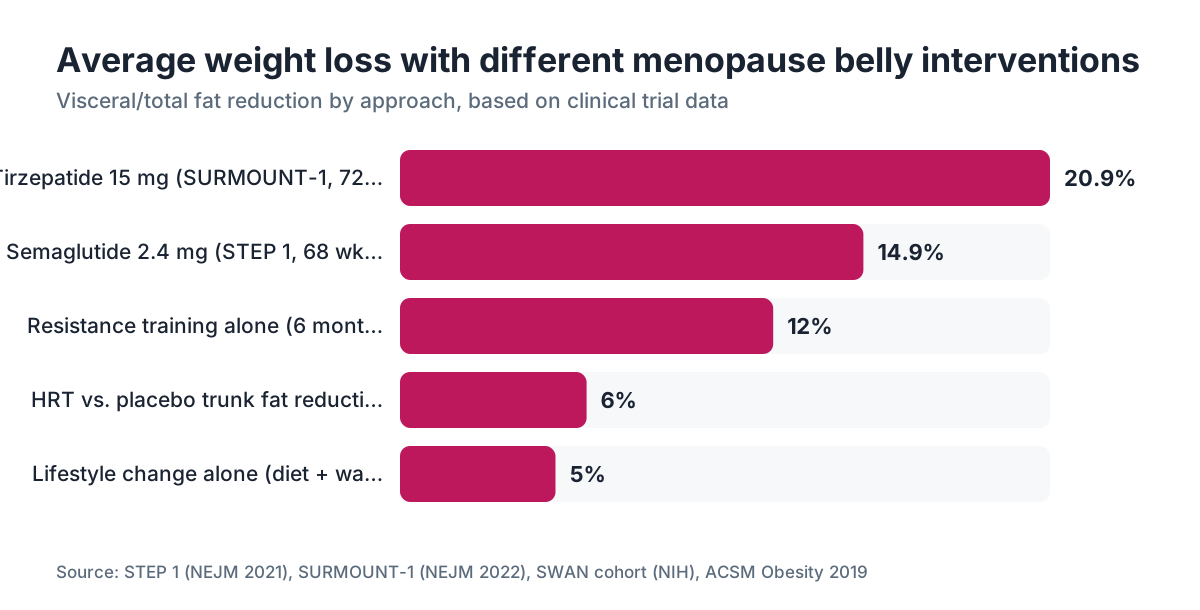
Multiple randomized controlled trials show systemic estrogen therapy, with or without progesterone, blunts the redistribution of fat to the abdomen during menopause. A meta-analysis in Obesity Reviews found HRT reduced trunk fat mass significantly compared with placebo, though it produced no dramatic drop in total weight [7].
The mechanism is straightforward. Restoring estrogen partly restores the pre-menopausal fat pattern. Visceral accumulation slows. Some women see a modest drop in waist circumference, especially if they start early in the transition.
HRT is not a weight loss drug. Women who start it hoping to shed 20 pounds are usually let down. What it changes is the trajectory. Without it, belly fat keeps building as estrogen keeps falling. With it, that process slows or stalls.
Hormone replacement therapy also helps the sleep and mood problems that quietly feed weight gain. Women who sleep better eat better and have the energy to train. Those downstream effects add up.
The form matters. Oral estrogen has a bigger first-pass liver effect and can raise triglycerides in some women. Transdermal estrogen (patches, gels, sprays) skips the liver and may suit women with metabolic concerns better. Ask your clinician which fits your situation. If you're weighing the estrogen patch specifically, there's a full breakdown of patch options and dosing on this site.
Still have a uterus? You'll need a progestogen alongside estrogen to protect the uterine lining. Progesterone options include micronized progesterone (Prometrium), which has a friendlier metabolic profile than synthetic progestins.
What exercise actually works for menopause belly?
Strength training. More precisely, progressive resistance training that builds muscle. Cardio alone won't get you there.
Here's why. Visceral fat answers better to vigorous exercise than to steady moderate cardio. A 2019 study in the journal Obesity found resistance training reduced visceral fat in postmenopausal women even without a meaningful change in total body weight, by improving insulin sensitivity and driving muscle glucose uptake [6].
The target from current evidence is two to three resistance sessions a week, hitting the major muscle groups, with progressive overload, meaning you add weight or difficulty over time. Bodyweight work helps beginners, but most women will need external resistance within a few months to keep progressing.
High-intensity interval training (HIIT) is the cardio format with the best evidence for visceral fat. Short hard bursts with rest between them push more metabolic adaptation than the same minutes of steady walking. HIIT is rough on joints, though, and demands recovery. Three sessions a week is about the ceiling for most women over 50.
Walking still counts. Women who log 7,000 to 10,000 steps daily carry meaningfully less visceral fat than sedentary women, probably through steady glucose uptake by working muscle. A walk after meals blunts the post-meal glucose spike.
The pull is to hammer crunches because the belly is the problem. That's not how fat loss works. You can't spot-reduce. Core work builds strength and stability, which is worth doing, but it won't preferentially burn belly fat. Compound movements move the needle on body composition: squats, deadlifts, rows, presses.
What should you eat to reduce menopause belly fat?
No single diet erases menopause belly, but a few patterns have far stronger evidence than the rest. Protein first, alcohol down, ultra-processed food out of the default rotation.
Protein is the most underrated lever. Most women eat far below what muscle preservation needs. Current evidence suggests postmenopausal women need at least 1.2 grams of protein per kilogram of body weight a day to hold muscle, and some researchers argue 1.6 g/kg is better if you're training [6]. At 150 lbs (68 kg), that's roughly 82 to 109 grams daily. Most women get 50 to 60.
Ultra-processed foods are a specific problem. They're engineered to override fullness, they run high in refined carbs that spike insulin, and several large studies tie heavy ultra-processed intake to faster visceral fat gain. This doesn't mean never eat a chip. It means minimally processed whole foods become the default.
Alcohol earns its own paragraph. Your body burns alcohol before anything else, so fat oxidation pauses while it clears the ethanol. Alcohol also fractures sleep, and broken sleep drives visceral fat. Even one to two drinks a day tracks with a larger waist in midlife women. Cutting back is one of the more effective behavioral changes for belly fat.
A Mediterranean-style pattern, plenty of vegetables, legumes, fish, olive oil, and whole grains, with limited processed meat and sugar, has the strongest overall evidence for lowering visceral fat and cardiovascular risk in midlife women [7]. It isn't magic. It just packs high nutrient density with better fullness-per-calorie than a typical Western diet.
Intermittent fasting gets a lot of airtime. The evidence for it in menopause specifically is thin and mixed. Some women find time-restricted eating useful because it curbs late-night snacking, which tends to be high-calorie and low-satiety. Others find it triggers binge eating in the window. If it works for you and you can keep it up, fine. If it doesn't, you're not missing a miracle.
How does sleep affect menopause belly and what can you do about it?
Sleep is the most underestimated variable in menopause weight gain. Fix sleep and the hormonal math tilts back in your favor.
Vasomotor symptoms, hot flashes and night sweats, disrupt sleep in up to 75% of menopausal women [8]. Even partial sleep loss (under 6 hours) raises ghrelin, lowers leptin, bumps cortisol, and dents insulin sensitivity. Every one of those changes promotes fat storage, especially viscerally.
SWAN cohort data found women reporting poor sleep quality had significantly greater increases in visceral fat over follow-up than women who slept well [5]. Sleep is not passive downtime. It's when your body manages hormones, repairs tissue, and resets metabolic signaling.
HRT often improves sleep by knocking down hot flashes and night sweats. For women who can't or won't use hormones, cognitive behavioral therapy for insomnia (CBT-I) has strong evidence for menopausal insomnia and is recommended first-line by The Menopause Society [8].
Sleep hygiene basics matter more than people like to admit: a consistent wake time, a dark cool room (65 to 68°F is often cited as the sweet spot), no screens in the hour before bed, and less alcohol. Cooling mattress pads and moisture-wicking sheets genuinely help women whose sleep breaks from night sweats rather than insomnia itself.
Can GLP-1 medications help with menopause belly specifically?
Yes, and the evidence here has gotten genuinely strong over the last few years. These drugs pull fat off the midsection more than off anywhere else.
GLP-1 receptor agonists, semaglutide (Ozempic, Wegovy) and tirzepatide (Mounjaro, Zepbound), produce large weight loss that comes disproportionately from visceral fat. In the STEP 1 trial, participants on semaglutide 2.4 mg lost an average of 14.9% of body weight over 68 weeks [9]. In SURMOUNT-1, tirzepatide 15 mg produced average loss of 20.9% [10].
Neither trial was menopause-specific, but subgroup data and clinical experience consistently show menopausal women respond well. The mechanism doesn't care about menopausal status. GLP-1 agonists slow gastric emptying, quiet appetite signaling in the brain, and improve insulin sensitivity. All three pathways bear directly on menopause belly.
The visceral reduction tends to run proportionally larger than the subcutaneous reduction. Imaging studies using CT and MRI confirm GLP-1 agonists specifically cut visceral fat, which is exactly the risk factor menopause drives up.
These drugs aren't for everyone. Side effects are real (mostly nausea, and in a minority of patients, more significant GI trouble). They're expensive without insurance, often $900 to $1,300 a month at list price. And weight tends to return if you stop without sustained habits in place. FDA-approved options for chronic weight management include semaglutide 2.4 mg (Wegovy) and tirzepatide (Zepbound) [11].
If you're considering this route, there's a fuller breakdown of semaglutide for weight loss and a semaglutide vs tirzepatide comparison on this site. Compounded semaglutide is an option some women use to cut cost during brand shortages, though FDA has raised concerns about compounded versions and the shortage designation has changed.
WomenRx prescribes GLP-1s alongside hormonal care for exactly this population, because handling menopause belly well usually means treating hormones and weight together, not as two separate problems.
What about stress and cortisol? Do they make menopause belly worse?
They do, and this isn't pop psychology. It's well-established physiology.
Cortisol drives visceral fat storage through glucocorticoid receptors that sit densely in intra-abdominal fat. Chronic stress means chronically high cortisol, which means a standing order to store fat in the abdomen [4]. Menopause itself is a physiological stressor, so the hormonal backdrop already tilts toward higher cortisol activity before any outside life stress lands.
Midlife happens to collide with peak life stressors for many women: aging parents, teenagers at home, career pressure, relationships in flux. None of that is destiny, but it's fair to note the stress load often peaks exactly when hormonal vulnerability peaks too.
Cortisol strategies with real evidence behind them include regular moderate exercise (which spikes cortisol acutely but lowers baseline cortisol over time), enough sleep, and mind-body practices like yoga and mindfulness-based stress reduction. A 2011 randomized trial in the journal Menopause found a mindfulness-based stress reduction program lowered hot flashes and anxiety in menopausal women, with the cortisol pathway plausibly involved [8].
Ashwagandha and other adaptogens have small-scale evidence for lowering cortisol, but the trials are short and the effects are modest. Nobody has good long-term data on adaptogens in menopause specifically. The supplement industry has over-promised here.
How to get rid of menopause belly naturally, without medication
Natural approaches can move the needle, especially in earlier perimenopause when the hormonal disruption is milder. They just work more slowly and demand more consistency than most people expect.
The most evidence-backed natural plan is progressive resistance training three times a week, a high-protein diet (1.2 to 1.6 g/kg body weight daily), and aggressive sleep protection. That trio addresses muscle preservation, metabolic rate, insulin sensitivity, and the hormones behind hunger all at once.
Cutting added sugar and refined carbs gives the fastest visible change in belly girth for most women, partly because refined carbs drive water retention and bloating on top of actual fat.
Reducing alcohol, even by half, is underrated. Most women don't realize how much moderate drinking breaks sleep and stalls fat burning.
Stress management isn't optional. Chronically high cortisol will undo an otherwise perfect diet and training plan.
Here's the honest reality check. Natural approaches typically produce a 5 to 10% cut in visceral fat over 6 to 12 months of real consistency. That's meaningful for metabolic health but not dramatic to look at. Women expecting their 35-year-old waistline back with no hormonal or pharmacological support are fighting basic endocrinology. Setting realistic expectations isn't defeatism. It's how you stay with a plan long enough to actually benefit.
To figure out where you are in the transition (which shapes how hard you need to push), the articles on perimenopause age and when does menopause start give useful context.
Are there tests you should get if you're worried about menopause belly?
Yes. Belly fat isn't only cosmetic, and a metabolic baseline tells you your actual risk and whether your interventions are working.
A fasting lipid panel, fasting glucose, and HbA1c are the starting points. Visceral fat drives dyslipidemia and insulin resistance, so these markers often shift before any visible disease shows up. Plenty of women in perimenopause discover their lipid panel has quietly gotten worse.
A home waist measurement, taken at the navel, relaxed, not sucked in, gives you a direct number to track over time. Above 35 inches signals metabolic risk [3].
A DEXA scan (dual-energy X-ray absorptiometry) is the reference standard for body composition. It separates muscle from fat and can estimate visceral fat in some protocols. It also reads bone density, which matters because bone loss speeds up at menopause. A bone density test is often recommended around or after menopause, and many practices run body composition at the same visit.
Fasting insulin isn't part of a standard metabolic panel but is worth requesting. High fasting insulin (above 10 to 15 uIU/mL is often called elevated, though reference ranges vary by lab) flags insulin resistance even when fasting glucose looks fine.
Thyroid function (TSH, free T4) is worth checking. Hypothyroidism gets more common in midlife, mimics many menopause symptoms including weight gain, and is easy to treat once you catch it.
What is the realistic timeline for reducing menopause belly?
Slow and steady is the honest answer. Anyone promising a transformed waist in four weeks is selling something.
With lifestyle changes alone (diet, exercise, sleep, stress), most women see better metabolic markers in 8 to 12 weeks, and visible waist changes in 3 to 6 months of true consistency. Visceral fat reductions of 10 to 20% over 6 months are achievable without medication for many women [6].
Add HRT and the shift toward a more favorable fat pattern usually takes 6 to 12 months to show. HRT doesn't produce fast fat loss. It changes where fat goes and slows new visceral accumulation.
With GLP-1 medications, body composition changes usually show within 8 to 12 weeks, with peak effect around 52 to 72 weeks depending on the drug and dose. STEP 1 ran 68 weeks for a reason: the full effect builds over time [9].
A combination approach, lifestyle plus HRT plus a GLP-1 if indicated, is the fastest path and the one best supported by current evidence for women with significant metabolic risk. It's also the most medically intensive and the most expensive.
Patience is genuinely required. Menopause belly built up over several years of hormonal change. Expecting to erase it in 90 days sets you up to quit before any approach gets a fair trial.
Frequently asked questions
How to get rid of menopause belly naturally?
The most effective natural approach combines progressive resistance training 2-3 times weekly, a high-protein diet (1.2-1.6 g per kg body weight daily), strict sleep protection, reduced alcohol, and stress management. None alone is sufficient. Together they can cut visceral fat 10-20% over 6 months. Realistic expectation: measurable improvement, not a return to your 35-year-old waistline without hormonal support.
Is menopause belly fat permanent?
No, but it won't reverse on its own. Visceral fat gained during menopause is metabolically active and can be reduced through targeted lifestyle changes, hormone therapy, or GLP-1 medications. The key is addressing the underlying drivers (low estrogen, insulin resistance, poor sleep) rather than just cutting calories. Women who intervene early in the transition tend to have better outcomes.
Does HRT help with belly fat?
Yes, with modest expectations. HRT, particularly systemic estrogen, slows visceral fat accumulation and partly restores a more favorable fat distribution pattern. Studies show it reduces trunk fat mass compared with placebo. It is not a weight loss drug and won't produce dramatic belly reduction on its own, but it changes the hormonal environment so diet and exercise work better.
Why did my stomach suddenly get bigger at 50?
Estrogen drops sharply in perimenopause and menopause, moving fat storage from hips and thighs to the abdomen. Intra-abdominal (visceral) fat can rise by roughly 49% during this transition even without weight gain on the scale. Muscle loss slows metabolism at the same time. The result is a larger waistline that seems sudden but is the product of several converging hormonal changes over years.
Can you lose menopause belly with diet and exercise alone?
Yes, partially. Strength training plus a high-protein Mediterranean-style diet with less alcohol and refined sugar can produce meaningful visceral fat reduction. Most women see 10-20% reductions over 6 months of genuine consistency. For women with significant hormonal disruption driving fat storage, adding HRT or a GLP-1 medication produces substantially greater results than lifestyle change alone.
What foods cause menopause belly?
Refined carbohydrates, ultra-processed foods, added sugars, and alcohol are the main dietary drivers. They spike insulin (a fat-storage signal), disrupt sleep, and override fullness cues. Alcohol also directly pauses fat oxidation while the liver clears it. There's no single villain food, but a diet heavy in these categories compounds the hormonal fat redistribution already happening during menopause.
How much weight gain is normal during menopause?
The SWAN longitudinal study found women gained roughly 3.4 kg (about 7.5 lbs) of total body fat over 6 years through the transition, with disproportionate accumulation in the trunk. Individual variation is wide. Women who are active at baseline and enter with lower insulin resistance gain less. None of this is inevitable; it's a tendency that targeted interventions can blunt.
Does semaglutide help with menopause belly?
Yes. In the STEP 1 trial, semaglutide 2.4 mg produced average weight loss of 14.9% over 68 weeks, with visceral fat reduction confirmed in imaging substudies. GLP-1 medications preferentially reduce visceral fat relative to subcutaneous fat, which is exactly the fat type menopause drives. They work by suppressing appetite, improving insulin sensitivity, and slowing gastric emptying, all relevant to menopause-related fat gain.
Does walking reduce menopause belly?
Walking helps, though it's rarely enough on its own. Women logging 7,000-10,000 steps daily carry meaningfully less visceral fat than sedentary women. Walking after meals blunts post-meal glucose spikes, cutting the insulin-driven fat storage signal. The best results come from combining daily walking with progressive resistance training, which builds muscle and raises resting metabolic rate more than cardio alone.
What is the best exercise to lose menopause belly?
Progressive resistance training is the single most evidence-backed exercise for reducing visceral fat in menopausal women. It improves insulin sensitivity, builds muscle (which raises resting metabolism), and reduces trunk fat independent of the scale. Two to three sessions weekly covering major muscle groups, with progressive overload, is the target. HIIT cardio is a strong complement. Steady-state cardio alone is the weakest option for belly fat.
How long does menopause belly last?
Without intervention, visceral fat accumulation continues through the transition and often stabilizes at a higher level in postmenopause. It doesn't resolve on its own once hormone levels settle at a new lower baseline. With active intervention, diet, exercise, HRT, or GLP-1 therapy, visceral fat can be reduced at any age. Starting earlier in the transition generally produces better outcomes.
Is menopause belly dangerous?
Yes, in the medical sense. Visceral fat is active tissue that secretes inflammatory cytokines and raises insulin resistance. A waist above 35 inches in women signals elevated cardiometabolic risk per the NHLBI. Excess visceral fat is independently associated with higher risk of type 2 diabetes, cardiovascular disease, and certain cancers. Treating menopause belly is a health issue, not a vanity concern.
Can stress cause menopause belly?
Yes. Cortisol, the main stress hormone, binds to receptors concentrated in visceral fat and promotes storage there. Menopausal women have increased cortisol sensitivity due to lower estrogen. Chronic life stress on top of the hormonal transition creates a compounding effect. Stress management through regular exercise, adequate sleep, and evidence-based practices like mindfulness is a legitimate part of any menopause belly plan.
Does losing weight during menopause get rid of belly fat?
General weight loss does reduce visceral fat, but the proportions matter. Standard calorie restriction tends to shed more subcutaneous fat and lean muscle than visceral fat, especially in menopausal women. Approaches that preserve muscle while creating a deficit, high protein, resistance training, and sometimes GLP-1 medications, produce better visceral fat reduction for the same amount of scale weight lost.
Sources
- Endocrine Society, Journal of Clinical Endocrinology & Metabolism: Estrogen and adipose tissue distribution
- The Menopause Society (NAMS), Menopause journal: intra-abdominal fat increase at menopause transition
- NHLBI, NIH: Clinical guidelines on waist circumference and metabolic risk
- NIH National Institute of Diabetes and Digestive and Kidney Diseases: insulin resistance and fat storage
- Study of Women's Health Across the Nation (SWAN), NIH-funded longitudinal cohort
- American College of Sports Medicine, Obesity journal 2019: resistance training and visceral fat in postmenopausal women
- Obesity Reviews meta-analysis: HRT and trunk fat mass in menopausal women; Mediterranean diet and visceral fat
- The Menopause Society (NAMS), Clinical Practice Guidelines: vasomotor symptoms and insomnia
- STEP 1 Trial, New England Journal of Medicine 2021: semaglutide 2.4 mg for weight management
- SURMOUNT-1 Trial, New England Journal of Medicine 2022: tirzepatide for weight management
- FDA, Drug Safety Communications: GLP-1 receptor agonist prescribing information
- WHO, Global Database on Body Mass Index: waist-to-hip ratio thresholds