Menopause and joint pain: why it happens and what actually helps
TL;DR: Estrogen protects joint cartilage and dampens inflammation. When it drops in perimenopause and menopause, up to 60% of women develop new joint pain, stiffness, or swelling, most often in the hands, knees, hips, and spine. Hormone therapy is the only treatment that addresses the root cause. NSAIDs, weight loss, and targeted exercise also reduce symptoms meaningfully.
Why does menopause cause joint pain?
Estrogen is an anti-inflammatory hormone. It keeps synovial fluid healthy, maintains the collagen matrix in cartilage, and quiets the immune signals that drive joint inflammation. When estrogen falls, all three of those protective effects weaken at once.
Researchers have found estrogen receptors inside cartilage cells, synovial tissue, and the cells that line joint capsules [1]. That means joints are literally designed to respond to estrogen. It is not surprising, then, that the average age of first osteoarthritis diagnosis in women lines up almost exactly with the menopausal transition, somewhere in the late 40s to early 50s [2]. In men, osteoarthritis typically appears a decade later.
The drop in estrogen also makes the body's inflammatory response less regulated. Cytokines, the signaling proteins that drive swelling and pain, run hotter after menopause. A 2011 analysis in the journal Maturitas described the pattern clearly: estrogen withdrawal increases production of interleukin-1 and tumor necrosis factor, two cytokines directly linked to cartilage breakdown [3].
There is also a mechanical factor. Most women gain some weight during the menopausal transition, partly because falling estrogen shifts fat storage toward the abdomen, and partly because sleep disruption and fatigue reduce activity. Every extra pound of body weight adds roughly four pounds of force across the knee joint [4]. So the hormonal and mechanical hits land together.
This is why joint pain in perimenopause can feel sudden and disorienting. A woman who was fine at 45 can feel like her hands aged ten years by 50, and the change is real, not imagined.
What joints hurt most during menopause?
The hands are the most commonly reported site. Many women notice morning stiffness in the finger joints, sometimes with swelling at the knuckles, in their mid-to-late 40s, often before their periods become irregular. This pattern is so consistent that some rheumatologists informally call it "menopausal hand" [2].
The knees and hips follow closely. These are load-bearing joints, so the combination of less estrogen, more inflammatory signaling, and any weight gain hits them hard. The spine, especially the lower back and neck, is another common site. Many women also report jaw stiffness or temporomandibular joint discomfort that they had never noticed before.
Shoulder pain and frozen shoulder (adhesive capsulitis) are more common in perimenopausal women than in any other demographic group, though the research on the estrogen connection there is less settled.
Where your pain lands matters for ruling out other causes. Symmetrical small-joint swelling that comes with fatigue and a rash should prompt a rheumatoid arthritis workup, because RA can also flare or first appear around menopause. One-sided hip or groin pain warrants a bone density check, since a stress fracture or early avascular necrosis can mimic joint pain. See the bone density test article for guidance on when to get your first scan.
How common is joint pain in perimenopause and menopause?
The numbers are high enough that joint pain deserves to be listed alongside hot flashes as a core menopause symptom, even though it rarely shows up in patient pamphlets.
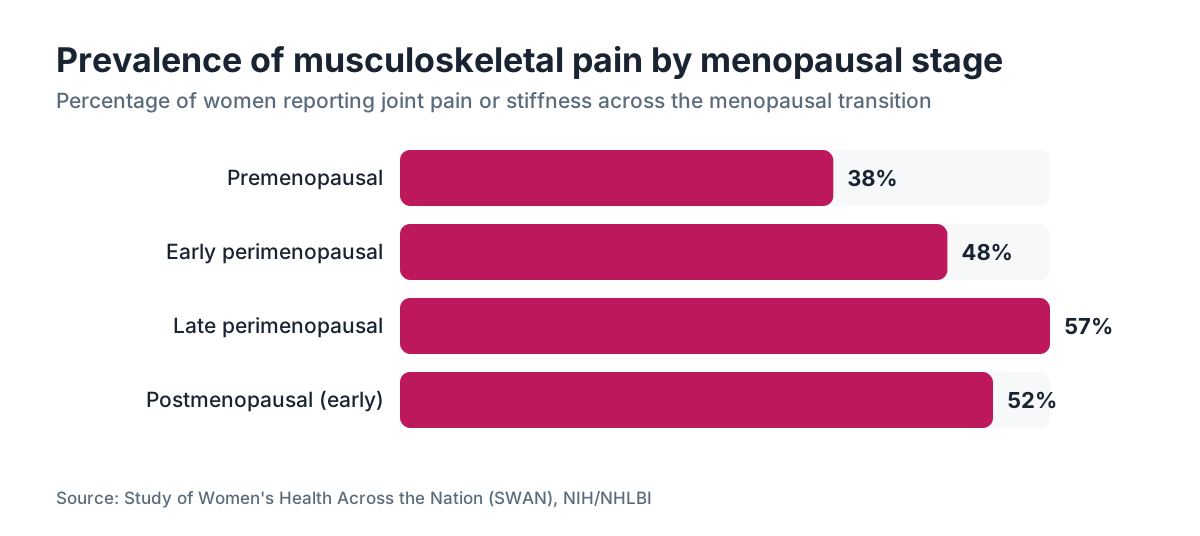
The Study of Women's Health Across the Nation (SWAN), one of the largest longitudinal studies of the menopausal transition in the U.S., found that musculoskeletal pain, including joint pain and stiffness, was reported by over 50% of perimenopausal and postmenopausal women, compared to about 38% of premenopausal women in the same cohort [5]. Some survey data push the estimate to 60% when broader stiffness is included.
The SWAN data also showed that women in late perimenopause, meaning the 1-2 years just before the final menstrual period, reported the highest rates of new musculoskeletal symptoms [5]. That peak timing tracks exactly with when estrogen is at its most variable and when short-term inflammation is highest.
For context on where you are in the timeline, the perimenopause age and when does menopause start articles walk through the typical sequence.
Does hormone replacement therapy actually help joint pain?
The evidence is genuinely promising, though not perfect. Several analyses of the Women's Health Initiative (WHI) data found that women taking combined estrogen-progestin therapy reported significantly less joint pain and stiffness than those on placebo [6]. The benefit was not trivial: roughly 40% of HRT users in those analyses reported improvement in joint symptoms.
Mechanistically, it makes sense. If falling estrogen is the driver, replacing it should reduce the inflammatory signaling, preserve cartilage health, and ease synovial fluid production. Observational data support this: postmenopausal women who use hormone therapy consistently show lower rates of osteoarthritis progression compared to non-users, though randomized trial evidence specifically on cartilage is limited.
The hormone replacement therapy article covers the full risk-benefit picture. The short version: for healthy women under 60 who are within ten years of menopause, most major medical societies, including the North American Menopause Society (NAMS), consider HRT a reasonable option for managing menopause symptoms, joint pain included [7]. NAMS states in its 2022 position statement that "for most healthy menopausal women aged younger than 60 years or within 10 years of menopause onset, the benefits of hormone therapy outweigh the risks" [7].
An estrogen patch delivers steady transdermal estrogen without the first-pass liver metabolism of oral pills, which matters for women with certain cardiovascular risk factors. Progesterone is also part of the picture for women with a uterus. The progesterone article explains why and which forms matter.
WomenRx offers telehealth evaluation for hormone therapy if you want to explore that path with a clinician without a months-long wait for an in-person appointment.
One honest caveat: not every woman is a candidate for HRT, and some joint pain during menopause has a structural cause that hormones will not fix. Getting a clear diagnosis first is worth the time.
What else reduces joint pain during menopause beyond hormones?
Weight loss is the most potent non-hormonal lever for knee and hip pain specifically. A 5-10% reduction in body weight reliably reduces knee pain scores in overweight women with osteoarthritis [4]. Given that the menopausal transition often comes with weight gain that feels resistant to previous strategies, this is easier said than done, but the dose-response is real.
GLP-1 receptor agonists like semaglutide and tirzepatide have changed the calculus here. The SURMOUNT-1 trial of tirzepatide showed average weight loss of 20.9% at 72 weeks in adults with obesity [8], and many women in that age range are using these medications partly for the downstream joint relief. If you want to understand how these medications compare, the semaglutide vs tirzepatide article lays out the differences directly. Keep in mind that GLP-1s can cause modest bone density loss with rapid weight loss, so pairing them with resistance training and adequate protein matters.
Exercise, specifically low-impact strengthening and range-of-motion work, is the single intervention with the most consistent evidence for osteoarthritis symptom relief. A 2015 Cochrane review of exercise for knee osteoarthritis found statistically significant reductions in pain and functional limitation across nearly all study types [9]. Strength training that builds the muscles around a joint reduces the load the joint itself has to absorb.
NSAIDs (ibuprofen, naproxen) provide short-term relief for inflammatory flares and are reasonable as occasional tools. Long-term daily use, though, carries GI, kidney, and cardiovascular risks that add up fast after menopause, when baseline cardiovascular risk is already rising. Use them for flares, not as a daily strategy.
Topical diclofenac (Voltaren gel, now available over the counter) gets medication to the joint with far less systemic absorption than oral NSAIDs. For hand and knee pain in particular, it is a genuinely useful option with a cleaner safety profile for longer-term use.
Fish oil at 2-3 grams of EPA+DHA per day has modest anti-inflammatory evidence and is low-risk. Glucosamine and chondroitin have a complicated evidence record: the large GAIT trial found no benefit over placebo for most patients [10], though a subset with moderate-to-severe pain showed possible benefit. My honest take: the supplement is not worth the cost for most people; the money is better spent on a gym membership or physical therapy.
Acupuncture has reasonable evidence for knee osteoarthritis pain, with several trials showing clinically meaningful improvement, though the effect size is modest and the mechanism is debated.
Is menopause joint pain the same as rheumatoid arthritis?
No, and the distinction matters because the treatments are very different.
Menopausal joint pain is primarily driven by declining estrogen's effect on cartilage and inflammation. It tends to be symmetric, worse in the hands and knees, and worst in the morning but improving within 30-60 minutes of moving around. It does not typically cause the severe systemic inflammation, fatigue, or elevated inflammatory markers (CRP, ESR) that characterize rheumatoid arthritis.
RA, on the other hand, is an autoimmune disease. Estrogen fluctuations can affect RA activity too. Some women with established RA notice that perimenopause worsens their flares, and some women develop RA for the first time around menopause. A 2019 study in Annals of the Rheumatic Diseases found a small but real association between menopausal transition and new-onset RA [2].
If your joint pain comes with significant fatigue, prolonged morning stiffness lasting more than an hour, warmth and visible swelling in multiple small joints, or elevated inflammatory labs, get a rheumatology workup. A positive rheumatoid factor or anti-CCP antibody test points toward RA. Menopause does not cause positive autoantibodies.
Psoriatic arthritis, lupus, and gout can also mimic or overlap with menopausal joint pain. Gout in women is uncommon before menopause because estrogen promotes uric acid excretion, but rates rise postmenopause, so a sudden, intensely painful, red joint, especially the big toe, should prompt a uric acid level.
How does weight gain during menopause make joint pain worse?
This connection is direct and well-quantified. Every pound of body weight translates to about four pounds of force on the knee joint during walking, and six times body weight during climbing stairs [4]. A 10-pound weight gain adds 40-60 pounds of repetitive stress to the knee with every step.
Fat tissue, especially the visceral fat that accumulates preferentially after menopause, is metabolically active. It secretes adipokines, inflammatory signaling molecules, that accelerate cartilage breakdown. So weight gain during menopause adds both mechanical load and inflammatory fuel to joints at the same time.
The menopausal shift in fat storage, from subcutaneous to visceral, is driven by the loss of estrogen's fat-distribution effects. Women who maintain the same body weight through menopause still often see a shift in where fat sits, and that shift carries its own inflammatory consequences.
This is where GLP-1 medications have become a real option for women in this age group. Semaglutide for weight loss describes the evidence base. The SELECT trial of semaglutide, published in 2023 in the New England Journal of Medicine, found a 20% reduction in major cardiovascular events in adults with obesity and cardiovascular disease, with average weight loss around 9.4% [11]. Joint pain outcomes were not the primary endpoint, but secondary data from GLP-1 trials consistently show musculoskeletal pain improvement with weight loss.
What supplements or vitamins help with menopausal joint pain?
The honest answer: fewer than the supplement industry would have you believe, but a few have credible evidence.
Vitamin D is the most important. Deficiency is extremely common in perimenopausal and postmenopausal women, and low vitamin D correlates with increased joint pain, worse osteoarthritis symptoms, and faster bone loss. The Endocrine Society recommends 1,500-2,000 IU per day for adults at risk of deficiency [12]. Getting a 25-OH vitamin D level is cheap and worth doing. Supplementing to a level of 40-60 ng/mL is a reasonable target, though the optimal threshold for joint and bone outcomes is still debated.
Omega-3 fatty acids (EPA and DHA from fish oil) at 2-3 grams per day have several trials showing modest reductions in inflammatory joint symptoms, particularly in RA, and reasonable evidence in osteoarthritis as well. The effect is not dramatic, but the risk profile is benign.
Magnesium at 300-400 mg per day supports muscle relaxation and sleep, and some women report less generalized achiness when they correct a deficiency. Magnesium is commonly low in the general population, so there is often a gap to fill.
Collagen peptides, specifically 10 grams per day of hydrolyzed type II collagen, have some trial data suggesting reduced knee pain over 6 months [10], though the research quality is inconsistent. The biological plausibility is reasonable; collagen peptides may provide substrate for cartilage matrix maintenance. This is one supplement I would not dismiss entirely, but I also would not put it above vitamin D or fish oil in priority.
Glucosamine and chondroitin: see the note above. The GAIT trial found no consistent benefit for most patients [10]. I would skip them.
When should I see a doctor about joint pain during menopause?
Most menopausal joint pain is manageable with lifestyle changes and, for appropriate candidates, hormone therapy. But some presentations need prompt attention.
See a doctor quickly if: you have a single joint that is acutely swollen, warm, and very painful (rule out gout, infection, or fracture); your joint pain is accompanied by fever, a rash, or significant fatigue; you have morning stiffness lasting more than an hour consistently; or your pain is worsening rapidly despite basic measures.
See a doctor less urgently but still soon if: you have had a fall or sudden injury; your pain is primarily in the hip, groin, or thigh (worth imaging to rule out a stress fracture or hip joint problem); you are losing function in daily tasks; or you want to know whether hormone therapy is right for you.
For a general telehealth evaluation of menopause symptoms including joint pain, platforms like WomenRx can do a complete hormonal workup and symptom assessment without requiring a months-long wait.
Labs that are useful to check at the time of a new joint pain evaluation in a perimenopausal or menopausal woman include: FSH and estradiol (to confirm menopausal status), complete metabolic panel, CBC, CRP, ESR, rheumatoid factor, anti-CCP antibody, uric acid, 25-OH vitamin D, and TSH (hypothyroidism causes joint pain and achiness and is more common after 40). A lot of diagnoses hide in that panel.
What does a realistic treatment plan for menopause joint pain look like?
The best outcomes come from addressing the hormonal, mechanical, and lifestyle factors together rather than looking for one answer.
A realistic plan for a healthy 48-year-old with new hand and knee pain, confirmed perimenopause, and no contraindications to HRT might look like this: start with a complete hormonal evaluation, address the estrogen deficiency if appropriate with an estrogen patch plus progesterone if she has a uterus, check vitamin D and supplement to sufficiency, begin a 3-day-per-week strength training program focused on quadriceps and hip stabilizers, use topical diclofenac gel for acute flares, and schedule a bone density test if she has not had one.
If she also has weight to lose and prior approaches have not worked, a conversation about GLP-1 therapy, either semaglutide or a comparison of options via semaglutide vs tirzepatide, is worth having. Weight loss of even 5-10% can meaningfully reduce knee load and inflammatory cytokine levels.
Progress should be tracked over 3-6 months. Pain that does not improve on this framework, or that is getting worse, needs imaging and a specialist referral.
For women who cannot or choose not to take hormone therapy, the plan shifts toward optimizing all the non-hormonal levers harder: weight management, strength training, omega-3s, vitamin D, topical NSAIDs, and potentially acupuncture or physical therapy. It is a thinner toolkit, but it is not empty.
For broader context on the full menopause symptom picture, the menopause hub covers everything from cognitive changes to cardiovascular risk.
Does joint pain go away after menopause?
For some women, yes. The joint pain that peaks in late perimenopause, driven by rapidly fluctuating estrogen, can stabilize or ease once estrogen settles at its new postmenopausal baseline. The acute inflammatory component is partly driven by estrogen variability, more than low estrogen. Once the fluctuation stops, inflammation can quiet somewhat.
For others, especially those who developed or accelerated structural osteoarthritis during the transition, pain persists or progresses. Cartilage does not regenerate once it is damaged. The menopausal transition can accelerate osteoarthritis by years, and that acceleration is not reversed when the transition is over.
The SWAN study found that musculoskeletal pain scores did peak around the final menstrual period and declined slightly in the early postmenopausal years for many women, but remained elevated above premenopausal levels for the majority [5]. That means most women feel better than they did at the worst of perimenopause, but do not fully return to how they felt at 40.
Starting hormone therapy early in the transition, before structural damage accumulates, is one argument for not waiting. The evidence that HRT slows osteoarthritis progression is not conclusive, but the mechanistic rationale is solid and the symptom benefit is real.
The practical take: do not assume joint pain will just resolve on its own and delay treatment for years. The window during which joint-protective interventions are most effective is likely earlier rather than later.
Frequently asked questions
Can menopause cause joint pain even before periods stop?
Yes. Joint pain often starts in perimenopause, sometimes before periods become irregular. The SWAN study found musculoskeletal symptoms peaking in late perimenopause, roughly the 1-2 years before the final period. This is when estrogen is most variable and inflammatory signaling is most disrupted. If you are in your mid-40s with new joint stiffness, perimenopause is a real explanation.
Which joints are most affected by menopause?
Hands are the most commonly reported site, followed by knees, hips, and the lower spine. Many women notice finger-joint stiffness in the morning as one of the first signs. Shoulder pain and frozen shoulder are also more common around perimenopause. The pattern is usually symmetric, meaning both hands or both knees, which helps distinguish it from injury or single-joint mechanical problems.
Does HRT help with joint pain or make it worse?
Most evidence shows HRT helps. Analysis of the Women's Health Initiative found roughly 40% of women on combined hormone therapy reported improvement in joint pain compared to placebo. The anti-inflammatory and cartilage-protective effects of estrogen are the likely mechanism. HRT is not appropriate for everyone, but for eligible women within 10 years of menopause onset, joint pain is a legitimate reason to consider it.
What is the difference between menopause joint pain and rheumatoid arthritis?
Menopausal joint pain improves within 30-60 minutes of moving and does not cause elevated autoantibodies. Rheumatoid arthritis involves morning stiffness lasting more than an hour, significant fatigue, warm swollen joints, and positive rheumatoid factor or anti-CCP antibody tests. Some women develop RA around menopause, so if symptoms are severe or systemic, get blood work done.
Does losing weight help menopause joint pain?
Yes, significantly. Every pound of body weight adds roughly four pounds of force on the knee joint. A 5-10% reduction in body weight produces measurable reductions in knee pain scores. Weight loss also reduces visceral fat, which secretes inflammatory cytokines that accelerate cartilage breakdown. For women with knee or hip pain specifically, weight management is as effective as most medications for symptom relief.
Is joint pain a symptom of menopause that doctors often miss?
Often, yes. Joint pain does not appear on many standard menopause symptom checklists, and many women are told they have early osteoarthritis without any discussion of the hormonal connection. The SWAN study found over 50% of perimenopausal women reported musculoskeletal pain, making it as common as hot flashes, yet it receives far less attention. Bringing it up explicitly with your clinician is worth the effort.
Can GLP-1 medications like semaglutide help with joint pain from menopause?
Indirectly, yes. GLP-1 medications produce significant weight loss, which reduces mechanical load on joints. Secondary data from GLP-1 trials consistently show improvements in musculoskeletal pain with weight reduction. They do not address the hormonal driver of joint pain directly. For women who are overweight and have knee or hip pain, GLP-1 therapy combined with hormone management makes physiological sense.
What vitamins should I take for joint pain during menopause?
Vitamin D is the priority. Deficiency is common in this age group and correlates with worse joint symptoms. The Endocrine Society recommends 1,500-2,000 IU daily for adults at risk of deficiency. Fish oil at 2-3 grams of EPA+DHA daily has modest but real anti-inflammatory evidence. Magnesium supports muscle relaxation and sleep. Glucosamine and chondroitin have weak evidence and are probably not worth the money for most women.
Does joint pain get better after menopause is complete?
For some women, pain that peaked during the volatile late-perimenopause phase does ease once estrogen stabilizes at its postmenopausal baseline. The SWAN data suggest modest improvement after the final menstrual period for many women. However, most women do not return to their premenopausal baseline, and those who developed structural cartilage damage during the transition may have persistent or progressive symptoms.
How do I know if my joint pain is from menopause or something else?
Timing is the first clue. New onset symmetric joint stiffness, especially in the hands, appearing in the mid-40s to early 50s alongside other menopause symptoms, fits a hormonal pattern well. Pain that is asymmetric, involves fever, follows an injury, or comes with prolonged morning stiffness and fatigue needs a broader workup including blood tests for RA, gout, thyroid disease, and inflammatory markers.
What exercises help the most with menopause joint pain?
Strength training that builds muscle around the affected joint is the most evidence-backed approach. For knees, quadriceps and hip strengthening reduce joint load significantly. A 2015 Cochrane review found consistent pain and function improvements with exercise across nearly all knee osteoarthritis trials. Low-impact options like swimming, cycling, and water aerobics reduce mechanical stress while preserving the strengthening benefit. Aim for at least 3 sessions per week.
Can topical treatments help with joint pain during menopause?
Yes. Topical diclofenac gel (Voltaren, available over the counter) delivers an anti-inflammatory directly to the joint with much lower systemic absorption than oral NSAIDs. For hand and knee pain, it is a practical option for managing flares with fewer GI, kidney, and cardiovascular risks than oral ibuprofen. Topical menthol and capsaicin creams provide more modest, shorter-term relief but are reasonable additions for mild pain.
Does estrogen cream or local estrogen help joint pain?
Local estrogen applied to the vagina or vulva does not produce sufficient systemic absorption to affect joint symptoms. For joint pain, systemic hormone therapy, meaning an oral pill, patch, or gel that raises circulating estradiol levels, is required. Vaginal estrogen is excellent for genitourinary symptoms but should not be counted on to address musculoskeletal complaints. Systemic HRT is a separate conversation.
Should I get a bone density test if I have joint pain during menopause?
Joint pain and bone density loss are separate processes, but they share a common driver in falling estrogen, and the distinction between joint pain and bone pain can be unclear clinically. NAMS and the U.S. Preventive Services Task Force recommend bone density screening for women 65 and older, and earlier for postmenopausal women under 65 with risk factors. Hip or groin pain specifically warrants earlier imaging.
Sources
- Arthritis Research & Therapy, Sniekers et al. 2010: Estrogen receptors in joint tissues
- Annals of the Rheumatic Diseases, Hussain et al. 2019: Menopausal transition and arthritis risk
- Maturitas, Roman-Blas et al. 2011: Estrogen and joint inflammation
- Arthritis & Rheumatism, Felson et al. 2004: Body weight and knee joint load
- Arthritis & Rheumatism, Cirillo et al. 2006: WHI data on HRT and joint symptoms
- North American Menopause Society (NAMS), 2022 Hormone Therapy Position Statement
- New England Journal of Medicine, Jastreboff et al. 2022: SURMOUNT-1 trial of tirzepatide
- Cochrane Database of Systematic Reviews, Fransen et al. 2015: Exercise for knee osteoarthritis
- JAMA, Clegg et al. 2006: GAIT trial of glucosamine and chondroitin
- New England Journal of Medicine, Lincoff et al. 2023: SELECT trial of semaglutide
- Endocrine Society Clinical Practice Guideline: Vitamin D deficiency, 2011