Menopause and heart palpitations: what's normal and what's not
TL;DR: Heart palpitations affect roughly 40-54% of perimenopausal and menopausal women. Falling estrogen disrupts the autonomic nervous system and increases heart rate variability, causing fluttering, racing, or skipped-beat sensations. Most are benign. But palpitations with chest pain, fainting, or a history of heart disease need a cardiology workup. Hormone therapy, stress reduction, and cutting triggers all help.
What do menopause heart palpitations actually feel like?
Most women describe a flutter in the chest, a sudden hard thump, a sense that the heart skipped a beat, or a brief racing that comes out of nowhere. Some feel it in the throat. Others notice it mostly at night, lying still, with nothing else to distract them.
Palpitations are not a single arrhythmia. They're a symptom, a perception of your own heartbeat becoming noticeable when it normally isn't. The underlying electrical event could be a premature atrial contraction (PAC), a premature ventricular contraction (PVC), a brief run of elevated sinus heart rate, or true atrial fibrillation. In otherwise healthy midlife women it's usually PACs or PVCs, which are common and not dangerous.
The experience varies a lot. Some palpitations last two or three seconds and resolve completely. Others run for several minutes. The pattern often tracks with hot flashes: the same autonomic surge that triggers flushing and sweating can also cause a sudden jump in heart rate.
How common are heart palpitations during perimenopause and menopause?
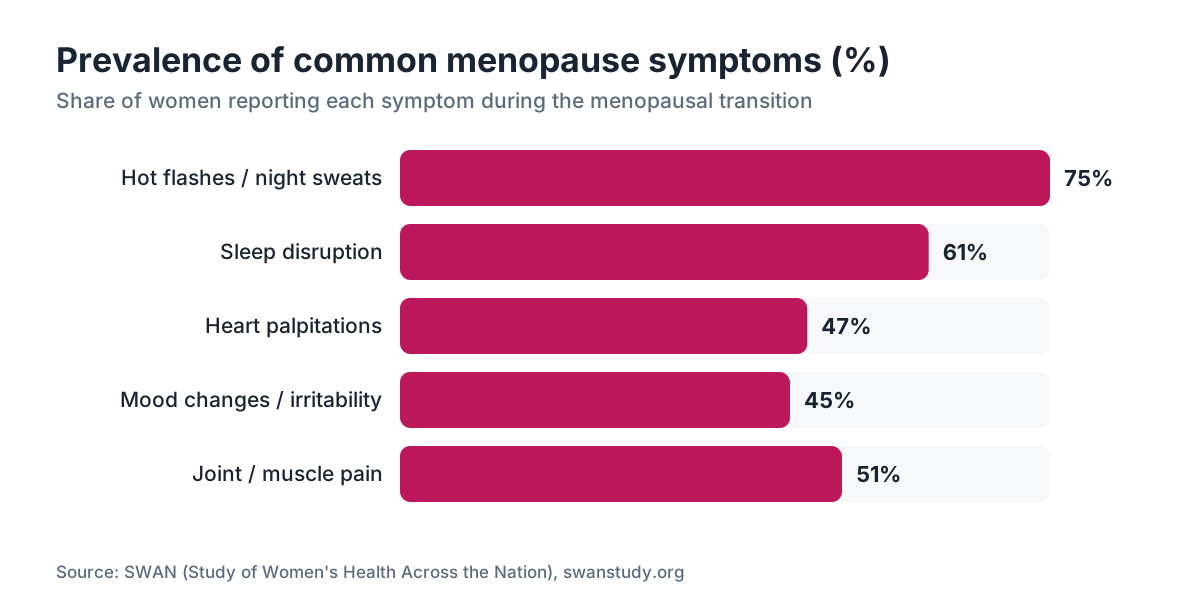
Very common. A 2005 study in the journal Menopause found that palpitations were reported by roughly 40-54% of women during the menopausal transition, putting them among the top five most frequently reported symptoms alongside hot flashes, sleep disruption, and mood changes. [1]
They tend to peak during perimenopause, when estrogen is swinging wildly rather than simply declining. That volatility seems harder on the autonomic nervous system than the steady low-estrogen state of postmenopause. Women who have frequent hot flashes are significantly more likely to also report palpitations, which fits the shared autonomic pathway theory.
The Study of Women's Health Across the Nation (SWAN), an NIH-funded study that followed more than 3,000 women across the menopausal transition, documented palpitations as a cardinal vasomotor symptom alongside hot flashes and night sweats. [2] SWAN data also showed that Black and Hispanic women reported palpitations at somewhat higher rates than white women, though the reasons for that gap aren't fully understood.
If you're in your mid-to-late 40s and suddenly noticing your heartbeat in a way you never did before, you have plenty of company. That doesn't mean ignore it. It means your body isn't doing something rare.
Why does menopause cause heart palpitations? The estrogen-heart connection
Estrogen is more than a reproductive hormone. It has receptors in cardiac muscle, in the smooth muscle of blood vessels, and in the autonomic nervous system itself. When estrogen falls, several things happen at once that can make the heart behave erratically.
First, estrogen normally steadies the autonomic nervous system, dampening sympathetic (fight-or-flight) activity and supporting parasympathetic (rest-and-digest) tone. Without it, the sympathetic side becomes more reactive. Heart rate variability, which measures beat-to-beat variation and is a marker of cardiovascular health, tends to drop during perimenopause, meaning the heart becomes less flexible in how it responds. [3]
Second, estrogen affects the ion channels in cardiac cells that govern the electrical impulse traveling through heart muscle. Animal and in-vitro studies show estrogen modulates calcium and potassium channel activity, and changes in those channels can increase ectopic beats, the PACs and PVCs most women with palpitations are feeling. [4]
Third, vasomotor instability is a direct trigger. A hot flash involves sudden dilation of peripheral blood vessels and a compensatory rise in cardiac output. Heart rate can jump 10-15 beats per minute during a hot flash. That abrupt change reads as a palpitation even when the rhythm stays perfectly normal.
Progesterone matters too. In the perimenopausal years, progesterone drops before estrogen does, and progesterone has its own calming effect on the nervous system through GABA receptors. Less progesterone means less neurological calm, which can raise anxiety and autonomic reactivity. Our overview of progesterone goes deeper on this. [5]
When are menopause palpitations harmless and when do they signal something serious?
This is the question that matters most, and the honest answer is: most of the time they're benign, but you need a baseline workup to know for sure.
Palpitations that are more likely to be harmless:
- Brief, lasting seconds, then completely gone
- Tied to hot flashes, caffeine, alcohol, or poor sleep
- Present for months without any other symptoms
- Occurring in an otherwise healthy woman with no prior heart disease
- Not paired with lightheadedness or fainting
Palpitations that need same-day or urgent evaluation:
- Any palpitation with chest pain, chest pressure, or shortness of breath
- Fainting or near-fainting (syncope or presyncope) during an episode
- Palpitations lasting longer than 30 minutes without resolving
- A rapid, regular racing heart rate above 150 beats per minute that doesn't slow with rest
- Palpitations in a woman with known heart disease, a prior arrhythmia, or a family history of sudden cardiac death
Atrial fibrillation (AFib) deserves its own mention. AFib risk does rise in the menopausal years, partly from estrogen loss and partly because women are simply getting older. AFib feels like a chaotic, irregular flutter with no rhythm to it. If your palpitation feels disorganized and irregular rather than just fast or thumpy, get an EKG. AFib is treatable, but it has to be caught. The American Heart Association notes that women often have atypical AFib symptoms and may describe an episode as fatigue or shortness of breath rather than classic palpitations. [6]
What tests does a doctor order for menopause-related palpitations?
A reasonable first workup includes a 12-lead EKG at rest, basic labs (thyroid function, complete blood count, basic metabolic panel, and ferritin, because iron-deficiency anemia is another common trigger in this age group), and a conversation about symptom timing and triggers.
If the EKG is normal and your palpitations are infrequent, your doctor may stop there and reassure you. If they're happening daily or bothering you, a Holter monitor (24 to 48 hours of continuous recording) or an extended event monitor (worn for two to four weeks) can catch intermittent arrhythmias that won't show on a resting EKG. Some women get a patch monitor like the Zio patch, which records for up to 14 days and is more comfortable than traditional Holter systems.
Thyroid testing is not optional. Subclinical and overt hyperthyroidism cause palpitations, anxiety, heat intolerance, and sleep disruption. All of those overlap almost perfectly with perimenopause. The two conditions can co-exist, and hyperthyroidism gets missed when everything is chalked up to hormones. TSH alone is a reasonable screen; if it's low or borderline, follow up with free T4 and T3.
Anemia matters too. A hemoglobin below roughly 10-11 g/dL causes compensatory tachycardia. Women in perimenopause can have heavy or irregular periods, which drains iron quietly over months before it becomes obvious.
If your resting EKG shows any abnormality, or if you carry cardiac risk factors, an echocardiogram (ultrasound of the heart's structure and function) may be added. That gives a fuller picture and rules out structural issues.
Does hormone replacement therapy help with heart palpitations?
For palpitations driven by vasomotor instability and estrogen-withdrawal autonomic dysregulation, the evidence says yes, it often does. Estrogen therapy reduces hot flash frequency and severity, and since hot flashes and palpitations share the same autonomic trigger, easing one tends to ease the other. [7]
The North American Menopause Society (NAMS) 2022 position statement calls hormone therapy the most effective treatment for vasomotor symptoms in appropriate candidates, and vasomotor symptoms include palpitations when they occur alongside hot flashes. [7]
In women whose palpitations aren't tied to hot flashes, the picture is murkier. No large randomized trial shows HRT specifically reduces isolated ectopic beats in postmenopausal women. And the cardiovascular effects of HRT depend heavily on timing: started within 10 years of menopause or before age 60, estrogen appears cardioprotective or at least neutral; started later in women who already have subclinical atherosclerosis, it may carry more risk. [8]
Most clinicians who prescribe HRT for midlife women report that patients notice palpitations improve within a few weeks of starting therapy. That fits the autonomic stabilizing mechanism. It's not proof from a controlled trial, but it makes biological sense.
If you want to weigh your options, our hormone replacement therapy overview covers who's a good candidate, what forms exist, and what the current safety evidence actually says. For women who want estrogen delivered topically to smooth out systemic peaks, an estrogen patch gives steadier blood levels than oral estradiol and skips first-pass liver metabolism, which some cardiology-minded clinicians prefer.
What lifestyle changes reduce menopause heart palpitations?
Several triggers show up again and again across studies and clinical experience, and cutting them has real impact for many women.
Caffeine is the biggest modifiable trigger. It increases catecholamine release and directly provokes ectopic beats in susceptible people. Many women find that dropping from two or three cups of coffee to one, or switching to half-caffeinated, cuts palpitation frequency within a week or two. You don't have to give up coffee forever, but an N-of-1 trial (eliminate it for two weeks and watch what happens) is worth doing.
Alcohol is the second most consistent trigger. Even one drink can set off palpitations in some women, and the effect seems to sharpen in the menopausal years. The mechanism runs through alcohol's effect on autonomic tone and direct electrolyte shifts, particularly magnesium and potassium. So-called 'holiday heart syndrome,' where atrial arrhythmias follow alcohol intake, is well described even in people with no underlying heart disease.
Sleep deprivation makes autonomic instability worse. Poor sleep and palpitations form a loop in perimenopause: night sweats wreck sleep, the deprivation raises sympathetic tone the next day, and that excess drives more palpitations. Treating the night sweats, with HRT or non-hormonal options like low-dose paroxetine or fezolinetant (FDA-approved in 2023), can break the cycle. [9]
Magnesium deserves a look. Low magnesium is linked to more ectopic beats, and many American women run chronically low. Magnesium glycinate or malate at 200-400 mg per day is cheap and has a reasonable evidence base for reducing palpitation burden, though the trials are small. If you're going to try one supplement, this one has the best mechanistic rationale and the lowest risk.
Stress reduction is real medicine here, not a platitude. The sympathetic nervous system is the common thread. Practices that credibly lower sympathetic tone, including regular aerobic exercise, diaphragmatic breathing, and yoga, have small but real data behind them for reducing arrhythmia burden in low-risk people.
A quick-reference comparison of common triggers and interventions:
| Trigger / Intervention | Evidence level | Expected benefit | |---|---|---| | Reducing caffeine | Moderate | 20-40% reduction in ectopic beats for sensitive individuals | | Reducing alcohol | Moderate | Significant in alcohol-triggered cases | | Treating hot flashes (HRT) | Strong | Palpitations often reduce alongside vasomotor symptoms | | Magnesium supplementation | Low-moderate | May reduce ectopic beat frequency | | Aerobic exercise | Moderate | Improves heart rate variability over 8-12 weeks | | Stress reduction / yoga | Low-moderate | Modest autonomic benefit | | Treating thyroid disease | Strong (if thyroid is the cause) | Near-complete resolution |
Do heart palpitations in menopause increase your long-term heart disease risk?
Palpitations themselves, in a woman with no underlying arrhythmia, are not a marker of increased cardiovascular risk. PACs and PVCs, the most common electrical events behind perimenopausal palpitations, show up in the vast majority of people who wear a Holter monitor long enough, and they carry no meaningful association with cardiac events in structurally normal hearts.
The menopausal transition itself is a different story. It marks a period of rising cardiovascular risk that has nothing to do with palpitations as a symptom. Estrogen loss accelerates LDL oxidation, promotes central fat deposition, increases blood pressure variability, and impairs endothelial function. Framingham Heart Study and SWAN data both show that cardiovascular event rates in women start climbing steeply in the years just after the final menstrual period. [11]
So the palpitations aren't the threat. They're a signal that your body is going through a transition with real cardiovascular implications. The right response is to use the moment for a full cardiac risk assessment: fasting lipid panel, blood pressure, blood glucose, and family history review. If you've been putting off that annual visit, palpitations are a useful nudge.
AFib is the exception to the benign-palpitation rule. Persistent or recurrent AFib raises stroke risk roughly five-fold and needs an anticoagulation evaluation. [6] If a monitor catches AFib, that's a different conversation than 'you have a few extra beats.'
Can anxiety and menopause both cause palpitations at the same time?
Yes, and they amplify each other in ways that can be genuinely hard to untangle.
Estrogen supports serotonin and GABA activity in the brain. As it falls, many women feel a rise in baseline anxiety, even women who never struggled with it before. That anxiety raises sympathetic tone, which increases ectopic beats and shifts heart rate variability, which makes palpitations more noticeable, which then causes anxiety about the palpitations. The loop is real and common.
Cognitive behavioral therapy (CBT) has good evidence for reducing health anxiety and improving quality of life in women with menopausal symptoms. In some studies, CBT-based approaches lower the perceived severity of hot flashes even without changing their objective frequency, presumably by shifting how the body reads the threat. The same principle likely applies to palpitations.
SSRIs and SNRIs are also prescribed for menopausal anxiety and, as a side effect, some modestly reduce hot flash frequency. Paroxetine at 7.5 mg (brand name Brisdelle) is the only non-hormonal therapy with FDA approval specifically for vasomotor symptoms. [9] Venlafaxine also has reasonable data. These aren't first-line for palpitations, but if anxiety and hot flashes are driving them, they hit several symptoms at once.
Beta-blockers are sometimes prescribed for palpitation-related anxiety in midlife women, especially when there's a component of sinus tachycardia. They blunt the sympathetic surge and can break the anxiety-palpitation feedback loop. They don't touch the underlying hormonal cause, but they give relief while a longer-term plan gets sorted out.
How do you talk to your doctor about menopause palpitations and actually get taken seriously?
This is a real problem. Cardiac symptoms in women are systematically underinvestigated compared to men, and palpitations in midlife women often get waved off as anxiety without a proper workup. A 2020 analysis in the Journal of the American Heart Association found that women with palpitations are less likely to receive Holter monitoring or cardiology referral than men presenting with the same symptoms. [12]
Come to the appointment with specifics. When do the palpitations happen (time of day, relation to hot flashes, meals, caffeine, alcohol)? How long do they last? What do they feel like, exactly? Have you ever felt lightheaded or fainted during one? Keep a two-week symptom diary on your phone. That level of detail signals you're not bringing a vague complaint, and it makes it easier for a clinician to categorize the episodes.
Ask directly for a 12-lead EKG and TSH if you haven't had them. If your palpitations are daily or very bothersome, ask for a Holter or extended event monitor. You can phrase it like this: 'I'd like to get a rhythm recording during an actual episode so we know what we're dealing with.' That's a completely reasonable request, and most clinicians will agree.
If you feel like your symptoms are being dismissed as just menopause, you have two options: ask for a cardiology referral outright, or see a menopause specialist trained to take vasomotor and autonomic symptoms seriously. Telehealth platforms focused on women's midlife health, including WomenRx, can connect you with a menopause-knowledgeable clinician who evaluates palpitations in the full hormonal context rather than treating them as incidental.
A consumer wearable can back you up. An Apple Watch or Fitbit can detect irregular rhythms and generate an EKG strip. If your watch flagged an irregular rhythm, bring that data. It's not a substitute for clinical monitoring, but it gives your clinician something concrete to respond to.
What medications and treatments actually work for menopause-related palpitations?
Treatment depends entirely on what's causing the palpitations. That's why the workup comes before any intervention.
If palpitations are vasomotor-driven and HRT is appropriate for you, estrogen (with or without progesterone, depending on whether you have a uterus) is the most direct fix. It addresses the root mechanism. Many women notice improvement in palpitation frequency within four to eight weeks of starting therapy. [7]
If palpitations come from documented ectopic beats (PACs or PVCs) that are frequent enough to bother you but benign on workup, beta-blockers are the standard pharmacological option. Metoprolol succinate at low doses is commonly used. It reduces sympathetic drive and makes ectopic beats less perceivable. It's not a cure, but it's effective symptom management.
If AFib is found, treatment escalates to rate control, rhythm control, and anticoagulation based on your stroke risk score (CHA2DS2-VASc). That's a cardiology conversation, not a primary care one.
If thyroid disease is the driver, treating the thyroid resolves the palpitations. This one has a clean cause-and-effect relationship.
For women who prefer to start with non-hormonal options, fezolinetant (brand name Veozah, FDA-approved May 2023 for vasomotor symptoms) reduces hot flash frequency by blocking neurokinin B signaling in the hypothalamus. [9] If the palpitations are hot-flash-linked, easing the hot flashes with fezolinetant may ease the palpitations too, though there are no direct palpitation-outcome trials for this drug yet.
Women also considering GLP-1 therapy for weight management during this stage should know that semaglutide and tirzepatide both have small but real effects on resting heart rate, typically a modest bump of a few beats per minute. That's usually clinically insignificant, but flag it to your prescriber if you're already having palpitations. Our semaglutide vs tirzepatide piece has a detailed comparison.
What is the connection between perimenopause age and when palpitations typically start?
Palpitations most commonly show up in the perimenopause years, which for most women runs from the early 40s to the early 50s. The average age of the final menstrual period in the US is 51.4 years. [10] Perimenopause typically starts four to eight years before that last period, so many women first notice palpitations in their mid-to-late 40s.
Early perimenopause is often marked by cycles turning irregular and by the first vasomotor symptoms. The hormonal volatility at this stage, with estrogen swinging unpredictably rather than declining smoothly, is often when palpitations are most frequent and most dramatic. Women who go through surgical menopause (removal of the ovaries) at any age can have sudden, severe palpitations because the hormonal withdrawal is abrupt rather than gradual.
If you're in your early 40s with palpitations, don't assume it's too early for perimenopause to be a factor. Some women enter it at 40 or slightly before. Our article on perimenopause age covers the full range of when the transition begins and what symptoms mark its onset. Our when does menopause start piece walks through the diagnostic criteria if you're trying to place yourself in the transition.
Postmenopause doesn't mean palpitations vanish automatically. Some women keep having them for years after their last period, particularly if their vasomotor symptoms persist. The Menopause Rating Scale, a validated symptom tool used in research, includes palpitations as a scored item, recognizing they can be a long-term feature of the postmenopausal state.
Frequently asked questions
Can heart palpitations be the first sign of perimenopause?
Yes, for some women they are. Palpitations can appear before cycles become irregular, particularly if progesterone drops early and autonomic reactivity rises. If you're in your mid-40s with unexplained new palpitations, check FSH and estradiol alongside the usual cardiac workup. An FSH above 10-12 IU/L, especially on day 2-3 of your cycle, can suggest the transition has begun even if your periods still look normal.
How long do menopause heart palpitations last?
Individual episodes are usually brief: seconds to a few minutes. As a phase of life, palpitations tied to perimenopause can persist for two to seven years, tracking with vasomotor symptoms overall. SWAN data show that vasomotor symptoms can last a median of 7.4 years from first onset for many women. Once menopause is fully established and the body adjusts to consistently lower estrogen, palpitations often diminish but don't always disappear completely.
Is it normal to have heart palpitations every day during menopause?
Daily palpitations during perimenopause aren't unusual, but daily means it's worth a workup rather than reassurance alone. Get a baseline EKG and TSH, and ask about extended cardiac monitoring if episodes are frequent or prolonged. Once structural heart disease and arrhythmia are ruled out, daily mild palpitations in an otherwise healthy woman can be managed with trigger reduction and, if appropriate, hormone therapy.
Will hormone replacement therapy stop heart palpitations?
For palpitations triggered by hot flashes and autonomic instability from estrogen withdrawal, HRT often reduces them substantially. Most women notice improvement within four to eight weeks of starting estrogen therapy. For palpitations caused by true arrhythmias (like AFib or frequent PVCs), HRT alone is unlikely to be enough, and those arrhythmias need their own treatment. HRT is not a blanket antiarrhythmic drug.
Can low progesterone cause heart palpitations?
Low progesterone probably contributes. Progesterone has a calming effect on the nervous system through GABA-A receptor modulation. In early perimenopause, progesterone often drops before estrogen does, which raises nervous system reactivity and may lower the threshold for perceiving heartbeats. Some women on estrogen-only HRT who still have palpitations find that adding progesterone helps, though direct trial data on this specific endpoint is limited.
What does a menopause-related palpitation feel like compared to AFib?
A typical menopause palpitation feels like a single thump, a flutter, or a brief run of fast beats that then resolves back to a normal regular rhythm. AFib feels like a chaotic, irregularly irregular fluttering with no discernible pattern, often lasting minutes to hours. If your heart feels like it's doing whatever it wants with no rhythm at all, that warrants an urgent EKG rather than watchful waiting.
Does caffeine make menopause palpitations worse?
For many women, yes. Caffeine stimulates the sympathetic nervous system and can directly trigger premature beats. Sensitivity to caffeine often rises in perimenopause when the autonomic nervous system is already less stable. A two-week caffeine elimination trial is one of the simplest and most informative things you can do. If your palpitations improve substantially, you've found a modifiable trigger with no medication involved.
Can a smartwatch detect dangerous palpitations during menopause?
Apple Watch Series 4 and later can generate an EKG strip and flag irregular rhythms that may be consistent with AFib. Sensitivity and specificity for AFib detection are reasonably good in large validation studies, around 84-98% sensitivity depending on design. It won't catch every arrhythmia, and a positive irregular-rhythm alert needs follow-up with a clinical EKG, but it can give useful real-time data during an actual symptomatic episode.
Are heart palpitations during menopause a sign of heart disease?
Not directly. Palpitations are a symptom, not a diagnosis of heart disease. Most perimenopausal palpitations come from benign ectopic beats or autonomic changes from estrogen loss. The menopausal transition does mark the beginning of rising cardiovascular risk for women, though. Use the moment for a full risk assessment: lipids, blood pressure, blood glucose, and family history. The palpitations are rarely the threat; the underlying transition deserves the attention.
What supplements help with menopause heart palpitations?
Magnesium has the strongest rationale. Low magnesium is common in American women and associated with more ectopic beats. Magnesium glycinate or malate at 200-400 mg per day is low-risk and worth trying. The evidence comes from small trials and observational data, so results vary. Avoid megadoses, which cause diarrhea. CoQ10 gets mentioned but has weak direct evidence for palpitations. Taurine and omega-3s have cardiovascular data but minimal specific palpitation data.
Should I see a cardiologist or a menopause specialist for palpitations?
Ideally both, but start with whoever can order an EKG and Holter monitor first. A cardiologist rules out dangerous arrhythmias. A menopause specialist puts the palpitations in hormonal context and can offer HRT or other vasomotor treatments. If your EKG and monitoring come back normal, the menopause specialist is often the more useful ongoing provider. If an arrhythmia is found, cardiology takes the lead with menopause management as adjunctive.
Does stress cause heart palpitations during menopause?
Yes, and the relationship runs both ways. Stress activates the sympathetic nervous system, which triggers ectopic beats and raises heart rate. Menopausal estrogen loss makes the sympathetic nervous system more reactive to stressors than before, so the same life stressor that barely registered at 38 may produce palpitations at 48. Chronic stress also wrecks sleep, which further destabilizes autonomic tone. Addressing stress is real treatment, not an afterthought.
Can night sweats cause heart palpitations during sleep?
Yes. Night sweats involve the same autonomic surge as daytime hot flashes: peripheral vasodilation, a compensatory rise in cardiac output, and a jump in heart rate. Women often wake from a night sweat with a pounding or racing heart. This is not AFib; it's a normal cardiovascular response to an abnormal autonomic event. Treating night sweats effectively (with HRT, fezolinetant, or CBT-based approaches) usually resolves the associated nocturnal palpitations.
Can weight gain during menopause make palpitations worse?
Yes, through several mechanisms. Central fat increases systemic inflammation, worsens insulin resistance, raises blood pressure, and is independently associated with AFib risk. Sleep apnea, which becomes more common with weight gain after menopause, is one of the strongest modifiable risk factors for atrial arrhythmias. If you have palpitations and have gained significant weight, getting screened for sleep apnea with a home sleep study is a worthwhile step.
Sources
- Menopause journal (The Menopause Society) - Palpitations prevalence in menopausal transition
- SWAN (Study of Women's Health Across the Nation) - NIH-funded longitudinal cohort
- NIH National Heart, Lung, and Blood Institute - Heart rate variability and autonomic function
- Circulation (American Heart Association journal) - Estrogen and cardiac ion channels
- Endocrine Society - Progesterone and GABA receptor activity
- American Heart Association - Women and atrial fibrillation
- The Menopause Society (NAMS) 2022 Hormone Therapy Position Statement
- NIH National Heart, Lung, and Blood Institute - Women's Health Initiative
- FDA - Veozah (fezolinetant) for vasomotor symptoms, approved May 2023
- NIH National Institute on Aging - Menopause overview
- Framingham Heart Study (NHLBI) - Cardiovascular risk after menopause
- Journal of the American Heart Association - Sex differences in palpitation workup