Menopause and breast tenderness: why it happens and what actually helps
TL;DR: Breast tenderness during perimenopause comes from estrogen and progesterone swinging hard, not from low estrogen. Up to 70% of women get it. It usually eases within one to two years after periods stop for good. Before then, hormone therapy choices, cycle timing, and a few low-cost changes cut the pain. New or one-sided pain needs imaging.
Why do breasts get tender during perimenopause and menopause?
Breast tissue reacts to estrogen and progesterone more than almost any other tissue in the body. Both hormones stimulate the ductal and glandular cells inside the breast. When those hormone levels swing sharply, as they do all through perimenopause, the stimulation turns erratic. You get swelling, fluid trapped inside the ducts, and the dull ache or sharp twinge doctors call mastalgia.
In a normal cycle, estrogen climbs in the first half and then drops, progesterone climbs after ovulation and falls before a period. Breast cells respond on schedule. Perimenopause breaks the schedule. Ovulation becomes hit or miss, so progesterone production gets unreliable while estrogen can spike unexpectedly high before it crashes. Those surges, not consistently low estrogen, are the usual trigger. [1]
After the final period, estrogen settles at a lower, steadier baseline. Most women find breast tenderness fades within one to two years of that point. But in the run-up, some months hurt worse than any period ever did.
How common is breast tenderness in perimenopause?
Roughly 50 to 70 percent of women report mastalgia at some point during the menopause transition. [2] That wide range reflects how differently studies define tenderness and who they recruit, but the takeaway holds: most women feel at least some breast discomfort on the way through.
The Study of Women's Health Across the Nation (SWAN), which followed more than 3,000 women through the transition, found breast tenderness ranked among the most frequently reported physical symptoms, close behind irregular periods in the early perimenopause years. [3] Women with a higher body mass index, higher baseline estrogen, and those using hormonal contraception tended to report worse symptoms.
So if your breasts turn suddenly sensitive at 42 or 48, you're not imagining it. You're in the majority.
What does menopause-related breast tenderness feel like?
It varies a lot. Many women describe a general heaviness or fullness across both breasts. Others get sharp or burning pain in one spot, usually the upper outer quadrant. Some feel sensitivity so intense that a seatbelt or a hug genuinely hurts. Cyclic mastalgia is the kind tied to hormone shifts, and it tends to peak in the second half of whatever cycle remains. Noncyclic mastalgia has no clear link to cycle phase and often feels more pinned to one location.
Early in perimenopause, cyclic mastalgia dominates. As cycles get irregular, the pattern blurs and pain shows up at unpredictable times. That randomness is part of what makes it so annoying.
Swelling comes along too. Some women go up a full cup size on their worst days. This is real. Breast tissue holds more fluid under high-estrogen surges, and lymphatic drainage slows a little. The swelling and the pain usually travel together.
Here's what perimenopausal tenderness does NOT feel like: a hard lump, skin dimpling, nipple discharge, or pain that gets steadily worse over weeks no matter what your cycle is doing. Those features need a prompt look.
What makes breast tenderness worse during the menopause transition?
Several things turn up the volume on the baseline hormonal noise:
Caffeine. The link is debated in the literature, but a long-running hypothesis says methylxanthines (in coffee, tea, chocolate, and cola) may sensitize breast tissue. Some observational data show women who cut caffeine report less cyclic mastalgia. [4] The effect is modest and not universal. It costs you nothing, so it's usually the first thing to try.
High dietary fat, especially saturated fat. This affects circulating estrogen and may raise breast sensitivity. A lower-fat diet was one arm of the Women's Health Initiative dietary modification trial, though mastalgia wasn't the main endpoint.
A poorly fitting bra. Sounds trivial. It isn't. Breast volume changes during the transition, and a bra that no longer fits creates both pressure pain and poor-support pain. Getting measured is free and often helps that same day.
Exogenous hormones. Hormonal contraception, particularly combined pills and higher-dose hormonal IUDs, worsens tenderness in some women. So can hormone therapy, covered separately below.
Fluid retention triggers. High sodium and low water intake both amplify the fluid part of breast swelling.
Stress. Chronic stress raises cortisol, which disrupts the hypothalamic-pituitary-ovarian axis and can widen estrogen swings. No clean trial shows stress reduction directly cuts breast tenderness, but the pathway is plausible.
Vitamin D and iodine deficiency. Low iodine has been linked to fibrocystic breast changes, which often ride alongside mastalgia. [5] The evidence here is genuinely thin, but correcting a documented deficiency carries low risk.
Does hormone replacement therapy cause or worsen breast tenderness?
This is one of the most common questions women ask before starting hormone replacement therapy. The honest answer: it depends on the formulation, the dose, and your own breast tissue.
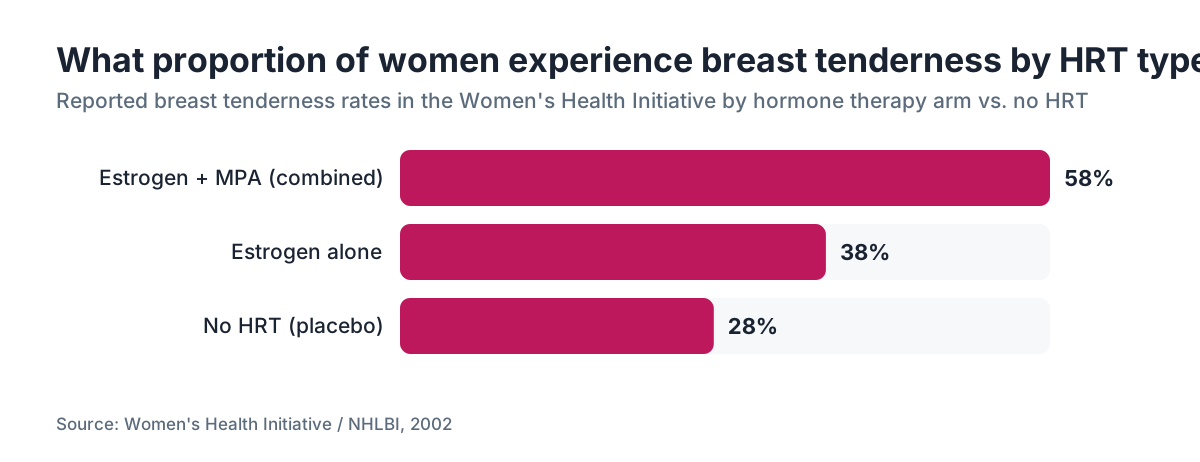
Estrogen alone, used by women who've had a hysterectomy, causes less breast tenderness than combined estrogen-plus-progestogen therapy. In the Women's Health Initiative, women on combined conjugated equine estrogen plus medroxyprogesterone acetate reported significantly more breast tenderness than those on estrogen alone. [6] The synthetic progestogen (MPA) looks like the main driver.
Micronized progesterone, which is bioidentical and comes in oral or vaginal forms, causes less breast tenderness than synthetic progestogens in most studies, though head-to-head data across every formulation are limited. [7] If you're on HRT and tenderness is a problem, asking your provider about switching to micronized progesterone is a reasonable conversation to have.
Transdermal estrogen through an estrogen patch or gel delivers steadier levels than oral estrogen, skipping the peaks that may aggravate breast symptoms. [11] Starting at the lowest effective dose and titrating up slowly also lowers the odds of tenderness as a side effect.
Breast tenderness from HRT often eases within two to three months as tissue adapts. If it hangs on past three months at the same dose, that's a signal to reassess the formulation instead of pushing through it.
WomenRx providers review hormone formulations with breast symptoms specifically in mind, adjusting progestogen type or delivery route before writing off therapy altogether.
Can GLP-1 medications like semaglutide affect breast tenderness?
There's no established direct mechanism by which GLP-1 receptor agonists like semaglutide cause breast tenderness. The FDA label for semaglutide (Ozempic, Wegovy) does not list breast tenderness as a reported adverse effect. [8]
That said, fast weight loss from any cause, GLP-1 therapy included, changes the fat makeup of the breast. Breast tissue is roughly 50 percent fat in many women, and dropping adipose tissue quickly can produce temporary soreness as the breast reorganizes. This usually resolves, and it isn't the same thing as hormonal mastalgia.
For women in perimenopause using semaglutide for weight loss, losing weight can actually lower circulating estrogen (fat tissue converts androgens to estrogen via aromatase), which may reduce estrogen-driven tenderness over time. On the flip side, rapid weight swings during an already volatile hormonal stretch can worsen symptoms in the short run.
If you're on a GLP-1 and notice new breast tenderness, put hormonal changes at the top of the suspect list, not the medication. Then mention it to your provider anyway.
What treatments actually reduce breast tenderness during perimenopause?
Here's what the evidence supports, ranked roughly by strength:
Supportive bra, worn by day and possibly at night. A well-fitted sports bra cuts movement-related pain. Small trials and a mountain of clinical experience back it as first-line. Cost: one fitting appointment.
Evening primrose oil (EPO). Contains gamma-linolenic acid, which may modulate prostaglandin pathways. A Cochrane-reviewed analysis found modest benefit for cyclic mastalgia. [9] Typical dose studied: 1 to 3 grams daily. Takes six to eight weeks to show anything. Not everyone responds.
Vitamin E. Some small trials suggest 400 IU daily reduces cyclic mastalgia, though data are mixed and high doses carry their own considerations.
Topical NSAIDs. Diclofenac gel applied to the breast has randomized trial support for reducing mastalgia with minimal systemic absorption. This is probably the most evidence-backed symptomatic treatment after bra fit. [2]
Oral NSAIDs or acetaminophen. Fine for acute flares, wrong as a long-term plan given GI and liver considerations.
Danazol. A synthetic androgen that suppresses estrogen and progesterone. FDA-approved for mastalgia and genuinely effective, but side effects (weight gain, acne, voice changes) limit its use. Reserved for severe, stubborn cases. [2]
Low-dose tamoxifen. 10 mg daily has been studied specifically for mastalgia. It works, but it carries its own risk profile and is generally saved for when other options fail.
Caffeine reduction. Modest evidence, minimal risk, worth a four-to-six-week trial.
Correcting vitamin D and iodine deficiency. Low-risk when the deficiency is documented.
What lacks good evidence: most herbal supplements beyond EPO, detox protocols, castor oil packs, and the bulk of products marketed for "breast health."
How do you tell the difference between hormonal breast pain and something that needs imaging?
Most perimenopausal tenderness hits both breasts, spreads diffusely or sits heaviest in the upper outer quadrant, and loosely tracks with cycle phase or hormonal events. It's been around a while, changes month to month, and travels with other perimenopausal symptoms like irregular cycles or hot flashes.
Features that should prompt an appointment and likely imaging:
- Pain clearly localized to one specific area that doesn't move with the cycle
- A palpable lump, even a tender one (tenderness does not rule out cancer)
- Skin changes: dimpling, redness, an orange-peel texture
- Nipple discharge, especially if it's spontaneous, from one duct, or bloody
- Pain that gets steadily worse over weeks regardless of cycle timing
- Any new breast symptom in a woman with prior breast cancer, atypical hyperplasia, or a BRCA mutation
The American College of Radiology recommends annual screening mammography starting at age 40 for average-risk women. [10] Ongoing tenderness doesn't change that schedule, but flag it at your mammogram so any dense or fibrocystic changes get noted.
For women in their late 40s and 50s also due for bone health monitoring, a bone density test is a separate but related step worth coordinating with your provider.
Does breast tenderness get better after menopause?
For most women, yes. The final period marks the point where estrogen stops surging and settles into a lower, steadier baseline. Without those swings, cyclic mastalgia usually improves a lot within one to two years of the final period. [1]
Women who start hormone therapy at menopause may briefly reawaken the tenderness, but as covered above, formulation choices keep it in check. Women who skip HRT generally find the tenderness resolves and stays resolved.
The exception is women with significant fibrocystic breast disease, whose structural tissue changes can cause ongoing low-grade discomfort no matter the cycle phase. This isn't dangerous, but it persists and deserves its own management plan.
New tenderness that starts after menopause, after years of no symptoms, is more concerning than perimenopausal tenderness and needs evaluation. New pain is a different clinical situation from ongoing perimenopausal pain.
Does breast size change during perimenopause and does that contribute to tenderness?
Yes on both counts. Breast composition shifts across the transition. As progesterone and estrogen fluctuate, glandular tissue cycles through waves of proliferation and regression. Over the full transition the net effect is often less glandular tissue and more fatty replacement, but it happens unevenly and over years.
In the short term, some women notice their breasts feel larger and heavier during high-estrogen phases of irregular cycles. That fullness is mostly fluid and glandular swelling, not permanent tissue gain. It can also make an existing bra feel tight and crank up the pain.
Weight changes common in perimenopause add another layer. Most women gain 5 to 10 pounds in the transition, driven partly by metabolic shifts and partly by declining muscle mass, and that does raise breast fat volume. A heavier breast pulls harder on Cooper's ligaments, the fibrous supports inside breast tissue, and that mechanical strain adds discomfort on top of the hormones.
To see the full picture of menopause and what's driving your particular symptoms, track your cycle, note when tenderness peaks, and log what else is going on (hot flashes, sleep changes, mood shifts). That gives your provider far more to work with than tenderness alone.
What should you tell your doctor about breast tenderness during perimenopause?
Bring three things to the appointment: a rough timeline of when the tenderness started or shifted, whether it tracks with your cycle at all even if cycles are irregular, and a full list of what you're taking, including supplements, hormonal contraception, and any herbal products.
Your doctor will likely ask about associated symptoms, family history of breast cancer or BRCA mutations, your last mammogram, and whether you're considering or already using hormone therapy. If prior mammography showed dense breasts, say so, because dense tissue is both more prone to tenderness and harder to read on standard mammography.
If you want to explore hormone therapy options, including whether switching to micronized progesterone or transdermal estrogen might ease your symptoms, that's exactly the conversation a menopause specialist or a telehealth platform like WomenRx is built for. The aim is to match the formulation to your symptom profile, not to run everyone through the same recipe.
Ask directly: Is my dose the lowest that would still control my other symptoms? Would a different progestogen type make sense? Is there a topical NSAID I could try for flares?
Frequently asked questions
Is breast tenderness a sign of perimenopause or should I be worried?
Bilateral tenderness that fluctuates with your (now irregular) cycle is a very common perimenopausal symptom, affecting up to 70% of women in the transition. It's usually hormonal, not dangerous. One-sided pain, a lump, skin changes, or nipple discharge are different and need prompt evaluation. If you're unsure, a clinical breast exam and an up-to-date mammogram give you a clear baseline.
Can breast tenderness during menopause be a sign of breast cancer?
Breast pain alone is rarely the first sign of breast cancer. Most cancers are painless, at least early on. Inflammatory breast cancer is the exception and can cause pain alongside warmth and redness. New, persistent, one-sided, or worsening pain deserves evaluation. Keeping current mammography screening is the most reliable safety net for average-risk women, starting at age 40.
Does hormone therapy make breast tenderness better or worse?
It depends on the type. Combined estrogen plus synthetic progestogens (like MPA) cause more breast tenderness than estrogen alone or estrogen combined with micronized progesterone. Transdermal delivery and lower doses also cause less tenderness than oral high-dose regimens. If HRT is causing tenderness, a formulation change usually beats stopping therapy entirely.
How long does breast tenderness last in perimenopause?
Perimenopause averages four to eight years, and breast tenderness can run through that whole window. Most women see clear improvement within one to two years after their final period, once estrogen settles at a lower baseline. Women on combined hormone therapy may have ongoing tenderness that usually calms within two to three months of a steady dose, or improves with a formulation switch.
What is the fastest way to relieve breast tenderness from hormonal changes?
The fastest reliable relief for acute pain is topical diclofenac gel, which has randomized trial support and minimal systemic absorption. A well-fitted sports bra gives immediate mechanical relief. Oral NSAIDs work for flares but aren't a daily plan. Evening primrose oil takes six to eight weeks. Caffeine reduction, if you drink a lot, can help within a few weeks.
Does breast tenderness get worse before periods stop completely?
Yes, for many women. In early perimenopause, estrogen surges can run higher than during normal cycles because the ovaries are working harder against rising FSH. Those elevated, erratic estrogen levels are the main driver of worsening tenderness. Once cycles become very infrequent and then stop, the surges stop too, and most women find the tenderness improves.
Can fibrocystic breasts cause more pain during perimenopause?
Yes. Fibrocystic breast changes, which include cysts and fibrous tissue, are hormone-sensitive. Perimenopausal estrogen swings can enlarge existing cysts and flare tender nodules. This isn't dangerous but it is uncomfortable. Fibrocystic changes don't raise cancer risk in most cases, though atypical hyperplasia found on biopsy does warrant closer monitoring.
Is evening primrose oil worth trying for breast tenderness?
Probably, with modest expectations. The evidence base is small but points in a positive direction for cyclic mastalgia. The typical dose studied is 1 to 3 grams daily, and it takes six to eight weeks to show an effect. Side effects are minimal. It's no replacement for medical evaluation, but it's a reasonable first step alongside bra fitting and caffeine reduction before escalating to prescriptions.
Does cutting out caffeine really help breast tenderness?
The evidence is observational rather than from clean randomized trials, so nobody can promise it works for you. Some women report clear improvement after four to six weeks of cutting coffee, tea, chocolate, and cola. The mechanism may involve methylxanthines sensitizing breast tissue. Since it costs nothing to try and has other health benefits, a six-week reduction is a reasonable experiment.
Can breast tenderness during perimenopause affect both breasts or just one?
Hormonal tenderness during perimenopause is almost always bilateral, meaning both breasts are involved, though one side may run more sensitive than the other. The pain tends to be diffuse, often heavier in the upper outer quadrant. Tenderness confined to one specific spot in one breast, especially if you can put a finger right on it, is more likely to have a structural cause and deserves imaging.
How do I know if my breast tenderness is from estrogen or progesterone?
Clinically you can't separate them without hormone testing, and even then the correlation is imperfect. In general, high-estrogen phases cause more fluid retention and fullness, while low or absent progesterone leaves estrogen unopposed and amplifies the effect. If you're on hormone therapy and tenderness is a problem, your provider can assess whether switching the progestogen component makes sense for your formulation and symptoms.
Should I stop hormone therapy if it causes breast tenderness?
Not right away. Breast tenderness from HRT often eases within two to three months as breast tissue adapts to steady hormone levels. Before stopping, talk to your provider about switching from a synthetic progestogen to micronized progesterone, lowering the estrogen dose, or trying transdermal instead of oral delivery. Stopping and restarting HRT repeatedly can itself trigger symptom swings.
What is the difference between cyclic and noncyclic breast pain and does it matter for treatment?
Cyclic mastalgia fluctuates with hormonal changes and is more common in perimenopause. It tends to respond better to hormonal interventions and lifestyle changes like caffeine reduction. Noncyclic mastalgia isn't tied to cycle phase, often sits in one spot, and more often has a structural cause like a cyst or a musculoskeletal issue. Treatment differs: noncyclic pain often responds better to topical NSAIDs and direct evaluation of the sore area.
When does menopause start and will my breast symptoms predict it?
Menopause, defined as 12 consecutive months without a period, hits at a median age of 51 in the US. Perimenopause typically begins four to eight years earlier. Breast tenderness alone doesn't predict timing, but it's one of many early perimenopausal symptoms alongside cycle irregularity, hot flashes, and sleep changes. See our article on when does menopause start for a fuller timeline.
Sources
- The Menopause Society (NAMS), Menopause Practice: A Clinician's Guide
- Cochrane Database of Systematic Reviews, Treatments for mastalgia
- Study of Women's Health Across the Nation (SWAN), University of Michigan Institute for Social Research
- Journal of the National Cancer Institute, Caffeine, cyclic nucleotides, and breast disease
- National Institutes of Health Office of Dietary Supplements, Iodine Fact Sheet
- Women's Health Initiative, JAMA 2002 (Rossouw et al.)
- Climacteric: Journal of the International Menopause Society, Progesterone and breast tenderness
- FDA, Wegovy (semaglutide) Prescribing Information
- Cochrane Database of Systematic Reviews, Evening primrose oil for mastalgia
- American College of Radiology, Breast Cancer Screening Guidelines
- Endocrine Society Clinical Practice Guidelines, Menopause Hormone Therapy
- National Cancer Institute, Breast Cancer Symptoms and Signs