Menopause age range: when it starts, peaks, and ends
TL;DR: Menopause, defined as 12 consecutive months without a period, happens on average at age 51 in the United States. The normal range is roughly 45 to 55. About 1% of women reach it before 40 (premature ovarian insufficiency), and perimenopause usually starts 4 to 8 years earlier. Your mother's timing is the single strongest clue to your own.
What is the normal age range for menopause?
The medically accepted normal range for menopause is 45 to 55 years old [1]. Within that window, the average age at the final menstrual period in the United States is 51 [1][2]. That number has barely budged across decades of data. The range around it is wide, though, so a woman who stops having periods at 46 and one who stops at 54 are both completely normal.
The North American Menopause Society defines menopause as the point confirmed after 12 consecutive months without a menstrual period, in the absence of other biological or physiological causes [1]. That 12-month mark is the official line. Before it, you are in perimenopause. After it, you are postmenopausal.
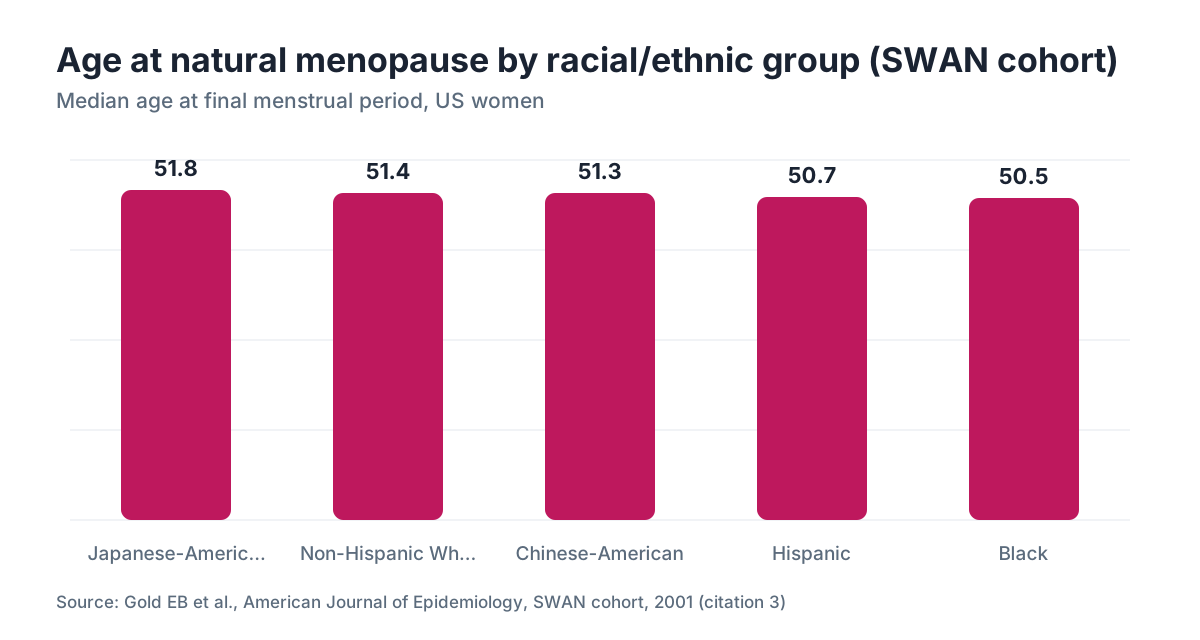
Age at menopause varies by population. A large analysis published in the American Journal of Epidemiology found that Black and Latina women in the SWAN study reached menopause slightly earlier than non-Hispanic white women, and Japanese-American women reached it slightly later, though all groups fell within the 45 to 55 window [3]. These differences matter clinically because earlier menopause means longer exposure to low estrogen and higher long-term cardiovascular and bone risk.
When does perimenopause start, and how long does it last?
Perimenopause, the transition leading up to the final period, usually begins in a woman's mid-to-late 40s, though it can start as early as the late 30s [1][2]. The average duration is 4 to 8 years. Some women move through it in 2 years; others stay in it for a decade [2].
The first sign is usually irregular periods. Cycles get shorter, then erratic, then increasingly spaced out. Hot flashes, broken sleep, and mood shifts often show up well before periods stop. This is the stage where many women feel the most, yet because occasional periods keep coming, some do not realize the transition has begun.
The SWAN (Study of Women's Health Across the Nation) cohort, which followed over 3,000 women across multiple racial and ethnic groups, found that the transition from early perimenopause to the final menstrual period took a median of 5.8 years [3]. Women who entered perimenopause earlier tended to have longer transitions. So if your periods start getting irregular at 43, you may be looking at a longer runway before you officially reach menopause.
For a detailed breakdown of what to expect and when, see perimenopause age.
What counts as early menopause versus premature menopause?
These two terms get swapped around, but they mean different things clinically.
Early menopause means the final menstrual period lands between ages 40 and 45. It affects roughly 5% of women [2]. The cause can be spontaneous (no identifiable reason), surgical (removal of both ovaries), or treatment-related (chemotherapy, pelvic radiation).
Premature menopause, more precisely called premature ovarian insufficiency (POI), means ovarian function declines before age 40. POI affects about 1% of women [2]. The Endocrine Society notes that POI differs from natural menopause because ovarian function can fluctuate rather than stop completely, which means some women with POI still ovulate occasionally and can become pregnant [4]. POI needs its own diagnostic workup, including FSH testing on at least two occasions at least one month apart, and it carries higher long-term risk for cardiovascular disease, osteoporosis, and mood disorders than later natural menopause [4].
If you stopped having periods before 45, the standard of care is a proper evaluation rather than an assumption that it is natural aging. A bone density test is also recommended at the time of early or premature menopause diagnosis, because bone loss speeds up sharply when estrogen drops early [4].
What factors shift your personal menopause timing earlier or later?
Genetics is the dominant driver. If your mother or older sisters reached menopause early, your odds of doing the same are meaningfully higher [2][3]. The SWAN data showed that mother's age at menopause was one of the strongest predictors in the entire dataset [3].
Smoking pulls the timing earlier, every time researchers look. Smokers reach menopause on average 1 to 2 years earlier than nonsmokers, a finding replicated across multiple large cohort studies [3]. The mechanism is thought to involve toxic effects on ovarian follicles and altered estrogen metabolism.
Body composition nudges in the opposite direction. Higher body fat is associated with slightly later menopause, because fat tissue converts androgens to estrogen through the aromatase enzyme, adding a small amount of circulating estrogen. Thinner women tend to reach menopause a bit earlier on average, though the effect is small [3].
Other factors that may pull timing earlier: never having been pregnant, certain autoimmune conditions (thyroid disease, rheumatoid arthritis), a history of eating disorders, and certain genetic variants including FMR1 premutations (linked to fragile X syndrome) [4]. Factors that do not reliably shift timing despite popular belief include oral contraceptive use and the age at which you got your first period.
Surgical menopause is its own category. Bilateral oophorectomy (removal of both ovaries) causes immediate surgical menopause regardless of age. Hysterectomy alone, without removing the ovaries, ends periods but does not technically cause menopause, though some research suggests ovarian function may decline somewhat faster after hysterectomy [2].
How do doctors confirm menopause, and what lab tests are used?
For a woman in the expected age range (45 to 55) with 12 consecutive months of no periods, menopause is a clinical diagnosis. No lab test is required [1][2].
FSH (follicle-stimulating hormone) and estradiol get checked sometimes, but neither is definitive on its own. FSH above 30 mIU/mL is consistent with menopause, yet FSH swings wildly during perimenopause, and a single high reading does not confirm anything [2]. Same with low estradiol. These labs earn their keep in women under 45, where you need to rule out POI or other causes of missed periods.
Thyroid function testing (TSH) is worth ordering alongside any hormonal workup because hypothyroidism and perimenopause share symptoms: irregular periods, fatigue, weight changes, mood disturbance. Missing a thyroid problem while blaming everything on menopause is a common, avoidable mistake.
AMH (anti-Mullerian hormone) shows up more in research and fertility clinics to estimate ovarian reserve, but it is not a standard clinical tool for confirming menopause. It can read very low or undetectable years before the final period, so it does not tell you exactly when menopause will arrive [2].
How does menopause age affect long-term health risks?
Earlier menopause means more years without estrogen's protective effects, and that has measurable consequences. Women who reach natural menopause before 45 have higher rates of cardiovascular disease, osteoporosis, cognitive decline, and all-cause mortality than women who reach it closer to 51 [4][5].
The cardiovascular risk is real. Estrogen has well-documented effects on lipid profiles, vascular tone, and inflammation. The Endocrine Society's clinical practice guideline on POI states that estrogen-progestogen therapy should be offered to women with early or premature menopause to reduce cardiovascular risk, at least until the average age of natural menopause [4].
Bone loss speeds up sharply at menopause. In the first 5 to 7 years after the final period, women lose 2 to 3% of bone mineral density per year, compared to roughly 0.5 to 1% per year before that [5]. Women with earlier menopause pile up more years of that accelerated loss. This is why a bone density test is recommended at diagnosis of early or premature menopause rather than at the standard screening age of 65.
Later menopause has its own risk profile. Women who reach menopause after 55 carry modestly higher risks of breast cancer and endometrial cancer, likely from prolonged lifetime estrogen exposure [2]. That does not mean earlier is better. It means timing has real clinical weight in both directions, and it shapes how aggressively symptoms get managed and for how long.
During the menopause transition, hormone replacement therapy remains the most effective treatment for vasomotor symptoms and is the standard of care for managing long-term risk in women with early or premature menopause [4][6].
Does race and ethnicity affect when menopause happens?
Yes, and the differences are more than statistical noise. The SWAN study, still the most thorough multi-ethnic cohort on this question, found that Black women reached natural menopause on average 8.5 months earlier than non-Hispanic white women, and Hispanic women reached it about 6 months earlier [3]. Japanese-American and Chinese-American women in the cohort tended toward slightly later timing.
These differences held even after adjusting for smoking, BMI, parity, and education, which points to genetic and possibly environmental factors beyond lifestyle. The SWAN report noted: "African American women had an earlier age at the final menstrual period than European American women" across the full dataset [3].
Race and ethnicity also affect symptom burden. Black women in SWAN reported more hot flashes and more severe vasomotor symptoms than white women, and were less likely to have received hormone therapy for those symptoms. That disparity has real health consequences over time.
These findings matter for clinical care. A Black woman with perimenopausal symptoms at 43 is not statistically unusual, and her clinician should not wait until she is 48 to take her seriously.
What symptoms signal that menopause is approaching?
The textbook list is familiar: hot flashes, night sweats, irregular periods, vaginal dryness, sleep problems, mood changes, and brain fog. Timing and intensity vary enormously. Some women barely notice perimenopause. Others are significantly impaired.
The symptom that most reliably flags the transition is menstrual irregularity. Before periods stop, cycles typically shorten (less than 25 days) first, then turn variable, then stretch out and thin out [1][2]. A gap of 60 or more days between periods marks late perimenopause, statistically within about 1 to 3 years of the final period [10].
Hot flashes affect about 75% of women in Western countries during the transition [6]. Their median duration, per SWAN, is 7 to 10 years, not the 2 to 3 years older guidelines suggested. A subset of women have symptoms deep into their 60s.
Genitourinary syndrome of menopause (GSM), which covers vaginal dryness, discomfort with sex, and urinary symptoms, is underreported and undertreated. Unlike hot flashes, it does not tend to fade with time. It often worsens without treatment.
Sleep disruption is among the most functionally punishing symptoms and is often driven by night sweats, though it can happen on its own. Mood changes and cognitive complaints (word-finding trouble, poor concentration) are common during perimenopause and improve after the final period for most women, though not all.
For a broader overview of the full transition, the menopause section of this site covers symptoms, staging, and management in depth.
What is the average age of menopause by country, and does it differ globally?
The US average of 51 lines up with other high-income countries. European data from the Netherlands, UK, and Scandinavia show similar median ages of 50 to 52 [2]. The World Health Organization cites a global range of roughly 45 to 55, with some variation in lower-income countries.
Studies from South Asia and parts of sub-Saharan Africa have reported slightly lower median ages (around 47 to 49), though differences in how menopause gets confirmed make direct comparisons tricky. Nutritional status, lifetime reproductive patterns, and healthcare access all likely feed into the international spread.
Despite the variation, the 45 to 55 range holds as the global normal across most populations studied. A woman in her mid-40s with perimenopausal changes is within normal range in nearly every country where data exist.
Is menopause getting later because women live longer?
It is a reasonable guess, and the evidence does not really back it. Age at menopause has not shifted meaningfully over the past century despite dramatic gains in life expectancy [2]. Women in 1900 who survived to midlife reached menopause at roughly the same age as women today. Longer life spans added years after menopause, not before it.
What has changed is how many decades women spend postmenopausal. In 1900, average life expectancy for a woman who reached 50 was perhaps 70 to 72 years. Today it is closer to 84 to 86 [7]. So a woman reaching menopause at 51 now has roughly 35 years of postmenopausal life ahead of her. The decisions made around menopause, whether to use hormone therapy, how aggressively to protect bone, how seriously to take cardiovascular risk, carry consequences across a much longer stretch than they did for previous generations.
This longer postmenopausal life span is part of why the hormone therapy conversation has shifted. A 51-year-old starting hormone replacement therapy is not making a short-term symptom decision. She is making a choice that may shape 30-plus years of health.
How does menopause age interact with weight and metabolic health?
The transition brings a shift in where fat sits, even in women whose total weight holds steady. Estrogen loss speeds up the buildup of visceral (abdominal) fat, which carries higher metabolic and cardiovascular risk than fat on the hips and thighs [6]. This happens independently of aging and independently of what you eat.
Weight gain during perimenopause and early postmenopause is common, and it is not simply about eating more or moving less. Metabolic rate changes, insulin sensitivity drops, and the body's set point for fat storage shifts. Average weight gain during the transition runs about 1.5 kg (roughly 3 pounds) per year in midlife women, though some gain much more and some gain none [6].
For women fighting weight gain tied to the transition, GLP-1 receptor agonists have shown real efficacy in this population. The SURMOUNT-1 trial of tirzepatide enrolled a large share of postmenopausal women and showed average weight reduction of 20.9% at 72 weeks in the highest dose group [8]. Some clinicians, including at WomenRx, now offer GLP-1 therapy alongside hormone management for women dealing with both menopausal symptoms and metabolic changes.
For more on GLP-1 options, semaglutide for weight loss covers the evidence, dosing, and practical considerations in detail.
Bone and metabolic health are tied together. The same hormonal changes that redistribute fat also speed bone loss, raise LDL cholesterol, and lower HDL, which makes the first years after menopause a narrow window for preventive action.
What should you do if you think you are approaching menopause?
Start by tracking your cycle. Note cycle length, any skipped periods, and when symptoms like hot flashes or broken sleep began. This detail helps your clinician stage where you are in the transition and guides decisions about whether and when to start treatment.
If you are under 45 and your periods have turned irregular or stopped, do not wait. Get a proper workup. FSH, estradiol, TSH, and in some cases prolactin are reasonable starting points. Early or premature menopause needs different management than natural menopause at the average age, including consideration of hormone therapy to protect bone and cardiovascular health even without bothersome symptoms [4].
If you are in the normal age range with classic symptoms, the first conversation with a clinician is whether treatment makes sense for you. Hormone therapy is the most effective option for vasomotor symptoms and has a favorable risk-benefit profile for healthy women under 60 or within 10 years of menopause onset, according to the 2022 NAMS hormone therapy position statement [6]. Options include an estrogen patch, oral estrogen, vaginal preparations, and combined estrogen plus progesterone for women with a uterus.
Where hormone therapy is not appropriate or not wanted, nonhormonal prescription options include fezolinetant (FDA-approved in 2023 specifically for vasomotor symptoms), certain SSRIs and SNRIs at low doses, and gabapentin [9]. None match the overall efficacy of hormone therapy across the full set of menopause symptoms, but they are real options.
The when does menopause start guide walks through the early signs in more detail if you are trying to figure out where you are in the transition right now.
Frequently asked questions
What is the average age of menopause in the United States?
The average age at the final menstrual period in the US is 51, with a normal range of 45 to 55. This figure comes from decades of population data and has not shifted meaningfully over time. Most women who reach menopause outside that range, meaning before 45 or after 55, warrant a clinical evaluation to understand the cause.
Can menopause happen at 40?
Yes, but it is not typical. Menopause before 40 is classified as premature ovarian insufficiency (POI) and affects about 1% of women. Menopause between 40 and 45 is called early menopause and affects roughly 5%. Both need proper evaluation, including FSH testing, and both carry higher long-term risk for bone loss and cardiovascular disease if not managed.
How long does perimenopause last before menopause?
Perimenopause lasts an average of 4 to 8 years, though the range is wide. The SWAN cohort found a median of about 5.8 years from the start of irregular cycles to the final period. Women who begin perimenopause earlier tend to have longer transitions. Symptoms, particularly hot flashes and sleep disruption, often start years before periods stop.
Is menopause at 45 considered early?
Technically yes, 45 sits at the lower edge of the normal range. Menopause between 40 and 45 is defined as early menopause. It is not uncommon, affecting about 5% of women, but it merits attention. Women who reach menopause at 45 should discuss bone health, cardiovascular risk, and hormone therapy options with their clinician, since they face more years of low estrogen than women who reach it at 51.
Does smoking affect the age you go through menopause?
Consistently, yes. Smokers reach menopause on average 1 to 2 years earlier than nonsmokers. The effect appears dose-related: heavier, longer-term smokers show the greatest shift. The likely mechanism involves direct toxic effects of cigarette components on ovarian follicles and changes in how the body metabolizes estrogen. Quitting does not undo earlier ovarian aging but reduces other health risks significantly.
Can you get pregnant during perimenopause?
Yes. Ovulation still happens during perimenopause, even when cycles are irregular. Pregnancy is possible until menopause is confirmed (12 consecutive months without a period). The odds of conceiving naturally drop sharply in the mid-40s, but they do not reach zero. Women who do not want to become pregnant should keep using contraception throughout perimenopause.
Does the age your mother went through menopause predict yours?
It is the strongest single predictor we have. Large studies including the SWAN cohort consistently show that maternal age at menopause is significantly associated with a daughter's age at menopause. It is not perfectly predictive, and factors like smoking can pull your timing earlier, but if your mother and older sisters all had early menopause, your probability of experiencing it early is meaningfully above average.
What blood tests confirm menopause?
For women aged 45 to 55 with 12 consecutive months of no periods, no lab test is needed. It is a clinical diagnosis. For women under 45, FSH above 30 mIU/mL on two separate tests at least one month apart, combined with low estradiol and absent periods, supports a diagnosis of premature ovarian insufficiency. A single FSH test is not reliable because levels fluctuate during perimenopause.
What is the difference between surgical menopause and natural menopause?
Surgical menopause results from removal of both ovaries (bilateral oophorectomy) and causes an immediate, abrupt drop in estrogen at any age. Natural menopause is a gradual process over several years. Surgical menopause tends to bring more intense vasomotor symptoms because the hormonal shift is sudden. Women who have surgical menopause before the natural age face significantly elevated long-term risk for cardiovascular disease, bone loss, and cognitive changes.
Does late menopause (after 55) increase cancer risk?
Modestly. Women who reach natural menopause after 55 have a somewhat higher lifetime risk of breast cancer and endometrial cancer, attributed to longer cumulative estrogen exposure. The absolute increase is small. Late menopause also appears to protect bones and the cardiovascular system through extended estrogen exposure. The tradeoff is real but is not a reason to induce menopause artificially.
How long do menopause symptoms like hot flashes last?
Longer than most women are told. Older guidelines said 2 to 3 years, but the SWAN data show a median duration of 7 to 10 years for hot flashes. About 10 to 15% of women have significant hot flashes into their 60s and beyond. Women who develop hot flashes earlier in the transition tend to have them for longer. This durability of symptoms is one reason many clinicians now support extended hormone therapy for eligible women.
Can you be in menopause and not have hot flashes?
Yes. Hot flashes affect about 75% of women in Western populations, which means roughly 1 in 4 reach menopause without them or with very mild ones. Asian women, particularly Japanese women, have historically reported lower rates, though rates in Japanese-American women in the SWAN study came closer to those of white women, suggesting diet and environment may contribute alongside genetics.
Does menopause age affect dementia risk?
Earlier menopause is associated with a modestly higher risk of cognitive decline and dementia later in life, according to observational data. The proposed mechanism is the loss of estrogen's neuroprotective effects over a longer postmenopausal period. Some studies suggest hormone therapy started around the time of menopause (the so-called 'critical window') may preserve cognitive function, but the evidence is not strong enough to use dementia prevention as a standalone reason to start it.
Is weight gain inevitable during menopause?
Weight gain during the transition is very common but not strictly inevitable. The shift toward visceral fat is largely driven by estrogen loss and happens even in women who do not gain total weight. Studies show average weight gain of about 1.5 kg per year during midlife, independent of caloric changes. Hormone therapy can partly offset fat redistribution. Structured lifestyle changes and, for some women, GLP-1 receptor agonist therapy can address the metabolic side.
Sources
- North American Menopause Society (NAMS), Menopause 101: A Primer for the Perimenopausal Woman
- Office on Women's Health, U.S. Department of Health and Human Services, Menopause overview
- Gold EB et al., Factors Associated with Age at Natural Menopause in a Multiethnic Sample of Midlife Women, SWAN cohort, American Journal of Epidemiology, 2001
- Endocrine Society Clinical Practice Guideline: Premature Ovarian Insufficiency, Journal of Clinical Endocrinology and Metabolism, 2016
- Bone Health and Osteoporosis Foundation (formerly National Osteoporosis Foundation), Bone loss after menopause
- The 2022 Hormone Therapy Position Statement of The North American Menopause Society, Menopause, 2022
- National Center for Health Statistics, CDC, Life Expectancy at 50 years, United States
- Jastreboff AM et al., Tirzepatide Once Weekly for the Treatment of Obesity, SURMOUNT-1 trial, New England Journal of Medicine, 2022
- U.S. FDA, Drug Approval Package: Veozah (fezolinetant) for vasomotor symptoms due to menopause, 2023
- Harlow SD et al., Executive Summary of the Stages of Reproductive Aging Workshop (STRAW+10), Menopause, 2012