Menopause age calculator: when will you reach menopause?
TL;DR: The average age of natural menopause in the United States is 51, with most women reaching it somewhere between 45 and 55. Your mother's age at menopause is the single strongest predictor. Smoking, certain surgeries, chemotherapy, and genetic conditions can move that date earlier by two to four years. No calculator is perfectly accurate, but knowing your risk factors lets you prepare before symptoms hit.
What is a menopause age calculator and how accurate is it?
A menopause age calculator takes your personal risk factors and compares them against population data to estimate when you will have your final menstrual period. That moment, confirmed only after 12 consecutive months without a period, is the clinical definition of menopause [1].
Here is the honest truth about accuracy: no calculator can tell you the exact year. What they can do is flag whether your pattern of factors puts you in an early, average, or late category. The strongest single input is your mother's age at her last period, because genetic heritability for age at natural menopause runs somewhere around 50 percent in twin studies [2]. Environment, lifestyle, body composition, and medical history account for the other half.
Most reputable calculators ask about six to ten variables: current age, cycle regularity, smoking history, body mass index, race or ethnicity, prior ovarian surgery, cancer treatment history, and whether you have had a hysterectomy. Each has a measurable effect size backed by population data. A calculator that asks only your birthday and nothing else is not worth your time.
The output is a probability range, not a date on a calendar. Think of it the way you would a weather forecast: useful for planning, not a guarantee.
What is the average age of menopause in the United States?
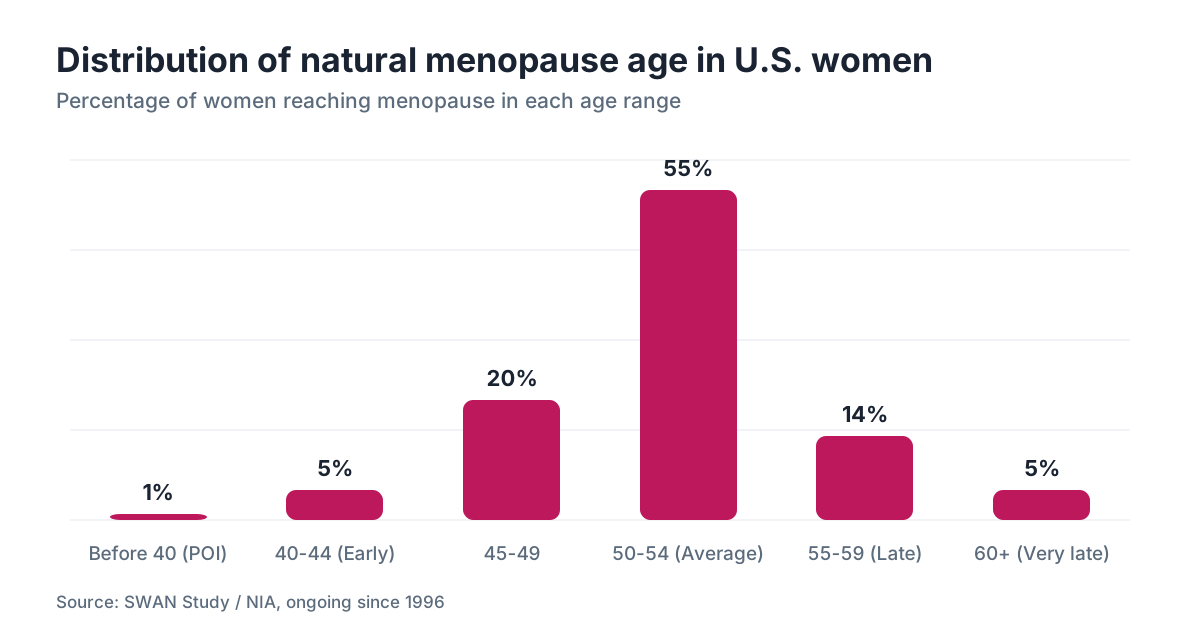
The median age at natural menopause for U.S. women is 51.4 years, based on the Study of Women's Health Across the Nation (SWAN), a long-running multisite cohort that has followed more than 3,300 women since 1996 [3]. The normal range spans roughly 45 to 55. Anything before 45 is considered early menopause; before 40 is premature ovarian insufficiency (POI) [9].
Race and ethnicity shift those averages meaningfully. SWAN data shows Black women reach menopause about 8.5 months earlier than white women on average, and Hispanic women reach it slightly earlier as well. Japanese American and Chinese American women in the same cohort tended to reach menopause slightly later [3]. These gaps are real and consistent across multiple datasets, which is why any good risk model accounts for ethnicity.
About one percent of U.S. women experience POI, reaching menopause before 40 [9]. Another five percent reach early menopause between 40 and 45. At the other end, roughly five percent of women still have periods past 55, which is considered late menopause [1].
For context, see the breakdown below.
What factors predict your personal menopause age?
Several factors have solid evidence behind them. Here is what actually moves the needle.
Genetics and family history. Your mother's age at natural menopause is the most predictive input in any calculator. If she reached menopause at 47, your odds of an early transition rise substantially. Sisters' ages matter too, particularly if multiple family members share the same pattern [2].
Smoking. This is the most well-documented lifestyle factor. Current smokers reach menopause one to two years earlier than nonsmokers on average, and the effect is dose-dependent: heavier smokers skew earlier [4]. Smoking damages ovarian follicles through oxidative stress and reduces estrogen metabolism.
Body weight. This one cuts both ways. Women with very low body fat (BMI under 18.5) tend toward earlier menopause, because adipose tissue produces estrogens that buffer the transition. Obesity is associated with later menopause in some studies, though the effect size is modest and the data are mixed [3].
Parity. Having had two or more pregnancies is associated with slightly later menopause in several large cohorts. The mechanism likely involves fewer ovulatory cycles across a lifetime, which may preserve follicle reserve.
Oral contraceptive use. Long-term pill use does not meaningfully change menopause age. Some older studies suggested a modest delay, but the effect is not consistent across populations.
Prior ovarian surgery. Even a cyst removal or endometriosis excision that leaves the ovary in place can reduce ovarian reserve and move menopause earlier, sometimes by several years depending on the extent of the procedure.
Chemotherapy and radiation. Alkylating agents and pelvic radiation are particularly damaging to the ovaries. The risk depends on the drugs used, the dose, and your age at treatment. Some women experience immediate ovarian failure; others recover temporarily but reach menopause earlier than expected [1].
Autoimmune conditions. Thyroid autoimmunity and other autoimmune disorders raise the risk of POI. If you have Hashimoto's or another autoimmune condition, mention it to your gynecologist when discussing timing.
Chromosome abnormalities. Turner syndrome (45,X) and fragile X premutation carriers have substantially higher rates of POI. Genetic testing can identify these risks years before symptoms appear [2].
How do you use your risk factors to estimate your menopause age?
Start with the population median: 51.4 years [3]. Then apply the adjustments below based on your personal profile.
| Factor | Estimated effect on menopause age | |---|---| | Current smoker (heavy) | 1 to 2 years earlier | | Former smoker | 0.5 to 1 year earlier | | Mother reached menopause before 46 | 1 to 3 years earlier | | Prior ovarian surgery | 1 to 4 years earlier (varies widely) | | Chemotherapy with alkylating agents | 2 to 10 years earlier or immediate POI | | BMI under 18.5 | ~1 year earlier | | Black race (SWAN data) | ~0.7 years earlier | | Two or more full-term pregnancies | ~0.5 to 1 year later | | BMI over 30 | possible slight delay, weak evidence |
These are population averages, not certainties. Add them up loosely. If your mother quit her periods at 46, you smoke a pack a day, and you had one ovary partly resected for endometriosis, you might reasonably plan for perimenopause to start in your late 30s to early 40s rather than the population-average late 40s.
The earliest reliable biological signal is your Anti-Mullerian hormone (AMH) level, a blood test that reflects ovarian reserve. AMH falls with age, and a level that is low for your age bracket suggests your follicle pool is declining faster than average. AMH is not a perfect predictor of menopause timing on its own, but combined with your risk factor profile it is the most actionable lab value available [5].
FSH (follicle-stimulating hormone) is the other commonly ordered test. An FSH consistently above 40 mIU/mL on two separate blood draws, taken at least a month apart, meets the laboratory threshold for menopause in a woman who has also been period-free for 12 months [10]. FSH levels during perimenopause swing wildly day to day, so a single elevated result means little on its own.
What is perimenopause and when does it usually start?
Perimenopause is the transition leading up to your final period. It is not a single moment. It is a multi-year process that the North American Menopause Society (NAMS) defines as beginning when you first notice changes in cycle length or other hormonal symptoms and ending 12 months after your last period [1].
Most women enter perimenopause in their mid- to late 40s. The average duration is four to eight years, though it can be as short as one year or as long as a decade [1]. For a woman who reaches menopause at 51, that puts the start of perimenopause somewhere around 43 to 47.
The hallmark early signs are irregular cycles (either shorter or longer than your usual pattern), changes in flow, and the first hot flashes or night sweats. Sleep disruption often comes before hot flashes, which means the transition can be underway before you recognize it as hormonal.
For a detailed breakdown of the timeline and what to expect year by year, see our article on perimenopause age.
If you want more on what changes clinically, the menopause hub covers the physiology in depth.
Does your menstrual cycle history predict when you will reach menopause?
Yes, and this is underappreciated. Women with naturally shorter cycles (25 days or fewer in their 20s and 30s) tend to reach menopause earlier than women with longer cycles. SWAN data showed that women reporting short cycles in midlife had a significantly higher risk of earlier menopause [3].
Heavy or prolonged bleeding during perimenopause does not predict timing the same way. Heavy bleeding in perimenopause is driven by anovulatory cycles and estrogen excess relative to progesterone, not by how much follicle reserve you have left. So more bleeding does not mean more time.
Skipped periods, on the other hand, are a stronger signal of progression toward menopause. When gaps between periods stretch to 60 days or more, you are in late perimenopause by the STRAW (Stages of Reproductive Aging Workshop) staging system, and the median time to your final period from that point is about one to three years [6].
Tracking your cycle length over years, not months, gives you the most signal. If you have kept a period diary or used a tracking app, go back and look at the trend starting in your late 30s. A consistent shortening trend is meaningful.
Does early or late menopause affect your health risks differently?
Timing matters clinically, more than it does for family planning.
Early menopause (before 45) and POI (before 40). Earlier estrogen withdrawal means a longer window of estrogen deficiency before the age when cardiovascular disease and osteoporosis risks normally rise. Women with POI carry higher risks of cardiovascular disease, osteoporosis, and cognitive decline than women who reach menopause at the average age [1]. NAMS recommends that women with POI consider hormone therapy at least until the average age of menopause (51) unless there is a specific contraindication, because replacement in that setting is physiological replacement, not supplementation [1][10].
Late menopause (after 55). Later natural menopause is associated with a modestly higher risk of breast cancer and endometrial cancer, because of longer lifetime exposure to estrogen. It also tends to come with better bone density, lower cardiovascular risk, and in some studies better cognitive aging. Late menopause is not something to treat. It simply changes which screening priorities you discuss with your doctor.
A bone density test makes sense for women who reach menopause early, within a few years of their final period, given the accelerated bone loss in the first two to three years post-menopause.
For women considering hormone therapy because of early menopause or significant symptoms, the evidence base for hormone replacement therapy is strongest in the under-60 or within-10-years-of-menopause window.
Can labs and genetic testing tell you when you will reach menopause?
AMH is the most clinically actionable lab test for estimating your ovarian reserve. Reference ranges vary by lab, but in general an AMH below 1.0 ng/mL for a woman in her early 40s suggests diminished reserve; below 0.5 ng/mL suggests very limited reserve [5]. Some fertility clinics use percentile tables by age, which are more precise than simple cut-points.
AMH does not predict the exact year of your final period, but a low-for-age result combined with your risk factor profile gives a reasonable basis for expecting an earlier-than-average transition. A normal-for-age AMH does not guarantee you will hit 51. It just removes one concerning signal.
Genetic testing is more niche but genuinely useful in specific situations. If you have a first-degree relative with premature ovarian insufficiency, or a known fragile X carrier in the family, testing for FMR1 premutation is worthwhile. Carriers of the fragile X premutation have a 20 to 30 percent lifetime risk of POI, compared to roughly one percent in the general population [2].
Polygenic risk scores for age at menopause exist in research settings, based on genome-wide association studies that have identified more than 200 genetic loci associated with menopause timing [2]. These are not yet standard clinical tools, but they will likely be in the next decade.
Inhibin B is another ovarian reserve marker, but it is less standardized and less commonly ordered than AMH, so it adds little in most clinical settings.
How does surgical menopause differ from natural menopause, and how do you calculate its timing?
Surgical menopause is not gradual. When both ovaries are removed (bilateral oophorectomy), estrogen, progesterone, and testosterone levels drop within 24 to 48 hours. There is no perimenopause runway. Symptoms, particularly hot flashes, tend to hit harder and faster than in natural menopause, and the cardiovascular and bone risks of estrogen withdrawal begin immediately [1].
There is no calculator for surgical menopause: the timing is the date of surgery. What matters after that is how quickly hormonal support is started and for how long. NAMS guidance states that women who undergo oophorectomy before the natural age of menopause and who have no hormone-sensitive cancer should generally receive hormone therapy until at least age 51 [1].
A hysterectomy that leaves the ovaries does not cause menopause, but it does complicate the diagnosis: you will never have a final period to count from. In that case, symptoms and hormone levels (FSH, AMH) are the only way to gauge where you are in the transition.
Women who have had a hysterectomy with ovaries intact reach ovarian failure about one to two years earlier on average than women with intact uteri, possibly because uterine blood supply to the ovaries is partially disrupted during surgery.
What role does weight change and GLP-1 therapy play near menopause?
Weight gain during perimenopause is real and documented. The SWAN study found that women gain an average of 1.5 pounds per year during the menopausal transition, independent of aging effects [3]. Fat distribution shifts centrally: visceral fat increases even in women whose total weight stays stable. That shift raises insulin resistance, cardiovascular risk, and inflammatory markers.
GLP-1 receptor agonists (semaglutide, tirzepatide) have become a common option for women trying to address perimenopausal weight gain that has not responded to diet and exercise. The STEP 1 trial of semaglutide showed a mean body weight reduction of 14.9 percent over 68 weeks in adults with obesity or overweight with a weight-related condition [7]. The SURMOUNT-1 trial of tirzepatide showed reductions ranging from 15 to 20.9 percent depending on dose [8].
One thing worth knowing: estrogen deficiency itself drives fat redistribution, so GLP-1 therapy without hormone therapy addresses the symptom (weight) but not the underlying hormonal driver. Many women benefit from both. For a comparison of the two leading GLP-1 options, see semaglutide vs tirzepatide.
If you are exploring whether a GLP-1 might fit your perimenopause or menopause care plan, a telehealth practice like WomenRx that handles both hormone therapy and GLP-1 prescribing can look at the full picture rather than treating weight and hormones in separate silos.
For more on semaglutide for weight loss specifically, that article goes deep on dosing, side effects, and who is a realistic candidate.
What symptoms signal that perimenopause or menopause is starting?
The classic symptom list is well known, but the order of appearance surprises many women.
Sleep disruption and mood changes often arrive first, before hot flashes, in early perimenopause. Many women report fragmented sleep and heightened anxiety or irritability starting in their early to mid-40s and chalk it up to life stress rather than hormones. That guess is sometimes wrong.
Hot flashes and night sweats are the most recognized symptoms, affecting about 75 percent of women at some point during the transition [1]. For most, they peak in the year or two around the final period and then gradually diminish. For roughly 10 to 15 percent of women they persist for 10 or more years.
Vaginal dryness and genitourinary symptoms tend to worsen over time because, unlike hot flashes, they do not self-resolve as the body adjusts. The genitourinary syndrome of menopause (GSM) affects an estimated 45 percent of postmenopausal women and includes dryness, irritation, pain with intercourse, and urinary urgency [1].
Cognitive changes, particularly word-finding difficulties and memory lapses, are reported by many women during perimenopause. These are typically transient and improve after the transition stabilizes, though they are distressing in the moment.
Joint pain, heart palpitations, and skin changes (thinning, dryness) are less discussed but commonly reported. If your symptom picture is complex, tracking symptoms in relation to your cycle stage helps your clinician tell what is perimenopause from what might need separate investigation.
For women considering progesterone for sleep and cycle irregularity, the progesterone article covers what the evidence supports.
When should you see a doctor about your menopause timing?
See a clinician sooner rather than later if:
You are under 40 and your periods have become irregular or stopped. POI needs evaluation, not watchful waiting, because the cardiovascular and bone consequences of untreated estrogen deficiency at that age are significant [1].
You are between 40 and 45 with a strong family history of early menopause and you are thinking about future fertility. AMH testing and a referral to a reproductive endocrinologist are worth doing now, while there may still be options.
Your symptoms are severe enough to affect sleep, work, or relationships. Moderate to severe vasomotor symptoms have good treatment options. Waiting them out is not the only choice.
You have had cancer treatment that involved alkylating chemotherapy or pelvic radiation. Your oncologist may have addressed ovarian function, but if not, a gynecologist who specializes in survivorship care should be part of your team.
You are approaching 51 and have had a hysterectomy without oophorectomy. Since you cannot track your last period, periodic FSH and AMH testing every one to two years helps you understand where you are in the transition.
For women who want a clear framework on the medical side of the transition, the when does menopause start and menopause age articles are good starting points before your appointment.
Frequently asked questions
Is there a free menopause age calculator I can use online?
Several exist, but quality varies. The Menopause Rating Scale and tools based on SWAN data are the most grounded. Any calculator that asks only your age is too simplistic to be useful. The Menopause Society (formerly NAMS) website offers educational resources, and some fertility clinics provide AMH-based ovarian reserve estimates that, combined with your risk factors, give a more personalized picture than a basic online tool.
What is the youngest age at which menopause can naturally occur?
Technically, premature ovarian insufficiency (POI) can occur in the teenage years or early 20s, though that is rare. By definition, any cessation of ovarian function before age 40 is POI. It affects roughly one percent of women. Turner syndrome and fragile X premutation are the most common identifiable causes in very young women. POI at any age warrants evaluation and usually hormone therapy until at least age 51.
Does my race or ethnicity affect when I will reach menopause?
Yes. The SWAN study found that Black women reach menopause about 8.5 months earlier than white women on average, and Hispanic women also tend to transition slightly earlier. Japanese American and Chinese American women in the cohort trended slightly later. These differences persist even after adjusting for smoking, BMI, and socioeconomic factors, suggesting a genuine biological component, though social and environmental stressors likely contribute as well.
Can stress cause early menopause?
Chronic psychological stress has been associated with earlier menopause in some observational studies, but the effect size is small and causality is hard to establish. Stress can disrupt the hypothalamic-pituitary-ovarian axis and cause temporary cycle irregularity, but it is unlikely to be a primary driver of early menopause on its own. Severe physical stress, like extreme underweight or intense athletic training, has a stronger documented effect on ovarian function.
Does breastfeeding change when you will reach menopause?
No meaningful evidence supports that breastfeeding delays or accelerates menopause. It suppresses ovulation temporarily during lactational amenorrhea, but this does not appear to preserve the follicle pool in a way that shifts long-term menopause timing. Parity (the number of full-term pregnancies) has a modest association with slightly later menopause, but breastfeeding duration specifically has not been shown to be an independent factor.
What is the difference between perimenopause and menopause?
Perimenopause is the transitional phase before your final period, typically lasting four to eight years, during which hormone levels fluctuate and symptoms begin. Menopause is a single point in time: the 12-month anniversary of your last menstrual period. Everything after that point is postmenopause. Many women use 'menopause' to describe all of it, which is common usage, but clinically the distinction matters when discussing treatment timing.
Will hormone replacement therapy delay my menopause?
No. Hormone therapy manages symptoms but does not preserve ovarian follicles or push back the biological clock on ovarian function. When you stop hormone therapy, your underlying hormonal status is the same as it would have been without it. One practical consequence: women on combined HRT may have breakthrough bleeding that makes it hard to know when their actual final period was, which is something to discuss with your prescriber when transitioning off therapy.
How do I know if I am in perimenopause if my periods are still regular?
Regular periods do not rule out early perimenopause. Changes in flow, worsening PMS, breast tenderness, and sleep disruption can appear before cycles become irregular. A blood test showing AMH declining for your age bracket, or FSH rising above 10 to 15 mIU/mL on a day-2 to day-3 draw, suggests the early transition even with regular cycles. Tracking symptoms alongside labs gives a clearer picture than either alone.
Can you get pregnant during perimenopause?
Yes. Until you have had 12 consecutive months without a period, you are not in menopause and ovulation is still possible. Fertility declines significantly in the late 40s, but accidental pregnancy does occur. NAMS recommends continuing contraception until 12 months of amenorrhea are confirmed if pregnancy prevention is the goal. This is an area where many women underestimate their risk because cycles are irregular.
What blood tests confirm menopause?
An FSH level above 40 mIU/mL on two separate tests at least one month apart, combined with 12 months of amenorrhea, meets the standard clinical threshold for confirmed menopause. Estradiol below 20 pg/mL supports the picture. AMH is often undetectable at this stage. In women who have had a hysterectomy, labs are the only way to assess menopausal status, since there is no period to count from.
Does chemotherapy always cause early menopause?
Not always, but the risk is significant and depends on the drugs used, the dose, and your age at treatment. Alkylating agents like cyclophosphamide are the most gonadotoxic. Women treated in their 20s have a better chance of ovarian recovery than those treated in their 40s, because they start with a larger follicle reserve. Even women who recover their periods after chemotherapy often reach menopause earlier than they otherwise would have.
Is there anything I can do to delay menopause naturally?
Quitting smoking is the only lifestyle change with strong evidence for preserving ovarian function longer. A balanced diet, a healthy weight, and moderate alcohol are reasonable but have weaker evidence specifically for menopause timing. Nothing currently available delays menopause by design. Fertility preservation (egg freezing) before cancer treatment can preserve reproductive options, but it does not change when menopause itself occurs.
How does menopause affect weight and metabolism?
Estrogen loss during menopause shifts fat distribution from hips and thighs to the abdomen, raising visceral fat even without weight gain. Resting metabolic rate declines modestly. The SWAN study documented average weight gain of 1.5 pounds per year during the transition. Hormone therapy attenuates but does not fully prevent this shift. Diet quality, resistance training, and sleep are the lifestyle levers with the best evidence for metabolic health in this window.
What is premature ovarian insufficiency and how is it diagnosed?
POI is defined as loss of normal ovarian function before age 40, affecting about one percent of women. Diagnosis requires two FSH levels above 40 mIU/mL at least one month apart in a woman under 40 with menstrual disruption. POI is not the same as premature menopause in all cases: some women with POI still ovulate intermittently and can become pregnant. Evaluation should include karyotype, FMR1 premutation testing, and autoimmune antibody screening.
Sources
- North American Menopause Society (NAMS) – Menopause Practice: A Clinician's Guide
- Stolk L et al., 'Meta-analyses identify 13 loci associated with age at menopause and highlight DNA repair and immune pathways', Nature Genetics, 2012
- Study of Women's Health Across the Nation (SWAN) – University of Michigan / NIH
- Harlow SD et al., 'Executive summary of the Stages of Reproductive Aging Workshop + 10', Menopause, 2012 (STRAW+10)
- American College of Obstetricians and Gynecologists (ACOG) – Committee Opinion on Ovarian Reserve Testing
- Soules MR et al., 'Executive summary: Stages of Reproductive Aging Workshop (STRAW)', Fertility and Sterility, 2001
- Wilding JPH et al., 'Once-Weekly Semaglutide in Adults with Overweight or Obesity' (STEP 1 Trial), NEJM, 2021
- Jastreboff AM et al., 'Tirzepatide Once Weekly for the Treatment of Obesity' (SURMOUNT-1 Trial), NEJM, 2022
- National Institute on Aging (NIA) – Menopause information page
- Endocrine Society – Clinical Practice Guideline on Menopause
- FDA – Approved Drug Products with Therapeutic Equivalence Evaluations (Orange Book) and HRT labeling guidance