Average age of menopause: what the numbers actually mean for you
TL;DR: The average age of menopause in the United States is 51, with the normal range spanning roughly 45 to 55. Menopause is confirmed after 12 consecutive months without a period. Genetics, smoking, chemotherapy, and certain surgeries can shift your timing significantly earlier. Perimenopause, the transition before, typically begins 4 to 10 years before your final period.
What is the average age of menopause?
The average age of menopause in the United States is 51 years old. [1] That number comes from decades of population data, including the Study of Women's Health Across the Nation (SWAN), one of the largest and longest-running longitudinal studies of the menopausal transition ever done in America. [2]
But 51 is a mean, not a destiny. The medically accepted normal range is 45 to 55. Women who reach natural menopause before 45 are considered to have early menopause. Women who reach it before 40 fall into a separate, clinically distinct category called primary ovarian insufficiency (POI), which is not the same biological process as natural menopause and warrants its own workup. [3]
Late menopause, after 55, happens in roughly 5 percent of women and carries its own health considerations, including a modestly higher lifetime estrogen exposure that some studies link to slightly elevated breast cancer risk. [4]
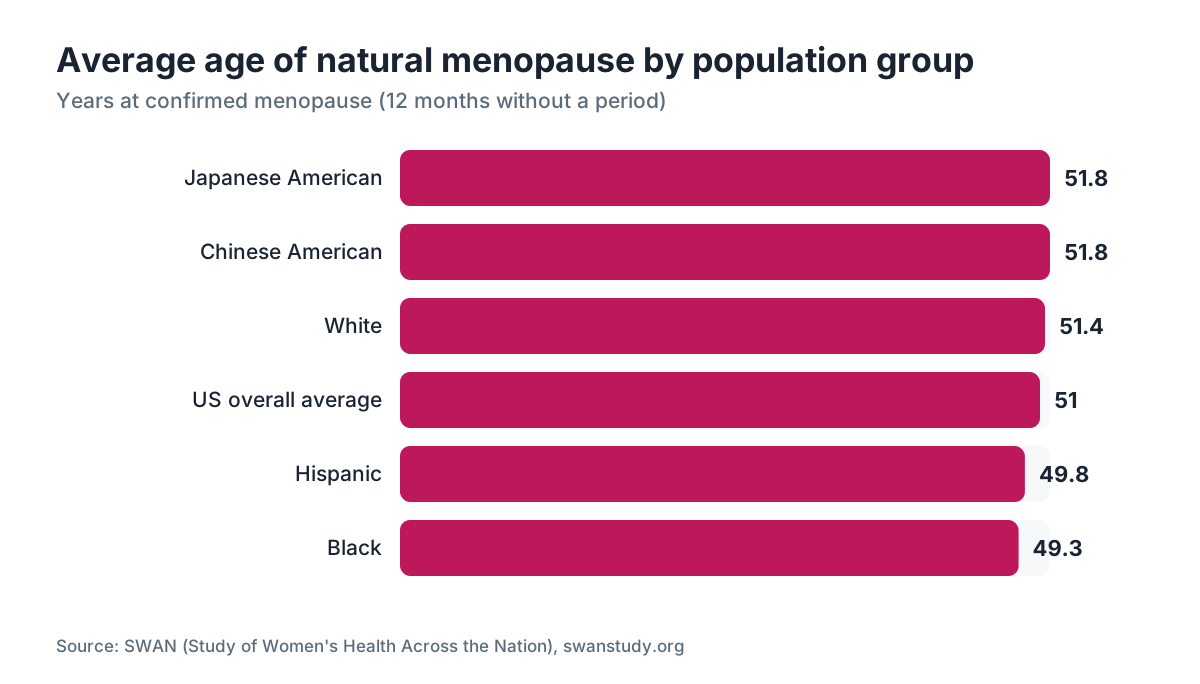
Here is what average age of menopause data looks like across major population groups, based on SWAN and related research:
| Population group | Average age of natural menopause | |---|---| | US overall | ~51 years [1] | | White women | ~51.4 years [2] | | Black women | ~49.3 years [2] | | Hispanic women | ~49.8 years [2] | | Chinese American women | ~51.8 years [2] | | Japanese American women | ~51.8 years [2] |
These differences are statistically real and matter clinically. Black women on average reach menopause nearly two years earlier than white or Asian American women in SWAN data, which means a Black woman in her late 40s with symptoms deserves a real evaluation, not reassurance that she is "too young." [2]
What counts as menopause, exactly?
Menopause is a single point in time, not a phase. It is defined as 12 consecutive months without a menstrual period in the absence of other causes like pregnancy, breastfeeding, or certain medications. [1] The day you hit that 12-month mark is retroactively called your menopause date. Everything before it is perimenopause. Everything after is postmenopause.
This matters for a few practical reasons. First, you can still get pregnant during perimenopause, even when cycles are wildly irregular. Second, many women assume that because they feel terrible, they must be "in menopause," but their hormonal picture may be mid-transition, which has different treatment implications than confirmed postmenopause.
The North American Menopause Society (NAMS) defines the transition using the STRAW+10 staging system, which classifies reproductive aging from late reproductive stage through late postmenopause based on bleeding patterns and hormonal markers. [1] Under STRAW+10, late perimenopause begins when cycles start skipping and FSH levels rise, and it ends at the final menstrual period.
No blood test confirms menopause in real time. FSH above 30 IU/L is a commonly cited threshold, but FSH bounces around so much in perimenopause that a single elevated result means little. [3] If you have a uterus and are under 50, most clinicians wait for the 12-month amenorrhea window before calling it confirmed menopause.
What factors change your personal menopause age?
Genetics is the biggest driver. If your mother and older sisters hit menopause at 48, your odds of an earlier transition rise considerably. Twin studies estimate that genetic factors account for roughly 50 to 80 percent of the variation in menopause timing. [5]
Smoking is the most modifiable factor. Current smokers reach menopause an average of 1 to 2 years earlier than non-smokers. [2] The more pack-years, the stronger the effect. The mechanism is thought to involve nicotine's anti-estrogenic activity and direct toxic effects on ovarian follicles.
Body weight has a nuanced relationship with timing. Lower BMI is associated with earlier menopause in some studies, because adipose tissue produces estrone, a weak estrogen that can partially sustain the hypothalamic-pituitary-ovarian axis. Very lean women may deplete their follicular reserve faster. Obesity does not reliably delay menopause in most population data. [2]
Surgical and medical factors that can move the clock forward significantly include:
- Bilateral oophorectomy (surgical removal of both ovaries): causes immediate surgical menopause regardless of age
- Chemotherapy, especially alkylating agents: can cause temporary or permanent ovarian failure depending on dose, drug, and age at treatment [3]
- Pelvic radiation: damages ovarian tissue in a dose-dependent way
- Unilateral oophorectomy (one ovary removed): associated with earlier menopause by an average of 1 to 2 years even when one ovary remains [5]
- Hysterectomy without oophorectomy: does not cause menopause directly, but some research suggests it may accelerate ovarian decline slightly
Ethnicity, as shown in the SWAN data above, independently predicts timing. Autoimmune conditions like thyroid disease and rheumatoid arthritis are also associated with earlier menopause in some studies, though the data are less consistent. [5]
When does perimenopause start relative to menopause age?
Perimenopause typically begins 4 to 10 years before the final menstrual period. [1] For a woman who reaches menopause at 51, that puts the start of noticeable perimenopausal symptoms anywhere from her early to mid-40s.
The earliest signs are often subtle: cycles that are a few days shorter or longer than usual, sleep that is lighter than it used to be, mood that is more reactive around the luteal phase. Hot flashes tend to arrive later in the transition, peaking in late perimenopause and the first two years of postmenopause. [2]
The SWAN data found that the median duration of hot flash symptoms was 7.4 years, and women who started having hot flashes earlier in the perimenopausal transition experienced them for longer, sometimes over a decade. [2] That is a long time to white-knuckle it.
If you want to understand where you are in the transition, the perimenopause age article covers staging in detail. The short version: irregular cycles combined with elevated FSH on two tests drawn at least 4 to 6 weeks apart, plus symptoms, is usually enough for a clinical working diagnosis of perimenopause even without a confirmatory 12-month window.
One thing worth stating plainly: perimenopause is not a minor warm-up act. For many women it is the most symptomatic phase of the entire transition, and it is the window when hormone replacement therapy decisions often make the most practical difference.
What is early menopause and who is at risk?
Early menopause means natural menopause before age 45. It affects roughly 5 percent of women. [3] Primary ovarian insufficiency (POI), which is ovarian failure before 40, affects about 1 percent of women and is technically a different diagnosis with different long-term health implications. [3]
The long-term health risks of early menopause are real and specific. Women who reach menopause before 45 have higher rates of cardiovascular disease, osteoporosis, cognitive decline, and all-cause mortality compared with women who reach menopause at the average age. [4] These risks are largely attributable to longer cumulative years of low estrogen exposure, and most guidelines, including those from NAMS and the Endocrine Society, recommend hormone therapy for women with early menopause at least until the average age of natural menopause (51) unless there is a specific contraindication. [3][4]
The Endocrine Society's 2023 clinical practice guideline on menopause states that "estrogen therapy is recommended for women with POI or early menopause to reduce cardiovascular and bone risks" until approximately age 51. [3] That is one of the clearest evidence-based consensus statements in women's medicine.
If you are under 45 and your periods have become irregular or stopped, ask your provider to check FSH, estradiol, and AMH (anti-Mullerian hormone). A bone density test is also worth scheduling earlier than the usual screening age if you have confirmed early menopause, because bone loss speeds up in the first years after estrogen drops.
Does late menopause (after 55) carry health risks?
Late menopause, defined as natural menopause after age 55, affects roughly 5 percent of women. [4] The trade-offs are genuinely mixed, and some coverage oversimplifies them.
On the protective side, longer exposure to endogenous estrogen is associated with better bone density, lower cardiovascular risk during the reproductive years, and some data suggesting cognitive benefits. Women with late menopause have lower rates of osteoporotic fracture over their lifetime compared with women who reach menopause early. [4]
On the risk side, longer estrogen exposure is associated with modestly elevated risk of hormone-receptor-positive breast cancer and endometrial cancer. The absolute risk increase is small, but it is real and shows up consistently in epidemiological data. [4] Late menopause is also associated with slightly higher risk of ovarian cancer, though the mechanism is not fully understood.
Nothing about late menopause requires treatment on its own. What it does require is that you and your doctor factor your longer reproductive life into your breast and gynecologic screening schedule, and that you do not automatically assume your risk profile from hormone therapy is the same as a woman who reached menopause at 51.
How does menopause age affect long-term health risks?
Menopause age is a meaningful predictor of several chronic disease risks, which is why it belongs in your health history the same way smoking status and family history do.
Bone density. Estrogen inhibits osteoclast activity, the cells that break down bone. When estrogen drops at menopause, bone loss speeds up, averaging roughly 1 to 2 percent per year in the first few years postmenopause. [6] Women who reach menopause earlier have more cumulative years of bone loss by the time they reach their 60s and 70s. Current guidelines recommend a baseline bone density test at 65 for average-risk women, but earlier if you had early menopause or other risk factors.
Cardiovascular disease. Estrogen has favorable effects on lipid profiles, vascular flexibility, and blood pressure. Menopause is associated with a shift toward a more atherogenic lipid pattern, including rising LDL and triglycerides. The SWAN study documented accelerating cardiovascular risk markers beginning in late perimenopause, more than after the final period. [2]
Cognitive function. The relationship between estrogen and brain health is an active research area. Some data from the Women's Health Initiative Memory Study (WHIMS) raised concerns about certain types of hormone therapy in older postmenopausal women, but the timing hypothesis, the idea that starting estrogen therapy close to menopause is protective while starting it years later may not be, has become the dominant framework in current practice. [7]
Vaginal and urinary health. Genitourinary syndrome of menopause (GSM) affects roughly 50 to 60 percent of postmenopausal women and includes vaginal dryness, dyspareunia, and recurrent urinary tract infections. [1] Unlike hot flashes, GSM tends to worsen over time rather than resolve on its own, and it responds very well to local (vaginal) estrogen therapy, which has minimal systemic absorption.
If you want a structured evaluation for these decisions, platforms like WomenRx pair you with clinicians who specialize in this transition, rather than routing you through a general practice that may not be current on post-WHI evidence.
What symptoms signal you are approaching menopause?
The classic symptom most women know is vasomotor symptoms, meaning hot flashes and night sweats. But the symptom picture is broader and often appears before cycles become noticeably irregular.
Common perimenopausal and early postmenopausal symptoms include:
- Hot flashes and night sweats (vasomotor symptoms)
- Sleep disruption, often driven by night sweats but sometimes independent of them
- Mood changes, including increased anxiety, irritability, and depressive symptoms
- Brain fog, difficulty with word retrieval and concentration
- Irregular periods, shorter or longer cycles, heavier or lighter bleeding
- Vaginal dryness and changes in libido
- Joint aches
- Weight redistribution toward the abdomen
The SWAN study followed women prospectively and found that vasomotor symptoms were most frequent during the late transition and early postmenopause, peaking in the two years surrounding the final menstrual period. [2] For some women, though, hot flashes begin years earlier and persist for over a decade.
Sleep disruption deserves particular attention because it compounds everything else. Poor sleep affects mood, cognition, metabolic health, and cardiovascular risk. If sleep is significantly disrupted, that is a symptom worth treating directly, more than waiting out.
If you are in your mid to late 40s and recognizing several of these symptoms, the when does menopause start article walks through how to tell the difference between normal perimenopausal variability and patterns that warrant a hormonal workup.
What are your treatment options around menopause age?
Hormone replacement therapy (HRT) remains the most effective treatment for vasomotor symptoms and has additional benefits for bone, cardiovascular markers, and genitourinary health when started near the time of menopause. [7] The timing hypothesis is well enough established now that NAMS, the Endocrine Society, and the British Menopause Society all recommend considering HRT for healthy women under 60 or within 10 years of their last period who have bothersome symptoms or are at elevated risk for osteoporosis or cardiovascular disease. [1][3]
Options include estrogen alone (for women without a uterus), combined estrogen plus progesterone (for women with a uterus, to protect the endometrium), patches, gels, sprays, and oral formulations. The estrogen patch delivers estradiol transdermally, which avoids first-pass liver metabolism and is associated with a lower risk of blood clots than oral estrogen. [7] Your route of administration matters clinically, more than for convenience.
For women who cannot or choose not to use systemic hormones, options include:
- Low-dose vaginal estrogen for GSM (very low systemic absorption, generally considered safe even for breast cancer survivors in most guidelines)
- Non-hormonal prescription medications: fezolinetant (FDA-approved 2023 for hot flashes), low-dose SSRIs or SNRIs, gabapentin [8]
- Lifestyle approaches: cooling strategies, avoiding triggers, CBT-based behavioral interventions
Weight management is also relevant. Women gain an average of 1 to 2 pounds per year during the menopausal transition independent of aging, driven partly by hormonal changes and partly by the muscle loss that accompanies it. [6] GLP-1 receptor agonists like semaglutide are increasingly used in this context. The semaglutide for weight loss article covers what the clinical trial data actually shows for women specifically.
For a full overview of what is HRT including current formulations and risks by category, that reference covers the post-WHI evidence landscape in detail.
How is menopause age confirmed clinically?
In practice, natural menopause is a retrospective diagnosis. You know you have reached it after you have gone 12 full months without a period. No test tells you in advance or in real time. [1]
Hormone panels can suggest you are in the transition. An FSH level persistently above 30 IU/L combined with estradiol below 30 pg/mL is consistent with menopause, but these values fluctuate enormously during perimenopause, so a single test can mislead. [3] NAMS does not recommend routine hormone testing to confirm menopause in women over 45 who have stopped cycling, because the 12-month criterion is diagnostic on its own.
In women under 45, or in any woman where the cause of amenorrhea is unclear, testing makes more sense. A full workup should include FSH, LH, estradiol, TSH, prolactin, and AMH. [3] AMH is produced by developing ovarian follicles and declines steadily as follicular reserve depletes. It is not a diagnostic test for menopause, but it is useful for estimating ovarian reserve and, in some research contexts, predicting approximate timing of menopause onset.
For women who have had a hysterectomy without oophorectomy, there is no period to track, which makes symptom assessment and hormone testing the primary tools. Elevated FSH combined with classic symptoms is the working clinical picture in that situation.
Can you predict your menopause age before it happens?
Somewhat, but not precisely. The best predictors available right now are:
Family history. Your mother's age at menopause is the single strongest individual predictor for natural menopause timing. Sibling history adds information. If your mother hit menopause at 47, your risk of early menopause is meaningfully higher than the population average. [5]
AMH levels. Anti-Mullerian hormone tracks ovarian follicle reserve and declines over time. Research groups have developed AMH-based models that estimate menopause timing within a range of roughly 3 to 4 years. These are statistical estimates, not guaranteed predictions, and no major guideline recommends routine AMH testing purely to forecast menopause in healthy women without fertility concerns. [5]
Antral follicle count (AFC). Measured via transvaginal ultrasound, AFC reflects the number of resting follicles available. Used primarily in fertility medicine, it correlates with ovarian reserve but is impractical as a menopause-prediction tool in most clinical settings.
Genetic testing. Research has identified dozens of genomic loci associated with menopause timing, including variants near genes involved in DNA repair. Commercial testing cannot yet translate these signals into an individual prediction accurate enough to guide clinical decisions. [5]
The honest answer is that current tools give you a range, not a date. If early menopause runs in your family, the practical implication is earlier surveillance for bone density and cardiovascular risk factors, not a specific number to aim for.
What should you actually do based on your menopause age?
The clinical actions that follow from knowing your menopause age are concrete.
If you are in perimenopause and symptomatic: get a thorough evaluation rather than waiting. Symptoms like significant hot flashes, sleep disruption, and mood changes are treatable. The window of greatest hormone therapy benefit, if you are a candidate, is within 10 years of menopause and before age 60. Waiting until symptoms are unbearable does not improve outcomes. [7]
If you had early menopause (before 45): hormone therapy until at least age 51 is the standard of care recommendation unless contraindicated, specifically to protect bone and cardiovascular health. [3] Schedule a baseline bone density test earlier than the usual screening age.
If you are newly postmenopausal: prioritize a lipid panel, blood pressure check, and a conversation with your provider about bone health and HRT candidacy. These are the years when cardiovascular risk markers shift most rapidly.
If you have late menopause (after 55): stay current on breast and gynecologic cancer screening. Your timeline may affect how your clinician weighs the risks and benefits of hormone therapy for you specifically.
For women managing weight through the menopausal transition, the metabolic changes are real. Insulin resistance tends to worsen, visceral fat accumulates, and standard calorie-restriction approaches often underperform. If you are exploring GLP-1s as part of that picture, semaglutide vs tirzepatide compares the two leading options with actual trial data.
Menopause is not a disorder. But it is a significant physiological shift that opens a window for meaningful preventive action, and the evidence for acting during that window is stronger than it has ever been.
Frequently asked questions
What is the average age of menopause in the United States?
The average age of menopause in the US is 51 years old, based on large population studies including the Study of Women's Health Across the Nation (SWAN). The normal range is 45 to 55. Women who reach menopause before 45 are considered early, and before 40 is classified as primary ovarian insufficiency, a distinct clinical condition.
What is the average age for menopause by ethnicity?
SWAN data show Black women reach natural menopause at an average of about 49.3 years, Hispanic women at 49.8, white women at 51.4, and Chinese and Japanese American women at approximately 51.8. These are population averages with real clinical implications, particularly for Black women who may be dismissed as too young when they present with symptoms in their late 40s.
Can smoking change when you go through menopause?
Yes. Current smokers reach menopause 1 to 2 years earlier on average than non-smokers, according to SWAN data. The mechanism involves nicotine's anti-estrogenic effects and direct toxicity to ovarian follicles. The more pack-years of smoking, the more pronounced the effect. Quitting smoking does not fully reverse the ovarian damage already done, but it is still worthwhile for overall health.
How do I know if I am in perimenopause or menopause?
Perimenopause is the transition before menopause, marked by irregular cycles, rising FSH, and symptoms like hot flashes and sleep disruption. Menopause is confirmed only after 12 consecutive months without a period. In women under 50, clinicians typically wait for the full 12-month window before diagnosing menopause rather than relying on a single hormone test.
What are the health risks of early menopause?
Early menopause (before 45) is associated with higher risks of cardiovascular disease, osteoporosis, cognitive decline, and all-cause mortality compared with average-age menopause. These risks are largely tied to longer years of low estrogen. Most clinical guidelines recommend hormone therapy for women with early menopause at least until age 51, unless there is a specific contraindication.
Is late menopause (after 55) dangerous?
Late menopause carries modestly elevated risks of hormone-receptor-positive breast cancer, endometrial cancer, and ovarian cancer due to longer lifetime estrogen exposure. It also offers protective benefits for bone density and cardiovascular health during the reproductive years. Women with late menopause should factor their extended reproductive history into breast and gynecologic cancer screening discussions with their provider.
Does a hysterectomy cause menopause?
A hysterectomy without oophorectomy removes the uterus but leaves the ovaries intact, so it does not directly cause menopause. Periods stop, but ovarian hormone production continues. Some research suggests this surgery may mildly accelerate the timing of ovarian decline. A bilateral oophorectomy (removing both ovaries) does cause immediate surgical menopause regardless of age.
What blood tests confirm menopause?
No blood test confirms menopause in real time. FSH above 30 IU/L combined with low estradiol is consistent with menopause, but FSH fluctuates widely during perimenopause. NAMS does not recommend routine hormone testing to confirm menopause in women over 45 who have gone 12 months without a period, since the clinical criterion is diagnostic on its own.
How long do menopause symptoms last?
The SWAN study found the median duration of hot flash symptoms was 7.4 years. Women who began experiencing hot flashes earlier in the perimenopausal transition had symptoms for longer, sometimes exceeding 10 years. Genitourinary symptoms like vaginal dryness tend to persist indefinitely without treatment, unlike vasomotor symptoms, which do improve over time for most women.
Can you predict your menopause age in advance?
Family history, especially your mother's age at menopause, is the best individual predictor. AMH levels and antral follicle count give a statistical range, not a precise date. Research has identified genetic variants associated with timing, but no commercial test can accurately predict your individual menopause year. If early menopause runs in your family, earlier screening for bone density and cardiovascular risk is the practical takeaway.
Does weight affect when menopause happens?
Lower body weight is associated with slightly earlier menopause in some studies, possibly because adipose tissue produces estrone, which can partially sustain the hormonal axis. Very lean women may deplete follicular reserve faster. Obesity does not reliably delay menopause in most population data. The relationship is modest compared with genetics and smoking.
What is the difference between menopause and perimenopause?
Perimenopause is the multi-year transition leading up to the final period, typically lasting 4 to 10 years and marked by hormonal fluctuations, irregular cycles, and symptoms. Menopause is a single point in time: the day you hit 12 consecutive months without a period. Everything after that point is postmenopause. Many of the most intense symptoms occur during late perimenopause, not after.
Should I start hormone therapy at or around menopause?
Current NAMS and Endocrine Society guidance supports considering hormone therapy for healthy women under 60 or within 10 years of their final period who have bothersome symptoms or elevated risk for osteoporosis or cardiovascular disease. Starting closer to menopause appears more beneficial than starting years later. Discuss your individual medical history, including any history of blood clots, certain cancers, or cardiovascular disease, with your provider.
Does chemotherapy cause early menopause?
Yes, some chemotherapy agents, particularly alkylating agents like cyclophosphamide, can cause temporary or permanent ovarian failure. Whether ovarian function returns depends on the drug, dose, and the patient's age and baseline ovarian reserve. Women who receive chemotherapy before their natural menopause should discuss ovarian function monitoring and fertility preservation options with their oncology team before starting treatment.
Sources
- North American Menopause Society (NAMS), Menopause Practice: A Clinician's Guide
- SWAN (Study of Women's Health Across the Nation), NIH-funded longitudinal cohort
- Endocrine Society, Clinical Practice Guideline: Menopause and Perimenopause (2023 update)
- NIH Office of Research on Women's Health, Menopause overview
- Stolk L et al., Nature Genetics, 2012 - GWAS of natural menopause timing
- NIH National Institute on Aging, Menopause and bone health
- Manson JE et al., New England Journal of Medicine, WHI Hormone Therapy Trials reanalysis and timing hypothesis
- FDA, Approved Drug label: fezolinetant (Veozah) for vasomotor symptoms of menopause, 2023
- MedlinePlus (NLM/NIH), Menopause reference page