Menopause and aching breasts: why it happens and what actually helps
TL;DR: Aching breasts during perimenopause come from fluctuating estrogen and low progesterone, not cancer in most cases. Up to 70% of women get breast pain at some point, and the hormone swings of perimenopause are a top trigger. The ache usually fades once periods stop for good. Until then, a supportive bra, topical NSAIDs, caffeine cuts, and sometimes hormone therapy help.
Why do breasts ache during menopause and perimenopause?
Breast tissue is studded with hormone receptors. Estrogen and progesterone tell those receptors to retain fluid, swell, and grow during certain phases of the menstrual cycle. During perimenopause, estrogen doesn't fall in a straight line. It spikes erratically, sometimes higher than anything you saw in your 30s, before dropping for good. Those swings drive fluid shifts in breast tissue that show up as that familiar deep ache or heaviness.
Progesterone adds a second layer. In the luteal phase of a normal cycle, progesterone counterbalances estrogen's fluid-retaining effects. But anovulatory cycles, which are common in perimenopause, skip ovulation entirely. You get estrogen stimulation with little or no progesterone to offset it. The result is often more breast discomfort than you had in your 20s. See more on how progesterone and estrogen interact during this transition.
Once estrogen settles at its post-menopausal baseline, the pain almost always improves or resolves. If pain starts or worsens after you've fully stopped menstruating, that pattern deserves a clinical look, because new post-menopausal breast pain has a different differential than the cyclical ache of perimenopause.
How common is breast pain during perimenopause?
Breast pain, medically called mastalgia, is one of the most common breast complaints at every age. Studies estimate 41% to 70% of women get it at some point [11]. During perimenopause specifically, most women report some breast tenderness, though the exact number swings depending on how you define the symptom and which stage of the transition you measure.
Cyclical mastalgia tied to hormonal fluctuation accounts for roughly two-thirds of all mastalgia cases in premenopausal and perimenopausal women [1]. Non-cyclical mastalgia, meaning pain that doesn't track a hormonal pattern, is more common after menopause and more likely to trace back to the chest wall, ribs, or costochondritis than to hormones.
The North American Menopause Society lists breast tenderness as a recognized symptom of the menopausal transition, sitting on standard symptom checklists alongside hot flashes and sleep disruption [2]. Most women never mention it to their doctors because they assume nothing can be done. That's a shame. Several options actually work.
What does menopause-related breast pain actually feel like?
The classic perimenopausal ache is bilateral, meaning it hits both breasts roughly equally. It feels like a dull heaviness or fullness, not a sharp or stabbing pain. Many women describe it as the soreness they used to get right before a period, except now it lasts longer or shows up at odd times that don't match an obvious cycle day.
Some women notice the outer quadrants, toward the armpit, are more tender than the central tissue. Others feel it in the nipple area. Neither pattern alone is worrying. But a few red flags do warrant prompt evaluation: pain in one breast only, a palpable lump, skin changes, nipple discharge, or pain that wakes you from sleep and keeps escalating rather than coming and going.
Separate breast pain from chest wall pain. If pressing on the sternum or a specific rib reproduces the pain, you're probably dealing with musculoskeletal discomfort. That has nothing to do with your hormone levels and won't respond to hormone therapy.
Is breast pain during menopause a sign of cancer?
This is the fear that sends most women to Google at 2 a.m., and the evidence is genuinely reassuring. Breast pain is an uncommon presenting symptom of breast cancer. Among women referred to breast clinics specifically for mastalgia, fewer than 5% had an underlying malignancy, and most of those had other findings that pointed to the diagnosis [1]. Pain alone, with no lump, skin change, or discharge, is a poor predictor of breast cancer [10].
That said, breast pain is no reason to skip your regular screening. The American Cancer Society recommends annual mammograms starting at 40 for average-risk women, and that schedule shouldn't change just because your pain turns out to be hormonal [4]. If you have a first-degree relative with breast cancer or a known genetic risk factor, your screening may start earlier and run more intensive.
The short version: bilateral, fluctuating breast pain in a perimenopausal woman is almost always hormonal. Get it checked if it's new, one-sided, or comes with any physical change you can see or feel. By itself, it is not a cancer alarm bell.
Does hormone replacement therapy cause or worsen breast pain?
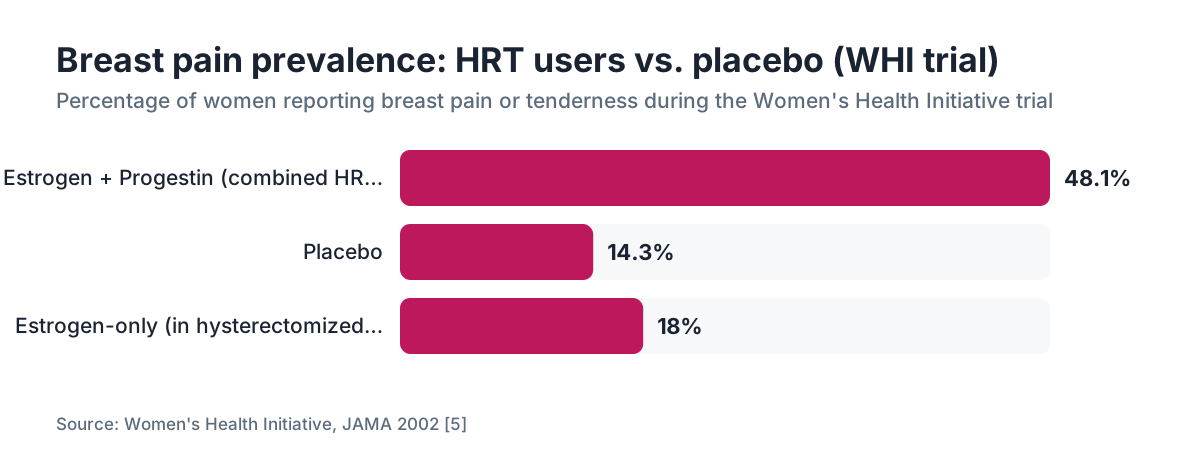
It can, and women deserve a straight answer. Combined estrogen-progestogen hormone therapy (HRT) increases breast tenderness in a meaningful share of users. The Women's Health Initiative found 48.1% of women on combined estrogen plus progestin reported breast pain during the trial, compared with 14.3% on placebo [5]. That's a big gap. Estrogen-only therapy, used in women who've had a hysterectomy, produces less tenderness than combined therapy [9].
The good news: for most women the tenderness peaks in the first three to six months of starting HRT, then eases as the body adapts. A lower dose, a different progestogen, or a change in delivery route (say, from oral to a transdermal estrogen patch) can cut breast symptoms. Micronized progesterone (Prometrium) appears to cause less tenderness than synthetic progestins in some head-to-head comparisons, though the evidence base is smaller than clinicians would like [9].
If you're considering hormone replacement therapy and worry about breast pain as a side effect, have a direct conversation about dose and formulation rather than skipping treatment outright, especially if hot flashes or broken sleep are wrecking your quality of life.
For a wider look at menopause management beyond breast symptoms, the toolkit has grown a lot in recent years.
What else causes breast pain around menopause?
Hormonal fluctuation is the most common cause, but not the only one. A few other contributors are worth ruling out.
Caffeine has been studied as a contributor to cyclic mastalgia for decades. The evidence is mixed, but some women report real improvement after cutting back on coffee, tea, and chocolate. A 1985 study in Surgery found 65% of women with fibrocystic breast changes and mastalgia improved after eliminating methylxanthines (the compound family that includes caffeine), though the study was small and had methodological limits [6]. It's free and carries no downside, so it's worth a trial.
Bra fit matters more than most doctors mention. An ill-fitting bra, especially an underwire that digs in or a band that doesn't carry the weight, can produce or amplify pain. A proper fitting, ideally at a specialty lingerie shop, sometimes fixes what looked like a hormonal problem.
Some medications trigger breast pain too. These include selective serotonin reuptake inhibitors (SSRIs), some blood pressure drugs, and spironolactone. If you started a new medication around the time the pain appeared, bring that timeline to your prescriber.
Large breasts carry more mechanical load on the Cooper's ligaments and chest wall. Women with larger cup sizes often report more background discomfort, and it tends to be positional rather than tied to a hormonal cycle.
What treatments actually relieve breast pain during menopause?
Here's what has real evidence and what doesn't.
Evening primrose oil gets marketed hard for mastalgia. Early small trials looked promising, but a Cochrane systematic review found it no more effective than placebo for cyclical breast pain [3][7]. Save your money.
Vitamin E at 400 to 600 IU daily has similarly weak evidence. Some observational data hints at a benefit, but randomized trials haven't backed it up.
NSAIDs like ibuprofen, taken as needed or in the days before expected tenderness, give real relief for many women. Topical diclofenac gel rubbed straight onto the breast is better studied than oral NSAIDs for localized pain and skips the systemic stomach effects [1].
Danazol, a synthetic androgen, is the only FDA-approved drug for mastalgia in the US [8]. It works, but it carries heavy side effects: acne, weight gain, voice changes. Most specialists reach for it only as a last resort in severe, stubborn cases.
Tamoxifen at low doses (10 mg daily) has been studied for mastalgia and shows a response rate around 70% in trials [1]. It carries its own risks including higher clotting risk, so it's reserved for women with significant, disabling pain who've failed other approaches.
For most women the practical plan is simple: supportive bra, topical NSAID or a short course of oral ibuprofen during flares, less caffeine, and the reassurance that this almost always improves after the final period.
If breast pain shows up alongside other perimenopausal symptoms like hot flashes or mood shifts, treating the underlying hormone instability often helps the breast pain as a bonus. Telehealth platforms like WomenRx can connect you with a prescriber who reads this hormonal picture and can assess whether HRT or other options fit your full symptom load rather than one symptom in isolation.
Does breast pain change at different stages of the menopause transition?
Yes, and the arc is somewhat predictable. Early perimenopause, which can start in the early-to-mid 40s for many women (see more on perimenopause age and when menopause starts), is often when breast pain is most erratic. Cycles are irregular, estrogen is spiking unpredictably, and progesterone is sometimes absent entirely in anovulatory cycles. This phase can feel worse than any PMS you had in your reproductive years.
Late perimenopause, the year or two before the final period, is often when symptoms across the board intensify before they resolve. Breast pain may peak here.
Post-menopause, defined as 12 consecutive months without a period, is when breast pain usually quiets down. Estrogen is now low and stable instead of high and chaotic. Women who still hurt after full menopause are more likely dealing with a non-hormonal cause, and a clinical workup makes more sense.
One caveat: if you start HRT after menopause, you may feel tenderness again during the adjustment phase, as described above. That doesn't mean the treatment isn't working. It usually means the dose is being titrated.
Can lifestyle changes reduce breast pain during perimenopause?
Several low-cost, low-risk changes have at least some evidence or a plausible mechanism behind them.
Weight management matters because fat tissue produces estrogen through a process called aromatization. More body fat generally means more circulating estrogen, which can amplify hormonal breast pain. That's one of many reasons addressing metabolic health during perimenopause pays off across multiple symptoms. For women dealing with perimenopausal weight gain, semaglutide for weight loss has become a discussed option, though it's not indicated for mastalgia.
Regular aerobic exercise appears to reduce overall estrogen variability over time, though the effect on mastalgia specifically hasn't been tested in randomized trials. The indirect benefits on sleep, mood, and metabolic health during perimenopause are well established.
Dietary fat reduction has been examined. One trial found that cutting fat intake to under 15% of calories reduced breast pain and swelling in premenopausal women, but the diet was hard to maintain and hasn't been replicated in large perimenopausal groups [6].
Stress is a real contributor. Cortisol interacts with both estrogen and progesterone metabolism, and chronic stress can amplify the hormonal chaos of perimenopause. Mind-body approaches like mindfulness-based stress reduction, while not studied specifically for mastalgia, have broader evidence for menopausal symptom relief.
Salt restriction in the week before an expected period, if your cycles are still somewhat predictable, can take the edge off the heaviness.
When should you see a doctor about breast pain during menopause?
Most perimenopausal breast pain is benign and self-limiting. But some features should push you to call your provider instead of waiting it out.
See your doctor promptly if: the pain is in one breast only and lasts more than two to four weeks, you feel a lump or thickening in the breast or armpit, there's skin puckering or dimpling, any nipple discharge appears (especially if it's bloody or comes from one duct), or the pain is bad enough to disrupt sleep or daily activity.
The standard first workup for new breast pain in a perimenopausal woman usually includes a clinical breast exam and, if you're overdue, a mammogram. Ultrasound gets added if there's a focal area of concern or if dense breast tissue limits mammogram reading. Most women with mastalgia have a normal workup and get reassured.
For women who've already had their annual screening and have classic bilateral cyclical pain that tracks with hormonal patterns, a phone or telehealth visit to talk through management is often enough as a first step, especially if the symptom is new and mild.
Does breast pain mean your estrogen is too high or too low?
This comes up constantly, and the honest answer is nuanced. Breast pain in perimenopause doesn't map cleanly onto either "too high" or "too low" estrogen.
The pain is most often driven by unstable, fluctuating estrogen rather than a steadily high level. A woman can hurt on a day her estrogen is at a relative peak and also on a day it's falling fast. The change drives the symptom as much as the absolute level.
That said, relative estrogen excess compared to progesterone, often called estrogen dominance in functional medicine circles, is probably the more accurate framing for perimenopause. When progesterone is low (because ovulation didn't happen) and estrogen is running high, the ratio tips toward fluid retention and breast sensitivity. That's why some clinicians trial low-dose progesterone in perimenopausal women with breast pain even before full HRT is indicated.
Blood tests for estrogen and progesterone on a single day usually aren't very useful here. Levels vary so much across a perimenopausal cycle that a single snapshot tells you little about the pattern driving the symptom. A clinical assessment built on symptoms and cycle history usually beats a hormone panel alone.
Does breast size or density affect how much pain you feel?
Both matter. Women with larger breasts carry more mechanical load on the ligamentous support structures, and that mechanical piece adds to whatever hormonal component is present. After weight loss, some women notice less breast pain partly because the mechanical burden drops.
Breast density is a separate issue. Dense breast tissue (categories C and D on a mammogram, which apply to roughly 40% to 50% of women in the US) holds more glandular and fibrous tissue relative to fat [4]. Glandular tissue has more hormone receptors per gram than fatty tissue, so dense breasts may react more to hormonal swings. Women with dense breasts also carry a modestly higher background risk for breast cancer, one reason mammography facilities now have to notify patients of their density category under updated federal rules [12].
Density tends to drop after menopause as hormone levels fall and glandular tissue involutes. Many women with very dense breasts in their 40s notice their pain improves noticeably after their final period, which tracks with the general trajectory of mastalgia in the transition.
Frequently asked questions
Is breast pain a normal part of menopause?
Yes, breast pain is a recognized and common symptom of the menopausal transition. Fluctuating estrogen and low progesterone during perimenopause cause fluid shifts in breast tissue, producing the ache or heaviness many women feel. The North American Menopause Society lists breast tenderness among standard perimenopausal symptoms. It typically improves after the final menstrual period once hormone levels stabilize.
Will my breast pain go away after menopause?
For most women, yes. Cyclical breast pain tied to hormonal fluctuation almost always improves or resolves once periods have stopped for 12 consecutive months and estrogen has settled at its new post-menopausal baseline. If significant breast pain starts or persists well after menopause, get a clinical evaluation, since post-menopausal breast pain is more likely to have a non-hormonal cause like a musculoskeletal issue.
Can progesterone cream help with breast pain in perimenopause?
Over-the-counter progesterone creams contain very low amounts of progesterone and have inconsistent evidence for any hormonal effect. Prescription micronized progesterone (oral or vaginal) absorbs better and has more clinical data. Some practitioners prescribe low-dose progesterone specifically for perimenopausal breast pain when the likely mechanism is too little progesterone to offset estrogen. Worth discussing with a prescriber who specializes in menopause care.
Does caffeine really make breast pain worse?
Possibly, for some women. Small older studies found that cutting methylxanthines (caffeine, and theobromine in chocolate) reduced breast pain and fibrocystic changes in a subset of women. The evidence isn't strong enough to be definitive, but reducing caffeine carries no risk and may help. A four-to-six week caffeine elimination trial is a reasonable first step before any medication.
Is breast pain on one side only more concerning than pain in both breasts?
Unilateral breast pain lasting more than two to four weeks warrants evaluation. Hormonal mastalgia is typically bilateral, so one-sided pain is more likely to reflect a focal cause. That said, most unilateral pain in women under 50 is still benign, often musculoskeletal or cystic. A clinical exam and imaging can usually sort this out quickly and either reassure you or direct further workup.
Can HRT cause breast pain even if I didn't have it before starting?
Yes. Combined estrogen-progestogen hormone therapy causes breast tenderness in roughly 48% of users, compared to 14% on placebo, based on Women's Health Initiative data. The tenderness is usually most noticeable in the first three to six months and often eases with continued use. A lower dose, a different progestogen, or a transdermal delivery route can help if the pain is significant.
What bra is best for breast pain during perimenopause?
A well-fitted, supportive bra with a wide band, full-coverage cups, and no underwire digging into tissue is generally most comfortable. Sports bras that compress and limit movement help during exercise. The key is fit: a band that sits parallel to the floor in back, cups that fully hold tissue without spillover. Many women find their size has shifted during perimenopause and are wearing an outdated fit.
Can semaglutide or GLP-1 medications affect breast pain?
GLP-1 receptor agonists like semaglutide aren't known to directly cause or treat breast pain. But significant weight loss, which these drugs produce, can shrink breast size and reduce mechanical load on breast ligaments, which may secondarily ease a component of pain in women with larger breasts. GLP-1s also improve insulin sensitivity, which may modestly shift sex hormone binding globulin and free estrogen, though this isn't well studied for mastalgia.
Does low estrogen after menopause cause breast pain, or only high estrogen?
Neither extreme maps cleanly onto the symptom. Breast pain in perimenopause is mostly driven by estrogen fluctuation rather than a steadily high level. The relative imbalance between estrogen and progesterone (high estrogen, low progesterone from anovulatory cycles) is probably the more accurate mechanism than absolute levels. True post-menopausal breast pain, after estrogen has fallen and stabilized, is less common and more likely non-hormonal.
What over-the-counter options help with breast pain?
Topical diclofenac gel applied to the affected area has reasonable evidence for localized breast pain relief, with fewer systemic side effects than oral NSAIDs. Oral ibuprofen taken as needed during flares relieves symptoms for many women. A well-fitting supportive bra addresses mechanical contributors. Evening primrose oil and vitamin E are widely marketed but haven't shown consistent benefit in well-designed trials, so the evidence doesn't support spending money on them.
How long does breast pain last during perimenopause?
Perimenopause can last anywhere from two to ten years, averaging four to eight. Breast pain may come and go throughout, often worst during phases of the most irregular ovulation. Most women see significant improvement within the first one to two years after their final period. There's no set timeline, but the endpoint, post-menopausal stabilization, is predictable even if the path there is erratic.
Can breast pain during menopause be a sign of a cyst?
Yes, breast cysts are common in perimenopausal women and can cause focal tenderness or pain, sometimes cycling with the menstrual cycle. Simple cysts found on ultrasound are benign and usually need no treatment unless they cause significant pain, in which case aspiration is a straightforward option. A clinical exam and ultrasound can tell a cyst from other causes of focal pain. New cysts after menopause are less common and worth evaluating.
Does dense breast tissue make breast pain worse during perimenopause?
Dense breasts hold more glandular tissue, which carries more hormone receptors than fatty tissue. That likely makes dense breasts more reactive to the estrogen swings of perimenopause. Women with dense breast categories C or D on mammography (roughly 40% to 50% of US women) may feel more pronounced hormonal tenderness. Breast density naturally drops after menopause as glandular tissue involutes, which often corresponds with less pain.
Is there a blood test that explains why my breasts hurt during perimenopause?
Blood hormone levels are rarely the most informative test for perimenopausal breast pain. Estrogen and progesterone vary dramatically day to day during perimenopause, so a single measurement is often uninterpretable without cycle context. FSH and estradiol together can confirm perimenopause, but they won't tell you why your breasts hurt on a given day. Diagnosis is usually clinical, based on the character, timing, and pattern of the pain.
Sources
- BMJ Clinical Evidence, Mansel RE et al., Breast pain (mastalgia)
- North American Menopause Society (NAMS), Menopause Practice: A Clinician's Guide
- Cochrane Library, Mansel RE, Goyal A, Preece PE, Breast pain (mastalgia)
- American Cancer Society, Breast Cancer Facts and Figures / Dense Breasts
- Women's Health Initiative, Writing Group, JAMA 2002, Risks and benefits of estrogen plus progestin
- Surgery (journal), 1985, Minton JP et al., Methylxanthine and dietary fat effects on breast pain
- Cochrane Database of Systematic Reviews, Srivastava A et al., Mastalgia treatment review
- FDA, Drug label, Danazol (Danocrine) prescribing information
- Endocrine Society, Clinical Practice Guideline: Hormone Therapy in Postmenopausal Women (2015, updated 2022)
- NIH National Cancer Institute, Breast Cancer Risk in American Women
- Menopause (journal), NAMS, Review of mastalgia in the menopause transition
- FDA, Mammography Quality Standards Act information on breast density reporting