Menopause: symptoms, timeline, and what actually helps
TL;DR: Menopause is the point 12 months after your last period, usually around age 51 in the US. Falling estrogen and progesterone drive the symptoms: hot flashes, night sweats, broken sleep, vaginal dryness, mood swings, and brain fog. The full transition, from early perimenopause through early postmenopause, often runs 7 to 14 years. Hormone therapy is still the most effective treatment for hot flashes and night sweats.
What is menopause, exactly?
Menopause is not a disease. It is a single point in time: the day you have gone 12 straight months without a menstrual period, with no other medical cause. After that day, you are postmenopausal for the rest of your life.
The North American Menopause Society (NAMS) defines menopause as "the permanent cessation of menstruation resulting from loss of ovarian follicular activity." [1] The ovaries stop releasing eggs. Estrogen and progesterone production drops. The hypothalamus and pituitary keep firing signals that never quite get answered the same way again.
The average age of natural menopause in the United States is 51, and anywhere from 45 to 55 counts as normal. [2] Menopause before age 40 is premature ovarian insufficiency (POI). Between 40 and 45 it is early menopause. Surgery to remove both ovaries (bilateral oophorectomy) causes menopause immediately, at any age.
What people call "menopause" in everyday talk is really the whole transition: the years of perimenopause leading up to that final period, the moment of menopause itself, and the early postmenopausal years when symptoms often peak. That distinction is not academic. Treatment decisions depend heavily on which phase you are in. For more on timing, when does menopause start and menopause age cover it in detail.
What are the symptoms of menopause?
The symptom list is longer than most people expect, and it varies wildly from woman to woman. Some sail through with minor annoyances. Others find the transition wrecks their sleep, work, relationships, and mood for years.
Vasomotor symptoms get the most attention: hot flashes and night sweats. A hot flash is a sudden wave of heat across the face, neck, and chest, often followed by sweating and then chills. The Menopause Society reports that roughly 75 percent of women in North America get hot flashes, and for about 25 percent they are severe enough to interfere with daily life. [1] A flash can last 30 seconds or several minutes, and at their worst they can hit multiple times an hour.
Sleep falls apart for almost everyone in perimenopause and early postmenopause. Night sweats are part of it. Falling estrogen also changes sleep architecture directly, cutting slow-wave sleep and making 3 a.m. wake-ups more likely.
Genitourinary syndrome of menopause (GSM) covers vaginal dryness, thinning vaginal walls, urinary urgency, recurrent urinary tract infections, and pain during sex. Here is the part women are rarely told: GSM does not fade on its own the way hot flashes eventually do. It gets worse without treatment. The Endocrine Society notes that GSM affects up to 50 percent of postmenopausal women and stays badly undertreated, because women do not raise it and providers do not ask. [3]
Mood changes (irritability, anxiety, low-grade depression) are common, especially in perimenopause, when hormones swing unpredictably instead of simply declining. Brain fog (trouble concentrating, losing words mid-sentence, short-term memory slips) is reported by up to 60 percent of women during the transition, though the science on why is still catching up.
Joint pain, heart palpitations, drier and thinner skin, collagen loss, hair thinning, and a shift toward more belly fat and less muscle round out the picture. None of these get the airtime hot flashes do. For a lot of women, they matter just as much.
What are early menopause symptoms to watch for in perimenopause?
Perimenopause is the transition phase before menopause, and its symptoms often start years before your periods stop. Most women enter perimenopause in their mid-to-late 40s, though it can begin in the late 30s. perimenopause age covers that timeline in depth.
The first signal is almost always a change in cycle length or flow. Periods turn irregular: shorter and lighter, then longer and heavier, sometimes swinging between the two. Ovulation gets erratic, and progesterone (which depends on ovulation) can drop well before estrogen does. That early progesterone dip is why anxiety, poor sleep, and heavy periods often show up first.
Early signs that catch women off guard:
- Night sweats or occasional hot flashes while periods are still regular
- New or worsening PMS, or premenstrual dysphoric disorder (PMDD)
- Heavier or longer periods from anovulatory cycles (cycles with no ovulation that still make estrogen)
- Breast tenderness in a new pattern
- More headaches or migraines, often around the cycle
- Sleep that keeps getting worse
Labs can clarify things but are not required for a diagnosis. Follicle-stimulating hormone (FSH) rises as the ovaries stop responding, and a level above 25 to 30 IU/L on day 2 or 3 of the cycle often points to reduced ovarian reserve. An FSH above 40 IU/L on two tests at least a month apart, in a woman with no periods for 12 months, confirms postmenopause. [3] Treat these numbers as guides, not verdicts. FSH bounces around a lot in perimenopause.
How long is menopause? What is the full timeline?
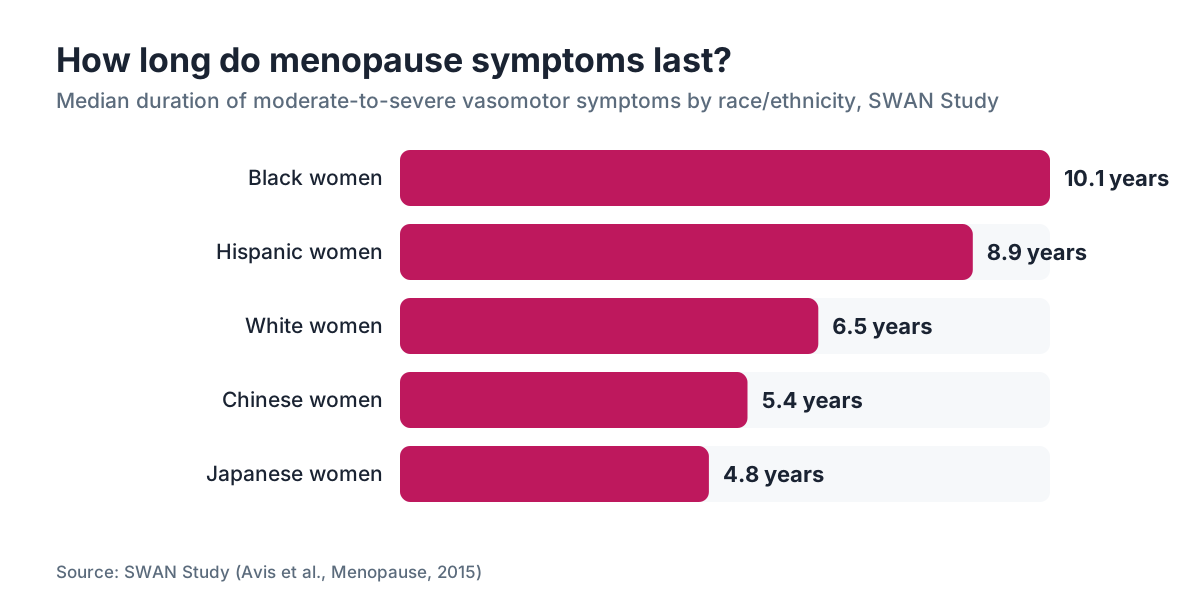
The honest answer is complicated. The menopausal transition typically runs 7 to 14 years, from the first perimenopausal symptoms to the point where the most acute symptoms settle down in early postmenopause. [2]
The SWAN study (Study of Women's Health Across the Nation), a long-term cohort of over 3,000 women, found the median duration of moderate-to-severe vasomotor symptoms was 7.4 years, and women who hit perimenopause earlier had symptoms that lasted longer. [4] Black women had longer and more frequent hot flashes on average than white women in the same study. That finding matters, because the old clinical assumption that every woman experiences menopause the same way is simply wrong.
Here is a rough map of the stages:
| Stage | Typical Age Range | What Is Happening | |---|---|---| | Early perimenopause | Mid-to-late 40s | Cycle irregularity begins; progesterone drops | | Late perimenopause | 47-51 | Periods > 60 days apart; hot flashes common | | Menopause | Average age 51 | 12 months with no period | | Early postmenopause | 51-56 | Vasomotor symptoms often peak, then begin to ease | | Late postmenopause | 56+ | GSM, bone loss, cardiovascular risk become primary concerns |
Hot flashes do not stop on the day of menopause. For many women they get worse in the first one to two years after the final period, then slowly ease. About 10 to 15 percent of women still get vasomotor symptoms in their 70s. [1]
Bone loss speeds up most in the first five years after menopause, which is why a bone density test is recommended around menopause for most women, and earlier for those with risk factors.
Why do falling estrogen and progesterone cause so many different symptoms?
Estrogen receptors sit in nearly every tissue in the body: brain, bone, skin, heart, blood vessels, gut, bladder, vagina. When estrogen falls, all of those tissues change. That is why menopause is a whole-body shift, more than a reproductive event.
In the brain, estrogen supports serotonin and norepinephrine signaling, which is part of why mood and sleep take a hit. It also tunes the hypothalamic thermostat. When estrogen withdraws, the thermostat gets twitchy, and small swings in core body temperature set off the cascade behind a hot flash: blood vessels open at the skin, you sweat, you feel the heat. The Endocrine Society describes how the thermoneutral zone (the temperature range in which the body does nothing to correct itself) narrows in postmenopausal women, so even a slightly warm room can trigger a flash. [3]
In bone, estrogen holds back osteoclast activity (the cells that break bone down). Without it, breakdown outpaces rebuilding, and bone density drops by 2 to 3 percent a year in the first several years after menopause. [5] Over a decade, that can add up to 20 percent of skeletal mass. Women who reach menopause with already-low bone density, from genetics, smoking, low calcium intake, or a history of missed periods, face real fracture risk in their 60s and 70s.
In the cardiovascular system, estrogen keeps arteries flexible and lipids favorable. After menopause, LDL tends to climb, HDL may drop, and arteries stiffen. Cardiovascular risk in women rises sharply after the transition. Heart disease, not breast cancer, is the leading cause of death in postmenopausal women in the US. [6]
Progesterone tells a slightly different story. Natural progesterone helps sleep and mood and calms the nervous system. Its decline in early perimenopause, often before estrogen has moved much, drives many of the anxiety and sleep symptoms women notice first.
Which treatments actually work for menopause symptoms?
Hormone therapy (HT) is the most effective treatment for hot flashes and night sweats. Full stop. The evidence has held up across decades. The panic that followed the 2002 Women's Health Initiative (WHI) publication, which the press badly misread, left a whole generation of women undertreated. Later reanalyses of the WHI data, plus other trials, made it clear that the risk-benefit math for healthy women in early menopause looks nothing like the older, higher-risk group WHI actually studied. [7]
For women under 60, or within 10 years of menopause onset, with no contraindications, NAMS guidelines say the benefits of hormone therapy outweigh the risks for bothersome vasomotor symptoms and GSM. [1] Type, route, and dose all matter. Estrogen alone is for women without a uterus. Women with a uterus need a progestogen alongside estrogen to protect the uterine lining. Natural micronized progesterone seems to carry a friendlier risk profile than synthetic progestins, particularly for breast tissue and sleep.
Estrogen comes as oral pills, estrogen patches, gels, sprays, and rings. Transdermal routes (patches, gels, sprays) skip first-pass liver metabolism and may carry lower blood clot risk than oral estrogen. hormone replacement therapy and what is HRT go deep on those distinctions.
For women who cannot or would rather not use systemic hormones, non-hormonal options with real evidence include:
- Fezolinetant (Veozah), an FDA-approved neurokinin B receptor antagonist that hits the hypothalamic pathway driving hot flashes, approved in 2023 [8]
- SSRIs and SNRIs (paroxetine, escitalopram, venlafaxine); paroxetine 7.5 mg (Brisdelle) was the only FDA-approved non-hormonal option for hot flashes before fezolinetant
- Cognitive behavioral therapy (CBT), which has solid randomized-trial evidence for reducing how much hot flashes bother you, even when it does not reduce how often they happen
- Gabapentin, which works for some women but often brings side effects
For GSM specifically, local (vaginal) estrogen is safe and effective and does not meaningfully raise systemic estrogen levels. It fits most women, including many breast cancer survivors, and it stays dramatically underused.
WomenRx clinicians can look at your full symptom picture and talk through whether systemic or local hormone therapy makes sense for you. The evaluation weighs symptom severity, personal history, and what the evidence actually says for your situation, not a one-size answer.
Weight matters here too. Women gain an average of about 1.5 pounds a year through the transition, much of it visceral fat, partly from hormonal shifts and partly from age-related muscle loss. GLP-1 receptor agonists like semaglutide produced meaningful weight loss in the STEP trials. [9] semaglutide for weight loss covers the data in detail.
What does the research say about hormone therapy safety?
The WHI trial, published in 2002, scared millions of women and their doctors off hormone therapy. The fear made sense at the time. The headline was higher risk of breast cancer, heart disease, stroke, and pulmonary embolism in women taking combined estrogen plus progestin. [7]
But WHI studied women with an average age of 63, most of them more than a decade past menopause. The treatment was oral conjugated equine estrogen plus medroxyprogesterone acetate, at doses higher than most prescriptions today. Stretching those findings onto a 50-year-old in early menopause is, as many endocrinologists and gynecologists have said plainly, a mistake.
The NAMS 2022 position statement reviewed the later reanalyses and concluded: "For women aged younger than 60 years or who are within 10 years of menopause onset and have no contraindications, the benefit-risk ratio is favorable for treatment of bothersome vasomotor symptoms and for those at elevated risk for bone loss or fracture." [1]
What matters in the exam room is absolute risk, not relative-risk headlines. In WHI, women aged 50 to 59 on combined HT saw an absolute increase of roughly 8 additional breast cancer cases per 10,000 women per year compared with women not taking HT. Some regimens (estrogen alone, or estrogen with micronized progesterone) appear to carry lower breast cancer risk than estrogen plus a synthetic progestin. [7]
The decision is personal. It turns on your own history, how bad your symptoms are, and your risk factors. A good conversation about HT gives you the real numbers so you can make a real choice.
How does menopause affect weight, metabolism, and body composition?
This is the question that deserves far more clinical attention than it gets. The menopausal transition shifts fat storage from subcutaneous (under the skin) to visceral (around the organs), even in women whose total weight barely moves. Visceral fat drives insulin resistance, inflammation, and cardiovascular risk, so it matters well beyond how your jeans fit.
Estrogen influences where the body parks fat. When it falls, the body starts storing fat in the belly instead of the hips and thighs. Muscle mass also declines with age, and estrogen has anabolic effects on muscle. Less muscle plus more visceral fat slows resting metabolism and makes weight easier to gain and harder to lose.
The SWAN study found women gained an average of 5 pounds over the 3-year perimenopausal window, though the gain tracked more with aging and lifestyle than with menopause itself. [4] What menopause changes is where that weight lands.
For women dealing with real weight gain around menopause, especially when metabolic markers are sliding, GLP-1 receptor agonists have become a legitimate option. Semaglutide (Ozempic, Wegovy) produced an average 14.9 percent body weight reduction in the STEP 1 trial. [9] Tirzepatide (Mounjaro, Zepbound) showed even larger reductions. semaglutide vs tirzepatide compares the two. These are not menopause treatments as such. They address the metabolic fallout of the transition for women whom diet and exercise alone are not helping.
How hormone therapy and GLP-1 use fit together in postmenopausal women is an active area of clinical interest. Some early data suggest estrogen therapy may improve insulin sensitivity and cut visceral fat on its own, which could make the two approaches complementary.
Does menopause affect bone health and cardiovascular risk?
Yes, and this is where the long-term stakes of menopause care come into focus.
Bone density drops fastest in the first 5 to 7 years after menopause, at roughly 1 to 3 percent a year. [5] The Bone Health and Osteoporosis Foundation estimates that 1 in 2 women over 50 will have an osteoporosis-related fracture in her lifetime. A hip fracture in a woman over 70 carries a one-year mortality rate of 15 to 20 percent. Those numbers are why bone health is not a footnote in menopause care.
The US Preventive Services Task Force recommends osteoporosis screening with a DEXA scan for all women 65 and older, and for younger postmenopausal women with risk factors. [5] If you are newly postmenopausal and carry any risk factors (small frame, smoking history, family history of fracture, past eating disorder, corticosteroid use), a bone density test now gives you a useful baseline.
The cardiovascular picture is blunt: a woman's risk of heart disease roughly doubles in the decade after menopause. Before menopause, women have lower cardiovascular risk than men their age. After, that edge largely disappears. [6] Estrogen appears to protect the arterial wall directly, and its withdrawal shifts lipids, blood pressure, and arterial stiffness the wrong way.
Hormone therapy started in early menopause (the "timing hypothesis," or "window of opportunity") may lower cardiovascular risk. Started later, in women who already have established atherosclerosis, it may be neutral or harmful. Timing is everything here. That is one of the strongest reasons not to wait until symptoms are unbearable before having the treatment conversation.
When should you see a doctor about menopause symptoms?
Any time your symptoms bother you. That is the honest answer. There is no threshold of suffering you have to clear before your symptoms deserve attention.
More specifically, see a clinician if:
- Hot flashes or night sweats are wrecking your sleep, work, or daily life
- You have gone more than 60 days between periods and you are under 45 (this warrants FSH testing and a workup)
- You have vaginal dryness or pain with sex and no one has offered you local estrogen
- You have new depression or anxiety that started with cycle changes
- You want to talk through bone health, cardiovascular prevention, or whether hormone therapy fits you
- Your periods stopped unexpectedly before age 40
Primary care, gynecology, and menopause-specialist practices can all manage the transition, but depth of knowledge varies a lot. NAMS keeps a directory of certified menopause practitioners at menopause.org. If your current provider waves off your symptoms as "just menopause" without discussing options, a second opinion is reasonable.
WomenRx offers telehealth visits with clinicians who focus on hormones and menopause. They can prescribe hormone therapy, local estrogen, or non-hormonal medications after a real look at your history and labs.
What about compounded hormones and bioidentical hormones?
"Bioidentical" is a marketing word, not a medical category. It means hormones chemically identical to the ones your body makes, including estradiol and micronized progesterone. And here is what the marketing leaves out: FDA-approved bioidentical hormones already exist. Estradiol patches, gels, and sprays, plus oral micronized progesterone (Prometrium), are all bioidentical and regulated for safety and consistency.
Compounded hormones are a different thing. Compounding pharmacies make them outside FDA review of individual products. They can make sense in specific cases, when a patient cannot tolerate a commercial formulation or needs a dose or delivery route that is not sold commercially. The FDA has said repeatedly that compounded hormone preparations have not been shown to be safer or more effective than approved products, and that quality can swing from batch to batch. [8]
Custom "hormone panels" built on unconventional additions (estriol alone, high-dose testosterone combinations) or saliva testing to guide dosing are not backed by NAMS or the Endocrine Society. Saliva hormone testing is especially unreliable for clinical decisions. [3]
If you are weighing compounded semaglutide for weight management alongside hormone care, the same logic holds: quality varies, and where and how it is compounded matters.
Frequently asked questions
What are the symptoms of menopause?
The most common are hot flashes, night sweats, broken sleep, vaginal dryness, mood changes, brain fog, joint pain, and irregular periods during perimenopause. About 75 percent of North American women get vasomotor symptoms (hot flashes and night sweats), and genitourinary symptoms affect up to 50 percent of postmenopausal women. Severity varies widely from one woman to the next.
How long does menopause last?
Menopause itself is a single point in time: 12 months without a period. The full transition, from the first perimenopausal symptoms through early postmenopause, typically runs 7 to 14 years. The SWAN study found the median duration of moderate-to-severe hot flashes alone was 7.4 years. About 10 to 15 percent of women still get vasomotor symptoms in their 70s.
What is menopause and how is it different from perimenopause?
Menopause is the specific moment defined as 12 straight months without a period. Perimenopause is the transitional phase leading up to it, often lasting 4 to 8 years, when cycles turn irregular and symptoms begin. Most women hit perimenopause in their mid-to-late 40s. The symptoms people blame on menopause actually start in perimenopause.
What are early menopause symptoms to watch for?
Early signs usually appear in perimenopause: irregular periods, heavier or lighter flow, new or worsening PMS, night sweats, poor sleep, more anxiety, and occasional hot flashes while still menstruating. Many women notice these years before their final period. Periods more than 60 days apart in a woman under 45 warrant a hormone evaluation.
At what age does menopause typically start?
The average age of natural menopause in the United States is 51, with a normal range of 45 to 55. Perimenopause usually begins 4 to 8 years earlier, so many women start noticing symptoms in their mid-to-late 40s. Menopause before 40 is premature ovarian insufficiency and deserves prompt medical evaluation and treatment.
Is hormone therapy safe for menopause symptoms?
For healthy women under 60, or within 10 years of menopause onset, with no contraindications, NAMS says the benefits of hormone therapy outweigh the risks for bothersome vasomotor symptoms. The alarming numbers from the 2002 Women's Health Initiative came from an older, higher-risk group. Route of delivery, type of hormone, and your own health history all shape the risk-benefit picture.
What is the difference between bioidentical and conventional hormone therapy?
Bioidentical means hormones chemically identical to the ones your body produces. FDA-approved bioidentical options include estradiol (patches, gels, sprays) and oral micronized progesterone. Compounded bioidentical preparations are not FDA-regulated for individual safety or consistency, and NAMS does not recommend them over approved products. The word bioidentical says nothing about whether a product is safer.
Can menopause cause weight gain?
Menopause shifts fat storage toward the abdomen, even without much change in total weight. Falling estrogen promotes visceral fat. Muscle mass also declines with age, slowing metabolism. Women gain an average of roughly 5 pounds during the perimenopausal transition, though aging and lifestyle are the main drivers. GLP-1 medications can help when diet and exercise fall short.
Does menopause increase the risk of osteoporosis?
Yes. Bone density drops 1 to 3 percent a year in the first 5 to 7 years after menopause, as estrogen's bone-protective effect goes away. The Bone Health and Osteoporosis Foundation estimates 1 in 2 women over 50 will have an osteoporosis-related fracture. DEXA screening is recommended at age 65, or earlier for postmenopausal women with risk factors.
What non-hormonal treatments work for hot flashes?
Fezolinetant (Veozah), FDA-approved in 2023, targets the hypothalamic pathway behind hot flashes and is the most targeted non-hormonal option. SSRIs and SNRIs (paroxetine 7.5 mg is FDA-approved as Brisdelle), gabapentin, and cognitive behavioral therapy also have supporting evidence. None match hormone therapy for most women, but they are real alternatives for those with contraindications.
Can you get pregnant during perimenopause?
Yes. Ovulation still happens in perimenopause, even with irregular cycles. Pregnancy is possible until menopause is confirmed (12 months without a period). Fertility drops sharply but does not hit zero. Women in perimenopause who do not want to conceive should keep using contraception. The pill can also smooth out cycle irregularity and symptoms for some women.
How is menopause diagnosed?
Menopause is diagnosed clinically: 12 straight months without a period in a woman of the right age, with no other cause. Lab tests (FSH, estradiol) can support the diagnosis but are not required for women over 45. FSH consistently above 40 IU/L, plus absent periods, confirms menopause. In women under 45, or with sudden loss of periods, labs and a workup matter more.
Does menopause affect heart health?
Yes. Cardiovascular risk climbs substantially after menopause. Estrogen protects arterial walls and lipid profiles directly. After menopause, LDL tends to rise, arteries stiffen, and the cardiovascular risk gap between women and men their age largely closes. Heart disease is the leading cause of death in postmenopausal US women, which makes cardiovascular risk management a core part of menopause care.
What is genitourinary syndrome of menopause (GSM)?
GSM covers vaginal dryness, thinning vaginal walls, urinary urgency, recurrent UTIs, and pain with sex, all from falling estrogen. Unlike hot flashes, GSM does not improve on its own and tends to worsen over time. Local vaginal estrogen is safe and effective for most women, including many breast cancer survivors, yet stays badly undertreated. If you have these symptoms, ask specifically about vaginal estrogen.
Sources
- North American Menopause Society (The Menopause Society), 2022 Hormone Therapy Position Statement
- NIH National Institute on Aging, Menopause overview
- Endocrine Society, Menopause and Perimenopause Clinical Practice Guideline
- SWAN Study (Study of Women's Health Across the Nation), Menopause journal, Avis et al. 2015
- US Preventive Services Task Force, Osteoporosis to Prevent Fractures: Screening (2018)
- American Heart Association, Menopause and Cardiovascular Disease Risk, Circulation 2020
- Women's Health Initiative, JAMA 2002 and 2004 reanalysis publications (Manson et al.)
- FDA, Drug Approval for Fezolinetant (Veozah), 2023
- STEP 1 Trial, Wilding et al., New England Journal of Medicine, 2021
- Bone Health and Osteoporosis Foundation, Osteoporosis Fast Facts