Menopausal weight gain: why it happens and how to stop it
TL;DR: Most women gain 2 to 5 pounds during the menopause transition, and belly fat grows even when the scale holds steady. Falling estrogen redirects fat from hips to abdomen, slows metabolism, and scrambles hunger hormones. Hormone therapy, strength training, protein-forward eating, and GLP-1 medications each have real evidence. No single fix works alone. Layering them does.
Why do women gain weight during menopause?
Estrogen does far more than run your menstrual cycle. It shapes where your body stores fat, how sensitive your cells are to insulin, and how your brain reads hunger. When estrogen drops during perimenopause and menopause, all of those systems shift at once.
Estrogen receptors sit on fat cells throughout your body, and they suppress the buildup of visceral fat, the deep abdominal fat that wraps around your organs. As estrogen falls, that brake comes off. Your body doesn't necessarily make more fat cells. It just reroutes where it parks the fat it already stores. DEXA scan studies show women add visceral fat during the transition even when total body weight stays flat [1]. That's why your clothes fit differently before the scale moves.
A metabolic slowdown runs alongside it. Resting metabolic rate declines with age in both sexes, but the estrogen drop speeds this up in women. Skeletal muscle is expensive tissue to maintain, and estrogen helps preserve it. Lose estrogen, lose muscle faster, burn fewer calories at rest. Women's Health Initiative data show menopausal women carry measurably less muscle and more fat than premenopausal women of the same weight [2].
Sleep disruption compounds all of it. Hot flashes and night sweats fragment sleep, and poor sleep raises cortisol and ghrelin (the hunger hormone) while suppressing leptin (the satiety hormone). After a few bad nights, you are biologically hungrier and harder to satisfy. This is not willpower. It's a hormonal cascade.
Insulin resistance creeps up last. Estrogen improves how efficiently your cells respond to insulin. Without it, glucose lingers in the bloodstream, insulin stays high, and fat storage wins out over fat burning. This is one reason postmenopausal women carry roughly double the cardiovascular disease risk of premenopausal women the same age [3].
How much weight do women actually gain during menopause?
The average is about 1.5 pounds per year through perimenopause and early postmenopause, which lands near 5 to 8 pounds across the full transition for many women [1]. That number sounds mild until you account for fat redistribution. Women who hold the same scale weight through menopause still show, on average, a 5 to 8 percent rise in body fat percentage and a real jump in waist circumference [4].
The range is wide. Some women gain 20 pounds or more. Others gain almost nothing. Genetics matter, starting BMI matters, and whether a woman stays active through perimenopause matters a great deal. Women who enter perimenopause already sedentary tend to have the steepest curves.
Postmenopausal weight gain slows somewhat after the first 3 to 5 years past the final period, but it doesn't reverse on its own. Once visceral fat accumulates, it's metabolically active and drives more insulin resistance, feeding a loop. That's why the window around perimenopause matters. Intervening early beats reversing established visceral fat later.
SWAN (the Study of Women's Health Across the Nation) followed over 3,000 women through the transition and found the rate of weight gain sped up in the two years before and after the final menstrual period compared to earlier reproductive years [4]. The transition itself, more than aging, was independently tied to rising fat mass.
Where does menopausal weight go, and why does belly fat get worse?
Before menopause, estrogen sends fat to subcutaneous depots: hips, thighs, buttocks. That's the classic gynoid, or pear-shaped, pattern. Subcutaneous fat at the hips is relatively quiet metabolically and, in some research, tracks with better insulin sensitivity.
After menopause, storage shifts toward the android pattern, belly-dominant fat. Visceral fat is active in a harmful way. It secretes inflammatory cytokines, dumps free fatty acids straight into the portal circulation to the liver, and drives insulin resistance. Waist circumference above 35 inches in women is a clinical marker for metabolic risk, and the North American Menopause Society flags this threshold in its guidance [5].
Visceral fat hides from a standard scale. A woman can hold 145 pounds while her visceral fat doubles and she sheds 10 pounds of muscle. People call this "skinny fat," but the clinical term is metabolically obese normal weight (MONW), and it carries real cardiovascular and diabetes risk even at a normal BMI.
Spot reduction doesn't work. You can't shrink visceral fat with crunches. What actually reduces it: a caloric deficit, aerobic exercise at moderate-to-vigorous intensity, resistance training, treating insulin resistance directly, and, for the right candidates, hormone therapy with meaningful effect.
Does hormone replacement therapy help with menopausal weight gain?
Yes, with caveats. Hormone therapy (HRT) is not a weight loss drug, but it addresses several root causes of menopausal fat redistribution.
Clinical trial data show estrogen therapy reduces visceral fat accumulation versus placebo in postmenopausal women, even without big changes in total body weight [6]. In the PEPI trial and later work, women on estrogen gained measurably less visceral fat over time than non-users. The mechanism is simple: restoring estrogen restores its effect on fat cell receptors and insulin sensitivity.
HRT also protects lean muscle, improves sleep quality (which normalizes hunger hormones), and eases the fatigue that makes exercise feel impossible. Those secondary effects matter a lot for long-term weight management.
Progesterone is more complicated. Synthetic progestins, especially medroxyprogesterone acetate (MPA), have been linked to more appetite and some fluid retention in clinical studies. Micronized progesterone (body-identical) looks more neutral to slightly favorable by comparison [7]. If you're on HRT and fighting your weight, the specific progestogen is worth raising with your prescriber. More on the differences in our piece on progesterone.
Who's a candidate? NAMS guidance holds that hormone therapy suits most healthy women within 10 years of menopause onset or under age 60, absent specific contraindications [5]. The decision is individual and belongs with your physician, but updated evidence has walked back the old reflexive fear of HRT. A deeper look at options lives in our hormone replacement therapy explainer.
HRT doesn't replace lifestyle work. It builds a hormonal environment where that work can actually take hold.
What diet changes actually help stop menopausal weight gain?
Calorie math still applies. Menopausal metabolism just changes which foods hit hardest and fastest.
Protein matters more now than at any earlier stage of life. After menopause, the muscle-building response to dietary protein (anabolic sensitivity) drops. You need more protein to trigger the same muscle protein synthesis. Most research points to 1.2 to 1.6 grams per kilogram of body weight per day, with some sports nutrition researchers going up to 2.0 g/kg for women actively building muscle [8]. For a 150-pound woman, that's roughly 82 to 109 grams a day on the conservative end. Most American women eat far less.
Refined carbs and added sugars worsen insulin resistance directly. After menopause, your pancreas works harder to clear a glucose load it handled easily before. Lowering the glycemic load of meals, not going zero-carb but swapping refined grains for vegetables and legumes, keeps insulin spikes and fat-storage signals lower.
Ultra-processed foods are a problem beyond their calories. They're built to override satiety, and postmenopausal women appear especially exposed because leptin signaling is already blunted. A 2021 review in The BMJ found higher ultra-processed food intake tracked with worse metabolic outcomes across all ages, and the associations ran stronger in women than men [9].
Timing carries more weight after menopause than before. Eating earlier lines food up with the daily rhythm of insulin sensitivity. Late-night eating, when insulin sensitivity bottoms out, drives more fat storage from the same calories. Time-restricted eating in an 8 to 10 hour window shows modest but real benefits for visceral fat in small RCTs, though long-term data in postmenopausal women stay thin.
Alcohol deserves a direct mention. It's calorie-dense, wrecks sleep, adds visceral fat, and feeds hot flashes. It also raises breast cancer risk. If weight and menopause symptoms are your concern, cutting alcohol is one of the highest-yield moves you can make.
Does exercise help with menopause weight loss, and which kind?
Exercise matters, and the type matters more during and after menopause than it did in your 30s.
Resistance training leads. Building and holding lean muscle raises resting metabolic rate. A pound of muscle burns roughly 6 calories a day at rest versus 2 for a pound of fat. After menopause, muscle can slip 1 to 2 percent a year without intervention. Lifting weights 2 to 3 times a week is the single most evidence-backed way to protect the metabolic engine that decides how many calories you burn doing nothing.
Aerobic exercise at moderate-to-vigorous intensity targets visceral fat. A meta-analysis in Obesity Reviews found aerobic exercise cut visceral adipose tissue in postmenopausal women even without weight loss [10]. The effective dose there was about 150 minutes per week of moderate cardio, which matches standard physical activity guidelines.
Both together beat either alone. Women doing combined resistance plus aerobic training in RCTs consistently outperformed single-modality groups on visceral fat, lean mass, and insulin sensitivity.
High-intensity interval training (HIIT) produces strong metabolic results in postmenopausal women in short trials, but dropout runs higher and injury risk climbs after 50. Starting moderate and building beats getting hurt in week two and quitting.
Steps and low-level movement count on their own, apart from structured workouts. Long stretches of sitting raise insulin and cortisol even in women who exercise. Breaking up sitting every 30 to 60 minutes with light movement has measurable metabolic effects. Less glamorous than a spin class. For a sedentary person, it's often the most doable place to start.
Can GLP-1 medications like semaglutide or tirzepatide help with menopausal weight gain?
Yes, and the evidence is heavy. GLP-1 receptor agonists are among the most effective drugs for fat loss ever studied, and menopausal women are well-represented in the trials.
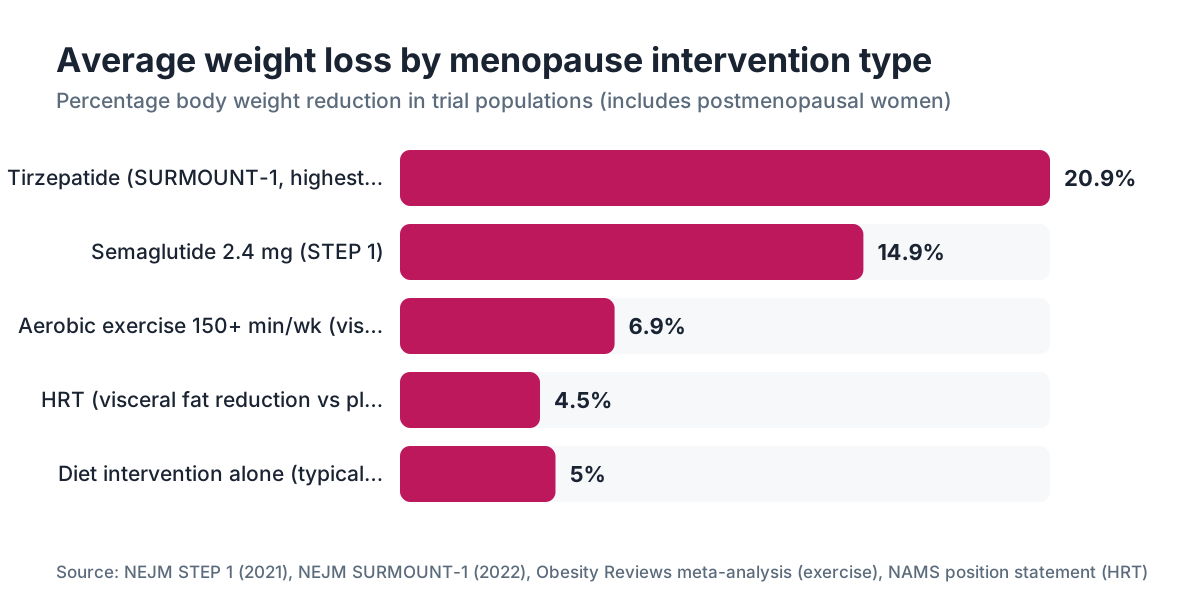
The STEP 1 trial for semaglutide showed an average 14.9 percent drop in body weight over 68 weeks in adults with obesity, including a large share of postmenopausal women [11]. The SURMOUNT-1 trial for tirzepatide (which acts on both GLP-1 and GIP receptors) showed average weight loss of 20.9 percent at the highest dose [12]. Both dwarf any diet or exercise result on record.
Beyond scale weight, these drugs cut visceral fat preferentially. A sub-analysis of STEP 1 using MRI found semaglutide reduced visceral adipose tissue by 34 percent versus 9 percent for placebo [11]. That's exactly the fat women fight during the transition, and these medications hit it directly.
For menopausal women, the appetite piece pays extra. GLP-1 receptors sit in the hypothalamus, the same brain region that runs hunger signaling. After menopause, leptin resistance blunts the brain's read on fullness. GLP-1 agonists work around that by slowing gastric emptying and acting on satiety centers.
GLP-1 medications don't replace HRT. They address weight and metabolic risk. HRT addresses estrogen deficiency symptoms, bone loss, cardiovascular protection, and fat redistribution at the hormonal level. The two can run together, and increasingly do in practice, each working a different root cause.
Side effects are real: nausea, constipation, and rarely more serious GI events. Muscle loss is a concern with rapid weight loss on GLP-1s, which is why pairing them with high protein and resistance training matters. Losing muscle while losing fat is a bad trade for a postmenopausal woman already fighting sarcopenia.
For a closer comparison of the two, see semaglutide vs tirzepatide. More on dosing and how semaglutide works is at semaglutide for weight loss.
What role does sleep and stress play in menopause belly fat?
Sleep and stress are not soft lifestyle extras. They're direct hormonal levers on weight.
Cortisol, the main stress hormone, is one of the strongest drivers of visceral fat storage. Chronically high cortisol tells abdominal fat cells specifically to hoard energy. That's old programming: during a stress response, the body wants fast fuel near the organs. Chronic cortisol from modern stress, or from sleep shattered by hot flashes, sends the same signal with no useful payoff.
Sleep deprivation raises ghrelin (hunger) by about 14 to 28 percent in clinical studies and lowers leptin (satiety) by a similar margin. In one NIH-funded study, adults sleeping 5.5 versus 8.5 hours while in a caloric deficit lost less fat and more lean mass [13]. Short sleep makes you eat more and burn muscle instead of fat. For women whose night sweats break sleep several times a night, that's no small thing.
Treating hot flashes and night sweats, through HRT, non-hormonal options like fezolinetant (Veozah), or behavioral sleep strategies, helps weight management directly by restoring sleep architecture. Fixing the symptom pays metabolic dividends past comfort.
Cortisol strategies with real evidence: regular moderate exercise (which lowers cortisol long-term even though a single hard workout raises it briefly), consistent sleep and wake times, less alcohol, and enough magnesium (many postmenopausal women run low). Magnesium glycinate around 300 to 400 mg before bed is low-risk and often helps sleep and mild anxiety, though high-quality RCT evidence in menopausal women is limited.
Does weight gain in menopause increase health risks beyond appearance?
It does, and substantially. Menopausal weight gain, especially visceral fat, is not cosmetic.
Postmenopausal women with a high waist circumference show higher rates of type 2 diabetes, hypertension, coronary artery disease, stroke, and certain cancers including breast and endometrial. The American Heart Association names menopause as a female-specific risk enhancer for cardiovascular disease, partly because lost estrogen and gained visceral fat each damage the cardiovascular system on their own [3].
Insulin resistance, which visceral fat drives, is the gateway to metabolic syndrome. Metabolic syndrome in postmenopausal women carries roughly a 2-fold jump in cardiovascular event risk. And it's common. Estimates put metabolic syndrome at over 40 percent of postmenopausal women in the United States [4].
Bone health intersects too. Falling estrogen speeds bone loss directly, and body weight, lean mass specifically, helps hold bone density through mechanical loading. Women who lose weight fast, including on GLP-1 medications without resistance training, can lose bone alongside fat. A bone density test at or near menopause is sensible for any woman with risk factors.
Joint pain links in as well, tied to the inflammatory cytokines visceral fat secretes. That's one reason many women see arthritis-like symptoms worsen as weight climbs in menopause. Cut visceral fat and you cut systemic inflammation, and many patients report joint relief with meaningful fat loss.
How to stop menopausal weight gain: a practical framework
No single drug, diet, or hack stops menopausal weight gain. The women who manage it best work in layers that hit the underlying hormonal shifts, more than the number on the scale.
Think about it as five layers.
Layer one: hormonal foundation. If you're in perimenopause or early menopause with no contraindications, discuss HRT with a qualified clinician. The earlier you start, the more it guards against visceral fat, bone loss, and cardiovascular risk. Many clinicians prefer an estrogen patch or other transdermal estrogen for metabolic reasons, paired with appropriate progesterone. If you're near the transition, knowing when does menopause start helps time the conversation.
Layer two: dietary foundation. Get to 1.2 to 1.6 g/kg of protein a day. Cut ultra-processed foods and added sugars harder than you cut total calories. Eat earlier when you can. Stop eating 2 to 3 hours before bed. Don't drink your calories.
Layer three: movement. Lift weights at least twice a week, heavy enough to challenge the muscle. Add 150 minutes of moderate aerobic activity. Move often through the day.
Layer four: sleep and stress. Treat night sweats if they're wrecking sleep. Build a dark, cool, consistent sleep setup. Manage cortisol with exercise and, if needed, professional support.
Layer five: medication if indicated. If BMI is above 30 (or above 27 with metabolic comorbidities) and the foundation layers aren't moving the needle, GLP-1 medications are evidence-backed and worth considering. Semaglutide and tirzepatide both have trial data in populations that include postmenopausal women. If cost is a barrier, compounded versions carry their own considerations, covered at compounded semaglutide.
The women who struggle most usually run one layer hard and skip the rest. Eating perfectly but not sleeping. Taking GLP-1 medications without changing protein. Starting HRT but never lifting. Integration is what works.
| Strategy | Effect on visceral fat | Effect on lean mass | Evidence strength | |---|---|---|---| | Estrogen therapy (HRT) | Reduces accumulation | Helps preserve | Strong RCT data | | Resistance training | Reduces | Builds | Strong RCT data | | Aerobic exercise (150+ min/wk) | Reduces directly | Neutral to modest | Strong RCT data | | High-protein diet | Modest | Preserves and builds | Moderate | | GLP-1 medications | Reduces substantially | Risk of loss if no exercise | Strong RCT data | | Sleep improvement | Reduces cortisol-driven fat | Helps preserve | Moderate, indirect | | Time-restricted eating | Modest reduction | Neutral with adequate protein | Limited long-term data |
When should you talk to a doctor about menopause weight gain?
A few straight answers.
If you've gained more than 10 pounds in 12 months with no obvious dietary cause, get seen. Unintended weight gain can flag thyroid dysfunction, which is common in perimenopausal and postmenopausal women, and its symptoms overlap heavily with menopause itself. A TSH test is cheap and belongs in any workup.
If your waist circumference is above 35 inches, get a full metabolic panel: fasting glucose, HbA1c, fasting insulin, lipids, and blood pressure. Those numbers tell you whether visceral fat is already doing metabolic damage, and they give you a baseline to track.
If you're in perimenopause and haven't talked about HRT, do it now. The right time to start is earlier than most women are told. Our overview of perimenopause age gives a clearer picture of where you might be in the transition.
If you've done the lifestyle work consistently for 3 to 6 months and the belly fat won't budge, that's a cue to add pharmacological support, not a verdict on your effort. The postmenopausal hormonal environment works against fat loss. It isn't premenopausal dieting, and it shouldn't be treated as such.
WomenRx connects women with clinicians experienced in both hormone therapy and GLP-1 prescribing, so you don't have to run those conversations in separate rooms. The menopause years are exactly when a single clinician who understands both hormonal and metabolic health earns their keep.
The bottom line: menopause weight gain is real, it's hormonal, and it carries real health consequences. It's also neither inevitable nor irreversible. The women with the best outcomes understand why it's happening and push on several levers at once.
Frequently asked questions
At what age does menopausal weight gain start?
Weight gain and fat redistribution usually begin during perimenopause, which for most women starts in the mid-40s, though it can start as early as the late 30s. The fastest change tends to hit the 2 to 3 years before and after the final menstrual period. The average age of menopause in the US is 51, so many women notice the biggest shifts between 47 and 53.
Can you lose belly fat after menopause?
Yes, though it takes more work than before menopause. The most effective combination is resistance training, moderate-to-vigorous aerobic exercise at 150+ minutes per week, a high-protein diet, and, for eligible women, hormone therapy. GLP-1 medications like semaglutide or tirzepatide can cut visceral fat substantially in trial populations that include postmenopausal women. It's harder, not impossible.
Does menopause cause weight gain even without eating more?
Yes. DEXA scan studies show women add visceral fat during menopause even when caloric intake stays constant. Falling estrogen lowers resting metabolic rate, drops muscle mass, and shifts fat storage to the abdomen. Insulin resistance means more of what you eat gets stored as fat. The scale may barely move while body composition worsens. This is a hormonal change, not a failure to diet.
How much weight gain is normal during menopause?
The average is about 1.5 pounds per year through the transition, totaling roughly 5 to 8 pounds across perimenopause and early postmenopause for many women. But body fat percentage and waist circumference climb more than scale weight suggests, because muscle is lost at the same time. Some women gain much more, particularly those who are sedentary or already have insulin resistance.
Does estrogen help with weight loss in menopause?
Estrogen therapy doesn't cause meaningful weight loss on its own, but it does reduce visceral fat accumulation compared to no treatment in clinical trials. It also preserves lean muscle, improves insulin sensitivity, and improves sleep, all of which support better weight management. Think of it as fixing the hormonal environment so diet and exercise can work the way they're supposed to.
Is semaglutide safe for postmenopausal women?
Semaglutide (Wegovy) is FDA-approved for weight management in adults with a BMI of 30 or above, or 27 with a weight-related condition. Postmenopausal women were included in the STEP 1 trial, which showed an average 14.9 percent weight reduction over 68 weeks. Major contraindications include a personal or family history of medullary thyroid carcinoma or MEN2. Side effects are mainly GI. Discuss your individual situation with a physician.
Why does my stomach get bigger in menopause even though I'm not eating more?
Estrogen normally suppresses visceral fat storage. As estrogen falls, fat that once went to hips and thighs redirects to the abdomen. Cortisol, which rises with poor sleep (often from night sweats), tells abdominal fat cells specifically to accumulate. Insulin resistance, which worsens without estrogen, means more glucose converts to fat. All of it happens regardless of how much you eat.
What foods should menopausal women avoid to prevent weight gain?
Refined carbohydrates and added sugars top the list, because postmenopausal insulin resistance handles glucose loads poorly. Ultra-processed foods override satiety. Alcohol is calorie-dense and a direct driver of visceral fat and hot flashes. Late-night eating of any food is worse after menopause because evening insulin sensitivity is lower. None of these need an absolute ban, but frequency and quantity matter.
Does menopause affect metabolism?
Yes, in several ways. Resting metabolic rate falls with the muscle loss that speeds up when estrogen drops. Insulin sensitivity worsens, so the same meal creates a larger, longer insulin spike. The liver's fat processing changes without estrogen. Thyroid function, which sets baseline metabolism, is also more likely to falter around menopause. Getting thyroid labs (TSH at minimum) is sensible for any woman with unexplained weight gain at this stage.
Does HRT cause weight gain?
The evidence says no. HRT doesn't cause weight gain on balance and may reduce visceral fat accumulation. A common fear is that progesterone causes weight gain, and some synthetic progestins (particularly medroxyprogesterone acetate) can raise appetite and fluid retention. Body-identical micronized progesterone looks more neutral. Many women who start HRT lose belly fat over the following months as hormonal balance returns, even without other changes.
How long does menopausal weight gain last?
The fastest fat redistribution happens in the 2 to 5 years around the final menstrual period. After that, weight gain slows but doesn't reverse on its own. Postmenopausal weight gain can continue gradually from ongoing muscle loss and insulin resistance, particularly without intervention. There is no point at which the body spontaneously undoes menopausal fat redistribution.
Can you prevent menopausal weight gain entirely?
Some prevention is realistic, but most women will see some fat redistribution regardless. The goal is to minimize visceral fat and preserve lean mass. Starting resistance training and dialing in protein before or early in perimenopause makes a real difference. Women who begin HRT early in the transition accumulate far less visceral fat than those who don't. Complete prevention is unlikely. Meaningful reduction is very achievable.
What's the difference between perimenopause weight gain and menopause weight gain?
Perimenopause is the transition period (often 4 to 8 years) before the final menstrual period, and weight and fat redistribution changes begin here as estrogen fluctuates erratically. Menopause is the point 12 months after the last period, and the years after are postmenopause. Visceral fat accumulation tends to speed up right around the final period and continues into early postmenopause. Same mechanisms, gradual timeline, not a sudden switch.
Does tirzepatide work better than semaglutide for menopausal weight loss?
Head-to-head trials in menopausal women specifically don't exist yet. In the general adult populations studied, tirzepatide (SURMOUNT-1) showed about 20.9 percent average weight loss at the highest dose versus semaglutide's 14.9 percent in STEP 1. Tirzepatide acts on two receptors (GLP-1 and GIP) versus semaglutide's one. Both significantly reduce visceral fat. The choice depends on individual response, cost, access, and side effect tolerance. See the semaglutide vs tirzepatide page for the full breakdown.
Sources
- North American Menopause Society (The Menopause Society), position content in Menopause journal on menopause and body weight
- NIH National Heart, Lung, and Blood Institute, Women's Health Initiative
- American Heart Association, menopause as a cardiovascular risk enhancer
- Study of Women's Health Across the Nation (SWAN), published findings on fat mass changes
- The Menopause Society, hormone therapy position statement
- Endocrine Society, Journal of Clinical Endocrinology and Metabolism, estrogen and visceral fat
- The Menopause Society, Menopause journal, micronized progesterone metabolic effects versus synthetic progestins
- Academy of Nutrition and Dietetics with American College of Sports Medicine, joint position statement on nutrition and athletic performance
- The BMJ, ultra-processed food consumption and health outcomes (2021)
- Obesity Reviews, meta-analysis of aerobic exercise and visceral fat in postmenopausal women
- New England Journal of Medicine, STEP 1 trial, semaglutide 2.4 mg for obesity (Wilding et al., 2021)
- New England Journal of Medicine, SURMOUNT-1 trial, tirzepatide for obesity (Jastreboff et al., 2022)
- NIH National Heart, Lung, and Blood Institute; Nedeltcheva et al., Annals of Internal Medicine (2010) on sleep and body composition