Medvi semaglutide reviews: what women actually experience
TL;DR: Medvi is a telehealth platform that prescribes compounded semaglutide, with user-reported pricing around $179 to $299 per month depending on dose. Reviews praise the low cost and fast access versus brand Ozempic, but flag inconsistent injection support and variable compounding quality. This guide covers what real users say, the clinical evidence, red flags worth heeding, and the exact questions to ask before you sign up.
What is Medvi and how does its semaglutide program work?
Medvi is a direct-to-consumer telehealth company. It connects patients with licensed prescribers who can order compounded semaglutide from 503A or 503B compounding pharmacies. You fill out an intake form, do a short async or video visit, and if you qualify, a prescription goes to a partner pharmacy. Vials usually ship within a few business days.
The model is everywhere in the GLP-1 telehealth space right now. Branded semaglutide (Ozempic, Wegovy) spent long stretches on the FDA shortage list, and during a shortage, compounding pharmacies are legally allowed to make copies of the active ingredient. The FDA removed semaglutide from that shortage list in early 2025. That single decision created real legal uncertainty for compounders. Medvi, like every other platform, is working through that shift as of mid-2025 [1].
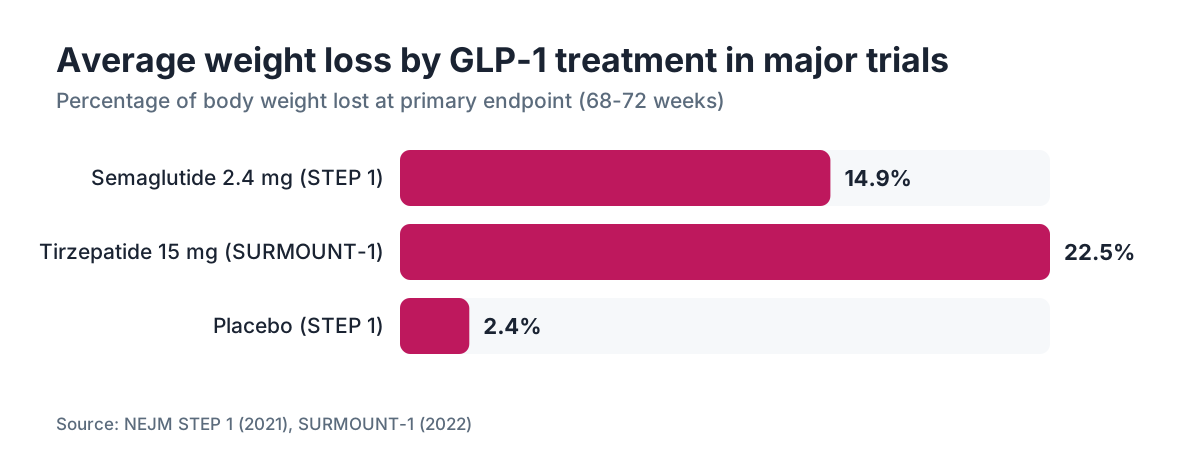
Here is the science, plainly. Semaglutide is a GLP-1 receptor agonist. It slows how fast your stomach empties, turns up satiety signals to the brain, and at higher doses reduces body weight by a meaningful amount. The STEP 1 trial found participants lost an average of 14.9% of body weight over 68 weeks on 2.4 mg weekly semaglutide, against 2.4% on placebo [2]. That is the evidence base. Medvi's program uses that same molecule, sourced differently.
You can read the full clinical picture in our semaglutide overview, and our semaglutide vs tirzepatide breakdown is worth a look before you commit to either drug.
What do Medvi semaglutide reviews actually say?
Medvi reviews are genuinely mixed across Trustpilot, Reddit (mostly r/Semaglutide and r/antiobesity), and Google. That is not a knock. Mixed is the honest picture for almost every compounding telehealth platform.
The positive reviews cluster around a few things. Onboarding is faster than getting in with a primary care doctor. Pricing runs far below retail Wegovy, which lists over $1,300 a month without insurance [3]. And for many users, the compounded injection feels the same as branded. Women who have been turned away from GLP-1 prescriptions through traditional channels often say they finally felt heard during intake.
The negative reviews are where you actually learn something. The most frequent complaints:
- Inconsistent pharmacy sourcing. Compounded semaglutide quality varies between 503A and 503B pharmacies. Some Medvi users report vials with different concentrations than expected, which forces a dose recalculation.
- Customer service delays. Renewals and dosing adjustments sometimes take longer than promised, and that stings when you are mid-titration.
- Vague escalation paths. A few reviewers describe struggling to reach a prescriber when side effects got bad.
- Thin support. No nutrition coaching or muscle-preservation plan comes with the base program.
None of this is unique to Medvi. These are structural problems across budget GLP-1 telehealth. The real question is whether Medvi runs the model better or worse than its peers. The honest answer: somewhere in the middle. Nobody has published a head-to-head audit of these platforms. The closest thing we have is user-reported experience aggregated across forums, which is soft data by any standard.
How much does Medvi semaglutide cost compared to alternatives?
Medvi's pricing has moved over time. As of mid-2025, the reported range is roughly $179 to $299 per month depending on dose and whether you are in a starter or maintenance tier. Some users report a first-month promo around $149. These numbers come from user-reported receipts on Reddit and review sites. Medvi does not publish a locked public pricing page, so treat any figure as a ballpark until you get your own quote.
Here is how that sits against the broader market:
| Option | Typical monthly cost | Notes | |---|---|---| | Wegovy (brand, no insurance) | ~$1,349 | FDA-approved 2.4 mg dose [3] | | Ozempic (brand, no insurance) | ~$935 | Approved for T2D, widely used off-label [8] | | Medvi compounded semaglutide | ~$179-$299 | Reported by users; not publicly posted | | Hims/Hers compounded sema | ~$199-$349 | Widely reported; varies by dose | | Ro Body compounded sema | ~$145-$299 | Promotional pricing varies | | Local compounding pharmacy (direct) | ~$100-$250 | Requires existing prescriber |
The gap between compounded and brand-name is large. Whether that gap is worth it comes down to compounding pharmacy quality, and you cannot fully judge that from the outside. The FDA is blunt that compounded drugs "are not FDA-approved" and do not undergo FDA review for safety, effectiveness, or quality before they reach patients [1]. That is not a reason to automatically avoid them. It is a reason to ask your Medvi prescriber which specific pharmacy fills your script and whether it is a 503B (FDA-registered, stricter standards) or a 503A (patient-specific, lighter oversight) [6].
See our compounded semaglutide article for what compounding actually means in practice.
Is compounded semaglutide from Medvi as effective as Wegovy?
Probably similar for most people. But there are real reasons the FDA treats the two differently, and you should know them.
The active molecule is the same: semaglutide. Compounding pharmacies buy the API (active pharmaceutical ingredient) from suppliers, then formulate it into injectable vials. Done correctly at a reputable pharmacy, the pharmacological effect should match branded semaglutide.
Here is the catch. The STEP trials that established semaglutide's efficacy used Novo Nordisk's formulation, not compounded versions [2]. No randomized controlled trial has ever compared compounded semaglutide head-to-head against Wegovy. So when a telehealth platform tells you it is "the same," that claim is biologically plausible and technically unverified. Both things are true at once.
The FDA has flagged a specific problem: some compounded products use semaglutide sodium or semaglutide acetate rather than the base semaglutide in Ozempic and Wegovy. The agency has warned that these salt forms "are not the same as semaglutide" and that their safety and effectiveness have not been established [1]. Ask about this by name when you evaluate Medvi or any compounding platform.
For women in menopause, the weight-loss story gets more tangled. Hormonal shifts change fat distribution, insulin sensitivity, and lean mass. Semaglutide handles the caloric intake side and does nothing for the estrogen-deficiency-driven metabolic changes underneath. Our hormone replacement therapy article explains why some clinicians now pair HRT and GLP-1s for perimenopausal women.
What side effects do Medvi users report most?
The side effect profile of compounded semaglutide should match branded, since the active ingredient is identical. The STEP 1 trial reported nausea in 44% of participants on semaglutide, vomiting in 24.8%, diarrhea in 29.8%, and constipation in 24.2% [2]. Those are trial figures at the full 2.4 mg dose after titration.
What Medvi-specific reviews add is telling. The most common complaint beyond standard GI symptoms is dosing confusion. Compounded semaglutide comes as a multi-dose vial with concentration listed in mg/mL, not the pre-filled pen you get with Ozempic or Wegovy. New users frequently report they are unsure how to draw the correct dose, especially early in titration. Some Medvi prescribers send detailed instructions. Others send a brief PDF and move on.
Muscle loss is the underreported concern, and it hits women harder. Semaglutide cuts overall caloric intake, and without a deliberate high-protein diet and resistance training, lean mass goes down along with fat. In STEP 1, roughly 39% of the weight lost was lean mass [4]. For a woman already shedding muscle through the hormonal changes of perimenopause, that stacks one problem on top of another.
Severe side effects that need medical attention, including pancreatitis and gallbladder disease, are listed in the FDA label for Wegovy [3]. They are rare but real. Medvi users who have had acute abdominal pain report uneven response times from the platform. So clarify this before you sign up: what is the escalation protocol if I get a serious symptom?
Our semaglutide for weight loss article covers the clinical side effect data in more depth.
How does Medvi's dosing protocol compare to FDA-approved titration?
The FDA-approved Wegovy titration starts at 0.25 mg weekly for four weeks, then steps up by set increments every four weeks until it reaches the 2.4 mg maintenance dose at week 17 [3]. That slow ramp exists for one reason: to blunt GI side effects.
Medvi, based on user reports, starts patients at 0.25 mg weekly and follows a similar escalation. Some users say they were offered accelerated titration, moving up faster than every four weeks. That can push weight loss along faster and can also make side effects worse. It is a judgment call a prescriber should make based on your tolerance, not a platform default.
The compounded vial means you self-inject with an insulin-style syringe instead of the auto-injector pens used for Ozempic and Wegovy. Most people adapt fast. But if you have needle anxiety or motor limitations, the pen format may be worth paying up for.
One thing to watch closely. Compounding platforms label vials in different concentrations, say 5 mg/mL or 2.5 mg/mL. Make sure you and your prescriber are talking about your weekly dose in milligrams, not volume. A dose error in either direction can hurt you.
Is Medvi legitimate and is compounded semaglutide legal in 2025?
As of mid-2025, the legal picture for compounded semaglutide is unsettled. The FDA removed semaglutide from its drug shortage list in early 2025, which in principle requires 503A and 503B compounders to stop making copies of commercially available doses. The FDA has said it intends to take action against pharmacies that keep compounding after a shortage resolves [1].
In practice, the enforcement timeline has been contested. Compounding trade groups and telehealth companies pushed back, and litigation created temporary delays. The result is a gray zone. Some platforms keep operating while legal arguments play out.
Medvi is a telehealth platform, not a pharmacy. It connects patients with prescribers and routes prescriptions to partner pharmacies. Whether those pharmacies are operating within current FDA guidance depends on their own decisions and the enforcement status of the moment, which can change.
Is Medvi a legitimate business? By the basic measures, yes. It uses licensed prescribers, real pharmacies, and is not running some obvious fraud. But legitimate does not mean immune to regulatory disruption. If you use Medvi right now, have a plan for what you will do if compounded semaglutide disappears from that channel.
For the full legal explainer, our compounded semaglutide article covers the 503A versus 503B distinctions [6].
What should women in perimenopause or menopause specifically know before trying Medvi?
Weight gain during menopause is common and well documented. Declining estrogen pushes fat toward the visceral, abdominal area and lowers insulin sensitivity, according to the North American Menopause Society [7]. GLP-1 agonists like semaglutide can bring body weight down, but they do not touch the hormonal driver behind that fat redistribution.
Some research suggests estrogen therapy improves insulin sensitivity and reduces visceral fat independent of weight. Whether combining hormone therapy with semaglutide beats either one alone is a genuinely interesting question and a genuinely understudied one. No large RCT has tested that combination in menopausal women specifically.
Here is what the evidence does support. For women over 40 losing significant weight on GLP-1s, bone density monitoring matters. Rapid weight loss is linked to lower bone mineral density [5], and postmenopausal women already carry elevated osteoporosis risk. Our bone density test guide explains when and why to get a DEXA scan if you are starting a GLP-1.
Muscle preservation is the other big concern. Women in their 40s and 50s are already losing muscle through sarcopenia and estrogen decline. Semaglutide-driven caloric restriction speeds that up if protein intake and resistance training are not front and center. Medvi's base program includes no nutrition or exercise guidance. Fill that gap yourself or with a registered dietitian before you start.
Platforms like WomenRx take a more integrated approach, handling hormonal care and GLP-1 prescribing inside a single care model. That coordination matters more than the drug alone.
See also: perimenopause age and menopause for the hormonal context behind weight changes at this stage.
How does Medvi compare to other GLP-1 telehealth platforms?
The compounding telehealth space grew fast and looks identical on the surface. Here is an honest comparison on the dimensions that actually matter when a woman is weighing her options:
| Platform | Approx. monthly cost | Prescriber access | Nutrition support | Pharmacy type | |---|---|---|---|---| | Medvi | ~$179-$299 | Async + sync | Minimal | 503A/503B (varies) | | Hims/Hers | ~$199-$349 | Async primary | Basic app tools | 503B partners | | Ro Body | ~$145-$299 | Async + sync | Coaching included | 503B partners | | Henry Meds | ~$297-$397 | Async | None standard | 503A/503B | | Noom Med | ~$149+ | Sync visits | Full Noom program | 503B | | WomenRx | Varies | Sync, women-focused | Hormone-integrated | Verified compounders |
The difference that matters most, and the one most reviews shortchange: what happens when something goes wrong? Nausea that will not quit. A dose that seems off. A symptom you do not recognize. Platforms with synchronous prescriber access and clear escalation paths earn their premium. Async-only platforms are fine for routine refills. They can feel inadequate in the first eight weeks, when side effects are most likely and you most want a human to answer.
For the specific comparison between semaglutide and tirzepatide (Mounjaro/Zepbound), which some platforms now offer, see our semaglutide vs tirzepatide head-to-head.
What questions should you ask Medvi before starting?
Before you pay the first month, you deserve clear answers to these. If the intake process gives you no room to ask them, that itself is a signal.
- Which specific pharmacy fills my prescription, and is it a 503A or 503B facility?
- What form of semaglutide is in the vial (base semaglutide, sodium salt, acetate salt)?
- What is your escalation protocol if I have severe side effects?
- How do I reach an actual prescriber, more than support staff, within 24 hours?
- What is your policy if semaglutide compounding becomes unavailable due to FDA enforcement?
- Does my titration schedule follow the FDA-approved Wegovy schedule, or is it modified?
- Is there any monitoring of my labs (blood glucose, thyroid, liver function) built into the program?
One more for women specifically: ask whether the prescribers have experience managing GLP-1s alongside hormone therapy. Most budget platforms treat these as separate tracks. If you are already on estrogen, progesterone, or other hormones, drug interactions are low risk, but coordination of care still matters.
Our progesterone and estrogen patch articles can help you describe your hormonal picture before that conversation.
What are the biggest red flags in Medvi reviews worth taking seriously?
After reading through hundreds of user reviews across platforms, a few patterns stand out as meaningful rather than routine grumbling. Here they are.
Vial labeling confusion. Multiple reviewers describe vials labeled differently than expected, in units or concentration. This is a patient safety issue, not an inconvenience. A dose error with semaglutide can cause severe nausea, raise hypoglycemia risk in people with certain conditions, or underdose you so weight loss stalls.
Prescription delays after a dose increase. Titration needs periodic check-ins and updated prescriptions. Users who report two to three week gaps between requesting a higher dose and receiving the new vial lose momentum and miss the benefit of steady titration.
No thyroid history screening. Semaglutide and other GLP-1 agonists carry an FDA boxed warning about thyroid C-cell tumors seen in rodents, and the FDA label tells prescribers to counsel patients with a personal or family history of medullary thyroid carcinoma or MEN 2 [3]. Some Medvi intake forms appear to screen for this. Others apparently do not ask. Confirm it is covered.
Green flags show up too: fast shipping after approval, clear vial instructions with injection tutorial videos, and prescribers who reply to messages within 24 hours. Those appear in positive reviews and suggest your experience depends heavily on which prescriber and pharmacy you land with, more than on the platform brand.
That variance is itself the lesson. Medvi appears to have less standardization than platforms with more vertically integrated care.
Frequently asked questions
Is Medvi semaglutide the same thing as Ozempic or Wegovy?
The active ingredient is the same: semaglutide. But Medvi prescribes compounded semaglutide from partner pharmacies, not the FDA-approved Novo Nordisk formulations in Ozempic and Wegovy. Compounded versions are not FDA-approved and were not tested in the trials that established semaglutide's efficacy. The pharmacological effect should be similar when the drug is correctly formulated, though manufacturing quality is not guaranteed the same way.
How much does Medvi semaglutide cost per month?
Based on user-reported pricing, Medvi's compounded semaglutide runs roughly $179 to $299 per month depending on dose tier. Some users report an introductory price around $149 for the first month. Medvi does not post a locked public pricing page, so quotes vary. That compares to roughly $1,349 a month for branded Wegovy without insurance, making compounded options far cheaper if quality holds.
Is compounded semaglutide from Medvi safe?
When correctly formulated by a reputable 503B pharmacy, compounded semaglutide carries a safety profile similar to branded. The main risks are compounding quality (concentration errors, wrong salt forms) and the lack of FDA manufacturing oversight. The FDA has warned that the semaglutide sodium and acetate salt forms used by some compounders 'are not the same as semaglutide.' Ask Medvi which form and which pharmacy they use.
Does Medvi prescribe semaglutide for weight loss or only for diabetes?
Medvi prescribes compounded semaglutide mainly for weight loss and obesity management rather than type 2 diabetes. The intake typically screens for a BMI of 27 or higher with a weight-related condition, or a BMI of 30 or higher, mirroring the criteria used for FDA-approved Wegovy. You do not need a diabetes diagnosis to qualify.
What happens to my Medvi prescription if the FDA bans compounded semaglutide?
The FDA removed semaglutide from its drug shortage list in early 2025, which puts legal pressure on compounders to stop making it. Enforcement is ongoing and contested. If Medvi's partner pharmacies are required to stop compounding, your prescription would be discontinued. Ask Medvi what their contingency plan is and whether they can help transition you to brand-name semaglutide with insurance assistance.
How long does it take to lose weight on Medvi semaglutide?
The FDA-approved Wegovy titration takes about 16 weeks to reach the full 2.4 mg maintenance dose. In STEP 1, measurable weight loss showed by week 12, with average total body weight loss of 14.9% by week 68. Most Medvi users report noticeable appetite reduction within the first two to four weeks, but real scale changes typically show by weeks 8 to 12.
Can women on hormone replacement therapy use Medvi semaglutide?
GLP-1 receptor agonists have no known clinically significant interactions with estrogen or progesterone-based hormone therapy. Many perimenopausal and menopausal women use both. The bigger point is that they solve different problems: HRT addresses estrogen-deficiency symptoms and hormonal metabolic changes, while semaglutide reduces caloric intake and body weight. Coordination between your HRT prescriber and GLP-1 prescriber matters.
What is the Medvi dosing schedule for semaglutide?
Based on user reports, Medvi follows a titration similar to the FDA-approved Wegovy protocol: starting at 0.25 mg weekly for four weeks, then stepping up every four weeks toward a 1 mg or 2.4 mg maintenance dose. Some prescribers offer accelerated titration. Compounded vials require manual dosing with a syringe, unlike the auto-injector pen used for brand-name Ozempic and Wegovy.
Does Medvi offer tirzepatide as well as semaglutide?
Some compounding telehealth platforms now offer compounded tirzepatide, the active ingredient in Mounjaro and Zepbound. Whether Medvi offers it depends on current availability and regulatory status, which changes often. Tirzepatide produced greater average weight loss than semaglutide in trial data, up to 22.5% in SURMOUNT-1 [9]. Check Medvi's current menu and compare it against our semaglutide vs tirzepatide overview before deciding.
Will Medvi semaglutide cause muscle loss?
Yes, this is a real risk. In STEP 1, roughly 39% of the weight lost on semaglutide was lean mass, not fat. For women in perimenopause and menopause who are already losing muscle through hormonal changes and age-related sarcopenia, that compounds an existing problem. A high-protein diet and resistance training are essential alongside any GLP-1 program. Medvi's base plan does not include structured nutrition guidance.
How do Medvi reviews compare to reviews for other GLP-1 telehealth platforms?
Medvi reviews are mixed, which is consistent with most compounding telehealth platforms. Recurring positives: lower cost than brand-name, faster access than traditional care. Recurring negatives: vial dosing confusion, slow prescriber response for dose adjustments, and variable pharmacy quality. Platforms with built-in nutrition coaching and synchronous prescriber access tend to produce more consistent positive reviews. Medvi sits in the middle on both price and support.
Is Medvi appropriate for women over 50?
Medvi does not age-restrict its GLP-1 program. Women over 50 can qualify on the same BMI criteria as younger patients. The considerations that matter more for this group: bone density monitoring (rapid weight loss lowers bone mineral density in postmenopausal women), muscle preservation, and whether concurrent HRT needs managing alongside the GLP-1. Medvi's base program does not coordinate those, so you would handle them separately.
Does Medvi accept insurance for semaglutide?
Compounded semaglutide is generally not covered by insurance because it is not FDA-approved. Medvi runs a cash-pay model. Branded Wegovy does have coverage through some commercial plans and can be covered under Medicare Part D in certain circumstances since 2024 [10]. If insurance coverage is a priority, the branded versions through a traditional prescriber may be a better path despite the higher sticker price.
Sources
- FDA, Compounding webpage and semaglutide compounding alerts
- Wilding JPH et al., STEP 1 Trial, New England Journal of Medicine, 2021
- FDA, Drugs@FDA database and Wegovy prescribing information
- Wilding JPH et al., STEP 1 Trial body composition analysis, NEJM 2021
- Endocrine Society clinical resources on obesity and bone health
- FDA, Human drug compounding overview (503A and 503B facilities)
- North American Menopause Society (The Menopause Society)
- GoodRx, Ozempic price reference
- Jastreboff AM et al., SURMOUNT-1 Trial, NEJM 2022
- Centers for Medicare & Medicaid Services (CMS)