Medications for perimenopause symptoms: what actually works
TL;DR: Hormone therapy (estrogen, plus progesterone if you still have a uterus) is the most effective treatment for hot flashes, night sweats, and vaginal dryness. Non-hormonal options like fezolinetant, SSRIs, SNRIs, and gabapentin work for women who can't or won't take estrogen. GLP-1 medications address perimenopausal weight gain. No single drug fixes everything, so match the drug to the symptom.
What is perimenopause and why do symptoms need treatment?
Perimenopause is the years-long hormonal transition before your final period. Estrogen and progesterone don't fade out on a smooth curve. They spike, crash, and swing in patterns that differ wildly from one woman to the next, which is exactly why the symptom list is so long and so unpredictable. [1]
Most women enter perimenopause in their mid-to-late 40s, though it can start as early as 38 or as late as 55. The transition runs anywhere from two to fourteen years, with a median around four to eight. [1] Our overview of perimenopause age covers the timing in more detail.
The common symptoms are hot flashes and night sweats (called vasomotor symptoms, or VMS), irregular periods, broken sleep, vaginal dryness, mood changes, brain fog, joint aches, and weight gain around the middle. Not every woman gets all of them. Some sail through with barely a ripple. But roughly 80 percent have at least some vasomotor symptoms, and for about 25 to 30 percent those symptoms are bad enough to interfere with daily life. [2]
Treatment isn't mandatory. It's a legitimate medical choice, and the old idea that suffering through menopause is just part of being a woman needs to go. There are real drugs with real evidence behind them. This article maps what they are, what each one treats best, who shouldn't take it, and what the studies actually show.
Is hormone therapy the most effective medication for perimenopause?
Yes, and it's not close for vasomotor symptoms. Hormone therapy (HT, also called HRT) is the most studied and most effective treatment for hot flashes, night sweats, sleep loss tied to VMS, and vaginal dryness. The North American Menopause Society (NAMS) put it plainly in its 2023 position statement: "Hormone therapy remains the most effective treatment for vasomotor symptoms and the genitourinary syndrome of menopause." [2]
Estrogen is the core ingredient. Women who still have a uterus need progesterone (or a synthetic progestin) added to protect the uterine lining from estrogen-driven overgrowth. Women who've had a hysterectomy can take estrogen alone.
Estrogen comes as pills, transdermal patches, gels, sprays, and vaginal rings. Transdermal estrogen (patch, gel, spray) skips first-pass liver metabolism and carries a lower blood clot risk than oral estrogen, which matters if you have any clot risk factors. That's why the estrogen patch is one of the most prescribed formats.
Progesterone comes as oral micronized progesterone (brand name Prometrium), progestin-containing IUDs (like Mirena), and synthetic progestins in pill form. Micronized progesterone appears to have a friendlier cardiovascular and breast safety profile than older synthetic progestins, based on observational data from the E3N cohort and the KEEPS trial, though head-to-head randomized data are still thin. [3]
For the full breakdown of what hormone replacement therapy involves, including dosing, formulations, and how to get it, that article goes deeper.
The main reasons not to take estrogen-containing HT: unexplained vaginal bleeding, an active or recent blood clot, stroke, or heart attack, a known or suspected estrogen-sensitive cancer (breast, endometrial), and active liver disease. Women with any of these need non-hormonal options.
What are the risks of hormone therapy for perimenopause?
The 2002 Women's Health Initiative (WHI) trial scared a generation of women off HT and cut prescriptions in half. The original findings were widely misread, and the picture has gotten much clearer in the twenty-plus years since. [4]
The WHI enrolled women with an average age of 63, many of them a decade or more past menopause, not women in their 40s and early 50s. The heart disease risk it found depends heavily on timing. Starting HT within ten years of menopause, or before age 60, links to cardiovascular benefit or neutrality, not harm. Starting it more than ten years out, or after 60, carries more risk. Researchers call this the timing hypothesis, or the window of opportunity. [2]
Breast cancer is the other big worry. Combined estrogen-progestin therapy links to a small rise in breast cancer risk after roughly five years of use, about 8 extra cases per 10,000 women per year compared to non-users in the WHI data. Estrogen-alone therapy (for women without a uterus) showed no increase in the WHI, and actually a slight decrease. The absolute numbers are small. The risk is real but modest, and it has to sit against the quality-of-life and bone benefits. [4]
Blood clot risk (deep vein thrombosis, pulmonary embolism) goes up with oral estrogen but not meaningfully with transdermal estrogen at standard doses. That's one reason most current guidelines favor the patch or gel for anyone with clot risk factors. [2]
Here's the honest summary: for healthy women under 60 who are within ten years of menopause onset, the benefits of HT generally outweigh the risks for moderate-to-severe symptoms. Individualize it. Find a clinician who actually knows this literature.
What non-hormonal prescription medications treat hot flashes?
Several non-hormonal drugs have solid evidence for cutting hot flash frequency and severity. They're the go-to for women with a reason to avoid estrogen: contraindications, personal preference, or an active hormone-sensitive cancer.
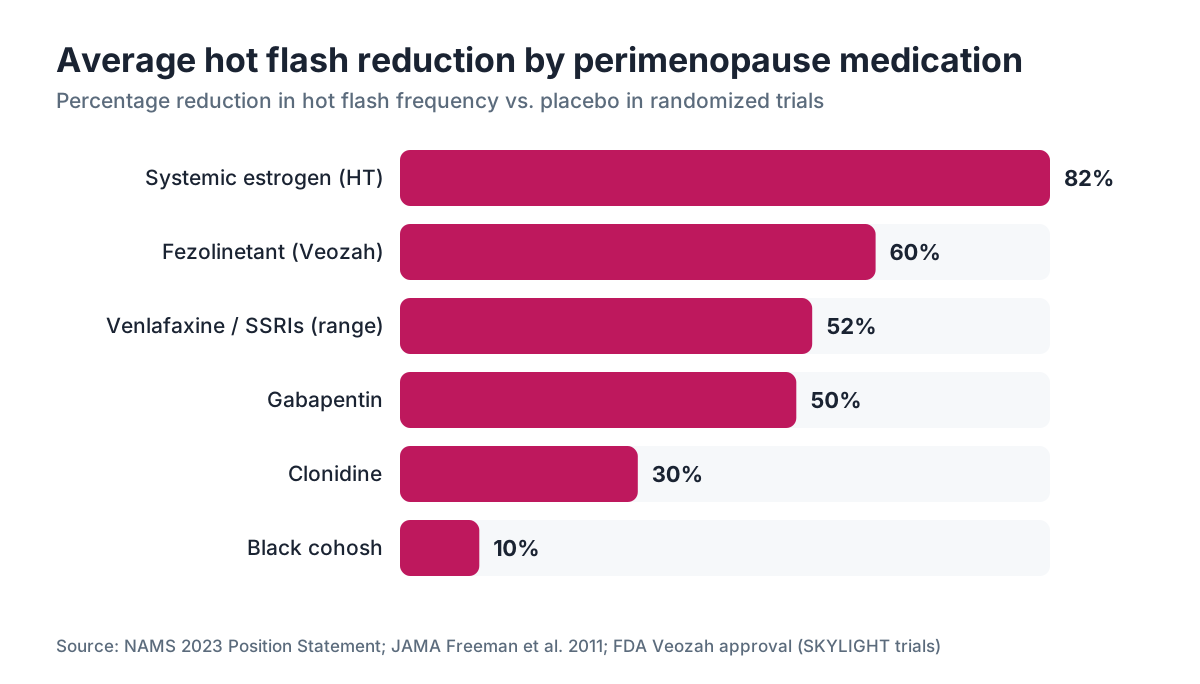
Fezolinetant (Veozah) is the newest and most targeted option. It's a neurokinin 3 (NK3) receptor antagonist, which means it blocks the specific brain signal that triggers hot flashes. The FDA approved it in May 2023 for moderate-to-severe vasomotor symptoms due to menopause. In the SKYLIGHT 1 and SKYLIGHT 2 trials, fezolinetant cut hot flash frequency by about 60 percent at 12 weeks, against about 45 percent for placebo. [5] It runs roughly $550 to $600 a month without insurance, and coverage is spotty. Liver enzyme monitoring is required because trials flagged rare hepatotoxicity signals.
SSRIs and SNRIs are the most commonly prescribed non-hormonal option and have the longest real-world track record. Paroxetine (Brisdelle, 7.5 mg) is the only SSRI with an FDA approval specifically for hot flashes. Others get used off-label with good evidence: escitalopram, venlafaxine (an SNRI), desvenlafaxine, and citalopram all cut hot flash frequency by roughly 40 to 65 percent in randomized trials. [6] If you're also dealing with anxiety or depression, an SSRI or SNRI is often the practical pick because it treats both at once.
One caveat that isn't theoretical: paroxetine strongly inhibits CYP2D6, the enzyme that activates tamoxifen. Women on tamoxifen for breast cancer should skip paroxetine and use venlafaxine or escitalopram instead.
Gabapentin and pregabalin cut hot flash frequency by around 45 to 55 percent versus placebo. Gabapentin causes drowsiness, which makes it handy at bedtime for women whose hot flashes are mainly nocturnal and who also can't sleep. It's a poor daytime drug for most women.
Clonidine, a blood pressure medication, has treated hot flashes for decades. It works, but it's weaker than SSRIs or gabapentin, and its side effects (dry mouth, dizziness, drowsiness, rebound high blood pressure if you stop it suddenly) push it to third-line at best.
Oxybutynin has some small trial data for hot flash reduction as an off-label use. The evidence is thin, and it causes dry mouth and cognitive fog in some women. It's not a standard recommendation.
What medications help with perimenopause mood changes and anxiety?
Perimenopause mood symptoms are real and biologically driven. Estrogen acts directly on the brain's serotonin, dopamine, and GABA systems, and the wild estrogen swings of perimenopause destabilize all three. [1]
When mood symptoms track clearly with hormone swings (worse right before a period, or in cycles), hormone therapy often beats antidepressants. Treat the hormone instability and you treat the mood symptom at its source.
For mood symptoms that don't follow a clear cycle, or in women with a history of depression or anxiety that perimenopause makes worse, SSRIs and SNRIs are first-line. Escitalopram, sertraline, and venlafaxine are the usual choices. They have decades of safety data and work for both depression and anxiety.
Buspirone shows up for anxiety in perimenopause, especially for women who want to avoid benzodiazepines. It takes four to six weeks to reach full effect and works as a daily medication, not a rescue pill.
Benzodiazepines get prescribed occasionally for severe anxiety, but they're usually avoided as routine perimenopausal treatment because of dependence risk, cognitive effects (already a concern during the transition), and rising fall risk as women age.
Mirtazapine deserves a mention for women who have insomnia and depression together. It's sedating, which can help, and it has minimal sexual side effects compared to most SSRIs.
Are there medications for perimenopause sleep problems?
Sleep falls apart in perimenopause for more than one reason. Some of it is direct: night sweats wake you up. Some of it is indirect: anxiety, mood changes, and primary insomnia that show up on their own during the transition.
When night sweats drive the sleep loss, treating the underlying vasomotor symptoms with HT or a non-hormonal hot flash medication usually fixes the sleep too. This is the first step, and it gets skipped constantly.
For insomnia that hangs on after VMS are controlled, the FDA-approved sleep medications include zolpidem, eszopiclone, and others in the sedative-hypnotic class. Cognitive behavioral therapy for insomnia (CBT-I) has the strongest long-term evidence for chronic insomnia and is now first-line in most sleep medicine guidelines, though it needs a trained provider or a structured digital program.
Low-dose doxepin (3 to 6 mg, brand name Silenor) is FDA-approved for insomnia and helps with staying asleep more than falling asleep. It's a good option for the woman who wakes up at 3 a.m. every night.
Melatonin is over the counter and useful for circadian problems (shift work, travel, delayed sleep phase) but weak for the sleep-maintenance insomnia typical in perimenopause. The doses sold in the US (3 to 10 mg) are pharmacological, not physiological. Starting at 0.5 to 1 mg lines up better with the research on what actually works. Nobody has good data on long-term melatonin use in perimenopausal women specifically.
What medications treat perimenopause-related weight gain?
Perimenopausal weight gain is part hormonal, part metabolic, part age-related muscle loss. Estrogen decline pushes fat toward the belly. Insulin sensitivity often slips. Resting metabolic rate drops. So women who haven't changed a thing about diet or exercise gain weight anyway, and it clusters around the midsection in a pattern that raises cardiometabolic risk. [7]
Hormone therapy does not cause weight gain, and it may soften the shift in fat distribution that comes with estrogen loss. Some studies show HT reduces abdominal fat buildup compared to no treatment. It's not a weight loss drug, but it's not the culprit many women assume it is.
GLP-1 receptor agonists are the most powerful weight loss drugs available right now. Semaglutide (Ozempic, Wegovy) and tirzepatide (Mounjaro, Zepbound) work by cutting appetite and slowing how fast the stomach empties. In the SURMOUNT-1 trial, tirzepatide produced average weight loss of 20.9 percent of body weight over 72 weeks. [8] In STEP-1, semaglutide 2.4 mg produced average weight loss of 14.9 percent over 68 weeks. [9]
Neither trial was perimenopause-specific, but women made up most of the participants, and the weight loss is real. For perimenopausal women with obesity or weight-related metabolic concerns, a GLP-1 is often the most effective tool available. WomenRx offers GLP-1 treatment evaluation for women sitting at this intersection of hormonal change and weight.
Read more about how semaglutide for weight loss works, or compare semaglutide vs tirzepatide to see which might fit. Compounded versions come up often too; compounded semaglutide covers what's available and what the FDA has said.
Bupropion-naltrexone (Contrave) is an older combination that doubles as an antidepressant through the bupropion. For women with both mood symptoms and weight gain it can be reasonable, though the weight loss is smaller than with GLP-1s (average 5 to 9 percent of body weight in trials).
What medications treat vaginal dryness and genitourinary symptoms?
Genitourinary syndrome of menopause (GSM) covers vaginal dryness, painful sex, urinary frequency, and recurrent UTIs. It hits up to 60 percent of postmenopausal women and, unlike hot flashes, gets worse over time without treatment rather than better. [2]
Local vaginal estrogen is the standard. It comes as a cream, tablet, ring, or suppository and delivers estrogen straight to vaginal tissue with almost no systemic absorption. Because that absorption is so low, most guidelines (NAMS and ACOG included) consider vaginal estrogen safe even for many breast cancer survivors, though the call in that group should involve the oncologist. [2]
Ospemifene (Osphena) is an oral selective estrogen receptor modulator (SERM) approved for moderate-to-severe dyspareunia (painful sex) due to GSM. It's a once-daily pill that acts as an estrogen agonist on vaginal tissue. It also has estrogenic effects on the uterine lining, so women with a uterus who use it long-term need progesterone. It's off the table for women with active or past estrogen-sensitive breast cancer. [12]
Prasterone (Intrarosa) is an intravaginal DHEA suppository. The DHEA converts locally to estrogen and testosterone in vaginal tissue. It's FDA-approved for painful sex due to GSM and suits women who want to avoid estrogen-labeled products.
Non-hormonal vaginal moisturizers (like Replens) and lubricants are OTC options that ease discomfort but don't reverse the tissue changes the way local estrogen does. Useful add-ons, not replacements, for moderate-to-severe GSM.
How do perimenopause medications compare: a head-to-head overview
Different symptoms call for different drugs, and most women in perimenopause are juggling more than one symptom. The table maps the major symptoms to the medications with the best evidence.
| Symptom | First-line option | Second-line / alternative | |---|---|---| | Hot flashes / night sweats | Systemic estrogen (+/- progesterone) | Fezolinetant, SSRI/SNRI, gabapentin | | Vaginal dryness / painful sex | Local vaginal estrogen | Ospemifene, prasterone (DHEA) | | Mood changes / depression | HT (if cyclical/hormonal) or SSRI/SNRI | Buspirone, mirtazapine | | Sleep disruption | Treat VMS first; CBT-I | Doxepin, eszopiclone | | Perimenopausal weight gain | GLP-1 agonist (semaglutide, tirzepatide) | Bupropion-naltrexone | | Bone loss prevention | HT or bisphosphonate (alendronate) | Denosumab, SERM (raloxifene) | | Irregular periods / heavy bleeding | Hormonal IUD (Mirena) or low-dose OCP | Oral progesterone |
On bone health, note that the US Preventive Services Task Force (USPSTF) doesn't recommend HT specifically for osteoporosis prevention in most women, because the fracture reduction doesn't outweigh the overall risk profile when bone protection alone is the goal. If bone density is your main concern, get a bone density test first to know your baseline, then talk bisphosphonate therapy with your clinician. [10]
Women still having periods, even irregular ones, can use low-dose oral contraceptives (a 20 mcg ethinyl estradiol pill, say) to regulate cycles, cut hot flashes, and cover contraception. That's a different thing from menopausal HT, which uses lower estrogen doses. The switch from contraceptive pills to HT is a common source of confusion, and a clinician who does menopause care can time it right.
What does the evidence say about low-dose antidepressants vs hormone therapy?
This comparison matters because antidepressants get handed to perimenopausal women who might do better on HT, and because some women genuinely prefer a non-hormonal path.
A 2011 randomized trial in JAMA compared escitalopram to placebo for menopausal VMS and found escitalopram cut hot flash frequency by about 47 percent. [6] HT, by contrast, typically cuts hot flash frequency by 75 to 90 percent in trials. So for vasomotor symptoms specifically, HT wins by a wide margin.
Mood and depression tell a different story. A 2018 randomized trial in JAMA Psychiatry found that a transdermal estradiol patch (with intermittent oral micronized progesterone) significantly cut depressive symptoms in perimenopausal women versus placebo, with a number-needed-to-treat of about five. [13] Antidepressants work too, but for women whose depression clearly tracks hormonal swings, HT can be the more targeted fix.
Here's the reality most women land in: both. A low-dose SSRI covers mood and some hot flash relief while HT gets titrated, or an SSRI gets added to HT if the hot flashes are controlled but mood still sags. There's no reason the two can't coexist. They don't meaningfully interact pharmacokinetically, with one exception already flagged: paroxetine and tamoxifen.
The bigger problem in practice is that perimenopausal women get antidepressants as a reflex first response, without anyone asking whether hormones are the actual driver. Antidepressants are right when depression or anxiety is the primary diagnosis. They're no substitute for a real conversation about hormone therapy in women whose main complaints are VMS, broken sleep, and hormonal mood cycling.
How do you know which perimenopause medication is right for you?
Start with your symptom profile. Hot flashes and vaginal dryness point toward hormone therapy. Mood and anxiety point toward HT if they're cyclical, SSRIs or SNRIs if they aren't clearly tied to hormone swings. Sleep problems should prompt treating VMS first. Belly weight gain is worth a GLP-1 conversation if your BMI and metabolic risk warrant it.
Then weigh your health history. A clot history or a strong family history of breast cancer changes the estrogen math. Active cancer treatment can rule options out. Cardiovascular risk factors shape the timing and route of HT.
Age and stage matter too. Early perimenopause, where cycles are irregular but still happening, often responds well to low-dose oral contraceptives or a hormonal IUD plus monitoring. Late perimenopause and early postmenopause is where classic HT formulations fit best.
A clinician who specializes in menopause medicine, or a board-certified OB/GYN who actively follows NAMS guidance, is worth finding. Plenty of primary care physicians got minimal training in perimenopause and reflexively avoid hormone therapy based on an outdated reading of the WHI. The NAMS Menopause Society Practitioner directory is a real resource for locating credentialed providers. [2]
If your symptoms don't fit neatly into one drug bucket, or you want to see what a telehealth evaluation looks like, WomenRx runs assessments for women working through hormone therapy, GLP-1s, and the full range of perimenopausal care. The evaluation starts with your symptom and health history, not a one-size-fits-all protocol.
For the wider picture, our articles on menopause and when does menopause start fill in the background.
What over-the-counter options actually help perimenopause symptoms?
OTC products are usually the first thing women reach for, and some hold up far better than others. The honest answer: most supplements and herbal products have weak or no evidence, and the FDA doesn't regulate them for whether they work.
Black cohosh is the most studied herbal option for hot flashes. The Cochrane review found no consistent benefit over placebo, and there are rare reports of liver toxicity. No major clinical guideline recommends it. [11]
Soy isoflavones and phytoestrogens have similarly mixed trial results. They're not harmful for most women at normal dietary levels, but they don't replace medical treatment for moderate-to-severe symptoms.
Magnesium glycinate gets used by many perimenopausal women for sleep and muscle cramps. There's modest trial data for magnesium and sleep quality, though the studies are small and not perimenopause-specific.
Non-hormonal vaginal lubricants and moisturizers (polycarbophil-based products like Replens, silicone-based lubricants) genuinely help with dryness and painful sex, and you can use them daily or as needed. Real, OTC, useful.
CBT-I for insomnia comes through apps (Sleepio, Somryst) and has the strongest evidence for chronic insomnia of any intervention, prescription sleep aids included. It isn't a supplement, but you can get it without a prescription.
For women with real symptoms, treat OTC options as add-ons to medical treatment, not stand-ins for it.
Frequently asked questions
Can you take both hormone therapy and antidepressants at the same time for perimenopause?
Yes. They work through different mechanisms and generally don't interact in a clinically meaningful way. The main exception is paroxetine (Paxil), which inhibits the enzyme CYP2D6 and can weaken tamoxifen's effectiveness in breast cancer patients. For women on HT who also need mood support, an SSRI or SNRI like escitalopram or venlafaxine can be added safely. Talk to your prescriber about the combination.
Is there a medication for perimenopause that doesn't contain hormones?
Yes. Fezolinetant (Veozah), FDA-approved in 2023, is a non-hormonal pill that blocks the brain signal behind hot flashes and cuts their frequency by about 60 percent in trials. SSRIs and SNRIs like venlafaxine and escitalopram cut hot flash frequency by 40 to 65 percent and help mood. Gabapentin works at night for nocturnal hot flashes. For vaginal symptoms, ospemifene and prasterone are non-estrogen-labeled options.
What is fezolinetant and how does it work for perimenopause?
Fezolinetant (brand name Veozah) is an NK3 receptor antagonist. As estrogen declines in perimenopause, neurons in the hypothalamus over-activate via neurokinin B, which throws off temperature regulation and triggers hot flashes. Fezolinetant blocks the NK3 receptor that receives that signal. It cuts hot flash frequency by about 60 percent in 12 weeks and uses no hormones. It costs roughly $550 to $600 a month without insurance and requires liver monitoring.
Can GLP-1 medications like semaglutide help with perimenopause weight gain?
GLP-1 receptor agonists are the most effective weight loss drugs available right now. The STEP-1 trial found semaglutide 2.4 mg produced average weight loss of 14.9 percent of body weight, and SURMOUNT-1 found tirzepatide produced about 20.9 percent. Neither trial was perimenopause-specific, but women made up most participants. For perimenopausal women with significant belly weight gain, a GLP-1 evaluation is worth having.
Is it safe to use vaginal estrogen if I can't take systemic hormone therapy?
For most women, yes. Vaginal estrogen (cream, ring, tablet, suppository) delivers estrogen locally with almost no systemic absorption. NAMS guidelines consider it safe for most women, including many breast cancer survivors, though those patients should involve their oncologist. It treats vaginal dryness, painful sex, and urinary symptoms better than any non-hormonal alternative. It's a separate decision from systemic HT and carries far less systemic exposure.
Does hormone therapy cause weight gain?
No, HT does not cause weight gain. This is a common misconception. Estrogen decline during perimenopause shifts fat toward the belly, and HT can actually soften that shift. Some women notice temporary fluid retention when starting HT, especially with oral estrogens, and it resolves. Perimenopausal weight gain comes from hormonal and metabolic changes, not from HT itself.
What medications help with perimenopause brain fog?
No medication is FDA-approved specifically for perimenopausal cognitive symptoms. Observational data and some small trials suggest estrogen has neuroprotective effects when started early in the transition. SSRIs may help attention and focus in women whose brain fog ties back to mood or sleep. Treating the underlying sleep problem, from night sweats or insomnia, is often the highest-impact step. No supplement has good evidence for perimenopause-related brain fog.
How long does it take for perimenopause medications to work?
HT usually cuts hot flash frequency within two to four weeks of hitting a therapeutic dose, with full effect by eight to twelve weeks. SSRIs and SNRIs generally take four to six weeks. Fezolinetant showed significant reduction at four weeks in trials. Vaginal estrogen improves symptoms over four to twelve weeks. GLP-1s show meaningful weight results by 12 weeks and reach peak effect at 68 to 72 weeks in trials.
Can low-dose birth control pills treat perimenopause symptoms?
Yes. Low-dose combined oral contraceptives (20 mcg ethinyl estradiol formulations) are often used in perimenopausal women still having periods. They regulate irregular cycles, cut hot flashes, cover contraception, and protect bone density. They deliver higher estrogen doses than standard menopausal HT, so they aren't appropriate for women with cardiovascular risk factors or migraines with aura. Smoking and age over 35 to 40 raise clot risk with pill use.
What does the NAMS say is the safest perimenopause hormone therapy approach?
The 2023 NAMS position statement recommends individualized HT based on symptom severity, personal risk factors, and preference. For women under 60 or within 10 years of menopause onset with moderate-to-severe symptoms and no contraindications, the benefits of HT outweigh the risks. Transdermal estrogen is preferred for women with clot risk factors. The lowest effective dose for the shortest time that meets the treatment goal is the standard framing, though NAMS notes rigid time limits aren't evidence-based.
Are there any perimenopause medications approved specifically for bone loss?
Bisphosphonates (alendronate, risedronate, zoledronic acid) are the most prescribed medications for osteoporosis prevention and treatment, and they aren't hormone-based. HT also preserves bone density and reduces fracture risk, though the USPSTF doesn't recommend starting HT solely for bone protection. Raloxifene (a SERM) is FDA-approved for osteoporosis prevention and reduces breast cancer risk but can worsen hot flashes. A bone density test sets your baseline before any treatment decision.
What perimenopause medications are safe for breast cancer survivors?
Local vaginal estrogen is considered safe for most breast cancer survivors by NAMS and is sometimes allowed even in women on aromatase inhibitors, though that call requires oncologist input. Systemic HT is generally avoided, especially for estrogen receptor-positive cancers. Non-hormonal options including fezolinetant, SSRIs, SNRIs, and gabapentin are appropriate first-line choices. Paroxetine is specifically avoided in women on tamoxifen because it impairs tamoxifen activation.
How is perimenopause different from menopause for medication choices?
Perimenopause means fluctuating, not yet absent, hormones, so symptoms can cycle unpredictably and contraception is still needed. Low-dose oral contraceptives or hormonal IUDs often suit perimenopause better than classic menopausal HT doses, which are built for the post-final-period phase. As cycles stop, the switch to standard HT formulations makes sense. Diagnosis, dosing, and timing all shift across the transition.
Sources
- ACOG – The Menopause Years (patient FAQ)
- NAMS – 2023 Menopause Hormone Therapy Position Statement
- Endocrine Society – Clinical Practice Guidelines
- NHLBI – Women's Health Initiative (WHI) study summary
- FDA – Veozah (fezolinetant) approval and label information
- JAMA – Escitalopram for Hot Flashes in Perimenopausal and Postmenopausal Women (Freeman et al., 2011)
- NIH National Institute on Aging – Menopause
- NEJM – SURMOUNT-1: Tirzepatide Once Weekly for Obesity (Jastreboff et al., 2022)
- NEJM – STEP-1: Once-Weekly Semaglutide in Adults with Overweight or Obesity (Wilding et al., 2021)
- USPSTF – Recommendations (Hormone Therapy for Prevention of Chronic Conditions)
- NIH National Center for Complementary and Integrative Health – Black Cohosh
- FDA – Drugs@FDA (Ospemifene / Osphena prescribing information)
- JAMA Psychiatry – Estradiol Therapy for Perimenopausal Depression (Gordon et al., 2018)