Magnesium for menopause: what the evidence actually says
TL;DR: Magnesium is one of the most studied minerals in menopause, and one of the most depleted. Trial data supports it for sleep, mood, bone protection, and possibly hot flash frequency. Most menopausal women need 320 mg daily from all sources. Glycinate or malate absorbs best. It won't replace estrogen, but it works alongside hormone therapy.
Why do menopausal women need more magnesium?
Estrogen helps your kidneys hold onto magnesium. When estrogen drops in perimenopause, the kidneys start dumping more of it in urine. That single change can push a woman from borderline-low to clinically deficient without her eating one bite differently.
The NIH Office of Dietary Supplements estimates that roughly 48% of Americans fall short of the Estimated Average Requirement for magnesium from food alone [1]. Midlife stacks the deck further. Poor sleep disrupts how the body handles magnesium, chronic stress burns through it faster, and several common drugs (proton pump inhibitors, diuretics, some antidepressants) either block absorption or increase urinary loss [1].
Magnesium runs more than 300 enzyme reactions, from glucose metabolism to nerve conduction to bone mineralization [11]. During menopause the jobs that matter most are keeping cortisol in check, converting vitamin D into its active hormone form, supporting the GABA pathways that quiet the nervous system, and moderating osteoclast activity in bone. Low magnesium doesn't cause one symptom. It quietly makes almost every menopause symptom worse.
Before you decide what magnesium can and can't fix, it helps to understand the hormonal timeline. Our menopause explainer walks through the estrogen decline that sets all of this in motion.
What does magnesium actually do for menopause symptoms?
The evidence is uneven but real. Some symptoms have clean trial data. Others rest on mechanism alone. Here's the honest breakdown.
Sleep. This is the strongest signal. A 2012 randomized controlled trial of 46 older adults (mean age 67) in the Journal of Research in Medical Sciences found that 500 mg magnesium oxide daily for 8 weeks improved sleep efficiency, sleep time, and early-morning awakening compared to placebo [2]. Magnesium works on GABA-A receptors and lowers circulating cortisol, which almost certainly explains the effect. Most clinicians who work with perimenopausal women say sleep is the first thing patients notice changing.
Hot flashes. Smaller data, but encouraging. A 2011 North Central Cancer Treatment Group pilot study tested magnesium oxide (800 to 1200 mg/day) in breast cancer survivors and found a 50% drop in hot flash score from baseline at 4 weeks [3]. These were women with estrogen-sensitive cancer who can't use hormone therapy, which makes the finding useful even with a small sample. The likely mechanism is magnesium's effect on serotonin receptors that influence thermoregulation.
Bone density. Magnesium makes up roughly 60% of bone's mineral content, alongside calcium and phosphorus. It's required to convert vitamin D into its active form (1,25-dihydroxyvitamin D), which drives calcium absorption. Postmenopausal women with osteoporosis consistently test lower for serum and bone magnesium than age-matched controls [4]. A study in Magnesium Research found that 250 to 750 mg/day for 2 years arrested bone loss, with some women gaining 1 to 8% in bone mineral density [4]. This doesn't replace bisphosphonates or HRT for established osteoporosis. But for a woman in early perimenopause trying to protect her bones, magnesium is the floor you build on. Our bone density test guide covers when to get a baseline scan.
Mood and anxiety. Magnesium moderates the HPA stress axis. Low levels track with higher perceived stress, irritability, and depression in observational data. A 2017 randomized trial in PLoS ONE found 248 mg magnesium chloride daily for 6 weeks produced clinically meaningful drops in PHQ-9 depression scores, a mean change of 6.0 points [5]. Menopausal mood swings likely share these pathways.
Insulin sensitivity and weight. Many women search for a link between magnesium and menopause weight gain. The connection is indirect but real. Low magnesium impairs insulin receptor signaling, which worsens insulin resistance, which pushes fat storage toward the abdomen [7]. Fixing a deficiency won't melt weight off. It removes one metabolic headwind. If you're researching vitamins for menopause weight gain, magnesium belongs on the list with vitamin D and B vitamins, though none of them substitute for dietary change or, for the right candidates, GLP-1 medications.
How much magnesium should menopausal women take?
The NIH sets the Recommended Dietary Allowance for women 31 and older at 320 mg per day from all sources [1]. The Tolerable Upper Intake Level from supplements alone is 350 mg per day. Go above that and the main risk is diarrhea from osmotic effects in the gut, not toxicity, as long as your kidneys are healthy [1].
In practice, many clinicians use 300 to 400 mg of elemental magnesium from a well-absorbed form at bedtime, and go higher for specific problems like migraine prevention or stubborn constipation. The gap between the RDA and the UL is narrow on purpose, to protect people who unknowingly stack magnesium from several supplements at once.
The phrase that matters is elemental magnesium. Labels list the salt form (glycinate, citrate, oxide), and the elemental content swings widely. A 500 mg capsule of magnesium oxide delivers about 300 mg of elemental magnesium. A 500 mg capsule of magnesium glycinate delivers closer to 100 mg, but that smaller dose absorbs far better. Read the Supplement Facts panel for elemental mg, not the total compound weight.
Have chronic kidney disease? Talk to your physician first. The kidneys handle magnesium excretion, and supplementing with impaired kidneys lets it accumulate.
| Form | Elemental Mg % | Absorption | Best use | |---|---|---|---| | Magnesium glycinate | ~14% | High | Sleep, anxiety, daily use | | Magnesium malate | ~20% | High | Energy, muscle aches | | Magnesium citrate | ~16% | Moderate-high | Constipation, general | | Magnesium taurate | ~8% | High | Cardiovascular, blood pressure | | Magnesium L-threonate | ~8% | High, brain-targeted | Cognitive support | | Magnesium oxide | ~60% | Low (~4%) | Cheap, poor absorption | | Magnesium chloride | ~12% | Moderate | Topical, acute |
For most perimenopausal and postmenopausal women, magnesium glycinate at bedtime is the practical first choice. It's easy on the gut, absorbs well, and the glycine itself has a calming effect.
Which form of magnesium is best for menopause symptoms specifically?
This sounds like a marketing question. It's actually a pharmacology question with real answers.
For sleep disruption, which hits nearly every woman in perimenopause, glycinate is the top pick. Glycine is an inhibitory neurotransmitter on its own, so the combination adds to the GABA-promoting effect rather than just delivering the mineral.
For bone support, the form matters less than the dose reaching bone. Citrate and malate both have decent bioavailability. The 2-year bone density trial used magnesium lactate and gluconate in divided doses [4], so there's no single winner here.
For women fighting constipation (common in perimenopause as progesterone shifts affect gut motility), magnesium citrate does double duty.
For hot flashes, the pilot study used magnesium oxide at 800 to 1200 mg/day [3]. That's a high dose of a poorly absorbed form. The effect probably comes from what still reaches circulation even at low absorption, or from the dose being large enough to compensate. A smaller dose of a better-absorbed form could plausibly match it.
Magnesium oxide fills most cheap supplements. It isn't useless. But if you've had GI trouble or noticed nothing from a magnesium you've taken for weeks, switching to glycinate is a fair experiment before you write off the mineral entirely.
Can magnesium help with menopause-related bone loss?
Yes, and this is the most underrated use of all. Women lose roughly 10% of bone density in the first 5 years after menopause as estrogen withdrawal ramps up osteoclast activity [6]. Calcium gets the headlines. Magnesium does quiet, foundational work that calcium can't do without it.
Three things happen. Magnesium sits inside hydroxyapatite, the mineral matrix of bone. It activates alkaline phosphatase, the enzyme bone-building osteoblasts need. And it lets the body convert vitamin D into the active form that drives calcium into bone [8]. You can swallow calcium and vitamin D every single day and get limited return if your magnesium is low, because the vitamin D never fully activates.
The North American Menopause Society advises that postmenopausal women who can't or won't use estrogen address modifiable bone risk factors, including adequate mineral intake [6]. That's not a full endorsement of supplementation. It's an acknowledgment that magnesium has a mechanistic job here.
For women on hormone replacement therapy, estrogen does the heavy bone-protective lifting. Magnesium keeps the bone-building machinery running underneath it. Estrogen puts the brakes on bone breakdown. Magnesium keeps the engine of bone formation turning.
Schedule a DEXA scan at or before menopause if you carry risk factors. Our bone density test guide explains the timing.
Does magnesium help with menopause sleep problems?
Menopausal sleep falls apart for several reasons at once: hot flashes wake you, cortisol rises from a dysregulated HPA axis, and progesterone declines (it has its own sedating effect through GABA-A receptors). Magnesium hits the second and third mechanisms directly.
The 2012 Journal of Research in Medical Sciences RCT is the cleanest evidence we have [2]. Eight weeks of 500 mg magnesium oxide improved total sleep time, sleep efficiency, early-morning awakening, insomnia severity scores, and serum renin and melatonin. That melatonin finding is the interesting part. It suggests magnesium supports your own melatonin production rather than sedating you into unconsciousness.
So take it at bedtime, not in the morning. The GABA-promoting and cortisol-lowering effects earn their keep when you're trying to fall asleep and stay there. If night sweats are waking you, magnesium alone won't fix that, because vasomotor events trace back to estrogen. But it can cut the wide-awake stretches between hot flashes that turn one wake-up into an hour of staring at the ceiling.
Progesterone is worth reading alongside this. Low progesterone is a major driver of perimenopausal sleep loss, and the two often work better paired than either does solo.
Does magnesium affect menopause weight gain?
Directly? No. Magnesium is not a weight loss supplement, and anyone selling it that way is overselling it.
Indirectly the connection is real enough to respect. Insulin resistance worsens in perimenopause as estrogen loss changes how muscle and fat take up glucose. Magnesium is a cofactor in insulin receptor function, and low levels measurably worsen insulin sensitivity in both observational studies and intervention trials [7]. Correcting a deficiency can modestly improve insulin response, which matters when abdominal fat starts accumulating through the transition.
Magnesium also lowers cortisol. Chronically high cortisol drives visceral fat, raises appetite, and flips on fat storage through glucocorticoid receptors in fat tissue. Adequate magnesium builds a metabolic environment where weight management is a little easier. It will not, on its own, move the scale in any meaningful way.
For women dealing with real menopausal weight gain, the honest answer is that vitamins for menopause weight gain (magnesium, vitamin D, B vitamins) fix deficiencies that pile onto the problem. They don't fix the problem. Diet and lifestyle do more, and for the right clinical situation, semaglutide for weight loss or a semaglutide vs tirzepatide comparison does far more.
Should you take magnesium with calcium, vitamin D, and other menopause supplements?
Yes, and the interactions are worth getting right.
Calcium and magnesium compete for absorption in the gut when you take large doses at the same moment. The fix is simple. Take them at different times, or use a product that provides both at roughly 2:1 calcium to magnesium. If you get calcium from food and only supplement magnesium, this barely matters.
Magnesium and vitamin D depend on each other. Vitamin D needs magnesium-dependent enzymes to convert from its storage form (25-hydroxyvitamin D) into the active hormone calcitriol [8][9]. Women who are vitamin D deficient and take big vitamin D doses without enough magnesium can watch their serum 25(OH)D climb on labs while getting little clinical benefit. A 2018 analysis in the Journal of the American Osteopathic Association put it plainly: magnesium status determines whether vitamin D supplementation actually works [8].
Magnesium and progesterone interact too. Progesterone receptors in the brain influence magnesium transport, and some evidence suggests progesterone therapy nudges intracellular magnesium up. No one should build a supplement plan on that alone, but it's one more reason to correct several deficiencies together rather than one at a time.
At WomenRx, clinicians reviewing hormone labs look at the full nutritional picture, because treating estrogen and progesterone while magnesium and vitamin D sit depleted leaves results on the table.
What foods are highest in magnesium for menopausal women?
Food first is the right framing, even when a supplement is warranted.
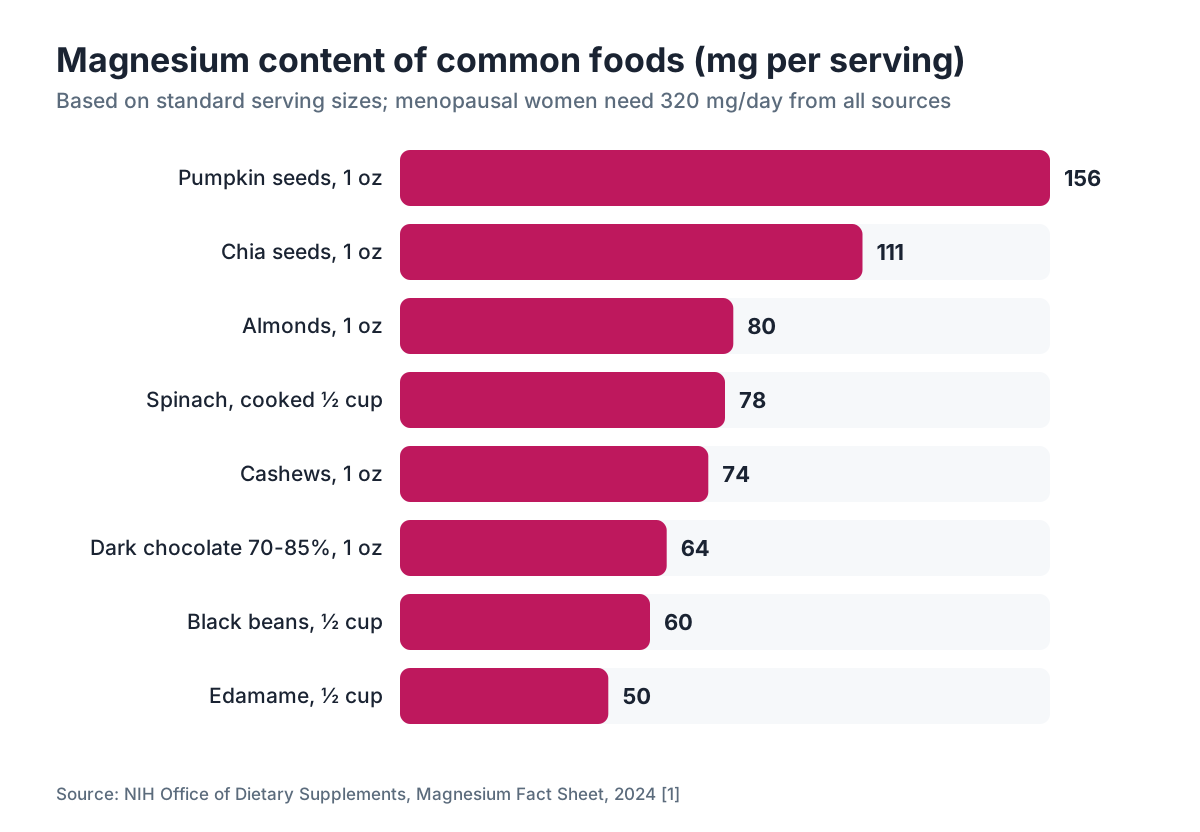
The richest sources are pumpkin seeds (156 mg per ounce), chia seeds (111 mg per ounce), almonds (80 mg per ounce), cooked spinach (78 mg per half cup), cashews (74 mg per ounce), dark chocolate at 70 to 85% cacao (64 mg per ounce), black beans (60 mg per half cup), and edamame (50 mg per half cup) [1].
A woman eating a varied whole-food diet built on vegetables, legumes, nuts, seeds, and whole grains can reasonably reach 250 to 320 mg from food. The modern food supply fights her on it. Magnesium in vegetables has fallen an estimated 20 to 30% since the 1950s as soil depletes, refining strips magnesium during processing, and alcohol pushes more of it out in urine [1].
For a woman in perimenopause eating fairly well but still hitting sleep disruption, anxiety, muscle cramps, or frequent headaches, trialing magnesium on top of a good diet makes sense. The math is simple. The downside of adequate magnesium is close to zero (loose stools if you overshoot, fixed by dropping the dose), and the upside touches several overlapping symptoms at once.
Are there risks or side effects of taking magnesium during menopause?
For women with healthy kidneys, supplemental magnesium at or below the UL of 350 mg elemental per day is well-tolerated in the large majority of cases [1]. The most common side effect is loose stools or diarrhea. It's dose-dependent and shows up more with oxide and citrate than with glycinate or malate.
The NIH notes that magnesium toxicity (hypermagnesemia) from oral supplements is uncommon when kidney function is normal, because healthy kidneys clear the excess fast [1]. True toxicity symptoms (nausea, low blood pressure, lethargy, cardiac arrhythmia) usually show up only with intravenous magnesium or serious kidney impairment.
Drug interactions worth knowing: magnesium can block absorption of certain antibiotics (quinolones, tetracyclines) and bisphosphonates if you take them together. Separate them by at least 2 hours. Magnesium can amplify muscle relaxants. If you take blood pressure medication, know that magnesium has a mild antihypertensive effect, so your readings may drift down and your dose may need adjusting over time.
Women on diuretics should have magnesium checked periodically, since loop and thiazide diuretics push urinary magnesium loss up significantly [1].
One more thing worth saying plainly. Serum magnesium tests are poor indicators of true status, because less than 1% of total body magnesium lives in the blood. Your serum level can read normal while your intracellular stores run dry. Some clinicians order RBC magnesium instead, a better proxy, though still imperfect.
Does magnesium work better with or without hormone replacement therapy?
Both, depending on the symptom and the woman.
For women who can't or won't use HRT (breast cancer survivors, certain clotting disorders, or simple preference), magnesium is one of the better-supported non-hormonal options. The hot flash pilot study enrolled women who couldn't use estrogen [3], which makes that evidence land directly on this group.
For women on hormone replacement therapy, magnesium is a genuine adjunct. Estrogen handles vasomotor symptoms and slows bone resorption. Magnesium keeps the bone-building side running, supports sleep beyond what estrogen delivers, and covers part of the GABA modulation progesterone provides when progesterone levels aren't yet dialed in.
Think of it this way. HRT is the hormonal foundation. Magnesium is the basic maintenance that foundation quietly relies on. A woman starting an estrogen patch while chronically magnesium-deficient will likely get less from the patch than she would with both addressed.
Still early in perimenopause and undecided about hormones? Magnesium is a low-risk first step that may improve sleep and mood while you gather information and work with your provider. Our perimenopause age guide helps you place yourself in the transition.
How long does magnesium take to work for menopause symptoms?
It depends heavily on the symptom.
Sleep tends to shift fastest. Many women notice better sleep within 1 to 2 weeks of consistent bedtime dosing. The 2012 RCT measured significant improvement at 8 weeks [2], but the direction of change often starts sooner.
Mood and anxiety usually take 4 to 6 weeks. The 2017 PLoS ONE trial used 6 weeks as its endpoint [5], which matches when clinicians tend to hear patients report a change.
Bone effects take months to years. You will not see a DEXA scan move after 6 months of magnesium. The 2-year study showing 1 to 8% density gains tells you the real timescale [4].
Hot flash reduction, based on the 4-week pilot [3], may start within a month, though that was a specific population and the effect varied.
The general rule: give any mineral 8 to 12 weeks of steady use before you decide it's helping or not. Minerals refill tissue stores gradually, not overnight. Stop and restart on repeat and you never give a deficiency the runway to correct.
If you're trying to figure out where to begin, our when does menopause start overview and the menopause explainer both put the symptom timeline in context.
Frequently asked questions
What is the best magnesium supplement for menopause?
Magnesium glycinate is the best all-around choice for most menopausal women. It absorbs well, is gentle on the gut, and the glycine molecule adds its own calming effect useful for sleep and anxiety. For women who also have constipation, magnesium citrate works well. Skip magnesium oxide as a primary supplement because its absorption is only about 4%, so most of what you pay for passes straight through.
Can magnesium stop hot flashes?
It can reduce hot flash frequency and severity in some women, especially those who can't use estrogen therapy. A 2011 North Central Cancer Treatment Group pilot study found roughly a 50% drop in hot flash score with magnesium oxide 800 to 1200 mg/day over 4 weeks in breast cancer survivors. It's not as effective as hormone therapy, but it's a meaningful non-hormonal option with an excellent safety profile.
How much magnesium should a menopausal woman take per day?
The NIH Recommended Dietary Allowance for women 31 and older is 320 mg per day from all sources combined, food plus supplements. The Tolerable Upper Intake Level from supplements alone is 350 mg elemental magnesium per day. Many clinicians target 300 to 400 mg of elemental magnesium at bedtime. Women with kidney disease should consult their physician first, since the kidneys manage magnesium excretion.
Does magnesium help with perimenopause anxiety and mood swings?
Yes, with real trial evidence behind it. A 2017 randomized trial in PLoS ONE found 248 mg magnesium chloride daily for 6 weeks produced clinically meaningful reductions in depression scores, a mean PHQ-9 change of 6.0 points. Magnesium moderates the HPA stress axis and supports GABA pathways, both disrupted in perimenopause. It doesn't replace therapy or, where warranted, medication, but it addresses a real biochemical deficiency that amplifies mood symptoms.
Will magnesium help with menopause-related weight gain?
Indirectly, by clearing metabolic headwinds rather than burning fat. Magnesium is a cofactor in insulin receptor function, and low levels worsen insulin resistance, which drives abdominal weight gain in perimenopause. Correcting a deficiency can modestly improve insulin sensitivity. Magnesium also lowers cortisol, which drives visceral fat storage. But it's not a weight loss supplement, and women with significant menopause weight gain need dietary and lifestyle change, sometimes alongside GLP-1 medications.
Can you take magnesium with hormone replacement therapy?
Yes, and they work well together. Estrogen in HRT handles vasomotor symptoms and slows bone breakdown. Magnesium supports bone formation, activates vitamin D, improves sleep quality, and steadies mood through separate pathways. Taking both covers more of the menopausal symptom picture than either alone. No significant interactions between magnesium supplements and standard HRT formulations are documented. Take magnesium at bedtime and keep it separate from calcium supplements.
Does magnesium help with menopause-related sleep problems and insomnia?
This is the strongest signal in the evidence. A 2012 randomized controlled trial (46 participants, 8 weeks, 500 mg magnesium oxide daily) found significant improvements in sleep efficiency, total sleep time, and early-morning awakening versus placebo, published in the Journal of Research in Medical Sciences. Magnesium acts on GABA-A receptors and lowers cortisol. Take it at bedtime. It cuts the wakefulness between hot flashes but doesn't prevent the vasomotor events themselves.
Is magnesium good for menopause bone loss?
Yes. Magnesium is structurally part of bone and is required to activate vitamin D, which drives calcium into bone. Postmenopausal women with osteoporosis consistently test lower for bone magnesium than age-matched controls. A 2-year study in Magnesium Research found 250 to 750 mg/day arrested bone loss and produced 1 to 8% increases in bone mineral density in some women. It doesn't replace bisphosphonates or HRT for established osteoporosis but is foundational for bone-protective nutrition.
What are the signs of magnesium deficiency in menopause?
Common signs include muscle cramps or twitches (especially at night), trouble sleeping, heightened anxiety or irritability, frequent headaches or migraines, fatigue that rest doesn't fix, constipation, and heart palpitations. These overlap heavily with menopause symptoms, which is exactly why magnesium deficiency goes unrecognized. Serum magnesium tests are unreliable, since less than 1% of body magnesium sits in blood, so RBC magnesium testing is a better measure.
Can magnesium cause side effects in menopausal women?
Side effects at standard doses (below 350 mg elemental from supplements) are rare in women with healthy kidneys. The main issue is loose stools or diarrhea, more common with oxide and citrate than glycinate or malate. Reduce the dose or switch forms if it happens. True magnesium toxicity from oral supplements is very uncommon and typically occurs only with IV magnesium or significant kidney impairment. Separate magnesium from antibiotics and bisphosphonates by at least 2 hours.
Does magnesium interact with other menopause supplements or vitamins?
Magnesium and calcium compete for gut absorption, so take them at different times. Magnesium is required to activate vitamin D, so if your vitamin D supplement isn't producing clinical benefit, low magnesium may be why. Magnesium and B6 work together for mood and PMS-like symptoms in perimenopause. Magnesium may add to progesterone's calming effect on GABA receptors. No major interactions exist with standard HRT. Separate magnesium from quinolone or tetracycline antibiotics by 2 hours.
Is magnesium safe to take long term during menopause?
Yes, at or below the UL of 350 mg elemental from supplements per day, long-term use is safe for women with normal kidney function. The NIH notes the kidneys clear excess efficiently. Many women take magnesium indefinitely as part of a bone health, sleep, and metabolic protocol through the postmenopausal years. An annual review of your supplement regimen with a clinician is reasonable, especially if your kidney function changes.
How is magnesium different from other vitamins recommended for menopause?
Most vitamins recommended for menopause fix one thing (vitamin D for bone and immune function, B vitamins for energy and mood, omega-3s for heart and joints). Magnesium is different because it underpins so many other processes, including vitamin D activation, insulin signaling, cortisol regulation, and bone mineral formation. Deficiency worsens nearly every menopause symptom. That breadth of effect is why women who were deficient tend to notice real results when they start.
Can magnesium help with menopause-related headaches and migraines?
Yes. Magnesium deficiency is a recognized migraine trigger, and estrogen swings in perimenopause often worsen migraine patterns. The American Migraine Foundation notes that magnesium supplementation at 400 to 500 mg/day reduces migraine frequency in clinical trials. This matters for menopausal women whose migraines flare during perimenopause. Glycinate or malate is preferred over oxide for migraine prevention, because higher absorption produces a steadier intracellular level.
Sources
- NIH Office of Dietary Supplements, Magnesium Fact Sheet for Health Professionals
- Abbasi B et al., Journal of Research in Medical Sciences, 2012
- Loprinzi CL et al., North Central Cancer Treatment Group pilot study, Supportive Care in Cancer, 2011
- Stendig-Lindberg G et al., Magnesium Research, 1993
- Tarleton EK et al., PLoS ONE, 2017
- North American Menopause Society (NAMS), Menopause Practice: A Clinician's Guide
- Barbagallo M and Dominguez LJ, Magnesium in type 2 diabetes, metabolic syndrome, and insulin resistance, Archives of Biochemistry and Biophysics, 2007
- Uwitonze AM and Razzaque MS, Journal of the American Osteopathic Association, 2018
- NIH Office of Dietary Supplements, Vitamin D Fact Sheet for Health Professionals
- American Migraine Foundation, Magnesium
- Fiorentini D et al., Magnesium: Biochemistry, Nutrition, Detection, and Social Impact of Diseases Linked to Its Deficiency, Nutrients, 2021
- Endocrine Society, Clinical Practice Guideline on Osteoporosis in Postmenopausal Women