Low testosterone in women during perimenopause: what it actually does
TL;DR: Women's testosterone peaks in their mid-20s and falls roughly 50% by the time menopause arrives. During perimenopause, that decline speeds up and shows up as low libido, fatigue, difficulty building muscle, brain fog, and flat mood. There's no FDA-approved testosterone product for women, but off-label low-dose therapy has real evidence behind it, particularly for sexual dysfunction.
What does testosterone actually do in women's bodies?
Most people think of testosterone as a male hormone. It isn't. Women make it in the ovaries and adrenal glands, and every cell that carries an androgen receptor responds to it. That includes brain cells, bone cells, muscle fibers, vaginal tissue, skin, and the clitoris.
Testosterone in women does a short list of concrete things: it drives sexual desire, helps maintain muscle mass and bone density, supports mood and mental sharpness, and feeds energy levels [1]. It also converts in peripheral tissues to estradiol, which means low testosterone can quietly lower estrogen activity even when estrogen levels look acceptable on paper.
The ovaries make roughly 25% of a woman's testosterone directly. The adrenal glands make another 25%. The remaining 50% comes from conversion of androgen precursors (mainly DHEA and androstenedione) in peripheral tissues like fat, skin, and muscle [10]. That third source matters during perimenopause because ovarian output starts dropping before the adrenal contribution does, which is why symptoms can start years before a woman's last period.
How and when does testosterone decline during perimenopause?
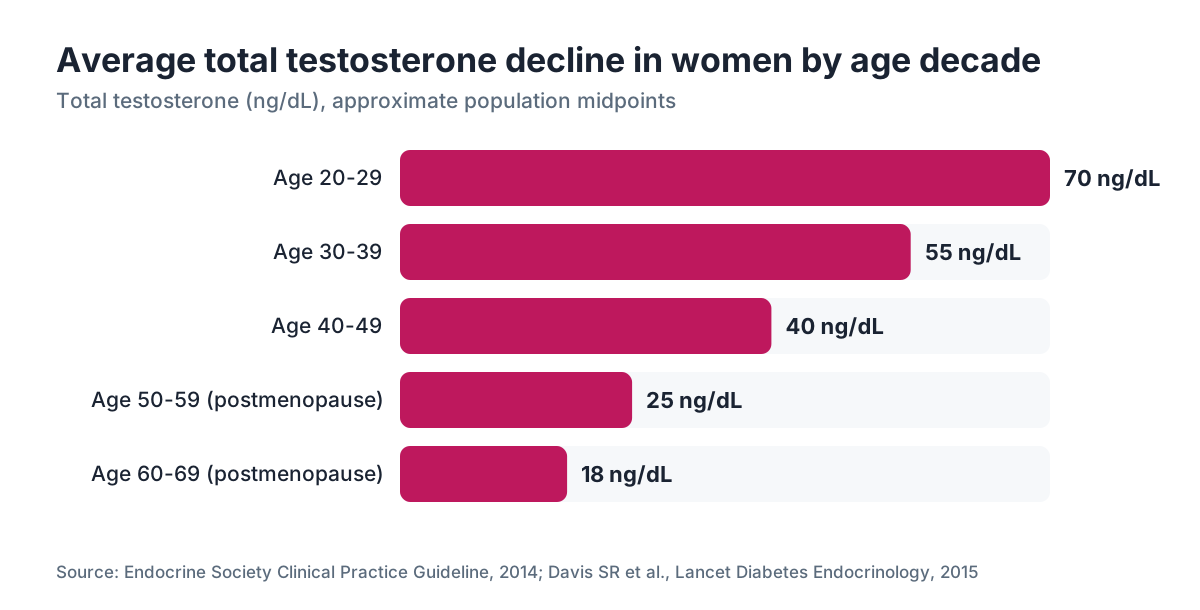
Testosterone doesn't fall off a cliff overnight. It declines gradually across a woman's reproductive life, and by the late 30s or early 40s, levels may already be half what they were at 25 [2]. The Endocrine Society reports that total testosterone in women drops approximately 50% between the ages of 20 and 45 [1].
Perimenopause usually begins in the mid-to-late 40s and lasts four to ten years, though it can start earlier [3]. During this window, estrogen and progesterone get most of the attention because they swing dramatically and drive the hot flashes and irregular periods women notice most. Testosterone is falling in parallel, and for many women the androgen decline produces the subtler, harder-to-name symptoms: the loss of drive, the flat libido, the slow recovery after a workout.
Sex hormone-binding globulin (SHBG) complicates the picture. SHBG is a carrier protein that binds testosterone and renders it biologically inactive. Oral estrogen therapy raises SHBG, which can cut free testosterone even if total testosterone stays constant [4]. This is one reason women on oral contraceptives or oral hormone therapy sometimes feel their androgen symptoms get worse rather than better.
Free testosterone, the fraction not bound to SHBG, is what actually reaches receptors. Most commercial lab panels measure total testosterone, and because women's total levels are so low to begin with, standard assays often lack the accuracy to catch meaningful changes. The Endocrine Society recommends liquid chromatography-tandem mass spectrometry (LC-MS/MS) for measuring testosterone in women, not the immunoassay panels most labs run automatically [1].
What are the symptoms of low testosterone in perimenopausal women?
The symptom list overlaps uncomfortably with other perimenopausal complaints, which is why low testosterone often goes undiagnosed or gets blamed entirely on low estrogen. Still, some patterns point more specifically toward androgen insufficiency.
Low libido is the most studied. A 2019 global position statement on testosterone for women, published in the Journal of Clinical Endocrinology and Metabolism and endorsed by multiple major societies including the British Menopause Society and the International Society for the Study of Women's Sexual Health, concluded that testosterone is the only evidence-based treatment for hypoactive sexual desire disorder (HSDD) in postmenopausal women [5]. The evidence for perimenopausal women is thinner simply because fewer trials have enrolled that group.
Beyond libido, women with low testosterone commonly report:
- Persistent fatigue that sleep doesn't fix
- Difficulty building or maintaining muscle even with steady exercise
- Increased body fat, particularly around the abdomen
- Low mood, reduced motivation, or emotional flatness that doesn't meet the threshold for clinical depression
- Cognitive changes: word-finding difficulty, poor concentration, brain fog
- Thinning pubic and underarm hair
- Reduced clitoral sensitivity and slower arousal [5]
Bone density is another concern. Androgens stimulate bone formation directly, more than through conversion to estrogen. Women with naturally low testosterone or surgical menopause (which causes an abrupt testosterone drop) have higher rates of osteoporosis than women whose ovaries decline gradually [2].
None of these symptoms is specific to low testosterone on its own. Thyroid dysfunction, iron deficiency, depression, and low estrogen can all produce overlapping pictures. If you're working through this, read up on thyroid hormone replacement therapy alongside androgen evaluation, because the two are often tangled.
What blood levels count as 'low' testosterone in women?
This is where the field gets genuinely messy, and any practitioner who hands you a confident cutoff number without caveats is oversimplifying.
There is no universally agreed-upon reference range for 'low' testosterone in women. The Endocrine Society's 2014 clinical practice guideline states plainly that there is insufficient evidence to define a lower threshold of testosterone that signals androgen deficiency in women [1]. The 2019 Global Consensus Position Statement echoes this, recommending against diagnosing 'androgen deficiency syndrome' because normal ranges have not been established across women's life stages [5].
What practitioners usually do instead is look at the lower quartile of the reference range for premenopausal women in a woman's age group, while also weighing symptoms. A total testosterone below roughly 15 ng/dL in a symptomatic woman is often treated as clinically meaningful, though that threshold comes from clinical consensus rather than hard outcome data.
The measurement problem is real. Immunoassay panels used by most commercial labs weren't designed for female ranges (which run 15-70 ng/dL in reproductive-age women, compared to 300-1000 ng/dL in men) and lose accuracy at low levels [1]. If a provider orders testosterone for you and it comes back as simply 'normal' on an immunoassay, that result is close to meaningless. LC-MS/MS from a specialized lab gives you data you can act on.
Free testosterone and SHBG levels add context. A woman with total testosterone of 25 ng/dL but very high SHBG may have free testosterone in the floor of the range and feel every bit as androgenically depleted as someone with a total of 10 ng/dL and normal SHBG.
Is low testosterone connected to weight gain and body composition changes in perimenopause?
Body composition shifts during perimenopause are real and frustrating, and testosterone contributes to them, though it isn't the whole story.
Testosterone builds lean muscle by driving muscle protein synthesis. When levels fall, muscle maintenance gets harder even at the same exercise load. Less muscle means a lower resting metabolic rate. Fat tissue, particularly visceral fat, tends to fill the gap [2]. Visceral fat is metabolically active and pumps out inflammatory signals that make the whole cycle worse.
Estrogen decline matters here too, possibly more than testosterone in the early perimenopausal years. The two hormones work together on body composition. Estrogen shifts fat storage (from hip and thigh toward the abdomen as it falls), while testosterone holds up the muscle side of the equation. Treat one without the other and you usually get partial results.
For women weighing GLP-1 receptor agonists like semaglutide for perimenopausal weight gain, the hormone picture is relevant context. Muscle loss during rapid weight loss on a GLP-1 is a known concern, and adequate testosterone may help preserve lean mass while you drop weight. You can read more about semaglutide news and how GLP-1 therapy intersects with women's physiology in our coverage of the latest research.
There's no large randomized trial proving testosterone supplementation alone reverses perimenopausal weight gain. The honest answer: the evidence is small-study and mechanistic. Body composition improvement has been seen in trials of testosterone therapy in postmenopausal women [5], but strong weight-loss data specifically in perimenopausal women doesn't exist yet.
Does low testosterone cause depression and brain fog in perimenopause?
The brain is full of androgen receptors, concentrated in regions that govern mood, memory, and executive function. This isn't theoretical. Testosterone and its metabolite 3-alpha-androstanediol interact with GABA receptors and the serotonin system, which is why androgen changes can produce real psychological effects [6].
The clinical evidence linking low testosterone specifically to depression in perimenopausal women is suggestive but not settled. Studies show women with lower androgen levels report higher rates of low mood, irritability, and reduced motivation [6]. The 2019 Global Consensus Statement notes that testosterone may have beneficial effects on mood and wellbeing, though the committee considered the evidence insufficient to make a formal recommendation for mood as a primary indication [5].
Brain fog is harder to study. Women in perimenopause consistently report trouble with word retrieval, concentration, and working memory. Estrogen gets most of the credit (or blame) for cognitive changes in menopause research, but androgens support neuronal health and myelination independently. The Study of Women's Health Across the Nation (SWAN), which followed more than 3,000 midlife women for over two decades, found women reported significant cognitive complaints during the menopausal transition that weren't fully explained by mood or sleep disruption [7].
Here's the practical read: if you're treating brain fog and fatigue with estrogen therapy alone and still feel off, low testosterone is worth testing. It's not a guaranteed fix. It's a reasonable next variable to examine.
What treatment options exist for low testosterone in perimenopausal women?
There is no FDA-approved testosterone product specifically formulated for women in the United States. This is a real gap, not a technicality. The FDA reviewed a testosterone patch for women (Intrinsa) in 2004 and declined to approve it, citing concerns about long-term safety data [8]. The European Medicines Agency approved it, and it was later pulled from the market for commercial reasons, not safety ones.
In the US, women are treated off-label with:
- Male testosterone gels or creams (AndroGel, Testim) prescribed at much lower doses, typically 1/10th of the male dose
- Compounded testosterone creams or gels formulated specifically for women
- Testosterone pellets implanted subcutaneously (longer-acting, less adjustable)
- Testosterone injections (less common in women because dosing precision is hard)
The 2019 Global Consensus Statement, reviewing 36 randomized controlled trials, concluded that transdermal testosterone at a dose producing physiological premenopausal levels improves sexual function in postmenopausal women with HSDD [5]. "Physiological" is the key word: the goal is to restore levels to the normal premenopausal range, not exceed them.
DHEA (dehydroepiandrosterone) is an androgen precursor that converts to testosterone and estrogen in peripheral tissues. Oral DHEA is sold over the counter as a supplement. Intrarosa, a vaginally delivered DHEA product, is FDA-approved for dyspareunia (painful sex due to vaginal atrophy) [8]. Systemic DHEA supplementation has mixed evidence for broader androgen effects, and conversion rates swing widely from person to person.
When you weigh your options, look for a provider who can order LC-MS/MS testing and prescribe compounded or off-label transdermal testosterone. A telehealth platform focused on women's hormones, like WomenRx, can often get you to an appropriate evaluation faster than a general gynecology practice, particularly if your local providers aren't comfortable prescribing off-label testosterone.
Safety monitoring during therapy includes periodic testosterone levels (to confirm you're in the physiological range, not above it), hematocrit, and a lipid panel. Acne and increased facial hair are the most common side effects at therapeutic doses. Clitoral enlargement and voice changes can happen if dosing runs high [5].
For a broader view of peri menopausal hormone management, including how estrogen and progesterone fit in, that's a useful starting point alongside androgen evaluation.
Are there natural ways to support testosterone levels during perimenopause?
Lifestyle factors genuinely move testosterone levels, though not enough to reverse a significant clinical deficit on their own. Think of them as floor-raising, not problem-solving.
Resistance training is the best-evidenced natural intervention. Weightlifting and high-intensity interval training acutely raise testosterone and may support baseline levels over time [2]. Even two to three sessions per week of progressive resistance exercise produces measurable gains in muscle mass and androgen responsiveness.
Sleep matters more than most people realize. Testosterone secretion follows a circadian pattern, peaking during sleep. Chronic sleep deprivation suppresses androgen output across sexes. Perimenopausal sleep disruption, often driven by night sweats and anxiety, sets up a self-reinforcing loop: poor sleep lowers testosterone, low testosterone worsens mood and body composition, worse body composition disrupts sleep further.
Body weight and fat mass have an inverse relationship with testosterone in women. Excess adipose tissue increases aromatase activity, converting androgens to estrogens and shrinking the androgen pool. Losing even 5-10% of body weight can raise free testosterone in women with overweight or obesity [2].
Zinc and vitamin D deficiency both track with lower testosterone. If you're short on either (both are common in midlife women), fix it. Zinc supports androgen synthesis, but taking it above sufficiency doesn't push testosterone any higher [11]. Vitamin D deficiency is widespread in midlife women and links to lower testosterone; correct it before you blame everything on androgen pathophysiology [12].
Alcohol suppresses testosterone synthesis. Even moderate regular drinking can make a measurable difference in women with borderline levels.
None of this replaces testing and a clinical conversation if your symptoms are significant. But all of it is worth doing regardless of whether you pursue hormone therapy, because it improves the conditions under which your remaining testosterone works.
How does low testosterone interact with estrogen and progesterone during perimenopause?
Hormones don't act in isolation. The three main sex hormones in women work together, and a shortfall in one changes how the others behave.
Estradiol and testosterone share a biosynthesis pathway: testosterone is the direct precursor to estradiol, converted by the enzyme aromatase. When testosterone supply falls, less substrate is available for that conversion, which can drag estrogen down even before the ovaries themselves fail [1]. In the other direction, estrogen shapes SHBG production, which sets how much testosterone stays free and active.
Progesterone is less directly tied to testosterone metabolism, but it competes with testosterone at androgen receptors in some tissues and can blunt androgen effects at high doses. This sometimes explains why women on high-dose progesterone (whether for cycle management in perimenopause or as part of HRT) find their androgen symptoms worse rather than better.
The practical takeaway: evaluating testosterone without also checking estradiol, progesterone, SHBG, and ideally FSH gives you half a picture. A full hormone panel, timed to your menstrual cycle if you're still cycling (typically day 2-4 for FSH, day 21-ish for progesterone), fills in the rest.
For a thorough grounding in how menopause medicine has learned to treat all three hormones together, the work coming out of the menopause society and books like the new menopause are worth your time.
What does low testosterone mean for bone health and cardiovascular risk in perimenopause?
Bone loss speeds up in the years around menopause, and both estrogen and testosterone hold bone together. Androgens stimulate osteoblasts (the cells that build bone) directly, independent of their conversion to estrogen. Women who lose ovarian function abruptly through surgery or cancer treatment, taking both estrogen and testosterone with them, show faster bone loss and higher fracture risk than women who go through natural menopause [2].
For women with a gradual testosterone decline during perimenopause, the bone effect is real but slower-moving. The bigger short-term concern is the additive loss from declining estrogen. A bone density screen (DXA scan) at or around menopause gives you a baseline. If you're in the osteopenic range and both hormones are low, that's an argument for addressing both.
Cardiovascular risk is more complicated. There's no established causal link between low testosterone and cardiovascular events in women, unlike in men where low testosterone tracks with metabolic syndrome and cardiac risk. Some data suggest women with higher androgen levels have more favorable lipid and insulin profiles [6], but the direction of causality is hard to pin down: healthier women tend to hold onto better hormone levels naturally.
Women weighing testosterone therapy should know that supraphysiological testosterone (particularly from pellets that can deliver unpredictably high doses) may hurt HDL cholesterol. Keeping levels in the physiological premenopausal range appears to sidestep this problem [5]. That's one argument against the high-dose pellet protocols that have gotten popular in some direct-to-consumer settings.
When should you actually see a doctor about possible low testosterone in perimenopause?
See someone when symptoms are hurting your quality of life and the workup for other causes has been done. That means ruling out thyroid dysfunction, iron deficiency anemia, vitamin B12 deficiency, and clinical depression before you pin everything on low testosterone. Not because those conditions are more common (they aren't necessarily), but because treating a treatable deficiency is faster and cleaner than starting hormone therapy with a missed diagnosis sitting underneath.
If you've done that workup and still have persistent low libido, fatigue that ignores sleep hygiene and exercise, or the cluster of androgen-related symptoms described above, ask your provider specifically for a hormone panel including testosterone (preferably LC-MS/MS), free testosterone, SHBG, estradiol, FSH, and DHEA-S.
Be ready for pushback. Many general practitioners are unfamiliar with testosterone evaluation in women and may tell you it's outside normal practice. It isn't, but it is outside common practice. A menopause-specialist gynecologist, a reproductive endocrinologist, or a telehealth service focused on women's hormones (WomenRx evaluates full hormone panels and can coordinate off-label testosterone therapy where it's clinically appropriate) will be more at ease with the nuances.
Bringing a printed copy of the 2019 Global Consensus Statement to an appointment with a hesitant provider is not unreasonable. It's peer-reviewed, society-endorsed, and speaks directly to the evidence base. You can also point to the Menopause Society's (NAMS) position on testosterone, which supports off-label use for HSDD in postmenopausal women [9].
For context on how health & her perimenopause support approaches the broader symptom picture, or to understand whether an odd symptom like frozen shoulder menopause might be hormone-related, those resources round things out.
Frequently asked questions
Can low testosterone cause anxiety in perimenopause?
Possibly, though the link is less direct than the testosterone-mood connection. Androgens interact with GABA receptors and the serotonin system, and low levels have been tied to more irritability and emotional reactivity in some studies. Anxiety in perimenopause is more strongly linked to progesterone and estrogen swings, but if anxiety comes with fatigue, low libido, and flat mood, a full hormone panel including testosterone is worth doing.
Does low testosterone cause vaginal dryness in perimenopause?
Estrogen is the main driver of vaginal tissue health, but testosterone also supports vaginal and vulvar tissue and clitoral sensitivity. FDA-approved intravaginal DHEA (Intrarosa) works partly by converting locally to testosterone, and some women on testosterone therapy report better vaginal symptoms alongside libido gains. Low testosterone alone is rarely the main cause of severe vaginal dryness; estrogen deficiency is usually the bigger factor.
Is there an FDA-approved testosterone treatment for women in the US?
No. There is no FDA-approved testosterone product formulated specifically for women in the United States as of mid-2025. Women are treated off-label with low doses of male formulations (gels, creams) or with compounded preparations. FDA-approved intravaginal DHEA (Intrarosa) addresses vaginal symptoms and delivers localized androgen activity but isn't a systemic testosterone therapy. The 2019 Global Consensus Statement supports off-label transdermal testosterone for HSDD in postmenopausal women.
How do I get my testosterone tested accurately as a woman?
Ask your provider to order total testosterone and free testosterone using liquid chromatography-tandem mass spectrometry (LC-MS/MS) rather than a standard immunoassay. Standard immunoassays are inaccurate at female-range levels. Also request SHBG, estradiol, and FSH at the same draw for context. If you're still cycling, early follicular phase (day 2-4) is the standard timing for baseline androgens, though total testosterone doesn't swing as dramatically as estrogen across the cycle.
Can you have normal estrogen but low testosterone in perimenopause?
Yes, and it's more common than many providers recognize. Testosterone declines gradually from the mid-20s onward and can sit in the low range while estradiol is still cycling normally, particularly in early perimenopause. Women in this situation often have clear androgen-related symptoms (low libido, fatigue, muscle loss) without the hot flashes and cycle irregularity that prompt estrogen testing. Evaluating testosterone independently of estrogen status matters.
Does testosterone help with perimenopausal fatigue?
There is plausible biology behind it: testosterone supports mitochondrial function, muscle maintenance, and red blood cell production, all of which affect energy. Clinical trial data for fatigue specifically as an endpoint in perimenopausal women is limited. The best evidence is for energy improvement as a secondary outcome in HSDD trials. If fatigue persists after ruling out thyroid, iron, B12, and sleep issues, testing testosterone is a reasonable next step.
What's the difference between DHEA supplements and testosterone therapy?
DHEA is a precursor hormone your body converts to both testosterone and estrogen. Over-the-counter DHEA supplements provide that precursor, but conversion rates vary widely between individuals and can't be controlled precisely. Testosterone therapy delivers the active hormone directly and can be dosed to hit specific blood levels. Intrarosa (prescription intravaginal DHEA) is FDA-approved for vaginal symptoms and works locally. For systemic androgen effects, direct testosterone therapy is more precise than oral DHEA.
Can testosterone therapy cause masculinizing side effects in women?
At physiological premenopausal doses, serious masculinization is uncommon. The most frequent side effects are mild acne and a slight increase in facial or body hair. Clitoral enlargement and voice deepening can happen if doses run supraphysiological, which is a real risk with poorly monitored pellet therapy. Regular blood level monitoring, aimed at the normal premenopausal female range, prevents most of these effects. Stopping therapy reverses mild side effects; voice changes may not fully reverse.
How long does testosterone therapy take to work in women?
Most women notice changes in libido and energy within four to six weeks of starting transdermal testosterone at an appropriate dose. Full effects on muscle mass and body composition take longer, often three to six months with steady resistance training alongside therapy. Mood and cognitive effects, if they show up, usually appear in the first one to two months. If there's no meaningful response after three months at confirmed therapeutic levels, testosterone may not be the main driver of symptoms.
Does oral contraceptive use affect testosterone in perimenopausal women?
Yes, significantly. Combined oral contraceptives containing estrogen raise SHBG substantially, which binds free testosterone and cuts its biological activity. Some women on oral contraceptives or oral estrogen therapy notice worsening androgen symptoms even without a change in total testosterone. Switching from oral to transdermal estrogen delivery avoids this SHBG effect. Women with low libido or fatigue specifically after starting hormonal contraception should have free testosterone and SHBG measured.
Is low testosterone in perimenopause linked to osteoporosis?
Yes. Androgens directly stimulate osteoblast activity (bone formation) independent of their conversion to estrogen. Women who lose both estrogen and testosterone at once through surgical menopause carry higher fracture risk than those who go through natural menopause. During gradual perimenopausal decline, the bone effect is real but slower. Baseline DXA scanning around menopause is recommended, and low testosterone in a woman already losing bone density is an added argument for treatment.
What lab panel should I ask for if I suspect low testosterone in perimenopause?
A reasonable baseline panel includes: total testosterone (LC-MS/MS method), free testosterone, SHBG, estradiol, FSH, LH, DHEA-sulfate, thyroid-stimulating hormone (TSH), complete blood count (to check hematocrit), and a lipid panel. Timing matters if you're still cycling: draw on days 2-4 of your cycle for FSH and estradiol, though testosterone can be drawn any time. DHEA-S doesn't fluctuate with the cycle and can be measured anytime.
Can a woman in perimenopause be too old for testosterone therapy?
No, there's no age cutoff. The evidence base for testosterone therapy in women, particularly for HSDD, comes largely from postmenopausal women in their 50s and 60s. The 2019 Global Consensus Statement sets no upper age limit. Safety considerations are the same across the menopausal transition: keep levels physiological, monitor blood counts and lipids, and use transdermal rather than oral delivery to avoid liver first-pass effects and SHBG elevation.
Sources
- Endocrine Society, Clinical Practice Guideline: Androgen Therapy in Women (2014)
- StatPearls / NCBI Bookshelf, Testosterone Physiology in Reproductive Aging Women
- NIH National Institute on Aging, What Is Menopause?
- FDA, Oral Contraceptive Drug Labels (SHBG and free testosterone reference)
- Global Consensus Position Statement on the Use of Testosterone Therapy for Women, Journal of Clinical Endocrinology and Metabolism, 2019
- Shifren JL et al., Androgen Deficiency in the Oophorectomized Woman, Fertility and Sterility, 2002 (NCBI)
- SWAN, Study of Women's Health Across the Nation (NIH-funded multisite cohort)
- FDA, Intrarosa (prasterone) Prescribing Information
- Menopause Society (NAMS), Position Statement on Testosterone Therapy for Women
- Davis SR et al., Testosterone in Women: The Clinical Significance, Lancet Diabetes and Endocrinology, 2015
- NIH Office of Dietary Supplements, Zinc Fact Sheet for Health Professionals
- NIH Office of Dietary Supplements, Vitamin D Fact Sheet for Health Professionals