Low progesterone symptoms: what they feel like and what to do
TL;DR: Low progesterone causes anxiety, poor sleep, irregular or heavy periods, premenstrual spotting, mood swings, and breast tenderness. Symptoms get worse in perimenopause as ovulation becomes unreliable. A day-21 serum progesterone test confirms low levels. Options include oral micronized progesterone, treating the root cause, and lifestyle changes. Most women see real improvement within one to three cycles.
What does low progesterone actually feel like?
Low progesterone rarely announces itself as one clean symptom. It shows up as a cluster: you can't fall asleep even though you're exhausted, you feel anxious for no reason you can name, your period comes early or late or far heavier than usual, and you spot for days before the real bleed starts. No single one of those screams "hormones," which is exactly why women spend years collecting partial answers from different doctors.
Progesterone is the hormone that rises after ovulation and stays elevated through the back half of your cycle. It does a few specific jobs. It calms the nervous system by acting on GABA receptors in the brain (the same receptors that anti-anxiety drugs target), it counters estrogen's growth effect on the uterine lining, and it sustains a pregnancy if conception happened [1]. When progesterone is low, those jobs go undone.
The symptoms women report most often:
- Anxiety, irritability, or a low-grade sense of dread, worst in the week before the period
- Trouble falling asleep, or waking at 2 to 4 a.m. and not getting back down
- Cycles shorter than 24 days or longer than 35 days
- Heavy or prolonged bleeding
- Spotting in the 5 to 10 days before the period
- Breast tenderness in the second half of the cycle
- Bloating and water retention that doesn't track with what you ate
- Premenstrual migraines
- Trouble getting or staying pregnant
- Low libido
Most women have three or four of these, not all ten. The pattern tells you more than any single symptom does.
Why does progesterone go low in the first place?
The most common reason is anovulation, a cycle where you don't release an egg. No ovulation means no corpus luteum, the temporary gland that forms after a follicle releases an egg and makes roughly 25 mg of progesterone a day during the luteal phase [1]. No corpus luteum, no progesterone for that cycle.
Anovulation happens more than most women realize. Stress, under-eating, hard training, thyroid problems, PCOS, and high prolactin all shut ovulation down. And here's the trick: you can still bleed after an anovulatory cycle, because the uterine lining sheds on estrogen alone. The period looks normal. The progesterone was essentially absent.
Age is the other big driver. Follicle numbers drop steadily after 35, and follicle quality decides how much progesterone the corpus luteum can pump out. The Endocrine Society notes that progesterone starts falling in the mid-to-late reproductive years, well before estrogen does. That's why perimenopause usually opens with the progesterone-deficiency picture (anxiety, bad sleep, irregular cycles) rather than the estrogen-deficiency picture (hot flashes, vaginal dryness) [2].
Other causes:
- Luteal phase defect: you ovulate, but the corpus luteum doesn't hold progesterone high enough or long enough
- Low body weight or relative energy deficiency in sport (RED-S)
- Chronic high cortisol, which competes with progesterone at receptor sites and suppresses the hypothalamic-pituitary-ovarian axis
- Some medications, including opioids, antipsychotics, and certain antidepressants that raise prolactin
- Post-pill recovery, where the HPO axis takes several cycles to reset
What are the specific symptoms of low progesterone in perimenopause?
Perimenopause is ground zero for low progesterone, and knowing why changes how you read your own body. Perimenopause usually starts in the early-to-mid 40s, though for some women it begins in the late 30s [3]. The first hormonal shift is almost never an estrogen drop. It's a progesterone drop, because ovulation gets unreliable before estrogen production falls.
So the early perimenopause picture is estrogen high relative to progesterone, not estrogen deficiency. Estrogen keeps fluctuating and sometimes surges while progesterone sits low. The result is a set of symptoms women (and plenty of doctors) never connect to hormones.
The symptoms cluster around a few themes.
Sleep. Progesterone's metabolite allopregnanolone is a neurosteroid that boosts GABA-A receptor activity, producing a calm, sedating effect [1]. When progesterone falls, that signal disappears. Women describe lying awake with a racing mind, waking at 3 a.m. for good, or logging eight hours and feeling wrecked anyway.
Mood and anxiety. The same progesterone-GABA link explains why so many perimenopausal women develop anxiety or a flat low mood that feels unlike anything before. It tends to land in the back half of the cycle and lift slightly once the period starts.
Cycle changes. Shorter cycles, premenstrual spotting, and sudden heavy bleeding all point to a short or insufficient luteal phase. The North American Menopause Society calls irregular cycles one of the defining features of the menopausal transition [3].
Breast tenderness and bloating. With no progesterone to balance it, estrogen drives fluid retention and breast tissue growth in the luteal phase.
Here's a useful diagnostic clue: symptoms that worsen in the week before your period and ease once bleeding starts are pointing straight at progesterone.
How is low progesterone diagnosed and what blood levels matter?
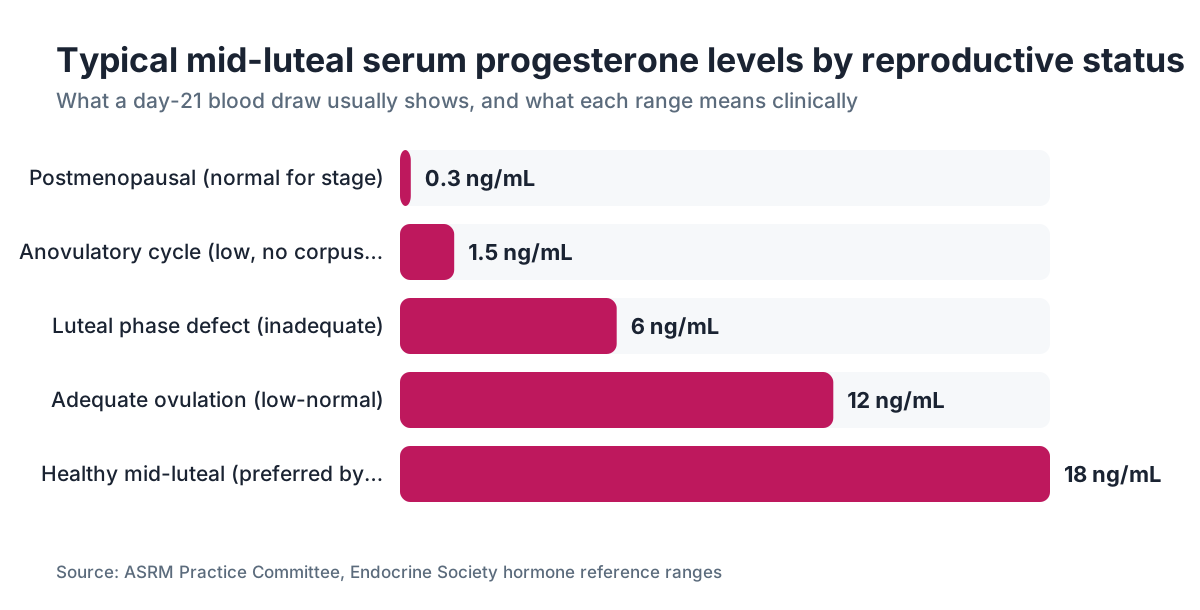
The standard test is a serum progesterone drawn on day 21 of a 28-day cycle, or about 7 days after ovulation. That's the mid-luteal progesterone test. In a healthy ovulatory cycle, mid-luteal progesterone should sit above 10 ng/mL, and many reproductive endocrinologists want to see above 15 ng/mL as proof of a strong corpus luteum [4]. Below 3 ng/mL in the mid-luteal phase points to anovulation.
For women with irregular cycles, the timing gets tricky. Some clinicians test on several days or use urinary hormone metabolite testing (DUTCH) to map the whole cycle, though insurance rarely covers DUTCH and the evidence for making clinical decisions from it is thinner than for standard serum testing.
A few things worth knowing:
- Progesterone is pulsatile. It spikes and drops within hours, so a single number is a snapshot, not the full story.
- Postmenopausal reference ranges run very low (below 0.5 ng/mL). "Normal" on your lab report depends entirely on cycle day and life stage.
- Timing is everything. A day-21 draw in a woman with a 35-day cycle can land in the follicular phase and read falsely low.
Other labs worth pulling when you evaluate low progesterone: FSH, LH, estradiol, a thyroid panel (TSH, free T3, free T4), prolactin, and sometimes cortisol. FSH above 10 IU/L in the early follicular phase suggests diminished ovarian reserve. FSH above 30 IU/L on two tests 30 days apart meets most clinical definitions of menopause [3].
| Test | Timing | Healthy luteal range | Suggests low progesterone if... | |---|---|---|---| | Serum progesterone | Day 21 (28-day cycle) | 10-20 ng/mL | Below 10 ng/mL | | Serum progesterone | 7 days post-ovulation | >15 ng/mL preferred | Below 3 ng/mL suggests anovulation | | FSH (early follicular) | Days 2-4 | 3-10 IU/L | Above 10 suggests diminished reserve | | Estradiol (early follicular) | Days 2-4 | 25-75 pg/mL | Elevated E2 with low P4 = estrogen dominance pattern |
Can low progesterone cause anxiety and sleep problems on their own?
Yes, and it's one of the most overlooked mechanisms in women's hormonal health. The path runs through allopregnanolone, the neurosteroid your body makes from progesterone that acts on GABA-A receptors. GABA is your main inhibitory neurotransmitter. It slows neural firing, produces calm, and lets you sleep. When progesterone drops, allopregnanolone drops with it, and the brake on your nervous system loosens [1].
A 2023 review in Nature Mental Health found that women have higher rates of anxiety disorders than men specifically during hormonal transitions: the premenstrual phase, postpartum, and perimenopause, all low-progesterone states [5]. That's not a coincidence. The authors noted that women with a history of premenstrual dysphoric disorder (PMDD) appear more sensitive to allopregnanolone swings, which may be why their anxiety worsens out of proportion in perimenopause.
Sleep architecture takes a direct hit too. Progesterone increases slow-wave sleep and cuts time in lighter stages. A small crossover study published in Menopause found that oral micronized progesterone improved sleep quality against placebo, with the biggest effect in the first half of the night [6]. The dose was 300 mg at bedtime, higher than the 200 mg used for endometrial protection in combination HRT.
The practical point is blunt. If you're being treated for anxiety or insomnia and nobody has checked your hormones, you may be chasing a symptom while the cause keeps running.
Does low progesterone cause weight gain?
Directly, probably not much. Progesterone doesn't drive fat storage the way insulin does. Indirectly, though, the chain is real.
Bad sleep from low progesterone raises ghrelin and lowers leptin, the two hormones that run hunger and fullness. One disrupted night measurably bumps your appetite the next day. Stretch that over weeks and months and weight follows. Fluid retention from unopposed estrogen adds a few pounds that aren't fat but show on the scale and feel real.
Cortisol matters here too. Chronic stress suppresses progesterone, and cortisol pushes fat toward the middle. Plenty of perimenopausal women get stuck in a loop: stress drains progesterone, which wrecks sleep, which raises cortisol, which suppresses progesterone further. Breaking it usually means hitting more than one point at once.
Women trying to separate hormonal weight from metabolic weight in perimenopause often find that fixing progesterone deficiency improves sleep and quiets the anxious eating that trails it, even though progesterone burns no fat itself. When weight gain is large and stubborn, GLP-1 receptor agonists are a real option, but that's a separate conversation from hormone balance.
What are the treatment options for low progesterone in women?
The right approach depends on why progesterone is low and what you're trying to fix.
Oral micronized progesterone (Prometrium). This is the FDA-approved, bioidentical progesterone prescribed most often in hormone therapy. The gut and liver turn it into allopregnanolone, so it has a sedating effect and gets taken at bedtime. The standard dose for endometrial protection in women using estrogen is 200 mg daily for 12 days a month (sequential) or 100 mg daily (continuous) [7]. Higher doses (200 to 300 mg) are sometimes used for sleep and anxiety.
Progesterone cream or gel. Topical progesterone comes both over the counter and by prescription. The evidence for real systemic absorption from OTC creams is inconsistent, and the studies showing endometrial protection used oral micronized progesterone, not cream. If you're on a topical estrogen patch for hormone therapy, you still need an adequate dose of systemic progesterone to protect the uterus, and most gynecologists don't count OTC cream as enough for that.
Vaginal progesterone (Crinone, Endometrin). Used mainly in fertility treatment to support the luteal phase and early pregnancy. Rarely used for perimenopause.
Lifestyle changes that support progesterone. These won't fix a real deficiency alone, but they count. Cutting chronic stress (and therefore cortisol) has the strongest behavioral evidence behind it. Adequate calories and body fat matter too; below roughly 17 to 18% body fat, ovarian function drops off sharply. Sleep itself restores the HPA and HPO axes. Some women report help from acupuncture, though that evidence is thin and mixed.
Fixing the root cause. Treating PCOS, correcting thyroid function, stopping a prolactin-raising drug, or reversing an energy deficit can restore ovulation and, with it, your own progesterone.
For women working through this in perimenopause, a hormone-literate clinician is worth the effort. WomenRx offers telehealth hormone evaluation built for women in this stage, useful if local access is limited.
See also our overview of hormone replacement therapy and the wider picture of progesterone in the female hormone system.
Is low progesterone the same as estrogen dominance?
They overlap, but they aren't the same thing. Estrogen dominance describes a state where estrogen runs high relative to progesterone, whether or not estrogen itself is above normal. A woman can have perfectly normal estrogen and still be estrogen dominant if her progesterone is low enough.
The ratio matters because estrogen and progesterone pull against each other in several tissues. Estrogen grows the uterine lining; progesterone matures and stabilizes it. Estrogen drives breast tissue growth; progesterone modulates it. Without enough progesterone to balance it, estrogen produces a specific set of symptoms: heavy periods, fibroid growth, breast tenderness, and fluid retention.
In perimenopause, estrogen doesn't fall in a straight line. It swings, sometimes spiking well above premenopausal levels before it declines. If progesterone has already dropped from irregular ovulation, estrogen dominance can get pronounced even in women years from their last period.
That's why some clinicians go slow on prescribing estrogen without progesterone to perimenopausal women who still have a uterus. Adding estrogen to an already estrogen-dominant picture without enough progesterone can make symptoms worse before they get better.
How does low progesterone affect fertility and early pregnancy?
Progesterone is essential for implantation and holding an early pregnancy. It converts the uterine lining from a growth state to a secretory state, the one that lets an embryo implant. It also quiets uterine contractions and shifts immune tolerance so the body doesn't reject the embryo [1].
A luteal phase defect, where progesterone either never rises high enough after ovulation or falls too fast before the placenta takes over progesterone production (around weeks 8 to 10), is linked to recurrent miscarriage. The American Society for Reproductive Medicine estimates luteal phase defect contributes to roughly 5% of recurrent pregnancy loss cases, though the true rate is debated because the diagnostic criteria have never been fully standardized [4].
For women trying to conceive, a mid-luteal progesterone below 10 ng/mL is worth following up with a reproductive endocrinologist. Vaginal progesterone (Crinone 8% or Endometrin) is standard after IVF cycles, and some OB-GYNs prescribe it in the early weeks for women with a miscarriage history, though the benefit in the general population is mixed.
If you're under 35 and struggling to conceive, or over 35 after 6 months of trying, get in front of a reproductive endocrinologist sooner rather than later. The CDC advises women over 35 to seek evaluation after 6 months instead of the usual 12 [11].
When should you actually see a doctor about low progesterone symptoms?
Sooner than most women do. The average woman lives with real hormonal symptoms for two to three years before she gets a diagnosis or treatment. That's a long stretch of bad sleep, anxiety, and unpredictable periods.
See a clinician promptly if:
- You're spotting between periods, especially in the 5 to 10 days before your period
- Your cycles suddenly shortened under 24 days or stretched past 35
- You're soaking through a pad or tampon in an hour for two or more hours in a row
- You've had two or more miscarriages
- Anxiety or insomnia is severe enough to disrupt your daily life
- You're in your late 30s or 40s and you recognize the perimenopause pattern
A primary care physician, OB-GYN, or reproductive endocrinologist can order the labs. If you want someone who focuses on hormonal health in midlife women, a menopause specialist certified through NAMS is a good bet. Find one through the NAMS provider locator at menopause.org [3].
For the wider menopause transition and when menopause typically starts, those pieces can help you place your own timeline. Reading up on menopause age ranges before your first appointment can make the conversation more specific.
Are there natural ways to raise progesterone levels?
There are things that support healthy ovulation, and there's an honest ceiling on what they can do.
For women anovulating from stress, under-eating, or over-training, removing those causes can restore ovulation and your own progesterone. That's a real intervention, and it isn't a supplement. It's changing the conditions that are shutting your HPO axis down.
Vitamin B6 at 50 to 100 mg a day has some evidence for reducing premenstrual symptoms and may support luteal function, though the randomized trial evidence is thin [8]. Zinc supports LH production, which drives ovulation. Magnesium glycinate at 300 to 400 mg before bed helps the cortisol-sleep loop and may indirectly help. Chasteberry (Vitex agnus-castus) has been studied in several small European trials with modest benefit for premenstrual symptoms and irregular cycles, likely by suppressing prolactin through dopamine pathways [8]. The effect sizes are small, and it isn't appropriate if your prolactin is normal.
Nobody has good randomized data showing any supplement meaningfully raises mid-luteal progesterone in women with a true luteal phase defect. The honest version: if your progesterone is low because you aren't ovulating well, supplements are an adjunct at best. If it's low because you've entered perimenopause and your ovarian reserve has dropped, no supplement changes that trajectory. Bioidentical progesterone exists for exactly that situation.
Frequently asked questions
What are the most common symptoms of low progesterone in women?
The most common are anxiety or irritability in the second half of the cycle, trouble falling or staying asleep, irregular or shortened cycles, spotting before the period, heavy bleeding, breast tenderness, and bloating. They tend to cluster in the week before the period and ease once bleeding starts. Most women have a handful of these rather than all of them at once.
Can low progesterone cause anxiety?
Yes. Progesterone converts into allopregnanolone, a neurosteroid that calms the brain by boosting GABA-A receptor activity. When progesterone drops, that calming effect goes with it. A 2023 review in Nature Mental Health found anxiety rates in women spike specifically during low-progesterone states including the premenstrual phase and perimenopause. Restoring progesterone, especially oral micronized progesterone at bedtime, often improves anxiety within a few weeks.
What blood level of progesterone is considered low?
A mid-luteal serum progesterone below 10 ng/mL (drawn day 21 of a 28-day cycle, or 7 days after confirmed ovulation) suggests weak luteal function. Below 3 ng/mL in the mid-luteal phase points to anovulation. Many reproductive endocrinologists prefer above 15 ng/mL for a fully adequate corpus luteum. Postmenopausal normal is below 0.5 ng/mL, so cycle timing and life stage change everything.
How do low progesterone symptoms differ in perimenopause?
In perimenopause, low progesterone symptoms often show up years before hot flashes and vaginal dryness. The dominant picture is anxiety, sleep disruption, irregular cycles, spotting, and mood instability, all driven by anovulatory cycles as ovarian reserve declines. Estrogen may still be normal or even elevated. Recognizing this timing matters, because the fix may be progesterone alone rather than a full estrogen-plus-progestogen regimen.
Can you have low progesterone with regular periods?
Yes. A cycle can produce a period while progesterone stays inadequate. An anovulatory cycle bleeds on estrogen withdrawal, not progesterone withdrawal, and the period can look completely normal. A luteal phase defect also allows regular-looking cycles while progesterone after ovulation runs too low or too short. Only hormonal testing timed to the mid-luteal phase reveals the deficiency.
Does low progesterone cause weight gain?
Not directly through fat storage, but the indirect effects are real. Low progesterone disrupts sleep, which raises the hunger hormone ghrelin and lowers the satiety hormone leptin. Fluid retention from unopposed estrogen adds scale weight that isn't fat. Cortisol matters too: chronic stress suppresses progesterone, and cortisol pushes abdominal fat. Correcting the deficiency often improves sleep and quiets the stress cascade, which can stabilize weight.
What is the best treatment for low progesterone?
For women in perimenopause or with a clinical luteal phase defect, oral micronized progesterone (Prometrium) has the most evidence behind it. The FDA-approved form is bioidentical and taken at bedtime, where it also helps sleep and anxiety. For fertility support, vaginal progesterone (Crinone, Endometrin) is standard. Lifestyle work (stress reduction, adequate calories, fixing thyroid function) matters when low progesterone comes from anovulation.
Is low progesterone the same thing as estrogen dominance?
Related but not identical. Estrogen dominance describes a ratio: estrogen high relative to progesterone, even when estrogen is normal in absolute terms. Low progesterone is a primary cause of it. The symptoms overlap a lot: heavy periods, breast tenderness, bloating, mood swings. In perimenopause, erratic high estrogen plus consistently low progesterone from anovulation creates a pronounced estrogen-dominant picture.
Can low progesterone cause spotting before a period?
Yes. Premenstrual spotting (light bleeding 3 to 10 days before the period) is one of the hallmark signs of a luteal phase defect or low progesterone. Without enough progesterone holding the uterine lining through the full luteal phase, the lining starts to shed early. This is estrogen-withdrawal or lining-instability bleeding rather than the full progesterone-withdrawal bleed of a normal period.
How do you test for low progesterone at home?
There are at-home finger-prick tests that measure serum progesterone (LetsGetChecked and Everlywell offer them) and urine-based cycle-mapping kits. Accuracy is reasonable for serum-based home tests, though timing the draw to the mid-luteal phase is still the main challenge. These make a useful first step before a clinical appointment, but shouldn't replace lab-ordered testing if symptoms are significant or fertility is the goal.
Does low progesterone cause hot flashes?
Hot flashes tie mainly to declining and erratic estrogen, not directly to low progesterone. But the two run together in perimenopause. Some women in early perimenopause have low progesterone before estrogen drops much and report heat intolerance or night sweats that differ from classic hot flashes. Full vasomotor flashes usually appear once estrogen swings get severe. Low progesterone is more reliably tied to sleep disruption, anxiety, and irregular bleeding.
Can low progesterone cause headaches or migraines?
Yes. Premenstrual migraines track closely with hormonal swings, and low progesterone in the luteal phase is implicated in a subset of them. Estrogen withdrawal at the end of a cycle triggers many menstrual migraines; when progesterone is also low, the estrogen-to-progesterone ratio shifts harder, which can worsen the trigger. Some women with luteal-phase migraines find relief with cyclic oral progesterone taken through the luteal phase.
At what age do progesterone levels start declining?
Progesterone starts declining in the mid-to-late 30s as ovarian reserve drops and anovulatory cycles get more frequent. The Endocrine Society notes this precedes the estrogen decline by several years. By the early 40s, many women have enough anovulatory cycles that low progesterone symptoms are present while estrogen is still normal. Progesterone reaches near-zero after the final period, on average around age 51 in the U.S.
Can thyroid problems cause low progesterone symptoms?
Yes. Thyroid dysfunction and progesterone deficiency overlap in both symptoms and mechanism. Hypothyroidism can suppress ovulation by disrupting GnRH pulsatility, leading to anovulatory cycles and low progesterone. It also raises prolactin, which suppresses the HPO axis further. A full hormonal workup should always include TSH and free thyroid hormones alongside sex hormone testing, because treating the thyroid sometimes restores ovulation and progesterone without any added hormone therapy.
Sources
- Endocrine Society, Endocrine Library: reproductive hormones
- Endocrine Society, Clinical Practice Guidelines
- North American Menopause Society (NAMS), Clinical Practice Materials
- American Society for Reproductive Medicine (ASRM), Practice Committee Documents
- Nature Mental Health (2023), review of sex differences in anxiety during hormonal transitions
- Menopause (journal of NAMS), crossover trial of oral micronized progesterone and sleep
- FDA, Drugs@FDA: Prometrium (progesterone, USP) prescribing information
- Cochrane Library, reviews of interventions for premenstrual syndrome
- NIH Office on Women's Health, Menopause basics
- CDC, Reproductive Health
- Journal of Clinical Endocrinology and Metabolism, review of progesterone and allopregnanolone at GABA receptors