Low estrogen symptoms in perimenopause: what's actually happening
TL;DR: In perimenopause, estrogen drops unevenly and unpredictably, setting off symptoms from hot flashes and night sweats to brain fog, vaginal dryness, joint pain, and mood swings. Most women notice these in their mid-to-late 40s, though they can start in the late 30s. Hormone therapy remains the most effective treatment for moderate-to-severe symptoms.
What does low estrogen actually feel like in perimenopause?
Most women describe it as their body suddenly refusing to cooperate. Sleep falls apart first for a lot of people. Then concentration gets unreliable. Then the hot flashes start, or the joint pain, or both at once, and you're Googling symptoms at 2 a.m. wondering if something is seriously wrong.
The short answer: this is estrogen doing what it does in perimenopause. Estrogen doesn't just regulate your period. It touches the brain, bones, heart, skin, joints, gut, and urinary tract. When levels start dropping, and in perimenopause they don't drop smoothly, they lurch up and down for years before finally declining, you feel it in all of those places at once [1].
The North American Menopause Society (NAMS) reports that roughly 75% of women experience vasomotor symptoms (hot flashes and night sweats) during the menopause transition, and for about 25% those symptoms are severe enough to disrupt daily life [2]. Vasomotor symptoms are just the most famous ones. The full list is longer and more disruptive than most women are ever warned about.
What are the most common symptoms of low estrogen in perimenopause?
Here's what the evidence actually shows, grouped by body system.
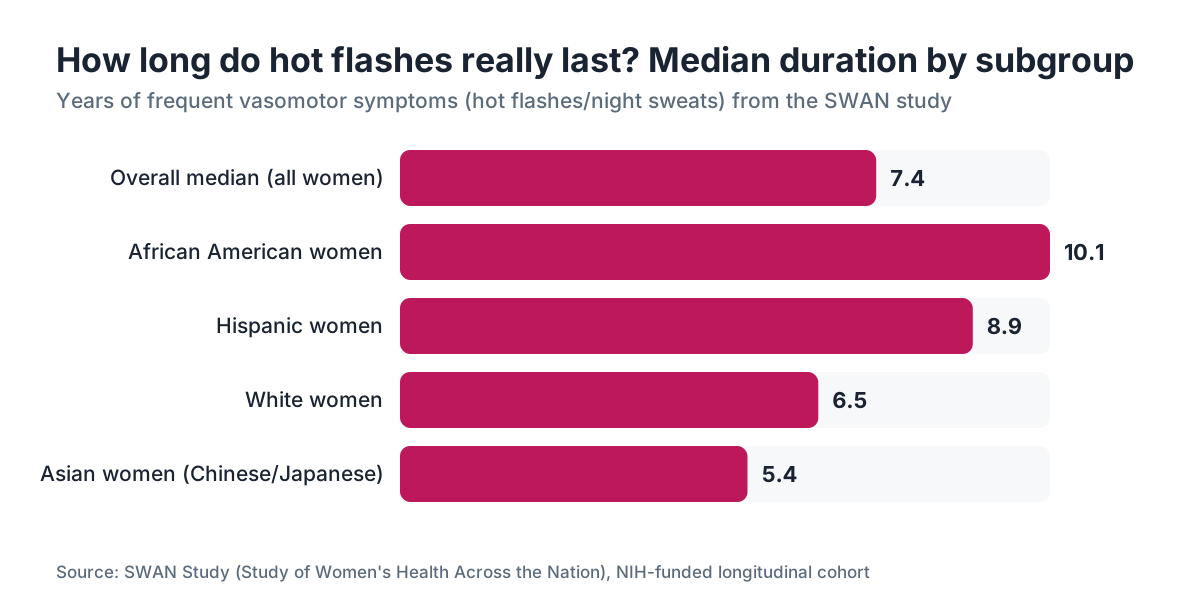
Vasomotor symptoms Hot flashes and night sweats are the hallmark. A hot flash is a sudden wave of heat, usually starting in the chest and moving up to the face, lasting anywhere from 30 seconds to 10 minutes. Night sweats are the nocturnal version and are often worse because they wreck your sleep. The SWAN (Study of Women's Health Across the Nation) found the median duration of frequent hot flashes is 7.4 years, not the 2-3 years that older literature keeps citing [3].
Sleep disruption Night sweats are one cause. But estrogen also has a direct effect on sleep architecture, independent of hot flashes. Women in perimenopause report more difficulty falling asleep, more awakenings, and less restorative slow-wave sleep even on nights without a single sweating episode [3].
Brain fog and memory changes Estrogen modulates serotonin, dopamine, and acetylcholine. When levels drop, many women notice word-finding difficulties, trouble concentrating, and short-term memory lapses. These symptoms are real and measurable. The SWAN study found objective declines in verbal memory and processing speed during the late perimenopause transition that partially improved post-menopause [3].
Mood changes Irritability, anxiety, and low mood are among the most underrecognized and undertreated symptoms. The perimenopausal period carries the highest risk of a first depressive episode in a woman's lifetime, roughly two to four times higher than premenopausal risk [4]. This is more than stress. It is neurobiological.
Vaginal and urinary symptoms (GSM) Genitourinary syndrome of menopause (GSM) covers vaginal dryness, burning, itching, pain with sex, and urinary symptoms like urgency and recurrent UTIs. Unlike hot flashes, GSM does not improve with time. It gets worse unless treated [2].
Joint and muscle pain Musculoskeletal pain is reported by up to 55-60% of perimenopausal women and is one of the most common symptoms women never connect to their hormones [5]. Estrogen has anti-inflammatory properties; losing it contributes to joint stiffness and achiness, particularly in the hands, knees, and hips.
Skin and hair changes Estrogen supports collagen synthesis. Studies show skin loses roughly 30% of its collagen in the first five years after estrogen declines, which drives thinning, dryness, and increased wrinkling [6]. Hair shedding and texture changes are also common.
Palpitations Heart palpitations during perimenopause are usually benign and tied to vasomotor instability rather than cardiac disease. Still, any new palpitations warrant a cardiac workup to rule out arrhythmia.
How is perimenopause different from menopause, and why does it matter for symptoms?
Menopause is a single point in time: 12 consecutive months without a period. Perimenopause is everything leading up to that point, and it can last anywhere from 2 to 14 years [1]. During perimenopause, estrogen doesn't just decline, it swings wildly. Follicle-stimulating hormone (FSH) spikes as the ovaries become less responsive, and estrogen can surge unpredictably before crashing.
That volatility is what makes symptoms feel so chaotic. Women often have weeks where they feel fine, followed by weeks of intense symptoms, and this inconsistency makes it harder to connect the dots. It also means a single estrogen blood test can look completely normal even when symptoms are significant, because you happened to catch a high-estrogen day.
The perimenopause age typically starts between 45 and 55, but the transition can begin earlier. If you're wondering when menopause starts, the average age of natural menopause in the U.S. is 51 [1].
This distinction matters for treatment, too. Hormone therapy dosed for perimenopause is different from post-menopause dosing, because you still have some ovarian function.
Which symptoms of low estrogen in perimenopause are most likely to be missed or misdiagnosed?
Brain fog gets misattributed to burnout, ADHD, or early dementia. Joint pain gets labeled arthritis. Mood changes get called anxiety disorder or depression without any hormonal workup. Heart palpitations trigger cardiac evaluations that come back negative. Recurrent UTIs get treated with antibiotics over and over without anyone checking for GSM as the root cause.
This happens because most physicians were never trained to think about these symptoms as one hormonal syndrome. The 2022 Menopause Society position statement specifically calls out that vasomotor symptoms, sleep disruption, mood changes, cognitive symptoms, and musculoskeletal pain should all be evaluated together as part of the menopause transition [2].
One symptom surprises a lot of women: gastrointestinal changes. Estrogen affects gut motility and the gut microbiome. Increased bloating, constipation, or IBS-like symptoms during perimenopause are common and tied directly to estrogen flux. This gets nowhere near enough attention.
Another overlooked area is sexual dysfunction beyond vaginal dryness. Declining estrogen (and testosterone, which also falls during perimenopause) reduces libido and the capacity for arousal. Many women assume this is psychological or relational when it is physiological.
How do you know if your symptoms are from low estrogen or something else?
There's no single test that definitively confirms your symptoms are from perimenopause. FSH and estradiol levels can support the clinical picture, but because estrogen fluctuates so much during perimenopause, a normal result doesn't rule anything out. NAMS and the Endocrine Society both recommend that perimenopause is diagnosed clinically: based on age, symptom pattern, and menstrual cycle changes, not on lab values alone [2][7].
What the labs are useful for: ruling out thyroid dysfunction (hypothyroidism overlaps heavily with perimenopausal symptoms), anemia, and in some cases premature ovarian insufficiency (POI) in women under 40. If you're 38 and experiencing these symptoms, FSH above 25 IU/L on two occasions at least 4-6 weeks apart, combined with irregular periods, warrants a POI evaluation [7].
A symptom diary over 4-8 weeks is genuinely useful. Tracking when symptoms hit relative to your cycle, sleep, and diet often reveals patterns that help both you and your clinician understand what's going on.
| Symptom | Also seen in | Key differentiator | |---|---|---| | Fatigue, weight gain, cold sensitivity | Hypothyroidism | TSH, free T4 testing | | Mood changes, tearfulness | Clinical depression | PHQ-9 score, hormonal context | | Brain fog, concentration issues | ADHD, burnout | Timing relative to cycle/symptoms | | Joint pain | Rheumatoid arthritis | CRP, ANA, RF panel | | Vaginal dryness | Sjögren's syndrome | Dry eyes/mouth, ANA | | Palpitations | Arrhythmia, hyperthyroidism | EKG, TSH, Holter monitor |
Does low estrogen in perimenopause cause weight gain?
Yes, and the mechanism is real. Estrogen influences where the body stores fat. When estrogen drops, fat distribution shifts from the hips and thighs toward the abdomen, as visceral fat. Visceral fat is metabolically active and linked to higher cardiovascular and metabolic risk. Research from the SWAN study found the menopause transition is associated with a measurable increase in central adiposity independent of chronological aging [3].
Metabolic rate also declines. Estrogen supports insulin sensitivity; losing it drives insulin resistance, which makes weight management harder. Many women eat and exercise exactly as they always have and still gain 5-10 pounds through perimenopause.
This is the point where GLP-1 receptor agonists come up. Semaglutide and tirzepatide work on the brain's appetite and reward circuits and improve insulin sensitivity. If you're in perimenopause and struggling with weight gain that hasn't responded to lifestyle changes, reviewing semaglutide for weight loss or comparing semaglutide vs tirzepatide may be relevant. The honest note: GLP-1s don't fix the hormonal root of perimenopausal weight gain. Hormone therapy and GLP-1s work on different pathways and can be used together.
Services like WomenRx can evaluate both hormone status and GLP-1 candidacy in the same visit, which matters because treating one without the other often leaves women still struggling.
What happens to bones and the heart when estrogen drops in perimenopause?
Estrogen is one of the main brakes on bone resorption. When it drops, osteoclast activity (bone breakdown) accelerates. The first five years after menopause see the fastest bone loss a woman will ever experience, averaging 2-3% per year [8]. Women can lose up to 20% of their bone density in the decade around menopause.
This is why a bone density test at or shortly after menopause is clinically recommended, earlier if you have risk factors. The U.S. Preventive Services Task Force recommends osteoporosis screening for women 65 and older, and the National Osteoporosis Foundation recommends screening earlier for women with risk factors including early menopause [8][11].
For cardiovascular health, premenopausal estrogen levels are linked to lower LDL, higher HDL, and better vascular flexibility. After menopause, cardiovascular risk rises. The increase isn't immediate in perimenopause, but lipid changes begin during the transition. A 2019 analysis found LDL cholesterol increases an average of 10-14 mg/dL across the menopause transition [9].
This is part of why the timing of hormone therapy matters. The "timing hypothesis" suggests that starting estrogen therapy early in the transition (within 10 years of menopause and before age 60) preserves cardiovascular benefit. Starting it later, in women who already have established atherosclerosis, may not carry the same benefit [2][12].
What treatments actually work for low estrogen symptoms in perimenopause?
Hormone therapy is the most effective treatment for vasomotor symptoms, sleep disruption, mood symptoms related to the transition, and GSM. The Menopause Society's 2023 position statement says it plainly: "Hormone therapy is the most effective treatment for vasomotor symptoms and the genitourinary syndrome of menopause and has been shown to prevent bone loss and fracture" [2].
The type matters. For women who still have a uterus, estrogen must be paired with progesterone to protect the uterine lining. The form matters too. Transdermal estrogen (patches, gels, sprays) bypasses first-pass liver metabolism and carries a lower risk of blood clots than oral estrogen. An estrogen patch is often the preferred delivery method for perimenopausal women. Hormone replacement therapy has more nuance than many women were taught. The older, high-dose synthetic formulations of the WHI study are not what gets prescribed today.
For GSM specifically, low-dose vaginal estrogen works locally with minimal systemic absorption and is considered safe even for women who can't use systemic hormone therapy [2].
Non-hormonal options with reasonable evidence:
- Fezolinetant (Veozah), an FDA-approved neurokinin B antagonist, cuts hot flash frequency by about 50% in trials [10].
- SSRIs/SNRIs (paroxetine, venlafaxine, escitalopram) have modest evidence for vasomotor symptoms, roughly 50-60% reduction versus 75%+ for hormone therapy.
- Gabapentin has some evidence for hot flashes, particularly nighttime ones, but comes with sedation and dependency considerations.
- CBT and mindfulness have evidence for reducing the distress around hot flashes, though not the frequency.
Lifestyle factors matter in real terms: regular vigorous exercise reduces hot flash frequency by roughly 30-40% in some studies. Cutting alcohol and caffeine helps. Keeping the bedroom cool is obvious but genuinely effective.
For musculoskeletal symptoms: resistance training preserves muscle mass and bone density, and weight-bearing exercise has its own benefits. Physical therapy for specific joint issues is underused and often works well.
Is there a link between perimenopause symptoms and mental health?
Yes, and it's biochemical, more than circumstantial. Estrogen modulates the serotonin system directly. Falling estrogen destabilizes serotonin signaling, which is why perimenopausal women have elevated rates of irritability, anxiety, panic attacks, and depression even when nothing in their lives has changed [4].
The risk of a new depressive episode is highest during perimenopause among all reproductive life stages. Women with a prior history of premenstrual dysphoric disorder (PMDD) or postpartum depression are at particularly elevated risk during the transition, a pattern suggesting the vulnerability lies in hormonal sensitivity, more than hormonal levels [4].
Cognitive symptoms (brain fog, memory lapses) are among the most distressing for many women, often more than the hot flashes. The reassuring news from the SWAN study: cognitive function largely stabilizes and often improves once women are fully post-menopausal, which suggests the transition itself, not the endpoint, is the neurologically turbulent period [3].
Treating sleep disruption is often the highest-leverage move for mood. Poor sleep amplifies every other symptom. If night sweats are the cause, treating those (with hormone therapy or fezolinetant) can improve mood and cognition more than treating mood directly.
How long do low estrogen symptoms last in perimenopause?
Longer than most women are told. The SWAN study, which followed women for over two decades, found the median total duration of frequent hot flashes was 7.4 years [3]. Women who started experiencing symptoms earlier in perimenopause tended to have them longer. African American women in the study had longer duration than white or Asian women, a finding with real implications for how long treatment may be needed.
GSM symptoms, unlike vasomotor symptoms, have no natural endpoint. They continue and typically worsen throughout the post-menopausal years without treatment.
Bone loss accelerates in the five years around the final menstrual period and continues, at a slower rate, for the rest of a woman's life. Cardiovascular risk climbs progressively.
What this means in practice: perimenopause is not a short inconvenience to push through. For many women, the symptom window spans their most demanding professional and personal years. Untreated moderate-to-severe symptoms have real costs, to work performance, relationships, and long-term health. The decision to treat or not treat deserves an honest picture of the duration involved.
When should you see a doctor about perimenopause symptoms?
If symptoms are affecting your sleep, work, relationships, or quality of life, that's reason enough. You don't need to wait until symptoms are severe or until you're officially in menopause.
Specific situations that warrant prompt evaluation:
- Symptoms appearing before age 40 (possible premature ovarian insufficiency).
- Heavy or unpredictable bleeding that disrupts daily life.
- New cardiovascular symptoms including chest pain, significant palpitations, or syncope.
- Depressive symptoms that go beyond mood variability.
- Rapid bone density loss or a fracture from minimal trauma.
Many primary care physicians are undertrained in menopause management. A 2023 survey found that fewer than 7% of OB-GYN residency programs in the U.S. have formal menopause training curricula. Seeking a clinician with specific menopause training (NAMS-certified menopause practitioners carry the NCMP credential) or a telehealth platform that specializes in hormones, like WomenRx, can make a real difference in the quality of care you get.
Bring a symptom log. Track which symptoms occur, how frequently, how severely, and whether they line up with your cycle if you're still having periods. This is far more useful than a single lab value.
What questions should you ask your doctor about low estrogen symptoms?
Go in prepared. These are the questions most likely to move the conversation toward a useful treatment plan.
- Based on my symptom pattern and age, do you think I'm in perimenopause? What clinical signs support that?
- Should we check thyroid function, CBC, and metabolic panel to rule out other causes?
- Am I a candidate for hormone therapy? If not, why specifically, and what are the alternatives?
- If you recommend hormone therapy, what form of estrogen would you use, and how would we dose it for perimenopause specifically (as opposed to post-menopause dosing)?
- Do I need progesterone, and if so, what type? (Micronized progesterone vs. synthetic progestins have different effects on sleep, mood, and breast tissue.)
- How will we monitor bone density over time? When should I have a baseline bone density test?
- How do you think about the cardiovascular risks and benefits of hormone therapy given my personal history?
- What's your plan if the first treatment approach doesn't work well?
A good clinician will engage with these seriously. If the answer to "am I a candidate for hormone therapy" is a reflexive "no, it causes cancer" with no nuance, get a second opinion. The evidence base for hormone therapy has shifted substantially since the initial WHI reporting in 2002, and later re-analysis significantly revised the understanding of breast cancer risk [2][12].
Frequently asked questions
What are the first signs of low estrogen in perimenopause?
For most women, the first signs are menstrual cycle changes (shorter or longer cycles, heavier or lighter periods), sleep disruption, and mood shifts including increased irritability or anxiety. Hot flashes may come a bit later. Some women notice vaginal dryness or changes in libido early on. Because estrogen fluctuates rather than drops steadily, symptoms often feel inconsistent at first, which makes them easy to dismiss.
Can low estrogen in perimenopause cause anxiety and panic attacks?
Yes. Estrogen directly modulates serotonin and GABA signaling in the brain. When estrogen drops or fluctuates, anxiety and panic attacks become more common even in women who never had anxiety before. The perimenopausal period carries the highest lifetime risk of a first depressive episode. This is neurobiological. If new anxiety is significantly affecting your life, it deserves treatment, whether that means hormone therapy, an SSRI, therapy, or some combination.
How do I know if my symptoms are perimenopause or something else?
The most common mimics are hypothyroidism (fatigue, weight gain, brain fog, mood changes) and clinical depression. A basic workup including TSH, free T4, CBC, and metabolic panel can rule out these causes. Perimenopause is diagnosed clinically based on age, symptom pattern, and cycle changes. Lab values for estrogen and FSH are useful but unreliable on their own because estrogen fluctuates dramatically throughout perimenopause.
Does low estrogen in perimenopause cause joint pain?
Yes. Musculoskeletal pain is reported by 55-60% of perimenopausal women and is one of the most commonly missed hormone-related symptoms. Estrogen has anti-inflammatory properties and supports cartilage health. When it drops, joint stiffness and pain increase, particularly in the hands, knees, and hips. Many women are told they have early arthritis when the real driver is the menopause transition. Hormone therapy can reduce this type of joint pain.
What blood tests diagnose low estrogen in perimenopause?
No single test confirms it. FSH and estradiol can support the clinical picture but are unreliable in perimenopause because estrogen fluctuates so much. A normal result doesn't rule out perimenopause. NAMS and the Endocrine Society recommend clinical diagnosis based on age, symptoms, and cycle changes. Useful labs to run alongside: TSH, free T4, CBC, metabolic panel, and fasting lipids. If you're under 40, FSH above 25 IU/L on two occasions warrants premature ovarian insufficiency evaluation.
How long do hot flashes last in perimenopause?
Much longer than commonly stated. The SWAN study, which tracked women for more than two decades, found the median duration of frequent hot flashes is 7.4 years. Women who started symptoms earlier in perimenopause tended to have them longer. African American women in the study had longer symptom duration than white or Asian women. The common claim that hot flashes last 2-3 years comes from older, smaller studies that didn't follow women long enough.
Can perimenopause cause brain fog and memory problems?
Yes, and the cognitive effects are measurable, more than subjective. The SWAN study found objective declines in verbal memory and processing speed during late perimenopause. These symptoms are tied to estrogen's role in modulating acetylcholine and other neurotransmitters. Most women see cognitive function improve once they reach the post-menopausal state. Sleep deprivation from night sweats significantly amplifies brain fog, so treating sleep disruption is often the most impactful first step.
Does hormone therapy really help perimenopause symptoms?
Yes, it's the most effective treatment we have. The Menopause Society's 2023 position statement calls hormone therapy the most effective option for vasomotor symptoms, genitourinary syndrome of menopause, and bone protection. Transdermal forms (patches, gels) carry lower clot risk than oral estrogen. For women with a uterus, estrogen must be paired with progesterone. The outdated fears from the original 2002 WHI reporting have been significantly revised by subsequent re-analysis.
Is weight gain from perimenopause reversible?
Partially. The fat redistribution toward the abdomen driven by declining estrogen can be partially addressed with hormone therapy, which helps preserve insulin sensitivity and lean mass. Resistance training is the most evidence-backed lifestyle tool for preserving muscle and bone. Caloric restriction alone is often ineffective in perimenopause because of metabolic shifts. GLP-1 receptor agonists like semaglutide can help, though they address appetite and insulin pathways rather than the hormonal root cause directly.
What is genitourinary syndrome of menopause (GSM) and how is it treated?
GSM covers vaginal dryness, burning, itching, pain with sex, urinary urgency, and recurrent UTIs. Unlike hot flashes, GSM doesn't resolve on its own. It worsens progressively without treatment. Low-dose vaginal estrogen (cream, ring, or tablet) is the first-line treatment and is considered safe even for women who can't use systemic hormone therapy. Over-the-counter vaginal moisturizers help with daily comfort but don't reverse the underlying tissue changes the way estrogen does.
What's the difference between perimenopause and menopause symptoms?
Perimenopause is the transition phase, often lasting 2-14 years, where estrogen fluctuates unpredictably. Menopause is the point after 12 consecutive months without a period. Symptoms are broadly similar, but perimenopause is often more chaotic because of estrogen volatility. Hot flashes, night sweats, brain fog, mood changes, and cycle irregularity are the hallmarks of perimenopause specifically. Post-menopausal women tend to have more stable (though lower) estrogen levels, and some vasomotor symptoms actually ease after the transition.
At what age do low estrogen symptoms typically start in perimenopause?
Most women notice first symptoms in their mid-to-late 40s, though the transition can begin in the late 30s. The average age of menopause in the U.S. is 51, so perimenopause typically spans ages 45-51, though the range is wide. Symptoms before age 40 should be evaluated for premature ovarian insufficiency (POI), which affects about 1% of women and requires a different clinical approach than typical perimenopause.
Can lifestyle changes reduce perimenopause symptoms without medication?
Somewhat. Regular vigorous exercise reduces hot flash frequency by 30-40% in some studies and supports bone density, mood, and sleep. A diet lower in refined carbohydrates helps manage insulin resistance. Reducing alcohol and caffeine can cut hot flash triggers. CBT improves how distressing symptoms feel, though it doesn't reduce their frequency. For mild symptoms, lifestyle changes may be enough. For moderate-to-severe symptoms, they rarely are on their own and work best alongside medical treatment.
Does low estrogen in perimenopause affect the heart?
Yes, over time. Premenopausal estrogen levels support favorable lipid profiles and vascular flexibility. LDL cholesterol rises an average of 10-14 mg/dL across the menopause transition. Cardiovascular disease risk increases significantly after menopause. The "timing hypothesis" suggests that starting hormone therapy early in the transition, before age 60 and within 10 years of menopause, may preserve cardiovascular benefit. Starting it later in women with established atherosclerosis carries different risk considerations.
Sources
- ACOG Practice Bulletin on Menopause — American College of Obstetricians and Gynecologists
- The Menopause Society (NAMS) 2022 Hormone Therapy Position Statement
- SWAN Study (Study of Women's Health Across the Nation) — University of Michigan / NIH
- Soares CN. Mood disorders and menopause. Lancet Psychiatry, 2021 — The Lancet
- Magliano M. Menopausal arthralgia: Fact or fiction. Maturitas, 2010 — ScienceDirect
- Thornton MJ. Estrogen functions in skin and skin appendages. Expert Opinion on Therapeutic Targets, 2005 — PubMed/NIH
- Endocrine Society Clinical Practice Guideline: Premature Ovarian Insufficiency
- National Osteoporosis Foundation — Bone Health Basics
- Matthews KA et al. Lipid changes around the final menstrual period. Menopause, 2019 — PubMed/NIH
- FDA Drug Approval — Fezolinetant (Veozah) prescribing information and clinical trial data
- U.S. Preventive Services Task Force — Osteoporosis Screening Recommendation
- Manson JE et al. Menopausal hormone therapy and long-term all-cause and cause-specific mortality. JAMA, 2017