Low-dose birth control pills for perimenopause: what you need to know
TL;DR: Low-dose combined oral contraceptives (20 to 35 mcg ethinyl estradiol) are a legitimate option for perimenopausal women under 50 who need both symptom relief and contraception. They steady erratic cycles, cut hot flashes, hold bone density, and lower ovarian cancer risk. They are wrong for smokers over 35 and women with clot or cardiovascular risk. Around natural menopause, most clinicians move you to standard HRT.
What is perimenopause and why do symptoms get so bad?
Perimenopause is the years-long stretch before your final period, when estrogen and progesterone production goes wildly uneven instead of simply fading out. It usually starts around age 47. For some women it begins in the early 40s, for others not until 51. [1] Our perimenopause age page walks through the timing in detail.
Here is the biology that matters. Your ovaries start skipping ovulations, so progesterone craters while estrogen can spike unpredictably before it finally drops. That seesaw drives most of the misery. Hot flashes, night sweats, bleeding that swings from spotting to flooding, mood swings, and wrecked sleep all trace back to hormonal variability, not purely to low hormone levels. The distinction changes what treatment makes sense.
One fact most women miss: you are still ovulating some months, which means you can still get pregnant. Fertility drops sharply after 40, but spontaneous pregnancy in your mid-to-late 40s is real. Perimenopause is not menopause. You are not protected until you have gone 12 straight months without a period. [2]
How do low-dose birth control pills help perimenopausal symptoms?
Low-dose combined oral contraceptives hold both a synthetic estrogen (almost always ethinyl estradiol, or EE) and a progestin. "Low dose" in practice means 20 to 35 mcg of EE per pill. Ultra-low formulations drop to 10 mcg, but most perimenopausal prescribing sits in the 20 to 35 mcg range. [3]
The pill works by overriding your ovaries entirely. Instead of chaotic surges and drops, it delivers a steady synthetic dose on a 28-day schedule. That predictability is the whole point. Hot flashes ease because you are no longer riding estrogen swings. Periods turn regular and lighter. Mood tends to settle once the hormonal noise quiets down.
Contraception is the other real benefit. A low-dose pill used perfectly is more than 99% effective at preventing pregnancy. [3] For a 44-year-old who does not want to get pregnant but has not yet confirmed menopause, that combination of symptom control plus reliable contraception is hard to match with anything else.
There are longer-term protections too. Women who use combined oral contraceptives carry roughly a 40 to 50% lower lifetime risk of ovarian cancer than never-users, and the protection builds with years of use. [4] Low-dose pills also help hold bone mineral density during a window when falling estrogen would otherwise speed up bone loss, which starts to count as you near natural menopause.
How is a low-dose BCP different from standard menopause HRT?
This is the question that trips up most women, and the answer has real clinical consequences.
Standard hormone replacement therapy for menopause uses bioidentical or conjugated estrogen at doses set to replace what your ovaries stop making, typically 0.5 to 1 mg oral estradiol or a 0.025 to 0.1 mg transdermal patch paired with progesterone. The estrogen in HRT is estradiol, the same molecule your ovaries produce.
Birth control pills use ethinyl estradiol, a synthetic estrogen that is far more potent milligram for milligram because it resists liver metabolism. A 20 mcg ethinyl estradiol pill delivers roughly four to seven times the systemic estrogenic effect of a standard menopausal HRT dose, depending on the formulation. [5]
That extra potency is exactly what suppresses ovulation reliably. It also pushes the cardiovascular and clot risks meaningfully higher than with standard HRT. The Women's Health Initiative findings on HRT do not translate directly to combined OC risk, and the reverse is just as true. These are different drugs with different risk profiles, even though both involve estrogen.
HRT is not FDA-approved as a contraceptive. Low-dose BCPs are not FDA-labeled for menopause symptom management (they get used off-label for it, and the symptom benefit is well documented). If your only goal is managing symptoms after confirmed menopause, standard HRT is usually the better call. If you still need contraception, the pill has a real edge.
Who is a good candidate for low-dose BCPs in perimenopause?
The North American Menopause Society (NAMS) names good candidates for low-dose combined OCs as perimenopausal women who are non-smoking, under 50 (or within a few years of expected menopause), without hypertension, without a personal or strong family history of venous thromboembolism, without migraines with aura, and without known cardiovascular disease. [6]
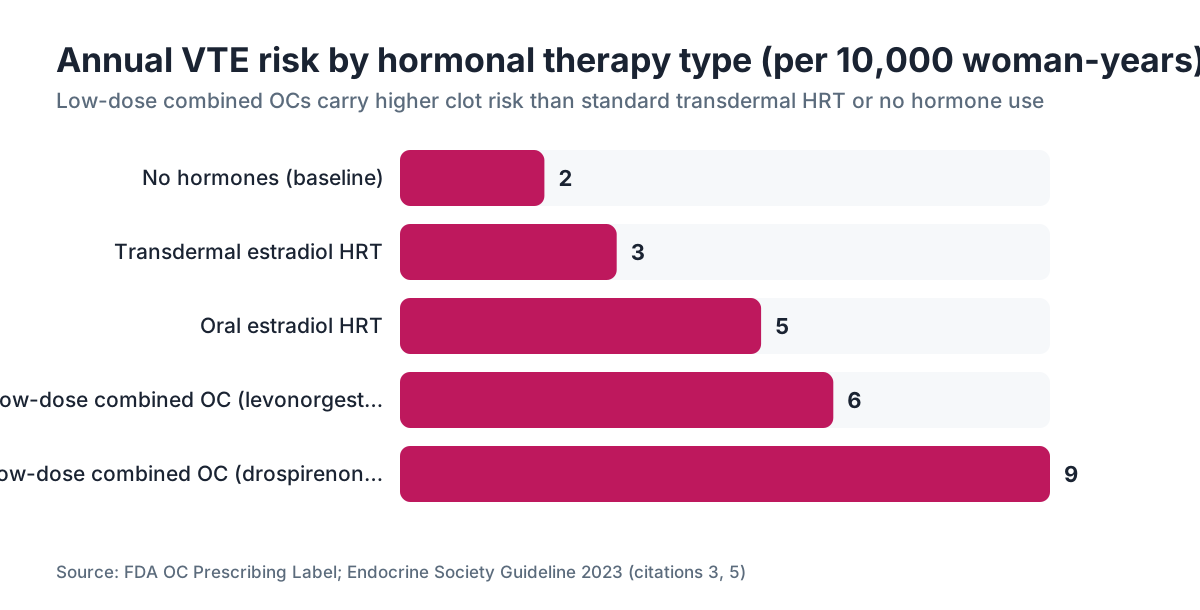
Check those boxes and the absolute risks from a 20 to 35 mcg OC stay low. Venous thromboembolism (blood clots) is the most cited worry. Background VTE risk in reproductive-age women runs about 1 to 5 per 10,000 woman-years. Combined OCs roughly double to quadruple that, to about 3 to 9 per 10,000 woman-years depending on the progestin. [3] A small absolute number. Not zero.
Smoking is a hard stop. The FDA label for combined oral contraceptives carries a boxed warning: "Cigarette smoking increases the risk of serious cardiovascular events from combination oral contraceptive use." That risk climbs with age and with heavier smoking, and women over 35 who smoke should not use combined oral contraceptives. [3] No physician can responsibly work around that.
Migraines with aura are another hard contraindication, because estrogen-containing OCs raise ischemic stroke risk in women who have aura, independent of other factors. [8] Progestin-only options are sometimes used in that group, though they do not manage estrogen-related perimenopausal symptoms as well.
Women who do not meet the criteria above often do better with a progesterone-only pill, or a progestin-releasing IUD paired with a low-dose estrogen patch.
What are the real risks of low-dose BCPs during perimenopause?
Here is what the evidence actually shows, without softening it.
Venous thromboembolism is the most common serious adverse event. The risk is real, tracks with estrogen dose, and shifts with the progestin. Levonorgestrel-containing pills carry lower VTE risk than desogestrel or drospirenone-containing pills. [5] For a 45-year-old non-smoker with no other risk factors, the absolute annual risk stays well under 1 in 1,000, but it beats the risk from standard transdermal HRT, which barely raises clot risk at all because the estrogen skips first-pass liver metabolism.
Breast cancer is the question almost every patient asks. Combined OC use links to a small rise in relative breast cancer risk, roughly a 20 to 30% relative increase, which stays small in absolute terms for most women. [4] The increase appears to fade after you stop the pill, and the picture for perimenopausal women specifically has not been well studied apart from the broader reproductive-age data.
Blood pressure can climb on combined OCs in some women, and a perimenopausal woman already drifting toward higher readings needs monitoring. Lipid effects vary by progestin. Androgenic progestins like levonorgestrel can nudge HDL down. Anti-androgenic progestins like drospirenone have a slightly friendlier lipid profile but higher VTE risk.
One underrated problem: on the pill, you may sail past natural menopause without noticing, because the pill masks your cycles. You can check FSH during the pill-free week for a rough signal, but readings on hormonal contraception are unreliable. Most clinicians move you off the pill around age 50 to 51 and watch whether natural cycles resume to sort out where you stand.
What does the FSH test show when you're on the pill?
FSH (follicle-stimulating hormone) is the standard lab marker for menopause. A level above 40 mIU/mL on two tests at least a month apart, with no periods for 12 months, confirms menopause. [2]
The catch: combined oral contraceptives suppress FSH artificially, because the synthetic estrogen feeds back on the pituitary. An FSH drawn while you are on the pill tells you almost nothing about menopausal status. Some clinicians measure it during the pill-free interval (week four of a 28-day pack) for a slightly more useful reading, but even that is not reliable enough to call it.
Most gynecologists use a practical workaround. Around age 50 to 51, if you are on a low-dose pill and want to know whether you have reached menopause, stop the pill (with another contraceptive method in place if you still need pregnancy prevention), wait 4 to 8 weeks, and check FSH. If it stays elevated and periods do not return, menopause is confirmed and you can move to standard HRT if symptoms linger.
The "stop to check" method is imperfect. Some perimenopausal women ovulate again even after an elevated FSH, so contraception during the transition is not something to drop casually.
Which low-dose pill formulations do clinicians actually prescribe for perimenopause?
No single pill is FDA-approved specifically for perimenopause, so prescribing rests on evidence from contraceptive trials applied to this group plus clinical experience.
Commonly used formulations:
| Formulation | EE dose | Progestin | Notes | |---|---|---|---| | Lo Loestrin Fe | 10 mcg | Norethindrone acetate | Ultra-low EE; some women get breakthrough bleeding | | Loestrin 1/20 | 20 mcg | Norethindrone acetate | Long track record, lower VTE profile | | Ortho-Cyclen generics | 35 mcg | Norgestimate | Favorable lipid profile | | Yaz / Yasmin | 20 to 30 mcg | Drospirenone | Anti-androgenic, can help bloating; slightly higher VTE risk | | Seasonique / extended-cycle | 30 mcg | Levonorgestrel | Quarterly periods; useful when bleeding control is the main goal |
The 20 mcg EE formulations are the usual starting point for women in their mid-to-late 40s. Extended-cycle pills that cut periods to four a year suit women whose main complaint is irregular heavy bleeding rather than hot flashes, since constant hormone delivery avoids the estrogen drop that triggers a withdrawal bleed.
Progestin choice matters more for side effect profile than for perimenopausal symptom control. Women who had mood trouble on older androgenic progestins sometimes tolerate drospirenone better, but the VTE trade-off belongs in that conversation.
When should you switch from the pill to HRT?
This is where women need clear guidance and often do not get it.
The clinical consensus, backed by NAMS, is that around age 50 to 51 it is time to reassess whether combined OCs are still the right tool. [6] Once you have confirmed natural menopause (or are functionally menopausal by symptoms and labs), the contraceptive benefit shrinks fast, and you are carrying the higher cardiovascular risk of synthetic OC estrogen with nothing to show for it.
Standard menopausal HRT, especially transdermal estradiol, carries a friendlier risk profile for cardiovascular events and clots than combined OCs in most post-menopausal women. A 51-year-old post-menopausal woman on transdermal estradiol plus progesterone faces less clot risk than the same woman on a 20 mcg EE pill. [5] That flip in the risk-benefit math is the main reason to switch.
Symptoms often run for years past the final period. Hot flashes persist an average of 7 to 10 years after menopause onset in many women. [1] Moving to HRT at confirmed menopause, rather than stopping hormones cold, is usually the right move for symptomatic women.
If you work with a telehealth provider like WomenRx, this transition is worth mapping in advance, so the conversation does not catch you off guard when it needs to happen.
Do low-dose BCPs protect bone density during perimenopause?
Bone loss speeds up in the years around menopause. Estrogen directly quiets osteoclasts (the cells that break down bone), so falling estrogen means faster bone turnover. The decade running from perimenopause through the first years after menopause accounts for roughly 10 to 20% of total lifetime bone mass loss in many women. [7]
Combined oral contraceptives do preserve bone mineral density during use, largely because the synthetic estrogen, even at 20 mcg EE, suppresses the resorption that uncontrolled fluctuation would otherwise drive. But the evidence that OC use in the perimenopausal years produces a lasting drop in post-menopausal fracture risk is mixed, and not strong enough to prescribe the pill for bone protection alone. [7]
If bone is your concern, the better-supported moves are confirming adequate calcium and vitamin D intake, doing weight-bearing and resistance exercise, and getting a bone density test (DEXA scan) at or around menopause to set your baseline. Some women who need both symptom control and bone support find the pill covers both goals in perimenopause, then transition to HRT, which has its own modest bone-preserving evidence.
Can low-dose BCPs help with perimenopausal mood changes and heavy bleeding?
Two of the most disruptive perimenopausal symptoms beyond hot flashes are mood swings and abnormal bleeding. The pill helps with both, though the mechanisms differ.
Perimenopausal mood runs partly on estrogen variability and partly on sleep wrecked by night sweats. When the pill flattens that variance, many women report real mood improvement. Some do not, especially women with a history of pill-related low mood. Progestins differ in their neurological activity, and some women react to a synthetic progestin in a way they never did to natural progesterone. If your mood tanked on the pill in your 20s or 30s, that history counts.
Perimenopausal heavy bleeding (clinically, heavy menstrual bleeding, or HMB) is common as ovulation gets erratic. The uterine lining builds without the progesterone signal that normally follows ovulation, so shedding turns prolonged, heavy, or irregular. Combined OCs reliably thin the lining and set up predictable withdrawal bleeds. For women whose bleeding has turned disabling, sometimes soaking through a super pad in an hour, that is no small thing.
The Mirena IUD (levonorgestrel-releasing) is also highly effective for heavy perimenopausal bleeding, cutting menstrual blood loss by up to 90% in most users, and it delivers progestin locally with minimal systemic effect. [11] It does not supply the estrogen that touches hot flashes or protects bone, so some clinicians pair a Mirena with low-dose systemic estrogen as a hybrid.
For women managing both hormones and weight, GLP-1 receptor agonists like semaglutide increasingly run alongside hormonal therapy. The two do not interact, but weight change from a GLP-1 can shift estrogen levels on its own, which is worth watching.
Are there alternatives to the pill for managing perimenopause symptoms?
Yes, and they matter, especially for women who cannot or should not use combined OCs.
Standard HRT (estradiol plus a progesterone or progestin) is the most directly effective option for hot flashes and other menopause-driven symptoms. The limit: it does not reliably block ovulation, so it is not an approved contraceptive. Women who need contraception must run a separate method alongside it.
The levonorgestrel IUD (Mirena or Liletta) paired with a low-dose estrogen patch works well for women who need both contraception and estrogen support. The IUD delivers progestin locally (protecting the uterine lining), an estrogen patch supplies systemic estrogen for symptoms, and the IUD is over 99% effective as contraception. This combination gets called "HRT plus IUD" and is used off-label for perimenopausal management. [11]
Non-hormonal options for hot flashes include fezolinetant (Veozah), FDA-approved in May 2023 as the first non-hormonal neurokinin B receptor antagonist for vasomotor symptoms. [10] It offers no contraception. SSRIs and SNRIs (paroxetine, venlafaxine) give modest hot flash relief, well below what estrogen delivers, but can help women with concurrent depression or anxiety.
For women weighing weight management alongside hormonal care, our pages on semaglutide for weight loss and semaglutide vs tirzepatide are worth a read, since midlife weight gain and hormonal change tend to arrive together and often respond best to a combined plan.
What does your doctor actually need to check before prescribing a low-dose BCP?
A responsible prescriber does more than write a script.
Blood pressure gets measured. Combined OCs are contraindicated in women with uncontrolled hypertension (systolic above 160 or diastolic above 100), which the CDC's US Medical Eligibility Criteria classes as category 4. [9] Even well-controlled hypertension in a perimenopausal woman over 40 deserves a careful risk conversation.
A personal and family history of clots, stroke, or heart disease gets collected. Inherited thrombophilias like Factor V Leiden sharply raise VTE risk on combined OCs. Routine thrombophilia testing before starting the pill is not standard, but it is appropriate when family history raises the question.
Migraine history matters, specifically whether migraines come with aura (visual disturbances, numbness, other neurological symptoms). Aura plus combined OCs is a hard no because of stroke risk. [8]
Smoking status, obviously. Even "social" smoking adds risk, and combined OCs are contraindicated in smokers over 35, full stop. The CDC classes that as category 4 too. [9]
A lipid panel and blood glucose are worth having. Perimenopausal lipids often shift, and some progestins move lipids in ways worth knowing at baseline.
You do not need a Pap smear to get a birth control prescription, but if you are overdue, this is a sensible time to catch up. Many practices bundle the visit.
For women managing care through a telehealth platform, a self-reported medical history plus ordered lab work reviewed by a licensed clinician covers most of these bases without an in-office visit, though blood pressure documentation (a pharmacy cuff or home device works) is still required.
Frequently asked questions
Can I get pregnant during perimenopause if I stop my birth control?
Yes. Perimenopause does not equal infertility. You may ovulate only occasionally, but occasional ovulation still means real pregnancy risk. Natural fertility drops sharply after 40, yet unintended pregnancies in the mid-to-late 40s do happen. Menopause is only confirmed after 12 straight period-free months. Until then, reliable contraception makes sense if pregnancy is not the plan.
Is 20 mcg ethinyl estradiol enough to control hot flashes in perimenopause?
For most women, yes. The 20 to 35 mcg EE in a standard low-dose pill overrides erratic ovarian hormone production and delivers enough estrogen to cut hot flashes and night sweats significantly. Some women find that 10 mcg ultra-low formulations do not fully suppress vasomotor symptoms, and stepping up to 20 mcg helps. Response is individual and usually takes a 2 to 3 month trial to judge.
At what age should I stop taking the pill and switch to HRT?
Most clinicians recommend reassessing around age 50 to 51, the average age of natural menopause in the US. Once menopause is confirmed (FSH above 40 mIU/mL on two readings, no periods for 12 months), the contraceptive benefit fades and combined OCs carry a worse risk profile than standard HRT. Some women stay on the pill until 52 to 53 with close monitoring.
Why can't smokers over 35 take the pill?
The FDA label for combined oral contraceptives carries a boxed warning tying smoking to sharply higher risk of serious cardiovascular events, including heart attack and stroke, with risk climbing by age and cigarette count. Synthetic estrogen's clot-promoting effects stacked on smoking's cardiovascular effects is the reason. Non-estrogen options (progestin-only pill, IUD) do not carry the same restriction.
Does a low-dose BCP protect bone density as well as HRT does?
Both low-dose BCPs and standard HRT preserve bone mineral density during use, through estrogen's suppression of bone resorption. The evidence for reduced fracture risk as a lasting outcome is stronger and better studied for menopausal HRT than for OCs used in perimenopause. A DEXA scan at or near menopause gives you the clearest read on where your bone density actually stands.
Can I use a low-dose BCP if I have high blood pressure?
Not safely if your blood pressure is uncontrolled. Combined OCs can raise blood pressure and are contraindicated at systolic above 160 or diastolic above 100, which the CDC rates category 4. Even well-managed hypertension in a woman over 40 needs a careful risk discussion. Progestin-only options or transdermal estradiol HRT (with a much better cardiovascular profile) are usually preferred for hypertensive perimenopausal women.
How do I know when I've actually reached menopause if I'm on the pill?
You cannot tell reliably while taking the pill, because synthetic estrogen suppresses FSH artificially. The standard approach is to stop the pill around age 50 to 51, use barrier contraception for 4 to 8 weeks, then check FSH. Two readings above 40 mIU/mL, plus absent periods, confirm menopause. Do not stop the pill without a backup method in place during the waiting window.
Will a low-dose BCP help my perimenopausal mood swings?
For many women, yes. Perimenopausal mood instability runs largely on erratic estrogen swings and sleep disrupted by night sweats. The pill flattens that variability. But some women are sensitive to synthetic progestins and feel low mood or irritability on combined OCs. If you had mood trouble on the pill in your 20s or 30s, mention it. Progestin type and dose can often be adjusted.
Does the pill increase breast cancer risk in perimenopause?
Current evidence links combined OC use to a roughly 20 to 30% relative increase in breast cancer risk during and shortly after use. In absolute terms, that is a small increase for most women. The risk appears to decline after you stop. This picture differs from and is not directly comparable to the breast cancer data from the Women's Health Initiative HRT trials. Your personal risk factors matter and belong in the conversation.
What blood tests should I get before starting a low-dose BCP in my 40s?
At minimum: a blood pressure measurement, fasting lipid panel, and blood glucose. A medical and family history covering clotting disorders, migraines with aura, cardiovascular disease, and smoking status is essential. Thrombophilia screening (Factor V Leiden, prothrombin mutation) is not routine, but it is appropriate if you have a personal or first-degree family history of unexplained blood clots.
Is the progestin in the pill the same as progesterone used in HRT?
No. Progestins in birth control pills are synthetic compounds. Some resemble testosterone in structure (levonorgestrel, norethindrone); others are more anti-androgenic (drospirenone). Progesterone used in menopausal HRT, including oral Prometrium and bioidentical formulations, is chemically identical to what your ovaries produce. The difference shows up in side effect profiles, particularly mood, libido, and cardiovascular risk.
Can low-dose BCPs reduce ovarian cancer risk during perimenopause?
Yes. This is one of the more consistent findings in reproductive health research. Combined oral contraceptive use links to a 40 to 50% reduction in lifetime ovarian cancer risk, with protection building over duration of use and lasting years after you stop. For women with a family history of ovarian cancer, that reduction can factor into the decision to use the pill through perimenopause.
What are the alternatives to the pill for heavy bleeding in perimenopause?
The levonorgestrel IUD (Mirena, Liletta) is highly effective for heavy perimenopausal bleeding, cutting menstrual blood loss by up to 90% in most users. Combined OCs are the main alternative when you also need systemic symptom control. For women who cannot use hormones, tranexamic acid (a non-hormonal antifibrinolytic) and NSAIDs taken during bleeding give modest reduction. Endometrial ablation is a permanent surgical option.
How long does perimenopause last and do I need the pill the whole time?
Perimenopause averages 4 to 7 years, though it stretches to 10 for some women. Whether you need hormonal management the whole time depends on symptom severity and contraceptive needs. Some women coast through with few symptoms; others are badly impaired. The pill is not the only tool across the whole span. Reassessing yearly, and especially around age 50, keeps the plan matched to where you actually are.
Sources
- NAMS (North American Menopause Society), Menopause 101
- NIH Office on Women's Health, Menopause Basics
- FDA, Prescribing Information for Combined Oral Contraceptives (reference label)
- Collaborative Group on Epidemiological Studies of Ovarian Cancer, Lancet 2008 – combined OC use and ovarian cancer risk
- Endocrine Society Clinical Practice Guideline, Treatment of Symptoms of the Menopause, 2023
- NAMS, Hormone Therapy Position Statement 2022
- NIH National Institute of Arthritis and Musculoskeletal and Skin Diseases, Osteoporosis Overview
- ACOG (American College of Obstetricians and Gynecologists), Practice Bulletin on Hormonal Contraception, 2021
- CDC, US Medical Eligibility Criteria for Contraceptive Use (US MEC) 2024
- FDA Drug Approval, Fezolinetant (Veozah) 2023
- ACOG, Practice Bulletin on Management of Menopausal Symptoms, 2022