Low bone density in women: causes, symptoms, and treatment
TL;DR: Low bone density means your bones have lost mineral and are weaker than normal for your age. It ranges from osteopenia (T-score between -1.0 and -2.5) to osteoporosis (T-score at or below -2.5). Estrogen loss after menopause is the biggest driver in women. Treatments work, from hormone therapy to bisphosphonates, and catching it early changes the outcome.
What is low bone density and how is it defined?
Bone density measures how much mineral, mostly calcium and phosphate, is packed into a given area of bone. The World Health Organization defines low bone density with a T-score, which compares your bone mineral density to the average peak bone mass of a healthy 30-year-old woman [1]. A T-score between -1.0 and -2.5 is osteopenia. A T-score at or below -2.5 is osteoporosis.
Those numbers carry weight because fracture risk roughly doubles for every standard deviation drop in T-score [2]. A woman at -2.5 is not "a little below average." She is in the zone where a fall, or even a hard stumble, can break a hip or a vertebra.
There is a second number called the Z-score, which compares you to women your own age. Z-scores help most for younger women and for spotting bone loss that is worse than expected for your life stage. Your report may show both.
Low bone density is not something you feel. It is a silent structural change that shows up on a bone density test long before anything breaks. That is the whole point of the diagnostic criteria: to catch it while you can still act.
How common is low bone density in women?
The scale is big. The Bone Health and Osteoporosis Foundation estimates that about 54 million Americans have low bone density or osteoporosis, and women make up roughly 80 percent of osteoporosis cases [3]. About half of all women over 50 will break a bone because of osteoporosis at some point [3].
Hip fractures are the worst outcome. Roughly 20 percent of older adults who fracture a hip die within a year from complications, and about half of survivors never get their pre-fracture mobility back [3].
Vertebral fractures happen more often than hip fractures, yet they slip past diagnosis constantly because many occur with no dramatic fall. A woman notices she has lost height, or that her upper back has started to round forward, and only then does imaging reveal old compression fractures she never knew she had.
The racial picture is uneven. White and Asian women have higher rates of osteoporosis than Black and Hispanic women, but Black women get screened less often and, after a fracture, are less likely to get follow-up care [4].
What causes low bone density in women?
Bone is living tissue. Cells called osteoclasts break it down, and cells called osteoblasts rebuild it. Estrogen keeps osteoclasts from working too fast. When estrogen drops during perimenopause and after menopause, the balance tips toward breakdown, and bone mineral density falls faster than the body replaces it [5].
Women lose bone fastest in the two to five years around the final period. Some research puts average loss during that window at 10 to 20 percent of total bone mass [5]. That is a lot to shed in a short time.
Estrogen is the headline, but other causes stack up:
- Long-term corticosteroid use (prednisone, dexamethasone). Even low doses taken longer than three months raise fracture risk sharply.
- Low body weight or a history of eating disorders. Bone responds to load, and less weight means less stimulus.
- Calcium and vitamin D deficiency over years or decades.
- Thyroid disease, especially untreated hyperthyroidism or too much thyroid hormone replacement.
- Type 1 diabetes and some forms of type 2 diabetes.
- Celiac disease and other malabsorption conditions.
- Early menopause (before 45) or surgical menopause at any age, both of which add years of estrogen deficiency [5].
- Smoking and heavy drinking, both of which poison osteoblast function.
Genetics count too. If your mother or grandmother broke a hip, your risk runs higher no matter what else is true. Family history is baked into every fracture risk calculation.
What are the symptoms of low bone density?
The honest answer: most people with low bone density feel nothing until a bone breaks.
Osteopenia and early osteoporosis do not hurt. Bone has no nerve endings that report mineral loss. The first sign is usually a fracture from a fall that would not have broken a healthy bone, or a vertebral compression fracture that shows up as sudden back pain with no injury behind it.
A few indirect signs are worth watching. Losing more than 1.5 inches from your peak height is a red flag and can point to vertebral fractures. A forward curve of the upper spine, sometimes called a dowager's hump, is a visible sign of vertebral collapse. Chronic mid or lower back pain in a postmenopausal woman with no other explanation deserves imaging.
Symptoms of the conditions behind the bone loss can be present too, like fatigue from thyroid disease or gut trouble from celiac disease. But those signal the underlying cause, not the bone loss itself.
So the practical rule is short. Waiting for symptoms is not a strategy. Screening is. The U.S. Preventive Services Task Force recommends a bone density scan for all women 65 and older, and for younger postmenopausal women whose 10-year fracture risk is equal to or greater than that of a 65-year-old white woman [6].
How is low bone density diagnosed?
The standard test is dual-energy X-ray absorptiometry, called a DEXA or DXA scan. It measures bone mineral density at the hip and lumbar spine, takes about 10 to 20 minutes, and gives you very little radiation, roughly one-tenth the dose of a chest X-ray [7].
Results come back as a T-score and a Z-score, and most reports also calculate a FRAX score. FRAX is a fracture risk tool from the WHO that combines your bone density with clinical risk factors like age, smoking, steroid use, and family history to estimate your 10-year chance of a major fracture [2]. A FRAX major fracture probability above 20 percent, or hip fracture probability above 3 percent, usually triggers a recommendation for medication [6].
The bone density test article walks through what to expect and how to prepare.
A few other tools exist. Quantitative ultrasound of the heel sometimes gets used for initial screening where DEXA is not available. It is cheaper but less precise, and it cannot diagnose osteoporosis by WHO criteria. Quantitative CT gives more detail but delivers much higher radiation, so it is not used for routine screening.
Blood and urine tests do not diagnose low bone density directly, but they find the causes. A workup often includes calcium, phosphorus, vitamin D (25-OH), parathyroid hormone, thyroid-stimulating hormone, and sometimes serum protein electrophoresis to rule out multiple myeloma.
What are the treatment options for low bone density?
Treatment tracks two things: where you land on the spectrum and what your actual fracture risk is. Osteopenia with a low FRAX score may need only lifestyle changes and monitoring. Osteoporosis, or osteopenia with a high FRAX score, usually needs medication.
Hormone replacement therapy (HRT)
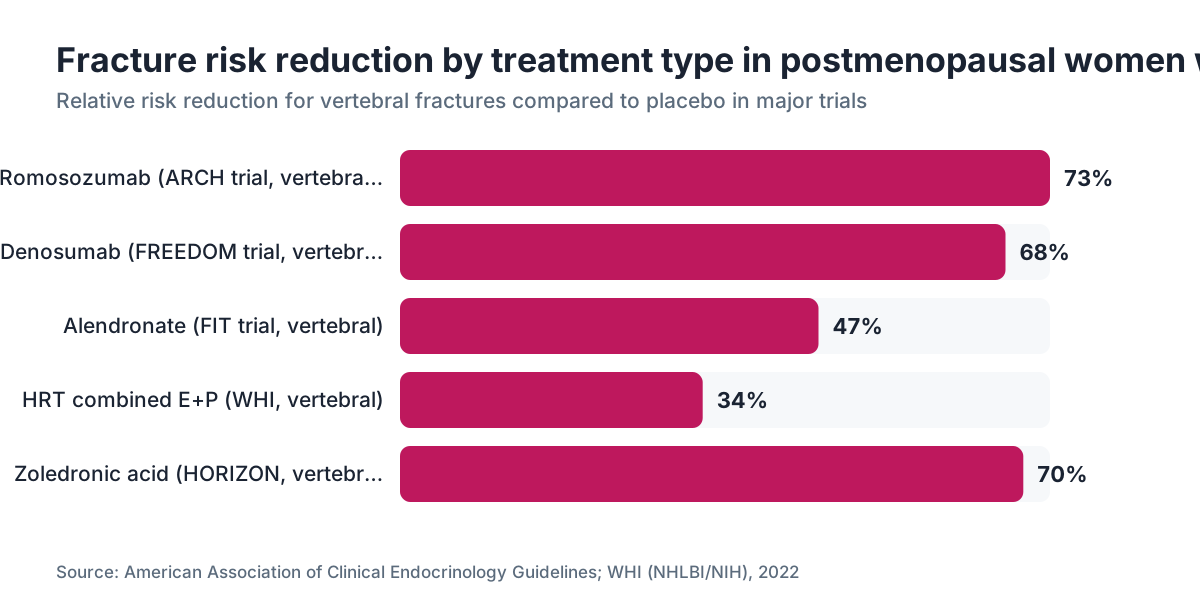
Estrogen is the most directly bone-protective option for perimenopausal and postmenopausal women. HRT stops the fast bone loss around menopause and lowers fracture risk. The Women's Health Initiative found that combined estrogen-progestin therapy cut hip fractures by 34 percent and vertebral fractures by 34 percent compared to placebo [8]. That is a real, clinically meaningful effect.
HRT is not right for every woman, and the risk-benefit conversation is personal. But for a woman already weighing hormone replacement therapy for menopausal symptoms, bone protection is a genuine bonus rather than a side effect. The Menopause Society (formerly NAMS) backs HRT as an option for fracture prevention in women under 60 or within 10 years of menopause onset who have no contraindications [9].
Progesterone is the paired hormone in most HRT regimens for women who still have a uterus. Its direct effect on bone is less studied than estrogen's, but it is part of standard combined therapy.
For women who prefer transdermal delivery, an estrogen patch reaches bone-protective estrogen levels without the first-pass liver metabolism that comes with oral estrogen.
Bisphosphonates
Alendronate (Fosamax), risedronate (Actonel), and zoledronic acid (Reclast) are the most commonly prescribed osteoporosis medications. They work by shutting down osteoclast activity. Weekly alendronate cuts vertebral fracture risk by about 47 percent and hip fracture risk by about 51 percent in women with osteoporosis and prior vertebral fractures [7]. Zoledronic acid comes as a once-yearly IV infusion, which solves the adherence problem.
Oral bisphosphonates can irritate the GI tract, and very long-term use carries rare but real risks of atypical femur fractures and osteonecrosis of the jaw. Most guidelines suggest reassessing after 3 to 5 years and considering a drug holiday for lower-risk patients.
Denosumab (Prolia)
Denosumab is a monoclonal antibody given by injection every 6 months. It cuts vertebral fracture risk by about 68 percent and hip fracture risk by about 40 percent in women with osteoporosis [7]. Its effect fades fast if you stop, so you cannot simply quit it. You transition to another drug or risk rebound bone loss.
Anabolic agents
Teriparatide (Forteo) and abaloparatide (Tymlos) are synthetic parathyroid hormone analogs that build new bone rather than just slowing breakdown. They treat severe osteoporosis or cases where other drugs have failed. Romosozumab (Evenity) is newer and does both at once, building bone and cutting breakdown. It is approved for postmenopausal women at high fracture risk.
Calcium and vitamin D
Neither calcium nor vitamin D alone treats established osteoporosis, but both are the floor everything else stands on. The NIH recommends 1,200 mg of calcium daily for women over 50, ideally from food, with supplements filling any gap [4]. Vitamin D recommendations run 600 to 800 IU daily per NIH guidance, though many clinicians aim for a 25-OH vitamin D blood level between 30 and 50 ng/mL and dose to hit it [11].
Does GLP-1 medication affect bone density?
This is a real, unsettled question, and it matters for women using semaglutide or tirzepatide for weight loss.
Rapid weight loss from any cause, including GLP-1 receptor agonists, can lower bone mineral density. When you drop body fat and muscle, you take load off the skeleton, and load is one of the signals bones use to hold density. The STEP 1 trial of semaglutide found participants lost lean body mass alongside fat, and bone density changes were measured but showed only modest decreases in the published data [10]. The SURMOUNT-1 trial of tirzepatide produced similar weight loss, but bone-specific results have gotten less attention in the published literature.
What we do not have is long-term fracture data for women on GLP-1 drugs. The trials were not built to detect fracture differences. Observational and mechanistic work is ongoing.
So here is the takeaway. If you are using semaglutide for weight loss or comparing semaglutide vs tirzepatide, raise this with your prescriber, especially if you already have low bone density or stacked risk factors. Resistance training, protein, calcium, and vitamin D matter more, not less, when weight is coming off fast.
For the broader hormonal context of GLP-1 use in women, WomenRx has clinicians who work at this exact intersection of weight management and bone health, and they can help you weigh the tradeoffs plainly.
The semaglutide article covers the pharmacology and clinical data if you want the full picture of how it works and who it fits.
What lifestyle changes actually help low bone density?
Exercise is the most under-used treatment in bone health. Bones respond to mechanical stress by laying down more mineral. The best kinds are weight-bearing aerobic activity (walking, hiking, dancing, not swimming or cycling) and resistance training with weights or bands. A meta-analysis in Osteoporosis International found progressive resistance training improved lumbar spine BMD by about 1 to 2 percent versus controls, which adds up over time [7].
Balance training matters just as much, because preventing falls prevents fractures no matter what your bone density is. Tai chi has the strongest evidence for cutting falls in older adults.
Smoke if you want to speed up bone loss. Quit if you want to slow it. Smoking is directly toxic to osteoblasts, the effect is dose-dependent, and it partly reverses after you stop.
Alcohol above moderate levels (roughly more than two drinks a day on average) impairs calcium absorption and osteoblast function. Moderate intake does not seem to harm bone and may even help slightly in postmenopausal women, though the data are mixed enough that it is no reason to start.
Falls cause most hip fractures, so home safety is bone medicine. Pulling up loose rugs, installing grab bars, and keeping walkways clear are not glamorous, but they work. Vision correction and a medication review belong in the same conversation, since many common drugs cause dizziness or throw off balance.
Sun exposure for vitamin D is real but unreliable at northern latitudes from October to April, and dermatologists rightly warn against unprotected exposure. Supplementing is the practical move for most women.
How does menopause timing affect bone density risk?
The earlier estrogen drops, the more lifetime bone loss piles up. Women who reach menopause before 45, whether natural or surgical, carry a much higher lifetime fracture risk than women who hit menopause age at the typical 51 to 52 [5].
Surgical menopause is especially abrupt. Removing both ovaries shuts off ovarian estrogen overnight instead of over the slow slide of natural menopause. Women who have both ovaries out before 45 and skip hormone therapy show much higher rates of osteoporosis and hip fracture later on [5].
Even in natural menopause, timing shapes treatment. The Menopause Society's 2023 position statement holds that for women under 60 or within 10 years of menopause onset, the benefits of hormone therapy generally outweigh the risks for bone protection and other outcomes in women without contraindications [9].
Knowing when menopause starts and tracking symptoms through perimenopause gives you a window to get a baseline DEXA and start protecting bone before much of it is gone. That window is real. It closes.
What does a bone density treatment plan actually look like?
A real plan is never one prescription. It is layered, built around your T-score, your FRAX probability, your age, your menopausal status, and the rest of your medical history.
Take a 52-year-old with a T-score of -1.8 (osteopenia), no prior fractures, and a FRAX major fracture probability under 10 percent. Her plan might be: dial in calcium and vitamin D, start or ramp up resistance training, repeat the DEXA in two years, and consider HRT if she has menopausal symptoms anyway.
Now a 65-year-old with a T-score of -2.7 and a prior wrist fracture. Different picture. She almost certainly qualifies for medication. Weekly alendronate is usually first-line if she tolerates oral dosing and has no esophageal disease. If weekly pills are hard to keep up with, once-a-year zoledronic acid by infusion works just as well and removes the adherence issue. She still needs calcium, D, exercise, and fall prevention.
For a woman at very high risk (T-score below -3.0, or a prior hip or vertebral fracture), anabolic therapy with teriparatide or romosozumab is increasingly the starting point, not a rescue.
Monitoring is part of the plan. DEXA scans usually repeat every 1 to 2 years during active treatment to confirm the drug is working and to catch unexpected loss. Bone turnover markers (blood and urine) can show a biochemical response within 3 to 6 months, well before DEXA changes appear.
WomenRx clinicians who carry women through perimenopause and beyond read bone density inside the full hormonal picture, including whether HRT fits and how it interacts with other drugs or conditions. The aim is a plan that fits the person, more than the number on the report.
What foods and supplements support bone density?
Calcium gets the most attention, and it earns it. About 99 percent of the body's calcium sits in bone. The NIH Office of Dietary Supplements recommends 1,200 mg per day for women over 50 [4]. Dairy, fortified plant milks, sardines with bones, tofu set with calcium sulfate, and leafy greens like bok choy and kale are solid dietary sources. Supplements fill gaps fine, but there is debate about whether calcium supplements above dietary needs raise cardiovascular risk. The evidence is not settled, so most clinicians say food first.
Vitamin D drives calcium absorption. Without enough D, you absorb roughly 10 to 15 percent of dietary calcium. With enough, absorption climbs to 30 to 40 percent [4]. Most Americans fall short from sun alone, especially in winter. Supplementing 1,000 to 2,000 IU daily is reasonable for most postmenopausal women, though a blood test tells you where you actually stand [11].
Magnesium, vitamin K2, and protein feed bone matrix quality, though the evidence for supplementing any of them specifically to prevent fractures is thinner than for calcium and D. A broadly nutritious diet with enough protein (at least 1 gram per kilogram of body weight a day) beats any single supplement stack on the evidence.
Too much sodium pushes calcium out in the urine. Too much caffeine has a small negative effect. Neither is big enough to be the main driver of bone loss, but both are worth trimming if your calcium intake already runs marginal.
Frequently asked questions
At what age should women start worrying about bone density?
Bone mass peaks in your late 20s and drifts down after that. The window that matters most is the years around menopause, usually the late 40s to early 50s, when estrogen drops and bone loss speeds up. The U.S. Preventive Services Task Force recommends screening all women at 65, and younger postmenopausal women with elevated fracture risk. With risk factors like early menopause, steroid use, or a family history of hip fracture, earlier screening makes sense.
Can low bone density be reversed?
Improved is more accurate than reversed. Bisphosphonates, denosumab, and HRT stop further loss and produce modest gains, often 1 to 3 percent a year at the spine. Anabolic agents like teriparatide or romosozumab can raise density more, sometimes 10 to 12 percent over two years. None fully restore bone to peak mass, but they cut fracture risk sharply, which is the actual goal.
What is the difference between osteopenia and osteoporosis?
Both describe low bone mineral density on a DEXA scan. Osteopenia means a T-score between -1.0 and -2.5, below average but not severely low. Osteoporosis is a T-score at or below -2.5. The line matters for treatment: osteopenia with low fracture risk often needs only lifestyle changes, while osteoporosis usually needs medication. A prior fracture can push someone into the high-risk category regardless of the exact T-score.
Does low bone density cause pain?
Low bone density itself does not cause pain. Bone has no sensors for mineral loss. Pain enters when a fracture happens, especially a vertebral compression fracture, which can bring sudden severe back pain. Chronic back pain from multiple old vertebral fractures is common in older women with osteoporosis. Any new back pain in a postmenopausal woman deserves imaging, even without a known fall or injury.
How does semaglutide or GLP-1 weight loss affect bone density?
Rapid weight loss takes mechanical load off the skeleton, which can modestly lower bone mineral density. The STEP 1 trial of semaglutide showed small drops in lean mass alongside fat loss. Long-term fracture data from GLP-1 trials do not exist yet. Women on these drugs should prioritize resistance training, protein, calcium, and vitamin D. A baseline DEXA and periodic monitoring is reasonable, especially for women already at bone risk.
Is hormone therapy the best treatment for bone density after menopause?
It depends on your full picture. HRT protects bone and is a reasonable first choice for women under 60 or within 10 years of menopause who also have symptoms and no contraindications. The Women's Health Initiative showed a 34 percent drop in hip fractures with combined HRT. For women who cannot or choose not to use HRT, bisphosphonates carry strong fracture-reduction evidence and are typically first-line for established osteoporosis.
How long does it take for bone density treatment to work?
Bone turnover markers in blood and urine can show a biochemical response within 3 to 6 months. Measurable DEXA changes usually take 1 to 2 years. Fracture risk reduction starts earlier than DEXA improvement, sometimes within the first year of bisphosphonate or denosumab treatment. That is why repeat DEXA at one to two years is standard during active treatment, rather than waiting longer to check.
What is a FRAX score and do I need one?
FRAX is a WHO fracture risk tool that calculates your 10-year probability of a major osteoporotic fracture (hip, spine, wrist, or shoulder) from your bone density result and clinical risk factors. You need one if you have osteopenia and are deciding whether to start medication. A FRAX major fracture probability above 20 percent or hip fracture probability above 3 percent is a common threshold to start pharmacotherapy, per Bone Health and Osteoporosis Foundation guidance.
Can you have low bone density without having osteoporosis?
Yes. Osteopenia is the category between normal and osteoporosis: a T-score between -1.0 and -2.5. Many women in their 50s land here. Osteopenia does not automatically call for medication, but it does call for monitoring and attention to lifestyle. A woman with osteopenia plus a high FRAX score, a prior fracture, or ongoing bone-damaging drugs like steroids may still need treatment. The T-score alone does not settle it.
Do calcium supplements actually help bone density?
Calcium supplements fill gaps in dietary intake but do not treat established osteoporosis on their own. They work best as a foundation alongside adequate vitamin D, exercise, and, when indicated, pharmacotherapy. The NIH recommends 1,200 mg total daily calcium for women over 50, ideally from food. If diet provides 800 mg, a 400 mg supplement makes sense. Higher supplement doses have uncertain cardiovascular implications and add no extra bone benefit.
What exercises are best for low bone density?
Weight-bearing aerobic activity and resistance training carry the strongest evidence. Walking, hiking, and dancing load the skeleton in ways cycling and swimming do not. Progressive resistance training with weights or bands can improve lumbar spine BMD by 1 to 2 percent versus controls, per meta-analysis data. Balance training such as tai chi cuts fall risk. All three types together, done consistently, beat any single form of exercise.
How does early menopause affect bone density risk?
Early menopause, defined as menopause before 45, raises lifetime fracture risk by adding years of estrogen deficiency. Surgical menopause from removing both ovaries causes an abrupt estrogen drop more severe than natural menopause. Women who go through early menopause and skip hormone therapy have much higher rates of osteoporosis and hip fracture later in life. A baseline DEXA and serious consideration of HRT fit most women in this group.
Are there medications that cause low bone density?
Yes, several common ones. Corticosteroids like prednisone top the list. Even low doses taken longer than three months cause real bone loss. Others include proton pump inhibitors (long-term use impairs calcium absorption), certain anticonvulsants, aromatase inhibitors used in breast cancer treatment, and in some cases high-dose thyroid hormone replacement. If you take any of these chronically, your prescriber should discuss bone monitoring and possibly preventive treatment.
How often should I get a bone density test?
The U.S. Preventive Services Task Force recommends screening from age 65 for all women. How often to repeat depends on your results. A woman with normal density and low risk may not need another scan for 10 to 15 years. Osteopenia calls for one every 2 to 5 years depending on severity. Osteoporosis on treatment usually repeats every 1 to 2 years to track response. Your clinician sets the interval from your T-score and risk factors.
Sources
- FRAX WHO Fracture Risk Assessment Tool, University of Sheffield
- Bone Health and Osteoporosis Foundation, Osteoporosis Fast Facts
- NIH Office of Dietary Supplements, Calcium Fact Sheet for Health Professionals
- Endocrine Society, Osteoporosis and Bone Health
- U.S. Preventive Services Task Force, Osteoporosis to Prevent Fractures: Screening (2018)
- Women's Health Initiative, JAMA 2002 and NEJM 2003, NIH
- NEJM, STEP 1 Trial: Once-Weekly Semaglutide in Adults with Overweight or Obesity (Wilding et al., 2021)
- NIH Office of Dietary Supplements, Vitamin D Fact Sheet for Health Professionals