Losing weight in perimenopause: what actually works
TL;DR: Most women gain 5 to 10 pounds during perimenopause, driven by falling estrogen, rising cortisol, and insulin resistance. Standard calorie restriction works less well than it used to. What actually moves the needle: resistance training, protein-forward eating, managing sleep and stress, and for many women, hormone therapy or a GLP-1 medication. None of this is quick, but the tools exist.
Why is it so hard to lose weight in perimenopause?
Your hormonal environment changes faster than your habits do, and the mismatch is brutal.
Estrogen has a direct effect on where your body stores fat. When levels are high and cycling normally, fat tends to park in the hips and thighs. As estrogen declines during perimenopause, fat redistributes toward the abdomen. This visceral fat is metabolically active in the worst way: it drives inflammation, worsens insulin resistance, and makes losing weight harder as a feedback loop [1].
At the same time, progesterone drops sharply and early in the transition, often years before estrogen follows. Low progesterone disrupts sleep, and poor sleep raises ghrelin (your hunger hormone) while suppressing leptin (your satiety signal). You are genuinely hungrier and less satisfied than you were at 35 [2].
Muscle mass compounds the problem. Women lose roughly 3 to 8 percent of muscle mass per decade after age 30, and the rate accelerates after menopause [3]. Less muscle means a lower resting metabolic rate. The same 1,800 calories that maintained your weight at 38 now creates a surplus at 46, even if nothing else in your life changed.
Cortisol often rises during perimenopause too, partly from poor sleep, partly from the psychological stress of midlife, partly from the hormonal chaos itself. Elevated cortisol preferentially deposits fat in the abdomen and signals the liver to increase glucose output, nudging fasting blood sugar higher over time.
So when you feel like you're doing everything right and still gaining weight, you're probably correct. The physiology shifted. That's the honest starting point.
How much weight do women actually gain during perimenopause?
The numbers are well-studied and the range is wide. The Study of Women's Health Across the Nation (SWAN), which followed over 3,000 women through the menopause transition, found that women gained an average of 1.5 pounds per year during perimenopause, independent of age-related changes [4]. Over a typical 7 to 10 year perimenopause window, that adds up to 10 to 15 pounds for many women, even those who would not describe themselves as sedentary or overeating.
Body composition changes even when the scale doesn't. Women can stay at the same total weight while losing 5 or more pounds of muscle and gaining the equivalent in fat, mostly in the midsection. Waist circumference is a more honest marker than body weight alone. A waist above 35 inches in women is associated with elevated cardiometabolic risk regardless of BMI [1].
Not every woman gains the same amount. Genetics, starting body composition, activity level, sleep quality, and how quickly hormones decline all matter. Women who enter perimenopause with more muscle mass and a history of resistance training tend to gain less visceral fat and hold on to metabolic rate better. That's not a lecture, it's useful information about where to put your energy.
Does hormone replacement therapy help with weight loss in perimenopause?
This is one of the most common questions women ask, and the answer has layers: HRT doesn't cause meaningful weight loss on its own, but it changes where fat goes and makes other weight loss efforts more effective.
Multiple randomized trials show that estrogen therapy reduces visceral fat accumulation during the menopause transition. The PEPI trial and later data from the WHI substudy both found that women on estrogen therapy gained less abdominal fat than women not on it, even when total body weight was similar [5]. That distinction matters because abdominal fat is the type most linked to cardiovascular disease, type 2 diabetes, and metabolic syndrome.
Estrogen also helps preserve muscle mass. Women on estrogen tend to have a higher resting metabolic rate than comparable women not on it, which makes calorie management less of an uphill battle.
Progesterone's role is subtler but real. Restoring progesterone improves sleep quality, and better sleep directly improves hunger regulation. If you're waking at 3 a.m. with a racing mind and then eating more the next day to compensate for fatigue, that's a solvable problem. You can read more about progesterone's specific effects at progesterone.
The practical takeaway: hormone replacement therapy is not a weight loss drug, but it addresses several of the underlying hormonal drivers of perimenopausal weight gain. Women who start HRT early in perimenopause often find that diet and exercise start working the way they used to. That's not a coincidence.
If you want to explore HRT options including the estrogen patch, a telehealth provider who specializes in women's hormones can evaluate what's appropriate for your current hormone levels and history.
What diet approach actually works for weight loss in perimenopause?
Calorie restriction alone works less reliably in perimenopause than it did at 25, and most women already know this from experience. The shift worth making is from thinking about calories to thinking about protein and blood sugar.
Protein is the macronutrient that matters most. It preserves muscle during a calorie deficit, which is the whole game when you're already losing muscle to hormonal changes. It's also the most satiating macronutrient per calorie. A practical target for perimenopausal women trying to lose fat while preserving muscle is 1.2 to 1.6 grams of protein per kilogram of body weight per day. For a 150-pound (68 kg) woman, that's roughly 82 to 108 grams of protein daily, which is substantially more than most women currently eat [3].
Blood sugar management is the second lever. Falling estrogen worsens insulin sensitivity, meaning carbohydrates have a larger glycemic impact than they used to. This doesn't mean going ketogenic. It means prioritizing fiber-rich vegetables, legumes, and whole grains over refined carbohydrates, and pairing any carbohydrate with protein or fat to blunt the glucose spike. Keeping fasting glucose under 100 mg/dL and 2-hour postmeal glucose under 140 mg/dL are reasonable targets based on standard metabolic health guidelines.
Caloric needs do decline with age, roughly 100 to 200 calories per decade after 30, largely because of muscle loss. A 47-year-old woman may need to eat about 200 fewer calories per day than she did at 35 to maintain the same weight, even if her activity level hasn't changed. Acknowledging that reality without catastrophizing it is more useful than ignoring it.
Intermittent fasting gets a lot of press. The honest assessment: there's limited evidence specific to perimenopausal women, and some evidence that prolonged fasting can raise cortisol, which is counterproductive given that many women in this life stage already have elevated cortisol. If a 12 to 14 hour overnight fast helps you naturally reduce calories and doesn't leave you exhausted, fine. If you're doing 20-hour fasts and feeling terrible, that's not a hormonal fix.
Alcohol is worth mentioning plainly. Alcohol disrupts sleep architecture, raises cortisol, and provides empty calories. For women already struggling with sleep and weight during perimenopause, cutting alcohol often produces surprising improvements in both.
What type of exercise is most effective for perimenopause weight loss?
Resistance training. Full stop. If you only have capacity for one change to your exercise routine, make it this one.
Here's why: cardio burns calories during the session, but muscle tissue burns calories continuously. Every pound of muscle you add raises your resting metabolic rate by roughly 6 to 10 calories per day. That compounds. Resistance training also improves insulin sensitivity acutely and chronically, which directly counteracts one of the main hormonal drivers of perimenopause weight gain [3].
The evidence for resistance training in menopausal and perimenopausal women is consistent across multiple studies. Two to three sessions per week using compound movements (squats, deadlifts, rows, presses) at progressively challenging weights produces measurable improvements in body composition, bone density, and metabolic markers within 12 to 16 weeks [6]. Bone density matters here too: low estrogen accelerates bone loss, and resistance training is one of the few interventions proven to slow it. Consider getting a baseline bone density test if you haven't already.
Cardiovascular exercise still has value, especially for heart health and stress management. The sweet spot for most perimenopausal women is a mix: two to three days of resistance training plus two to three days of moderate cardio (brisk walking, cycling, swimming). High-intensity interval training (HIIT) is effective for insulin sensitivity but should be approached with attention to recovery, since high-intensity exercise spikes cortisol, and some women in perimenopause find it worsens sleep and increases anxiety if overdone.
Walking is underrated. A consistent daily walk of 7,000 to 10,000 steps reduces visceral fat, improves sleep, lowers cortisol, and adds meaningfully to calorie expenditure without the recovery demands of high-intensity work. The Nurses' Health Study found women who walked briskly for 30 minutes per day had significantly lower rates of weight gain over 16 years compared to sedentary women [7].
Nobody can out-train poor sleep and chronic stress. Exercise is one input in a system that also includes recovery.
How does sleep affect weight during perimenopause?
More than most women realize.
Sleep disruption is nearly universal in perimenopause. Night sweats, anxiety, early waking, and lighter sleep architecture are all common. And this matters for weight in a direct, measurable way. A study published in Annals of Internal Medicine found that when people slept 5.5 hours instead of 8.5 hours per night during a calorie-restricted diet, 55% of the weight they lost came from lean mass instead of fat, even with the same caloric deficit [8]. Meaning: sleep deprivation doesn't just make you eat more, it changes what you burn when you're in a deficit.
Four to seven nights of poor sleep raises ghrelin (hunger hormone) by 15 to 20 percent and lowers leptin (satiety hormone) by a similar amount. This creates a physiological push toward overeating that willpower cannot reliably override.
Improving sleep during perimenopause often requires addressing the hormonal cause directly. Hot flashes and night sweats respond well to estrogen therapy. The 3 a.m. anxiety and waking often improve with progesterone. Those aren't lifestyle interventions; they're hormone problems with hormone solutions.
Beyond hormones: sleep hygiene basics that actually matter at this life stage include keeping the bedroom cool (65 to 68 degrees Fahrenheit), limiting alcohol within three hours of bedtime, and consistent wake times even on weekends. Cognitive behavioral therapy for insomnia (CBT-I) has strong evidence and is now accessible via app or telehealth when in-person therapy isn't practical.
Do GLP-1 medications like semaglutide work for perimenopause weight loss?
Yes, and they work for the same reasons they work in anyone: they reduce appetite, slow gastric emptying, and improve insulin sensitivity. The case for them in perimenopausal women is particularly strong because GLP-1s directly address insulin resistance, which is one of the core hormonal problems of this life stage.
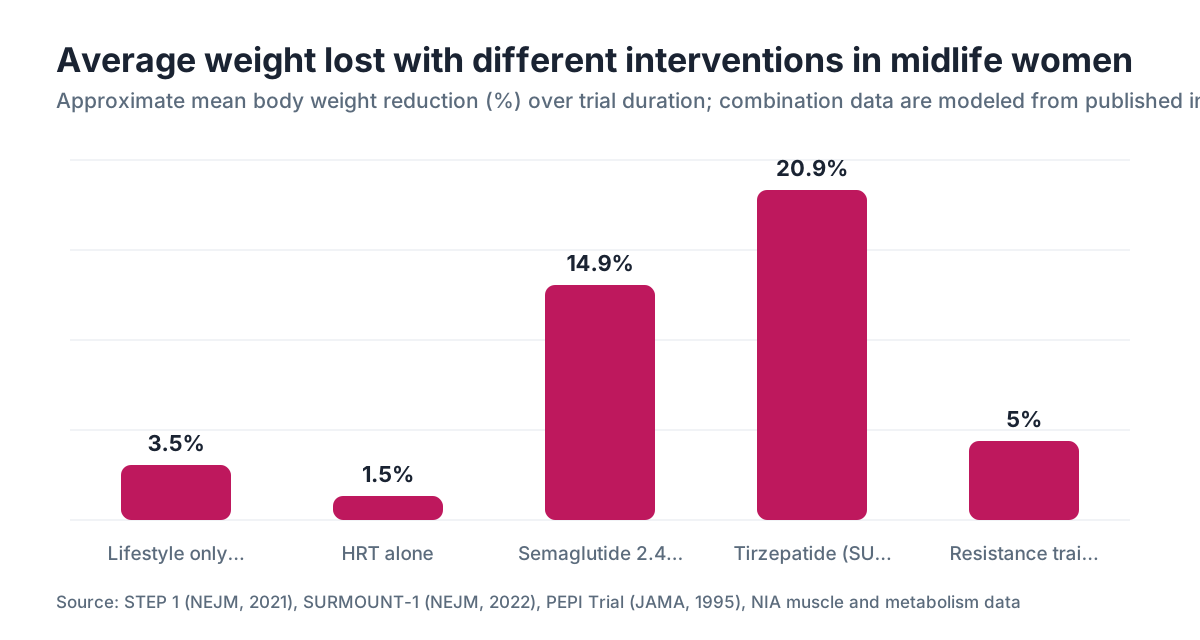
The STEP 1 trial, the main semaglutide weight loss study, found that adults on semaglutide 2.4 mg weekly lost an average of 14.9% of body weight over 68 weeks, compared to 2.4% with placebo [9]. This included a large proportion of women in midlife. The SURMOUNT-1 trial for tirzepatide (which acts on both GLP-1 and GIP receptors) showed even larger average weight loss: 20.9% over 72 weeks [10].
These are averages. Individual results vary considerably based on starting metabolic health, diet, activity level, and whether hormonal issues are being addressed at the same time. GLP-1s are not a substitute for treating underlying hormonal imbalances, and they work better when combined with adequate protein intake and resistance training to prevent muscle loss during rapid weight reduction.
For women in perimenopause, pairing a GLP-1 with HRT may be more effective than either alone. HRT addresses the hormonal environment; the GLP-1 addresses appetite and insulin resistance. There's no large randomized trial on the combination yet, but the mechanistic case is sound.
Cost and access are real barriers. Brand-name semaglutide (Wegovy) and tirzepatide (Zepbound) typically cost $900 to $1,300 per month without insurance. Compounded versions are available at lower cost, though the regulatory landscape is evolving. You can find a full comparison of the options at semaglutide for weight loss and a head-to-head breakdown at semaglutide vs tirzepatide.
WomenRx offers GLP-1 evaluation and prescribing for eligible women, alongside hormone management, which lets both issues get addressed together rather than bouncing between providers.
If you're considering semaglutide, the questions to answer first are: Is your perimenopause hormonal picture being addressed? Are you prepared to prioritize protein and resistance training to protect muscle? Those answers matter for how much of the weight loss will be the kind that improves your metabolic health long-term.
What's the role of stress and cortisol in perimenopause weight gain?
Cortisol is the weight loss conversation nobody wants to have because the solutions are less satisfying than a prescription.
Cortisol promotes fat storage in the abdomen, raises blood glucose, increases appetite (particularly for calorie-dense foods), and suppresses thyroid function. During perimenopause, cortisol tends to trend higher for several overlapping reasons: sleep deprivation, the physical stress of hormonal fluctuation, psychological stress of midlife, and lower estrogen (which normally buffers the cortisol response).
You can't out-lift or out-diet chronically elevated cortisol. Women who are training hard, eating carefully, and still not losing abdominal fat often have a cortisol problem. A salivary cortisol test (four-point, taken throughout the day) gives a more useful picture than a single serum cortisol draw.
The interventions with the clearest evidence for lowering cortisol: adequate sleep (the single most powerful lever), moderate-intensity exercise rather than high-intensity daily, deliberate recovery time, and reducing caffeine after noon. Ashwagandha has the best evidence among adaptogens; a randomized controlled trial found 300 mg twice daily reduced serum cortisol by about 28% compared to placebo in stressed adults, though data specific to perimenopausal women is limited [11].
None of this is glamorous. But ignoring cortisol while optimizing everything else is like bailing water from a boat without looking for the leak.
Does thyroid function affect weight loss in perimenopause?
Hypothyroidism and perimenopause overlap in timing and symptoms enough that one is often mistaken for the other, or both exist at once.
Hypothyroidism affects roughly 5 to 10 percent of women, with rates rising significantly after age 40 [13]. Symptoms include fatigue, weight gain, cold intolerance, constipation, and low mood, which are hard to tell apart from perimenopause symptoms. A standard TSH test identifies overt hypothyroidism. Many clinicians also check free T4 and sometimes free T3 and TPO antibodies (to identify Hashimoto's thyroiditis, an autoimmune condition that's more common in women).
If your TSH is above 4.0 mIU/L and you're gaining weight despite reasonable effort, getting treated for hypothyroidism should come before intensifying diet or exercise. Weight loss is much harder when your thyroid is underperforming, and levothyroxine is inexpensive and well-tolerated.
Subclinical hypothyroidism (TSH between 2.5 and 4.0) is more contested. Some clinicians treat it when symptoms are significant; others prefer watchful waiting. If your TSH is in that range and your weight loss efforts are stalled, it's a conversation worth having with your provider.
Blood sugar dysregulation and thyroid dysfunction often travel together in perimenopausal women. Getting a fasting glucose, HbA1c, and TSH at the same time gives a fuller metabolic picture than any single test alone.
What's a realistic timeline for losing weight in perimenopause?
Slower than you want, and faster than doing nothing.
A realistic rate of fat loss in perimenopause, when doing things well, is about 0.5 to 1 pound per week, or roughly 1 to 3 pounds per month. That's slower than what many diet plans promise and slower than most women lost weight in their 20s and 30s. The slower rate is partly metabolic, but it's also protective: losing weight too quickly in perimenopause accelerates muscle loss, which is already happening from hormonal changes. Slower, protein-supported fat loss keeps more lean mass on your frame.
With GLP-1 medications, the pace is faster. STEP 1 participants lost approximately 14.9% of body weight over 68 weeks, or roughly 10 to 15 months [9]. That's a lot of weight at a rate the body can mostly accommodate, though muscle loss is still a concern without deliberate protein and resistance training.
Hormonal interventions work on their own timeline. Most women who start HRT notice sleep improvement within a few weeks and mood changes within one to two months. The effect on body composition is gradual and works better as a foundation than as a fast track.
The honest frame: addressing perimenopause weight gain is a 12 to 24 month project, not a 12-week one. The women who do best are the ones who make simultaneous changes to exercise (resistance training), protein intake, sleep quality, and hormonal environment, rather than cycling through one intervention at a time and abandoning each when it doesn't produce fast results.
Understanding where you are in the transition can also inform the approach. The perimenopause window varies widely; you can read more about typical timing at perimenopause age.
Should you track hormones, blood sugar, or other labs when trying to lose weight in perimenopause?
Testing tells you which levers to pull and in what order. Guessing wastes months.
The baseline labs worth getting: FSH and estradiol (to gauge where you are in the perimenopause transition), progesterone (day 21 of cycle if still cycling), TSH, fasting glucose, HbA1c, fasting insulin, and a lipid panel. Some clinicians add DHEA-S and free testosterone, since low androgens contribute to fatigue and muscle loss during this period.
FSH above 10 mIU/mL on a day 3 draw suggests declining ovarian reserve. FSH consistently above 40 mIU/mL, combined with 12 months without a period, meets the standard definition of menopause [1].
Fasting insulin is often more informative than fasting glucose alone. You can have a normal fasting glucose but a high fasting insulin, which means your pancreas is working harder to keep glucose in range. Fasting insulin above 10 to 15 uIU/mL suggests insulin resistance is already present, which changes the dietary and intervention priorities meaningfully.
Continuous glucose monitors (CGMs) have become accessible without a prescription and can be genuinely useful for perimenopausal women who want to see how specific foods, sleep, and stress affect their blood sugar in real time. One week of CGM data is often more instructive than years of abstract nutritional advice.
Repeat labs every 6 to 12 months if you're actively managing hormones or weight. Hormonal needs change through the perimenopause transition, and a protocol that was right at 44 may need adjustment at 48.
What actually doesn't work for perimenopause weight loss?
Saying this directly is more useful than another list of tips.
Extreme calorie restriction makes things worse. Eating below 1,200 calories per day triggers muscle breakdown, raises cortisol, suppresses thyroid function, and nearly always leads to rebound weight gain. The research on very low calorie diets in women over 40 is not encouraging.
Cardio-only exercise routines don't move the needle the way they did at 30. Running 5 miles a day without resistance training burns calories but doesn't rebuild the metabolic infrastructure that perimenopause erodes. Many women who exercise heavily but only do cardio still gain visceral fat because they're losing muscle at the same time.
Fat burner supplements are a waste of money. The evidence for any over-the-counter supplement (green tea extract, garcinia cambogia, raspberry ketones, and the rest) producing meaningful weight loss is either absent or based on tiny, poorly controlled studies. Caffeine has a small thermogenic effect but nothing that moves the scale in a way you'd notice.
Going it alone when a hormonal problem is driving the weight gain. If your sleep is destroyed by night sweats, your insulin resistance is worsening from falling estrogen, and your cortisol is elevated from chronic poor sleep, the most disciplined diet and exercise routine will produce disappointing results. Treating the hormonal environment is not optional, it's the foundation.
WomenRx evaluates the full picture, including hormones and metabolic health, for women who want one place to address the root causes rather than chasing symptoms.
Frequently asked questions
Can you lose belly fat specifically during perimenopause?
Yes, though it requires targeting the right causes. Visceral belly fat in perimenopause is driven by declining estrogen and insulin resistance. Estrogen therapy reduces visceral fat accumulation even when total weight doesn't change much. Resistance training and cutting refined carbohydrates both improve insulin sensitivity and reduce abdominal fat over time. GLP-1 medications also reduce visceral fat specifically. No approach works overnight; expect 3 to 6 months of consistent effort before visible changes in the abdomen.
Is perimenopause weight gain inevitable?
Significant weight gain is common but not inevitable. SWAN data shows women gain an average of 1.5 pounds per year during perimenopause, but the range is wide. Women who enter perimenopause with a habit of resistance training, high protein intake, and good sleep tend to gain much less. Hormonal management also limits the extent of weight gain. You won't fully override the hormonal shifts, but you can meaningfully reduce their effect on your body composition.
Does intermittent fasting help with perimenopause weight loss?
Evidence specific to perimenopausal women is limited. A 12 to 14 hour overnight fast is probably fine for most women and can reduce overall calorie intake without conscious restriction. Longer fasting windows (16 to 20 hours) may raise cortisol, worsen sleep, and increase muscle loss in women who are already hormonally stressed. If you try intermittent fasting, prioritize getting adequate protein within your eating window and watch whether your sleep and energy improve or worsen.
How does perimenopause affect metabolism?
Perimenopause reduces resting metabolic rate through two mechanisms: muscle loss (which accelerates as estrogen falls) and declining thyroid and mitochondrial function. Women may need 100 to 200 fewer calories per day in their late 40s compared to their mid-30s just to maintain weight. Insulin sensitivity also worsens, meaning carbohydrates cause larger blood sugar spikes. Resistance training and estrogen therapy both partially offset these metabolic changes.
Can hormone therapy actually help you lose weight in perimenopause?
HRT alone doesn't cause significant weight loss, but it changes body composition favorably. Multiple trials show estrogen therapy reduces visceral fat accumulation compared to no treatment, even when total weight is similar. It also helps preserve muscle mass and improves sleep, which supports hunger regulation. Most women find that diet and exercise become more effective once HRT is in place. It's a hormonal foundation, not a weight loss drug.
What's the best diet for perimenopausal weight loss?
A protein-forward, lower-glycemic diet has the strongest mechanistic case for perimenopausal women. Aim for 1.2 to 1.6 grams of protein per kilogram of body weight daily to preserve muscle. Emphasize fiber-rich vegetables, legumes, and whole grains over refined carbohydrates to manage blood sugar, which worsens as estrogen falls. Cutting alcohol helps sleep and reduces empty calories. There's no single named diet with strong trial data specific to perimenopausal women.
Are GLP-1 medications safe for perimenopausal women?
The FDA-approved GLP-1 medications (semaglutide and tirzepatide) have been studied in large trials including women in midlife. Common side effects are gastrointestinal: nausea, constipation, and reflux, especially early on. The main concern specific to perimenopausal women is muscle loss during rapid weight reduction, which worsens an already unfavorable hormonal trend. High protein intake and resistance training during GLP-1 treatment reduce this. Anyone with a personal or family history of medullary thyroid cancer or MEN2 should not use GLP-1s [12].
Why am I gaining weight in perimenopause even though my diet hasn't changed?
Because your hormonal environment has changed even if your diet hasn't. Declining estrogen worsens insulin resistance and shifts fat to the abdomen. Lower progesterone disrupts sleep, raising hunger hormones. Muscle loss reduces your resting metabolic rate. The same diet that maintained your weight at 38 now produces a caloric surplus at 46. This is physiology, not failure. Addressing the hormonal root causes and slightly adjusting protein and calories is the right response.
How do I know if my weight gain is perimenopause or thyroid?
You often can't tell without labs, because the symptoms overlap so much. Get a TSH, free T4, and TPO antibodies along with FSH and estradiol. If TSH is above 4.0 mIU/L, treating hypothyroidism should come first. If thyroid is normal and FSH is elevated, perimenopause is the more likely driver. Both can coexist. Women with Hashimoto's thyroiditis, which is common in perimenopause, may have a normal TSH but still benefit from close monitoring.
Does strength training help more than cardio in perimenopause?
Yes, for weight management specifically. Strength training rebuilds the muscle mass that perimenopause erodes, raises resting metabolic rate, improves insulin sensitivity, and strengthens bones. Two to three sessions per week of compound resistance exercises produce measurable body composition changes within 12 to 16 weeks. Cardio improves cardiovascular health and supports mood, but it does less to address the metabolic root causes of perimenopausal weight gain. The ideal program includes both.
What labs should I ask for if I'm struggling to lose weight in perimenopause?
Ask for: FSH and estradiol, progesterone (day 21 if cycling), TSH and free T4, fasting glucose and HbA1c, fasting insulin, and a full metabolic panel. Fasting insulin is particularly useful because elevated insulin (above 10 to 15 uIU/mL) indicates insulin resistance even when fasting glucose looks normal. Add DHEA-S and free testosterone if fatigue and muscle loss are prominent. Repeat every 6 to 12 months if you're actively managing hormones.
How long does perimenopause weight gain last?
The perimenopause transition averages 4 to 8 years, during which hormonal fluctuations drive ongoing changes in metabolism, body composition, and fat distribution. Weight gain tends to be most pronounced in the years just before the final menstrual period. After reaching menopause, the rate of weight gain often slows, but visceral fat can keep accumulating if hormonal and lifestyle factors aren't addressed. Starting interventions early in perimenopause produces better long-term outcomes than waiting.
Can compounded semaglutide help with perimenopause weight loss?
Compounded semaglutide works through the same mechanism as brand-name Wegovy and can be effective for perimenopausal women who can't access or afford the brand version. The FDA has flagged quality and dosing concerns with some compounders, so sourcing matters. A physician-supervised program with regular follow-up, protein and exercise guidance, and hormone assessment gives better outcomes than taking any weight loss medication without that support. Read more about the landscape at compounded semaglutide.
Does menopause make weight loss impossible?
No, but it makes it harder and requires a different approach than what worked earlier in life. The tools that work: resistance training, high protein intake, sleep optimization, managing cortisol, treating thyroid and hormonal imbalances, and for some women, GLP-1 medications. The tools that stop working as well: cardio-only exercise, simple calorie restriction without protein emphasis, and willpower substituting for hormonal management. Women lose weight successfully after menopause regularly. It takes longer and requires addressing more variables.
Sources
- NAMS (North American Menopause Society), Menopause Practice: A Clinician's Guide
- Endocrine Society, Clinical Practice Guideline: Treatment of Menopause
- National Institute on Aging (NIA), Muscle Loss and Aging
- Sternfeld B et al., Study of Women's Health Across the Nation (SWAN), American Journal of Epidemiology, 2004
- Postmenopausal Estrogen/Progestin Interventions (PEPI) Trial, JAMA, 1995
- Westcott WL, Resistance Training is Medicine, Current Sports Medicine Reports, 2012 (ACSM)
- Nurses' Health Study, Harvard T.H. Chan School of Public Health
- Nedeltcheva AV et al., Insufficient Sleep Undermines Dietary Efforts to Reduce Adiposity, Annals of Internal Medicine, 2010
- Wilding JPH et al., STEP 1 Trial: Once-Weekly Semaglutide in Adults with Overweight or Obesity, NEJM, 2021
- Jastreboff AM et al., SURMOUNT-1 Trial: Tirzepatide Once Weekly for the Treatment of Obesity, NEJM, 2022
- Chandrasekhar K et al., A Prospective, Randomized Double-Blind, Placebo-Controlled Study of Ashwagandha Root in Chronically Stressed Adults, Indian Journal of Psychological Medicine, 2012
- FDA, Wegovy (semaglutide) Prescribing Information
- American Thyroid Association, Hypothyroidism