FDA-approved bioidentical hormones: the complete list and what it means for you
TL;DR: The FDA has approved more than 30 bioidentical hormone products: estradiol patches, gels, sprays, rings, and pills, plus micronized progesterone (Prometrium) and off-label testosterone. These molecules match the hormones your body makes and have passed full safety and efficacy review. Compounded bioidenticals are a different animal and carry more risk. The complete list is below.
What does 'FDA-approved bioidentical hormone' actually mean?
Two words get jammed together in the marketing, so let's pull them apart. 'Bioidentical' describes chemistry: the hormone molecule is structurally identical to what your ovaries, adrenal glands, or other tissues make. It is not a regulatory category. The FDA does not use the word 'bioidentical' in any approval, yet dozens of approved hormone products are bioidentical by that chemical definition.
'FDA-approved' means something specific and testable. The manufacturer submitted clinical trial data, manufacturing controls, and labeling, and the agency agreed the product is safe and effective for a defined use. Every prescription drug clears this bar. Bioidentical or not, if it carries an FDA approval, someone tested it in real people and proved it works for a stated purpose.
The muddle comes from compounding pharmacies, which mix custom hormone preparations that are not FDA-approved products. A compounded cream may contain bioidentical estradiol, but the compound itself has never been reviewed for potency, sterility, or safety by the FDA [1]. That difference is real, not a technicality.
So here is the practical question. Which bioidentical hormone products have cleared full FDA review and earned an approval? The list is long, and most women are surprised by how many options already sit on pharmacy shelves.
What is the full list of FDA-approved bioidentical hormone products?
The table below covers the major FDA-approved bioidentical hormone therapies sold in the United States as of 2025. Each one contains a hormone structurally identical to what the human body produces: 17-beta estradiol, progesterone, or testosterone.
| Product Name | Active Bioidentical Hormone | Form | Approved Indication | |---|---|---|---| | Climara | 17-beta estradiol | Weekly patch | Menopause symptoms, osteoporosis prevention | | Vivelle-Dot | 17-beta estradiol | Twice-weekly patch | Menopause symptoms, osteoporosis prevention | | Alora | 17-beta estradiol | Twice-weekly patch | Menopause symptoms | | Minivelle | 17-beta estradiol | Twice-weekly patch | Menopause symptoms | | Menostar | 17-beta estradiol | Weekly patch (low dose) | Osteoporosis prevention only | | Estraderm | 17-beta estradiol | Twice-weekly patch | Menopause symptoms, osteoporosis prevention | | Divigel | 17-beta estradiol | Topical gel | Menopause vasomotor symptoms | | EstroGel | 17-beta estradiol | Topical gel | Menopause vasomotor symptoms | | Elestrin | 17-beta estradiol | Topical gel | Menopause vasomotor symptoms | | Evamist | 17-beta estradiol | Topical spray | Menopause vasomotor symptoms | | Estrace | 17-beta estradiol | Oral tablet | Menopause symptoms, atrophic vaginitis | | Femtrace | Estradiol acetate | Oral tablet | Menopause vasomotor symptoms | | Estring | 17-beta estradiol | Vaginal ring (low dose) | Vaginal atrophy | | Femring | 17-beta estradiol | Vaginal ring (systemic dose) | Menopause symptoms, vaginal atrophy | | Estrace Cream | 17-beta estradiol | Vaginal cream | Vaginal atrophy | | Imvexxy | 17-beta estradiol | Vaginal insert | Dyspareunia due to menopause | | Vagifem / Yuvafem | 17-beta estradiol | Vaginal tablet | Vaginal atrophy | | Intrarosa | Prasterone (DHEA) | Vaginal insert | Dyspareunia (converts to estradiol/testosterone locally) | | Annovera | Segesterone + ethinyl estradiol | Vaginal ring (contraceptive) | Contraception | | Prometrium | Micronized progesterone | Oral capsule | Endometrial protection, secondary amenorrhea | | Crinone | Progesterone | Vaginal gel | Luteal phase support, secondary amenorrhea | | Endometrin | Progesterone | Vaginal insert | Luteal phase support during ART | | Prochieve | Progesterone | Vaginal gel | Secondary amenorrhea | | AndroGel (1%, 1.62%) | Testosterone | Topical gel | Hypogonadism in males (off-label for women) | | Testim | Testosterone | Topical gel | Male hypogonadism (off-label for women) | | Natesto | Testosterone | Nasal gel | Male hypogonadism (off-label for women) | | Androderm | Testosterone | Patch | Male hypogonadism (off-label for women) | | Depo-Testosterone | Testosterone cypionate | Injectable | Male hypogonadism (off-label for women) | | Aveed | Testosterone undecanoate | Injectable | Male hypogonadism (off-label for women) | | Testopel | Testosterone | Subcutaneous pellet | Male hypogonadism (off-label for women) |
This list is not exhaustive. The FDA's Orange Book lists additional generics of estradiol tablets and patches from several manufacturers [10]. The brands above cover every major category.
A note on combination products. Combipatch (estradiol + norethindrone) and Climara Pro (estradiol + levonorgestrel) pair bioidentical estradiol with a synthetic progestin, so they are only partly bioidentical. Bijuva, approved in 2018, is an oral capsule holding bioidentical 17-beta estradiol plus bioidentical progesterone in a single pill [2].
If you want the wider picture, our guide to hormone replacement therapy explains how these products compare to older synthetic regimens and puts this list in context.
How do FDA-approved bioidentical hormones differ from compounded bioidentical hormones?
This is the difference that matters most at the bedside, and it is not subtle. FDA-approved products have documented potency, sterility, and batch-to-batch consistency. Every capsule of Prometrium delivers the same dose. The trials that earned the approval used that exact formulation, so the safety data actually describes what you swallow.
Compounded bioidentical hormones (cBHT) are mixed by a pharmacy, usually to a prescriber's spec. The pharmacy may use the same active molecule, micronized progesterone or estradiol, but the FDA has never reviewed that specific preparation for efficacy, dose uniformity, or sterility. A 2019 study in Menopause found potency in compounded hormone preparations varied by as much as 68% from the labeled dose in some batches [3]. That kind of swing matters a lot when you are managing symptoms or protecting your endometrium.
The North American Menopause Society does not support compounded bioidentical hormones as first-line therapy, citing the lack of safety and efficacy data [4]. The Endocrine Society holds the same position and recommends FDA-approved products instead [5].
None of this makes compounding always wrong. Sometimes a woman needs a dose or delivery route no commercial product offers, or she reacts to an inactive ingredient in a branded pill. Compounding fills that gap. But it belongs as a second choice, not a first. And 'bioidentical' marketing on a compounded product is not a government safety stamp.
Our deeper look at progesterone walks through the specific gap between oral Prometrium and compounded progesterone creams, which the body absorbs very differently.
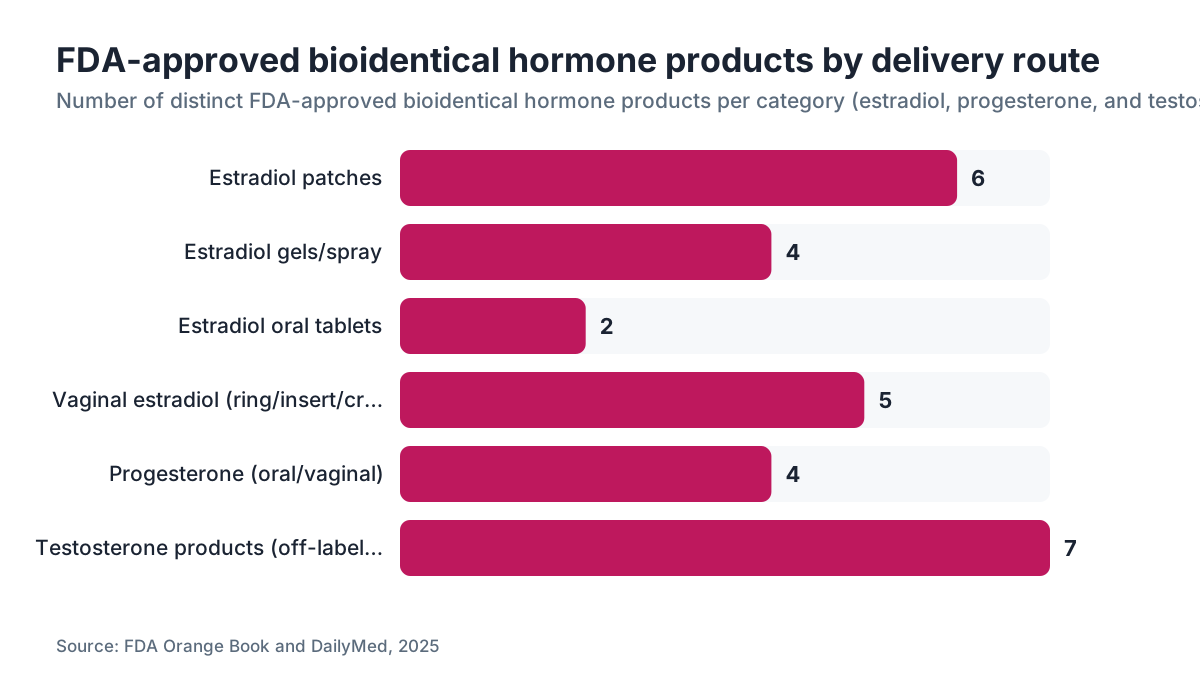
Which FDA-approved estradiol product is right for your situation?
Delivery route changes everything. The right pick depends on your symptoms, skin sensitivity, cardiovascular risk, and plain preference, so there is no single winner for every woman.
Patches (Climara, Vivelle-Dot, Alora, Minivelle) have the strongest cardiovascular safety data because they skip first-pass liver metabolism. Oral estradiol tablets (Estrace) cost less and go down easy, but they route through the liver, which can raise triglycerides and nudge up clotting risk compared with transdermal options. A 2016 study in the BMJ found transdermal estradiol was not associated with the elevated VTE risk seen with oral estrogen [6].
Gels (EstroGel, Divigel, Elestrin) and the spray (Evamist) also bypass the liver and allow flexible dosing. The trade-off: alcohol-based gels can irritate sensitive skin and have to dry fully before you touch anyone else, especially children.
For vaginal symptoms only, low-dose local products (Estring, Imvexxy, Vagifem) keep systemic absorption minimal. A woman with a history of hormone-receptor-positive breast cancer may be a candidate for local vaginal estradiol when systemic therapy is off the table, but that decision still needs her oncologist's sign-off.
Femring delivers a systemic dose and treats both systemic and vaginal symptoms. Menostar is a very low-dose patch approved only for bone protection, not hot flashes.
Our estrogen patch guide covers application details and dose ranges if you want to line up the patch options side by side. If you are still figuring out where you sit in the transition, perimenopause age and when does menopause start are worth reading first, because the right product often depends on that timing.
Is progesterone (Prometrium) really bioidentical, and why does the form matter?
Yes. Prometrium is micronized progesterone suspended in peanut oil, and the molecule is identical to the progesterone your luteal-phase ovary makes. It is the only FDA-approved oral bioidentical progesterone [13].
Why does the form matter? Data from the PEPI trial and later cohorts suggest natural progesterone has a friendlier breast safety profile than synthetic progestins like medroxyprogesterone acetate (MPA). The Women's Health Initiative used MPA, and the elevated breast cancer signal in that trial traced largely to the synthetic progestin arm, not the estrogen-only arm. Women on Prometrium are simply not taking the same hormone that raised alarms in the 2002 WHI report.
The E3N cohort, a French prospective study of more than 80,000 women, found estrogen combined with progesterone (not synthetic progestins) carried no significant increase in breast cancer risk versus non-users, while estrogen-alone showed a modest bump [7]. These are observational data, not randomized trials, so causality is not locked down. They still shape practice in a real way.
For women who cannot take oral progesterone (a peanut allergy, say), the vaginal gels Crinone and Prochieve and the vaginal insert Endometrin are all FDA-approved progesterone products. Most carry fertility-related indications rather than menopausal endometrial protection, so using them for uterine protection in HRT is off-label and less standard than oral Prometrium.
One honest caveat: Prometrium makes many women drowsy. Take it at bedtime and that side effect turns into a feature for the many menopausal women fighting broken sleep.
What about testosterone? Is there an FDA-approved bioidentical option for women?
No, and it is a real hole in the regulatory map. The FDA has never approved a testosterone product for women, even though the evidence for low-dose testosterone in hypoactive sexual desire disorder (HSDD) is reasonably good, with weaker support for energy and mood in postmenopausal women.
Every approved testosterone product in the table above is labeled for male hypogonadism. Clinicians who prescribe it to women do so off-label, which is legal and common. The usual move is a small fraction of a male-labeled product, for example one-tenth the male dose of AndroGel 1.62%.
The 2019 Global Consensus Position Statement on Testosterone Therapy for Women, signed by multiple major endocrine and menopause societies, concluded that testosterone therapy for HSDD in postmenopausal women 'has a positive benefit-risk profile' when dosed to approximate premenopausal physiologic levels [8]. The recommended female total testosterone target usually lands around 15 to 70 ng/dL, though lab ranges vary.
Because no commercial product is built for women's doses, compounding shows up a lot here. A compounded testosterone cream or gel at 0.5 to 2 mg daily is widely prescribed. This is compounding filling a genuine clinical gap that approved products do not cover. It does not make the compounded version FDA-approved, but it is a reasonable choice when the dosing is monitored properly.
What is Bijuva and why does it matter?
Bijuva earns its own section because it is the first FDA-approved oral combination of two bioidentical hormones in one capsule: 1 mg 17-beta estradiol and 100 mg progesterone. The FDA approved it in 2018 for moderate-to-severe vasomotor symptoms in postmenopausal women who still have a uterus [2].
Before Bijuva, women taking both hormones by mouth juggled two separate pills. Not a huge burden, but one capsule improves adherence for some women. The REPLENISH trial behind the approval found that the 1 mg/100 mg dose cut mean daily moderate-to-severe hot flashes by 64.3% versus placebo at 12 weeks [2].
The catch: Bijuva contains peanut oil, same as Prometrium. A peanut allergy rules it out. And like oral progesterone, it can bring on drowsiness, so evening dosing is the norm.
Bijuva is not right for everyone. Some women need more than 1 mg of estradiol, and the fixed ratio means you cannot dial one hormone without moving the other. For women who fit that dose, though, it is a genuinely convenient all-bioidentical oral option with solid trial data behind it.
How does DHEA (Intrarosa) fit into the bioidentical hormone picture?
Intrarosa is the odd one out, in a useful way. Its active ingredient is prasterone, which is synthetic DHEA, and DHEA itself is structurally identical to the DHEA your adrenal glands produce. Delivered vaginally, prasterone gets converted locally into both estradiol and testosterone by enzymes in vaginal tissue. That local conversion is why it eases painful sex and dryness without the systemic estrogen exposure of a ring or cream.
The FDA approved Intrarosa in 2016 for dyspareunia (painful sex) due to menopause [1]. It is a vaginal insert used daily. Systemic absorption of the downstream hormones stays low compared with systemic products, though it is not zero.
For women who want to steer clear of systemic estrogen but still treat vaginal atrophy, Intrarosa and ospemifene (Osphena, a SERM, not bioidentical) are the FDA-approved non-estrogen choices. Intrarosa often fits better for someone who wants a bioidentical mechanism without a traditional estrogen product.
Our overview of menopause treatment options shows where Intrarosa sits alongside systemic HRT.
Are FDA-approved bioidentical hormones safer than synthetic HRT?
Honest answer: probably better in some ways, but 'safer' is not a blanket truth across every head-to-head.
The strongest case for bioidentical over synthetic sits in the progestin comparison. Evidence from the E3N cohort and other observational work points to progesterone (bioidentical) carrying a friendlier breast safety profile than MPA (synthetic). Most major menopause guidelines now lean toward progesterone over MPA when a progestogen is needed [4][7].
For estrogen, the picture blurs. Conjugated equine estrogens (CEE, from horse urine) are not bioidentical to human 17-beta estradiol, yet decades of data back them. The Women's Health Initiative used CEE, and its estrogen-only arm (women without a uterus) actually trended toward lower breast cancer risk versus placebo after 7.1 years. Bioidentical 17-beta estradiol has less long-term randomized data but a growing pile of observational support.
Where FDA-approved bioidenticals clearly win the argument is against compounded hormones, not necessarily against other approved products. An approved bioidentical is tested; a compounded one is not. For most women deciding today, that is the comparison that counts.
If you are earlier in your research, a bone density test is often one of the first concrete steps a clinician recommends alongside hormone evaluation, since estrogen loss drives real bone loss in the years around menopause.
How do I actually get an FDA-approved bioidentical hormone prescription?
Any licensed physician, NP, or PA can prescribe these products. Your OB/GYN, primary care provider, or a menopause specialist can write it. A few practical notes.
Cost swings widely. Generic estradiol patches (like generic Vivelle-Dot) often run $25 to $70 for a month's supply at a pharmacy with a GoodRx coupon. Branded products without insurance can hit $200 to $400 a month. Prometrium generics exist and drop the price well below the branded version. Bijuva stays branded and costs more, often $300-plus without coverage.
Insurance for menopausal HRT has improved but stays inconsistent. Medicare Part D covers most of these products, though formulary tiers differ by plan. Many commercial plans cover generic estradiol and progesterone at standard copays.
Telehealth has made access genuinely easier. Platforms like WomenRx connect women with clinicians who specialize in hormonal care, which matters because general practitioners sometimes underprescribe or do not know the full product menu, especially newer options like Bijuva or Intrarosa. A clinician who works in this space every day knows the options cold.
For any prescription, the FDA label lives on DailyMed (dailymed.nlm.nih.gov), run by the National Library of Medicine. Read the actual prescribing information for a product you are weighing. It tells you which trials were done, what doses were studied, and what the real warnings are, stripped of marketing spin from either direction.
What should I ask my doctor before starting any of these hormones?
A short list of questions that genuinely change the answer your clinician should give.
Do I have a uterus? If yes, you need a progestogen with any systemic estrogen. Unopposed estrogen in a woman with a uterus raises endometrial cancer risk. If you have had a hysterectomy, you take estrogen alone.
What are my symptoms? Hot flashes, night sweats, and disrupted sleep respond to systemic products (patches, gels, oral). Vaginal dryness or painful sex responds to local vaginal products, often with no systemic therapy at all.
Do I have a personal or family history of blood clots, stroke, or certain cancers? That history shapes which route and molecule is safest. Transdermal estradiol carries lower VTE risk than oral [6], which matters for women with elevated clotting risk [12].
What is my cardiovascular and bone baseline? A DEXA scan tells you whether bone protection should factor into product selection. Women closer to menopause onset get the most from HRT's cardiovascular neutral-to-positive effects, the timing hypothesis backed by the KEEPS and ELITE trials [11].
Am I also exploring GLP-1 medications? This comes up more than you would expect. Women using semaglutide or tirzepatide for weight loss during perimenopause or early menopause are running two hormonal and metabolic systems at once. Your prescriber should know about both. See semaglutide for weight loss for how it intersects with metabolic changes in midlife women.
What does the FDA say about the marketing of compounded bioidentical hormones?
The FDA has been blunt. In 2019 guidance the agency stated that compounded bioidentical hormones are 'not FDA-approved and have not been shown to be safe or effective.' The FDA has also acted against companies that market compounded hormones as safer or more effective than approved products, calling those claims false and misleading [1].
The agency specifically flags words like 'natural,' 'individualized,' and 'customized' as language used to imply safety benefits that the evidence does not support. That vocabulary runs through direct-to-consumer marketing for compounded hormone products constantly.
Sections 503A and 503B of the Federal Food, Drug, and Cosmetic Act define when compounding is legal. A 503A pharmacy can compound for an individual patient based on a prescription. A 503B outsourcing facility can produce larger batches. Neither pathway equals FDA approval of the compounded product itself [9].
This does not make compounding illegal or always inappropriate. But a woman who sees 'FDA-registered compounding pharmacy' on a website should know registration is not approval of what the pharmacy makes. The facility may meet certain standards. The product inside does not carry FDA approval.
Frequently asked questions
Are all bioidentical hormones FDA-approved?
No. Many bioidentical hormones are compounded by pharmacies and have never gone through FDA review. The FDA has approved more than 30 bioidentical hormone products, including estradiol patches, gels, oral pills, vaginal products, and Prometrium (progesterone). Those carry proven potency, sterility, and clinical trial data. Compounded bioidentical hormones, however they are marketed, are not FDA-approved products.
What is the difference between Prometrium and compounded progesterone cream?
Prometrium is an FDA-approved oral micronized progesterone capsule with documented absorption and trial data supporting endometrial protection. Compounded progesterone cream absorbs poorly through skin and has not shown adequate serum levels to protect the uterine lining in most studies. For women who need uterine protection alongside estrogen therapy, Prometrium is the standard of care, not progesterone cream.
Is Vivelle-Dot a bioidentical hormone?
Yes. Vivelle-Dot contains 17-beta estradiol, structurally identical to the estradiol your ovaries produce. It is a twice-weekly transdermal patch approved for menopausal vasomotor symptoms and osteoporosis prevention. It is one of the most commonly prescribed FDA-approved bioidentical estrogen products in the United States, and generic versions are widely available at lower cost.
Can I get bioidentical hormones through a telehealth provider?
Yes. Licensed clinicians on telehealth platforms can prescribe FDA-approved bioidentical hormones in most US states. A provider can review your history, order labs, and prescribe products like estradiol patches, gels, or Prometrium. You fill the prescription at any pharmacy. Telehealth works well for routine hormone management; complex cases with significant cardiovascular or cancer history may benefit from in-person specialist involvement.
Does insurance cover FDA-approved bioidentical hormones?
Usually yes, for generics. Generic estradiol patches and oral progesterone sit on most commercial and Medicare Part D formularies, often at low copay tiers. Branded products like Bijuva or Evamist may need prior authorization or carry higher copays. Compounded hormones are typically not covered. A GoodRx or similar discount card can cut out-of-pocket costs for generics, sometimes below $30 a month.
What is Bijuva and who is it for?
Bijuva is an FDA-approved oral capsule combining 1 mg 17-beta estradiol and 100 mg progesterone in one pill. It was approved in 2018 for moderate-to-severe hot flashes in postmenopausal women who still have a uterus. The REPLENISH trial showed it cut moderate-to-severe hot flashes by over 64% versus placebo. It fits women who want an all-bioidentical oral option, though the fixed dose limits flexibility and a peanut allergy rules it out.
Is there an FDA-approved testosterone for women?
No. As of 2025, no testosterone product is FDA-approved for use in women. Clinicians prescribe existing male-labeled testosterone products off-label at much lower doses. The 2019 Global Consensus Position Statement supports testosterone therapy for postmenopausal women with hypoactive sexual desire disorder, dosed to physiologic premenopausal levels. Compounded low-dose testosterone is also common because no commercial product is formulated for women's doses.
Are estradiol patches safer than oral estradiol?
For most women, transdermal estradiol carries lower VTE (blood clot) risk than oral estradiol because it bypasses first-pass liver metabolism. A 2016 BMJ study found oral estrogen was associated with elevated clot risk while transdermal was not. Transdermal also avoids the triglyceride rise sometimes seen with oral estrogen. For women with elevated cardiovascular or clotting risk, patches, gels, or sprays are generally preferred over pills.
What is Intrarosa and how does it work?
Intrarosa (prasterone/DHEA) is a vaginal insert FDA-approved for painful sex due to menopause. Used daily, it converts locally into estradiol and testosterone inside vaginal tissue. It improves dryness and pain with minimal systemic hormone exposure, making it an option for women who want to avoid systemic estrogen. It is not a treatment for hot flashes or other systemic menopause symptoms.
What's the difference between Estring and Femring?
Both are vaginal rings containing 17-beta estradiol, but they behave very differently. Estring releases a very low local dose (about 7.5 mcg/day) and treats vaginal dryness only, with minimal systemic absorption. Femring releases a higher systemic dose (50 or 100 mcg/day) and treats both vaginal symptoms and hot flashes, similar to a patch. Both rings are replaced every 90 days, but Femring requires a progestogen if the uterus is intact.
Can I use bioidentical hormones if I've had breast cancer?
This needs a direct conversation with your oncologist, not a general answer. For hormone-receptor-negative breast cancer, some providers and patients choose hormone therapy for quality of life after careful discussion. For hormone-receptor-positive cancers, systemic estrogen is generally contraindicated. Low-dose local vaginal estradiol may be considered in some cases even with prior hormone-sensitive breast cancer, but oncology sign-off is essential before starting anything.
How do I know if a product I'm taking is actually FDA-approved?
Check the FDA's Orange Book for approved drug products, or look up the label on DailyMed (dailymed.nlm.nih.gov). Both are free public databases. If the product you use is not listed, it is not FDA-approved. Your pharmacy can also confirm approval status. Products dispensed with a standard pharmacy label and NDC number are generally approved; anything made to order by a compounding pharmacy is not.
Do bioidentical hormones help with weight gain during menopause?
HRT does not directly cause weight loss, but estrogen therapy helps preserve lean muscle mass and may reduce the shift of fat toward the abdomen that speeds up after menopause. Some women find that controlling hot flashes and improving sleep indirectly supports weight management. For women with significant menopausal weight gain, some clinicians combine HRT with GLP-1 medications. The two are not mutually exclusive and may work better together than either alone.
What is the 'timing hypothesis' for bioidentical hormone therapy?
The timing hypothesis, supported by the KEEPS and ELITE trials, holds that starting hormone therapy close to menopause onset (within 10 years or before age 60) is associated with cardiovascular benefit or neutrality, while starting later may carry more risk. The ELITE trial found women who started estradiol within 6 years of menopause had slower progression of carotid intima-media thickness than those who started 10 or more years after menopause.
Sources
- FDA, Compounding and the FDA: consumer information on compounded bioidentical hormones
- FDA, DailyMed: Bijuva (estradiol/progesterone) prescribing information
- Menopause (journal), Bhatt et al. 2019, 'Potency variation in compounded hormone preparations'
- North American Menopause Society (NAMS), 2022 Hormone Therapy Position Statement
- Endocrine Society, Clinical Practice Guideline on Menopause
- BMJ 2016, Vinogradova et al., 'Use of hormone replacement therapy and risk of venous thromboembolism'
- Breast Cancer Research and Treatment, Fournier et al., E3N cohort study, 2008
- Menopause (journal), Global Consensus Position Statement on the Use of Testosterone Therapy for Women, 2019
- FDA, Compounding laws and policies (Sections 503A and 503B of the FD&C Act)
- FDA Orange Book: Approved Drug Products with Therapeutic Equivalence Evaluations
- JAMA Internal Medicine, ELITE Trial (Early versus Late Intervention Trial with Estradiol), 2016
- NAMS, The Menopause Society recommendations on hormone therapy route selection
- FDA, DailyMed: Prometrium (progesterone) prescribing information