Liraglutide vs semaglutide: which GLP-1 is better for women?
TL;DR: Semaglutide (Ozempic, Wegovy) produces roughly twice the weight loss of liraglutide (Victoza, Saxenda) in the trial data, around 15% of body weight versus 5-8%. Both are GLP-1 receptor agonists approved for type 2 diabetes and/or obesity. They differ on dosing schedule, cost, side effects, and cardiovascular evidence. For most women, semaglutide is the stronger pick.
What are liraglutide and semaglutide, exactly?
Both drugs belong to a class called GLP-1 receptor agonists. They mimic glucagon-like peptide-1, a hormone your gut releases after eating that tells the pancreas to secrete insulin, slows stomach emptying, and signals the brain that you're full. The class has existed since 2005, but these two are the ones women ask about most.
Liraglutide is the older drug. Novo Nordisk launched it as Victoza for type 2 diabetes in 2010 and as Saxenda for obesity in 2014 [1]. It shares about 97% amino-acid sequence identity with native human GLP-1 and lasts long enough in the body for once-daily injection.
Semaglutide is liraglutide's successor, also from Novo Nordisk. Structural tweaks, including attachment to a longer fatty acid chain, extend its half-life to roughly seven days, which is why you inject it once a week [2]. It comes as Ozempic (diabetes, approved 2017), Wegovy (obesity, approved 2021), and an oral tablet called Rybelsus (diabetes, approved 2019) [3].
The mechanism is essentially the same. The potency is not. Semaglutide binds the GLP-1 receptor with higher affinity and stays active far longer per dose, which is the main reason its weight-loss results are larger.
How much weight do women actually lose on each drug?
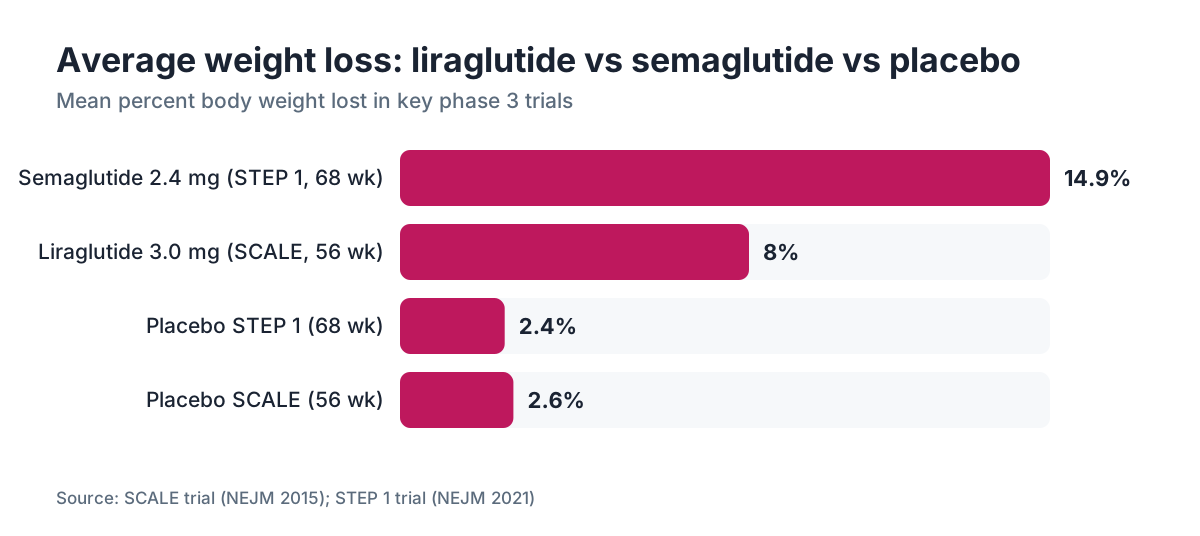
Semaglutide produces roughly twice the weight loss of liraglutide. That's the headline. In their big trials, semaglutide 2.4 mg took off about 15% of body weight; liraglutide 3.0 mg took off about 8%.
The SCALE Obesity and Prediabetes trial (56 weeks, n=3,731) found that liraglutide 3.0 mg produced a mean weight loss of 8.4 kg (about 8% of body weight) versus 2.8 kg on placebo [4]. Roughly 63% of participants lost at least 5% of body weight on liraglutide.
The STEP 1 trial of semaglutide 2.4 mg (68 weeks, n=1,961) found a mean weight loss of 14.9% of body weight, or about 15.3 kg, versus 2.4% on placebo [5]. Nearly 87% of participants lost at least 5%.
No large trial has directly randomized participants to liraglutide versus semaglutide for weight loss head-to-head, but an indirect comparison published in Diabetes, Obesity and Metabolism (2022) estimated semaglutide produced roughly twice the weight loss at equivalent treatment duration [6]. That gap holds up across almost every real-world registry study published since Wegovy launched.
One nuance for perimenopausal and postmenopausal women: both trials enrolled majority-female populations (about 75-80% female in STEP 1, about 79% in SCALE), so the weight-loss percentages apply reasonably well to women specifically. The hormonal shift during menopause pushes fat toward the abdomen, and GLP-1 agonists appear to trim visceral fat disproportionately, though the data specific to menopausal women is still thin. If you're also considering hormone replacement therapy for hot flashes and metabolic changes, estrogen has its own modest effect on body composition and can pair with a GLP-1 in ways nobody has quantified well yet.
| Metric | Liraglutide 3.0 mg (Saxenda) | Semaglutide 2.4 mg (Wegovy) | |---|---|---| | Trial | SCALE (56 wk) | STEP 1 (68 wk) | | Mean weight loss | ~8% body weight | ~15% body weight | | % losing ≥5% body weight | 63% | 87% | | % losing ≥15% body weight | ~12% | ~35% | | Injection frequency | Daily | Weekly | | FDA obesity approval | 2014 | 2021 |
How do their dosing schedules compare?
Liraglutide (Saxenda for obesity) starts at 0.6 mg injected subcutaneously once a day and goes up by 0.6 mg each week until you reach the 3.0 mg maintenance dose, which typically takes five weeks [1]. Most people inject it at the same time each day into the abdomen, thigh, or upper arm.
Semaglutide (Wegovy for obesity) starts at 0.25 mg once a week and escalates over 16 weeks to the 2.4 mg maintenance dose [3]. That slow ramp is intentional. Nausea is the most common reason people quit either drug, and easing in cuts early dropout.
The weekly schedule wins on convenience almost universally. Forgetting a daily shot is far easier than forgetting a weekly one, and a missed dose costs you less when you only take it once a week. That said, some women prefer the daily routine because it feels like more active engagement with the process. Neither preference is wrong.
For type 2 diabetes, the dosing is different. Victoza (liraglutide) goes up to 1.8 mg daily; Ozempic (semaglutide) goes up to 2.0 mg weekly depending on glycemic control. The obesity doses run higher than the diabetes doses for both drugs.
What are the side effects, and are they different between the two drugs?
The side-effect profiles overlap heavily because both drugs work the same way. Nausea, vomiting, diarrhea, and constipation top the list for both, and they hit hardest during dose escalation, then usually ease [1][3].
A few differences matter. Liraglutide's daily shot can make nausea feel more constant early on, because you're re-stimulating the receptor every 24 hours. Semaglutide's weekly peak-and-trough cycle sometimes means nausea is worse on injection day and better by mid-week. Neither pattern is universal.
Both carry FDA black-box warnings about thyroid C-cell tumors based on rodent studies. The Saxenda label states: "Liraglutide causes dose-dependent and treatment-duration-dependent thyroid C-cell tumors at clinically relevant exposures in both genders of rats and mice" [1]. The same warning appears on semaglutide's label [3]. Human relevance is unknown. Neither drug is approved for people with a personal or family history of medullary thyroid carcinoma or MEN2.
Pancreatitis is a rare but serious risk for both. Gallbladder disease (cholelithiasis, cholecystitis) is more common than pancreatitis and shows up at the weight-loss doses. The STEP 1 trial reported gallbladder-related adverse events in 2.6% of the semaglutide group versus 1.2% on placebo [5]. SCALE found similar rates.
Muscle loss is a real concern at the weight-loss magnitudes semaglutide produces. Dropping 15% of body weight fast without resistance training speeds up sarcopenia, which matters more for women over 50 who are already shedding muscle. This is one reason many clinicians pair GLP-1 therapy with strength training and higher protein intake. Liraglutide's smaller weight loss carries proportionally less muscle-loss risk, though the problem exists there too.
There's also bone density. Rapid weight loss of any kind can lower bone mineral density [7]. Women already at risk for osteoporosis post-menopause should discuss a bone density test with their provider before starting, or at least within the first year of treatment.
What do liraglutide and semaglutide cost, and does insurance cover them?
Cost is ugly for both. Wegovy (semaglutide 2.4 mg) lists around $1,350 per month without insurance as of mid-2025. Ozempic (semaglutide for diabetes) lists around $935 per month. Saxenda (liraglutide 3.0 mg) lists around $1,400 per month [8]. These prices move, and manufacturer savings cards can cut out-of-pocket costs a lot for commercially insured patients, but they don't apply to Medicare or Medicaid.
Insurance coverage for obesity drugs is a patchwork. As of 2024, traditional Medicare Part D does not cover anti-obesity medications, though the Treat and Reduce Obesity Act has been introduced in Congress repeatedly to change that. Many commercial plans cover Wegovy or Saxenda with prior authorization. Ozempic gets covered more often because it's prescribed for a diabetes diagnosis.
Compounded semaglutide was widely available from 503A and 503B compounding pharmacies while Wegovy and Ozempic sat on the FDA shortage list. The FDA removed semaglutide from the shortage list in early 2025, which means compounding pharmacies can no longer legally produce copies of the active ingredient for most patients [9]. That reshapes the cost math for women who had been using compounded versions. Our page on compounded semaglutide covers the current regulatory picture.
Liraglutide has no approved generic, so the compounding pathway applies similarly. If cost is the binding constraint, liraglutide's list price sits close to semaglutide's, so the cost argument doesn't favor liraglutide much.
| Drug | Brand | FDA approval | List price/month (approx) | Injection schedule | |---|---|---|---|---| | Liraglutide 3.0 mg | Saxenda | 2014 (obesity) | ~$1,400 | Daily | | Liraglutide 1.8 mg | Victoza | 2010 (T2D) | ~$700 | Daily | | Semaglutide 2.4 mg | Wegovy | 2021 (obesity) | ~$1,350 | Weekly | | Semaglutide 1.0-2.0 mg | Ozempic | 2017 (T2D) | ~$935 | Weekly | | Semaglutide 3-14 mg | Rybelsus | 2019 (T2D) | ~$950 | Daily oral |
Which drug has better cardiovascular evidence?
Semaglutide has the deeper cardiovascular record, and the numbers back it up. Both drugs ran dedicated cardiovascular outcomes trials, and the results genuinely differ.
Liraglutide's trial, LEADER (n=9,340, follow-up 3.8 years), showed a statistically significant 13% reduction in major adverse cardiovascular events (MACE) in people with type 2 diabetes and established cardiovascular disease [10]. This was the first GLP-1 trial to prove cardiovascular benefit, and it meant something.
Semaglutide has two. SUSTAIN-6 (n=3,297) showed a 26% reduction in MACE in people with type 2 diabetes at high cardiovascular risk [2]. The larger SELECT trial (n=17,604, published 2023) enrolled adults with obesity but without diabetes and showed a 20% relative risk reduction in MACE with semaglutide 2.4 mg versus placebo [11]. SELECT matters because it's the first trial to show a GLP-1 cutting cardiovascular events in people with obesity who don't have diabetes.
For a perimenopausal or postmenopausal woman with cardiovascular risk factors, the SELECT data is probably the most useful thing published in this space in years. Cardiovascular disease passes breast cancer as the leading cause of death in women over 55, and a drug that cuts MACE by 20% in people with obesity matters well beyond the scale.
Liraglutide has not run a SELECT-equivalent trial in obesity without diabetes. That's a real gap in its evidence base.
Is liraglutide ever the better choice?
Semaglutide wins on efficacy and cardiovascular evidence, so why would anyone pick liraglutide? A few reasons hold up.
First, tolerability. Some women find semaglutide's once-weekly dose delivers a sharper nausea hit than liraglutide's daily small dose. That's individual variation and hard to predict, but if a patient already tried semaglutide and couldn't stand the GI side effects, liraglutide's smoother daily curve is worth a try.
Second, dose flexibility. Because liraglutide steps up in 0.6 mg increments and you inject it daily, it's easier to hold a dose below maximum if the full dose causes problems. Semaglutide's weekly schedule makes micro-adjustments less precise.
Third, adolescent approval. Saxenda is FDA-approved for obesity in adolescents 12 and older. Wegovy carries the same approval, but some pediatric specialists know Saxenda's longer track record in younger patients better [1][3].
Fourth, access. If semaglutide is unavailable because of shortages or cost and compounding is off the table, liraglutide is a legitimate fallback. The weight loss is less impressive, but real-world 5-8% still improves cardiometabolic risk factors, drops blood pressure, and improves insulin sensitivity.
How do these drugs interact with menopause and perimenopause?
Here the research is genuinely thin, and anyone who tells you otherwise is overselling the evidence.
Estrogen decline during perimenopause and menopause pushes fat storage toward the abdomen and viscera. Insulin resistance tends to worsen. Appetite regulation shifts partly because estrogen affects GLP-1 sensitivity and leptin signaling. So there's a reasonable biological rationale for why GLP-1 agonists might be especially useful in this window. But randomized trial data stratified by menopausal status is sparse.
STEP 1 reported that roughly 50% of female participants were postmenopausal, and semaglutide produced similar weight loss across menopausal-status subgroups, though those subgroup analyses weren't pre-specified and should be read carefully [5]. That's the honest state of the evidence.
What we do know is that women using hormone therapy and a GLP-1 agonist together are doing so without dedicated trial support. Estrogen improves insulin sensitivity and independently reduces visceral fat; whether that makes GLP-1 therapy more or less effective in combination is not answered by a controlled trial. If you're managing both hormones and a GLP-1, a clinician who understands both matters. WomenRx focuses on exactly this intersection, where GLP-1 dosing and hormonal context need to be considered together.
Progesterone type matters too. Synthetic progestins (like medroxyprogesterone acetate) can worsen insulin resistance, which may affect how hard a GLP-1 has to work. Micronized progesterone looks more metabolically neutral. If you're choosing between progestogen options alongside a GLP-1, raise that distinction with your provider.
What does the FDA actually approve each drug for?
The approved indications are specific, and they matter because insurance coverage and off-label prescribing rules turn on them.
Liraglutide (Victoza): adults with type 2 diabetes as an adjunct to diet and exercise. Also approved to reduce major adverse cardiovascular events in adults with type 2 diabetes and established cardiovascular disease. Liraglutide (Saxenda): chronic weight management in adults with initial BMI of 30 or above, or 27 or above with at least one weight-related comorbidity (hypertension, dyslipidemia, type 2 diabetes). Also approved for adolescents 12 and older with obesity [1].
Semaglutide (Ozempic): adults with type 2 diabetes as an adjunct to diet and exercise. Reduction of cardiovascular events in adults with type 2 diabetes and established cardiovascular disease. Semaglutide (Wegovy): chronic weight management in adults with BMI 30 or above, or 27 or above with at least one weight-related comorbidity. Also approved for adolescents 12 and older with obesity, and in 2024, for reducing major adverse cardiovascular events in adults with established cardiovascular disease and obesity [3].
Semaglutide (Rybelsus): type 2 diabetes only, oral formulation.
The cardiovascular indication for Wegovy (the SELECT result) is new and matters. A woman with obesity and no diabetes can now be prescribed Wegovy for its cardiovascular benefit, not only for weight. That shifts how prescribers can justify the drug to insurers.
Should I ask my doctor about liraglutide or semaglutide specifically?
For most women looking for meaningful weight loss and lower cardiovascular risk, semaglutide is the stronger choice on current evidence. That's the honest framing to walk into your appointment with.
The STEP trials and SELECT give semaglutide a depth of evidence liraglutide doesn't match. Weekly dosing is more convenient. And the weight-loss magnitude (roughly 15% versus 5-8%) is large enough to matter for joint pain, sleep apnea, and cardiometabolic markers.
Liraglutide is worth considering if you've had serious GI side effects on semaglutide, prefer daily dosing for behavioral reasons, or if access or cost makes semaglutide unworkable for you.
The comparison between semaglutide and tirzepatide (Mounjaro, Zepbound) is a separate question worth understanding before you commit. Tirzepatide adds a GIP receptor agonist arm and produces even greater weight loss (around 20-22% in SURMOUNT-1) than semaglutide. There's a full breakdown at semaglutide vs tirzepatide.
Whatever you choose, the drug works better with lifestyle change. That's not a platitude. In STEP 1, participants also received behavioral intervention, and the combined effect beat either alone. The drug quiets appetite and slows gastric emptying. What you do with that window matters.
If you want the weight-loss mechanics before your appointment, semaglutide for weight loss covers the STEP trial data in more detail. For a broader overview of the drug, semaglutide is a good start.
What happens when you stop taking either drug?
Weight regain after stopping GLP-1 therapy is real and well-documented. The STEP 4 trial, a withdrawal study for semaglutide, showed that participants who stopped semaglutide after 20 weeks regained about two-thirds of their lost weight within a year, while those who continued lost an additional 7.9% [5].
The same pattern applies to liraglutide. A SCALE extension study found weight came back over a 12-week drug-free period after Saxenda discontinuation.
This doesn't make GLP-1 therapy a lifetime sentence for everyone, but it does mean the drugs manage a chronic condition (obesity) the way a blood pressure pill manages hypertension. Stop the medication and the condition often returns. That's not a drug failure. It's how the biology works.
For women approaching menopause who are using a GLP-1 partly to manage the hormonal weight shift, the long-term-use math is different than it is for a 35-year-old using it for a defined stretch. Have that conversation with your prescriber before you start, not two years in when you're wondering whether you can stop.
Frequently asked questions
Is semaglutide stronger than liraglutide?
Yes, by every major clinical measure. Semaglutide produces roughly 15% body weight loss versus 5-8% for liraglutide in their respective large trials (STEP 1 and SCALE). It also has a stronger cardiovascular evidence base, including the SELECT trial showing a 20% relative risk reduction in MACE in people with obesity. The structural differences, particularly a longer fatty acid chain, give semaglutide higher receptor affinity and a seven-day half-life versus roughly 13 hours for liraglutide.
Can I switch from liraglutide to semaglutide?
Yes, and many clinicians make this switch when a patient has been on Saxenda but hasn't reached adequate weight loss. There's no mandatory washout period; typically a provider stops liraglutide and starts the semaglutide dose-escalation sequence from the beginning. GI side effects can recur during re-escalation even if you tolerated liraglutide well. The prescriber sets the pace based on your tolerance.
Which GLP-1 drug causes less nausea?
Neither drug is clearly better on nausea. Liraglutide's daily small doses may feel more manageable for some people; semaglutide's weekly dosing means nausea can be more intense on injection day but often settles by mid-week. Individual variation is large. Eating smaller meals, avoiding high-fat foods, and taking the injection at bedtime can reduce nausea with both drugs. If nausea is severe on one, switching or slowing escalation is the practical answer.
Does liraglutide or semaglutide work better for menopausal weight gain?
No trial has studied menopausal women as a primary population. STEP 1 enrolled roughly 50% postmenopausal women and found semaglutide effective in that group, though the subgroup analysis wasn't pre-specified. Given semaglutide's larger weight-loss magnitude, it's the more likely choice for the visceral fat that accumulates around menopause. Combining a GLP-1 with hormone therapy may have additive effects on body composition, but dedicated trial data is lacking.
Is Saxenda or Wegovy covered by insurance?
Coverage varies widely. Many commercial plans cover Wegovy or Saxenda with prior authorization and a BMI or comorbidity requirement. Traditional Medicare Part D does not cover anti-obesity medications as of mid-2025; some Medicare Advantage plans do. Ozempic is covered more consistently than either obesity drug because it's prescribed for a diabetes diagnosis. Always check your specific plan's formulary and prior authorization criteria before assuming coverage.
What is the difference between Ozempic and Saxenda?
Ozempic contains semaglutide and is approved for type 2 diabetes (and cardiovascular risk reduction in people with diabetes). Saxenda contains liraglutide and is approved for obesity. They work by the same mechanism (GLP-1 receptor agonism) but differ in active ingredient, dosing frequency (weekly for Ozempic, daily for Saxenda), maximum dose, and FDA-approved indication. Using Ozempic for weight loss without a diabetes diagnosis is off-label prescribing.
How long does it take to see results on liraglutide versus semaglutide?
Most people begin to see measurable weight loss within four to eight weeks on either drug, once they're near or at the maintenance dose. Semaglutide's 16-week escalation to full dose (2.4 mg) means it takes longer to reach peak effect than liraglutide's five-week ramp. STEP 1 measured most of semaglutide's weight loss by week 60 of 68. SCALE measured liraglutide's effect over 56 weeks. Neither is a fast drug in absolute terms.
Are there risks specific to women taking GLP-1 drugs?
No female-specific contraindications have been identified beyond pregnancy (both drugs are not recommended during pregnancy due to animal teratogenicity data). Women using hormonal contraception should know that both drugs slow gastric emptying, which could theoretically affect oral contraceptive absorption. The FDA label for both drugs recommends using non-oral contraceptive methods or adding a barrier method for at least four weeks after dose escalation when using oral contraceptives.
Can you take liraglutide or semaglutide while on hormone replacement therapy?
There's no known drug interaction between GLP-1 agonists and estrogen or progesterone-based hormone therapy. Both are commonly used together in perimenopausal and postmenopausal women. The practical caveat: oral estrogen or oral progesterone absorption could theoretically be affected by delayed gastric emptying, though no clinically significant interaction has been documented. Transdermal hormone delivery (patches, gels, creams) bypasses this concern entirely.
Does liraglutide or semaglutide affect bone density?
Rapid weight loss from any cause can lower bone mineral density, and both drugs produce meaningful weight loss. GLP-1 receptors are present in bone tissue, and some animal studies suggest direct effects, but human trial data is mixed and not conclusive for harm. Women over 50 already at elevated fracture risk should discuss baseline and follow-up bone density testing with their provider. The SCALE and STEP trials did not show significantly elevated fracture rates, but both had limited follow-up duration.
What happens to weight after stopping liraglutide or semaglutide?
Weight regain is common and substantial after stopping either drug. The STEP 4 semaglutide withdrawal trial showed participants regained roughly two-thirds of lost weight within one year of stopping. Liraglutide studies show similar patterns. Both drugs treat obesity as a chronic, relapsing condition. This doesn't mean you must take them forever, but it does mean stopping requires a deliberate plan for sustaining dietary and behavioral changes without the drug's appetite-suppressing effect.
Is there a generic version of liraglutide or semaglutide?
No FDA-approved generic exists for either drug as of mid-2025. Both are biologics, and biosimilar development takes years of regulatory work after patent expiration. Compounded versions of semaglutide were available while the drug was on the FDA shortage list, but the FDA removed it from the shortage list in early 2025, restricting legal compounding for most patients. No comparable shortage ruling currently applies to liraglutide.
Which is better for type 2 diabetes, liraglutide or semaglutide?
For type 2 diabetes specifically, semaglutide (Ozempic) generally shows stronger HbA1c reduction and cardiovascular benefit over liraglutide (Victoza) in trial comparisons. The SUSTAIN 7 trial directly compared semaglutide 0.5 mg and 1.0 mg against liraglutide 1.2 mg and 1.8 mg and found semaglutide superior on HbA1c reduction and weight loss at both dose pairs. Individual response varies, and a provider may choose either based on specific patient factors.
Sources
- FDA, Saxenda (liraglutide) Prescribing Information
- Marso SP et al., SUSTAIN-6, New England Journal of Medicine, 2016
- FDA, Wegovy (semaglutide) Prescribing Information
- Pi-Sunyer X et al., SCALE Obesity and Prediabetes, New England Journal of Medicine, 2015
- Wilding JPH et al., STEP 1, New England Journal of Medicine, 2021
- Shi Q et al., Indirect comparison of liraglutide vs semaglutide for weight loss, Diabetes, Obesity and Metabolism, 2022
- NIH, National Institute of Arthritis and Musculoskeletal and Skin Diseases, bone health information
- GoodRx, Saxenda and Wegovy list price estimates
- FDA, Drug Shortages Database, semaglutide shortage resolution notice
- Marso SP et al., LEADER trial, New England Journal of Medicine, 2016
- Lincoff AM et al., SELECT trial, New England Journal of Medicine, 2023
- Ahmann AJ et al., SUSTAIN 7 trial, Diabetes Care, 2018