Lack of energy in perimenopause: why it happens and what actually helps
TL;DR: Fatigue hits an estimated 40-70% of women during the perimenopause transition, making it one of the most common symptoms. Falling estrogen disrupts sleep, mood, and the way your cells make energy, all at once. The upside: hormone therapy, insomnia treatment, and a handful of evidence-backed lifestyle changes restore energy for most women.
Why does perimenopause cause such extreme fatigue?
Perimenopause fatigue is not laziness and it is not depression, though the two can overlap. It is a physiological cascade that starts with erratic estrogen and progesterone and ripples outward into sleep, metabolism, mood, and the machinery that makes energy inside your cells.
Estrogen does a lot more than regulate periods. It modulates serotonin and norepinephrine, two neurotransmitters that keep you alert and motivated. It also influences mitochondrial function, the process by which your cells turn glucose and fat into ATP, the energy currency your body actually runs on. When estrogen swings wildly in perimenopause, then starts its sustained decline, those systems take the hit [1].
Progesterone is the sedating hormone. In a normal cycle it rises after ovulation and makes you sleepy in the luteal phase. In perimenopause, progesterone is often the first hormone to drop meaningfully. You would think that helps you sleep. The opposite happens. Without enough progesterone, sleep architecture fragments, deep slow-wave sleep shortens, and night awakenings multiply [2]. You wake up tired because you never cycled through enough restorative sleep stages.
Vasomotor symptoms make everything worse. Hot flashes and night sweats interrupt sleep even when you never fully wake up, raising core body temperature and triggering cortisol spikes at 2 or 3 in the morning. Studies using actigraphy (wrist-worn sleep trackers in research settings) consistently show perimenopausal women with frequent vasomotor symptoms get less total sleep and less REM sleep than women without them [3].
The result is a loop that feeds itself. Poor sleep drives fatigue. Fatigue kills the motivation to exercise. Less activity worsens sleep and insulin sensitivity. Dysregulated blood sugar piles its own crashes on top.
What does perimenopause fatigue actually feel like?
Women describe it differently than ordinary tiredness. Coffee does not fix it. A full night of sleep does not fix it. Many say it feels like a heaviness in the limbs, a mental fog that turns concentration into wading through mud, or a collapse of motivation that arrives mid-afternoon and is total for no clear reason.
Brain fog is real, not metaphorical. Estrogen supports cerebral blood flow and glucose metabolism in the brain. The Study of Women's Health Across the Nation (SWAN), one of the largest long-term studies of the menopause transition, found women scored lower on memory and processing speed tests during perimenopause than they did before or after it, which suggests the transition itself is the worst window cognitively [4]. Many women read that cognitive drag as fatigue, because their brain simply needs more effort to do the same tasks.
Post-exertional crashes are common too. A woman who used to bounce back after a hard workout now feels wrecked for two days. This is partly adrenal and partly mitochondrial: the hormonal shifts that lower estrogen also lower the efficiency of oxidative phosphorylation in muscle cells. You make less ATP per unit of effort.
If your fatigue comes with extreme cold sensitivity, hair loss, and real weight gain despite eating normally, rule out thyroid dysfunction separately. Hashimoto's thyroiditis peaks in midlife for women and shares a lot of symptom overlap with perimenopause fatigue. These are not mutually exclusive.
How common is fatigue in perimenopause?
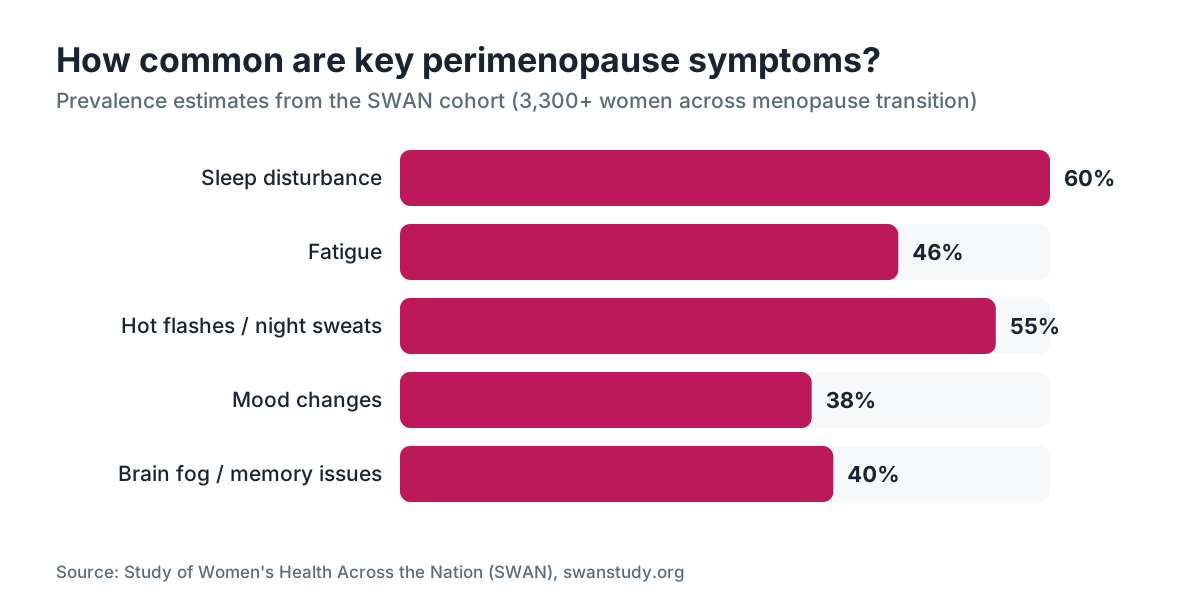
Very common. The SWAN study followed more than 3,300 women across multiple ethnic groups for over two decades and reported that fatigue and sleep disturbance were among the most prevalent symptoms of the menopause transition, with sleep problem estimates ranging from roughly 40% to over 60% depending on the stage and how the question was asked [4].
A separate analysis in Menopause: The Journal of the North American Menopause Society found roughly 46% of midlife women report clinically meaningful fatigue, with the odds significantly higher in late perimenopause than in premenopause [5].
Fatigue does not hit all women equally. SWAN data show Black women report higher rates of vasomotor symptoms than white women, and that socioeconomic factors, caregiving load, and sleep environment each independently predict how bad the fatigue gets. That matters, because studies of mostly white, college-educated women probably undercount the fatigue burden in working-class women juggling night shifts and caregiving at once.
For most women the worst fatigue overlaps with the worst vasomotor symptoms, usually the two to three years before the final period and the first year or two after. For some it drags on for years past menopause, especially when sleep disorders like obstructive sleep apnea (which rises after menopause) go undiagnosed.
What is the connection between hormones and energy in perimenopause?
Estrogen and mitochondria have a direct relationship. Estrogen receptors (particularly estrogen receptor beta) sit in mitochondrial membranes, and estrogen signaling ramps up enzymes in the electron transport chain, the last step in ATP production. Animal and lab data on this are strong; the human clinical data are harder to isolate but fit the mechanism [1].
Estrogen also keeps insulin sensitivity intact in skeletal muscle. As estrogen falls, muscles get worse at pulling in glucose for fuel, so your cells spend more energy for the same output. That drives both fatigue and the abdominal fat redistribution so many women notice in perimenopause.
Progesterone's fatigue link runs mostly through sleep, but there is a direct piece too. Progesterone metabolizes into allopregnanolone, a neurosteroid that binds GABA-A receptors and has sedating, anti-anxiety effects. When progesterone is low and variable, allopregnanolone swings with it, which is part of why perimenopausal women so often report anxiety and bad sleep in the same breath [2].
Cortisol enters through HPA axis dysregulation. Chronic sleep loss raises cortisol, and high evening cortisol makes it harder to fall and stay asleep, closing the loop. Some research suggests estrogen normally buffers the cortisol response to stress; without it, the stress axis gets more reactive [6].
Thyroid hormone earns its own paragraph. A TSH that looks normal can still hide subclinical hypothyroidism, and estrogen changes thyroid-binding globulin levels, which shifts how much free thyroid hormone is available. If fatigue is significant, ask your clinician to check free T3 and free T4, not TSH alone.
How is perimenopause fatigue different from other kinds of tiredness?
The distinction that matters most is whether fatigue is primary (caused by the hormonal transition itself) or secondary (caused by something perimenopause is making worse, like untreated sleep apnea, depression, anemia, or thyroid disease).
A good clinician checks a specific list: complete blood count (to rule out anemia), TSH with free T4 and free T3 (thyroid), fasting glucose and A1c (dysregulation peaks in perimenopause), ferritin (iron stores, even when hemoglobin looks normal), vitamin D and B12 (common shortfalls in midlife women), and a sleep history that asks directly about snoring and witnessed apneas. Sleep apnea in women often shows up atypically, with fatigue and insomnia instead of classic loud snoring, and it is badly underdiagnosed before menopause.
Depression and perimenopause fatigue genuinely overlap and can coexist. Women with a history of premenstrual dysphoric disorder or postpartum depression have higher rates of perimenopause mood symptoms. The NAMS 2022 hormone therapy position statement notes perimenopause is a period of increased risk for new-onset depressive symptoms even in women with no prior psychiatric history [7]. Treating the hormonal component often improves mood a lot, but not always, and sometimes antidepressants are the right first tool.
| Fatigue type | Key distinguishing features | First-line workup | |---|---|---| | Perimenopause primary | Linked to vasomotor symptoms, sleep disruption, age 40-55 | FSH, estradiol, symptom timing | | Sleep apnea | Morning headaches, snoring, bed partner reports pauses | Sleep study (polysomnography) | | Hypothyroidism | Cold intolerance, hair loss, constipation, weight gain | TSH, free T4, free T3 | | Iron deficiency | Cravings for ice or dirt, restless legs, pallor | Ferritin, CBC | | Depression | Persistent low mood, anhedonia, early morning waking | PHQ-9 screen | | Anemia (non-iron) | Heavy perimenopausal bleeding, B12/folate low | CBC, B12, folate |
Does hormone replacement therapy help with perimenopause fatigue?
For many women, yes, and the evidence is stronger than popular skepticism suggests. The NAMS 2022 Hormone Therapy Position Statement states that hormone therapy is the most effective treatment for vasomotor symptoms and related sleep disruption in women under 60 or within 10 years of menopause onset who have no contraindications [7]. Since sleep disruption drives a large share of perimenopause fatigue, treating it with HT often has a dramatic effect on daytime energy.
Estrogen therapy improves sleep architecture directly. Randomized trials show women on systemic estrogen (oral or transdermal) spend more time in slow-wave and REM sleep and wake fewer times at night than on placebo [3]. That is not a surrogate endpoint. More deep sleep means more restorative sleep, which means less daytime fatigue.
Progesterone, specifically oral micronized progesterone (brand name Prometrium), has a mild sedating effect and can improve sleep quality in perimenopausal women, separate from its job protecting the uterine lining. A placebo-controlled trial in Menopause found oral micronized progesterone 300 mg at bedtime significantly improved self-reported sleep quality versus placebo in perimenopausal and early postmenopausal women [8]. You can read more about how it works at progesterone.
Transdermal estrogen (patches, gels, sprays) skips first-pass liver metabolism and is generally preferred over oral estrogen for minimizing clotting and cardiovascular risk, especially for women starting HT during perimenopause. For a thorough look at the patch, see estrogen patch.
HT is not right for every woman. Women with active or recent hormone-sensitive breast or uterine cancer, unexplained vaginal bleeding, active VTE, or certain cardiovascular conditions need alternatives. For the full picture of who is and is not a candidate, hormone replacement therapy has the detail. For most healthy perimenopausal women under 60 with no major contraindications, HT is worth a serious conversation with your clinician.
WomenRx's online hormone consultations are one way to have that conversation without waiting months for a specialist, if your geography or schedule makes access hard.
What non-hormonal treatments actually help with perimenopause fatigue?
Sleep hygiene gets eye-rolls, but a few specific moves have real evidence. Keeping your bedroom below 67 degrees Fahrenheit reduces the frequency and severity of night sweats on its own. Cognitive behavioral therapy for insomnia (CBT-I) is now a first-line recommendation from the American College of Physicians for chronic insomnia and has strong evidence in midlife women specifically [9]. CBT-I usually runs six to eight weeks and can be done by app or therapist.
Aerobic exercise is probably the most evidence-backed non-hormonal fatigue fix. A meta-analysis in Maturitas found regular moderate-intensity aerobic exercise significantly reduced fatigue severity in menopausal women across multiple studies [10]. Three to four sessions a week of 30 to 45 minutes looks like the effective dose. The mechanism runs on several tracks: better sleep architecture, fewer vasomotor symptoms, improved insulin sensitivity, and new mitochondria.
Resistance training deserves its own line. Muscle is metabolically active; more of it means better glucose disposal and more efficient energy production at rest. Women in perimenopause lose muscle faster as estrogen falls (sarcopenia starts earlier than most women realize). Two to three sessions of progressive resistance training a week counter this and tend to help energy more reliably than cardio alone for women hit by afternoon crashes.
For women whose sleep is wrecked by hot flashes and who cannot or would rather not use hormones, the FDA approved fezolinetant (Veozah) in 2023 specifically for vasomotor symptoms. It is a neurokinin B receptor antagonist, not a hormone, and in the SKYLIGHT trials it cut moderate-to-severe hot flash frequency by roughly 50 to 60% at 12 weeks [11]. Fewer night sweats, better sleep, more daytime energy.
Nutrition matters more than most women expect. Blood sugar regulation gets worse in perimenopause even without diabetes. Eating protein-first at each meal (aim for 25 to 35 grams to trigger satiety and slow glucose absorption), cutting refined carbohydrates in the afternoon, and front-loading calories earlier in the day all line up with the chrononutrition research on midlife women.
Can GLP-1 medications like semaglutide affect energy in perimenopause?
GLP-1 receptor agonists do not treat perimenopause fatigue through a hormonal mechanism, but they change the picture in real ways for women also carrying excess weight.
Obesity worsens vasomotor symptoms, sleep apnea, and insulin resistance, all of which pile onto perimenopause fatigue. Weight loss from GLP-1 medications reduces hot flash severity in women with obesity (an analysis of SCALE trial data found liraglutide produced greater improvement in vasomotor symptom scores in women with obesity than placebo). Losing 10 to 15% of body weight can resolve obstructive sleep apnea in many cases, which removes a major fatigue driver outright.
The tiredness and nausea GLP-1s often cause in the first few weeks can temporarily make fatigue worse. That is a known, dose-dependent side effect that usually passes. Women already exhausted by perimenopause sometimes find the initiation phase rough. Starting low and titrating slowly helps.
For a comparison of semaglutide versus tirzepatide and which might fit midlife women better, see semaglutide vs tirzepatide. If you want the detail on semaglutide alone, semaglutide for weight loss covers the evidence.
When should you see a doctor about perimenopause fatigue?
The threshold is lower than most women act on. If fatigue is meaningfully affecting your work, relationships, or quality of life for more than a few weeks, that alone is reason to get evaluated. You do not need to be bedridden.
See a clinician right away, not eventually, if fatigue comes with chest pain or palpitations, unexplained weight loss, new or severe headaches, or vision changes. Those are not perimenopause symptoms.
At a standard perimenopause workup, ask specifically for: FSH and estradiol (ideally on day 2 to 5 of your cycle if you still cycle, or any day if cycles are very irregular), a full thyroid panel, ferritin, vitamin D 25-OH, fasting glucose or A1c, and a sleep screening questionnaire. Many primary care physicians will not order all of these unprompted, so ask directly.
If your clinician waves off fatigue as "just stress" without any workup, that is your cue to get a second opinion, ideally from a menopause specialist or a NAMS-certified clinician. The NAMS provider directory at menopause.org lists certified practitioners by zip code [7].
For context on when perimenopause typically starts and how long it runs, perimenopause age and when does menopause start give good grounding. Knowing where you sit in the transition helps calibrate how long symptoms may last.
How long does perimenopause fatigue last?
Honest answer: it varies a lot, and nobody has great individual-level prediction data.
For most women, the worst fatigue tracks the most chaotic hormonal swings, generally the two to three years before the final period and the year right after. Postmenopausally, estrogen settles at a new (lower) baseline and many women report energy improves noticeably even without treatment.
But roughly 25 to 30% of women keep dealing with significant fatigue well into postmenopause, based on SWAN follow-up data [4]. That is more likely when sleep apnea is present and untreated, when hypothyroidism developed during the transition, when depression is a concurrent factor, or when HT was never tried.
Women who start hormone therapy during perimenopause (rather than waiting until well after menopause) appear to get better symptom relief, possibly because they preserve some estrogen receptor sensitivity in the brain and other tissues. The "timing hypothesis" in HT research is active and not fully settled, but it is one more reason not to sit on symptoms for years.
The transition itself averages four to eight years from first irregular periods to final period [12]. Fatigue does not necessarily fill that whole window, but it can. Treatment, hormonal or behavioral, shortens and softens the worst stretch for most women.
What can you do today to have more energy in perimenopause?
Start by protecting sleep. Every hour of fragmentation costs more than it did a decade ago. Steps with evidence behind them: blackout curtains plus a cooling mattress pad (or just a fan aimed at the bed), no alcohol within three hours of bedtime (it fragments sleep in the second half of the night even though it helps you nod off), and a consistent wake time seven days a week, which anchors your circadian rhythm even when sleep onset is all over the place.
Morning light within 30 minutes of waking resets the circadian clock and has measurable effects on daytime alertness in studies of both sleep disorders and depression. Ten to 20 minutes outside without sunglasses is the prescription. Free and immediate.
Protein at breakfast blunts the mid-morning crash and curbs the cortisol-driven carb cravings that peak in early perimenopause. Aim for 25 to 30 grams before noon.
Caffeine has a half-life of five to seven hours in most adults. Drink a cup at 2 p.m. and half of it is still circulating at 9 p.m. A noon cutoff is the safe bet for sleep-impacted women.
If you have been putting off the hormone conversation because of lingering fears from the 2002 Women's Health Initiative (WHI) study, the evidence has moved a lot. The WHI used conjugated equine estrogen plus a synthetic progestin in women who averaged 63 years old and were more than a decade past menopause. Its findings do not map onto younger perimenopausal women using transdermal body-identical hormones [7]. The conversation is worth having with a clinician who knows the current data.
WomenRx connects women with clinicians trained specifically in perimenopause and menopause care, which can shorten the path from "I feel exhausted all the time" to an actual plan.
Frequently asked questions
Is extreme fatigue a sign of perimenopause?
Yes. Fatigue that affects daily function is one of the most common perimenopause symptoms, reported by an estimated 40-70% of women in the transition. It comes from erratic estrogen and progesterone, sleep disrupted by hot flashes and night sweats, and metabolic changes. That said, extreme fatigue also warrants ruling out thyroid disease, anemia, sleep apnea, and depression, which can coincide with perimenopause.
What age does perimenopause fatigue start?
Most women enter perimenopause in their mid-to-late 40s, though it can begin as early as 40. Fatigue typically starts when hormonal swings get big enough to disrupt sleep, which often coincides with the first irregular cycles. A small share of women notice energy changes in their late 30s, particularly those with premature ovarian insufficiency.
Can low estrogen cause tiredness?
Yes, through several mechanisms. Estrogen supports mitochondrial energy production, keeps insulin sensitivity intact in muscle, and regulates serotonin and norepinephrine, the neurotransmitters that drive alertness. Declining estrogen in perimenopause also worsens sleep by increasing vasomotor symptoms and shortening slow-wave sleep. The fatigue that follows is physiological, not imagined.
Does HRT give you more energy in perimenopause?
For many women, yes. Hormone therapy reduces hot flashes and night sweats, which restores more restorative sleep, and that is the main energy benefit. Estrogen also improves sleep architecture directly in randomized trials. The effect is strongest in women whose fatigue is clearly sleep-driven. HRT does not uniformly produce energy as a direct drug effect, but the sleep and vasomotor gains consistently translate to better daytime function.
Can perimenopause fatigue feel like depression?
Yes, and the two often coexist. Both cause low motivation, mental fog, and trouble concentrating. NAMS notes perimenopause is a period of heightened risk for new depressive symptoms even without a psychiatric history. One distinguishing feature is that perimenopause fatigue is often tightly linked to sleep disruption and vasomotor symptoms. Treating the hormonal component sometimes resolves mood fully, but sometimes antidepressants are also needed.
What vitamins help with perimenopause fatigue?
Evidence is modest but real for a few. Vitamin D deficiency is common in midlife women and independently tied to fatigue; testing and correcting a shortfall (target 40-60 ng/mL 25-OH vitamin D) is worth doing. Low ferritin causes fatigue even when hemoglobin is normal; ferritin under 30-50 ng/mL should be corrected. B12 deficiency is more common after 50. Supplements cannot substitute for HRT when hormonal deficiency is the root cause.
Does exercise help perimenopause fatigue?
Yes. A meta-analysis in Maturitas found regular moderate-intensity aerobic exercise significantly reduced fatigue in menopausal women. Three to four sessions of 30-45 minutes per week is the effective dose in most studies. Resistance training adds more benefit by improving insulin sensitivity and preserving muscle mass, which reduces the metabolic inefficiency that drives crashes. Start at lower intensity than you think you need, since the post-exertional crash is real in perimenopause.
Why is my fatigue worse during perimenopause than it was in early menopause?
Hormonal volatility is actually worse during the perimenopause transition than after menopause. Estrogen swings hard, sometimes very high then very low within the same cycle, which disrupts sleep and neurochemistry more than the stable, low estrogen of established postmenopause. Many women report fatigue improves noticeably one to two years after their final period, once estrogen settles at its new baseline.
Can sleep apnea start during perimenopause?
Yes. The prevalence of obstructive sleep apnea roughly doubles after menopause compared with premenopausal women, and it starts rising during perimenopause. Progesterone normally acts as a respiratory stimulant; as levels fall, upper airway muscle tone drops. Women with sleep apnea often present atypically, with fatigue and insomnia rather than loud snoring. If fatigue persists despite HRT and good sleep hygiene, a sleep study is warranted.
What is the best diet for energy during perimenopause?
No single diet has been tested in an RCT specifically for perimenopause fatigue, but the evidence points toward protein-forward, lower-refined-carbohydrate eating timed earlier in the day. Targeting 25-35 grams of protein per meal supports muscle mass, insulin sensitivity, and satiety. Cutting refined carbs at dinner blunts the evening blood sugar swings that fragment sleep. Limiting alcohol to one drink or fewer per day removes a meaningful sleep disruptor.
How do I know if my fatigue is thyroid-related or perimenopause-related?
The symptoms overlap heavily. Cold intolerance, hair loss, constipation, and weight gain despite normal eating tilt toward thyroid. Hot flashes, night sweats, and irregular periods tilt toward perimenopause. You can have both at once. The only reliable way to tell is bloodwork: FSH and estradiol for menopause staging, plus TSH, free T4, and free T3 for thyroid. Request both; many clinicians only check TSH, which can miss subclinical hypothyroidism.
Does perimenopause brain fog go away?
For most women, yes. The SWAN cognitive data suggest processing speed and verbal memory dip during perimenopause and then stabilize or recover afterward. Starting hormone therapy during perimenopause (rather than years later) appears to preserve more cognitive function. Good sleep, aerobic exercise, and blood sugar control are the non-hormonal interventions with the strongest supporting data for cognitive symptoms.
Can low progesterone cause fatigue in perimenopause?
Yes. Progesterone metabolizes into allopregnanolone, a neurosteroid that supports deep sleep by acting on GABA receptors. When progesterone drops in perimenopause, sleep architecture fragments, slow-wave sleep shortens, and women wake more often. The fatigue that follows is real. Oral micronized progesterone at bedtime has evidence from at least one RCT for improving sleep quality in perimenopausal women, separate from its uterine-protective role.
What non-hormonal medication helps perimenopause fatigue?
No medication is FDA-approved specifically for perimenopause fatigue. The best-evidenced indirect approach is treating the vasomotor symptoms that wreck sleep. Fezolinetant (Veozah), FDA-approved in 2023 for moderate-to-severe vasomotor symptoms, cut hot flash frequency by roughly 50-60% in the SKYLIGHT trials without hormones. CBT-I (cognitive behavioral therapy for insomnia) is a first-line non-hormonal approach for the insomnia driving fatigue and has strong evidence.
Sources
- Bhupinder Bhatt et al., 'Estrogen and Mitochondrial Function', Frontiers in Endocrinology, 2021
- Lydia Donoho & Sara Nowakowski, 'Sleep and the Menopause Transition', Sleep Medicine Clinics, 2018
- Study of Women's Health Across the Nation (SWAN), University of Michigan / NIH, SWAN Research Overview
- Avis NE et al., 'Duration of Menopausal Vasomotor Symptoms Over the Menopause Transition', JAMA Internal Medicine, 2015
- Kajantie E & Phillips DI, 'The effects of sex and hormonal status on the physiological response to acute psychosocial stress', Psychoneuroendocrinology, 2006
- North American Menopause Society (NAMS), 2022 Hormone Therapy Position Statement
- Hitchcock CL & Prior JC, 'Evidence about extending the duration of oral micronized progesterone for sleep', Menopause, 2012
- American College of Physicians, Clinical Practice Guideline for Chronic Insomnia in Adults, Annals of Internal Medicine, 2016
- Daley A et al., 'The effectiveness of exercise as treatment for vasomotor menopausal symptoms: randomised controlled trial', Maturitas, 2015
- FDA Drug Approval: Fezolinetant (Veozah), FDA.gov, 2023
- National Institute on Aging / NIH, 'What Is Menopause?'