Itchy ears in perimenopause: what's causing it and what actually helps
TL;DR: Falling estrogen during perimenopause dries out mucous membranes and skin throughout the body, including the ear canal. That makes itchy ears a genuine perimenopause symptom, not a random coincidence. Most women improve by treating both the local dryness (ear drops, humidity) and the hormonal root cause. Systemic estrogen therapy has the strongest evidence for reversing estrogen-driven skin and tissue changes.
Can perimenopause actually cause itchy ears?
Yes. Itchy ears in perimenopause are not in your head, and they are more than a coincidence with allergy season. The ear canal is lined with skin and sebaceous glands that depend on estrogen to stay moist, supple, and lubricated. When estrogen drops during perimenopause, that lining dries out the same way your vaginal tissue, your lips, or your eye surface can dry out [1].
The formal term for estrogen-related tissue changes is genitourinary syndrome of menopause (GSM). But the dryness and itch that estrogen withdrawal causes is not limited to the genitourinary tract. Skin throughout the body, including the delicate skin inside the ear canal, carries estrogen receptors. Researchers have confirmed estrogen receptors in human skin since the 1990s, and less receptor stimulation translates directly into less sebum, thinner skin, and itch [2].
Perimenopause can start anywhere from the late 30s to the mid-50s. Periods usually become irregular around age 47, and the transition to menopause takes four to ten years on average [3]. That is a long window during which estrogen is fluctuating and falling. The ear canal is just one of many tissues feeling it.
Why does estrogen loss make ears itchy?
The ear canal makes cerumen (earwax) through a mix of sebaceous glands and modified sweat glands. Cerumen is not gross stuff to clean out. It is the ear's natural moisturizer and antimicrobial barrier. Estrogen influences sebaceous gland activity across the body, and when levels fall, cerumen production often drops or changes consistency, leaving the canal dry, flaky, and itchy [4].
A few overlapping mechanisms are at work:
Reduced sebum. Sebaceous glands in the ear canal slow output, so the skin there dries out faster than it used to.
Thinner skin. Estrogen promotes collagen and supports skin thickness. As estrogen falls, skin everywhere, including in the ear, gets thinner, more fragile, and more reactive to minor irritants.
Altered immune response. Estrogen modulates local inflammation. Lower estrogen can make tissues more prone to itch signals even without obvious external irritation [2].
Dry mucous membranes. The middle ear connects to the back of the throat through the eustachian tube, which is lined with mucous membrane. Estrogen loss dries these membranes too, which can add a feeling of fullness or itch that seems to come from deep inside the ear.
None of this is unique to your ears. It is the same hormonal cascade that causes vaginal dryness and dry eyes, just located somewhere people talk about less.
Is itchy skin a symptom of perimenopause, or is something else going on?
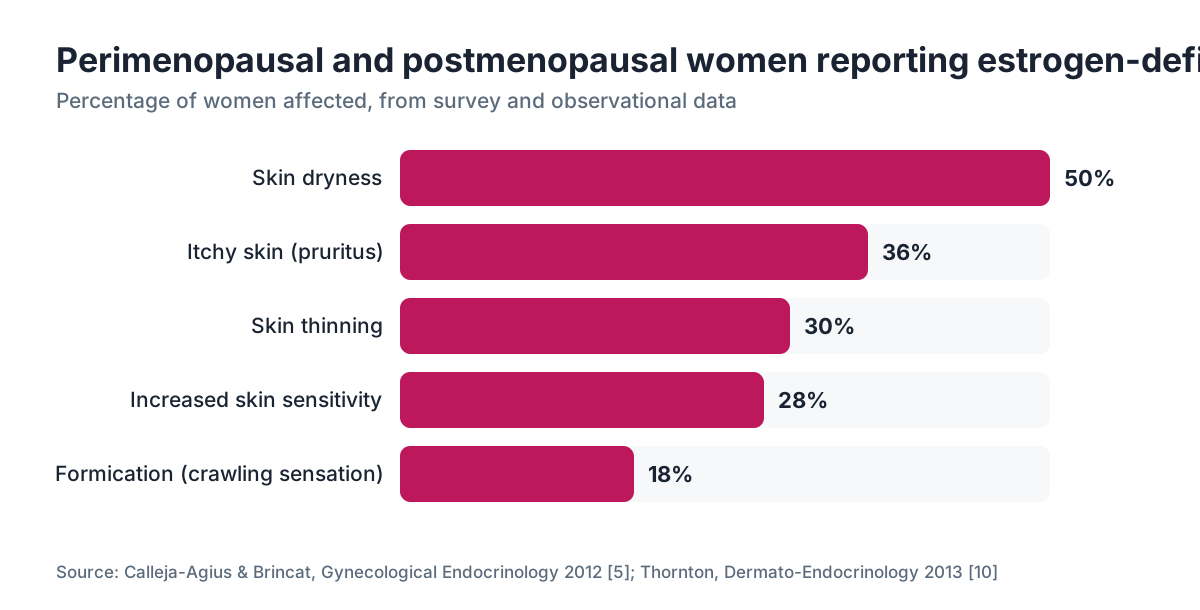
Itchy skin (the medical term is pruritus) is a recognized symptom of perimenopause and menopause. In surveys, roughly 36 to 50 percent of perimenopausal and postmenopausal women report significant skin dryness and itching they link to the transition [5]. The North American Menopause Society (NAMS) lists skin changes, including dryness, thinning, and reduced elasticity, among the systemic effects of declining estrogen [1].
Here is the catch. Itchy skin and itchy ears rarely appear on standard menopause symptom checklists, which focus on hot flashes, night sweats, mood changes, and sleep. So a frustrating pattern shows up: women mention ear itch to their gynecologist and get sent to an ENT, who finds nothing obviously wrong and sends them back. The hormonal root cause gets missed.
Other things can cause or worsen itchy ears: contact dermatitis (from earbuds, hearing aids, or hair products), fungal or bacterial infections, psoriasis, eczema, and allergies. Perimenopause does not cause these, but it can make skin more susceptible to all of them. So the honest answer is that it could be perimenopause, something else, or both. If the itch started or got dramatically worse in your mid-40s or 50s without an obvious trigger, hormones are a reasonable explanation to explore.
One clean way to sort this out. Keep a symptom timeline. If the ear itch tracks with other perimenopause symptoms like irregular periods, hot flashes, or vaginal dryness, the hormonal connection is more plausible. See a clinician either way.
What other perimenopause skin symptoms show up at the same time?
Itchy ears rarely travel alone. Most women who develop ear canal itch from estrogen loss are also dealing with at least a few of these at once [1][2][5]:
| Symptom | Mechanism | Where it shows up | |---|---|---| | Dry, flaky skin | Reduced sebum and collagen | Face, shins, forearms | | Formication (crawling sensation) | Altered nerve sensitivity | Arms, legs, trunk | | Thinning skin | Less collagen and elastin | Everywhere, most visible on hands | | Increased bruising | Fragile capillaries | Arms, legs | | Itchy scalp | Dry sebaceous glands | Scalp | | Vaginal dryness/itch | Mucosal atrophy | Vagina, vulva | | Dry eyes | Reduced tear film stability | Eyes | | Itchy ears | Dry ear canal skin | Ear canal |
The pattern matters. Vaginal dryness plus dry eyes plus itchy ears plus itchy skin points squarely at estrogen. Itchy ears plus a new pair of silicone earbuds points at the earbuds.
Formication, the feeling that something is crawling on your skin when nothing is there, gets its own line because it sounds alarming and often gets blamed on anxiety or a neurological problem when it is really a fairly direct consequence of estrogen's effect on skin nerve sensitivity [2].
How is perimenopause-related ear itch different from an ear infection or other ear problem?
The distinction matters because the treatments are completely different. Here is how to tell them apart.
Perimenopause-related itch tends to be bilateral (both ears), chronic (weeks to months, not sudden), dry rather than weepy, and paired with other dryness symptoms elsewhere. It usually comes without discharge, significant pain, hearing loss, or fever. Scratching gives brief relief but often makes things worse, because it damages already fragile skin.
An outer ear infection (otitis externa, sometimes called swimmer's ear) typically hits one ear, starts suddenly, causes pain when you tug the ear lobe, and may produce discharge. Moisture trapped in the canal triggers it, not hormones [6].
Fungal ear infections (otomycosis) cause a musty itch and often show white or black debris in the canal. They are more common in warm climates and can follow antibiotic ear drops, not estrogen changes.
Eczema and psoriasis can affect the ear canal and can be hard to separate from hormone-related dryness without a look inside. A dermatologist or ENT can usually tell by the appearance of the skin.
Contact dermatitis from earbuds (especially silicone or rubber tips), hearing aids, hair dyes, or shampoos that run into the ear is common, and it often coexists with hormonally dry skin, because compromised skin reacts more easily to irritants.
The rule of thumb: pain, discharge, one-sided itch, or hearing changes means see a clinician promptly. Do not assume it is hormones.
What can you do right now to relieve itchy ears during perimenopause?
Start with the least invasive options.
Mineral oil or baby oil drops. A drop or two of plain mineral oil in each ear canal once or twice a week lubricates dry skin and softens dry wax without disrupting the canal's natural environment. Many ENTs recommend this for dry ear canals in general, regardless of cause [4].
Skip the cotton swabs. This sounds backward because swabs feel satisfying, but they push wax deeper, abrade fragile skin, and strip the little protective cerumen that remains. Every scratch creates micro-damage that feeds the itch cycle.
Humidifier in the bedroom. Central heating or air conditioning can drop indoor humidity to 20 to 30 percent, which dries mucous membranes fast. Raising bedroom humidity to 40 to 50 percent helps all of your dry tissues, not only your ears [7].
Swap out earbuds. If you wear silicone or rubber earbuds daily, switch to foam tips or over-ear headphones for a few weeks and watch whether the itch settles. Silicone contact dermatitis is more common than people realize.
Gentle over-the-counter options. Swimmer's ear drops with glycerin can help, but avoid anything with isopropyl alcohol, which makes dryness worse. Carbamide peroxide earwax softeners are an option if wax buildup is also part of the problem.
Antihistamines. With an allergic component, a non-sedating antihistamine like loratadine may cut the itch, but it does nothing for the underlying hormonal dryness.
These measures reduce symptoms. They do not fix the root cause, which is falling estrogen.
Does hormone replacement therapy help itchy ears and itchy skin?
It often does, and the skin data is reasonably good. Multiple studies show systemic estrogen therapy increases skin thickness, collagen content, hydration, and sebum production in postmenopausal women [2][5]. If your itchy ears come from estrogen-related skin dryness, restoring estrogen addresses the underlying mechanism.
NAMS states in its 2022 position statement that "hormone therapy remains the most effective treatment for vasomotor symptoms and GSM and has been shown to prevent bone loss and fracture." Skin symptoms, including dryness and itch, count as systemic estrogen-deficiency symptoms that hormone therapy can address [1].
A study in Gynecological Endocrinology found postmenopausal women on systemic estrogen had significantly better skin hydration and lower pruritus scores than controls, with improvements measurable within about 12 weeks of starting treatment [5].
Local options matter too. If your ear itch travels with vaginal dryness, low-dose vaginal estrogen (cream, ring, or tablet) treats the genitourinary symptoms with little systemic absorption. It would not help ear dryness directly, but it confirms the estrogen-deficiency picture.
If you are weighing hormone therapy, our guides on hormone replacement therapy and the estrogen patch walk through the delivery method differences. Progesterone is part of the conversation for women with a uterus.
At WomenRx, clinicians look at the full hormone picture, including skin symptoms, when they choose a treatment approach. That full-picture evaluation is exactly what gets skipped when ear itch is treated in isolation.
Hormone therapy is not right for everyone. The decision turns on personal and family history, symptom burden, and individual risk, and it needs a clinician who knows your whole story.
Are there non-hormonal treatments for perimenopause itchy skin and ears?
Yes, though none of them fix the hormonal root cause.
Topical emollients. Thick, fragrance-free moisturizers applied right after a shower (while skin is still damp) help restore barrier function. For ears, mineral oil is safer than most commercial moisturizers, which are not made for ear canals.
Omega-3 fatty acids. A few small studies suggest omega-3 supplements improve skin hydration by supporting sebum production, but effect sizes are modest and the data in perimenopausal women specifically is thin. It is a low-risk option worth trying.
Shorter, cooler showers. Hot water strips natural oils fast. Lukewarm water and a mild, fragrance-free soap preserve what dryness has already reduced.
Gabapentin and pregabalin have been studied for menopausal itch and formication in women who cannot take hormones. These are prescription drugs with their own side effects, usually reserved for disruptive symptoms when hormone therapy is off the table.
Cognitive behavioral therapy (CBT) has evidence for chronic itch, partly because the itch-scratch cycle has a psychological reinforcement loop. This is not a claim that the itch is psychological. Chronic itch changes how the nervous system processes sensation, and CBT can interrupt that cycle.
For context on where you sit in the transition, perimenopause age and when does menopause start cover the timeline in detail.
What makes perimenopause ear itch worse?
A few things reliably amplify already-dry ear canals during perimenopause.
Daily earbud use is the biggest one. Silicone tips block natural airflow in the canal and create a warm, moist pocket that swings between too wet (during use) and too dry (after), and the material can trigger contact reactions in sensitized skin. If you wear earbuds for hours a day at work, that is the first variable to change.
Swimming and frequent water exposure, followed by hard toweling or a blow dryer, strips whatever residual moisture remains in an already-dry canal.
Hearing aids bring the same contact-irritation and moisture-trap problem as earbuds, sometimes worse because they are worn all day. Some hearing aid users in perimenopause develop ear canal eczema that goes unlinked to hormones for years.
Anti-dandruff shampoos and hair dyes often carry harsh surfactants and run into the canal during rinsing. Normal skin handles this fine. Estrogen-depleted skin reacts harder.
Cold, dry air. Winter heating plus cold temperatures outside is a reliable double hit on all mucous membranes, ear canal skin included.
Stress. Estrogen normally has an anti-inflammatory effect on skin. Lower estrogen plus elevated cortisol from stress can push itch sensitivity higher through inflammatory pathways. That is one reason perimenopause symptoms, skin ones included, often flare during high-stress stretches.
When should you see a doctor for itchy ears during perimenopause?
Most estrogen-related ear itch is a nuisance, not a danger. But see a clinician if:
You have pain, especially when the ear lobe is pulled or pressed.
You see any discharge, blood, or unusual debris in the canal.
Hearing seems muffled, or you have new ringing (tinnitus).
The itch is only in one ear.
You have tried conservative measures for four to six weeks with no improvement.
You have a fever along with ear symptoms.
You are immunocompromised, because fungal infections in the ear canal can be more serious.
If none of those red flags apply and the itch is bilateral, chronic, dry, and tracks with other perimenopausal symptoms, bring it up with your gynecologist or a menopause-focused clinician. Frame it as a skin and hormonal symptom rather than an ear problem, so it gets evaluated in the right context [1].
For the wider view of the menopause transition and the symptoms that come with it, that overview covers what falling estrogen does across the body.
What does the evidence say about estrogen and ear health more broadly?
This is an area where the data is genuinely limited, and honest uncertainty is warranted. Most of what we know comes from skin studies rather than ear-specific studies, and from postmenopausal rather than perimenopausal populations.
What is established [2][5]:
Estrogen receptors are present in human skin, including the dermis and sebaceous glands.
Estrogen stimulates collagen synthesis (Type I and III), increases skin thickness, and improves moisture retention.
Postmenopausal women have measurably drier skin, thinner skin, and higher rates of chronic pruritus than premenopausal women.
Systemic estrogen therapy partially reverses these changes.
What is inferred but not directly tested in ear-specific trials: that sebaceous glands in the ear canal respond to estrogen the same way sebaceous glands elsewhere do. That is a reasonable biological inference, not a proven ear-specific mechanism.
What nobody has good data on: how fast ear-specific itch improves with hormone therapy, whether local estrogen applied to the ear canal would help (it is not a standard or approved application), and what the ideal treatment algorithm looks like for perimenopause ear itch as a distinct diagnosis.
The practical takeaway: women with estrogen-deficiency ear itch get treated for the systemic condition, and ear symptoms are expected to improve alongside skin and mucosal symptoms generally. That is a reasonable approach given what we know, even though the ear-specific trial has not been run.
Frequently asked questions
Can perimenopause cause itchy ears?
Yes. Falling estrogen during perimenopause reduces sebum production and thins the skin in the ear canal, the same way it dries skin and mucous membranes elsewhere. Bilateral ear itch that starts in your 40s or 50s alongside other perimenopause symptoms like vaginal dryness, hot flashes, or irregular periods is very likely estrogen-related.
Is itchy skin a symptom of perimenopause?
Yes. Roughly 36 to 50 percent of perimenopausal and postmenopausal women report significant skin dryness and itching. Estrogen receptors in skin regulate sebum production, collagen synthesis, and skin thickness. As estrogen falls during perimenopause, skin becomes drier, thinner, and more prone to itch signals. This can affect the face, arms, scalp, and ear canals.
Why do my ears itch so much since perimenopause started?
The ear canal has sebaceous glands that depend on estrogen to stay lubricated. When estrogen drops, those glands make less cerumen (earwax), leaving the canal dry and prone to itching. Daily earbud use, low indoor humidity, and fragrance-based hair products all make it worse. The itch often improves once estrogen levels stabilize through hormone therapy.
What helps itchy ears during perimenopause?
Start with one or two drops of plain mineral oil in the ear canal once or twice a week to restore lubrication. Skip cotton swabs. Raise bedroom humidity to 40 to 50 percent. Swap silicone earbuds for foam tips or over-ear headphones. If nothing helps after four to six weeks, ask a clinician about hormone therapy, which addresses the root cause of estrogen-driven dryness.
Could my itchy ears be something other than perimenopause?
Yes. Otitis externa (swimmer's ear), fungal infections, eczema, psoriasis, and contact dermatitis from earbuds or hearing aids can all cause ear canal itch. Red flags that point away from hormones: one-sided itch, pain when you pull the ear lobe, discharge, hearing loss, or fever. If any of those are present, see a clinician rather than assuming hormones.
Does hormone replacement therapy help itchy skin and itchy ears?
For hormonally driven dryness and itch, yes. Studies show systemic estrogen therapy increases skin hydration, thickness, and sebum production in postmenopausal women, with improvements measurable within about 12 weeks. NAMS considers systemic hormone therapy the most effective treatment for estrogen-deficiency symptoms in healthy women under 60 or within 10 years of menopause onset. Ask a menopause-savvy clinician whether it fits your situation.
What is formication and is it related to perimenopause?
Formication is the feeling that something is crawling on your skin when nothing is there. It is a recognized perimenopause symptom driven by estrogen's effect on skin nerve sensitivity. As estrogen falls, altered nerve signaling in the skin can produce crawling, tingling, or itching without any external trigger. It can accompany itchy ears and other skin symptoms and often improves with hormone therapy.
Can low estrogen cause ear problems beyond itching?
Possibly. The eustachian tube, which connects the middle ear to the back of the throat, is lined with mucous membrane that estrogen helps maintain. Dry eustachian tube tissue may add to sensations of fullness or pressure in the ear during perimenopause. Some women also report tinnitus (ringing) worsening during perimenopause, though the direct hormonal mechanism for that is less established.
Are cotton swabs safe to use for itchy ears during perimenopause?
No. Cotton swabs push wax deeper into the canal, abrade fragile skin, and strip the little protective cerumen that remains. In hormonally dry ear canals, that creates micro-damage that feeds the itch-scratch cycle. The American Academy of Otolaryngology recommends against routine cotton swab use inside the ear canal for most people.
At what age does perimenopause usually cause itchy skin symptoms?
Perimenopause typically starts in the mid-to-late 40s, though it can begin as early as the late 30s. The average age of the final menstrual period in the US is around 51 to 52. Skin and mucosal dryness tends to worsen as estrogen drops more steeply, often in the two to four years before the final period and in early postmenopause. It does not resolve on its own without hormonal support.
Can allergies and perimenopause both cause itchy ears at the same time?
Yes, and they often do. Estrogen-depleted skin reacts more readily to environmental irritants and allergens, so perimenopause can lower the threshold at which existing allergies cause symptoms. If your ear itch is clearly seasonal or tied to specific triggers, an antihistamine may help. But if the itch is year-round and comes with other dryness symptoms, estrogen deficiency is the more likely driver and should be evaluated separately.
How long does it take for ear itch to improve after starting hormone therapy?
Nobody has good ear-specific data on this timeline. For skin dryness and itch generally, studies in postmenopausal women show measurable improvement in hydration and self-reported itch within about 12 weeks of starting systemic estrogen. Some women notice a difference sooner. The improvement in ear-specific symptoms is inferred from the general skin data, not from dedicated ear-itch trials.
Do perimenopausal skin symptoms ever get better on their own?
Skin dryness and itch driven by estrogen loss do not typically improve on their own without hormonal support, because estrogen keeps declining through perimenopause and into postmenopause. Local measures like mineral oil drops, humidifiers, and gentle cleansers reduce symptom severity, but the underlying cause persists. In contrast, some other perimenopause symptoms like hot flashes do fade over time for many women.
Sources
- North American Menopause Society (NAMS), 2022 Hormone Therapy Position Statement
- Verdier-Sevrain S, Bonte F. Skin hydration: a review on its molecular mechanisms. Journal of Cosmetic Dermatology, 2007
- National Institute on Aging (NIA), Menopause overview
- American Academy of Otolaryngology-Head and Neck Surgery (AAO-HNS), Clinical Practice Guideline: Cerumen Impaction
- Calleja-Agius J, Brincat M. The effect of menopause on the skin and other connective tissues. Gynecological Endocrinology, 2012
- Centers for Disease Control and Prevention (CDC), Swimmer's Ear (Otitis Externa)
- American Academy of Allergy, Asthma and Immunology (AAAAI), Indoor Humidity and Mucous Membrane Health
- Archer DF. Postmenopausal skin and estrogen. Gynecological Endocrinology, 2012
- MedlinePlus (National Library of Medicine), Pruritus (Itching)
- Thornton MJ. Estrogens and aging skin. Dermato-Endocrinology, 2013
- Endocrine Society, Clinical Practice Guideline: Treatment of Symptoms of the Menopause
- NIH Office on Women's Health, Menopause