Is Zepbound a semaglutide? The key differences explained
TL;DR: Zepbound is not a semaglutide. It contains tirzepatide, a dual GIP/GLP-1 receptor agonist made by Eli Lilly. Semaglutide (Ozempic, Wegovy) targets only GLP-1 receptors. In the SURMOUNT-1 trial, tirzepatide produced up to 22.5% body weight loss versus about 15% for semaglutide in STEP 1. Different drug, different mechanism, meaningfully different results.
What drug is actually in Zepbound?
Zepbound contains tirzepatide. Full stop. It is not semaglutide, it does not contain semaglutide, and it is not a generic or biosimilar version of any semaglutide product. The FDA approved Zepbound in November 2023 specifically for chronic weight management in adults with obesity or with at least one weight-related condition [1].
Tirzepatide is made by Eli Lilly and Company. Semaglutide is made by Novo Nordisk. They are two completely different molecules with different chemical structures, different mechanisms of action, and different clinical trial histories. The confusion is understandable because both drugs belong to the same broader class of injectable weight-loss medications and both are prescribed for type 2 diabetes and obesity. But conflating them is a real clinical mistake worth clearing up.
The name Zepbound is the weight-management brand. Lilly sells the exact same molecule under the brand name Mounjaro for type 2 diabetes management [2]. So if you see "tirzepatide" on a label, you may be looking at either Zepbound or Mounjaro depending on which indication your prescription covers.
How does tirzepatide differ from semaglutide mechanically?
This is where the science gets interesting. Semaglutide is a GLP-1 receptor agonist. It mimics glucagon-like peptide-1, a gut hormone that slows gastric emptying, reduces appetite, and signals satiety to the brain. One target, one mechanism [3].
Tirzepatide is a dual agonist. It activates both the GLP-1 receptor and the GIP receptor (glucose-dependent insulinotropic polypeptide). GIP is a separate gut hormone that also affects fat storage, insulin secretion, and energy metabolism. Researchers originally thought blocking GIP would be helpful, but it turns out activating the GIP receptor alongside GLP-1 appears to produce additive or even synergistic effects on weight loss and blood sugar control [4].
Think of it this way: semaglutide sends one signal to your metabolism, tirzepatide sends two. Whether that second signal accounts for the superior weight loss seen in trials is still being studied, but the clinical data strongly suggest the dual mechanism matters.
Neither drug is a hormone in the classical sense. They are synthetic peptide analogs, meaning they are engineered molecules that mimic your body's own gut hormones closely enough to activate the same receptors. This distinction matters because some people assume GLP-1 drugs interact directly with sex hormones like estrogen or progesterone. They do not act on those receptors, though the weight changes they produce can indirectly affect hormonal balance, especially for women in perimenopause or post-menopause [see /articles/menopause and /articles/perimenopause-age].
Zepbound vs semaglutide: how do the weight loss results compare?
The clinical trial data here are real and worth looking at directly.
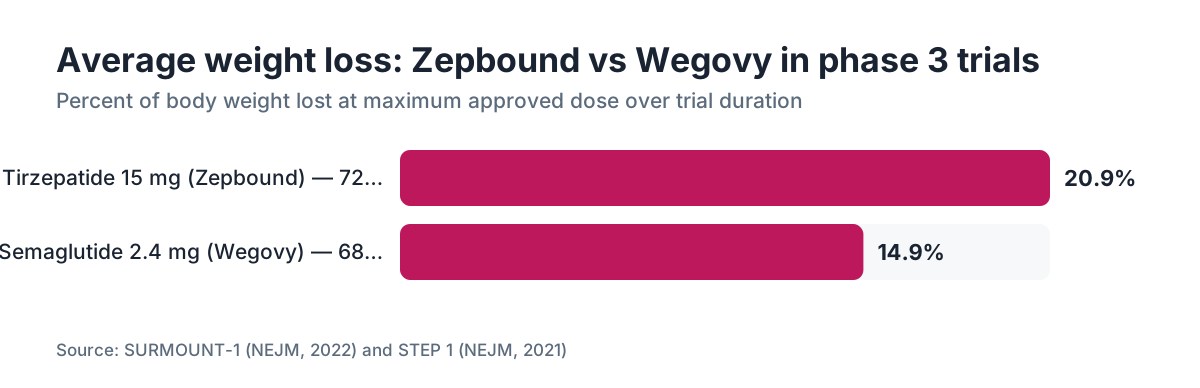
In SURMOUNT-1, the phase 3 trial that anchored tirzepatide's obesity approval, participants without diabetes lost an average of 20.9% of body weight on the 15 mg dose over 72 weeks [5]. The highest responders (top tertile) lost around 22.5% on average. About 57% of participants on the highest dose lost 20% or more of their body weight.
In STEP 1, the equivalent trial for semaglutide 2.4 mg (Wegovy's approved dose), participants lost an average of 14.9% of body weight over 68 weeks [6]. About 32% lost 20% or more.
That is not a small difference. Head-to-head, a 2022 trial called SURMOUNT-5 directly compared tirzepatide 10 mg and 15 mg against semaglutide 2.4 mg (Wegovy doses). Participants on tirzepatide lost about 47% more body weight than those on semaglutide over 72 weeks [7]. The trial concluded, as stated in its results, that tirzepatide was "superior to semaglutide" for weight reduction in people with obesity or overweight.
None of this means semaglutide is a bad drug. A 15% average weight reduction is clinically meaningful and life-changing for many women. Some women respond better to semaglutide than tirzepatide, and individual variation is real. But if raw weight loss numbers are the primary goal, the data currently favor tirzepatide.
| Metric | Tirzepatide (Zepbound 15 mg) | Semaglutide (Wegovy 2.4 mg) | |---|---|---| | Trial | SURMOUNT-1 | STEP 1 | | Duration | 72 weeks | 68 weeks | | Avg. weight loss | ~20.9% | ~14.9% | | % losing 20%+ | ~57% | ~32% | | FDA approval (obesity) | Nov 2023 | June 2021 | | Mechanism | Dual GIP/GLP-1 | GLP-1 only |
Do Zepbound and semaglutide have the same side effects?
The side effect profiles are similar because both drugs slow gastric emptying and act on the gut. The most common adverse effects for both are nausea, vomiting, diarrhea, constipation, and reduced appetite, all more likely during dose escalation and often improving over time [1][3].
There are some differences worth knowing. In SURMOUNT-1, about 10.5% of tirzepatide participants on the highest dose discontinued due to adverse events, compared with 8.2% in the STEP 1 semaglutide trial [5][6]. Both drugs carry FDA black box warnings about thyroid C-cell tumors based on animal studies, and both are contraindicated in people with a personal or family history of medullary thyroid carcinoma or MEN2 syndrome.
Both also carry a risk of pancreatitis, gallbladder disease (gallstones, cholecystitis), and, more recently, a warning about intestinal obstruction in the setting of gastroparesis. Women considering either drug should discuss their gallbladder history with their prescriber, because rapid weight loss itself elevates gallstone risk regardless of which GLP-1 you take.
One pattern that shows up in clinical practice but is not yet fully documented in large trials: women in perimenopause and post-menopause report more pronounced nausea, possibly because estrogen affects gastric motility. Nobody has good randomized data on this specifically, but it is worth flagging with your provider before assuming side effects are "normal" for your body.
How does Zepbound compare to Ozempic, Wegovy, and Rybelsus?
All four of those names involve semaglutide. Ozempic is semaglutide 0.5, 1, or 2 mg injected weekly, approved for type 2 diabetes [3]. Wegovy is semaglutide 2.4 mg injected weekly, approved for chronic weight management [3]. Rybelsus is oral semaglutide 3, 7, or 14 mg, approved for type 2 diabetes only. They are all the same active molecule at different doses and routes of administration.
Zepbound is tirzepatide, approved for weight management. Mounjaro is tirzepatide approved for type 2 diabetes. If a prescriber writes for Zepbound, you are getting tirzepatide. If they write for Ozempic or Wegovy, you are getting semaglutide.
The practical takeaway for women shopping for GLP-1 treatment: the brand name does not tell you the molecule. Learn both the brand and generic names so you know exactly what you are taking.
For a deeper comparison of the clinical evidence, see semaglutide vs tirzepatide and our main semaglutide overview.
Can you switch from semaglutide to Zepbound, or take both?
You can switch, but you should never take both at the same time. Combining two GLP-1 receptor agonists compounds the risk of severe nausea, vomiting, dehydration, and hypoglycemia (if you also take insulin or sulfonylureas). The FDA has not approved any combination regimen, and prescribing two GLP-1 drugs simultaneously is outside standard of care.
Switching from semaglutide to tirzepatide (or vice versa) is done in clinical practice and is reasonable if one drug is better tolerated or more effective for a particular patient. The typical approach is to stop the first drug and start the second at a low starting dose rather than jumping to an equivalent or higher dose. How long to wait between drugs varies, since semaglutide has a half-life of roughly one week, so most providers wait at least one to two weeks before starting the new medication, though protocols vary.
Women switching because of inadequate weight loss on semaglutide sometimes see significantly better results on tirzepatide, though this has not been studied in a formal crossover trial to my knowledge. The reverse is also true: some women do better on semaglutide, particularly if tirzepatide causes intolerable GI effects.
What about compounded semaglutide vs. compounded tirzepatide?
The compounding landscape shifted significantly in 2025. During the period when branded semaglutide (Wegovy, Ozempic) was on the FDA shortage list, compounding pharmacies were legally permitted to produce copies. The FDA removed semaglutide from its drug shortage list in early 2025, which triggered enforcement against compounders making copies of the molecule [8]. The situation with tirzepatide (Zepbound, Mounjaro) followed a similar path, with the FDA declaring the shortage resolved for certain dosages and moving to restrict compounding.
This matters because many women exploring GLP-1 options have encountered compounded semaglutide or compounded tirzepatide at significantly lower prices. These are not interchangeable with branded products from a regulatory standpoint, and the FDA has raised concerns about quality, purity, and accurate dosing from unverified compounders.
If cost is a barrier, there are legitimate routes: Lilly's Zepbound direct-to-patient program has offered vials at reduced prices for self-pay patients, and Novo Nordisk has savings programs for Wegovy. A telehealth provider that operates within proper prescribing standards, like WomenRx, can walk you through current access options and what is legally available at the time of your consultation.
For more on the compounding question specifically, see compounded semaglutide and semaglutide for weight loss.
Does it matter which GLP-1 you choose if you're in perimenopause or menopause?
It matters more than most prescribers acknowledge right now. Women in perimenopause and post-menopause carry a different metabolic profile than younger women or men. Estrogen loss shifts fat distribution toward visceral adiposity (belly fat), raises insulin resistance, and changes how the body responds to caloric restriction and appetite signals. GLP-1 drugs are not specifically studied in women stratified by menopausal status in their major trials, which is a real gap in the evidence.
What we know from SURMOUNT-1 and STEP 1 is that the enrolled populations were largely female (about 70% in SURMOUNT-1), but the trials were not powered to detect differences by menopausal status [5][6]. Some subgroup analyses suggest women lose slightly less weight than men on both drugs, possibly because hormonal context affects the GIP and GLP-1 systems. Nobody has good primary data isolating menopausal status as the variable.
Clinically, what this means is that a woman in perimenopause struggling with weight may find that a GLP-1 alone produces modest results unless hormonal factors are also addressed. The North American Menopause Society notes that hormonal changes during menopause are a significant driver of weight gain, and that evidence supports the use of hormone therapy to reduce visceral fat accumulation [9].
If you are in perimenopause, a conversation about both GLP-1 options and hormone replacement therapy is worth having with your provider. These are not competing treatments. They address different mechanisms. See also when does menopause start and menopause age if you're still working out where you are hormonally.
How much does Zepbound cost compared to semaglutide?
List prices for both drugs are high, and insurance coverage is inconsistent.
Zepbound's list price is roughly $1,059 to $1,086 per month for the branded auto-injector pen as of 2024 to 2025. Lilly's direct vial program has offered tirzepatide at $349 to $499 per month for self-pay patients, though availability changes.
Wegovy (semaglutide 2.4 mg) carries a list price of approximately $1,349 per month. Ozempic (semaglutide for diabetes) is around $936 per month at list price.
Insurance coverage for obesity treatment specifically (as opposed to diabetes) remains poor in the United States. Medicare Part D did not cover anti-obesity medications until the Treat and Reduce Obesity Act provisions began moving, and commercial insurance coverage is inconsistent by plan and employer [10].
The practical upshot: Zepbound currently costs less at list price than Wegovy, and Lilly's direct program has made tirzepatide more accessible for self-pay patients than semaglutide at equivalent doses. That could change. Check current pricing directly with each manufacturer's savings program rather than relying on any article, including this one.
What questions should you ask your doctor before choosing Zepbound or semaglutide?
A few questions actually worth raising:
First, ask about your GIP and GLP-1 receptor genetics. This is emerging science and not yet standard clinical practice, but some pharmacogenomic data suggest individual response to GIP agonism varies. Your prescriber probably cannot act on this today, but it is worth knowing is on the horizon.
Second, ask about your bone density. Significant rapid weight loss, regardless of the drug causing it, can accelerate bone mineral density loss, which is already a concern for women entering menopause [11]. Getting a baseline bone density test before starting a GLP-1 drug is reasonable, especially if you are post-menopausal.
Third, ask specifically about muscle mass. Both GLP-1 drugs produce meaningful lean mass loss alongside fat loss, which matters long-term for metabolic rate, strength, and fracture risk. Resistance training is genuinely protective here and not optional.
Fourth, ask about your gallbladder history. Both drugs increase gallstone risk, and if you have had gallbladder issues before, your prescriber should factor that in.
Finally, if you are also managing hormone therapy with an estrogen patch or progesterone, make sure your prescriber knows. There are no known direct drug interactions, but altered GI motility from GLP-1 drugs can theoretically affect absorption of oral medications. Transdermal and vaginal hormone delivery routes sidestep this concern entirely.
WomenRx providers are trained to manage both GLP-1 prescribing and hormonal care together, which is genuinely rare in standard outpatient practice. If you want both evaluated at once, that matters for choosing a provider.
Is one drug safer for women with certain medical histories?
For most women without specific contraindications, both tirzepatide and semaglutide are reasonably well-tolerated. The contraindications overlap almost entirely: personal or family history of medullary thyroid carcinoma, MEN2 syndrome, known hypersensitivity to the drug, and pregnancy.
For women with a history of pancreatitis, both drugs require caution, and many providers will not prescribe either in that setting. For women with diabetic retinopathy, semaglutide carries an FDA label warning about worsening retinopathy with rapid glucose lowering [3]. This is particularly relevant for women with type 2 diabetes who are also managing eye disease.
For women with a history of eating disorders, both drugs deserve careful discussion. GLP-1 drugs suppress appetite signaling in ways that can interact unpredictably with restriction-based eating disorders. There is no large trial data on this population, and individual clinical judgment matters enormously.
The Endocrine Society's clinical practice guidelines on obesity emphasize that medication choice should account for comorbidities, more than expected weight loss [12]. That framing is useful: do not pick the drug with the bigger trial number in isolation. Pick the one that fits your full medical picture.
Frequently asked questions
Is Zepbound the same as Ozempic?
No. Zepbound contains tirzepatide. Ozempic contains semaglutide. They are different molecules from different manufacturers. Tirzepatide is a dual GIP/GLP-1 receptor agonist made by Eli Lilly. Semaglutide is a GLP-1 receptor agonist made by Novo Nordisk. Both are weekly injectables used for blood sugar control and weight management, but they are not interchangeable.
Is Zepbound the same as Wegovy?
No. Wegovy is semaglutide 2.4 mg, approved for chronic weight management by the FDA in 2021. Zepbound is tirzepatide, approved for the same indication in 2023. Both are once-weekly injections. In a direct head-to-head trial (SURMOUNT-5), tirzepatide produced approximately 47% more body weight loss than semaglutide 2.4 mg over 72 weeks.
Why do people confuse Zepbound with semaglutide?
Both drugs belong to the GLP-1 receptor agonist class, are weekly injections, produce significant weight loss, and have been heavily covered in the same news cycle. The confusion also comes from compounding pharmacies that market GLP-1 injectables generically, making it harder for consumers to track which molecule is which. Learning the generic names (tirzepatide vs. semaglutide) rather than just brand names prevents this mistake.
Which works better for weight loss, Zepbound or semaglutide?
Clinical trial data favor tirzepatide (Zepbound). SURMOUNT-1 found an average 20.9% body weight loss at the 15 mg dose over 72 weeks. STEP 1 found 14.9% average loss with semaglutide 2.4 mg over 68 weeks. A direct comparison trial (SURMOUNT-5) found tirzepatide produced roughly 47% greater weight loss than semaglutide at the same doses. Individual response varies, and some patients do better on semaglutide.
Can I take Zepbound and semaglutide at the same time?
No. Combining two GLP-1 receptor agonists is not medically appropriate and significantly increases the risk of severe nausea, vomiting, dehydration, and, if you use insulin, dangerous hypoglycemia. No FDA-approved combination regimen exists. If you want to switch from one to the other, stop the first drug completely and restart at a low dose of the new one after allowing enough time for the first to clear.
Does Zepbound affect hormones like estrogen or progesterone?
Tirzepatide does not act directly on estrogen or progesterone receptors. The weight loss it produces can indirectly shift hormonal balance, since adipose tissue makes estrogen, and significant fat loss can lower circulating estrogen levels. For women in perimenopause, this matters. A provider managing both GLP-1 therapy and hormone treatment together is better positioned to monitor these interconnected changes.
Is Zepbound FDA approved, and for what?
Yes. The FDA approved Zepbound (tirzepatide) in November 2023 for chronic weight management in adults with a BMI of 30 or greater, or 27 or greater with at least one weight-related comorbidity such as hypertension, type 2 diabetes, or high cholesterol. The same molecule is sold as Mounjaro, which is FDA approved specifically for type 2 diabetes management.
How do the side effects of Zepbound compare to Wegovy?
The side effect profiles are similar: nausea, diarrhea, vomiting, and constipation are most common with both, typically peaking during dose increases. Both carry black box warnings for thyroid C-cell tumors (based on animal data) and both are associated with pancreatitis risk and gallbladder disease. Discontinuation due to adverse events was slightly higher for tirzepatide (10.5% at 15 mg in SURMOUNT-1) than semaglutide (8.2% in STEP 1).
Is Zepbound covered by insurance?
Coverage varies widely. Many commercial insurance plans cover Zepbound for obesity, but coverage depends on your specific plan and employer. Medicare Part D historically did not cover anti-obesity medications, though this is changing. Without insurance, list price runs roughly $1,059 to $1,086 per month. Eli Lilly's direct vial program has offered tirzepatide to self-pay patients for $349 to $499 per month, subject to availability and eligibility.
Should women in menopause choose Zepbound or semaglutide?
Neither drug has been studied with menopausal status as a primary variable, so there is no evidence-based head-to-head answer specific to menopause. Tirzepatide generally produces more weight loss, which matters because menopause-related visceral fat gain carries cardiovascular and metabolic risk. However, the most important factor is often which drug a woman tolerates and can sustain long-term, combined with appropriate hormone management if indicated.
Will I lose muscle mass on Zepbound or semaglutide?
Both drugs cause loss of lean muscle mass alongside fat, typically representing 25 to 40% of total weight lost based on body composition data from the SURMOUNT and STEP trials. This is meaningful for women, particularly post-menopausal women who already face age-related muscle loss (sarcopenia). Resistance training throughout treatment is the best-studied strategy for preserving muscle mass. High protein intake also helps, though the optimal amount is still debated.
Can compounded tirzepatide substitute for Zepbound?
Legally and regulatorily, compounded tirzepatide is in a complex position. The FDA has moved to restrict compounding of tirzepatide as it resolves shortage designations. Compounded versions are not FDA approved and carry potential risks around purity and dosing accuracy. If cost is the barrier, explore Lilly's direct access program or manufacturer savings cards before turning to compounding pharmacies.
Does Zepbound cause hair loss?
Hair shedding is reported by a meaningful number of people on both tirzepatide and semaglutide, though it is not listed as a common adverse event in FDA labeling. The most likely cause is telogen effluvium, a temporary hair thinning triggered by rapid weight loss and caloric restriction rather than the drug itself. It typically resolves within a few months as weight stabilizes. Adequate protein intake may reduce severity.
How long do you have to take Zepbound or semaglutide?
Both drugs treat obesity as a chronic condition, meaning the intended duration is long-term, often indefinite. The STEP 4 trial for semaglutide showed that participants who stopped the drug after 20 weeks regained about two-thirds of their lost weight within a year. Similar patterns are observed with tirzepatide. Most clinical guidelines now frame GLP-1 therapy the same way as blood pressure medication: ongoing rather than a fixed course.
Sources
- FDA, Zepbound (tirzepatide) Prescribing Information
- FDA, Mounjaro (tirzepatide) Prescribing Information
- FDA, Wegovy (semaglutide) Prescribing Information
- Frías JP et al., New England Journal of Medicine, Tirzepatide versus Semaglutide Once Weekly in Patients with Type 2 Diabetes (SURPASS-2), 2021
- Jastreboff AM et al., New England Journal of Medicine, Tirzepatide Once Weekly for the Treatment of Obesity (SURMOUNT-1), 2022
- Wilding JPH et al., New England Journal of Medicine, Once-Weekly Semaglutide in Adults with Overweight or Obesity (STEP 1), 2021
- Aronne LJ et al., New England Journal of Medicine, Tirzepatide versus Semaglutide for Obesity (SURMOUNT-5), 2025
- FDA, GLP-1 drug shortage and compounding guidance
- North American Menopause Society (NAMS), Menopause and Weight Gain position
- CMS Medicare Part D coverage of anti-obesity medications, policy history
- NIH National Institute of Arthritis and Musculoskeletal and Bone Diseases, Bone Health and Menopause
- Endocrine Society, Clinical Practice Guideline: Pharmacological Management of Obesity, 2015 (updated 2023)