Is Wegovy semaglutide? What women need to know
TL;DR: Wegovy is semaglutide, the same active molecule as Ozempic, but FDA-approved at a higher maximum dose (2.4 mg weekly) for chronic weight management. Ozempic tops out at 2.0 mg and is approved for type 2 diabetes. Both are GLP-1 receptor agonists. The drug is identical. The indication, dose ceiling, and insurance coverage are what change.
What exactly is Wegovy and is it the same drug as semaglutide?
Yes. Wegovy is semaglutide. Full stop.
Semaglutide is the generic name for the molecule, a glucagon-like peptide-1 (GLP-1) receptor agonist developed by Novo Nordisk. Wegovy is the brand name Novo Nordisk uses for the 2.4 mg weekly injectable formulation approved for weight management. Think ibuprofen versus Advil: same chemical, different label.
The FDA approved Wegovy in June 2021 for chronic weight management in adults with a body mass index of 30 or higher, or 27 or higher with at least one weight-related condition such as high blood pressure, type 2 diabetes, or high cholesterol [1]. That approval rested on the STEP (Semaglutide Treatment Effect in People with Obesity) program, a set of phase 3 randomized controlled trials.
Ozempic, Rybelsus, Wegovy, and the compounded versions you've heard about all share the same molecule. What differs is dose, route, and FDA-approved indication. Rybelsus is oral semaglutide for type 2 diabetes. Ozempic is injectable semaglutide for type 2 diabetes (and, since 2024, cardiovascular risk reduction). Wegovy is injectable semaglutide for weight management. Read more on the molecule itself at semaglutide.
The dose gap is not trivial. Ozempic's maximum approved dose is 2.0 mg weekly. Wegovy goes to 2.4 mg weekly. That extra 0.4 mg changes weight-loss outcomes enough that the two products carry separate FDA labels.
How does semaglutide work in the body?
Semaglutide copies GLP-1, a hormone your gut releases after you eat. It hits receptors in the pancreas to trigger insulin release (only when blood sugar is high, which is why hypoglycemia risk stays low in people without diabetes), suppresses glucagon, slows how fast your stomach empties, and acts on receptors in the brain's hypothalamus to blunt appetite and stretch out fullness [2].
That appetite effect is the one that drives weight loss. Women on Wegovy often say they eat less not because they're fighting themselves at every meal, but because food stops pulling at them and they fill up faster. That's the brain signaling doing its work.
Semaglutide also acts on the liver to reduce fat buildup, and early evidence points to effects on reward pathways, which may explain why some users report weaker cravings for alcohol and nicotine. Those effects are real but still being pinned down. The FDA has made no claims for them.
The half-life of semaglutide is about one week. That's why once-weekly dosing keeps plasma levels steady between injections [2].
Here's the piece specific to women. GLP-1 receptors show up in the ovary and uterus, though what that means clinically for reproductive health is still under study. What is settled: rapid weight loss from any cause, GLP-1s included, can change ovulation and fertility. If you're not trying to conceive, use reliable contraception while on Wegovy.
What did the STEP trials actually find for weight loss?
The STEP trials are the evidence Wegovy's approval stands on. STEP 1, published in the New England Journal of Medicine in 2021, is the anchor study.
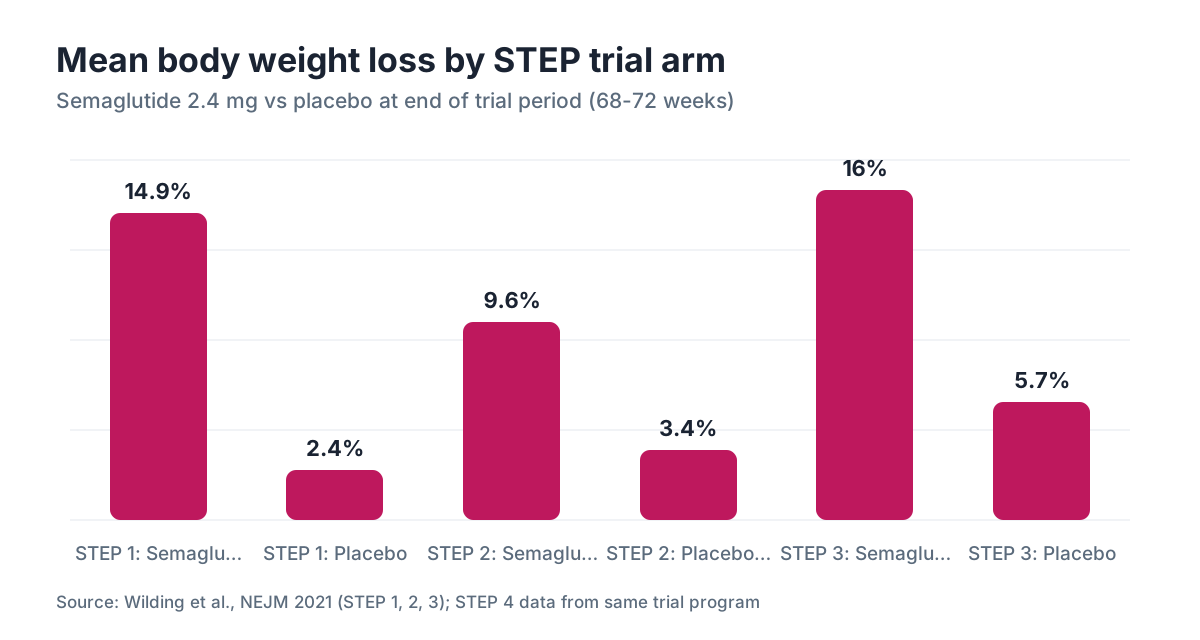
STEP 1 randomized 1,961 adults with obesity but without type 2 diabetes to 2.4 mg semaglutide weekly or placebo over 68 weeks, with lifestyle support in both groups. The semaglutide group lost a mean of 14.9% of body weight versus 2.4% on placebo. In the study's own words, semaglutide produced a weight change that was "clinically relevant" and consistent across subgroups. 86.4% of semaglutide participants lost at least 5% of body weight, against 31.5% on placebo. About one-third lost 20% or more [3].
STEP 2 enrolled people with type 2 diabetes and found smaller but real weight loss: 9.6% versus 3.4% for placebo [3]. Diabetes blunts the weight-loss response to GLP-1s, and that pattern holds across the whole drug class [7].
STEP 4 tested what happens when you stop. People who had lost weight on semaglutide, then switched to placebo for 48 weeks, put back about two-thirds of what they'd lost. Read that twice. Wegovy is a chronic treatment, not a course you finish.
For women in perimenopause and menopause, body weight and fat distribution shift as estrogen drops. No dedicated large RCT of Wegovy in perimenopausal women exists yet. But STEP subgroup analyses included women over 50, and their weight-loss magnitude tracked with the overall group.
Comparing Wegovy to tirzepatide (Zepbound/Mounjaro)? The head-to-head picture is messy. See semaglutide vs tirzepatide for the direct read.
How is Wegovy different from Ozempic if they're both semaglutide?
The molecule is identical. What changes is dose, indication, titration schedule, and how insurance treats each one. This is the question that confuses almost everyone who walks into a clinic asking for semaglutide.
Ozempic is FDA-approved for type 2 diabetes and cardiovascular risk reduction in people with established heart disease. Its maximum approved dose is 2.0 mg weekly. Wegovy is FDA-approved for chronic weight management and, since 2024, cardiovascular risk reduction. Its maximum approved dose is 2.4 mg weekly [1][4].
The SELECT trial, published in the New England Journal of Medicine in 2023, found that among adults with existing cardiovascular disease and obesity but without diabetes, semaglutide 2.4 mg cut the risk of major adverse cardiovascular events by 20% versus placebo over about 3.3 years [4]. That result earned Wegovy an expanded label claim, one Ozempic's diabetes indication already carried through separate trials.
Why does 0.4 mg matter? The dose-response curve for weight loss with semaglutide is not flat. People at 2.4 mg consistently lose more than those at lower doses, and 2.4 mg is the target the STEP trials used, so the weight-loss evidence is built around that number.
The practical fallout: if you have type 2 diabetes, your insurer may cover Ozempic but fight Wegovy. No diabetes but you qualify for weight management? The reverse is more likely. Using Ozempic off-label for weight loss is common but drops you into insurance gray territory.
See semaglutide for weight loss for how the coverage landscape actually plays out.
What is the Wegovy dosing schedule and how does titration work?
Wegovy climbs through a fixed titration schedule over 16 weeks before you reach the 2.4 mg maintenance dose. This isn't red tape. GI side effects (nausea, vomiting, diarrhea, constipation) are the top reason people quit GLP-1s, and slow titration cuts them sharply.
The FDA-approved schedule [1]:
Weeks 1-4: 0.25 mg weekly Weeks 5-8: 0.5 mg weekly Weeks 9-12: 1.0 mg weekly Weeks 13-16: 1.7 mg weekly Week 17 onward: 2.4 mg weekly (maintenance)
If 2.4 mg proves rough, the label allows staying at 1.7 mg. Plenty of people get real weight loss at sub-maximal doses and don't need to push higher when side effects bite.
Injections go under the skin, once weekly, in the abdomen, thigh, or upper arm. Pick a day and keep it consistent. Wegovy ships as prefilled autoinjector pens, one dose per pen.
Storage matters. Keep pens refrigerated at 36 to 46 degrees Fahrenheit. Once out of the fridge, a pen holds at room temperature (below 77 degrees Fahrenheit) for up to 28 days, then it goes in the trash.
Who qualifies for Wegovy and what are the contraindications?
FDA criteria for a Wegovy prescription [1]:
BMI 30 or higher (obesity), OR BMI 27 or higher (overweight) plus at least one weight-related condition: hypertension, type 2 diabetes, dyslipidemia, obstructive sleep apnea, or cardiovascular disease.
The drug is approved for adults and, since December 2022, for adolescents 12 and older with obesity.
The contraindications are real and worth honest attention.
Personal or family history of medullary thyroid carcinoma (MTC). Semaglutide carries a black box warning for thyroid C-cell tumors, based on animal data. The FDA labels every GLP-1 receptor agonist this way. Human epidemiology hasn't confirmed a causal link, but the warning stands, and the drug is contraindicated in anyone with an MTC history or Multiple Endocrine Neoplasia syndrome type 2 (MEN 2) [1].
Pancreatitis history. Not an absolute contraindication in the label, but prescribers stay cautious. Acute pancreatitis has been reported with GLP-1 agonists, though causality is debated.
Pregnancy. Wegovy is not approved in pregnancy, and animal studies showed fetal harm. Stop the drug if you become pregnant. Because Wegovy can restore fertility in women with obesity-related ovulatory problems, pregnancy is a real possibility to plan around.
Severe GI disease. Gastroparesis or severe inflammatory bowel disease are relative contraindications given the gastric emptying effect.
Renal or hepatic impairment. No dose adjustment in mild-to-moderate cases, but data in severe impairment are thin [10].
What are the most common side effects women report on Wegovy?
GI side effects run the show, especially during titration. In STEP 1, nausea hit 44% of semaglutide participants versus 16% on placebo. Diarrhea showed up in 30% versus 16%, vomiting in 24% versus 6%, constipation in 24% versus 11% [3]. Most peaked during dose escalation and faded over time.
About 4.5% of STEP 1 participants stopped because of GI side effects, versus 0.8% on placebo. That's meaningful, not catastrophic. Most people who get through titration stay on the drug.
Beyond the gut, a few things come up specifically for women.
Hair loss (telogen effluvium). Real, and underreported in trials. It likely comes from rapid caloric restriction and the physical stress of losing weight rather than semaglutide itself, since it happens with any large weight loss. It's usually temporary, clearing in 6 to 12 months. Adequate protein (most sources suggest 1.2 to 1.6 g/kg body weight) helps.
Muscle loss. Weight loss from GLP-1s takes lean mass along with fat, and the lean-mass fraction may run higher than with plain caloric restriction. Resistance training and high protein are the standard defenses. For women over 40 already facing age-related sarcopenia, this matters a lot.
Bone density. Rapid weight loss from any cause lowers bone density. Women already at risk for osteoporosis should talk through a bone density test with their provider before or during treatment.
"Ozempic face," the gaunt look some users get, is not specific to semaglutide. It's fat loss in the face, and it comes with any large, fast weight loss.
Gallstones. Weight loss raises gallstone risk, and the label lists gallbladder disease as an adverse event. Worth knowing, not worth panic.
Does Wegovy interact with hormones, HRT, or menopause treatment?
Here's where things get genuinely interesting for women in midlife, and where the data are thinner than anyone wants to admit.
No major pharmacokinetic drug-drug interaction exists between semaglutide and estradiol or progesterone at the molecular level. They don't fight for the same receptors or metabolic pathways in any clinically meaningful way [2].
The real interaction is indirect. Semaglutide slows gastric emptying, which can lower the peak absorption of oral medications, including oral estrogen and oral progesterone. Transdermal estrogen (patches, gels, creams) skips the gut and is unlikely to be affected. If you're on oral hormone replacement therapy, a switch to a transdermal estrogen patch during Wegovy treatment is worth raising with your provider, though the clinical weight of the oral absorption effect is debated and probably modest.
Estrogen status decides where women store fat. After menopause, falling estrogen pushes fat storage from the hips and thighs toward the abdomen, a pattern tied to higher cardiovascular and metabolic risk [9]. HRT, estradiol in particular, partly reverses that abdominal shift. GLP-1s attack abdominal fat through a different mechanism. Nobody has studied estrogen replacement plus semaglutide in postmenopausal women in a dedicated RCT, but the mechanistic case for using both is sound.
A platform like WomenRx that pairs GLP-1 prescribing with hormone management is built for exactly this group: women in perimenopause or menopause juggling metabolic and hormonal shifts at once. Whether you need one intervention or both is a clinical call based on your symptoms and labs.
More on menopause and its metabolic fallout at menopause and perimenopause age.
How much does Wegovy cost and is it covered by insurance?
Wegovy's US list price runs roughly $1,350 to $1,400 per month as of mid-2025, though the exact figure moves with pharmacy negotiations. That's cash, without insurance or manufacturer help.
Novo Nordisk's savings card can drop out-of-pocket costs to $0 for eligible commercially insured patients, or to $25 to $99 a month depending on the program. These programs exclude Medicare and Medicaid patients [5].
Medicare is the painful one. Medicare Part D has excluded weight-loss drugs under a provision dating to the Medicare Modernization Act of 2003. The SELECT cardiovascular data pushed Congress to weigh the Treat and Reduce Obesity Act, introduced multiple times but not passed into law as of this writing. Following the 2024 expanded label, some Medicare plans began covering Wegovy for cardiovascular risk reduction in patients with existing heart disease, though coverage varies by plan.
Commercial coverage is spotty. Many large employers drop GLP-1s for weight management from their formularies over cost. Some states mandate coverage for obesity treatment. Prior authorization usually demands documentation of BMI and comorbidities.
If cost is the wall you hit, compounded semaglutide entered the picture during the Wegovy shortage. The FDA shortage listing let compounding pharmacies produce semaglutide. That shortage was declared over in early 2025, and the FDA told compounders to phase out production. The regulatory status of compounded semaglutide is in flux and hinges on whether a given patient qualifies for a specific compounded formulation under 503A pharmacy rules. Going this route? Verify your compounding pharmacy's accreditation carefully.
How does Wegovy compare to tirzepatide (Zepbound) for women?
Tirzepatide (Zepbound for weight management, Mounjaro for diabetes) is a dual GIP/GLP-1 receptor agonist. Different molecule from semaglutide, same drug class.
The SURMOUNT-1 trial, published in the New England Journal of Medicine in 2022, found tirzepatide at its top dose (15 mg weekly) produced a mean weight loss of 20.9% at 72 weeks versus 3.1% on placebo [6]. That's numerically larger than Wegovy's 14.9% in STEP 1.
No direct head-to-head RCT between Wegovy and Zepbound has been published, so the comparison stays indirect. Different populations, protocols, and durations mean you can't just subtract the numbers and call a winner. Still, tirzepatide's weight-loss edge shows up across multiple trials, and most clinical pharmacologists don't chalk it up to statistical noise.
GI side effects look similar between the two. Tirzepatide may tolerate slightly better at comparable weight-loss effect thanks to its dual mechanism, but the data there aren't settled.
No large trial has compared the two drugs in perimenopausal or postmenopausal women. If you're choosing, the honest answer is this: your individual response isn't predictable from population averages, insurance will often make the call for you, and you can switch if the first choice underdelivers.
Full comparison at semaglutide vs tirzepatide.
Can you get Wegovy through telehealth?
Yes. Semaglutide is not a controlled substance, so no special waiver is needed to prescribe it remotely. A licensed clinician in your state can prescribe Wegovy through a video visit or, in some states, an asynchronous visit.
What a legitimate telehealth prescriber does before writing the script:
Reviews your BMI (they need documented height and weight; some platforms ask for a home scale photo or take self-reported values, which adds uncertainty).
Asks about contraindications: thyroid cancer history, pancreatitis, pregnancy status.
Checks your current medications for interactions.
Walks you through the titration schedule and what to do if side effects turn severe.
What legitimate telehealth won't do: hand Wegovy or compounded semaglutide to anyone who asks with no intake. If a platform approves a prescription without asking about your medical history, that's a red flag, walk away.
WomenRx offers GLP-1 prescribing alongside hormone management, which helps women whose metabolic and hormonal concerns overlap, as they so often do during perimenopause and menopause. Wanting both or just one is a conversation worth having with a provider who reads both systems.
For broader context on GLP-1 options for women, see semaglutide for weight loss.
What happens when you stop taking Wegovy?
Most of the weight comes back. This is the single most important fact about Wegovy that popular coverage keeps soft-pedaling.
STEP 4 studied it directly. Participants who lost weight on semaglutide over 20 weeks, then got randomized to placebo for 48 weeks, regained about 11.6 percentage points of what they'd lost. The group that stayed on the drug kept losing. By the end of the 48-week withdrawal window, the gap between the groups was roughly 14 percentage points of body weight [3].
The mechanism explains it. Semaglutide quiets appetite by acting on GLP-1 receptors in the brain. Remove the drug, and those signals go silent. The underlying biology, including your body's defense of its set point, reasserts itself.
That doesn't make Wegovy useless. It makes it a chronic treatment, like blood pressure medication or thyroid hormone. The benefit lasts as long as you take it.
For women going through menopause, where estrogen loss makes fat gain more likely and harder to undo, this cuts deep. Start Wegovy for menopause-related weight gain and quit after a year because you feel great, and the weight comes back unless you've built lifestyle changes that hold on their own. Most people haven't.
Have the exit-strategy conversation with your prescriber before you start. Know your plan for year two before you commit to year one.
Frequently asked questions
Is Wegovy the same as Ozempic?
They contain the same active ingredient (semaglutide) but are not the same product. Ozempic is approved for type 2 diabetes and tops out at 2.0 mg weekly. Wegovy is approved for weight management and cardiovascular risk reduction and goes up to 2.4 mg weekly. The extra dose matters for weight loss outcomes. Insurance coverage and prior authorization criteria also differ significantly between the two.
Can you take Wegovy if you don't have diabetes?
Yes. Wegovy is not approved for diabetes; it's approved for weight management in adults with a BMI of 30 or higher, or 27 or higher with a weight-related comorbidity like hypertension or sleep apnea. You do not need to have diabetes to qualify. In fact, the STEP 1 trial specifically excluded people with type 2 diabetes to evaluate weight loss in a non-diabetic population.
How much weight can women realistically expect to lose on Wegovy?
In STEP 1, mean weight loss was 14.9% of body weight at 68 weeks. For a 200-pound woman, that's about 30 pounds on average. Around one-third of participants lost 20% or more, and about one in eight lost less than 5%. Individual results vary based on starting weight, adherence, diet, exercise, and hormonal status. Women with type 2 diabetes typically see smaller losses than those without.
Does Wegovy affect menstrual cycles or fertility?
Semaglutide itself hasn't been shown to directly disrupt the menstrual cycle, but significant weight loss from any cause can restore ovulation in women with obesity-related anovulation. This can actually increase pregnancy risk in women who assumed they were infertile due to weight. Wegovy is not recommended during pregnancy and should be stopped if you become pregnant. Use reliable contraception while on treatment.
What's the difference between Wegovy and compounded semaglutide?
Wegovy is the FDA-approved, brand-name formulation from Novo Nordisk, subject to manufacturing quality controls and approved labeling. Compounded semaglutide is produced by individual pharmacies, typically at lower cost. It was permitted during an official FDA shortage period. As of early 2025, the FDA declared that shortage resolved and instructed compounders to wind down production. Compounded versions have not undergone FDA approval for safety or efficacy.
Can Wegovy be used alongside hormone replacement therapy (HRT)?
No pharmacokinetic data suggest a direct harmful interaction between semaglutide and estradiol or progesterone. The practical concern is that semaglutide slows gastric emptying, which may reduce peak absorption of oral hormone medications. Transdermal estrogen avoids this. The combination of HRT and Wegovy for postmenopausal women hasn't been studied in a dedicated trial, but both treatments have independent mechanistic rationale and are commonly used together.
Is Wegovy covered by Medicare?
Generally not for weight management under Medicare Part D, due to a statutory exclusion for obesity drugs dating to 2003. Following the 2024 label expansion for cardiovascular risk reduction, some Medicare plans began covering Wegovy for patients with existing cardiovascular disease. Coverage varies by plan. Medicare patients who don't qualify for the CV indication typically pay full list price, which runs about $1,350-$1,400 per month.
How long does it take for Wegovy to start working?
Most people notice appetite reduction within the first few weeks, even at the starting 0.25 mg dose. Meaningful weight loss on the scale typically takes 8-12 weeks to become visible. The maximum dose isn't reached until week 17. Clinical trials measured outcomes at 68-72 weeks, so the full effect takes well over a year. Early slow progress during titration is normal and not a signal that the drug isn't working.
Does weight come back after stopping Wegovy?
Yes, most of it. STEP 4 showed participants regained roughly two-thirds of their lost weight within 48 weeks of stopping. This is consistent with how GLP-1 agonists work: they suppress appetite via brain signaling while you take them, and that effect stops when the drug is gone. Wegovy works as a chronic treatment, not a temporary course. Planning for long-term use (or a post-Wegovy maintenance strategy) before starting is important.
What's the thyroid cancer risk with Wegovy?
Wegovy carries a black box warning for thyroid C-cell tumors (medullary thyroid carcinoma) based on animal studies showing dose-dependent tumor formation in rodents. Human epidemiological data have not confirmed a direct causal link in clinical populations. The drug is contraindicated in anyone with a personal or family history of medullary thyroid carcinoma or Multiple Endocrine Neoplasia syndrome type 2. If you notice a neck mass or hoarseness, contact your provider promptly.
Is Wegovy safe for women over 50?
The STEP trials included women over 50, and the FDA has not issued age-specific restrictions for adults. Clinicians typically pay closer attention to bone density, muscle mass, and cardiovascular history in this group, since rapid weight loss can accelerate both muscle and bone loss in women already at risk post-menopause. A bone density assessment and protein-prioritized diet with resistance training are reasonable additions to a treatment plan for women in this age group.
Can Wegovy cause hair loss?
Hair loss (telogen effluvium) has been reported and appears to be related to rapid weight loss and caloric restriction rather than a direct drug effect. In clinical trials, 3% of semaglutide users reported hair loss vs 1% on placebo. It's usually temporary, resolving within several months as weight stabilizes. Eating enough protein (roughly 1.2-1.6 grams per kilogram of body weight daily) reduces the severity and duration in most cases.
How is Wegovy given and where do you inject it?
Wegovy is injected subcutaneously once weekly using a prefilled autoinjector pen. Injection sites are the abdomen (at least 2 inches from the navel), upper thigh, or upper arm. Rotate sites to avoid local irritation. Keep the pen refrigerated; unrefrigerated pens are usable for up to 28 days at room temperature below 77 degrees Fahrenheit. Each pen contains one dose, so there's no measuring or loading required.
What is the SELECT trial and why does it matter for Wegovy?
SELECT was a large cardiovascular outcomes trial published in the New England Journal of Medicine in 2023. It enrolled about 17,600 adults with existing cardiovascular disease and obesity but without diabetes. After roughly 3.3 years, semaglutide 2.4 mg reduced major adverse cardiovascular events by 20% compared to placebo. This finding led the FDA to add a cardiovascular risk reduction indication to the Wegovy label in 2024, making it the first weight-management drug with an approved CV outcome claim.
Sources
- Mahapatra et al., Pharmaceuticals (MDPI), 'Semaglutide, a Glucagon-Like Peptide-1 Receptor Agonist with Cardiovascular Benefits,' 2022
- Wilding et al., New England Journal of Medicine, 'Once-Weekly Semaglutide in Adults with Overweight or Obesity' (STEP 1), 2021
- Lincoff et al., New England Journal of Medicine, 'Semaglutide and Cardiovascular Outcomes in Obesity without Diabetes' (SELECT trial), 2023
- Novo Nordisk, Wegovy savings and patient assistance information
- Jastreboff et al., New England Journal of Medicine, 'Tirzepatide Once Weekly for the Treatment of Obesity' (SURMOUNT-1), 2022
- Davies et al., Diabetes Care, 'Efficacy of Liraglutide for Weight Loss Among Patients With Type 2 Diabetes' (contextual for STEP 2 interpretation), 2021
- NAMS (North American Menopause Society), position statement on obesity and menopause
- Endocrine Society, clinical practice guideline on pharmacological management of obesity, 2015