Is tirzepatide better than semaglutide for women?
TL;DR: In the SURMOUNT-5 head-to-head trial, tirzepatide produced 20.9% average body weight loss versus 15.3% for semaglutide 2.4 mg, a statistically significant difference. Tirzepatide wins on average weight loss. Semaglutide has a longer safety record, more insurance coverage, and lower compounded cost. The right choice depends on your glucose metabolism, how you tolerate GI side effects, and what your insurance will pay.
What did the head-to-head trial actually find?
Tirzepatide beat semaglutide in the first direct comparison ever run. That is the short version. For years, ranking the two drugs meant stacking two separate trials against each other, which is a messy way to compare anything. SURMOUNT-5 fixed that. Results published in early 2025 gave clinicians the randomized head-to-head they had been asking for. The trial enrolled 751 adults with obesity or overweight plus at least one weight-related condition, and it compared the maximum tolerated doses of each drug: tirzepatide up to 15 mg weekly versus semaglutide 2.4 mg weekly (the Wegovy dose). [1]
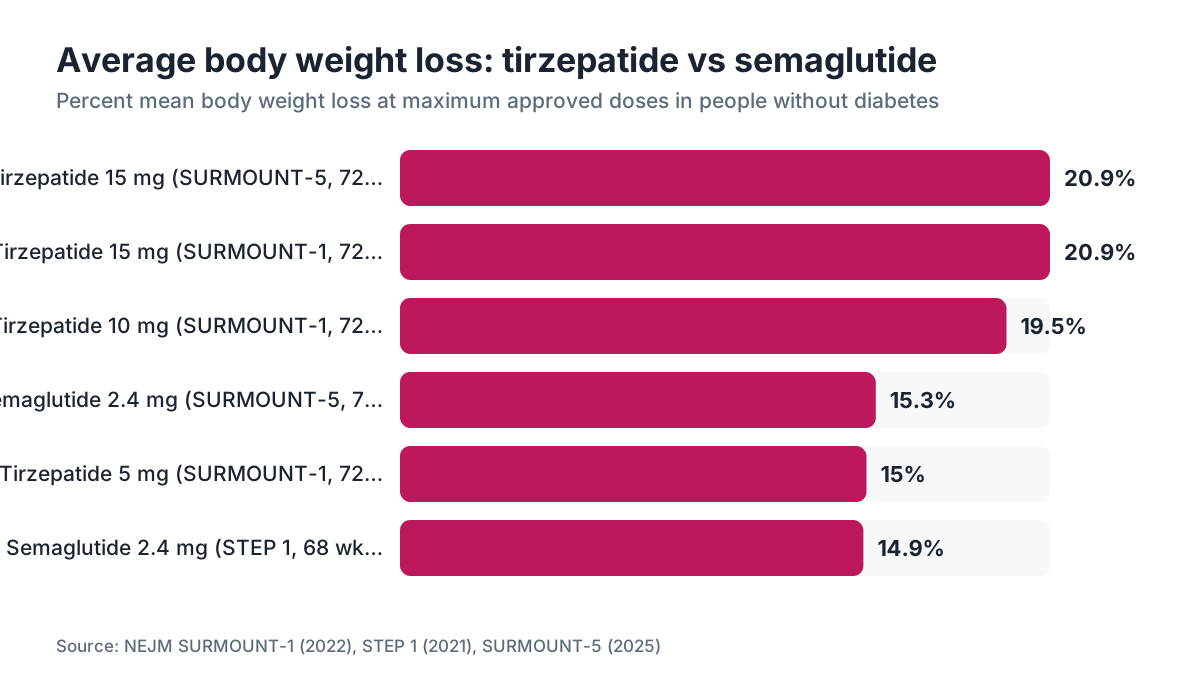
The headline number: tirzepatide produced 20.9% mean body weight loss over 72 weeks versus 15.3% for semaglutide. That is a 5.6 percentage-point difference, and it was statistically significant. Put in pounds, tirzepatide users lost about 47.4 lb on average while semaglutide users lost about 33.1 lb. [1]
Participants on tirzepatide were also more than twice as likely to lose at least 25% of their body weight compared to those on semaglutide (32% vs 16%). [1] That threshold matters clinically. Losing a quarter of your body weight is the range where obesity-related conditions like sleep apnea, joint disease, and metabolic dysfunction tend to resolve most completely.
One caveat worth naming honestly: SURMOUNT-5 enrolled both men and women, and sex-stratified subgroup results have not been widely reported in the published summary. The overall signal almost certainly applies to women, but precise female-specific effect sizes from this trial are not available in the public data as of mid-2025.
How do tirzepatide and semaglutide work differently?
Tirzepatide hits two receptors. Semaglutide hits one. That difference explains most of the weight-loss gap between them.
Semaglutide is a GLP-1 receptor agonist. It mimics glucagon-like peptide-1, a gut hormone that slows gastric emptying, quiets appetite, and signals satiety to the brain. At the 2.4 mg weekly dose marketed as Wegovy, it is approved specifically for chronic weight management. [2]
Tirzepatide adds a second mechanism. It is a dual GIP and GLP-1 receptor agonist, meaning it also activates glucose-dependent insulinotropic polypeptide (GIP) receptors. GIP receptors sit in fat tissue, the brain, the gut, and the pancreas. Turning on both receptor systems appears to cut appetite, food intake, and fat mass more than turning on GLP-1 alone, which is the most credible explanation for why tirzepatide keeps beating semaglutide on weight. [3]
The dual mechanism also matters for insulin resistance, which affects a large share of perimenopausal and postmenopausal women. Falling estrogen in perimenopause shifts fat storage toward visceral (abdominal) fat and worsens insulin sensitivity. Both drugs improve insulin resistance, but tirzepatide's GIP component appears to add benefit on glucose metabolism beyond what semaglutide manages alone. [3]
Neither drug is a stimulant. They do not spike heart rate the way older weight-loss drugs did. Both are injected under the skin once a week.
How do weight loss results compare across the major trials?
Tirzepatide's top dose lands around 20% weight loss; semaglutide lands around 15%. That pattern holds whether you look at the standalone trials or the direct comparison. Before SURMOUNT-5 existed, most clinicians read the STEP trials (semaglutide) against the SURMOUNT trials (tirzepatide). Here is what those separate programs found in people without diabetes:
| Trial | Drug | Dose | Duration | Mean weight loss | |---|---|---|---|---| | STEP 1 [4] | Semaglutide | 2.4 mg/wk | 68 wks | 14.9% | | SURMOUNT-1 [5] | Tirzepatide | 5/10/15 mg/wk | 72 wks | 15.0% / 19.5% / 20.9% | | SURMOUNT-5 [1] | Tirzepatide vs Sema | 15 mg vs 2.4 mg | 72 wks | 20.9% vs 15.3% |
The cross-trial read suggested tirzepatide's top dose was superior, and SURMOUNT-5 confirmed it under controlled conditions. STEP 1 enrolled women at roughly 75% of participants, so the semaglutide number is representative of women. [4] SURMOUNT-1 was similarly female-majority. [5]
For women specifically: in STEP 1, women lost slightly less weight than men on average, a pattern also seen in real-world data. Whether the same sex gap applies to tirzepatide is less clearly documented, but no published evidence shows tirzepatide erasing it. So the 5 to 6 percentage-point advantage of tirzepatide over semaglutide is probably real for women, though the absolute numbers for women may sit a few points below the overall trial averages.
Does tirzepatide work better for women in menopause or perimenopause?
Probably, but nobody has clean data proving it. Menopause is not a contraindication for either drug, and no trial has enrolled only menopausal women to compare the two head-to-head. So the honest answer is: we are reasoning from physiology, not from a randomized trial in this exact population.
What we do know is relevant. Estrogen decline in perimenopause and menopause shifts metabolism in ways that make weight harder to lose and easier to gain, especially around the abdomen. [11] Visceral fat is metabolically active and tightly linked to insulin resistance. Tirzepatide's dual mechanism, and its GIP-receptor activity in particular, may act more favorably on visceral fat than semaglutide does, though direct comparisons in menopausal women are not published as of mid-2025.
Women on hormone replacement therapy and a GLP-1 drug at the same time are in uncharted territory from a trial perspective. Estrogen itself improves insulin sensitivity and helps preserve lean mass. Obesity-medicine specialists generally treat HRT and GLP-1 therapy as compatible and possibly complementary, but this is expert opinion, not RCT data. If you are weighing both, reading about hormone replacement therapy and menopause separately will show you what each does on its own.
Muscle loss is a real concern with any big calorie deficit, and it gets worse after menopause when estrogen is no longer protecting lean mass. Neither drug has a strong track record of preserving muscle specifically, though both trim fat more preferentially than calorie restriction alone. Resistance training and enough protein are still your best tools during either drug's course.
What are the side effects, and are they different between the two drugs?
The side effect profiles look alike because both drugs slow gastric emptying. Nausea, vomiting, diarrhea, and constipation top the list for both. They are dose-dependent and usually worst during dose escalation, which is why both drugs ramp up slowly over months. [2][3]
In the SURMOUNT-5 head-to-head, gastrointestinal adverse events hit 79% of the tirzepatide group versus 72% of the semaglutide group. Serious adverse events were similar (7.9% vs 8.3%). Discontinuation due to adverse events ran 7.7% vs 6.3%, slightly higher for tirzepatide. [1] Tirzepatide is not dramatically worse on side effects, but it does run marginally more GI-intensive, which fits the dual mechanism.
Both drugs carry a class warning about medullary thyroid carcinoma based on rodent data, and neither should be used in people with a personal or family history of MEN2 or medullary thyroid cancer. [2][3] This warning sits on both FDA-approved labels. It is not unique to one drug.
Pancreatitis is a rare but real risk with both agents. Gallstone disease also shows up more often with rapid weight loss on either drug. Women with a prior history of pancreatitis or gallbladder disease should flag it with a prescriber before starting either medication.
One practical point. Bad nausea on semaglutide does not automatically predict the same experience on tirzepatide, or the reverse. The mechanisms overlap but are not identical, and individual response varies enough that plenty of patients tolerate one better than the other with no clear reason why.
Which drug is more expensive, and does insurance cover them?
Insurance decides this more than list price does. Brand-name pricing as of mid-2025: Wegovy (semaglutide 2.4 mg) lists at roughly $1,350 per month before insurance, and Zepbound (tirzepatide) lists at roughly $1,060 per month before insurance. [7] These numbers move frequently and vary by pharmacy, so treat them as ballparks.
Coverage is the bigger variable. Wegovy has FDA approval for chronic weight management and a longer time on the market, so it has broader (though still inconsistent) commercial insurance coverage. Zepbound got FDA approval for obesity in November 2023 and for obstructive sleep apnea in June 2024. [7] Medicare Part D coverage for weight-loss drugs stays limited by statute, though that is an active policy fight.
Compounded versions of both drugs exist because both have appeared on FDA shortage lists. Compounded semaglutide is widely discussed; you can read more at compounded semaglutide. Compounded tirzepatide has been available too, but its legal footing is shakier, and the FDA moved to take tirzepatide off the shortage list in early 2025, which means compounded versions face tighter scrutiny going forward. [8] Compounded semaglutide has more regulatory runway as of this writing, a practical edge for cost-sensitive patients.
If you have type 2 diabetes, the math changes. Ozempic (semaglutide for diabetes) and Mounjaro (tirzepatide for diabetes) both get better insurance coverage for the diabetes indication than their weight-management twins. A prescriber who writes for the diabetes indication when a patient actually has diabetes is doing nothing unusual.
Services like WomenRx that focus on GLP-1 prescribing for women can often help sort out insurance pathways and whether a compounded or brand-name option fits your situation. Worth knowing before you commit to a year of out-of-pocket cost.
Is semaglutide safer because it has been around longer?
Semaglutide has a longer track record and, right now, better cardiovascular outcome data. That is the real safety edge, and it is narrower than it sounds. The diabetes version (Ozempic) was approved in December 2017, and Wegovy for weight management followed in June 2021. [2] That is several years of real-world data across millions of patients, which gives regulators a fuller picture of rare adverse events.
Tirzepatide (Mounjaro for diabetes) was approved in May 2022, with Zepbound for obesity following in November 2023. [3] That is meaningfully less post-market experience, though the trial safety data across the SURMOUNT and SURPASS programs are extensive.
The SELECT trial, published in 2023, showed semaglutide 2.4 mg cut major adverse cardiovascular events by 20% in people with existing cardiovascular disease and overweight or obesity. [9] Tirzepatide's cardiovascular outcomes trial (SURMOUNT-MMO) is running, but results are not published as of mid-2025. So if cutting cardiovascular risk is a primary goal, semaglutide has hard outcome data behind that claim and tirzepatide does not yet, though its metabolic effects strongly suggest a benefit will show up.
For most women without established cardiovascular disease who are choosing between these drugs purely for weight, the longer safety record of semaglutide matters less than it would for someone with a complicated cardiac history. It is still a legitimate factor in shared decision-making.
Which drug should you actually choose?
There is no single right answer, but there is a logic to it.
Choose tirzepatide if your main goal is maximum weight loss, if you have significant insulin resistance or prediabetes, if your insurance covers Zepbound, or if you and your prescriber agree the dual mechanism is worth trying first.
Choose semaglutide if you have established cardiovascular disease and want a drug with proven CV outcome data, if insurance covers Wegovy but not Zepbound, if cost is the main concern and you are eyeing a compounded option, or if you have already tried and tolerated semaglutide well for another indication.
The honest reality: both drugs work well. The average patient who sticks with either one for 68 to 72 weeks loses a clinically meaningful amount of weight. Tirzepatide produces more on average, but individual response varies a lot. Some women lose 25% of their body weight on semaglutide. Some lose only 8% on tirzepatide. Genetics, gut microbiome, baseline insulin resistance, adherence, diet, and activity all shape the outcome in ways no trial average captures.
If you have already tried one and are not getting the response you expected, switching is a reasonable strategy rather than pushing the dose up indefinitely. Talk that through with your prescriber instead of walking away from GLP-1 therapy altogether.
For women in perimenopause or menopause, the weight question does not sit in a vacuum. Hormonal status, bone density (see bone density test for context on monitoring), cardiovascular risk, and quality of life all intersect. A prescriber who thinks about GLP-1s and hormones together will guide you better than one who only manages weight.
What happens when you stop either drug?
You regain most of the weight. That is the pattern with both drugs, and it is well-documented. The STEP 4 withdrawal study showed participants who stopped semaglutide regained about two-thirds of their prior weight loss within one year. [10] Tirzepatide's SURMOUNT-4 data ran parallel: participants who switched to placebo after 36 weeks of tirzepatide regained about half of their lost weight within 52 weeks, while those who kept taking tirzepatide held their loss. [5]
This is not a willpower problem. GLP-1 and GIP hormones regulate appetite at a physiological level. Remove the drug and appetite and food-reward signaling drift back toward baseline. The consensus from the Endocrine Society and obesity-medicine groups increasingly treats these drugs as long-term therapy, the way blood pressure or cholesterol medication is used. [6]
For perimenopausal and postmenopausal women, this is a planning point. If you lose 20% of your body weight on tirzepatide and then stop, you need a plan for what comes next. That might mean shifting to a lower maintenance dose, adding more intensive behavioral support, or accepting that staying on the medication indefinitely is a reasonable medical choice rather than a sign that anything went wrong.
How does semaglutide dosing compare to tirzepatide dosing?
Both drugs climb a step-up schedule built to keep side effects tolerable. Starting doses sit far below maintenance doses, and titration usually takes 16 to 20 weeks to reach the target. If you want the deeper picture on the semaglutide side, read semaglutide for weight loss.
Semaglutide (Wegovy): starts at 0.25 mg weekly, increases every 4 weeks through 0.5 mg, 1.0 mg, 1.7 mg, and lands at the 2.4 mg maintenance dose. [2]
Tirzepatide (Zepbound): starts at 2.5 mg weekly, increases every 4 weeks through 5 mg, 7.5 mg, 10 mg, 12.5 mg, with 15 mg as the maximum approved dose. [3]
Neither drug shows dramatically better tolerability during titration, though individual experience varies. Escalate too fast and the GI side effects turn brutal. Most prescribers will hold a dose for an extra 4 weeks if nausea is rough rather than stopping the drug.
For women managing semaglutide alongside hormone therapy, there is no known pharmacokinetic interaction between GLP-1 agonists and estrogen or progesterone. They can be used together. If you are on oral contraceptives or oral hormone therapy, the slower gastric emptying from a GLP-1 drug can in theory shift the absorption timing of oral medications, including oral hormones. An estrogen patch or other transdermal formulation sidesteps that entirely, because absorption goes through the skin, not the gut. This is one practical reason some prescribers prefer transdermal HRT for women also on a GLP-1.
Is there a version of this comparison that works specifically for women with PCOS?
For most women with PCOS, insulin resistance is a core feature, and both GLP-1 agonists improve insulin sensitivity and support weight loss in this group. Small studies and clinical experience suggest both drugs lower androgen levels, improve menstrual regularity, and drop fasting insulin in women with PCOS, mostly as a downstream effect of weight loss and better insulin sensitivity rather than a direct hormonal action.
Tirzepatide's dual GIP and GLP-1 mechanism may fit PCOS well given its more pronounced effect on insulin resistance and fat distribution, but no large head-to-head trial in PCOS women exists as of mid-2025. Nobody has good clean data here. The closest we have are small uncontrolled studies and subgroup analyses from the bigger trials.
For women with PCOS who are also managing perimenopause or approaching menopause age, the insulin resistance picture tends to worsen as estrogen falls further. Managing it earlier with a GLP-1 drug may deliver metabolic benefits that persist even after stopping, particularly if the weight loss holds. That is extrapolation from mechanism, not long-term outcome data, so hold it loosely.
Frequently asked questions
Which is better, semaglutide or tirzepatide, for losing weight?
Tirzepatide produces more average weight loss. In the SURMOUNT-5 head-to-head trial, tirzepatide at 15 mg caused 20.9% body weight loss versus 15.3% for semaglutide 2.4 mg over 72 weeks. That 5.6 percentage-point gap is statistically significant and clinically meaningful. Individual results vary widely, though, and some patients lose more on semaglutide than others do on tirzepatide.
Can you switch from semaglutide to tirzepatide if semaglutide stops working?
Yes, switching is a reasonable clinical strategy. There is no required washout period between them. Most prescribers restart tirzepatide at the lowest dose (2.5 mg weekly) and re-titrate, treating the switch like a fresh start rather than a continuation. If you hit a plateau on semaglutide, tirzepatide is a legitimate next step rather than escalating beyond the 2.4 mg ceiling.
Is tirzepatide approved by the FDA for weight loss?
Yes. The FDA approved tirzepatide under the brand name Zepbound for chronic weight management in adults with obesity or overweight plus a weight-related condition in November 2023. It also received approval for obstructive sleep apnea in June 2024. Tirzepatide under the brand name Mounjaro was approved earlier, in May 2022, specifically for type 2 diabetes.
Does tirzepatide cause more nausea than semaglutide?
Marginally, yes, based on SURMOUNT-5 data. GI adverse events occurred in 79% of tirzepatide participants versus 72% of semaglutide participants in that trial. Discontinuation due to side effects was 7.7% versus 6.3%. Both drugs cause similar types of side effects (nausea, diarrhea, constipation), and both ease significantly after the dose-escalation phase ends.
Is tirzepatide safe to take with hormone replacement therapy?
There is no known pharmacokinetic interaction between tirzepatide and estrogen or progesterone. Clinically, prescribers use them together regularly. One practical note: GLP-1 drugs slow gastric emptying, which can affect oral medication absorption. Women on oral hormone therapy who switch to a GLP-1 sometimes move to a transdermal estrogen product to avoid this issue. Patches are absorbed through the skin, not the gut.
How long does it take tirzepatide to start working compared to semaglutide?
Both drugs typically show noticeable appetite suppression within the first 1 to 4 weeks even at the starting dose. Meaningful weight loss (5% or more) usually appears by weeks 8 to 12 for most patients. Neither drug is immediate; both require reaching a higher therapeutic dose through a 16 to 20 week titration schedule before most of the weight-loss effect is fully active.
Which drug is cheaper, tirzepatide or semaglutide?
Brand-name list prices as of mid-2025: Zepbound (tirzepatide) runs roughly $1,060 per month and Wegovy (semaglutide) roughly $1,350 per month before insurance. Compounded semaglutide is often cheaper than either brand option, sometimes $200 to $400 monthly, but its legal availability depends on FDA shortage-list status. Compounded tirzepatide faces more uncertainty after the FDA's move to remove it from the shortage list in early 2025.
Does tirzepatide work better for insulin resistance than semaglutide?
Evidence suggests yes. Tirzepatide's GIP receptor activation adds to the glucose-lowering and insulin-sensitizing effect of GLP-1 stimulation alone. In the SURPASS diabetes trials, tirzepatide produced greater reductions in HbA1c and fasting glucose than semaglutide at approved doses. For women in perimenopause or menopause, whose insulin sensitivity often worsens as estrogen falls, this difference may be practically significant.
Will tirzepatide or semaglutide help with menopause belly fat specifically?
Both drugs reduce overall and visceral fat. Neither is targeted specifically to abdominal fat, but visceral fat, the metabolically active fat around the abdomen that accumulates in menopause, generally responds to the calorie deficit and improved insulin sensitivity both drugs create. Tirzepatide's slightly greater visceral fat reduction in some analyses may give it a modest edge, though direct comparative data in menopausal women is limited.
Can you use tirzepatide or semaglutide if you have a thyroid condition?
Both carry a black-box warning against use in anyone with a personal or family history of medullary thyroid carcinoma or Multiple Endocrine Neoplasia type 2 (MEN2). This is based on rodent carcinogenicity data; the relevance to humans is uncertain, but the FDA requires the warning. For common thyroid conditions like Hashimoto's hypothyroidism controlled with levothyroxine, neither drug is contraindicated, though your prescriber should review your full thyroid history.
Is there a cardiovascular benefit with tirzepatide like there is with semaglutide?
Semaglutide has published cardiovascular outcome trial data: the SELECT trial showed a 20% reduction in major adverse cardiovascular events in people with existing cardiovascular disease who used Wegovy. Tirzepatide's cardiovascular outcomes trial (SURMOUNT-MMO) is underway but results are not published as of mid-2025. So semaglutide currently has stronger evidence for CV risk reduction, which matters if cardiac history is a primary concern.
What happens to weight after stopping tirzepatide or semaglutide?
Most people regain significant weight after stopping either drug. SURMOUNT-4 data showed that switching from tirzepatide to placebo after 36 weeks resulted in regaining roughly half the weight lost within 52 weeks. STEP 4 data for semaglutide showed regain of about two-thirds of lost weight within a year after stopping. Both drugs appear to require long-term use to hold their effects, similar to blood pressure or cholesterol medication.
Is compounded tirzepatide still available in 2025?
Availability is uncertain. The FDA moved to remove tirzepatide from its drug shortage list in early 2025, which significantly restricts compounding pharmacies' ability to produce it under the traditional compounding exemptions. As of mid-2025, the legal landscape is contested and evolving. Compounded semaglutide has more regulatory runway currently, making it a more stable compounded option for cost-sensitive patients.
Do I need to eat differently on tirzepatide versus semaglutide?
Neither drug requires a specific diet, but both work best alongside a calorie-appropriate eating pattern. Both cut appetite substantially, and many women find they naturally gravitate toward smaller portions and lower-calorie foods without deliberate restriction. Protein intake and resistance training matter for both because preserving lean mass during rapid weight loss takes intentional effort, especially after menopause when muscle is harder to hold onto.
Sources
- NEJM Evidence, SURMOUNT-5 trial results (Jastreboff et al., 2025)
- FDA, Wegovy (semaglutide) prescribing information and approval history
- FDA, Zepbound (tirzepatide) prescribing information and approval history
- NEJM, STEP 1 trial (Wilding et al., 2021)
- NEJM, SURMOUNT-1 (Jastreboff et al., 2022) and SURMOUNT-4 withdrawal study
- Endocrine Society Clinical Practice Guidelines, Obesity Pharmacotherapy
- FDA drug approval database, Zepbound approval November 2023 and sleep apnea indication June 2024
- FDA drug shortage information, tirzepatide status update early 2025
- NEJM, SELECT cardiovascular outcomes trial (Lincoff et al., 2023)
- NEJM, STEP 4 withdrawal trial (Rubino et al., 2021)
- NAMS (North American Menopause Society), position statements on weight and menopause