Is semaglutide safe? What the evidence actually shows
TL;DR: Semaglutide is FDA-approved for type 2 diabetes (Ozempic) and chronic weight management (Wegovy) and has been studied in tens of thousands of people. For most adults it's safe. The common problems are nausea, vomiting, and lean muscle loss. Compounded versions add quality risks. Rare serious risks include pancreatitis, gallstones, and a thyroid tumor signal seen so far only in rodents.
What does FDA approval actually mean for semaglutide safety?
FDA approval means the agency read the trial data and decided benefits beat risks for a defined group of people. Semaglutide cleared that bar twice. First as Ozempic (up to 2.0 mg weekly, approved December 2017 for type 2 diabetes), then as Wegovy (2.4 mg weekly, approved June 2021 for chronic weight management in adults with obesity, or overweight plus a weight-related condition) [1][12].
Approval is not a promise of zero harm. It means regulators judged the risk-benefit picture acceptable with the evidence they had. Surveillance continues after launch, and the label changes when new signals turn up. That's why the Wegovy prescribing information today runs longer than it did in 2021.
Here's a gap worth saying out loud. The approval studies didn't exclude women in perimenopause or menopause, but they never reported results split by menopausal status. So the specific data women in midlife want doesn't really exist yet. Any honest provider will tell you that.
The Wegovy label carries a boxed warning about thyroid C-cell tumors, based on animal studies. It states plainly: "It is unknown whether Wegovy causes thyroid C-cell tumors, including medullary thyroid carcinoma (MTC), in humans." [1] The risk is real enough to warrant a warning. Human proof of MTC does not exist.
What do the large clinical trials show about semaglutide safety?
The STEP trials (Semaglutide Treatment Effect in People with Obesity) are the backbone of what we know about Wegovy. STEP 1, published in the New England Journal of Medicine in 2021, enrolled 1,961 adults without diabetes. People on 2.4 mg semaglutide lost an average of 14.9% of body weight over 68 weeks, against 2.4% on placebo [2].
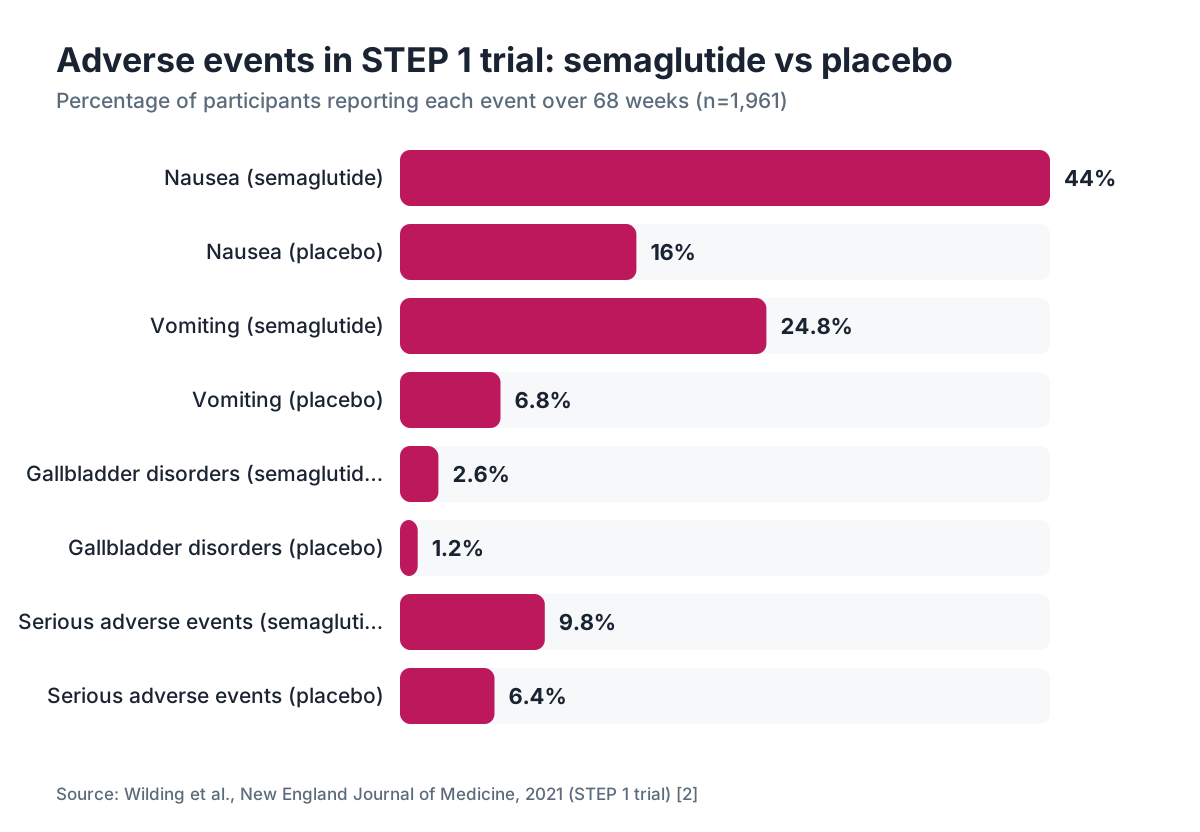
Most side effects were gut-related. Nausea hit 44% of semaglutide participants versus 16% on placebo. Vomiting showed up in 24.8% versus 6.8%. Nearly all of it was mild to moderate, peaked during dose escalation, then faded [2].
Serious adverse events landed at 9.8% on semaglutide versus 6.4% on placebo. Gallbladder disorders (gallstones, inflammation) ran 2.6% versus 1.2%. That's a difference that matters clinically. Fast weight loss from any cause raises gallstone risk, and semaglutide appears to add to it on its own [2].
The SUSTAIN program (Ozempic in diabetes) enrolled over 8,000 patients across multiple studies with consistently low rates of serious events. The cardiovascular outcomes trial, SUSTAIN-6, showed semaglutide did not raise major cardiovascular events and actually cut them in people with existing cardiovascular disease [3].
Muscle loss is the thing the trials measured badly. STEP 1 reported lean mass loss but didn't separate true muscle from other lean tissue in detail. Analyses of caloric-restriction and GLP-1 regimens suggest roughly one-third of weight lost may be lean mass, which tracks with other diet methods and is worth managing with protein and resistance training [4].
Here's how the key STEP 1 event rates stack up.
What are the most common side effects women should expect?
Nausea is the one you'll hear about most, and for good reason. Nearly half of STEP 1 participants got it [2]. It's dose-dependent, which is why titration starts at 0.25 mg per week and climbs over 16 to 20 weeks to the 2.4 mg target. Going slow genuinely helps.
Vomiting, diarrhea, constipation, and reflux all show up more on semaglutide than placebo. The worst usually hits in the first four to eight weeks after each dose bump. Smaller meals, less fatty food, and staying upright after eating take the edge off.
Hair loss (telogen effluvium) gets reported a lot by women and wasn't tracked systematically in the main trials. It's almost certainly the rapid weight loss and the physical stress of it, not the drug itself. You see the same thing after bariatric surgery. It usually clears in three to six months as your body settles.
Fatigue is common early, again mostly the calorie deficit rather than the molecule. Some women report mood changes too. The data on semaglutide and depression or anxiety is mixed. The FDA added a 2024 label note that reports of suicidal thoughts are under monitoring, with no causal link established [1].
One more thing for women using semaglutide for weight loss. Oral contraceptive absorption can drop during stretches of heavy vomiting or diarrhea. Nobody has studied this directly with semaglutide, but it's a real clinical point worth raising with your provider.
What are the serious but rare risks of semaglutide?
Pancreatitis is a labeled warning for Wegovy. Post-marketing case reports link GLP-1 receptor agonists to acute pancreatitis. The STEP and SUSTAIN trials didn't show a statistically significant rise versus placebo, but the absolute counts were tiny. Anyone with a personal or family history of pancreatitis should talk this through before starting [1].
Thyroid C-cell tumors. Rodent studies at drug exposures far above human therapeutic levels showed more C-cell tumors, including medullary thyroid carcinoma. Humans haven't reproduced this. Still, semaglutide is contraindicated in people with a personal or family history of MTC or Multiple Endocrine Neoplasia syndrome type 2 (MEN 2) [1].
Gallbladder disease. As above, STEP 1 showed 2.6% cholelithiasis on semaglutide versus 1.2% on placebo [2]. A history of gallstones is a genuine risk factor to weigh.
Severe low blood sugar is rare when semaglutide runs solo, because it triggers insulin only when glucose is high. Add insulin or a sulfonylurea and that risk becomes real.
Early observational reports tie GLP-1 agonists to higher aspiration risk under general anesthesia, likely because the drug slows gastric emptying. The American Society of Anesthesiologists now recommends pausing GLP-1 injections before elective surgery, with timing that varies by procedure [5].
Non-arteritic anterior ischemic optic neuropathy (NAION), a form of vision loss, surfaced in a 2024 case series from Mass Eye and Ear. The FDA is reviewing the signal [6]. Absolute numbers are small. It's a signal to watch, not a settled risk.
Is compounded semaglutide safe?
This is where the picture gets messier, and you deserve a straight answer. Compounded semaglutide carries risks that brand-name Wegovy and Ozempic don't.
Federal law (21 U.S.C. Sections 503A and 503B) lets compounding pharmacies make copies of FDA-approved drugs when those drugs sit on the FDA drug shortage list. Semaglutide was on that list from early 2022 until early 2025, which is why compounded versions flooded the market [7].
The FDA pulled Wegovy (2.4 mg) off the shortage list in February 2025 and Ozempic in March 2025, which set off enforcement against compounders making copies [7]. That legal ground is still moving as of mid-2025.
The core issue is simple. Compounded drugs aren't FDA-reviewed for safety, effectiveness, or manufacturing quality. The FDA issued repeated warnings about compounded semaglutide from 2023 to 2025: dosing errors (some products ran 5 to 10 times the intended concentration), contamination risk, and products listing semaglutide sodium or semaglutide acetate (salt forms not used in approved products and not proven bioequivalent) [7].
Some 503B outsourcing facilities run under current Good Manufacturing Practice (cGMP) standards, with tighter oversight than 503A pharmacies. That distinction is the whole ballgame. If you're using compounded semaglutide, where it comes from matters enormously.
The compounded semaglutide article covers sourcing red flags and the questions to ask a pharmacy. WomenRx works only with pharmacies meeting 503B or equivalent quality standards, which is the floor you should demand from any telehealth provider prescribing compounded versions.
Bottom line. If the product is genuine, the active molecule is the same as brand-name semaglutide. The molecule isn't the risk. Purity, concentration accuracy, sterility, and the missing FDA oversight are.
Is semaglutide safe for women in perimenopause or menopause?
This is one of the most common questions women 40 to 60 ask, and the honest answer is that the big trials never studied this group on its own. So there's no clean data.
What we do have from STEP is a wide age range. STEP 1 had a mean age of 46, and results held up across age subgroups. Women in their 40s and 50s were in the trials. Menopausal status just wasn't a reported variable [2].
The biology is worth knowing. Estrogen decline in perimenopause and menopause pushes fat toward the belly and visceral depots. Insulin resistance climbs. GLP-1 receptor agonists work partly by improving insulin sensitivity, so the mechanism actually fits the hormonal setup of midlife women well.
Bone loss is a legitimate worry. Rapid weight loss from any cause, semaglutide included, can speed bone mineral density loss, especially in postmenopausal women already losing bone from estrogen deficiency [8]. A 2023 study in the Journal of Clinical Endocrinology and Metabolism found GLP-1 agonists look neutral to mildly protective on bone turnover markers compared with equal calorie restriction, but that's early data [8]. If you're in menopause and considering semaglutide, a baseline bone density test plus a conversation about calcium, vitamin D, and possibly hormone replacement therapy is genuinely worth doing.
Muscle protection counts double here. Women lose skeletal muscle faster after menopause. Pairing semaglutide with enough protein (at least 1.2 g per kg of body weight per day in most guidelines) and resistance training isn't optional. It's the standard of care.
For women also on hormone replacement therapy, there are no known dangerous interactions between semaglutide and standard HRT (estradiol, progesterone). Oral estrogen mildly nudges clotting factors and carries its own considerations, but it doesn't touch semaglutide's mechanism.
How does semaglutide's safety compare to tirzepatide?
Both are weekly injectable peptides approved for weight management, and the comparison matters more now that tirzepatide (Zepbound for obesity, Mounjaro for diabetes) is everywhere. On safety, they look similar. GI side effects dominate both, gallbladder risk shows up in both, and the thyroid C-cell tumor warning sits on both labels.
The SURMOUNT-1 trial for tirzepatide (15 mg) reported GI adverse events in 85.1% of participants versus 59.4% on placebo, with nausea near 31% [9]. STEP 1 semaglutide nausea was 44%. So tirzepatide looks a touch easier on nausea by the numbers, but the trials weren't run head to head, so read that loosely.
Efficacy tilts toward tirzepatide. SURMOUNT-1 showed a mean 20.9% body weight drop at 15 mg versus 14.9% in STEP 1 semaglutide [2][9]. More weight lost means more benefit, and potentially a larger magnitude of the linked risks (gallstones, lean mass loss, bone effects).
The semaglutide vs tirzepatide article goes deeper. On safety alone, neither is clearly the safer drug. Your history (gallbladder disease, thyroid nodules, prior GI conditions) and how your body handles dose escalation should drive the pick.
Who should not take semaglutide?
The FDA label lists clear contraindications [1]. Do not use semaglutide if you have:
- Personal or family history of medullary thyroid carcinoma (MTC)
- Multiple Endocrine Neoplasia syndrome type 2 (MEN 2)
- A prior serious hypersensitivity reaction to semaglutide or any component of the formulation
Beyond the hard stops, these situations call for careful discussion and often mean semaglutide isn't the right first choice.
Personal history of pancreatitis. The label recommends stopping if pancreatitis is suspected.
Severe gastroparesis or other gastric motility disorders. Semaglutide slows gastric emptying a lot, and in someone with pre-existing gastroparesis that can be dangerous.
Pregnancy. Semaglutide is not approved in pregnancy. Because the drug has a long half-life (about 7 days), the prescribing information recommends stopping at least two months before a planned pregnancy [1].
Active or recent major depressive episode, especially with suicidal thoughts. The evidence isn't conclusive, but with FDA monitoring ongoing, close follow-up matters here.
Active or past eating disorder. Rapid appetite suppression and weight loss can destabilize someone with a history of restrictive eating or purging. It doesn't always rule out semaglutide, but it needs specialist involvement.
How do you use semaglutide safely? Practical steps that actually matter
The titration schedule exists for a reason. Start at 0.25 mg per week for the first four weeks, then step up slowly. That single habit cuts GI side effects sharply. Jumping ahead because you feel fine is a common mistake that ends in brutal nausea and early quitting.
Protein is the most important dietary move to protect lean mass. Dietitians working with GLP-1 patients usually aim for 1.2 to 1.6 g of protein per kilogram of body weight per day, spread across meals. Semaglutide kills appetite, which makes it easy to eat far below that and lose muscle fast.
Resistance training at least twice a week. Diet-induced weight loss studies consistently show that lifting cuts the share of weight lost as lean mass. There's no semaglutide-specific RCT on this yet, but the physiology is not ambiguous.
Stay hydrated. Vomiting and diarrhea drain fluid. Dehydration can trigger or worsen acute kidney injury, which has been reported with GLP-1 agonists during severe GI illness.
Tell every provider you're on it. The anesthesia interaction is real. The effect on oral drug absorption is real. Any prescriber who doesn't know you're on semaglutide is working with a blind spot.
Check labs at baseline and periodically. Lipase, thyroid function (TSH at minimum), kidney function, and a metabolic panel are reasonable. Your prescriber should be running these.
For women on semaglutide alongside hormone replacement therapy, the combination needs no special monitoring, but tracking your metabolic picture (A1c if relevant, lipids, bone density) once a year is smart medicine.
What is the long-term safety data on semaglutide?
Semaglutide as Ozempic has been on the US market since 2018. That's roughly 7 years of real-world post-marketing data for the diabetes dose, which is a real dataset.
The SELECT trial, published in the New England Journal of Medicine in 2023, followed 17,604 adults with overweight or obesity and established cardiovascular disease (no diabetes) for a mean of 34.2 months. Semaglutide 2.4 mg cut major adverse cardiovascular events by 20% versus placebo (HR 0.80; 95% CI, 0.72 to 0.90) [10]. That's the strongest long-term benefit and safety signal we have for the weight-management dose.
Long-term GI safety looks reassuring. A large Danish registry study published in Gut in 2023 followed GLP-1 receptor agonist users for up to 10 years and found no increased colorectal cancer risk, which had been a theoretical worry [11].
Rebound weight gain after stopping isn't a safety issue exactly, but it's a practical one. The STEP 1 extension found people regained about two-thirds of lost weight one year after stopping [2]. That marks semaglutide as chronic therapy for most people, which is exactly why long-term data keeps growing in value. SELECT at three years and the ongoing FLOW trial (kidney outcomes) keep adding to the record.
Nobody has 10-year data for the weight-management dose specifically. That's the honest limit. The 7-year diabetes-dose record is reassuring and the mechanism suggests no piling-up harm, but the long studies to say so definitively aren't finished.
Is semaglutide safe compared to staying at a higher weight?
This is the comparison that actually decides things clinically. Obesity is not cosmetic. It raises the risk of type 2 diabetes, cardiovascular disease, sleep apnea, several cancers, osteoarthritis, and it shortens life expectancy. SELECT's 20% drop in cardiovascular events is a real benefit against that backdrop [10].
For women specifically, excess visceral fat worsens insulin resistance and raises estrogen from adipose aromatization, which feeds estrogen-sensitive conditions like endometrial hyperplasia, and it compounds the metabolic hit of menopause. The harms of undertreated obesity are well-documented and large.
Semaglutide's risks, straight from the trial data, are mostly self-limiting GI side effects, a real but modest bump in gallbladder disease, a theoretical thyroid risk with no confirmed human evidence, and a few emerging signals that need more study. For most women with a BMI over 30 (or 27 with a weight-related condition), the math favors treatment.
That said, semaglutide isn't for everyone. Lifestyle change, behavioral therapy, and sometimes bariatric surgery stay valid alternatives or partners. The drug does the most good paired with real behavioral support, not used as a stand-in for it.
If you want structured care that handles hormones alongside GLP-1 therapy, WomenRx offers combined hormones and GLP-1 evaluation for women in midlife. The decision stays with you and your provider. Having both pieces assessed together helps you make it well.
Frequently asked questions
Is semaglutide safe for long-term use?
The longest data is roughly 7 years for the diabetes dose (Ozempic) and about 3 years for the weight-management dose (Wegovy) from the SELECT trial. SELECT showed a 20% cut in major cardiovascular events with no new serious safety signals at a mean 34.2-month follow-up. Data beyond 5 years for the 2.4 mg dose is still accumulating.
Is semaglutide safe during perimenopause?
No major trial studied women split by menopausal status. Based on STEP data (mean age 46), semaglutide appears effective with a similar safety profile in midlife women. The extra considerations are bone density protection, lean mass preservation, and how rapid weight loss interacts with already-declining estrogen. A bone density baseline is reasonable before starting.
Can semaglutide cause cancer?
Rodent studies showed more thyroid C-cell tumors at high exposures, but human evidence for medullary thyroid carcinoma has not been established. The FDA label carries a boxed warning. Large registry studies found no increased colorectal or other cancer risk. The label contraindicates semaglutide in people with a personal or family history of MTC or MEN 2.
Is compounded semaglutide as safe as Wegovy or Ozempic?
No. Compounded semaglutide carries risks brand-name products don't. The FDA does not review compounded drugs for safety, effectiveness, or manufacturing quality. From 2023 to 2025 the FDA received multiple adverse event reports from compounded semaglutide, including concentration errors and unapproved salt forms. If you use compounded versions, a 503B outsourcing facility with cGMP oversight is the minimum threshold.
Does semaglutide cause muscle loss?
Yes. Some lean mass loss happens with any significant weight loss, and semaglutide is no exception. Analyses suggest roughly one-third of weight lost on GLP-1 agonists may be lean mass. The STEP trials measured but didn't fully characterize this. Adequate protein (at least 1.2 g per kg daily) and resistance training at least twice weekly cut this effect substantially.
Can you take semaglutide with hormone replacement therapy?
No dangerous interactions between semaglutide and standard HRT (estradiol, progesterone) are known, and the combination is increasingly common in midlife women. The one practical note: oral medications, including oral HRT, can absorb differently during heavy nausea and vomiting, so transdermal HRT may be more reliable during GI-heavy dose escalation.
Is semaglutide safe if you have a thyroid condition?
It depends on the condition. Semaglutide is contraindicated in people with medullary thyroid carcinoma or MEN 2. For the far more common autoimmune thyroid conditions (Hashimoto's, Graves' in remission), there's no specific contraindication. Check TSH at baseline and monitor it, since significant weight loss can shift your thyroid medication needs.
What happens if you stop semaglutide?
Weight regain is the main consequence. The STEP 1 extension found participants regained about two-thirds of lost weight one year after stopping. Appetite returns to baseline and GI side effects resolve. There are no known dangerous withdrawal effects. For most people, semaglutide needs to continue long-term for sustained weight management, like treating other chronic conditions.
Is semaglutide safe for the heart?
Yes. In adults with cardiovascular disease, semaglutide is protective. SUSTAIN-6 showed reduced cardiovascular events in people with type 2 diabetes. The SELECT trial (2023) showed a 20% cut in major cardiovascular events in people with overweight or obesity and established cardiovascular disease, without diabetes, over about 3 years of follow-up.
Does semaglutide cause gallbladder problems?
Yes, at a modestly higher rate than placebo. STEP 1 showed gallbladder disorders (mainly gallstones and inflammation) in 2.6% of semaglutide users versus 1.2% on placebo. Rapid weight loss from any cause raises gallstone risk, and semaglutide adds to it. A history of gallstones or gallbladder disease is worth discussing explicitly before starting.
Is semaglutide safe before surgery?
The American Society of Anesthesiologists recommends pausing GLP-1 receptor agonists before elective procedures because they slow gastric emptying and raise aspiration risk under anesthesia. Timing guidance varies (commonly about one week for weekly injections before elective surgery, longer in some protocols). Tell every surgeon and anesthesiologist you use semaglutide well before any procedure.
Can semaglutide cause pancreatitis?
The STEP and SUSTAIN trials didn't show a statistically significant rise in pancreatitis versus placebo. Post-marketing case reports have linked GLP-1 agonists to acute pancreatitis, and the FDA label lists it as a warning. Anyone with a history of pancreatitis or severe hypertriglyceridemia (a pancreatitis risk factor) should discuss whether semaglutide is appropriate.
Is semaglutide safe for women over 60?
Age alone is not a contraindication. STEP trials enrolled adults across a wide age range with no meaningfully different safety profile in older subgroups. The concerns that intensify with age are bone density (accelerated loss with rapid weight loss) and muscle preservation, both more important after 60. A thorough baseline including bone density and renal function is good practice.
How does semaglutide affect bone density?
Rapid weight loss from any cause can speed bone mineral density loss, a real concern in postmenopausal women. Early data on GLP-1 agonists suggests neutral to mildly protective effects on bone turnover markers compared with equal caloric restriction alone, but it's not definitive. Baseline bone density measurement, adequate calcium and vitamin D, and resistance training are standard protective steps.
Sources
- FDA, Wegovy (semaglutide) Prescribing Information
- Wilding JPH et al., New England Journal of Medicine, 2021, STEP 1 trial
- Marso SP et al., New England Journal of Medicine, 2016, SUSTAIN-6 trial
- Cava E et al., Advances in Nutrition, 2017, preservation of lean mass during weight loss
- American Society of Anesthesiologists, guidance on GLP-1 receptor agonists and perioperative management
- FDA Drug Safety Communications, ongoing review of semaglutide and NAION signal, 2024
- FDA, information on compounding and the GLP-1 drug shortage list
- Journal of Clinical Endocrinology and Metabolism, 2023, GLP-1 agonists and bone turnover
- Jastreboff AM et al., New England Journal of Medicine, 2022, SURMOUNT-1 trial
- Lincoff AM et al., New England Journal of Medicine, 2023, SELECT trial
- Gut (journal), BMJ, 2023, registry study on GLP-1 agonists and colorectal cancer
- FDA, Ozempic (semaglutide) Prescribing Information, approval December 2017