Is nausea a symptom of perimenopause? What's actually causing it
TL;DR: Yes, nausea is a real perimenopause symptom, just quieter than hot flashes and sleep loss. Estrogen that surges and crashes unsettles the gut, the inner ear, and brain chemistry, and the result is genuine queasiness. Migraines, anxiety, broken sleep, and oral progesterone can each pile on. For most women it eases once hormones settle, on their own or with treatment.
Can perimenopause actually cause nausea?
Yes. It does for a lot of women, even the ones whose doctors never brought it up.
Perimenopause is the transition phase leading up to the final menstrual period. It usually starts in the mid-40s and runs four to eight years [1]. During that window, estrogen and progesterone don't drift politely downhill. They swing. Estrogen spikes abnormally high some months, then crashes, then climbs again with no schedule you can plan around, before finally trending down for good. Those swings drive most perimenopause symptoms, nausea included.
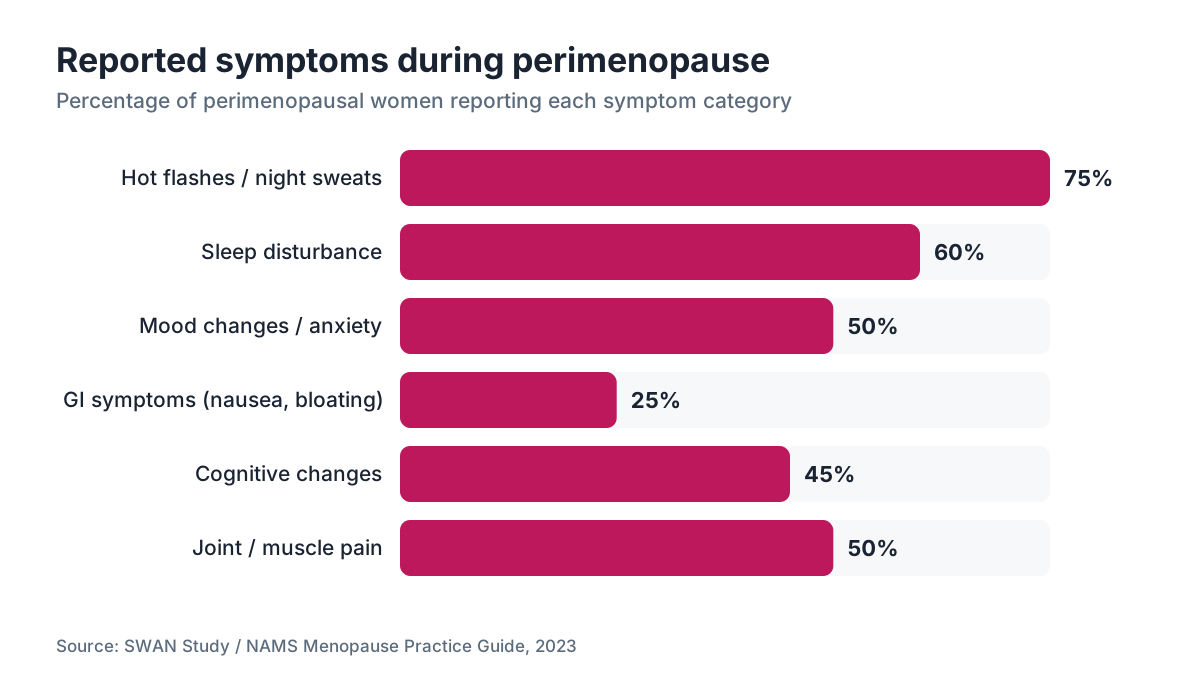
The North American Menopause Society lists gastrointestinal symptoms, including nausea, bloating, and indigestion, among the recognized features of the menopausal transition [2]. They get less airtime than hot flashes and night sweats. Clinicians who work in this space see them all the time.
Perimenopause nausea feels different from morning sickness or a stomach bug. Women describe a low-grade queasiness that's worst in the morning, sometimes with dizziness, and tightly linked to their cycle or a hot flash. It rarely ends in vomiting. And it's usually loudest during the years of heaviest hormonal chaos, not after menopause when things have gone quiet.
Why does estrogen affect the stomach at all?
Estrogen receptors line the digestive tract, in higher density than in reproductive tissue. So when estrogen levels lurch, gut motility (the rhythm at which food moves through your system) lurches with them [3]. High estrogen slows gastric emptying, food sits longer, and queasiness follows. A sudden estrogen drop does the opposite kind of damage: nausea, loose stools, cramping.
Then there's serotonin. About 90 percent of it is made in the gut, not the brain [4]. Serotonin is a main switch for nausea signals. When estrogen falls off a cliff, serotonin signaling gets scrambled and fires nausea signals up to the brain, the same pathway chemotherapy drugs hijack, just far gentler.
The inner ear matters too. Estrogen shapes fluid balance in the vestibular system, the part of the inner ear that handles balance and orientation. Hormonal shifts nudge that system off-kilter, and the body reads it as dizziness and nausea, sometimes a dead ringer for motion sickness.
And the hypothalamus, which runs the hot-flash response, sits close to the nausea circuitry in the brainstem. A hot flash is the hypothalamus misfiring its own thermostat. That misfire can poke the neighboring nausea centers. Plenty of women feel nausea land right before or during a hot flash, and this is almost certainly the reason.
How common is nausea during perimenopause?
Hard numbers are scarce, because the big perimenopause studies chased hot flashes, not stomachs. The best long-term data comes from the Study of Women's Health Across the Nation (SWAN), which tracked more than 3,300 women through the transition. SWAN found gastrointestinal symptoms noticeably more common in perimenopause than before it, though most published SWAN analyses never split out nausea as its own variable [5].
Smaller clinical surveys put the figure somewhere between 20 and 30 percent of perimenopausal women reporting nausea at some point in the transition. The range is wide because it depends on how you ask the question and whether you count migraine- and anxiety-driven nausea separately.
One pattern holds across the data. Nausea peaks in early and mid-perimenopause, the stretch of greatest hormonal volatility, and fades in late perimenopause and postmenopause as estrogen settles at a low, steady baseline.
What other perimenopause-related factors trigger nausea?
Hormonal swings are the root, but they work through several pathways at once, and many women run more than one.
Perimenopausal migraines. Estrogen withdrawal is a documented migraine trigger. The estrogen drop before a period, which turns sharper and more erratic in perimenopause, is one of the most reliable triggers for susceptible women [6]. Nausea is a core part of migraine, not a side note. If your nausea shows up with head pain, light sensitivity, or a visual aura, migraine is the immediate cause even when hormones are pulling the strings behind it.
Anxiety and the gut-brain axis. Perimenopause raises anxiety, partly because estrogen tunes the GABA and serotonin receptors that manage mood and stress [2]. Anxiety switches on the sympathetic nervous system, digestion slows, and nausea follows. Some women who never had an anxiety disorder develop one during this transition, and steady low-grade anxiety makes for steady low-grade nausea.
Sleep deprivation. Night sweats wreck sleep. Bad sleep produces nausea on its own through cortisol trouble and slowed gut motility. For many women the nausea is downstream of the sleep loss, not a direct hormone effect.
Progesterone supplementation. Oral progesterone, a common part of hormone therapy, is a real nausea trigger for some women because it hits the same central nervous system receptors as anesthesia agents [7]. If your nausea started or got worse after you began oral progesterone, that's the most likely culprit. Vaginal progesterone skips first-pass liver metabolism and often clears the nausea.
Blood sugar instability. Estrogen helps keep insulin sensitivity in line. As estrogen bounces, glucose metabolism bounces too, and a hypoglycemic dip brings nausea. That's one reason perimenopause nausea is often worst in the morning before you eat.
Thyroid changes. Thyroid disease gets more common in the 40s and 50s, and both hypothyroidism and hyperthyroidism cause nausea. Because thyroid symptoms mimic perimenopause symptoms so closely, thyroid trouble can hide for months.
How is perimenopause nausea different from other kinds of nausea?
Pattern recognition does most of the work here. Perimenopause nausea tends to:
- Run cyclical, worse around a period or during an anovulatory cycle
- Show up alongside other known perimenopause symptoms, especially hot flashes, night sweats, or irregular periods
- Peak in the morning and ease as the day goes on
- Come without vomiting most of the time
- Get worse in the years right around the final period
Nausea that comes with real vomiting, weight loss, blood in the stool, severe abdominal pain, or no hormonal context at all needs prompt evaluation no matter where a woman is in the transition. Peptic ulcer disease, gallbladder disease (more common after 40, and more common in women), gastroparesis, and early pregnancy in women still ovulating on and off all deserve ruling out.
One point worth stating plainly. Perimenopause does not protect against pregnancy. Women conceive in their mid-40s, and a pregnancy test earns its place before you pin nausea entirely on hormones, especially if periods have gone irregular rather than stopped.
| Feature | Perimenopause nausea | Morning sickness | Migraine nausea | GI illness nausea | |---|---|---|---|---| | Onset timing | Morning, hot flashes | Morning, 6-12 weeks gestation | With or after head pain | Any time | | Vomiting | Rare | Common | Sometimes | Common | | Duration | Weeks to months | Ends ~week 14 | Hours to 2 days | Hours to days | | Associated symptoms | Hot flashes, irregular cycles | Breast tenderness, fatigue | Light/sound sensitivity, aura | Fever, diarrhea | | Responds to HRT | Often yes | N/A | Estrogen stabilization helps | No |
What tests should you ask for if you have nausea during perimenopause?
A full workup makes sense when nausea is persistent and disruptive. Here's what to ask about.
FSH and estradiol. Follicle-stimulating hormone climbs as the ovaries lose responsiveness, and estradiol turns erratic. Neither test nails a perimenopause diagnosis on a single draw, because levels move so much cycle to cycle. But a high FSH (generally above 10-12 IU/L, though labs differ) with symptoms and irregular cycles fits the picture [1].
TSH. Run a thyroid-stimulating hormone test at least once to clear thyroid dysfunction off the list.
Complete metabolic panel. Checks liver, kidney, and blood sugar.
Pregnancy test. If pregnancy is possible at all, this goes first.
Migraine assessment. If nausea travels with head pain, a formal migraine diagnosis changes your options. Triptans and CGRP inhibitors treat migraine-related nausea. They do nothing for pure hormonal nausea.
If the workup comes back clean and symptoms clearly track the hormonal transition, the conversation moves from diagnosis to management.
Can hormone therapy help with perimenopause nausea?
For nausea driven straight from estrogen swings, yes, steadying estrogen usually helps. Transdermal estrogen (patch, gel, or spray) holds a flatter blood level than oral estrogen and skips the peaks and troughs thought to set off nausea [8]. The Endocrine Society's 2015 guideline backs transdermal over oral routes for women who get GI side effects on oral hormone therapy [9].
Oral estrogen can itself cause nausea, mostly in the first few weeks. Taking it with food and at night helps most women a lot. If nausea hangs on past four to six weeks on oral estrogen, moving to a transdermal estrogen patch is a sensible next step.
Progesterone form matters just as much. Oral micronized progesterone (brand name Prometrium) crosses into the central nervous system and turns sedating, sometimes nauseating, for some women [7]. Vaginal progesterone dodges the high systemic levels behind that. If you're on progesterone and feeling sick, ask specifically about changing the delivery route before you write off hormone therapy altogether.
WomenRx clinicians, who work in women's hormonal health including perimenopause care, routinely adjust hormone routes and timing to cut GI side effects, one of the most common reasons women quit an otherwise good regimen.
When the nausea is migraine-driven, blunting the hormonal trigger with a low-dose estrogen patch can cut migraine frequency and the nausea that rides with it. A 2022 analysis in Cephalalgia reported that continuous low-dose transdermal estrogen significantly reduced menstrual migraine frequency in perimenopausal women compared with placebo [6].
The full hormone replacement therapy picture, risks and benefits and all, lives in that article.
What non-hormonal approaches actually reduce nausea?
Not every woman wants hormone therapy or can use it, and even women on HRT sometimes need extra tools while levels settle.
Eat small, frequent meals. Keeping something in the stomach buffers the acid surges that empty-stomach nausea feeds on. High-protein, low-glycemic snacks beat carb-heavy ones because they hold blood sugar steadier.
Ginger. One of the few natural antiemetics with decent clinical evidence behind it. A meta-analysis in Integrative Medicine Insights found ginger (typically 500-2000 mg daily) significantly reduced nausea across several clinical groups [10]. It speeds gastric emptying and blocks serotonin receptors in the gut, both relevant to perimenopause nausea.
Acupressure. The P6 (Neiguan) point on the inner wrist shows modest but real benefit for nausea across multiple randomized trials, including cancer-related and postoperative nausea. The evidence for hormonal nausea is thin. The risk is nothing.
Fix the sleep. Treat night sweats so sleep improves, and morning nausea often drops with it. Cooling mattress pads, a cooler room, and where appropriate clonidine or low-dose paroxetine (FDA-approved for vasomotor symptoms as Brisdelle) can cut the night-sweat sleep disruption [11].
Vestibular exercises. If dizziness rides along with the nausea and points to the inner ear, vestibular rehab (simple head-movement sequences a physical therapist prescribes) can retrain the ear's sensitivity.
Anxiety treatment. When anxiety is a clear co-driver, treating it head-on with CBT, an SSRI, or an SNRI hits both the mood and the gut at once. SSRIs and SNRIs also cut hot flash frequency by 40 to 60 percent, which trims the nausea that comes with the flashes [11].
Does nausea from perimenopause ever go away on its own?
For most women, yes. Nausea driven purely by hormonal volatility tends to ease as perimenopause slides into postmenopause, because the wild estrogen swings give way to a low but steady baseline. The body adjusts. The gut and brain stop getting the erratic signals that were triggering the queasiness.
The timeline is anyone's guess. Perimenopause runs four to eight years on average, and the most symptomatic stretch is usually the two to three years right before the final period plus the year after [1]. If you're in early perimenopause, that means nausea could ride along for several more years untreated.
Women whose nausea is mostly migraine-driven sometimes find the migraines improve in postmenopause once the hormonal trigger is gone. Some see no change at all.
Here's the honest version. Waiting it out is fine if symptoms are mild and manageable. It's a bad plan if nausea is denting your daily function, dropping your weight, making you skip meals, or stacking onto other quality-of-life problems.
Should you see a doctor, or can you manage perimenopause nausea at home?
See a clinician if:
- Nausea is bad enough to interfere with eating or daily activities
- You've lost weight without trying
- You have pain in the right upper or lower abdomen (gallbladder and ovarian issues need evaluation)
- Vomiting comes with the nausea more than occasionally
- You're not sure whether you might be pregnant
- Nausea started or worsened after a new medication
- Home strategies haven't helped after four to six weeks
Home management is a reasonable first move if nausea is mild, tracks a hormonal pattern you recognize, and travels with other typical perimenopause symptoms like hot flashes and irregular cycles.
A gynecologist, an internist, or a menopause specialist all work as a starting point. NAMS runs a provider finder on its website for women who want someone with specific expertise in the transition [2]. For telehealth, platforms like WomenRx focus on this exact overlap of hormones and GI symptoms, and they can order labs and prescribe treatment without an in-person visit.
For the wider view of the menopause transition and when menopause typically starts, those pages lay out the timeline.
Can GLP-1 medications cause nausea during perimenopause, and is that a concern?
This comes up because GLP-1 receptor agonists like semaglutide and tirzepatide are increasingly used by perimenopausal women for weight management, and GLP-1s cause nausea in 20 to 44 percent of users depending on the drug and dose [12].
If a perimenopausal woman is on a GLP-1 and feeling nauseated, telling hormonal nausea apart from GLP-1 nausea is genuinely hard. Both run worse in the morning and ease as the day goes on. Both tend to fade over time. GLP-1 nausea peaks in the first four to eight weeks after starting or raising a dose, and it's dose-dependent, so slower titration knocks it down a lot.
The playbook is the same either way. Take the medication with food, keep portions small, skip high-fat meals, and give the body time. If nausea stays severe on a GLP-1, cutting the dose is fair and doesn't wreck long-term results.
For women weighing semaglutide against other options, or comparing semaglutide vs tirzepatide on tolerability, nausea rates and management differ between the two and are worth reading before you start either.
Frequently asked questions
Can perimenopause cause nausea every day?
Yes. For some women nausea is daily during the most volatile phase of perimenopause. It's usually worst in the morning and tied to low blood sugar, sleep wrecked by night sweats, or the same hormonal swings that drive hot flashes. Daily nausea that's severe or comes with vomiting deserves a medical workup to rule out other causes like thyroid disease or gallbladder problems.
Is nausea and dizziness a sign of perimenopause?
It can be. Estrogen shapes fluid balance in the inner ear, and hormonal swings can trigger vestibular disturbance that produces dizziness and nausea together, a lot like motion sickness. The combination is most common during hot flashes and in the morning. Persistent dizziness needs evaluation, since benign paroxysmal positional vertigo (BPPV) and cardiovascular changes also get more common in midlife.
Why do I feel sick to my stomach before my period during perimenopause?
The sharp estrogen drop before menstruation is a direct nausea trigger. In perimenopause that drop turns steeper and less predictable than it was in your 30s, so premenstrual nausea often worsens. It's the same mechanism that makes estrogen withdrawal a major migraine trigger. Low-dose transdermal estrogen can smooth the drop and cut premenstrual nausea for some women.
Can perimenopause cause nausea and vomiting?
Nausea is far more common than vomiting in perimenopause. Vomiting sometimes rides along with hormonally driven perimenopausal migraines. Vomiting without head pain is less typical and should prompt a look for gastrointestinal causes. Severe or repeated vomiting, especially with abdominal pain or weight loss, is not a normal perimenopause symptom and needs urgent assessment.
What helps nausea from perimenopause?
Small frequent meals, ginger (500-2000 mg daily has clinical support), and fixing the sleep disruption from night sweats all help. Stabilizing estrogen with a transdermal patch often beats oral estrogen, which adds its own GI burden. If oral progesterone is the cause, switching to vaginal delivery usually resolves it. Anti-nausea drugs like ondansetron can bridge the gap while longer-term strategies kick in.
Can stopping birth control cause nausea during perimenopause?
Yes. Women who come off hormonal contraception in their 40s often get nausea and other withdrawal symptoms as the body meets the underlying hormonal chaos of perimenopause that the pill was masking. It usually settles within one to three months. If nausea is severe or lingers after stopping, checking FSH and estradiol gives a clearer read on where you are in the transition.
Is nausea worse in early or late perimenopause?
Early to mid-perimenopause is usually the worst for nausea, because estrogen is swinging hardest then. Late perimenopause as the final period nears, and postmenopause after it, generally bring relief as estrogen settles low and steady. Women who still get migraines in postmenopause may keep the associated nausea, but most find GI symptoms improve once the transition finishes.
Can perimenopause cause morning nausea that feels like pregnancy?
Yes, and the resemblance surprises a lot of women. Both involve hormonal shifts hitting gastric motility and gut serotonin signaling. The context usually differs: pregnancy nausea starts around week six of gestation and often comes with breast tenderness, while perimenopause nausea tracks with cycle irregularity and hot flashes. Do a pregnancy test if there's any doubt, since perimenopausal women can still ovulate and conceive.
Does anxiety from perimenopause cause nausea?
Yes, directly. Anxiety switches on the sympathetic nervous system, which slows gastric emptying and sends nausea signals up the vagus nerve. Perimenopause raises anxiety risk because estrogen tunes the GABA and serotonin receptors that manage the stress response. Treating the anxiety, through therapy, SSRIs, or hormonal stabilization, often clears the nausea along with it.
Can hormone therapy make perimenopause nausea worse?
Oral estrogen can cause nausea, especially in the first weeks. Taking it with food at bedtime helps most women tolerate it. If it persists past four to six weeks, switching to transdermal estrogen usually fixes it. Oral progesterone (Prometrium) is a separate trigger in some women thanks to its CNS effects; vaginal delivery avoids that. Most HRT nausea resolves with a form or timing change rather than quitting.
How do I know if my nausea is perimenopause or something else?
Perimenopause nausea tends to be cyclical, morning-heavy, mild enough that vomiting is rare, and paired with other hormonal signs like irregular periods, hot flashes, or night sweats. Nausea from GI causes, thyroid disease, or medications usually lacks that hormonal pattern. A TSH, pregnancy test, complete metabolic panel, and a look at your full medication list should be the first steps before blaming perimenopause.
At what age does perimenopause start, and when might nausea begin?
Perimenopause most commonly begins between ages 45 and 50, though it can start in the late 30s for some women. Nausea and other GI symptoms can appear as soon as hormonal fluctuations begin, meaning some women notice them years before periods turn irregular. The average age of the final menstrual period in the US is 51, so the transition window is wide.
Sources
- The NAMS 2023 Menopause Practice: A Clinician's Guide (North American Menopause Society)
- North American Menopause Society (NAMS), Menopause symptoms overview
- Gastroenterology, Heitkemper & Chang, 'Role of ovarian hormones in the pathophysiology of functional bowel symptoms' (2009)
- Gut, Mawe & Hoffman, 'Serotonin signalling in the gut' (2013)
- SWAN (Study of Women's Health Across the Nation), University of Michigan, study overview
- Cephalalgia, Nappi et al., 'Hormones and migraines across the female lifespan' (2022)
- FDA prescribing information, Prometrium (micronized progesterone capsules)
- Menopause, Shifren & Gass for NAMS, 'The North American Menopause Society recommendations for clinical care of midlife women' (2014)
- Endocrine Society Clinical Practice Guideline, 'Treatment of Symptoms of the Menopause' (2015)
- Integrative Medicine Insights, Viljoen et al., 'A systematic review and meta-analysis of the effect and safety of ginger in the treatment of pregnancy-associated nausea and vomiting' (2014)
- FDA Drug Approval, Brisdelle (paroxetine mesylate 7.5 mg), FDA approval 2013
- New England Journal of Medicine, Wilding et al., STEP 1 trial, semaglutide 2.4 mg (2021)