Is nausea a symptom of menopause? What's actually causing it
TL;DR: Nausea is a real menopause symptom, most often during perimenopause. Falling estrogen and progesterone disrupt gut motility, stomach acid, and the body's heat control, and hot flashes can trigger waves of nausea directly. Transdermal hormone therapy, small low-fat meals, and ginger help. GLP-1 drugs can make it worse. If nausea is new or severe, rule out other causes first.
Is nausea actually a symptom of menopause?
Yes. Nausea is a recognized symptom of perimenopause and menopause, even though it never makes the headline list the way hot flashes and night sweats do. Studies estimate that 50 to 60 percent of women report gastrointestinal complaints during the menopause transition, and nausea sits inside that group [1].
Your gut is more than a digestion machine. It is densely packed with estrogen and progesterone receptors. When those hormones swing hard in perimenopause and then drop at menopause, the gut notices. Motility speeds up or slows down unpredictably, acid secretion shifts, and the vagus nerve (the long nerve connecting brain and gut) gets more reactive.
Midlife nausea is not automatically menopause, though. Thyroid disease, GERD, anxiety, medications, and early pregnancy in perimenopause all belong on the list. So does nausea from GLP-1 medications, which a lot of women in this age group now take. The first job is figuring out which bucket you are in.
Here is the pattern that points to hormones. If nausea clusters with other menopause symptoms, shows up around your period or in the weeks your cycle turns irregular, or started after a clear shift in your hormones, menopause is a plausible answer. If it is isolated, constant, and comes with weight loss, blood in stool, or repeated vomiting, get evaluated for something else first.
What hormonal changes cause nausea during perimenopause and menopause?
Three hormonal shifts do most of the work. Estrogen, progesterone, and the brain's response to falling estrogen.
Start with estrogen. Estrogen receptors line the entire gastrointestinal tract, from esophagus to colon. Estrogen sets how fast food moves through your gut and affects the sensitivity of the chemoreceptor trigger zone in the brainstem, the area that decides whether you feel sick [2]. When estrogen drops sharply, that control turns erratic. Some women get nausea from the drop itself. Others get it because gastric emptying slows and food sits in the stomach too long.
Now progesterone. It is a smooth-muscle relaxant. That is exactly why pregnancy, which floods the body with progesterone, brings nausea and reflux: the lower esophageal sphincter loosens and acid creeps up. In perimenopause, progesterone bounces around unpredictably before it finally declines, and those swings produce the same effect on a smaller scale [3].
The third one surprises people. It is the hypothalamic response to falling estrogen. The hypothalamus drives hot flashes by misfiring your internal thermostat, and that same misfiring fires up the sympathetic nervous system. Sympathetic activation shuts down digestion and can produce nausea on its own. That is why so many women feel queasy right before, during, or just after a hot flash.
Want the timeline behind these shifts? See our guide to perimenopause age and when does menopause start.
How common is nausea in perimenopause versus after menopause?
Nausea is worst during perimenopause, when hormones are swinging rather than simply low. Think seasickness: it is the motion, not the position, that makes you sick. Once estrogen settles at its new lower baseline after menopause (defined as 12 straight months without a period), many women find the nausea eases.
Research published in Menopause, the journal of the Menopause Society, found gastrointestinal symptoms including nausea, bloating, and reflux were more common in perimenopausal women than in age-matched premenopausal women, and tracked with vasomotor symptom severity [1]. The women with frequent, severe hot flashes reported the most gut trouble.
Still, some women develop nausea for the first time after menopause, often because estrogen's long-term steadying effect on gut motility is gone. Post-menopausal slowing of the colon is well documented. Gastroparesis (delayed stomach emptying) also grows more common with age, and low estrogen likely feeds into it [11].
What does menopause nausea feel like and when does it happen?
Women describe a few consistent patterns. The most common is a wave of nausea that hits right before or during a hot flash. It is usually brief, maybe one to three minutes, and fades as the flash passes. Some women feel it in the morning, like pregnancy sickness, because cortisol and estrogen fluctuations run sharpest overnight and in early morning.
Others get a low-grade queasiness that lingers through the day, sometimes with bloating, that is hard to pin to any single trigger. This kind tracks more with gastric motility and acid changes than with individual hot flashes.
Vomiting is uncommon. Menopause nausea rarely tips into throwing up for most women. If you are vomiting regularly, treat that as its own problem to investigate rather than filing it under hormones.
Timing inside your cycle matters too. In perimenopause, nausea often spikes in the luteal phase (the two weeks before your period) when progesterone normally rises but does so erratically. Plenty of women notice it worsens in the week before an irregular or missed period.
Can hormone therapy cause or relieve menopause nausea?
Both, and which one you get depends on dose, form, and timing.
Oral estrogen, especially at higher doses, causes nausea in some women. The liver processes it first and makes metabolites that stimulate nausea pathways. Nausea is listed as a common side effect in FDA labeling for oral estrogen products [4]. Taking oral estrogen with food cuts this down for most women.
Transdermal estrogen (patches, gels, sprays) skips the liver and carries a much lower risk of nausea. For women who are good HT candidates and are bothered by nausea, transdermal is usually the better starting point. Our article on the estrogen patch compares the delivery options.
Here is the relief side. When nausea is driven by hot flashes or by the hormonal chaos of perimenopause, HT that gets vasomotor symptoms under control often calms the nausea as a downstream effect. The Menopause Society 2022 Hormone Therapy Position Statement calls HT the most effective treatment for vasomotor symptoms in appropriate candidates [5].
Progesterone form matters too. Oral micronized progesterone (Prometrium) can cause nausea in some women, especially taken in the morning. Bedtime dosing almost always fixes it. Topical progesterone has lower systemic absorption and less gut impact. Read more about progesterone options if this hits home.
If you want the bigger picture on evidence and candidacy, hormone replacement therapy is the place to start.
Can GLP-1 medications make menopause nausea worse?
Yes. This comes up constantly now that so many midlife women use semaglutide or tirzepatide for weight during menopause.
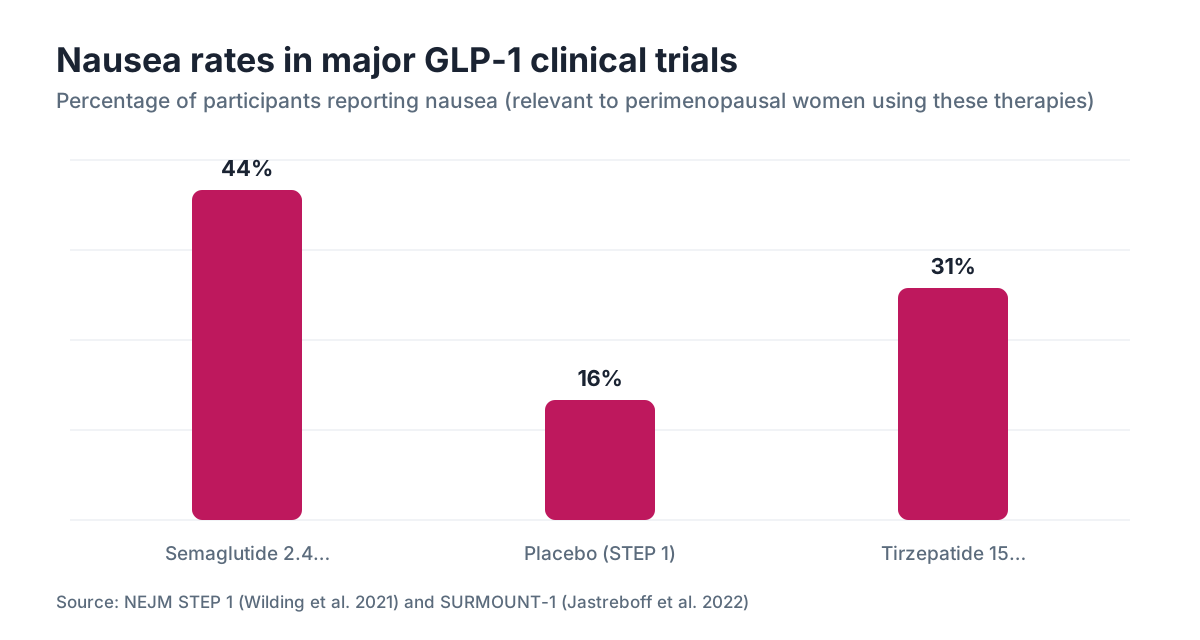
GLP-1 receptor agonists work partly by slowing gastric emptying and acting on the brainstem's nausea center, and nausea is their most common side effect. In the STEP 1 trial of semaglutide, 44 percent of participants reported nausea versus 16 percent on placebo [6]. In SURMOUNT-1 for tirzepatide, nausea hit roughly 31 percent of participants on the highest dose [7].
If you are perimenopausal or menopausal and already prone to gut sensitivity from hormone swings, a GLP-1 can stack on top of that, at least in the early weeks. The two mechanisms (hormone-driven gut dysregulation and drug-induced gastric slowing) add up.
The practical part: GLP-1 nausea is dose-dependent and usually improves a lot after the first four to eight weeks. Slow titration matters even more for menopausal women who already have a touchy gut. Evening dosing instead of morning, staying hydrated, and small low-fat meals all help. If these drugs interest you, our pieces on semaglutide for weight loss and semaglutide vs tirzepatide go deeper on who benefits.
WomenRx clinicians work with women in exactly this overlap. Adjusting the HT and GLP-1 regimen together, rather than treating each in its own silo, is usually what settles it.
What else could be causing nausea that you should not ignore?
Menopause is a fair explanation for midlife nausea, but it is a diagnosis of pattern and exclusion. Rule these out actively.
Thyroid disease. Both underactive and overactive thyroid cause nausea and other gut symptoms. Thyroid disorders peak in women between 40 and 60, the same window as perimenopause. A TSH test is cheap and fast.
GERD and gastroparesis. Reflux causes nausea in many people without classic heartburn. Gastroparesis (delayed stomach emptying) is more common in women than men and rises with age [11]. Either one gets mistaken for hormone-related nausea.
Anxiety and depression. Mood symptoms spike during perimenopause. Anxiety has strong physical effects, and chronic nausea is one of them. The gut-brain axis is real, and estrogen withdrawal can destabilize it at both ends.
Medications. Metformin, SSRIs, bisphosphonates for bone loss, and iron supplements all cause nausea. If a new prescription lines up with your nausea, start there.
Pregnancy. In perimenopause, women can and do get pregnant. Any chance of it plus new nausea means take a test.
GI pathology. Persistent nausea with any red flag (unplanned weight loss, blood in vomit or stool, severe abdominal pain, trouble swallowing) needs a gastroenterology workup, not a shrug and "it's hormonal."
Comparing causes of nausea in perimenopausal and menopausal women
The table sorts the common causes of midlife nausea, how to tell them apart, and what usually helps. None of this replaces a clinical evaluation.
| Cause | Distinguishing features | First-line approach | |---|---|---| | Hormonal (perimenopause / menopause) | Clusters with hot flashes; worse in luteal phase; improves post-menopause in many | Transdermal estrogen, lifestyle changes | | Oral estrogen / oral progesterone | Started with or after beginning HT | Switch to transdermal; take progesterone at bedtime | | GLP-1 medication | New in first 4-8 weeks of treatment; dose-related | Slow titration, small low-fat meals | | GERD | Worse after eating or lying down; may have acid taste | Dietary changes, PPI trial | | Thyroid disease | Fatigue, weight change, temperature intolerance | TSH blood test | | Anxiety | Comes with worry, racing heart, insomnia | CBT, SSRI, treat the anxiety | | Pregnancy | Missed period; morning predominance | Urine or serum hCG | | Medications (metformin, SSRIs, iron) | Timed to a new prescription | Timing change, dose adjustment, alternative drug |
What can actually help menopause-related nausea?
Let's be honest about what has evidence and what is wishful thinking.
Transdermal hormone therapy. If your nausea is hormonally driven and you are an HT candidate, this is the most direct fix. It treats the root, not the symptom, and it does not carry the liver-mediated nausea that oral estrogen can [4][5].
Dietary changes. Small, frequent, low-fat meals steady gastric activity. Ginger (about 1 gram per day in divided doses) has the best evidence of any over-the-counter remedy for nausea, including a 2014 meta-analysis in Obstetrics and Gynecology that found it beat placebo for pregnancy nausea, with a mechanism that plausibly applies more broadly [8]. Cold or room-temperature foods provoke less nausea than hot food for many people.
Treating hot flash severity. If your nausea is reliably hot-flash-linked, treating the flashes treats the nausea. Beyond HT, options with evidence for vasomotor symptoms include FDA-approved fezolinetant (Veozah), the SNRI venlafaxine, and gabapentin [5][12].
Acupuncture. A 2020 Cochrane review found acupuncture reduced chemotherapy-induced nausea more than antiemetic treatment alone in several trials, and small studies suggest benefit for menopausal symptoms broadly, though menopause-specific nausea data is thin [9]. Low risk, worth a try if you want a non-drug route.
Anti-nausea drugs. Ondansetron and promethazine work for acute nausea but are not a long-term answer for a hormonal problem. Use them for breakthrough nausea while you sort out the real driver.
Skip this. Proprietary "menopause nausea" supplement blends are not worth your money. Evidence for black cohosh specifically for nausea (as opposed to hot flashes, where it has modest data) is basically absent.
When should you see a doctor about nausea during menopause?
Go promptly if nausea comes with vomiting that stops you keeping food or fluids down, if you have lost weight without trying, if there is any blood in vomit or stool, or if the nausea is new and does not fit your usual menopause pattern.
Go soon (within a few weeks) if over-the-counter remedies and diet changes have not helped after a month, if nausea is wrecking your quality of life and no one has evaluated you for hormonal treatment, or if you suspect your current HT formulation is the culprit.
A primary care doctor or OB-GYN can order basic labs (TSH, metabolic panel, CBC) to rule out common causes, and a menopause specialist can look harder at your hormone picture. The Menopause Society (formerly NAMS) keeps a searchable directory of certified menopause practitioners at menopause.org [5].
You do not have to white-knuckle nausea for years because someone told you it is just menopause. It may well be menopause. If it is, there are real options.
The bottom line on nausea and menopause
Nausea is a legitimate menopause symptom, worst in perimenopause when hormone swings are sharpest. It comes from estrogen and progesterone receptors throughout the gut and from the sympathetic nervous system firing off during hot flashes. It gets underreported because women are told to expect the classic symptoms, and nausea is not on most printed checklists.
Midlife nausea also has a real differential. Thyroid disease, GERD, anxiety, medications, and GLP-1 use produce identical symptoms. Getting the right answer means watching pattern and timing, and sometimes running a few basic tests.
If you are managing menopause and GLP-1 therapy at once, or you want help deciding whether HT could treat your nausea at the source, WomenRx offers telehealth care built for women in this stage. The menopause overview is a good anchor for your own research.
Nausea during menopause is real. It is manageable. And you deserve care that takes it seriously.
Frequently asked questions
Is nausea a symptom of menopause or perimenopause?
Both, though nausea is more common and often worse during perimenopause, when estrogen and progesterone are swinging rather than simply low. The swings disrupt gut motility and can trigger sympathetic nervous system responses that cause nausea. After menopause, when hormones settle at a new low baseline, many women find nausea improves, though some develop it for the first time from long-term changes in gut function.
Can low estrogen cause nausea?
Yes. Estrogen receptors line the gastrointestinal tract and influence gastric motility and the sensitivity of the brain's nausea center. When estrogen drops sharply, gastric emptying can slow and the gut's sensory threshold shifts, both of which can produce nausea. This mirrors some pregnancy nausea, where the estrogen swings rather than the level alone appear to matter most.
Why do I feel nauseous during or after a hot flash?
Hot flashes fire up the sympathetic nervous system, the same system behind fight-or-flight. Sympathetic activation inhibits digestion and can trigger nausea directly through the vagus nerve and the brainstem's chemoreceptor trigger zone. If your nausea reliably follows hot flash episodes, treating the hot flashes with hormone therapy or another FDA-approved option often reduces the nausea too.
Can hormone replacement therapy cause nausea?
Oral estrogen can cause nausea in some women because it passes through the liver first, creating metabolites that stimulate nausea pathways. This is listed as a known side effect on FDA labeling. Transdermal estrogen (patches, gels, sprays) bypasses the liver and is much less likely to cause nausea. Oral progesterone taken in the morning can also cause nausea; switching to bedtime dosing usually eliminates it.
Is morning nausea in perimenopause the same as pregnancy morning sickness?
They share mechanisms. Both involve estrogen and progesterone fluctuations acting on gut receptors and the brainstem's nausea center. Perimenopause nausea tends to peak in the morning because cortisol and hormone fluctuations run sharpest overnight. That said, if you are perimenopausal and still cycling, pregnancy is possible and should be ruled out with a test before you blame morning nausea on perimenopause.
How long does menopause nausea last?
It varies widely. When nausea tracks hot flash activity, it tends to follow the duration of vasomotor symptoms, which can run four to ten years or more for many women. When it comes from hormonal swings specifically, it often eases once menopause is established and hormones stabilize. Treating the underlying driver beats waiting it out.
Can anxiety from menopause cause nausea?
Yes. Anxiety and nausea are tightly linked through the gut-brain axis, and anxiety symptoms rise during perimenopause as estrogen falls. Chronic anxiety produces persistent sympathetic nervous system activity, which suppresses normal digestion and raises nausea sensitivity. If your nausea comes with worry, a pounding heart, or disrupted sleep, treating the anxiety directly through therapy, SSRIs, or hormone therapy may resolve it.
Does semaglutide or tirzepatide make menopause nausea worse?
It can, especially in the early weeks. GLP-1 medications slow gastric emptying and act on the brain's nausea center; nausea affected 44 percent of semaglutide users in the STEP 1 trial. Women who already have hormone-related gut sensitivity may notice the two effects add up. Slow dose titration, small low-fat meals, and evening dosing cut GLP-1 nausea substantially for most women within four to eight weeks.
What home remedies actually help menopause nausea?
Ginger has the strongest non-prescription evidence, about 1 gram daily in divided doses (tea, capsules, or candied ginger). Small, frequent, low-fat, cool or room-temperature meals steady the gut. Staying upright at least 30 minutes after eating helps if reflux is part of it. Peppermint tea has anecdotal support and low risk. Most supplement blends marketed for menopause nausea lack clinical evidence and are not worth the cost.
Could my nausea during menopause be something more serious?
Possibly. Midlife nausea has a real differential: thyroid disease, GERD, gastroparesis, medication side effects, anxiety, and gastrointestinal pathology can all look like hormonal nausea. Red flags that warrant prompt evaluation include vomiting that prevents eating, unexplained weight loss, blood in vomit or stool, trouble swallowing, and nausea that fits no pattern with your other menopause symptoms. Basic labs and a clinical evaluation rule out most serious causes quickly.
Does progesterone cause nausea in menopause?
Oral micronized progesterone can cause nausea, especially taken in the morning, because it has mild sedating and smooth-muscle-relaxing effects on the GI tract. Bedtime dosing almost always resolves it. Topical progesterone has lower systemic absorption and is less likely to cause gut symptoms. If you started HT and nausea began at the same time, the progesterone formulation or timing is usually the first thing to adjust.
Is bloating different from nausea in menopause, or are they connected?
They are separate symptoms that often travel together. Both stem from estrogen and progesterone's effects on gut motility and smooth muscle tone. Bloating is mostly about gas and slow transit; nausea is about gastric sensitivity and brainstem signaling. Many women get both because the same hormonal shifts disrupt the whole GI environment at once. Treating the hormonal cause, when appropriate, tends to improve both together.
Can acupuncture help with nausea from menopause?
Possibly, with low risk. A 2020 Cochrane review found acupuncture reduced chemotherapy-induced nausea more effectively than antiemetic drugs alone in some studies, and several small trials support it for menopausal symptoms broadly. The evidence specifically for menopause-related nausea is limited but not absent. It is a reasonable add-on if you want a non-drug option, particularly for mild to moderate nausea when you prefer to avoid more medication.
What kind of doctor should I see for nausea during menopause?
Start with your primary care physician or OB-GYN for basic evaluation and to rule out thyroid disease, GERD, and medication causes. If hormones are suspected and your provider is not comfortable managing the menopause piece, the Menopause Society (menopause.org) keeps a directory of certified menopause practitioners. Telehealth options like WomenRx can also provide hormone evaluation without an in-person specialist visit.
Sources
- Menopause (journal of the Menopause Society): gastrointestinal symptoms and the menopause transition
- National Institute on Aging: What is menopause?
- Office on Women's Health (HHS): menopause symptoms and relief
- FDA: Drugs (oral estradiol prescribing information)
- Menopause Society: 2022 Hormone Therapy Position Statement
- New England Journal of Medicine: STEP 1 trial of semaglutide 2.4 mg (Wilding et al. 2021)
- New England Journal of Medicine: SURMOUNT-1 trial of tirzepatide (Jastreboff et al. 2022)
- Obstetrics and Gynecology (ACOG journal): ginger for nausea meta-analysis, 2014
- Cochrane Database of Systematic Reviews: acupuncture for nausea and vomiting, 2020
- Endocrine Society: clinical practice guidelines
- National Institute of Diabetes and Digestive and Kidney Diseases (NIDDK): gastroparesis
- ACOG: clinical guidance on management of menopausal symptoms