Is Mounjaro a semaglutide? The real difference explained
TL;DR: Mounjaro (tirzepatide) is not a semaglutide. Semaglutide (Ozempic, Wegovy) hits one receptor: GLP-1. Tirzepatide hits two: GLP-1 and GIP. That makes it a dual agonist. In the head-to-head SURMOUNT-5 trial, tirzepatide produced about 20.2% weight loss versus 13.7% for semaglutide. Both are FDA-approved and share a similar side-effect profile.
What exactly is Mounjaro and what drug class does it belong to?
Mounjaro is the brand name for tirzepatide, a once-weekly injection made by Eli Lilly. The FDA approved it in May 2022 for type 2 diabetes [1]. A higher-dose version of the same molecule, Zepbound, was approved in November 2023 for chronic weight management in adults with obesity or weight-related conditions [2].
Tirzepatide belongs to a class called dual GIP and GLP-1 receptor agonists. The word "dual" is the whole story. It switches on two hormone receptors at once, which no approved semaglutide product does.
Semaglutide (Ozempic for diabetes, Wegovy for obesity) is a GLP-1 receptor agonist. One receptor, not two. Both drug classes slow how fast your stomach empties, quiet appetite, and improve insulin sensitivity, but through overlapping rather than identical pathways. Calling Mounjaro a semaglutide is like calling ibuprofen an acetaminophen. Both ease pain. They work differently, and they are not swappable.
How does tirzepatide differ from semaglutide at the molecular level?
GLP-1 is a gut hormone your body releases after you eat. It tells the pancreas to release insulin, signals the brain that you're full, and slows food leaving your stomach. Semaglutide copies GLP-1 almost exactly. It binds GLP-1 receptors in the gut, brain, and pancreas, and it has a half-life of about one week, which is why you inject it weekly [3].
GIP (glucose-dependent insulinotropic polypeptide) is a second gut hormone. It also stimulates insulin release, but it acts on fat cells too and may amplify GLP-1's appetite signals when both receptors fire together. Animal studies suggest GIP receptor activity in the brain may strengthen the fullness effect of GLP-1, though the human picture is still being worked out.
Tirzepatide is a synthetic peptide built to bind both receptors. The FDA label calls it "a dual GIP and GLP-1 receptor agonist" [1]. Semaglutide's label calls it "a GLP-1 receptor agonist" [3]. That one word, "dual," drives most of the difference you see in the trial results.
Which drug produces more weight loss: Mounjaro or semaglutide?
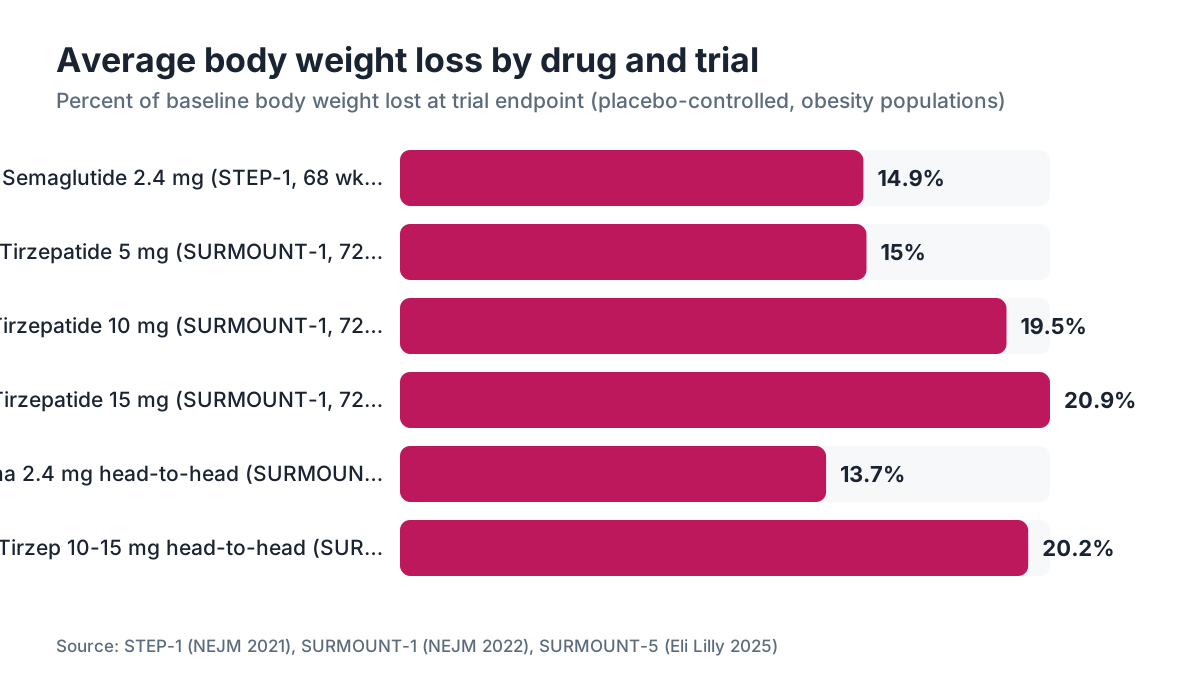
Tirzepatide wins on average weight loss. In the head-to-head SURMOUNT-5 trial, people on tirzepatide lost about 20.2% of body weight versus 13.7% on semaglutide. Here is the full picture.
The SURMOUNT-1 trial, published in the New England Journal of Medicine in 2022, tested tirzepatide 5 mg, 10 mg, and 15 mg against placebo in adults with obesity. After 72 weeks, participants lost an average of 15.0%, 19.5%, and 20.9% of body weight at those three doses [4]. In the 15 mg arm, roughly 1 in 3 people lost 25% or more of their body weight.
The STEP-1 trial, also in NEJM, tested semaglutide 2.4 mg (the Wegovy dose) against placebo in a similar group. After 68 weeks, average weight loss was 14.9% [5].
Those two trials were not run against each other, so comparing them has limits. The populations, trial lengths, and endpoints differed. The clean comparison comes from SURMOUNT-5, a head-to-head trial Eli Lilly reported in early 2025: tirzepatide 10 mg or 15 mg produced about 20.2% weight loss versus 13.7% on semaglutide 2.4 mg, a gap of roughly 6.5 percentage points [6].
Bigger average weight loss does not make tirzepatide the right pick for every woman. Individual response swings widely, insurance coverage differs, cost matters, and how you tolerate the drug is personal. Our full breakdown lives in the semaglutide vs tirzepatide comparison.
| Drug | Brand (weight loss) | Dose | Avg weight loss | Trial | |---|---|---|---|---| | Semaglutide | Wegovy | 2.4 mg/week | ~14.9% | STEP-1, 68 wks [5] | | Tirzepatide | Zepbound | 15 mg/week | ~20.9% | SURMOUNT-1, 72 wks [4] | | Tirzepatide vs Sema | Head-to-head | 10-15 mg vs 2.4 mg | ~20.2% vs 13.7% | SURMOUNT-5, 2025 [6] |
Are the FDA approvals for Mounjaro and semaglutide the same?
No, and the differences hit you in the wallet. Semaglutide has two separate FDA approvals: Ozempic (0.5 mg, 1 mg, 2 mg) for type 2 diabetes, approved 2017; and Wegovy (2.4 mg) for chronic weight management, approved 2021 [3]. Wegovy picked up a third approval in 2024 for cutting cardiovascular events in adults with obesity and known heart disease, based on the SELECT trial [10].
Tirzepatide also has two approvals: Mounjaro for type 2 diabetes (2022) [1] and Zepbound for chronic weight management (2023) [2]. As of mid-2025, tirzepatide does not carry the cardiovascular outcomes label that semaglutide has, though the trial is running.
Insurers and Medicare track these approvals closely. Plenty of plans cover Mounjaro for diabetes but flatly refuse Zepbound for weight management. The same split exists on the semaglutide side: Ozempic gets covered more often than Wegovy. If you're chasing either drug for weight loss, the brand name and the diagnosis code on your prescription decide whether your insurance pays a cent.
Do Mounjaro and semaglutide have the same side effects?
Mostly, yes. Both slow gastric emptying and act on gut receptors, so the common complaints line up: nausea, vomiting, diarrhea, constipation, and reduced appetite [1][3]. These peak during dose escalation and ease over time for most people.
Both carry an FDA boxed warning about thyroid C-cell tumors, based on rodent studies. Neither drug should be used by anyone with a personal or family history of medullary thyroid carcinoma or Multiple Endocrine Neoplasia syndrome type 2 [1][3].
Both also warn about pancreatitis, gallbladder disease (cholelithiasis and cholecystitis), low blood sugar (especially alongside insulin or sulfonylureas), and acute kidney injury from dehydration when GI side effects get bad.
One difference has shown up in real-world use and some trial subgroups: tirzepatide may cause slightly more GI trouble at its highest doses than semaglutide at its max, though the two are broadly similar. The FDA labels list similar discontinuation rates from adverse events, roughly 4 to 7 percent across trials for both [1][3].
Muscle loss is the concern nobody talks about enough. Both drugs strip lean mass along with fat, which matters most for women over 40. Strength training and enough protein belong in the plan from day one, not as an afterthought.
What do Mounjaro and semaglutide cost without insurance?
List prices move around, so treat these as ballpark. As of 2025, a monthly supply of Zepbound (tirzepatide for weight loss) lists at roughly $1,059 [2]. Wegovy (semaglutide for weight loss) lists at roughly $1,349 a month.
Ozempic and Mounjaro, the diabetes versions, tend to run close in price to their weight-loss twins. Manufacturer savings cards can slash out-of-pocket cost for people with commercial insurance, but those cards shut out Medicare and Medicaid enrollees.
Compounded tirzepatide and compounded semaglutide showed up during FDA shortage periods as cheaper options, sometimes priced between $150 and $500 a month through telehealth platforms. The FDA confirmed tirzepatide shortages resolved in late 2024 and semaglutide shortages largely resolved by early 2025, which pushed the agency to restrict compounding of these ingredients [7]. The legal ground under compounders shifted hard through 2025 and keeps moving.
If you're weighing your options through telehealth, WomenRx connects you with a prescribing clinician who can talk through which medication, at which dose, fits your actual insurance and health history.
Can women in perimenopause or menopause use either drug?
Yes. Neither tirzepatide nor semaglutide is off-limits for perimenopausal or postmenopausal women. The hormonal shifts of perimenopause and menopause often push weight gain, especially visceral belly fat, which is exactly what these drugs target.
Estrogen decline blunts the body's ability to regulate insulin sensitivity, which makes weight loss harder in the years around when menopause starts [11]. GLP-1-based drugs improve insulin sensitivity regardless of estrogen status, so they work mechanically even in a low-estrogen body.
The SURMOUNT and STEP trials enrolled large numbers of women, including women over 50, and the weight-loss effect held across age groups. What the trials did not study is how these drugs behave alongside hormone replacement therapy, though there is no known pharmacokinetic interaction between GLP-1 agonists and oral or transdermal estrogen or progesterone.
One practical worry for this age group: muscle and bone. Both drugs cause some lean mass loss. Estrogen protects bone density, and women past menopause already face higher osteoporosis risk. A bone density test before starting a GLP-1 drug is reasonable for women over 50. High-protein eating and resistance training are not optional here. They are part of the treatment.
Is one better than the other for women specifically?
The trials don't split outcomes by menopausal status cleanly, so there's no tidy answer. Here's what we have. Tirzepatide produces greater average weight loss across the general population. That may matter more for women who put on significant weight through the menopausal transition and stalled out on semaglutide.
Semaglutide has the longer safety record (approved for diabetes in 2017) and the cardiovascular outcomes data from SELECT [8]. For a woman with established heart disease and obesity, that outcomes trial is real evidence tirzepatide can't yet match.
Side-effect tolerance is personal. Some women do better on one than the other, and nausea is often the deciding factor. There's no test to predict who tolerates which drug. Starting low and titrating slowly is standard for both.
Insurance usually settles it, not the pharmacology. If your plan covers Mounjaro but not Zepbound, and you carry a diabetes diagnosis, that shapes the whole conversation. Clinicians who focus on women's metabolic health, including those at platforms like WomenRx, can work through that with you based on your situation.
Can you switch from semaglutide to tirzepatide (or vice versa)?
Yes, and prescribers do this regularly. No washout period is required between GLP-1-class drugs. Moving from semaglutide to tirzepatide, a prescriber typically starts tirzepatide at a lower dose to account for the added GIP activity and to avoid stacking GI side effects.
Some people switch because they plateaued on semaglutide and want the dual mechanism. Others switch because their coverage changed. A smaller group goes the other way, tirzepatide to semaglutide, over cost or tolerability.
There's no published trial data on outcomes in people who switch, so the guidance rests on mechanism, half-lives (about one week for both), and case experience. Your prescriber should log your response to the prior drug, your dose history, and your reasons for switching to set the starting dose on the new one.
Is Mounjaro approved for weight loss or only for diabetes?
Mounjaro (tirzepatide) is FDA-approved only for type 2 diabetes [1]. The weight-loss version of tirzepatide is a separate product, Zepbound, approved November 2023 [2].
This matters more than it sounds. When a prescriber writes "Mounjaro" for a patient without diabetes, that's off-label prescribing. It's legal, but it wrecks insurance reimbursement. Most insurers want the weight-management indication and the Zepbound brand name before they'll consider covering tirzepatide for obesity. Write Mounjaro for a non-diabetic patient and you'll usually get a denial.
For semaglutide for weight loss, the same split holds: Ozempic is the diabetes brand, Wegovy is the weight-loss brand, and they are not interchangeable for coverage even though the active ingredient is identical.
The short version: for your insurance, the brand name on the prescription matters more than the molecule inside it.
What does the research say about long-term use of these drugs?
Both drugs need ongoing use to hold the weight loss. The STEP-4 trial found that people who stopped semaglutide after 20 weeks regained about two-thirds of their lost weight within a year [5]. SURMOUNT-4 showed the same pattern for tirzepatide: most of the weight came back after stopping [4].
The SELECT trial, a cardiovascular outcomes study with over 17,000 participants and a median follow-up of 34 months, found semaglutide 2.4 mg cut major adverse cardiovascular events by 20% versus placebo in adults with obesity and known heart disease. The paper's stated conclusion was that "semaglutide at a dose of 2.4 mg per week reduced the incidence of death from cardiovascular causes, nonfatal myocardial infarction, or nonfatal stroke" [8]. That's the strongest long-term outcomes data in this class.
For tirzepatide, the SURPASS-CVOT cardiovascular outcomes trial is still running as of mid-2025. Until those results publish, the cardiovascular evidence for tirzepatide is indirect, inferred from improvements in risk factors rather than hard clinical events.
Nobody has good data past five to seven years for either drug. The studies that exist are encouraging but not the final word on lifetime safety. That honest uncertainty belongs in every informed-consent talk before you start.
Frequently asked questions
Is tirzepatide stronger than semaglutide?
By average weight loss in trials, yes. Tirzepatide produced about 20 to 21 percent weight loss at the highest dose in SURMOUNT-1, versus roughly 15 percent for semaglutide 2.4 mg in STEP-1. The 2025 head-to-head trial SURMOUNT-5 confirmed a roughly 6.5 percentage point edge for tirzepatide. 'Stronger' for you depends on tolerability, starting weight, and response, which vary a lot person to person.
Can I take Mounjaro if I'm not diabetic?
Mounjaro is FDA-approved only for type 2 diabetes. Without diabetes, the tirzepatide product to ask about is Zepbound, approved in 2023 for obesity and weight-related conditions. Prescribing Mounjaro off-label for weight loss is legal, but insurance will almost always deny it for that use. Ask your prescriber specifically for Zepbound if weight loss is the goal.
Does Ozempic contain tirzepatide?
No. Ozempic contains semaglutide, a GLP-1 receptor agonist made by Novo Nordisk. Tirzepatide is a different molecule made by Eli Lilly and sold as Mounjaro (for diabetes) or Zepbound (for weight loss). They work on overlapping but distinct receptors and are not interchangeable. The mix-up is common because both are popular injectable weight-loss drugs, but they are chemically unrelated.
Which GLP-1 drug is best for menopause weight gain?
There's no menopause-specific trial for either drug, so this rests on general evidence. Both work on the insulin-sensitizing and appetite-suppressing mechanisms that menopause disrupts. Tirzepatide produces greater average weight loss overall. Semaglutide has more long-term cardiovascular outcomes data. The best choice depends on your cardiovascular risk, your insurance coverage, and how your body responds.
Is Wegovy the same as Mounjaro?
No. Wegovy contains semaglutide 2.4 mg and is made by Novo Nordisk. Mounjaro contains tirzepatide and is made by Eli Lilly. Both are once-weekly injectables for weight management, but they are different molecules targeting different receptor combinations. Wegovy targets GLP-1 only; Mounjaro targets GLP-1 and GIP. Same therapeutic category, different drug.
Will insurance cover Mounjaro or Zepbound for weight loss?
Coverage varies widely. Most private plans with weight-management benefits cover Zepbound (tirzepatide) for obesity rather than Mounjaro, because Mounjaro's indication is diabetes. Medicare Part D does not cover weight-loss drugs as of 2025 unless the law changes. Employer plans differ by company. Confirm the exact brand name and diagnosis code with your insurer before filling a prescription.
Can you use semaglutide and tirzepatide together?
No. Combining them is not studied, not approved, and not standard practice. Tirzepatide already activates GLP-1 receptors on top of GIP receptors, so adding semaglutide (a GLP-1 agonist) would pile on GLP-1 stimulation and raise the risk of severe nausea, vomiting, and other GI effects. No prescriber would recommend both at once.
How long does it take to see results with Mounjaro versus semaglutide?
Both start working right away, but noticeable weight loss usually shows up over the first four to twelve weeks as doses climb. SURMOUNT-1 and STEP-1 both measured primary outcomes at 68 to 72 weeks, so maximum effect takes over a year. Some people see the scale move in the first month; others take longer. The titration schedule, three to six months to reach the top dose, paces the results.
Does Mounjaro affect hormones or interact with HRT?
No known pharmacokinetic interaction exists between tirzepatide and hormone replacement therapy, including estrogen patches, oral estrogen, or progesterone. GLP-1 and GIP agonists do not change estrogen metabolism or sex hormone-binding globulin in published studies. Women on HRT who also use tirzepatide or semaglutide don't appear to need dose changes for either, but dedicated research here is thin.
What happens when you stop taking Mounjaro or semaglutide?
Weight regain is the usual outcome. SURMOUNT-4 showed people who stopped tirzepatide after 36 weeks regained a large share of their weight over the next year. STEP-4 showed the same rebound for semaglutide. Both drugs suppress appetite and slow digestion only while they're in your body. Most guidelines now treat obesity as a chronic condition needing ongoing treatment, like hypertension or diabetes.
Is compounded tirzepatide the same as Mounjaro?
Compounded tirzepatide uses the same active ingredient but is not FDA-approved, not made under the same manufacturing standards, and not identical to Mounjaro. The FDA allowed compounding during shortage periods, then moved to restrict it once shortages resolved in late 2024 and into 2025. Compounded versions may cost far less but carry different quality and consistency considerations. The legal status keeps shifting.
Are there any women who should not use tirzepatide or semaglutide?
Both are contraindicated in anyone with a personal or family history of medullary thyroid carcinoma or Multiple Endocrine Neoplasia type 2. Neither should be used during pregnancy. Women with a history of pancreatitis, severe gastroparesis, or serious gallbladder disease are usually advised to avoid them or use them only with close monitoring. A full medication review with a prescriber comes first.
Which drug has better cardiovascular evidence?
Semaglutide, clearly, for now. The SELECT trial (published 2023) showed a 20 percent reduction in major cardiovascular events in high-risk adults with obesity. Tirzepatide's dedicated cardiovascular outcomes trial, SURPASS-CVOT, was still running as of mid-2025. Until it publishes, the cardiovascular case for tirzepatide rests on indirect evidence from biomarker improvements, not hard clinical events.
Is there a pill version of either drug?
Yes, for semaglutide. Rybelsus is an oral semaglutide tablet approved for type 2 diabetes at 3 mg, 7 mg, and 14 mg. It's not approved for weight management and reaches lower blood levels than the injection. No oral tirzepatide is FDA-approved as of mid-2025, though Eli Lilly has oral tirzepatide in clinical trials. For weight loss, the injectable forms of both remain standard.
Sources
- FDA, Mounjaro (tirzepatide) prescribing information
- FDA, Zepbound (tirzepatide) approval announcement, November 2023
- FDA, Wegovy (semaglutide) prescribing information
- Jastreboff AM et al., NEJM 2022, SURMOUNT-1 trial (tirzepatide)
- Wilding JPH et al., NEJM 2021, STEP-1 trial (semaglutide)
- Eli Lilly, SURMOUNT-5 head-to-head trial results, 2025
- FDA, Drug Shortages: GLP-1 receptor agonists update 2024-2025
- Lincoff AM et al., NEJM 2023, SELECT trial (semaglutide cardiovascular outcomes)
- Endocrine Society, Clinical Practice Guideline: Pharmacological Management of Obesity
- FDA, Ozempic (semaglutide) approval history
- North American Menopause Society (NAMS), Menopause Practice: A Clinician's Guide