Is HRT safe? What the evidence actually says in 2025
TL;DR: For healthy women under 60 who start hormone therapy within 10 years of menopause, the evidence is reassuring. Benefits for hot flashes, bone loss, mood, and heart health generally outweigh the risks. Old fears came largely from a misread of one study. Combined estrogen-plus-progesterone therapy carries a small breast cancer signal. Estrogen alone does not, in most analyses.
Why is there still so much confusion about HRT safety?
The short answer is one study, badly reported.
In 2002, the Women's Health Initiative (WHI) published interim results showing that combined estrogen-plus-progestin therapy raised breast cancer risk, and the trial was stopped early [1]. Headlines announced that HRT caused cancer and heart disease. Millions of women quit their prescriptions overnight. Prescribing dropped and stayed low for more than a decade.
Here's the catch. The WHI enrolled women with an average age of 63, more than a decade past their last period. Many had pre-existing cardiovascular risk factors. Using that population to make safety claims about a 50-year-old woman newly in menopause is like testing a cholesterol drug in 80-year-olds and applying the result to 55-year-olds. The design didn't match the clinical question.
Since 2002, re-analyses of WHI data, the "timing hypothesis" literature, and multiple prospective cohort studies have changed the picture substantially [2]. The North American Menopause Society (NAMS) and the Endocrine Society now both say that for healthy women under 60 who are within 10 years of menopause onset, the benefit-risk balance favors treatment for most women [3].
That is not a fringe position. It is the current consensus of every major menopause specialty society in North America and Europe.
What did the Women's Health Initiative actually find?
The WHI ran two parallel trials: one with combined estrogen-plus-progestin (for women with a uterus) and one with estrogen alone (for women who had a hysterectomy) [1].
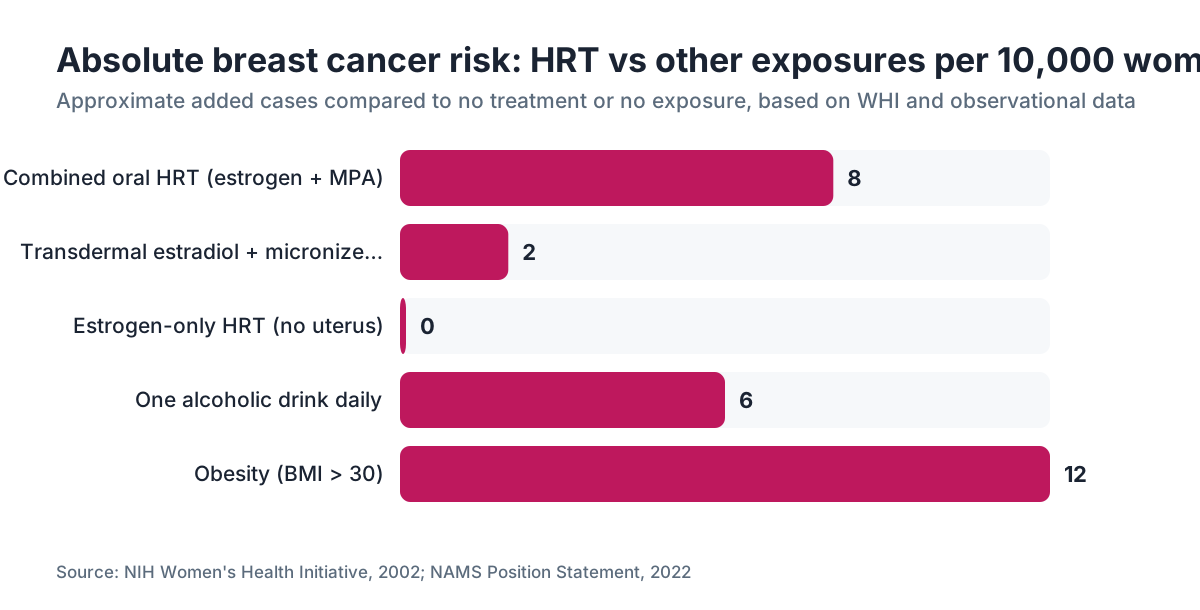
The combined arm found a hazard ratio of about 1.26 for invasive breast cancer, meaning roughly 26% higher relative risk. In absolute terms, that came to about 8 extra breast cancer cases per 10,000 women per year compared to placebo [1]. That is a real signal, and it matters. But it was attached to an older, less healthy population than most women who seek HRT.
The estrogen-only arm told a different story. Among women who took conjugated equine estrogen without progestin, breast cancer rates were actually lower than in the placebo group, though the difference was not statistically significant in every analysis [1].
Both arms showed reduced risk of hip fracture and colorectal cancer. The combined arm showed a modest increase in stroke and blood clots. The estrogen-only arm showed no increased heart disease risk in younger women, and in women aged 50 to 59 it hinted at possible cardiovascular benefit.
A 2017 re-analysis published in JAMA looked specifically at women aged 50 to 59 who started therapy within 10 years of menopause. Their results showed lower all-cause mortality compared to placebo [2]. That finding is the backbone of what's now called the "timing hypothesis" or "window of opportunity."
The WHI was not wrong. It was applied too broadly, to women for whom it was never designed to speak.
What are the real risks of HRT for most women?
Risk depends on three things: your age, how long you've been past menopause, and which type of HRT you take.
Breast cancer Combined estrogen-plus-progestogen therapy is associated with a small increase in breast cancer risk that grows with duration of use [3]. The NAMS 2022 position statement puts the absolute increase at fewer than 1 in 1,000 women per year for most regimens [3]. For context, one glass of wine daily carries a similar magnitude of breast cancer risk. Estrogen-only therapy, for women who don't have a uterus, does not appear to increase breast cancer risk and may reduce it slightly.
Micronized progesterone (sometimes called bioidentical progesterone) appears to carry a lower breast cancer signal than synthetic progestins like medroxyprogesterone acetate (MPA), based on observational data including the large French E3N cohort study, though randomized trial data are still limited [4]. Read more about progesterone to understand the difference between forms.
Blood clots (VTE) Oral estrogen increases the risk of venous thromboembolism, most sharply in the first year of use [3]. Transdermal estrogen (patches, gels, sprays) does not appear to carry this risk because it bypasses first-pass liver metabolism [5]. This is one reason many clinicians now prefer patches or gels over oral tablets. See our deeper look at the estrogen patch for specifics.
Stroke Oral estrogen is associated with a modest increase in ischemic stroke risk. Transdermal estrogen at standard doses does not appear to share that risk [5].
Heart disease For women under 60 starting HRT within 10 years of menopause, observational studies consistently show cardiovascular benefit or neutrality [2]. Starting HRT more than 10 years after menopause, especially in women with subclinical atherosclerosis, may raise cardiovascular risk. This is the core of the timing hypothesis.
Endometrial cancer Estrogen alone, in women who still have a uterus, causes endometrial hyperplasia and raises endometrial cancer risk. Adding progesterone or a progestogen removes that risk. Women with a uterus always need the progesterone component.
Who should not take HRT?
There are genuine contraindications. HRT is not right for everyone, and a clinician who tells you there's never a reason to avoid it is overselling the case.
Absolute or near-absolute contraindications include a personal history of hormone-receptor-positive breast cancer, unexplained vaginal bleeding, active liver disease, a history of estrogen-sensitive endometrial cancer (stage II or higher), and a current or recent blood clot (DVT or pulmonary embolism), particularly if it was unprovoked [3].
Relative contraindications, meaning situations that need careful individual discussion rather than automatic exclusion, include a strong family history of breast cancer (though this alone does not rule out HRT), a history of migraines with aura, hypertriglyceridemia (oral estrogen raises triglycerides, transdermal does not), and well-controlled but significant cardiovascular disease.
Women with BRCA1 or BRCA2 mutations who have had a prophylactic oophorectomy are a special case. Surgical menopause at a young age carries serious long-term risks from estrogen deficiency, and most guidelines support offering these women HRT at least until the natural age of menopause [6].
Contraindications are specific, not generic. "I have a family history of cancer" or "I heard it's risky" are not, by themselves, reasons to avoid HRT. A qualified clinician can help you think through your actual situation.
What are the proven benefits of HRT?
The safety conversation often crowds out the benefit side of the ledger. That's a problem, because the benefits are large and well-documented.
Vasomotor symptoms HRT is the most effective treatment for hot flashes and night sweats, full stop. Multiple meta-analyses show 75% or greater reduction in frequency compared to placebo [3]. Nothing else comes close. SSRIs, gabapentin, and CBT help, but not at that magnitude.
Bone health Estrogen preserves bone mineral density and reduces fracture risk. The WHI itself showed a 34% reduction in hip fracture risk with combined HRT versus placebo [1]. For women at high osteoporosis risk, that's a big deal. Check whether a bone density test is right for you before or during HRT.
Genitourinary syndrome of menopause (GSM) Vaginal dryness, urinary urgency, and painful sex affect more than half of postmenopausal women and rarely improve on their own [8]. Systemic HRT helps. Low-dose vaginal estrogen helps more for local symptoms and is considered safe even for most women with a breast cancer history.
Mood and sleep Estrogen acts on serotonin, dopamine, and GABA pathways. Women in perimenopause and early postmenopause frequently report better mood, less anxiety, and improved sleep on HRT. The data here are messier than for hot flashes, but the signal is consistent enough that major societies recognize it [3].
Cardiovascular protection (when started early) The "timing hypothesis" evidence suggests estrogen may slow atherosclerotic progression when started before significant plaque develops [2]. Women who reach menopause before age 40 carry markedly higher cardiovascular risk, and early HRT appears to reduce that excess.
Diabetes risk The WHI and several later studies found HRT reduced new-onset type 2 diabetes by roughly 20% compared to placebo [1]. This finding is underappreciated.
Does the type of HRT matter for safety?
Yes. Substantially.
The formulation, the route of delivery, and the type of progestogen all shape the risk profile. This is where a lot of women still get outdated advice.
Route of estrogen Oral estrogen passes through the liver before reaching the bloodstream, which raises clotting factors and triglycerides. Transdermal estrogen (patches, gels, sprays) delivers estrogen directly into the bloodstream and bypasses the liver. That difference appears to eliminate the VTE and stroke risk seen with oral estrogen, based on multiple observational studies [5]. For most women, transdermal is the preferred route.
Type of progestogen Conventional HRT trials, including the WHI, mostly used medroxyprogesterone acetate (MPA), a synthetic progestin. Observational evidence, particularly from the E3N cohort and the Million Women Study, suggests micronized progesterone (identical in structure to the progesterone the body makes) carries a lower breast cancer risk association and a more favorable cardiovascular profile than MPA [4][9]. Many women tolerate it better, too.
Dose Lower doses can control symptoms with fewer side effects for many women. The field has moved toward the lowest effective dose for the shortest effective duration, though "shortest" does not mean years are automatically ruled out for healthy women.
The risk numbers from the WHI were specific to oral conjugated equine estrogen combined with MPA. Transdermal estradiol plus micronized progesterone is a different product with a different risk profile. Treating them as identical isn't scientifically accurate.
For a full comparison of HRT types and formulations, see our article on hormone replacement therapy.
How does the "window of opportunity" change the risk calculation?
The timing hypothesis is probably the single most important concept in the HRT safety debate.
The core idea: estrogen's effect on the cardiovascular system depends heavily on whether your blood vessels are already healthy when you start. In early menopause, estrogen receptors on arterial walls are intact and responsive. Estrogen helps keep arteries flexible, lowers LDL, and calms inflammation at the vessel wall. Start here, and you're working with those pathways.
Wait 10 or more years past menopause, and the picture changes. Atherosclerotic plaques may have formed. Estrogen receptors downregulate. Estrogen introduced at that stage may destabilize existing plaques rather than prevent new ones. That is the most plausible reason the WHI, recruiting women who averaged 63 years old and 12 years past menopause, saw different cardiovascular results than studies of younger, recently menopausal women [2].
A 2017 JAMA analysis of WHI data stratified by age and time since menopause found that women aged 50 to 59 who started HRT showed a hazard ratio of 0.69 for all-cause mortality, meaning a 31% lower risk of death from any cause compared to placebo [2]. That number is striking, and it rarely surfaces in mainstream coverage of the WHI.
The practical message: if you're in perimenopause or within the first few years after your last period, starting HRT now is likely safer than waiting. Starting at 65 with no prior hormone use carries a different, higher risk profile for cardiovascular events.
Knowing when menopause starts can help you place yourself in that window.
What do major medical organizations say about HRT safety?
This is worth knowing, because it cuts through the noise of individual opinion.
The North American Menopause Society (NAMS) states in its 2022 position statement: "For women aged younger than 60 years or who are within 10 years of menopause onset and have no contraindications, the benefit-risk ratio is favorable for treatment of bothersome vasomotor symptoms and for those at elevated risk for bone loss or fracture" [3].
The Endocrine Society's clinical practice guideline on menopause supports HRT for symptomatic women without contraindications and emphasizes individualized decisions based on symptom burden and personal risk factors [6].
The British Menopause Society and the International Menopause Society have published similar positions.
The FDA approves estrogen-containing HRT products for hot flash treatment, prevention of postmenopausal osteoporosis, and treatment of moderate to severe genitourinary syndrome of menopause. FDA product labeling still carries a boxed warning about breast cancer, endometrial cancer, cardiovascular disease, and dementia risk, language that reflects the original WHI-era data and does not fully incorporate the timing-stratified evidence [7]. That leaves a gap between label language and current clinical guidance, and it confuses patients and some clinicians.
Every major specialty society agrees HRT is appropriate for healthy women in early menopause. The FDA label, written in a different era of evidence, has not kept up.
What about long-term HRT use? Is there a point where you should stop?
This is one of the genuinely unsettled areas, and anyone who gives you a certain answer here is overstating the evidence.
The old guidance was to use HRT for no more than 5 years and stop by age 60. That recommendation rested on the WHI data and has been walked back substantially by NAMS and others, who now say duration decisions should be individualized rather than capped arbitrarily [3].
Here's what we know. The small added breast cancer risk with combined HRT does grow with duration of use. After 5 years, the absolute numbers stay small but they aren't zero. Women with a low baseline breast cancer risk who use transdermal estrogen with micronized progesterone may have a more favorable picture than the aggregate statistics suggest.
Here's what we don't know with precision. Whether there is a specific year-count at which benefits consistently tip to net harm for healthy women on modern formulations. The honest answer is the data don't exist to say "stop at year 7" with confidence.
Many clinicians, including those at menopause specialist practices, support continuing HRT as long as the woman and her doctor review the benefit-risk picture every year, she has no new contraindications, and she still has symptoms or bone-loss risk that HRT is addressing. Stopping just because of an arbitrary timeline, in a woman doing well on therapy with no red flags, is not what current guidelines require.
The menopause article goes deeper on long-term management.
How does HRT safety compare to other common treatments women take?
Context matters enormously in medicine, and the HRT safety conversation often lacks it.
| Treatment | Breast cancer risk | VTE risk | Bone benefit | Notes | |---|---|---|---|---| | Combined oral HRT (estrogen + MPA) | Slight increase (~8 extra cases/10,000 women/yr) | Moderate increase | Strong benefit | WHI population, older women [1] | | Transdermal estradiol + micronized progesterone | Possibly lower or neutral (observational) | No significant increase | Strong benefit | Preferred modern regimen [4][5] | | Combined oral contraceptives | Slight increase (similar magnitude to HRT) | 3-4x increase over baseline | Neutral to slight negative | Used in younger women with higher baseline fertility benefit | | SSRIs (for hot flashes) | Neutral | Slight increase | Slight decrease with long-term use | Effective for mood; 50-60% reduction in flashes vs 75%+ for HRT [10] | | No treatment | Baseline | Baseline | Bone loss accelerates in early menopause | Progressive GSM, fracture risk rises |
The comparison with oral contraceptives is instructive. Pills containing 30 to 35 micrograms of ethinyl estradiol expose a woman to far more estrogen activity than standard postmenopausal HRT doses, and nobody stops prescribing them. The fear response to HRT has never been applied uniformly across the hormone prescribing landscape.
Telehealth providers like WomenRx can connect you with clinicians who specialize in individualized menopause care and can run through your personal risk profile rather than applying population averages to your specific situation.
How should you and your doctor decide if HRT is right for you?
The decision is genuinely personal, and the science supports individualization.
Start by being honest about your symptom burden. Hot flashes that break your sleep every night and drag down your work, relationships, and mental health are a different thing from mild warmth a few times a week. The first is a real quality-of-life problem, and HRT for it is hard to argue against.
Next, build an honest picture of your risk factors. Do you have a personal or strong family history of hormone-receptor-positive breast cancer? Have you had an unprovoked blood clot? Do you smoke? Are you significantly overweight? Each of these shifts the math.
Ask specifically about transdermal versus oral estrogen, and about micronized progesterone versus synthetic progestins. These are not interchangeable. If your clinician doesn't make that distinction, find one who does.
Get a baseline. Know your blood pressure and lipids, and for women over 50 or with risk factors, your bone density via a bone density test. Some women start HRT and discover they also had osteopenia that the therapy will help.
Review annually. Symptom control, side effects, any new health events, and changing risk factors all warrant revisiting the decision at least once a year.
And have the conversation you actually need, not the one shaped by 2002 headlines. The evidence has moved a long way. A clinician working from 20-year-old assumptions isn't giving you current care.
Frequently asked questions
Is HRT safe for women in their 50s?
For most healthy women in their 50s who are within 10 years of menopause, yes. NAMS and the Endocrine Society both say the benefit-risk balance favors this group. The risk factors to weigh are a personal history of breast cancer, blood clots, or active liver disease. Absent those, the evidence supports HRT for symptom relief and bone protection.
Does HRT cause breast cancer?
Combined estrogen-plus-progestin HRT is associated with a small increase: roughly 8 extra cases per 10,000 women per year in the WHI study. Estrogen-only therapy (for women without a uterus) does not appear to increase breast cancer risk and may reduce it slightly. Transdermal estrogen with micronized progesterone appears to carry a lower risk than oral estrogen with synthetic progestins, based on observational data.
Is HRT safe after 60?
Starting HRT after 60, particularly more than 10 years past menopause, carries higher cardiovascular risk than starting earlier. Most guidelines recommend against initiating HRT for the first time in women over 60 without specific clinical justification. Women who started before 60 and are doing well may continue under annual review. This is one area where your start date matters a great deal.
How long is it safe to take HRT?
There is no universal cut-off. NAMS no longer recommends stopping HRT at an arbitrary 5-year limit. Duration decisions should be individualized based on ongoing symptom burden, bone risk, and annual reassessment of the benefit-risk balance. The small added breast cancer risk with combined HRT does grow over time, so duration is part of the conversation, but it isn't a simple countdown.
Is transdermal HRT safer than pills?
The evidence strongly suggests yes for blood clot and stroke risk. Oral estrogen raises clotting factors through first-pass liver metabolism; transdermal estrogen bypasses the liver and does not appear to raise VTE or stroke risk. For breast cancer risk, the evidence is less clear-cut, though micronized progesterone combined with transdermal estradiol appears more favorable than the oral estrogen-plus-MPA combination used in the WHI.
Is bioidentical HRT safer than conventional HRT?
Micronized progesterone, structurally identical to the progesterone your body makes, does appear to have a more favorable safety profile than synthetic progestins like MPA, based on observational studies. For estrogen, bioidentical transdermal estradiol and conventional conjugated equine estrogen appear similarly safe at comparable doses. The term 'bioidentical' is broad and sometimes applied to custom-compounded products that lack rigorous safety data.
Can women with a history of blood clots take HRT?
A prior provoked blood clot (from surgery or immobility) is a relative contraindication that warrants careful discussion. An unprovoked DVT or pulmonary embolism is a near-absolute contraindication to oral estrogen. Transdermal estrogen does not appear to raise clot risk meaningfully, so some hematologists and menopause specialists support carefully monitored transdermal use even in women with prior VTE, depending on cause and whether they're anticoagulated.
Is it safe to start HRT 10 years after menopause?
This is where the risk-benefit balance shifts. Starting HRT more than 10 years after menopause, especially without prior use, is associated with higher cardiovascular risk than starting early. Most guidelines do not recommend initiating HRT anew in this group without symptoms that clearly outweigh the risks. Vaginal estrogen for GSM is generally considered safe at any age.
Does HRT protect against osteoporosis?
Yes, and this is one of HRT's most consistent benefits. The WHI found a 34% reduction in hip fracture risk with combined HRT versus placebo. Estrogen directly inhibits osteoclast activity, slowing bone breakdown. Women who stop HRT experience accelerated bone loss for one to two years afterward. For women at high fracture risk, this benefit weighs heavily in the decision.
Is HRT safe if you have a BRCA mutation?
Women with BRCA mutations who have had a prophylactic bilateral oophorectomy before natural menopause have a different risk equation. Surgical menopause before age 45 sharply raises cardiovascular and osteoporosis risk. Most guidelines, including NAMS guidance, support offering these women HRT at least until the average age of natural menopause, around 51 to 52, because the risks of untreated early menopause outweigh the HRT risk.
Does HRT cause weight gain?
No good evidence supports the idea that HRT causes meaningful weight gain. Some women notice water retention in the first few weeks, particularly on oral estrogen, which often resolves. Menopause itself brings body composition changes and fat redistribution to the abdomen, and HRT may actually blunt that shift. Multiple randomized trials found no significant difference in weight between HRT and placebo groups.
Is vaginal estrogen safe for women who can't take systemic HRT?
Yes. Low-dose vaginal estrogen, in cream, ring, or tablet form, is absorbed minimally into the bloodstream. NAMS and the American College of Obstetricians and Gynecologists consider it safe for most women, including many with a history of breast cancer, when used at standard doses. It's the first-line treatment for genitourinary syndrome of menopause when systemic HRT isn't appropriate.
What is the youngest age at which HRT is appropriate?
Women who experience premature menopause (before age 40) or early menopause (before 45), whether natural or surgical, are candidates for HRT from the time of diagnosis. In these women, HRT reduces the excess cardiovascular, bone, cognitive, and sexual health risks that come with early estrogen loss. The risk-benefit math in this group is strongly in favor of treatment.
Is HRT safe if you have migraines?
Migraines with aura are a relative contraindication to high-dose oral estrogen because of a small added stroke risk. Transdermal estrogen at low steady-state doses may actually reduce migraine frequency in some women by avoiding the estrogen swings that trigger attacks. This needs individual evaluation. Migraines without aura are generally not a barrier to HRT, especially transdermal.
Sources
- National Heart, Lung, and Blood Institute, Women's Health Initiative Program
- JAMA 2017: Manson et al., Menopausal Hormone Therapy and Long-term All-cause and Cause-specific Mortality
- North American Menopause Society, 2022 Hormone Therapy Position Statement
- E3N Cohort Study, Fournier et al., Breast Cancer Risk and Different Types of Hormone Replacement Therapy in the E3N Cohort
- BMJ 2015: Canonico et al., Postmenopausal Hormone Therapy and Risk of Stroke
- Endocrine Society Clinical Practice Guideline, Treatment of Symptoms of the Menopause
- FDA, Menopause and Hormones drug information
- Office on Women's Health, U.S. Department of Health and Human Services, Menopause section
- Million Women Study, Beral et al., Breast Cancer and Hormone-replacement Therapy in the Million Women Study, The Lancet 2003
- NAMS, Nonhormonal Management of Menopause-Associated Vasomotor Symptoms, 2015 Position Statement