Is hormone replacement therapy covered by insurance?
TL;DR: Most private plans cover FDA-approved hormone replacement therapy, though copays, formulary tiers, and prior-authorization rules vary. Medicare Part D covers oral and transdermal estrogen and progesterone prescribed for menopause. Without insurance, HRT runs roughly $30 to $300 a month depending on the formulation. Compounded bioidentical hormones are almost never covered by any plan.
What does hormone replacement therapy actually cost without insurance?
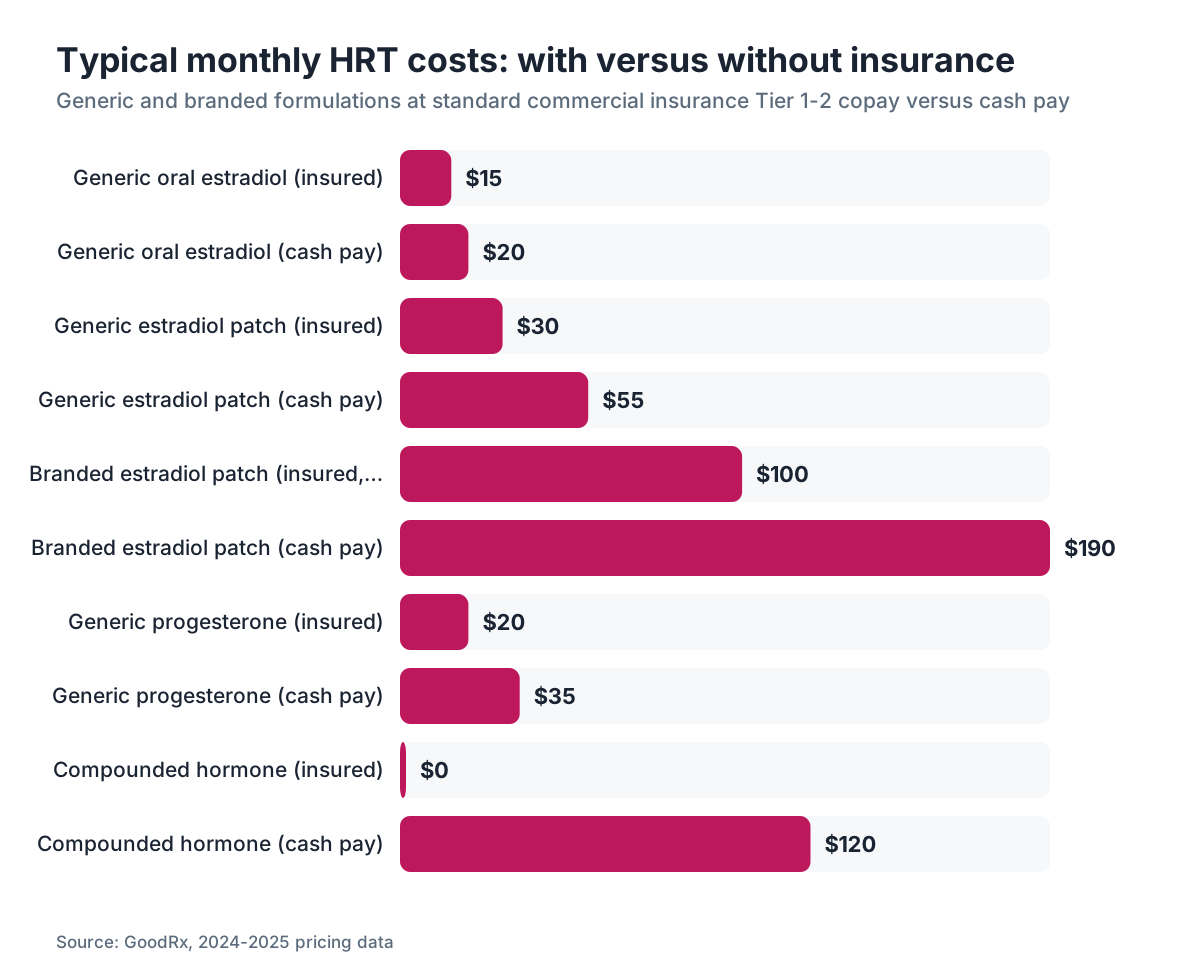
Without any coverage, HRT runs from about $30 a month for generic oral estradiol to well over $300 for a branded patch or vaginal ring. The number depends on the formulation and your pharmacy. That range sets the stakes for everything insurance does or doesn't do for you. [1]
Generic oral estradiol 1 mg tablets are the cheapest option. They cost $10 to $25 per month at major pharmacy chains using a discount coupon. Transdermal patches (estradiol 0.05 mg twice weekly) run $30 to $80 per month in generic form. The branded version of that same patch can cost $120 to $250 out of pocket. Vaginal estrogen creams are generally $40 to $100 monthly in generic. Branded Premarin cream is often $200 or more without coverage.
Progesterone adds to the tab. Generic micronized progesterone 100 mg capsules cost about $25 to $60 monthly. A combination product like Combipatch runs $80 to $180 per month without insurance. [1]
Those numbers matter because they tell you what your plan is actually worth. A plan that moves you from a $180 patch to a $35 copay earns its keep. A plan that makes you fail two cheaper drugs before covering the one your doctor wants feels more like an obstacle than a benefit.
For a closer look at the available formulations, see our guide to hormone replacement therapy.
Does insurance cover hormone replacement therapy?
Yes. Most private plans cover at least some HRT. But "some" is doing a lot of work in that sentence, and the fine print decides what you actually pay.
Under the Affordable Care Act, insurers selling non-grandfathered plans on the individual and small-group markets must cover preventive services rated "A" or "B" by the U.S. Preventive Services Task Force without cost-sharing. The USPSTF gives HRT a "C" recommendation for preventing chronic conditions in menopausal women. That means ACA plans are not required to cover it for free. [2] So your plan almost certainly lists HRT drugs on its formulary, and you almost certainly owe something at the counter, whether a copay, a coinsurance percentage, or both.
Here's what that looks like in practice. FDA-approved oral estrogens, transdermal patches, rings, and gels sit on the formularies of nearly every large commercial plan. Generic versions usually land on Tier 1 or Tier 2, so your copay is likely $10 to $45 per fill. Branded products land on Tier 3 or Tier 4, where a 30-day supply can still cost $60 to $150 even with coverage. [1]
Prior authorization is common for branded formulations, combination products, and testosterone prescribed for women. Your doctor may need to document that you tried and failed a lower-tier drug first, or submit a letter of medical necessity.
One thing catches women off guard again and again: coverage for the hormones doesn't mean coverage for the monitoring labs, bone density tests, or specialist visits that go with them. Those bill separately. Here's what to expect from a bone density test if your doctor recommends one.
Does Medicare cover hormone replacement therapy?
Medicare covers HRT, but the coverage is split across its different parts, and plenty of women don't realize they have real benefits until they ask.
Medicare Part D, the prescription drug benefit, covers FDA-approved hormone therapies prescribed for a medically accepted indication. That includes oral estradiol, conjugated estrogens (Premarin), transdermal estradiol patches, estradiol gels like EstroGel, vaginal estrogen products, and micronized progesterone (Prometrium). Which specific drugs are covered depends on your plan's formulary. You can check yours with the Medicare Plan Finder at medicare.gov. [3]
Out-of-pocket costs under Part D changed on January 1, 2025, thanks to the Inflation Reduction Act. The law caps annual out-of-pocket spending on Part D drugs at $2,000 per beneficiary starting in 2025. For most women on HRT, whose monthly drug costs are modest, this cap won't be the deciding factor. But it does mean a bad year can't wipe you out. [4]
Medicare Part B doesn't cover most outpatient prescriptions you pick up at a pharmacy. The exception is drugs a provider administers in a clinical setting, which doesn't apply to the oral and topical HRT most women use. Original Medicare (Parts A and B) does cover bone density tests every 24 months for women at increased risk of osteoporosis, and that ties directly into the HRT conversation. [3]
Medicare Advantage (Part C) plans must cover everything original Medicare covers, and most bundle in Part D drug benefits. Some Advantage plans get better formulary placement for specific HRT drugs than standalone Part D plans do. If HRT is a real ongoing cost for you, comparing plans during open enrollment (October 15 through December 7 each year) is worth the hour.
Medicaid coverage of HRT varies by state. Every state covers some hormonal medications, but formulary depth, prior authorization rules, and cost-sharing differ a lot. Checking your state's Medicaid drug formulary is the only reliable way to know what you'll owe.
What HRT formulations are most likely to be covered?
Not all hormone therapies sit equally on insurance formularies. Knowing which ones are reliably covered helps you and your doctor make a practical prescribing decision instead of a hopeful one.
Generic oral estradiol tablets are the most consistently covered formulation across private insurance, Medicare Part D, and Medicaid. They're cheap to make, everywhere, and backed by decades of safety and efficacy data. If cost is your main concern, this is usually the friendliest starting point.
Generic transdermal estradiol patches (Sandoz or Mylan versions) are also well covered at Tier 1 or Tier 2 on most formularies. The branded patches, Vivelle-Dot and others, are covered less consistently and often trigger step therapy. See our piece on the estrogen patch for a formulation comparison.
Vaginal estrogen products (cream, ring, tablet) are usually covered but sometimes need prior authorization, because the prescriber has to document the indication (atrophic vaginitis, genitourinary syndrome of menopause) clearly in the chart.
Micronized progesterone (Prometrium) is well covered in generic form. Synthetic progestins like medroxyprogesterone acetate (Provera) are Tier 1 on almost every plan.
Testosterone for women is the wild card. No testosterone product has FDA approval specifically for women, so prescribing it for female hypoactive sexual desire disorder or any other indication is off-label. Most commercial insurers and Medicare Part D plans won't cover testosterone for women without heavy documentation, and many deny it flat out. [5] Women who use it usually pay cash.
Here's a quick comparison:
| Formulation | Generic available? | Typical tier | Prior auth common? | |---|---|---|---| | Oral estradiol | Yes | Tier 1 | Rarely | | Generic estradiol patch | Yes | Tier 1-2 | Sometimes | | Branded estradiol patch | No (brand) | Tier 3-4 | Often | | Estradiol gel | Yes (some) | Tier 2-3 | Sometimes | | Vaginal estrogen cream | Yes | Tier 1-2 | Sometimes | | Micronized progesterone | Yes | Tier 1-2 | Rarely | | Testosterone for women | No FDA-approved female product | Often excluded | Frequently denied |
Are compounded bioidentical hormones covered by insurance?
Almost never. This is the part of the coverage conversation that surprises women most.
Compounded hormone preparations, custom-mixed by a compounding pharmacy, are not FDA-approved drug products. Insurance plans, Medicare Part D included, cover FDA-approved drugs. Compounded hormones don't carry that approval, so they fall outside what most plans reimburse. [6]
The FDA has flagged that some compounded hormone preparations make claims clinical evidence doesn't support. According to FDA guidance on compounded bioidentical hormone therapy, "FDA-approved hormone therapy products have been tested for safety and efficacy, while compounded hormones have not undergone the same rigorous review." [6] That gap in review, more than cost control, is why insurers exclude them.
Medicare Part D specifically excludes compounded drugs unless the compound includes at least one ingredient that is itself a covered Part D drug, in the same form as an approved product. Custom pellets, sublingual drops, and troches almost never meet that test. [3]
If your doctor recommends a compounded bioidentical hormone, plan to pay the full price yourself. Monthly costs swing wide depending on the pharmacy and formulation, commonly $50 to $200 a month for creams and drops, and $300 to $600 for hormone pellet therapy, which is typically redone every 3 to 6 months. [1]
For more on what bioidentical options exist and how they stack up against FDA-approved therapies, read our guide on progesterone.
How do you get insurance to cover HRT, and what actually works?
The process isn't a mystery. It just takes a few deliberate steps that most people skip.
Start with your formulary. Before your appointment, log into your insurer's website and search the drug list for the HRT your doctor is likely to prescribe. If it's Tier 3, hunt for a Tier 1 or Tier 2 generic alternative. Bring that list to your visit so your provider can prescribe the covered version from the start instead of writing a script you'll spend a month appealing.
Get a real diagnosis in your chart. Coverage runs smoother when the prescribing diagnosis is documented clearly. For estrogen, that means menopause (ICD-10 code N95.1, or Z78.0 depending on context), perimenopausal symptoms, or hypogonadism where it applies. A chart note that says "patient wants HRT" is the fastest route to a denial. Understanding perimenopause age and when symptoms typically begin can help you frame your timeline for your provider.
If you're denied, appeal. HRT denials are not final. The first step is an internal appeal, which you typically file within 60 to 180 days of the denial notice, depending on your state and plan type. Your doctor writes a letter of medical necessity citing clinical guidelines, specifically the North American Menopause Society (NAMS) and the Endocrine Society. The NAMS 2022 hormone therapy position statement concludes that "for most healthy symptomatic women who are younger than 60 years or who are within 10 years of menopause onset, the benefits of hormone therapy outweigh the risks." [7] That's exactly the language an appeal letter needs.
If the internal appeal fails, request an external independent review. ACA plans must offer one. The reviewer is a third party your insurer doesn't employ, and denial rates at this stage are meaningfully lower than at the internal stage.
Patient assistance programs are worth knowing for branded drugs. Pfizer (Premarin, Prempro), Novo Nordisk, and others offer copay cards that can drop out-of-pocket cost to as little as $0 a month for commercially insured patients. These don't work with Medicare or Medicaid. Check the manufacturer's website directly.
Telehealth platforms built around women's hormonal health, like WomenRx, have teams who know which formulations tend to clear a given insurer's prior authorization and can help with appeals. That's not the only reason to consider one, but it's a practical perk when you're already dealing with symptoms.
Does insurance cover HRT for perimenopause versus menopause?
Coverage doesn't hinge on whether you're perimenopausal or fully postmenopausal. It hinges on the documented diagnosis and the prescribing indication.
Say you're 42 with irregular periods, hot flashes, and an FSH over 25. Your doctor can document perimenopause or menopausal transition symptoms, and your insurer can cover the same estradiol patch it would cover for a 57-year-old. Your biology doesn't change the formulary placement of the drug. [8]
What can create friction in younger women is prior authorization. Some plans flag HRT for women under 45 for extra documentation, because premature or early menopause is less expected. If you have premature ovarian insufficiency (POI), diagnosed before age 40, the clinical case for coverage is actually stronger, not weaker. Both NAMS and the Endocrine Society recommend hormone therapy for women with POI at least until the average age of natural menopause (around 51 to 52), and that guideline support strengthens a prior authorization request or appeal. [7][9]
For timing context, read our articles on when does menopause start and menopause age.
How does the type of insurance plan affect HRT coverage?
Your plan type shapes your experience as much as the specific drug does.
Employer-sponsored plans, the most common kind for working-age women, fall under the Employee Retirement Income Security Act (ERISA), which preempts most state insurance rules for self-funded employers. If your employer self-insures (common at companies with more than about 200 employees), your state's insurance mandates may not reach you. That matters when a coverage dispute lands on your desk. [10]
Fully insured employer plans and individual market plans bought through healthcare.gov or your state exchange must follow ACA rules, including a set list of preventive services. As noted earlier, HRT doesn't sit in the free-with-no-copay preventive tier under current USPSTF grades, but the ACA's essential health benefits rules mean your plan has to carry meaningful prescription drug coverage. [2]
Health Savings Account (HSA) and Flexible Spending Account (FSA) money pays for HRT prescriptions, copays, and related medical costs. If you have an HSA through a high-deductible health plan, using it for HRT is a clean way to get a tax break on costs your plan doesn't fully cover. In 2025, the HSA contribution limit is $4,300 for individual coverage and $8,550 for family coverage. [11]
Short-term health plans don't have to follow ACA rules and often exclude or sharply limit coverage for chronic conditions and prescriptions. On a short-term plan, your HRT coverage may be minimal or nonexistent. Read the plan documents before you assume anything.
What about coverage for HRT-adjacent monitoring and labs?
The prescription is only part of the bill. Women on HRT often need periodic labs and monitoring, and each one carries its own coverage quirks.
Baseline and follow-up hormone panels (FSH, estradiol, progesterone) are usually covered when ordered with a qualifying diagnosis code. Annual preventive visits that include a menopause discussion are covered under ACA preventive care rules for many women. The catch: if your annual visit tips into a problem-oriented visit because your provider documents and manages a condition, you may owe an office visit copay on top of the preventive visit. That's a known quirk of how preventive versus problem-oriented billing works, and it surprises people every year.
Bone density screening by DEXA scan is covered by Medicare Part B every 24 months for women at risk of osteoporosis, including postmenopausal women not on estrogen. [3] Commercial plans vary, but most cover DEXA for women over 65 and for younger women with documented risk factors.
Mammography is covered annually under ACA rules for women 40 and older on most commercial plans. If you're on HRT and your imaging findings shift (density increases are associated with combined estrogen-progestogen therapy), your provider may recommend more imaging. Whether that follow-up is covered depends on whether it's billed as screening or diagnostic, and diagnostic mammography often involves cost-sharing.
Pelvic ultrasound for endometrial monitoring is sometimes recommended for women with a uterus on certain HRT regimens, especially if breakthrough bleeding shows up. It's usually covered when medically indicated and coded correctly.
What if your insurance won't cover HRT at all?
Some women, especially those on limited plans or with Medicare and a thin Part D formulary, find their preferred HRT isn't covered. Frustrating, but you have real fallback options.
Generic estradiol tablets and generic progesterone capsules are cheap enough that discount programs like GoodRx, RxSaver, or Cost Plus Drugs (Mark Cuban's pharmacy) can bring your total monthly cost to $20 to $50 even without insurance. For the generic patch, discount pricing usually lands in the $30 to $60 range per month. [1]
Mark Cuban's Cost Plus Drugs (costplusdrugs.com) has listed generic estradiol 1 mg (100 tablets) for under $10, which beats most copays. Check current listings, since inventory shifts.
Manufacturer copay cards work for brand-name drugs and commercially insured patients. They don't help Medicare or Medicaid patients, because the federal anti-kickback statute prohibits using them to offset government program cost-sharing. [10]
State pharmaceutical assistance programs exist in some states for lower-income residents who don't qualify for Medicaid but can't afford their medications. These vary widely. The National Council on Aging's BenefitsCheckUp tool (benefitscheckup.org) catalogs them.
Platforms like WomenRx work with pharmacies across cost tiers and can help pin down which formulation gives you the best clinical result at the lowest realistic price, whether that runs through your insurance or a direct-pay channel.
What's actually changing in HRT insurance coverage?
Coverage policy doesn't sit still. A few things are worth watching.
The 2024-2025 USPSTF review of HRT for chronic disease prevention is ongoing. If the task force upgrades its recommendation for any indication (cardiovascular protection, cognitive outcomes, or osteoporosis prevention), that could trigger mandatory ACA coverage with no cost-sharing. Women's health advocates are watching it closely, but no upgrade has landed as of mid-2025.
Medicare drug price negotiation under the Inflation Reduction Act gives HHS authority to negotiate prices on high-spend drugs. No HRT drugs are on the negotiated list right now, since they're mostly generic. But the broader effect of the IRA on Part D cost structures, including the $2,000 out-of-pocket cap that started in 2025, does improve the picture for Medicare beneficiaries on expensive branded formulations. [4]
State-level legislation is moving faster than federal policy. Several states have passed or are weighing bills requiring coverage of menopause-related care, hormonal therapies included. California, New York, and Illinois have been among the more active states on women's health coverage mandates. If you live in a state with a relevant mandate and your plan is fully insured (not ERISA-preempted), those rules may improve your coverage. Check your state insurance commissioner's website for current requirements.
Telehealth prescribing rules, which expanded a lot during the COVID-19 public health emergency, still matter. Ryan Haight Act exemptions that let controlled substances be prescribed via telehealth without an in-person visit were extended through 2025 for DEA-registered providers. Testosterone, sometimes used off-label in women, is a Schedule III controlled substance, so these telehealth rules affect access. [12]
Frequently asked questions
Is hormone replacement therapy covered by insurance if I'm under 45?
Yes. Coverage is based on your diagnosis, not your age. If your provider documents perimenopausal symptoms, premature ovarian insufficiency, or surgical menopause, most commercial plans cover FDA-approved HRT. Women under 45 may face more prior authorization requests, but NAMS and Endocrine Society guidelines strongly support HRT for younger women with documented hormonal deficiency, which helps on appeal.
Does Medicare Part D cover estrogen patches?
Yes. Generic transdermal estradiol patches are covered by most Medicare Part D formularies at relatively low cost-sharing tiers. Branded patches may sit on higher tiers with larger copays. Check your specific plan's formulary on medicare.gov. Starting January 2025, the Inflation Reduction Act caps your total annual Part D out-of-pocket spending at $2,000, which limits worst-case exposure for pricier formulations.
Does insurance cover progesterone for menopause?
Generic micronized progesterone (Prometrium) is well covered on most commercial and Medicare Part D formularies, usually at Tier 1 or Tier 2 with copays of $10 to $35. Synthetic progestins like medroxyprogesterone acetate (Provera) are almost universally covered at low cost. Compounded progesterone in custom doses or delivery forms is not covered by insurance, including Medicare.
Will insurance cover testosterone prescribed for women?
Almost never through standard coverage. No testosterone product has FDA approval specifically for women, so any prescription is off-label. Most commercial insurers and Medicare Part D plans exclude testosterone for women or demand extensive documentation and still frequently deny it. Women who use it for hypoactive sexual desire disorder or hormonal support typically pay out of pocket, often $30 to $100 per month for generic testosterone cypionate.
What is the average copay for HRT with insurance?
For generic oral estradiol and generic progesterone on Tier 1, copays run $5 to $20 per monthly fill. Generic patches run $15 to $40 per month with insurance. Branded products on Tier 3 or Tier 4 can still cost $60 to $150 per month even with coverage. Your actual copay depends on your plan's tier structure and whether you've met your deductible for the year.
Does insurance cover DEXA bone density scans related to menopause or HRT?
Medicare Part B covers DEXA bone density testing every 24 months for qualified women, including postmenopausal women not using estrogen therapy. Most commercial plans also cover DEXA for women over 65 and for younger women with documented risk factors like early menopause or prolonged steroid use. Ask your provider to document the clinical indication clearly. That's the key to getting the scan covered.
Can I use my HSA or FSA to pay for HRT?
Yes. Prescription HRT, including hormones, copays, and related medical costs, qualifies as a medical expense for both Health Savings Accounts and Flexible Spending Accounts. In 2025, the HSA contribution limit is $4,300 for individual coverage and $8,550 for family coverage. Using HSA or FSA funds effectively gives you a tax discount of 20 to 37 percent on your HRT costs, depending on your tax bracket.
Are bioidentical hormones covered by insurance?
FDA-approved bioidentical hormones (like generic estradiol and micronized progesterone, which are chemically identical to the hormones your body makes) are covered by most insurance plans. Custom-compounded bioidentical hormones made by a compounding pharmacy are not covered by commercial insurance or Medicare. The dividing line is FDA approval status, not whether the hormone is bioidentical.
How do I appeal an insurance denial for HRT?
File an internal appeal within the deadline on your denial notice, usually 60 to 180 days. Your provider submits a letter of medical necessity citing NAMS and Endocrine Society guidelines. If the internal appeal fails, request an external independent review, which ACA-compliant plans must offer. External reviewers are third parties your insurer doesn't employ, and reversal rates beat internal appeal denial rates.
Does Medicaid cover hormone replacement therapy?
Medicaid covers some HRT in every state, but formularies and cost-sharing vary a lot. Generic oral estradiol and progesterone are on most state Medicaid formularies. Branded products and compounded hormones are typically excluded. Prior authorization rules are common. Check your state's Medicaid preferred drug list or ask your provider's office to run a coverage check before prescribing.
What's the cheapest way to get HRT without insurance?
Generic oral estradiol tablets and generic progesterone capsules are the least expensive options without insurance. Discount programs like GoodRx or Cost Plus Drugs can bring the combined monthly cost under $30 in many markets. Generic estradiol patches typically run $30 to $60 per month with discount pricing. Telehealth platforms with direct-pay pricing can also cut total cost compared with traditional office visits plus pharmacy fees.
Does insurance cover the lab work and follow-up visits for HRT?
Usually yes, when coded with a menopause or hormonal deficiency diagnosis. Hormone panels (FSH, estradiol, progesterone) ordered for a documented indication are typically covered at standard lab cost-sharing rates. Annual preventive visits are covered without cost-sharing under ACA rules for most commercial plans, though a visit that shifts to problem-oriented billing may trigger a copay. Confirm coding with your provider's office before your appointment.
Is vaginal estrogen covered by insurance?
Generic vaginal estrogen cream and the vaginal estradiol tablet (Vagifem or its generic) are covered by most commercial plans and Medicare Part D formularies, usually at Tier 1 or Tier 2. The vaginal ring (Estring) is covered by many plans but may need prior authorization. The branded vaginal suppository Imvexxy and other newer products are more likely to be Tier 3 or require a step-therapy failure on a generic first.
Sources
- GoodRx, Hormone Replacement Therapy Price Guide
- HealthCare.gov, Preventive Care Benefits for Women
- Medicare.gov, Bone Density Tests and Prescription Drug Coverage
- Centers for Medicare & Medicaid Services, Inflation Reduction Act and Medicare
- FDA, Drugs (Approved Drug Products)
- FDA, Compounding and the FDA
- The Menopause Society (NAMS), 2022 Hormone Therapy Position Statement
- Endocrine Society, Menopause and Perimenopause Clinical Practice Guideline
- Endocrine Society, Primary Ovarian Insufficiency Clinical Practice Guideline
- U.S. Department of Labor, ERISA (Employee Benefits Security Administration)
- IRS, Publication 969 (Health Savings Accounts)
- DEA, Telemedicine