Is 200 mg progesterone a high dose? What the evidence says
TL;DR: 200 mg of oral micronized progesterone at bedtime is the FDA-approved standard dose for protecting the uterine lining in menopausal women on estrogen therapy. It is not a high dose. Lower doses (100 mg) are sometimes used for symptom relief or in perimenopause. Higher doses exist in specific clinical settings but are uncommon in routine hormone therapy.
What is a standard progesterone dose for menopause?
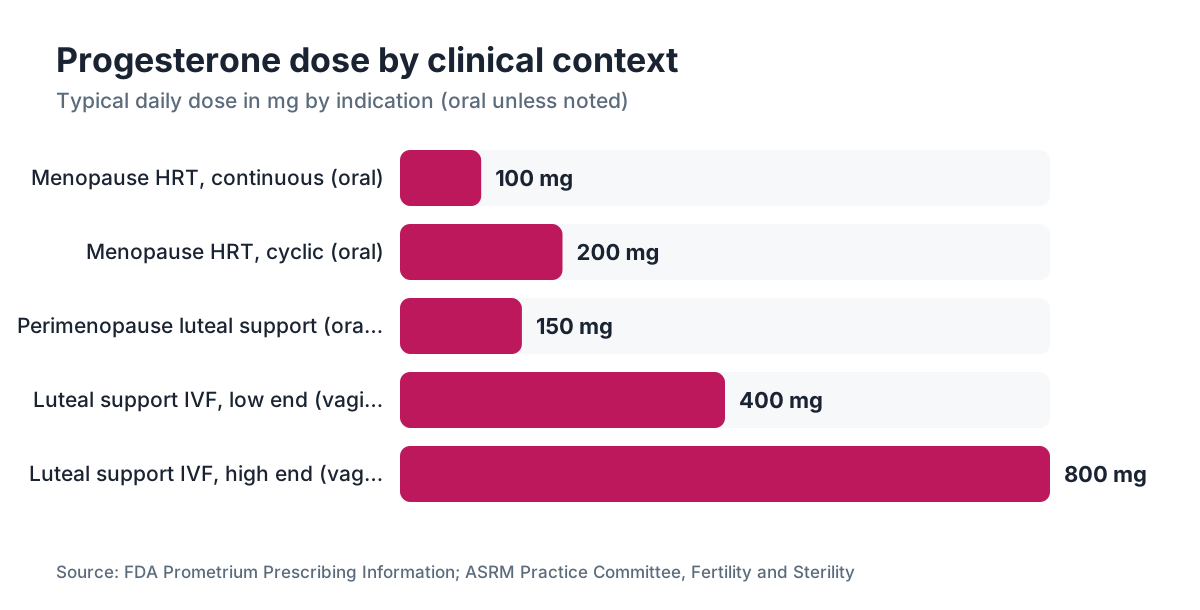
The FDA-approved dose of oral micronized progesterone (brand name Prometrium) for endometrial protection in postmenopausal women using estrogen is 200 mg taken orally at bedtime for 12 days per 28-day cycle, or 100 mg nightly when used continuously [1]. These numbers come straight from the Prometrium prescribing information, on the FDA label since the drug's approval in 1998. So when a clinician prescribes 200 mg, they are prescribing exactly what the FDA studied and approved for this purpose.
That matters because "high dose" is a relative term. In pharmacology, a dose is only high relative to the effective dose for a given goal. For endometrial protection, 200 mg cyclic progesterone has decades of safety data behind it. It is the reference dose, not an outlier.
None of this means 200 mg feels mild to everyone. Progesterone has sedating properties because it converts in the body to allopregnanolone, a neurosteroid that acts on GABA receptors. That sedation is why most prescribers tell patients to take it at bedtime. Some women notice heavy drowsiness, especially in the first few weeks. That is a real pharmacological effect, but it does not mean the dose is excessive.
Is 200 mg progesterone a high dose for menopause specifically?
No. For a postmenopausal woman using estrogen therapy who still has a uterus, 200 mg cyclic progesterone sits squarely in the middle of the standard clinical range, not at the top of it [1][2]. The North American Menopause Society (NAMS) recognizes both 100 mg continuous and 200 mg cyclic as appropriate regimens, depending on whether a woman uses a sequential or continuous hormone therapy protocol [2].
To understand what actually counts as a high dose, look at where progesterone goes in clinical practice. In fertility medicine, luteal phase support commonly uses progesterone doses from 200 mg to 800 mg vaginally per day, sometimes split into divided doses. Luteal support after IVF can reach 600 to 800 mg of vaginal progesterone daily [3]. Against those numbers, 200 mg oral at bedtime for a menopausal woman is conservative.
The word "high" also depends on the route. Oral progesterone has lower bioavailability than vaginal or injectable forms. Take 200 mg by mouth and your peak serum progesterone typically reaches roughly 17 to 19 ng/mL within 2 to 3 hours, then drops fast [4]. Vaginal progesterone gives more targeted uterine exposure at lower systemic levels. Injectable progesterone in oil produces sustained high blood levels even at doses as low as 25 to 50 mg. So 200 mg oral is not comparable to 200 mg of any other formulation.
The short answer: 200 mg oral progesterone for menopause is a standard, well-studied, FDA-approved dose, appropriate for most women with a uterus who are using estrogen therapy.
What does 200 mg progesterone actually do in your body?
Oral micronized progesterone is absorbed in the gut, carried through the portal circulation to the liver, and heavily metabolized there before it reaches general circulation. This first-pass metabolism is why oral progesterone has lower bioavailability than other routes. Only about 10% of the dose you swallow reaches systemic circulation in active form [4]. The liver converts a large share to metabolites, including allopregnanolone and pregnanolone.
Allopregnanolone is a potent positive modulator of GABA-A receptors. That is the mechanism behind progesterone's sedating and anti-anxiety effects. It is also why some women on 200 mg report better sleep, a benefit clinicians hear about often, though the evidence for sleep improvement is more anecdotal than proven.
At the uterus, progesterone counteracts estrogen's proliferative effect on the endometrium. Estrogen taken without progesterone in women who still have a uterus keeps the lining cells dividing. Unopposed estrogen sharply raises the risk of endometrial hyperplasia and endometrial cancer [2]. Progesterone tells those cells to stop dividing and mature. The 200 mg cyclic dosing was designed to deliver enough progesterone exposure across 12 days per cycle to fully protect the endometrium.
Progesterone also touches mood, breast tissue, bone, and the cardiovascular system, though those effects are messier and some are still under study. The Women's Health Initiative Memory Study found no cognitive harm from the progestin component specifically, though it used medroxyprogesterone acetate (a synthetic progestin), not oral micronized progesterone [5]. Oral micronized progesterone has a generally more favorable safety profile than synthetic progestins, particularly for breast tissue and cardiovascular markers, though neither is risk-free.
How does 200 mg compare to other common progesterone doses?
Here is a practical comparison of where 200 mg oral micronized progesterone sits relative to other clinical uses. This is real-world clinical context, not theoretical ranges.
| Use | Typical dose | Route | Notes | |---|---|---|---| | Menopausal HRT, cyclic | 200 mg nightly x 12 days/cycle | Oral | FDA-approved | | Menopausal HRT, continuous | 100 mg nightly | Oral | FDA-approved | | Perimenopause, cycle irregularity | 100-200 mg nightly x 10-14 days | Oral | Off-label, common | | Premature ovarian insufficiency | 100-200 mg nightly | Oral | Off-label | | Luteal support (IVF) | 400-800 mg/day | Vaginal | Much higher total dose | | Progesterone deficiency, pregnancy support | 200-400 mg/day | Vaginal | Crinone, Endometrin | | Preterm birth prevention | 90 mg gel vaginally | Vaginal | Lower systemic exposure |
As the table shows, 200 mg oral is on the lower end of progesterone use across reproductive medicine. Menopause is simply one of the most common settings where women meet it.
For perimenopause, the years-long hormonal transition before the final period, clinicians often start with 100 mg to address sleep disruption, anxiety, or irregular cycles, then adjust. You can read more about when and how perimenopause begins at perimenopause age. The 200 mg dose tends to show up when there is an established hormone therapy protocol that includes estrogen, or when lower doses have not delivered adequate symptom control or endometrial protection.
Who should take 200 mg progesterone and who might need a different dose?
The 200 mg cyclic dose was built for one situation: a postmenopausal woman on estrogen therapy who has a uterus and needs endometrial protection on a sequential (not daily) schedule [1]. If that describes you, 200 mg is almost certainly the right ballpark, and your clinician would move off it only for specific reasons.
Women who might do better on a lower dose include those who find the sedation too heavy, those on a continuous combined HRT protocol (where 100 mg nightly is the FDA-approved regimen), and those earlier in perimenopause who are not yet on estrogen. Some clinicians also use lower doses, sometimes as low as 50 mg, off-label for women who mainly want progesterone for sleep or anxiety without the full HRT framework, though the evidence for that is thin.
Women who need a higher dose are rarer in the menopause setting. Sometimes an endometrial biopsy showing persistent hyperplasia on a standard dose prompts a clinician to reassess. In those cases, switching to a continuous regimen or adding a topical progestogen often beats simply raising the oral dose.
Women without a uterus do not need progesterone for endometrial protection, since there is no lining to protect. Some clinicians still offer it for possible sleep, mood, or bone benefits, but that is entirely off-label and the evidence is limited. If you are in that group, the progesterone conversation is a different one.
Allergies matter too. Prometrium capsules contain peanut oil. Women with peanut allergies should not use Prometrium and may need a compounded progesterone product instead. That is a real safety point that occasionally gets missed [1].
What are the side effects of 200 mg progesterone?
The most common side effect is drowsiness, and it is dose-dependent. At 200 mg, most women feel heavy sedation within an hour, which is why the bedtime instruction is more than a suggestion. Taking it during the day is not dangerous, but most people find it impractical [1].
Other commonly reported effects include dizziness, headache, breast tenderness, bloating, and mood changes. Some women feel mood lability or irritability during the progesterone phase of a cyclic regimen, similar to premenstrual symptoms. This is more likely in women with a prior history of PMS or PMDD, where progesterone metabolites can act paradoxically on GABA receptors in sensitive individuals.
Depression is a concern some women raise. The data here are genuinely mixed. Some women on progesterone report mood improvement; others report worsening. A 2016 study published in JAMA Psychiatry found that women using hormonal contraceptives (not identical to progesterone therapy, but related) had modestly increased rates of depression diagnoses, with the effect varying by formulation [6]. Micronized progesterone looks less likely to worsen mood than synthetic progestins in most research, but individual responses vary and are not fully predictable.
Progesterone at standard doses does not raise clotting risk the way synthetic progestins do, and oral micronized progesterone is generally considered thrombosis-neutral, though that should not be stretched carelessly to women with high pre-existing clotting risk.
Signs the dose might be too high for a given individual include extreme sedation that does not ease after 2 to 4 weeks, real mood disruption, or heavy dizziness that hits daily function. Those are conversations to have with the prescribing clinician, not reasons to stop on your own.
Is progesterone 200 mg safe long-term?
The best long-term safety data for menopause hormone therapy comes from the Women's Health Initiative (WHI), but the WHI used synthetic medroxyprogesterone acetate, not oral micronized progesterone, in its estrogen-plus-progestin arm [5]. That distinction matters, because medroxyprogesterone acetate and oral micronized progesterone have different metabolic profiles and different effects on breast tissue and cardiovascular markers.
The ESTHER study, a French case-control study published in Circulation, found that transdermal estrogen combined with progesterone (not synthetic progestins) did not raise venous thromboembolism risk the way oral estrogen or combined synthetic progestin regimens did [7]. That is a meaningful safety distinction, and it is why many European prescribers and a growing number of U.S. clinicians prefer oral micronized progesterone over synthetic progestins.
For breast cancer, the picture is more layered. The E3N French cohort study found that postmenopausal women using estrogen plus micronized progesterone had a lower risk of breast cancer than those using estrogen plus synthetic progestins [8]. That does not mean progesterone carries zero breast cancer risk. NAMS notes the relationship between progesterone specifically and breast cancer risk is still an active research question, and that duration of use matters [2].
Long-term use of 200 mg cyclic progesterone as part of a sequential HRT regimen lines up with current clinical guidelines for women with a uterus on estrogen therapy. NAMS states that for women under 60, or within 10 years of menopause onset, the benefits of hormone therapy generally outweigh the risks for typical candidates [2]. For more background on the HRT evidence base, hormone replacement therapy covers the wider picture.
In practice, many women use this dose for years without serious adverse events. Endometrial surveillance (ultrasound or biopsy) is sometimes recommended for women on long-term hormone therapy, particularly if breakthrough bleeding shows up.
Can 200 mg progesterone cause weight gain?
This question comes up constantly, and the honest answer is that the evidence is weak in both directions. Progesterone does not have strong androgenic or glucocorticoid effects, which are the progestin properties most tied to weight gain and metabolic trouble. Oral micronized progesterone is one of the more weight-neutral progestogen options.
Still, some women report bloating or fluid retention during the progesterone phase of a cyclic regimen, which can bump the scale temporarily. That is likely progesterone's mild mineralocorticoid activity, not true fat gain.
Menopause itself drives big metabolic changes with or without hormone therapy. Declining estrogen shifts fat toward the abdomen, cuts muscle mass, and slows resting metabolism. Pinning weight changes entirely on progesterone, when so much else is shifting hormonally and metabolically during this stage, is a mistake many women (and some clinicians) make.
If weight is a concern alongside hormone therapy, that is a separate and legitimate conversation. Some women in the perimenopausal and menopausal years find that tools beyond diet and exercise help. WomenRx clinicians discuss both hormone therapy and GLP-1 options for women in these years together, which can be a practical way to address hormonal symptoms and metabolic changes in one clinical relationship.
How do you know if your progesterone dose is working?
For endometrial protection, the main signal that progesterone is working is the absence of unexpected uterine bleeding or spotting outside the expected withdrawal bleed in a cyclic regimen. Breakthrough bleeding on a combined HRT regimen is a reason to contact your clinician, not because it is always dangerous, but because it warrants a check to confirm the endometrium is healthy [2].
Blood tests for progesterone levels are not much use for monitoring HRT in postmenopausal women on oral progesterone. Because oral progesterone is heavily metabolized, serum levels swing widely and do not track reliably with clinical effect or endometrial protection. A blood draw taken at the wrong point in the dosing cycle can be frankly misleading.
For symptom-based goals, like better sleep or less anxiety, you should notice something within 2 to 4 weeks at 200 mg. Sleep improvement is the most reliably reported benefit, and if drowsiness is wrecking your morning without giving you any sleep benefit, that is worth revisiting with your clinician.
Endometrial ultrasound, which measures the thickness of the uterine lining, is a more reliable objective check. An endometrial stripe over 4 to 5 mm on transvaginal ultrasound in a postmenopausal woman on estrogen without adequate progesterone protection warrants a biopsy. This is not a routine annual test, but it becomes relevant if symptoms suggest inadequate protection.
What is the difference between progesterone and progestin, and does it matter for dosing?
Progesterone and progestins are related but not identical. Progesterone refers to the bioidentical hormone, chemically the same as what the ovaries and adrenal glands make. Progestins are synthetic compounds built to mimic progesterone's effects, but they carry additional hormonal properties depending on their structure.
That distinction matters for dosing, because progestins are generally more potent per milligram than oral progesterone and have different side effect profiles. Medroxyprogesterone acetate (Provera), the most studied synthetic progestin, is typically used at 2.5 to 10 mg per day. Norethindrone acetate is used at 0.5 to 1 mg. Those lower milligram numbers do not mean progestins are safer. In fact, most evidence suggests oral micronized progesterone has a more favorable metabolic and breast safety profile than these synthetic alternatives.
So when someone says "200 mg is a lot," they are often comparing it, without realizing it, to progestin doses measured in single-digit milligrams. That is an apples-to-oranges comparison. Oral micronized progesterone at 200 mg is not pharmacologically equivalent to 200 mg of a progestin. The routes of metabolism and receptor selectivity differ.
For a deeper look at the evidence on progesterone specifically, including bioidentical versus synthetic options, progesterone covers the clinical background in detail. For context on the full hormone therapy picture, menopause is a useful starting point for how the pieces fit together.
Should you take 200 mg progesterone if you're in perimenopause rather than menopause?
Perimenopause complicates the dosing picture. During perimenopause, ovulation still happens but erratically. The ovaries still produce progesterone during luteal phases, though often in lower and more variable amounts than during the reproductive years. Adding 200 mg oral progesterone on top of that can, in theory, produce relatively high combined progesterone exposure during a normal luteal phase.
Most clinicians therefore start perimenopausal women at 100 mg rather than 200 mg, often prescribed for the second half of the cycle (days 14 to 28) to support an irregular or deficient luteal phase. The 200 mg dose is more common once menopause is confirmed, meaning 12 consecutive months without a period, or in women on established estrogen therapy who need the full endometrial protection protocol.
There is no FDA-approved progesterone regimen specifically for perimenopause, so any use in that context is off-label. That does not make it wrong. Off-label prescribing is standard in menopause medicine and is explicitly recognized by NAMS as appropriate in carefully selected patients. But it does mean dosing is more individualized and less standardized than in the postmenopausal setting.
If you are not sure whether you are in perimenopause or how far along you are, when does menopause start offers a clear framework for the timeline.
How to talk to your doctor about your progesterone dose
If you have been prescribed 200 mg progesterone and are wondering whether it fits you, a few specific questions will get you further than a general worry about the number.
First, ask what the dose is meant to do for you specifically. Is it for endometrial protection because you are on estrogen? For sleep? For luteal phase support? The rationale shapes whether 200 mg is the right target or whether a different dose might work better.
Second, ask whether the regimen is cyclic or continuous. Taking 200 mg for 12 days a month is different from taking 200 mg every night. The latter would be an unusually high continuous dose and should prompt questions about the clinical reasoning.
Third, if side effects bother you, such as heavy morning drowsiness, mood changes, or bloating, ask whether a lower dose or a different formulation might work. Vaginal progesterone at a lower dose, for example, reaches the uterus with fewer systemic effects.
A good telehealth platform focused on women's hormones should walk through these questions with you, review your labs, and explain the reasoning behind your specific regimen. WomenRx clinicians do exactly this kind of protocol review as part of an initial hormone consultation. If you do not have a prescriber who can engage with these specifics, that is the real problem, not the number on your prescription label.
Frequently asked questions
Is 200 mg progesterone a high dose for menopause?
No. 200 mg oral micronized progesterone taken at bedtime for 12 days per 28-day cycle is the FDA-approved standard dose for endometrial protection in postmenopausal women using estrogen therapy. It sits in the middle of the clinical range, not at the high end. Fertility medicine routinely uses 400 to 800 mg vaginally per day in other settings, which puts 200 mg oral in perspective.
Why is progesterone prescribed at such a high milligram dose compared to other hormones?
Oral progesterone has low bioavailability due to heavy first-pass metabolism in the liver. Only about 10% of the dose you swallow reaches systemic circulation in active form. That is why 200 mg is needed to reach the blood and tissue levels required for endometrial protection. Synthetic progestins are more potent per milligram but carry different, often less favorable, side effect profiles.
Can I take 200 mg progesterone every night instead of just 12 days a month?
The FDA-approved continuous dose is 100 mg nightly, not 200 mg. Taking 200 mg every night would exceed the studied continuous regimen. Some clinicians do prescribe 200 mg continuously off-label in specific situations, but that requires individualized reasoning. Talk to your prescriber before changing from a cyclic to a continuous regimen or adjusting the nightly dose.
Will 200 mg progesterone make me gain weight?
Probably not, based on available evidence. Oral micronized progesterone lacks the androgenic and glucocorticoid activity that drives weight gain with some synthetic progestins. Some women notice temporary bloating or fluid retention, which is not the same as fat gain. Menopause itself causes metabolic shifts that affect weight independently of progesterone therapy, which makes the drug's contribution hard to isolate.
How long does 200 mg progesterone stay in your system?
After a single 200 mg oral dose, peak progesterone levels occur within 2 to 3 hours. By about 8 hours, levels have dropped a lot, and by 24 hours they are near baseline. The sedating metabolite allopregnanolone follows a similar time course, which is why most women feel the sedation in the evening and are functional by morning. This fast clearance is a feature of oral micronized progesterone compared to vaginal or injectable forms.
What happens if you take too much progesterone?
Excess progesterone causes sedation, dizziness, disorientation, and in severe cases trouble walking or staying awake. At the doses used in menopause management, serious toxicity is uncommon. If someone accidentally takes several times the intended dose, the main risk is prolonged sedation and falls, particularly in older adults. Contact Poison Control at 1-800-222-1222 if a significant accidental overdose occurs.
Is compounded progesterone the same as Prometrium at 200 mg?
Not necessarily. Compounded progesterone capsules can be made to contain 200 mg of micronized progesterone, which should be pharmacologically comparable to Prometrium. But compounded products are not FDA-approved and can vary in consistency between compounding pharmacies. Prometrium is FDA-approved and has standardized manufacturing. Women with peanut allergies use compounded progesterone to avoid the peanut oil in Prometrium.
Can I take 200 mg progesterone without estrogen?
Yes, progesterone can be taken without estrogen, though the FDA approval is specifically for use with estrogen in postmenopausal women with a uterus. Some clinicians prescribe progesterone alone for perimenopause symptoms, sleep disruption, or luteal phase support. That is off-label use. Women without a uterus sometimes use lower doses for non-endometrial benefits, though the evidence for those indications is thinner.
Does 200 mg progesterone help with sleep?
Many women report better sleep on oral progesterone, and it is biologically plausible. Progesterone converts to allopregnanolone, a GABA-A receptor modulator with sedating effects. Formal clinical evidence is limited, but a small randomized trial and wide clinical experience support the sleep benefit for some women. The effect is strongest in the first 1 to 2 hours after dosing, which is why bedtime administration is standard.
Is 200 mg progesterone safe with other medications?
Progesterone can interact with sedatives, benzodiazepines, and other CNS depressants by adding to sedation. It is metabolized by CYP enzymes, so drugs that strongly inhibit or induce those enzymes can shift progesterone blood levels. Rifampin, for example, is a strong CYP inducer that lowers progesterone exposure. Always give your prescriber a full medication list, including over-the-counter sleep aids, which often contain antihistamines that amplify sedation.
Can 200 mg progesterone protect against endometrial cancer?
Yes, when used correctly. Adequate progesterone exposure in women taking estrogen therapy is what protects the endometrial lining from estrogen's proliferative effect. Postmenopausal estrogen used without adequate progestogen sharply raises endometrial cancer risk. The 200 mg cyclic or 100 mg continuous regimens were designed and studied to lower that risk back to near-baseline levels, which is their primary purpose in combination HRT.
How do I know if 200 mg progesterone is protecting my uterus?
The main signal is the absence of irregular or unexpected bleeding. In a cyclic regimen, a predictable withdrawal bleed at the end of the progesterone phase is normal. Unexpected spotting or bleeding between cycles is a reason to contact your clinician and possibly have a transvaginal ultrasound or endometrial biopsy. Blood progesterone levels are not a reliable monitoring tool for oral progesterone due to fast metabolism and wide fluctuation.
Should progesterone dose change as you get older?
Not necessarily based on age alone. The standard dose for endometrial protection stays 200 mg cyclic or 100 mg continuous whether a woman is 52 or 72, assuming she continues estrogen therapy. Dose adjustments might be warranted based on side effects, liver function changes, or changes in the estrogen dose. Women who stop estrogen no longer need progesterone for endometrial protection, so the full regimen question gets revisited at that point.
What is the difference between oral progesterone and a progesterone patch or cream?
There is no FDA-approved progesterone patch. Progesterone creams are available over the counter but deliver inconsistent and generally inadequate amounts for endometrial protection. Vaginal progesterone gels and suppositories (like Crinone and Endometrin) are FDA-approved for fertility indications but not for menopause HRT. Oral micronized progesterone (Prometrium) is the FDA-approved oral option for menopause. OTC progesterone creams should not replace prescription progesterone.
Sources
- FDA, Prometrium (progesterone, USP) Prescribing Information
- The Menopause Society (NAMS), Hormone Therapy Position Statement 2022
- ASRM Practice Committee, Progesterone Supplementation During the Luteal Phase and in Early Pregnancies Following In Vitro Fertilization, Fertility and Sterility
- Simon JA et al., Micronized progesterone pharmacokinetics, American Journal of Obstetrics and Gynecology
- NIH Women's Health Initiative, WHI Study Results
- Skovlund CW et al., Association of Hormonal Contraception with Depression, JAMA Psychiatry, 2016
- Canonico M et al., Hormone Therapy and Venous Thromboembolism Among Postmenopausal Women: ESTHER Study, Circulation, 2007
- Fournier A et al., Breast Cancer Risk in Relation to Different Types of Hormone Replacement Therapy: E3N Cohort, Breast Cancer Research and Treatment, 2008
- Endocrine Society, Postmenopausal Hormone Therapy Clinical Practice Guideline
- FDA, Drug Safety Communications, Hormone Therapy